
When you’re planning a Paradise Valley Mediterranean home, you understand that authentic materials define the aesthetic. Jerusalem stone tile Paradise Valley installations deliver the textural warmth and historical depth that synthetic alternatives can’t replicate. You’ll find this Israeli limestone brings architectural character that resonates with Mediterranean design principles—creamy tones, subtle fossil details, and natural variation that ages beautifully under Arizona’s intense sun.
Your material selection decisions determine whether your project achieves genuine Mediterranean authenticity or falls into the territory of superficial imitation. Paradise Valley Mediterranean architecture demands materials that perform thermally while delivering visual sophistication. When you specify Jerusalem stone tile Paradise Valley projects, you’re selecting material that functions as both climate-responsive building envelope and design statement. The limestone’s thermal mass properties moderate interior temperatures, reducing cooling loads during Phoenix’s extended summer season.
Thermal Performance in Desert Climates
You need to understand how Jerusalem stone tile Paradise Valley installations respond to extreme temperature cycling. The material exhibits thermal conductivity ranging from 1.3 to 1.7 W/m·K, positioning it in the moderate range for natural stone. What matters for your Arizona projects is the 4-6 hour thermal lag—the delay between peak exterior temperature and interior surface heat transfer. This lag time creates passive cooling benefits when you detail your wall assemblies correctly.
Your thermal performance depends on tile thickness and installation method. For Paradise Valley Mediterranean facades, you’ll typically specify 15-20mm tiles in thin-set applications or 30-40mm tiles for mechanically anchored systems. The thicker material provides enhanced thermal mass, extending lag time to 6-8 hours in well-detailed assemblies. You should account for this when coordinating with your mechanical engineer—the reduced afternoon heat gain affects HVAC sizing calculations.
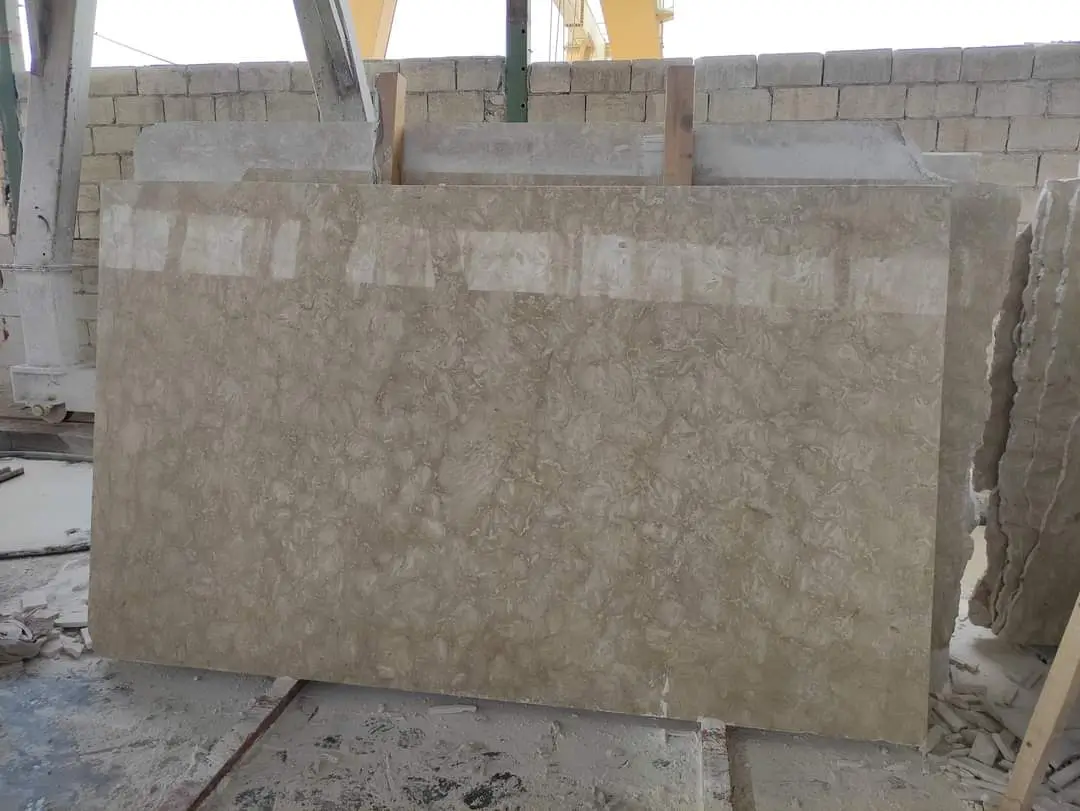
Surface temperature measurements on Jerusalem stone tile Paradise Valley installations show peak readings 18-24°F lower than dark granite or basalt under identical conditions. The cream stone tiles reflect 55-65% of solar radiation, significantly reducing radiant heat gain. You’ll find this particularly valuable for west-facing facades and courtyard pavements where afternoon sun exposure creates uncomfortable microclimates in less reflective materials.
Material Specifications and Sourcing Considerations
When you evaluate Israeli limestone Arizona suppliers, you’re navigating significant variation in material quality and geological source. Jerusalem stone originates from specific Judean Mountain quarries, with three primary grades affecting your specification decisions. You should understand these distinctions before committing to project documentation.
- You’ll encounter Meleke grade, the premium selection with 2-4% porosity and minimal fossil inclusions, suitable for high-visibility applications
- Your budget-conscious projects might utilize Mizzi Ahmar, exhibiting 6-8% porosity with more pronounced color variation and fossil content
- You need to avoid Mizzi Yahudi for exterior Arizona applications—its 10-12% porosity creates moisture-related problems despite lower cost
- Your compression strength requirements should specify minimum 8,500 PSI for flooring and 6,000 PSI for wall cladding applications
The sourcing reality you’ll face involves extended lead times and supply chain complexity. Material ships from Israeli quarries through Mediterranean ports, then crosses Atlantic routes before truck delivery to Arizona distributors. You’re looking at 14-18 week procurement timelines from order to warehouse availability. When you coordinate project schedules, you need to initiate material orders during design development, not construction documents.
For comprehensive material comparisons and alternative sourcing options, see artisanal natural stone tile maker in Maricopa County for regional availability data. Your specification should include approved equivalent clauses that allow domestic limestone substitutions when delivery timelines conflict with construction schedules.
Surface Finish Options and Performance Implications
Your finish selection for Jerusalem stone tile Paradise Valley projects directly affects slip resistance, maintenance requirements, and visual character. The material accepts four primary surface treatments, each creating distinct performance profiles you need to evaluate against project requirements.
Honed finishes deliver matte surfaces with DCOF ratings between 0.48-0.54, meeting ADA requirements for most applications. You’ll find this finish shows wear patterns in high-traffic areas after 10-15 years, developing subtle polish in foot-traffic paths. The surface accepts stain-resistant sealers effectively, with penetrating treatments lasting 3-5 years under normal use. When you specify honed Jerusalem stone tile Paradise Valley installations for interior floors, you’re selecting material that maintains consistent appearance with reasonable maintenance protocols.
Polished surfaces create formal aesthetics but present functional challenges you need to address. The finish reduces DCOF to 0.38-0.44, requiring slip-resistant treatments for wet areas or accessible routes. You should avoid polished finishes for exterior paving in Paradise Valley Mediterranean pool decks or courtyard applications—the combination of water exposure and reduced texture creates liability concerns. Interior wall applications benefit from polished treatments, as the enhanced light reflection brightens spaces while eliminating slip resistance concerns.
Textured Applications for Exterior Use
You’ll want tumbled or antiqued finishes for exterior Jerusalem stone tile Paradise Valley projects where authentic Mediterranean character matters. Tumbling creates softened edges and subtle surface undulation, with DCOF values reaching 0.58-0.65. The process removes sharp arrises that cause discomfort for barefoot traffic around pools or patios. Your installation cost increases 15-20% for tumbled material due to thickness variation and additional setting time requirements.
Bush-hammered surfaces deliver maximum slip resistance at 0.68-0.74 DCOF, suitable for sloped walkways or heavily trafficked commercial entries. The aggressive texture exposes internal stone structure, creating visual interest while providing secure footing. You should specify this finish for Paradise Valley Mediterranean exterior stairs and transition areas where slip incidents present risk. The pronounced texture complicates cleaning—pressure washing at 1,800-2,200 PSI becomes necessary for removing desert dust and organic accumulation from surface valleys.
Installation Methodology for Desert Conditions
Your installation success with cream stone tiles in Arizona depends on addressing substrate movement, moisture management, and thermal expansion. Standard thin-set methods require modification for desert climate performance. You’ll need to specify materials and details that accommodate Phoenix temperature extremes and minimal humidity.
Base preparation determines long-term performance more than any other factor. When you detail floor assemblies, you must verify that concrete substrates cure for minimum 28 days and exhibit moisture content below 3.5 pounds per 1,000 square feet via calcium chloride testing. Arizona’s low humidity accelerates surface curing but doesn’t eliminate deep moisture—you’ll encounter efflorescence problems 8-18 months post-installation if you rush the substrate preparation schedule.
- You should specify modified thin-set mortars with minimum 400 PSI bond strength, avoiding standard formulations that fail under thermal stress
- Your joint spacing must accommodate thermal expansion at 1/4 inch per 10 feet for interior installations and 3/8 inch per 10 feet for exterior applications
- You need to require movement joints at maximum 12-foot centers for exterior Jerusalem stone tile Paradise Valley installations, decreasing to 10 feet for dark accent materials
- Your grout specification should mandate epoxy formulations for wet areas and premium polymer-modified cementitious grout for dry interior spaces
The installation timing you coordinate affects material performance. Summer installations in Paradise Valley Mediterranean projects require morning-only work schedules when you’re placing exterior tile. Substrate temperatures exceeding 95°F cause accelerated thin-set curing that prevents proper tile embedment. You’ll see hollow-sounding tiles and subsequent debonding when installers work through afternoon heat. Your construction schedule should allocate Israeli limestone Arizona installations to October through April whenever possible.
Color Variation Management and Blend Strategies
When you open crates of Jerusalem stone tile Paradise Valley projects, you’re managing natural material variation that ranges 3-4 shades within single shipments. The limestone forms in varied depositional environments, creating color shifts from pale cream to warm beige with occasional rose or gray notes. You need to establish blending protocols that distribute this variation attractively rather than creating patchy installations.
Your pre-installation coordination should include full-scale mockups using material from at least six different crates. You’ll identify the variation range and develop tile placement strategies that prevent color clustering. Professional installers implement rotation systems, pulling simultaneously from 4-5 open boxes to randomize the blend. When you inspect installations, you should verify this practice—failure to blend creates visible banding that can’t be corrected without removal and reinstallation.
Lighting conditions in Paradise Valley Mediterranean interiors dramatically affect perceived color variation. You’ll find that natural daylight emphasizes warm tones while artificial illumination can shift perception toward cooler grays. Your material selection should occur under lighting conditions that replicate the finished installation environment. Warehouse fluorescent lighting doesn’t represent how cream stone tiles appear under Arizona sunlight streaming through south-facing windows.
Moisture and Porosity Considerations
You’re working with material that exhibits 4-7% porosity in premium grades, creating specific moisture management requirements for Arizona applications. While Paradise Valley’s 8-inch annual rainfall seems minimal, isolated monsoon events deliver intense precipitation that tests exterior installations. Your detailing must address both liquid water management and vapor transmission.
The limestone’s interconnected pore structure allows moisture absorption that manifests as temporary darkening during rain events. You should prepare clients for this characteristic—the material returns to baseline color within 4-8 hours as moisture evaporates in Arizona’s low humidity. More concerning is subsurface moisture from irrigation systems or inadequate waterproofing. When you detail Jerusalem stone tile Paradise Valley courtyard installations, you need continuous waterproof membranes under the tile assembly, with drainage planes directing water away from building foundations.
Sealer selection affects both moisture resistance and appearance. Penetrating sealers maintain natural surface texture while reducing absorption rates by 60-75%. You’ll need reapplication every 3-4 years for exterior surfaces and 5-7 years for protected interiors. Film-forming sealers create artificial gloss that contradicts Mediterranean aesthetic principles—you should avoid these products for authentic Paradise Valley Mediterranean applications. Your specification should mandate test applications on sample tiles, allowing you to verify that sealed appearance meets design intent before full installation.
Comparative Material Analysis for Mediterranean Aesthetics
When you evaluate alternatives to Jerusalem stone tile Paradise Valley projects, you’re comparing performance characteristics and aesthetic authenticity across several limestone types. Your material selection determines whether the project achieves genuine Mediterranean character or merely approximates the style through superficial similarity.
French limestone from Burgundy quarries offers comparable color ranges and superior dimensional consistency. You’ll find less color variation and more uniform thickness than Israeli material, simplifying installation and reducing waste. The trade-off involves 25-35% higher material cost and even longer procurement timelines. For budget-conscious Paradise Valley Mediterranean projects, this option exceeds financial parameters despite performance advantages.
- You could specify Texas limestone as domestic alternative, with 8-12 week delivery timelines and 40% cost reduction compared to imported material
- Your aesthetic compromise involves coarser texture and less refined color palette, though performance characteristics meet technical requirements
- You might evaluate Turkish limestone that splits the difference—better color than Texas material, shorter lead times than Israeli stone, moderate pricing
- Your specification should include side-by-side samples of all options, allowing design team and client to assess trade-offs directly
The authenticity question you’re navigating involves more than visual similarity. Israeli limestone Arizona sourcing provides direct connection to Mediterranean building traditions spanning millennia. When you specify actual Jerusalem stone for Paradise Valley Mediterranean residences, you’re incorporating material with legitimate historical lineage rather than aesthetic approximation. This distinction matters to clients investing in high-end custom homes where authenticity carries value beyond mere appearance.
Maintenance Protocols and Long-Term Durability
Your maintenance program for cream stone tiles determines whether installations maintain appearance for 20+ years or show premature wear requiring intervention. The limestone responds well to proper care protocols but deteriorates rapidly under harsh chemical exposure or abrasive cleaning methods.
Daily maintenance you should recommend involves dust mopping or soft bristle sweeping to remove abrasive particles. Arizona’s desert environment delivers fine dust that acts as grinding compound when foot traffic is present. You’ll see accelerated wear patterns and surface dulling when this simple maintenance step gets neglected. For wet cleaning, you need pH-neutral stone soap diluted according to manufacturer specifications—alkaline or acidic cleaners etch the limestone surface, creating permanent damage that requires professional restoration.
The long-term durability you can promise clients depends on usage intensity and maintenance consistency. Properly installed and maintained Jerusalem stone tile Paradise Valley floors in residential applications last 30-40 years before requiring surface refinishing. You should set realistic expectations about high-traffic commercial applications—these installations need professional cleaning and resealing every 18-24 months, with surface rehoning every 8-10 years to restore uniform appearance.
Stain Response and Treatment Methods
When you address stain incidents on Israeli limestone Arizona installations, you’re dealing with material that absorbs organic and oil-based contaminants readily. Red wine, coffee, and cooking oils penetrate within minutes on unsealed surfaces. Your immediate response protocol involves blotting (not wiping) to remove surface liquid, then applying poultice treatments that draw staining compounds from pore structures.
Professional poultice formulations combine absorbent powder with chemical solvents matched to stain type. You’ll need different treatments for oil-based versus water-based staining. Application involves spreading 1/4-inch thick paste over affected areas, covering with plastic film, and allowing 24-48 hour dwell time. The process often requires 2-3 repetitions for complete stain removal. You should inform clients that some deeply penetrated stains become permanent, requiring acceptance or tile replacement in extreme cases.
Cost Considerations and Budget Planning
When you develop budgets for Jerusalem stone tile Paradise Valley projects, you’re managing multiple cost components beyond base material pricing. The installed cost reflects material selection, finish specification, installation complexity, and site conditions. You need to provide clients with comprehensive cost projections that account for all variables.
Material costs for premium Meleke grade Israeli limestone range from $18-26 per square foot for standard field tiles in honed finish. Your costs increase 15-20% for tumbled surfaces and 25-30% for custom sizing or thickness specifications. When you calculate project quantities, you should add 12-15% waste factor for installations with complex patterns or numerous cuts. Simpler running bond layouts require only 8-10% overage for cuts and potential damage.
Installation labor in Paradise Valley Mediterranean markets runs $8-14 per square foot depending on project complexity and installer experience. You’ll pay premium rates for crews experienced with natural stone rather than ceramic tile installers attempting limestone work. The skill difference manifests in blending technique, thin-set application consistency, and lippage control. Your project quality depends more on installer selection than any other controllable factor—this isn’t where you should value-engineer to reduce costs.
- You need to budget for substrate preparation costs ranging from $3-6 per square foot when existing floors require removal or significant leveling
- Your waterproofing membrane adds $2-4 per square foot for wet areas or exterior installations requiring continuous protection
- You should allocate budget for professional sealing at $1.50-2.50 per square foot, including proper surface preparation and two-coat application
- Your contingency reserve should reach 15-20% of total stone budget for unexpected substrate issues or design modifications during installation
Design Integration with Mediterranean Style Elements
When you incorporate Jerusalem stone tile Paradise Valley projects, you’re creating material continuity that extends beyond flooring to walls, stairs, and architectural details. The cream stone tiles work most effectively when you develop comprehensive material strategies rather than isolated floor applications. Your design approach should consider how limestone integrates with other Mediterranean palette materials.
Interior applications you’ll specify include floor-to-wall transitions that eliminate base trim for seamless appearance. The limestone extends 8-12 inches up wall surfaces, creating visual continuity while protecting painted surfaces from floor maintenance activities. You can detail these transitions with coved profiles or square reveals depending on project aesthetic. For Paradise Valley Mediterranean stair applications, you should specify matching tread and riser material with honed tread surfaces and tumbled risers that distinguish elevation changes through texture variation.
Your exterior design integration connects indoor and outdoor spaces through consistent material selection. When you extend Jerusalem stone tile Paradise Valley installations from interior living areas to covered loggias and open courtyards, you create spatial continuity fundamental to Mediterranean architecture. The material transition between indoor and outdoor requires proper flashing and waterproofing details—this isn’t simple continuous installation across the building envelope.
Citadel Stone: Natural Stone and Tile Company in Arizona for Paradise Valley Mediterranean Projects
When you evaluate specifications for premium residential developments across Arizona, you’re considering how material selection responds to diverse regional conditions. At Citadel Stone, we provide technical guidance for hypothetical applications spanning desert valleys to high-country mountain communities. This section outlines how you would approach Jerusalem stone tile Paradise Valley installations and related Israeli limestone Arizona applications for three representative cities with distinct climate challenges. You’ll find these scenarios useful for understanding specification modifications required across Arizona’s varied environments.
Flagstaff Mountain Applications
In Flagstaff’s 7,000-foot elevation environment, you’d need to modify Jerusalem stone specifications substantially from desert valley standards. The 120-inch annual snowfall and freeze-thaw cycling exceeding 100 events annually would require you to specify Meleke grade material exclusively, with maximum 3% porosity to prevent moisture-related fracturing. Your detailing would mandate heated substrate systems for exterior applications to prevent ice accumulation and thermal shock. When you consider Paradise Valley Mediterranean aesthetics in mountain contexts, you’re adapting visual language developed for dry climates to high-altitude conditions requiring different performance characteristics. You’d likely recommend limiting Israeli limestone to protected interior spaces while selecting more freeze-resistant materials for exterior exposure.
Sedona Red Rock Integration
Your Sedona specifications would address how cream stone tiles relate to the region’s dominant red sandstone geology and architectural vernacular. You’d consider whether Jerusalem stone tile Paradise Valley installations translate effectively to red rock country, where color contrast creates visual tension against native landscape. The moderate climate allows exterior applications without Flagstaff’s freeze-thaw concerns, but you’d need to address differential thermal expansion between limestone tiles and traditional adobe or rammed earth walls common in regional architecture. Your material selection might favor warmer beige tones rather than cool cream colors to harmonize with surrounding geology. When you design Mediterranean-influenced projects here, you’re blending imported limestone tradition with Southwest regional character—a balance requiring careful color and texture coordination.
Peoria Valley Development
In Peoria’s expanding master-planned communities, you would encounter large-scale residential projects where material consistency and warehouse inventory management become critical specification factors. Your Jerusalem stone tile Paradise Valley aesthetic translates directly to Peoria’s luxury home market, with climate conditions nearly identical to Paradise Valley proper. You’d specify standard desert installation protocols—modified thin-set mortars, 3/8-inch joint spacing for thermal expansion, and penetrating sealers for exterior applications. The primary challenge you’d face involves material procurement for multi-phase developments requiring consistent color lots across 18-36 month construction timelines. You would need to coordinate bulk purchasing and climate-controlled storage to ensure material availability throughout project duration. When you plan truck deliveries for large developments, you should verify that warehouse stock levels support construction schedules without delays.
Common Specification Errors and Avoidance Strategies
When you review failed Jerusalem stone tile Paradise Valley installations, you’ll identify recurring specification errors that create performance problems and costly remediation. Your documentation needs to address these issues explicitly rather than relying on standard details that don’t account for material-specific requirements.
The most frequent error you’ll encounter involves inadequate movement joint specification. Generic details showing joints at 20-25 foot centers fail for Israeli limestone Arizona applications where thermal cycling demands closer spacing. You need explicit callouts at 10-12 foot centers for exterior work and 12-15 feet for interior floors. Your details should specify joint width, backer rod sizing, and sealant type—leaving these decisions to field personnel results in inconsistent execution.
- You’ll see failures from thin-set mortar specifications that don’t mandate modified formulations with adequate bond strength for limestone’s smooth back surfaces
- Your waterproofing details often get simplified to generic membrane callouts without addressing termination conditions at vertical transitions
- You might omit sealer specifications entirely, leaving product selection to tile installers who default to inappropriate film-forming products
- Your finish schedule sometimes fails to distinguish between interior and exterior sealer types, creating maintenance problems when single-product specifications span all conditions
Another specification gap you need to address involves sample approval protocols. Your standard language about “architect approval of samples” doesn’t capture the variation management required for natural stone. You should specify that contractor submits samples representing full range of color variation, and that field installation must blend material to match approved distribution pattern. Without this language, you lack enforcement mechanism when installations show unacceptable color clustering.
Final Considerations
Your decision to specify Jerusalem stone tile Paradise Valley projects commits you to managing natural material variation, extended procurement timelines, and installation complexity beyond standard tile applications. The authentic Mediterranean character you achieve justifies these challenges when projects demand genuine material performance rather than manufactured alternatives. You’ll find that cream stone tiles deliver thermal benefits and aging characteristics that align with sustainable design principles while satisfying aesthetic requirements for luxury residential work.
When you develop comprehensive specifications addressing substrate preparation, movement accommodation, moisture management, and maintenance protocols, you’re establishing project quality standards that translate designer intent into built reality. Your attention to procurement logistics—verifying warehouse availability, coordinating delivery schedules, and planning for material storage—prevents construction delays that compromise project timelines. For detailed guidance on transition conditions and installation methodology, review Professional installation methods for threshold stone strips in Arizona before finalizing your construction documents. As major tile and stone distributors in Arizona we offer volume discounts for massive commercial orders.