
Base preparation is where most white travertine installations in Arizona either succeed or fail — and the margin between those two outcomes is thinner than most contractors expect. The thermal cycling this climate delivers, from pre-dawn lows near 55°F into afternoon highs that push pavement surface temperatures well past 140°F, creates compressive stress at the mortar bed that compounds over every season. Understanding how to approach installing white travertine tiles Arizona climate demands more than following a general tile spec sheet — it requires rethinking every layer of the assembly from the ground up, calibrated specifically for desert conditions.
Why Arizona Demands a Different Specification
Standard tile installation guidelines are written for temperate climates. The TCNA Handbook provides a solid foundation, but its expansion joint spacing recommendations assume temperature differentials that Arizona routinely exceeds by a factor of two or more. Your installation schedule, mortar selection, and joint design all need to be reconsidered when the substrate itself can reach 160°F on a July afternoon in the Sonoran Desert.
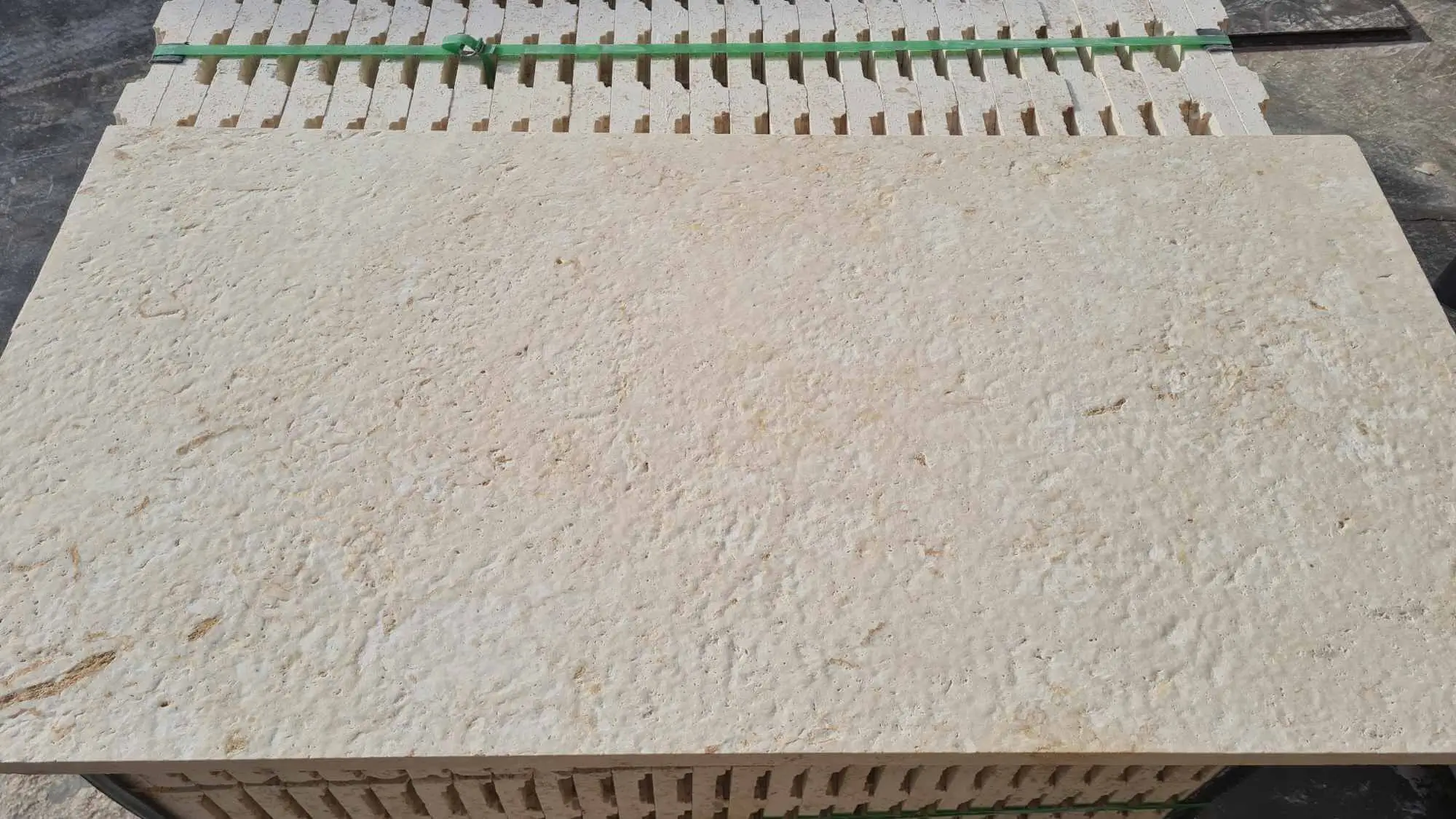
White travertine tile in Arizona performs exceptionally well because the lighter colorway reflects solar radiation rather than absorbing it — surface temperature differentials between white travertine and dark-colored concrete can exceed 35°F under identical exposure. That thermal advantage, however, doesn’t eliminate the structural demands placed on the setting bed. The substrate still cycles dramatically, and your mortar selection needs to accommodate that movement without transmitting it as stress into the tile face.
Travertine’s natural porosity — typically 5–10% void volume depending on fill quality and finish — gives it a thermal mass advantage over denser materials, but it also means your sealer selection and reapplication schedule carry more long-term consequence than they would with porcelain or ceramic alternatives. Proper substrate preparation for Arizona travertine installations is the foundation on which every other decision rests.
Substrate and Base Preparation for Arizona Projects
The single most consequential decision in any travertine tile installation is base preparation, and Arizona’s soil conditions make this especially critical. Expansive clay soils — common across the Phoenix metro and Tucson Basin — can exert uplift pressures that exceed the bond strength of standard thin-set mortar when moisture content fluctuates. Addressing the soil before considering tile is the only defensible starting point for exterior work in this region.
For exterior applications over native soil, your compacted aggregate base should be a minimum of 4 inches for pedestrian-only applications and 6 inches where occasional vehicular or heavy equipment loads are expected. Crushed granite fines — widely available across the state — compact well and resist the capillary rise that can undermine the mortar bond in wetter monsoon months. Avoid recycled concrete aggregate as a base material; it retains moisture unevenly and can introduce pH variability that degrades certain polymer-modified mortars over time.
- Compact the native subgrade to 95% Proctor density minimum before any aggregate placement
- Use Class II crushed aggregate for base layers, not decomposed granite, which can shift under thermal load
- Install a 4-mil polyethylene vapor barrier between the aggregate and concrete slab on grade applications
- Allow new concrete slabs a minimum 28-day cure before applying mortar — 45 days is preferable in Arizona’s low-humidity environment where surface moisture loss is deceptive
- Check flatness tolerance: substrate must be within 3/16 inch over a 10-foot straight edge before mortar bed application
Projects in Yuma frequently encounter extremely low-humidity conditions year-round, which accelerates concrete cure times but also causes rapid moisture loss from the mortar bed itself — a factor that forces crews to mist the slab before mortar application and tent larger installations to prevent premature skinning.
Mortar Selection and Setting Material Standards
Not all polymer-modified mortars handle tile installation in Arizona desert heat equally. Your mortar selection needs to satisfy two competing requirements simultaneously: enough flexibility to absorb thermal movement without cracking, and enough compressive strength to prevent tile rocking under point loads. For white travertine tile in Arizona, a medium-bed mortar rated to ANSI A118.15 — extended polymer-modified — delivers the right balance for most outdoor applications.
Avoid standard thin-set formulations for any exterior travertine installation in this climate. The lower polymer content in basic mortars leaves insufficient elasticity to accommodate the 0.8–1.2mm cumulative movement that occurs across a 10-foot travertine tile run between seasonal extremes. That movement is invisible to the eye but consistent — and over 3–5 years it will telegraph as grout line cracking followed by tile debonding at the edges.
- Specify ANSI A118.15 medium-bed polymer-modified mortar for all exterior Arizona travertine applications
- Use a white mortar base to maintain travertine’s reflective performance — gray mortar telegraphs through thinner tiles
- Mix mortar at 70–75°F when possible — never mix in direct sunlight where bucket temperatures can spike and reduce working time below 20 minutes
- Back-butter each tile individually with a skim coat in addition to trowel application to the substrate — travertine’s back texture creates voids that reduce bond surface area
- Target 95% mortar coverage on all exterior tiles per TCNA industry standards — spot bonding in Arizona’s climate invites failure at the unbonded edges
Installing white travertine tiles in Arizona’s climate creates a short working window that surprises crews unfamiliar with the conditions. On days above 95°F, mortar can begin to skin over within 12–15 minutes of application, compared to the 20–30 minutes specified on the product data sheet, which assumes a 70°F reference temperature. Adjust your coverage area accordingly — work in smaller sections and never apply more mortar than you can cover with tile within 10 minutes.
Expansion Joint Layout and Movement Accommodation
The detail most contractors get wrong when installing white travertine tiles in Arizona’s climate is expansion joint frequency. Generic guidelines suggest movement joints every 20–25 feet in interior applications. Outdoors in Arizona, that number drops to every 12–15 feet in both directions, with perimeter joints at every fixed vertical surface — walls, columns, pool coping, drain frames, and transitions to other materials.
Here’s the underlying physics: travertine expands at approximately 4.8 × 10⁻⁶ per °F. A 15-foot run of travertine tile experiencing a 100°F temperature swing — entirely normal for an Arizona patio between early morning and midday peak — will undergo roughly 0.086 inches of dimensional change. That number seems small until you consider that the mortar bed, the concrete slab, and the surrounding fixed elements are all cycling at different rates simultaneously. Without properly designed movement accommodation, stress concentrates at the weakest point — typically a grout joint.
- Install movement joints at maximum 12-foot intervals for exterior Arizona travertine tile fields
- Size movement joints at minimum 3/8 inch width — never fill movement joints with sanded grout, which has no elasticity
- Use ASTM C920 silicone sealant in movement joints — choose a UV-stable formulation rated for continuous service above 200°F
- Match sealant color to grout color as closely as possible — sealant manufacturers typically offer 40–60 standard colors
- Never place a movement joint under a tile — always at a grout line location
Grouting for Arizona Outdoor Travertine Applications
Grout selection for exterior travertine in Arizona involves a trade-off worth understanding clearly before specifying. Sanded grout provides better dimensional stability in wider joints and costs significantly less than epoxy-based alternatives. Epoxy grout offers superior stain resistance and chemical durability but is difficult to work with in high ambient temperatures — and Arizona summers put you right at the upper edge of workable conditions.
For most residential and light commercial exterior travertine installations, a premium sanded cement grout with a polymer additive replacing the water component is the practical specification. Use a grout joint width of 3/16 to 1/4 inch for filled travertine tiles — wider joints invite debris accumulation and increase cleaning requirements without providing meaningful movement accommodation since movement joints handle that function separately.
- Never apply grout when ambient temperature exceeds 90°F without shading the work area — high temperatures cause premature moisture loss and weak grout surface strength
- Wet-cure grout for 72 hours minimum by misting lightly — this is especially important in Arizona’s low-humidity environment
- Pre-seal travertine tiles with a penetrating impregnator before grouting to prevent grout haze staining the open pores
- Allow full grout cure (minimum 7 days) before applying a topical sealer over the complete installation
For projects in Mesa, where alkaline water chemistry is common from municipal supply systems, epoxy grout’s chemical resistance to pH variability offers a genuine long-term advantage in pool-adjacent and water-feature applications — the premium cost is justified when factoring in a 25-year performance window.
Sealing White Travertine in Arizona’s Climate
Sealing is where travertine durability in AZ outdoor spaces is either protected or compromised. The material’s interconnected pore structure — what gives travertine its characteristic texture and natural warmth — is also its primary vulnerability to the oil, sunscreen, food residue, and mineral deposits that accumulate on outdoor surfaces. A quality penetrating impregnator sealer fills that pore network from the inside, leaving the surface texture unchanged while dramatically reducing stain absorption.
Choose between solvent-based and water-based impregnators based on application conditions. Solvent-based formulations penetrate more deeply into dense travertine varieties and typically offer longer service life in high-UV applications — 3–5 years between reapplication versus the 2–3 year cycle most water-based products require. The trade-off is VOC content during application, which matters if working in an enclosed or partially enclosed outdoor space. For fully open patio and pool deck applications, solvent-based impregnators are the professional recommendation for Arizona conditions. Check out our Arizona travertine tile installation resources for product-specific guidance on sealer selection matched to specific travertine finishes and exposure conditions.
- Apply sealer only to clean, fully cured travertine — residual mortar or grout haze will lock in under the sealer and become unremovable
- Apply two thin coats rather than one heavy coat — heavy application creates a surface film that can whiten under UV exposure
- Test water beading annually as your resealing indicator — when droplets no longer bead on the surface, reapplication is due
- In pool-adjacent applications, use a sealer specifically rated for chlorine and saltwater exposure — standard impregnators degrade faster in chemical contact zones
At Citadel Stone, we recommend scheduling your initial sealer application no later than 30 days after installation completion — waiting until the end of the first full season leaves the open pores exposed through the critical monsoon period when organic debris and suspended soil cause the most concentrated staining.
Weatherproofing Your Tile Setting Assembly
The monsoon season introduces a moisture load that the rest of the year doesn’t prepare you for. Between July and September, rapid-onset heavy rain can deposit 1–2 inches of water in under an hour on surfaces that have been baking at surface temperatures above 150°F for the preceding eight hours. That thermal shock — the combination of rapid temperature drop and sudden moisture penetration — places unique stress on tile assemblies that aren’t detailed for weatherproof tile setting Arizona homeowners require.
Drainage geometry is the primary defense. Your tile field should slope a minimum of 1/8 inch per foot away from structures — 1/4 inch per foot is preferable for patios where ponding is a consistent concern. This isn’t just a comfort issue; standing water that penetrates through grout joints and cycles through freeze-thaw conditions, even in the mild freeze-thaw Arizona sees at higher elevations, can undermine the mortar bond from below over several seasons.
- Never install travertine tiles on a completely flat substrate — minimum 1/8 inch per foot slope is non-negotiable for exterior applications
- Specify linear drains over point drains in large tile fields — they allow closer placement to tile layouts without requiring diagonal cuts at drain locations
- Detail waterproof membrane at all wall-to-floor transitions before mortar application in covered outdoor spaces where water can run vertically onto the tile field
- Verify that landscape irrigation systems are adjusted to avoid direct spray onto tile surfaces — mineral buildup from sprinkler contact is one of the most common premature deterioration causes in Arizona travertine installations
Ordering, Logistics, and Project Planning in Arizona
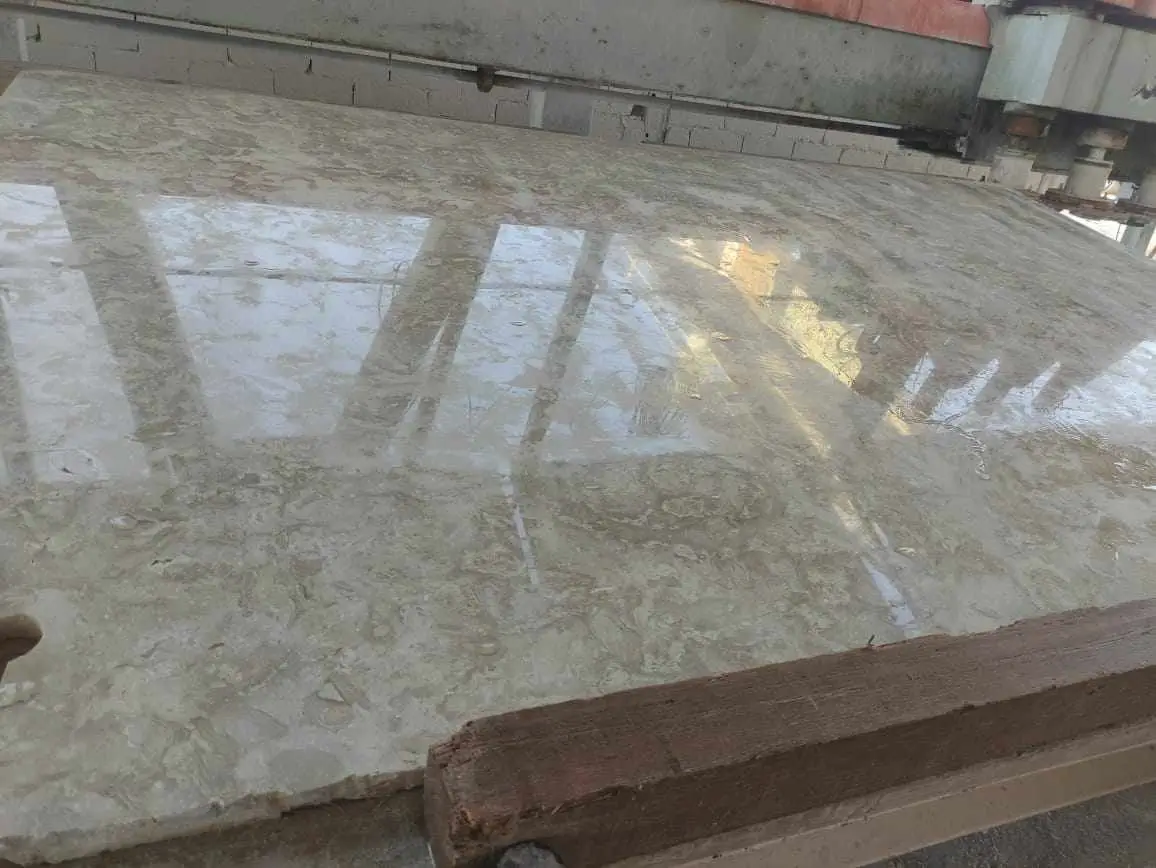
Material procurement timing affects installation quality more directly than most project managers realize. White travertine tile in Arizona is not an off-the-shelf commodity at every supplier — consistent lot availability, especially for the larger format tiles (24×24 and 18×24) that dominate current design preferences, requires coordination with warehouse inventory cycles that may run 4–8 weeks if product needs to be sourced internationally.
Citadel Stone maintains warehouse inventory specifically matched to Arizona project demand, which typically compresses that lead time to 1–2 weeks for most standard sizes and finishes. That availability advantage matters when your installation window is constrained by seasonal timing — late spring and fall represent the optimal installation windows in Arizona, and missing that window into summer heat means compromising installation quality or postponing the project entirely.
Overage calculation for travertine deserves attention. Order a minimum of 10–12% overage above your measured square footage for standard running bond patterns. For diagonal layouts, increase that overage to 15–18% — the additional cut waste is significant. Natural travertine tile has inherent lot-to-lot color and vein variation; installing a mix of multiple lots without blending can create visible banding across your tile field that becomes more pronounced as the material weathers and patinas over time. In Gilbert, where HOA aesthetic standards often require visual consistency across large community common areas, ordering from a single confirmed lot is worth the coordination effort with your supplier before committing to the installation schedule.
- Confirm lot consistency across all pallets before installation begins — open boxes from multiple pallets and view tiles side by side in natural light
- Store tile pallets in shade during delivery staging — direct sun exposure can cause differential thermal expansion that makes individual tiles difficult to handle and increases chipping risk
- Verify truck access routes to your job site before scheduling delivery — forklift clearance at gates and paved surface weight limits affect where pallets can be placed
- Stage material on site a minimum of 48 hours before installation to allow acclimation to local temperature conditions
Before You Specify: Getting the Assembly Right
Installing white travertine tiles in Arizona’s climate is a commitment to a specific set of technical decisions that build on each other — and the quality of the final installation reflects the quality of every choice from subgrade preparation through sealer selection. The most common pattern in failed Arizona travertine installations isn’t one catastrophic error; it’s a series of small compromises, each individually defensible, that combine into an assembly without adequate resilience for the thermal demands the climate places on it year after year.
Your specification needs to account for travertine durability in AZ outdoor spaces across the full performance lifecycle — not just the installation day, but the 20–25 years of service you should reasonably expect when the assembly is properly executed. That means planning for biennial sealer reapplication, seasonal grout inspection, and expansion joint sealant replacement on a 7–10 year cycle as part of the total project cost picture. Providing that long-term framework to clients or homeowners sets realistic expectations and distinguishes a professional installation from a commodity one.
For projects that combine travertine tile fields with pool environments — one of the most common applications across Arizona’s resort and residential sectors — the design decisions at the water’s edge carry additional complexity. 7 White Travertine Pool Designs for Arizona explores that specific application context with design configurations that address both the aesthetic and technical demands of pool-adjacent travertine in the Arizona climate.
The specification decisions made before the first trowel of mortar goes down determine whether you’re building a 10-year installation or a 25-year one. Getting the base right, choosing the correct mortar and grout for tile installation in Arizona desert heat, designing movement accommodation into the layout geometry, and committing to a sealing schedule — these are the variables within your control that define long-term performance. Citadel Stone’s white travertine tiles are prepared for Arizona’s demanding UV and temperature conditions, supporting successful projects in Scottsdale, Flagstaff, and Chandler.