
Code Compliance Comes Before Climate Concerns
Structural failure in oversized patio slab installations almost always traces back to one root cause — ignoring Arizona’s prescriptive base and load requirements before the first stone ever leaves the warehouse. Installing oversized patio slabs in Arizona correctly starts with understanding that the state’s building departments, particularly in incorporated cities, treat large-format stone flatwork differently than standard paver installations. You’re not just laying stone — you’re constructing a load-bearing surface that must meet specific base depth, edge restraint, and drainage standards depending on your jurisdiction.
The Arizona Residential Code references IRC Section R403 and related flatwork appendices that set minimum compacted base requirements for ground-level hardscape. Most inspectors in incorporated areas will expect a minimum 4-inch compacted aggregate base for slabs over 24 inches in any dimension, with some jurisdictions requiring 6 inches for slabs exceeding 36 inches. Verify this with your local municipality — not with a generic contractor who works across state lines and may not know Maricopa County’s specific amendments.
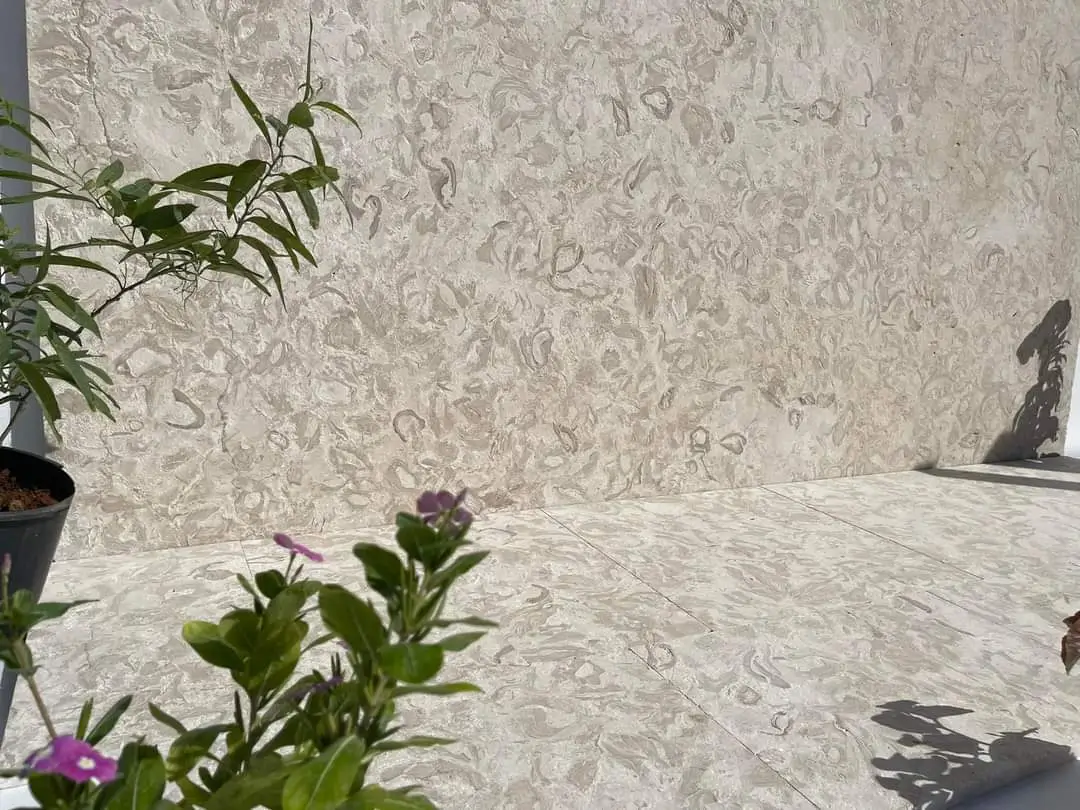
Arizona Soil Behavior Under Large Slabs
Extra large patio slabs in Arizona behave differently than their northern counterparts precisely because of what sits beneath them. Tucson‘s expansive clay soils — common throughout the Tucson basin — swell measurably during monsoon saturation events and contract sharply during the dry season. A 48-by-48-inch slab sitting over untreated native soil in that environment is essentially riding a slow-motion hydraulic press through two distinct cycles annually.
Caliche layers add another variable. In many parts of southern and central Arizona, you’ll hit a caliche hardpan at 12 to 30 inches below grade. Improperly handled caliche creates a perched water table — monsoon moisture can’t drain downward, so it saturates the zone directly under your slab base instead. That saturated base then loses bearing capacity, and large-format slabs, which concentrate point loads at corners rather than distributing them the way smaller pavers do, start to rock and settle unevenly. Large slab installation problems across Arizona frequently begin with this exact soil dynamic going unaddressed at the planning stage, and avoiding slab settling issues in Arizona soil depends entirely on how thoroughly this variable is evaluated before base work begins.
Base Preparation Depth and Compaction Standards
Proper base prep for large patio stones in Arizona isn’t a general recommendation — it’s a structural calculation. Your base system needs to account for the slab’s weight, the anticipated traffic loading, and the soil’s plasticity index. For residential patios using slabs in the 2-inch to 3-inch thickness range, a 6-inch compacted Class II aggregate base (crushed granite or 3/4-inch minus crushed stone) is a defensible minimum for expansive soil zones. On stable decomposed granite native soil, you can sometimes work with 4 inches, but don’t make that call without a soil assessment.
- Compact in two lifts of 3 inches each — single-lift compaction of 6 inches rarely achieves uniform 95% Proctor density throughout
- Verify compaction with a nuclear density gauge or dynamic cone penetrometer before setting bedding sand
- Bedding sand layer should be 1 inch nominal — no more, because oversized slabs need a firm, non-compressible setting bed
- Do not use concrete sand as a bedding layer for slabs over 30 inches — use coarse washed sand or fine crushed aggregate to prevent migration under load
- Scarify and re-compact any areas where moisture content was outside the optimum range during base work
Slab Thickness and Structural Specifications
The thickness specification for extra large patio slabs in Arizona should correlate directly to the unsupported span between bearing points. A 36-by-36-inch slab with no intermediate support under its center carries bending stress in both directions simultaneously. At 1.25-inch nominal thickness — common in imported product — that slab will crack under modest point loading, particularly at corners where setting bed voids are most likely to exist.
For slabs 30 inches and larger, spec a minimum 1.5-inch thickness. For slabs 48 inches and larger, move to 2 inches minimum. Scottsdale‘s luxury residential market has driven demand for 60-by-60-inch format slabs in recent years, and those installations require either a 3-inch stone thickness or a continuous mortar-set system over a concrete substrate — there’s no in-between option that performs reliably. At Citadel Stone, we consistently advise specifiers on this thickness-to-span relationship because it’s the single most common source of extra large stone patio failures that AZ homeowners face after the first full monsoon season.
Edge Restraint and Perimeter Anchoring
Edge restraint for oversized slabs isn’t optional — it’s structural. The challenge is that large-format slabs generate significantly more lateral force per unit length at perimeter edges than standard 12-by-12-inch pavers do. A single slab shifting outward by even a quarter inch creates a visible offset that propagates across your entire field pattern.
- Concrete haunching at perimeter edges — minimum 6-inch wide by 8-inch deep — provides superior lateral resistance compared to plastic restraint systems for large-format applications
- Steel L-angle edge restraint anchored at 12-inch spacing works adequately for slabs up to 36 inches but should be avoided for larger formats on expansive soil
- Pin spacing for any spike-based system should be reduced from the standard 24-inch recommendation to 12 inches when working with slabs over 30 inches
- Perimeter haunching should be poured after slab installation — not before — to ensure restraint engages the actual slab edge position
Avoiding slab settling issues in Arizona soil requires treating edge restraint as a load transfer component, not just an aesthetic border. The moment perimeter integrity fails, differential settlement accelerates in every adjacent slab.
Joint Spacing and Thermal Movement
Arizona’s diurnal temperature swings — particularly in higher-elevation areas — create thermal expansion cycles that standard joint specifications don’t account for. The surface temperature of a dark-toned natural stone slab in direct Phoenix-area sun can reach 155°F to 165°F midday, then drop to ambient temperature overnight. That thermal differential drives dimensional change across the slab face.
For natural stone with a thermal expansion coefficient around 4.5 to 5.5 × 10⁻⁶ per °F, a 48-inch slab undergoing a 100°F temperature swing expands approximately 0.025 to 0.031 inches. Across a large patio field with 20 or more slabs, that cumulative movement needs somewhere to go. Maintaining minimum 3/8-inch joints between slabs 36 inches and larger — filled with polymeric sand that has genuine flexibility rather than rigid set — is essential. Installing oversized patio slabs in Arizona correctly means accounting for this thermal movement in your joint design from day one, not discovering the problem when slabs start cracking against each other in year two.
You’ll also want to review the Citadel Stone slabs for Arizona installs product specifications, which include thermal expansion data and recommended joint widths calibrated for Arizona climate zones.
Drainage Slope and Surface Water Management
The structural argument for proper drainage often gets lost in conversations about aesthetics, but in Arizona it’s directly tied to slab longevity. Your patio surface must maintain a minimum 2% cross-slope (approximately 1/4 inch per foot) toward a defined drainage path. That standard is non-negotiable in monsoon country, where 1 to 2 inches of rain can fall in under an hour.
Ponding water under oversized slabs creates two compounding problems. First, it softens the bedding layer and allows slab movement that disrupts the entire surface plane. Second, fine soil particles migrate upward through joint sand during draining events — a process called pumping — which gradually creates voids beneath slab corners. Flagstaff installations face this at an accelerated rate due to freeze-thaw cycling on top of the monsoon season, meaning drainage slope there is critical for both moisture management and frost heave prevention. These are precisely the conditions where large slab installation problems across Arizona become compounded by environmental factors that proper drainage slope directly mitigates.
- Establish finish grade for drainage before any base compaction begins — retrofitting slope after the base is set requires costly rework
- Design drainage outlets with capacity for 2-inch-per-hour rainfall intensity — undersized outlets back up and pond
- Avoid draining patio water toward foundation walls or property lines — both create code violations and neighbor disputes
- French drain perimeter systems work well when combined with large-format patio slabs on sites with limited natural fall
Lifting, Handling, and Setting Large Slabs
The logistics of installing oversized patio slabs correctly extend well beyond the base prep. A 48-by-48-inch natural stone slab at 2-inch thickness can weigh 200 to 240 pounds — well beyond safe two-person manual handling. Truck delivery should be planned with mechanical offloading in mind, whether that’s a boom truck, lull, or at minimum a flatbed with a pallet jack capable of navigating to the installation zone.
Setting technique matters as much as base preparation. Large slabs require a full mortar or sand contact across the entire underside — no high spots or voids at corners. Field experience shows that slabs set with less than 90% bedding contact will rock and crack within two to three seasons regardless of how good your base is. Verifying contact percentage by lifting a just-set slab before any load is applied and checking the sand or mortar transfer pattern on the slab’s underside is a reliable quality control step. At Citadel Stone, we recommend clients confirm warehouse stock availability at least two weeks before installation begins — truck scheduling and crane equipment availability often takes longer to arrange than the stone delivery itself. Extra large stone patio failures that AZ homeowners face are frequently traced back to rushed logistics decisions that compromised setting quality.
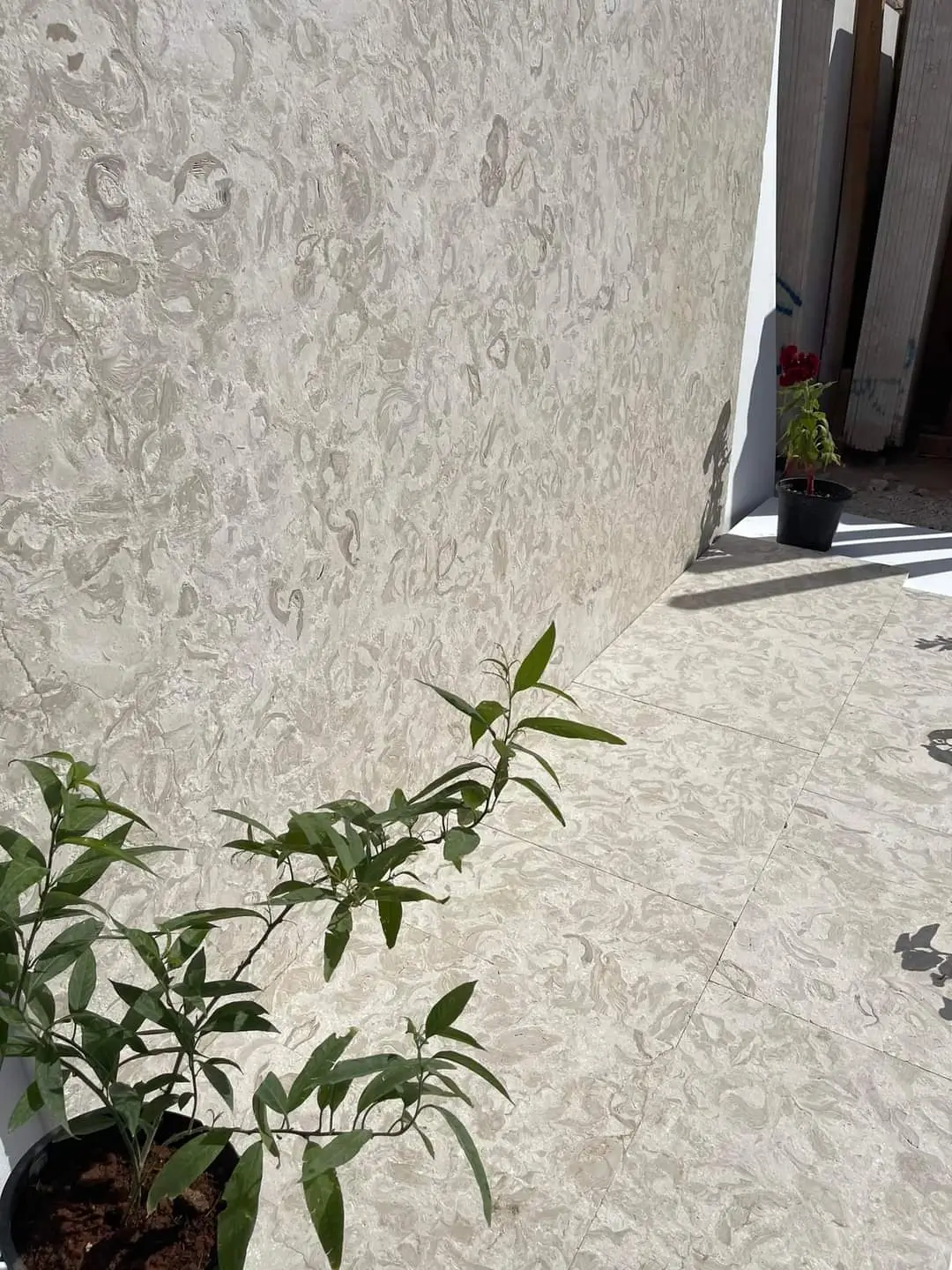
Sealing Protocols for Large-Format Natural Stone
Sealing protocols for extra large patio slabs in Arizona differ from standard concrete maintenance because natural stone’s open pore structure responds differently to penetrating sealers. Penetrating silane-siloxane sealers — applied at a 200 to 300 square foot per gallon rate — provide the best combination of water repellency and vapor permeability. Avoiding film-forming sealers is critical, since they trap moisture beneath the surface of slabs that sit over a damp base after monsoon events.
- Apply sealer to dry stone only — surface moisture content should be below 4% before application
- Allow new installations to cure for a minimum of 28 days before sealing if set in mortar
- Reapply penetrating sealers every 24 to 36 months — Arizona’s UV intensity degrades sealer chemistry faster than most manufacturer schedules account for
- Test sealer absorption using the water bead test before each reapplication — if water still beads strongly, the previous coat is still active
- Avoid solvent-based sealers on light-colored stone in full-sun Arizona exposures — they can darken the stone tone permanently
What Defines a Correctly Installed Oversized Patio in Arizona
Installing oversized patio slabs in Arizona correctly means reconciling code requirements, soil behavior, thermal movement, and drainage geometry before a single slab is unloaded. The projects that hold up for 20-plus years share a common profile — verified base compaction, code-compliant base depth, full bedding contact, proper joint width, defined drainage slope, and a sealing schedule maintained through Arizona’s aggressive UV environment.
The details that separate a 10-year installation from a 25-year one aren’t mysterious — they’re discipline. Your base prep report, your compaction verification, your joint width specification, and your drainage plan should all be documented before the truck arrives. Projects that skip documentation tend to skip the underlying steps as well. Proper base prep for large patio stones in Arizona and thorough pre-installation planning are what consistently separate successful long-term installations from those that begin failing after the first monsoon season. As you extend your Arizona hardscape planning beyond the patio surface, How to Choose Front Driveway Pavers in Arizona: Buyer’s Guide addresses complementary stone specification decisions for the broader property that follow similar structural principles.
For homeowners in Yuma, Gilbert, and Peoria, Citadel Stone’s extra large patio slabs are selected for low water absorption rates, which limits the expansion stress that causes settling problems in Arizona’s shifting soil conditions.