
Timing your granite brick installation in Arizona is just as critical as the material spec itself — and it’s the variable that separates a pathway that lasts 25 years from one that starts showing joint failure within five. Installing granite bricks Arizona pathways demands that you work with the desert’s thermal calendar, not against it. The base layers, the setting bed, and the jointing compound all behave differently depending on whether you’re pouring at 7 a.m. in October or at noon in July — and those differences aren’t minor.
Why Seasonal Timing Defines Installation Success
Arizona doesn’t give you a uniform installation window the way temperate climates do. You have roughly two optimal seasons — a fall-winter window from late October through February, and a narrow spring window that closes fast in April when ground temperatures start climbing ahead of air temperatures. The fall-winter window is your best opportunity for base compaction and mortar setting because soil temperatures stay below 85°F, and curing compounds don’t flash off before achieving adequate bond strength.
The spring window is trickier than most contractors appreciate. Air temperatures in March can feel comfortable, but if you’re working in Mesa on a southeast-facing slope, the substrate can already be reading 95–100°F by mid-morning. That thermal load accelerates moisture loss in your setting bed, shrinking your workable time from 90 minutes down to 35 minutes. You need to recalibrate your mix water and your pace accordingly.
- Late October through February: optimal curing temperatures, full workday available for installation
- March through mid-April: workable with morning-start discipline and accelerated scheduling
- Mid-April through mid-October: avoid mortar-set applications entirely; dry-lay with polymeric sand is the viable alternative
- November through January: best window for base compaction and final leveling before spring use
Base Preparation for Desert Soil Conditions
Your base is where the project lives or dies, and in Arizona’s expansive soils, the standard 4-inch compacted aggregate base that works fine in the Midwest is genuinely insufficient. You’re targeting a minimum 6-inch compacted Class II aggregate base for residential pathways, with 8 inches in areas with sandy or silty native soil. The key metric isn’t just thickness — it’s compaction to 95% Modified Proctor density, verified with a nuclear density gauge rather than eyeballed.
Projects in Gilbert frequently encounter expansive clay subsoils that swell 3–5% volumetrically after monsoon saturation. That movement translates directly into surface displacement if your base isn’t properly isolated. Geotextile fabric between the native soil and your aggregate layer isn’t optional here — it’s what keeps fines from migrating upward through 18 months of thermal cycling and monsoon infiltration.
- Excavate to a minimum depth of 9 inches below finished grade (6-inch base, 1-inch sand bed, 2-inch brick)
- Install geotextile fabric before placing aggregate to prevent subgrade contamination
- Compact in 3-inch lifts — never dump 6 inches and compact once
- Test compaction density before placing sand bed — don’t guess
- Allow newly compacted base to rest 24 hours before placing setting bed in summer conditions
Selecting Granite Bricks for Arizona’s Climate Demands
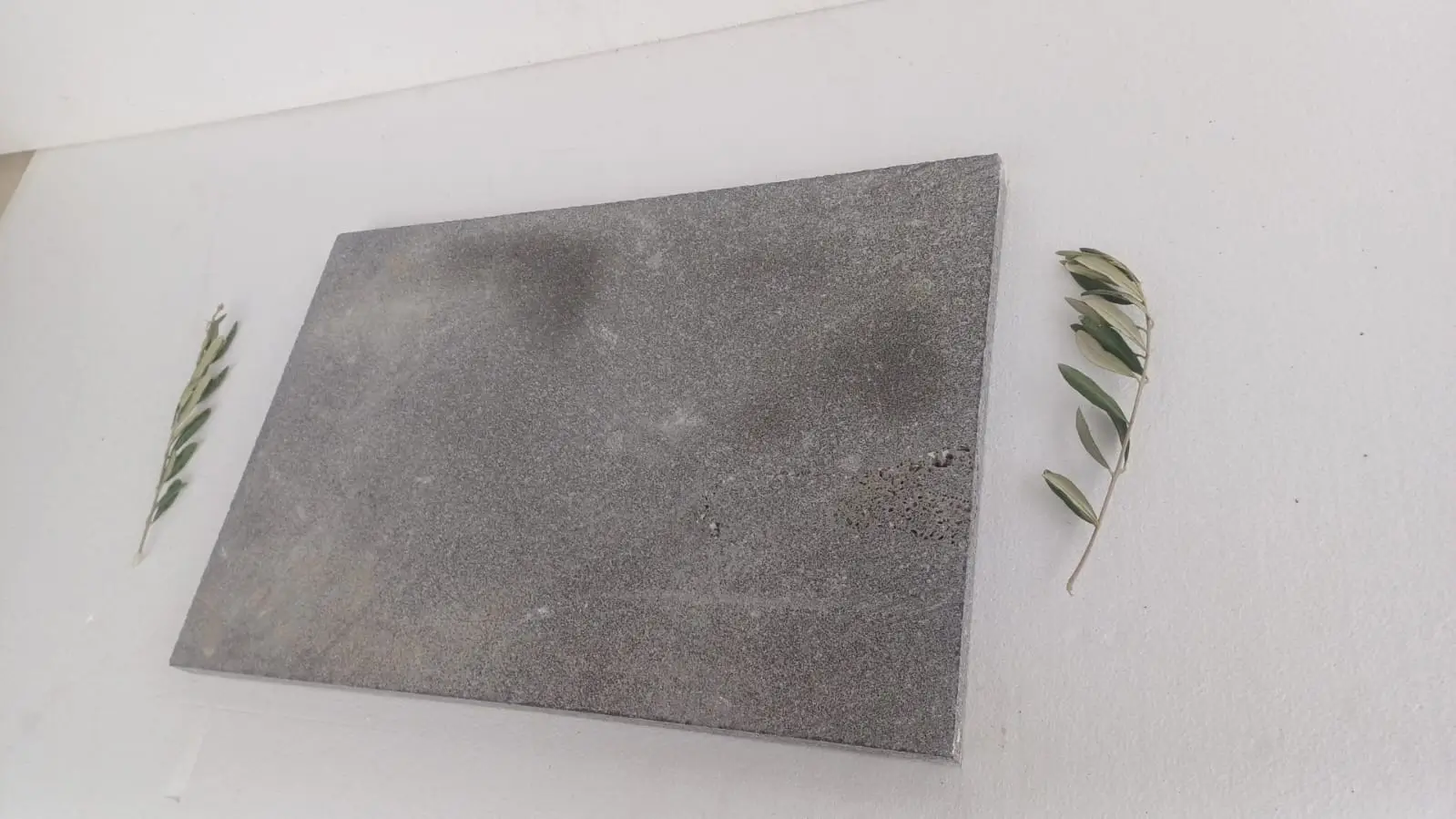
Not all granite performs equally in desert conditions, and the differences matter across a 20-year service window. You want granite bricks with a water absorption rate below 0.4% (ASTM C97 standard) — this is the threshold that separates granite that handles monsoon infiltration and rapid drying cycles without surface spalling from granite that starts delaminating after three or four seasons. Dense, fine-grained granite in the 2-inch nominal thickness range handles the point loads and thermal expansion of Arizona pathways best.
Thermal expansion in granite runs approximately 4.4–5.0 × 10⁻⁶ per °F. Across a typical Arizona summer swing from 60°F overnight to 115°F surface temperature, a 12-inch granite brick can expand nearly 0.003 inches. That sounds small, but multiply it across a 40-foot pathway with tight joints and no expansion accommodation, and you’re looking at cumulative pressure that will crack units or cause edge lifting. Your joint spacing and the flexibility of your jointing compound need to account for this.
At Citadel Stone, we source granite bricks from quarries where we’ve verified consistent density and surface finish across production batches — a detail that matters when you’re installing a 200-square-foot pathway and can’t afford color or thickness variation mid-project. Checking Arizona granite bricks from Citadel Stone before committing to a supplier lets you compare thickness tolerances and surface calibration specs side by side.
Morning vs. Afternoon Scheduling: The Timing Detail That Changes Everything
Here’s what most installation guides skip entirely: the hour you start work in Arizona determines whether your setting bed and polymeric sand perform as specified or as field-compromised materials. During any period from late April through September, you need to be setting bricks before 7:30 a.m. and completing jointing work before 10 a.m. After that window, surface temperatures climb fast enough to affect adhesive performance and polymeric sand activation. Following a reliable desert-rated granite brick laying guide means scheduling is treated as a non-negotiable technical variable, not a convenience preference.
Polymeric sand requires moisture activation to trigger the binding polymers — but in afternoon conditions with surface temps exceeding 120°F and humidity below 10%, the water you spray for activation evaporates before it can penetrate the joint fully. You end up with a surface crust that looks set but hasn’t bonded adequately at depth. The fix isn’t more water — it’s earlier scheduling and pre-dampening the substrate before you begin jointing. In the fall-winter installation window, afternoon work is perfectly viable and actually benefits from the slightly warmer afternoon temperatures that help polymeric sand cure more completely.
- Summer schedule: begin base and brick placement by 6:30 a.m., complete all jointing by 10 a.m.
- Fall-winter schedule: full workday available — start at 8 a.m., complete jointing by 3 p.m. for adequate curing light
- Spring schedule: start by 7 a.m., monitor substrate temp every 90 minutes with an infrared thermometer
- Never activate polymeric sand when substrate temp exceeds 110°F — reschedule to early morning
- Pre-dampen granite brick surface 15 minutes before jointing to reduce flash evaporation
Setting Bed Options and Seasonal Adhesive Behavior
The setting bed choice for a desert granite brick installation is more nuanced than the standard spec sheet suggests. For dry-lay installations — the preferred method during summer — a 1-inch screeded sand bed over compacted aggregate delivers the thermal flexibility you need. Rigid mortar beds in summer conditions introduce a thermal mismatch problem: the mortar cures at a faster rate on the sun-exposed face than at depth, which creates internal stress that can crack the mortar bed within 12–18 months.
For mortar-set applications, restrict your installation to the November through February window when ambient temperatures stay between 50°F and 80°F during working hours. In this window, a Type S mortar bed with a water-to-cement ratio held tight at 0.45–0.50 provides adequate workability without excessive shrinkage. Push the w/c ratio above 0.55 in an attempt to extend workability, and you’ll lose compressive strength — dropping from the target 1,800 PSI to as low as 1,200 PSI, which isn’t adequate for pedestrian pathway loading over expansive subsoils.
- Dry-lay with polymeric sand: viable year-round with proper scheduling discipline
- Mortar-set bed: restrict to November–February window only
- Epoxy-based setting compounds: acceptable in spring if substrate temp stays below 95°F during application
- Never use standard Type N mortar in Arizona — Type S minimum for thermal and load demands
Step-by-Step Installation Sequence for Arizona Pathways
The sequence of operations matters in desert installs because you’re managing moisture loss at every stage. The granite brick installation steps in Arizona that produce consistent long-term results are organized around the fall-winter optimal window, where you have the most time flexibility and the most forgiving curing conditions.
Start with layout and excavation at least two days before your planned brick placement. This gives the exposed subgrade time to equilibrate — freshly excavated soil has higher moisture content that will compress differently under your compaction equipment. Your pathway layout should slope a minimum of 1% and ideally 1.5% transversely to drive water away from structures and prevent ponding at granite joints during monsoon events. Cross-slope is a non-negotiable design element for any outdoor granite brick walkway across Arizona, not an afterthought that gets addressed after problems appear.
- Day 1: Excavate, install geotextile fabric, place and compact first 3-inch aggregate lift
- Day 2: Place and compact second 3-inch aggregate lift, verify density, establish final grade
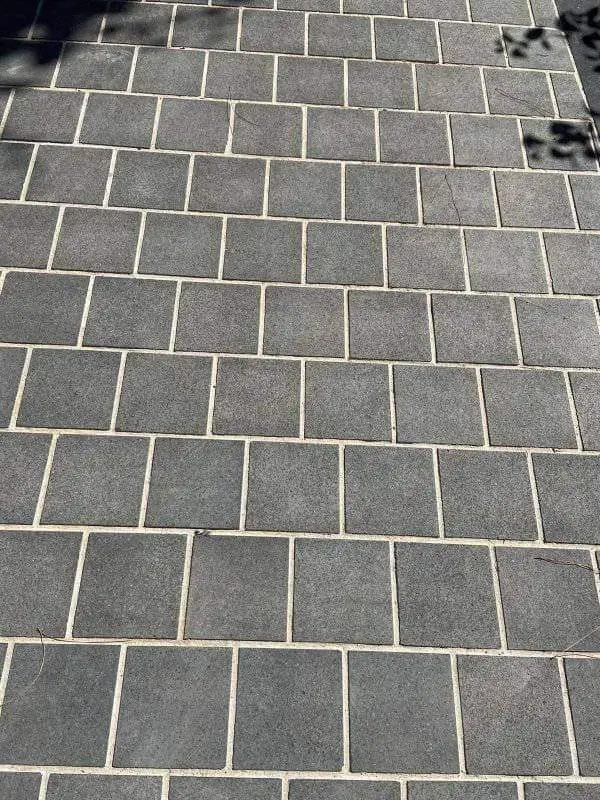
- Day 3: Screed 1-inch sand setting bed, place granite bricks with 3/16-inch minimum joint spacing
- Day 4: Sweep polymeric sand into joints, compact bricks with plate compactor and rubber pad, activate sand
- Day 5 (optional): Apply penetrating sealer if surface finish requires protection
The 3/16-inch minimum joint spacing is wider than the 1/8-inch you’ll see in general installation guides. That extra space accommodates thermal expansion without generating joint pressure while still providing adequate polymeric sand depth for binding stability. Verify warehouse stock of your selected granite brick before scheduling your installation days — last-minute substitutions with a different batch can introduce thickness variations that throw off your screeded sand bed level.
Monsoon Season: Why July and August Aren’t Installation Months
Arizona’s monsoon pattern — typically July 15 through September 30 — creates installation conditions that undermine pathway performance in ways that aren’t immediately visible. The problem isn’t rain itself. The problem is the moisture cycle: bone-dry soil, rapid saturation from intense short-duration storms, then immediate return to extreme drying. A setting bed placed in July that gets hit by a monsoon cell 36 hours after installation hasn’t achieved adequate strength to resist the hydraulic pressure of water infiltrating through open joints.
The natural stone brick pathway Arizona homeowners trust for long-term performance is one scheduled entirely around the monsoon. Plan your installation for November through February, use the spring window if your project timeline requires it, and treat July through mid-September as your planning and ordering phase rather than your building phase. Use this time to confirm truck delivery logistics, finalize your pathway dimensions, and receive material at the warehouse staging area so you’re ready to move immediately when fall conditions arrive.
In Chandler, where flat terrain creates drainage challenges during monsoon events, pathway cross-slope and edge drainage details are even more important than in elevated areas. Building proper drainage geometry into your design during the planning phase means your installation — whenever it happens — handles Arizona’s precipitation extremes without joint washout or surface displacement.
Sealing and Long-Term Maintenance for Arizona Granite Pathways
Granite’s low porosity means sealing is protective rather than structural — but in Arizona’s UV environment, an unsealed granite surface will experience surface micro-oxidation that alters finish appearance over 5–8 years. A penetrating silane-siloxane sealer applied within 30 days of installation and reapplied every 3–4 years in low-desert climates gives you surface protection without altering the natural texture or slip resistance of the granite.
Apply sealer only in the cooler months — October through March — when substrate temperatures stay below 85°F. Sealer applied to a hot granite surface flashes off before adequate penetration, leaving a surface film rather than a genuine penetrating bond. You’ll know you’ve applied it correctly when you see water bead at a contact angle greater than 90° — anything flatter indicates insufficient penetration depth. Any thorough desert-rated granite brick laying guide treats sealer timing as part of the installation sequence itself, not an optional add-on performed whenever it’s convenient.
- Initial seal: 30 days post-installation, October–March only
- Reapplication interval: every 3–4 years in low-desert zones, every 2–3 years if adjacent to pool decks or irrigation systems
- Product type: penetrating silane-siloxane, not topical film-forming sealer
- Surface temp at application: below 85°F — verify with infrared thermometer before starting
- Post-seal cure window: 48 hours before foot traffic, 72 hours before heavy furniture placement
Installing Granite Bricks in Arizona: The Bottom Line on Timing and Technique
Installing granite bricks Arizona pathways successfully comes down to one discipline most projects neglect: scheduling your work around the desert’s thermal calendar rather than around project convenience. Your material can perform for 25 years or more — granite is inherently durable enough — but only when the base is prepared in stable temperature conditions, the setting bed cures without moisture competition from heat, and the polymeric sand activates properly. Every shortcut taken on timing creates a compounding problem that shows up 18–36 months after installation when the pathway looks established but joint failures start appearing.
Every outdoor granite brick walkway across Arizona that holds up decade after decade shares a common characteristic: it was installed in the fall-winter window, started before 8 a.m. on any warm-weather days, and used setting materials matched to the season’s actual conditions rather than the spec sheet’s ideal conditions. The granite brick installation steps in Arizona that separate durable results from premature failures aren’t complicated — they’re disciplined. For projects where budget is also a planning factor, Black Granite Paving Cost in Arizona: Buyer’s Guide covers the pricing variables across Arizona granite applications — a useful reference when scoping the full cost of your project alongside material and labor decisions. Homeowners in Tucson, Mesa, and Chandler rely on Citadel Stone granite bricks, each cut to consistent thickness to support stable base compaction in Arizona’s shifting desert soils.