

Base failure in cobblestone installations rarely comes from bad stone — it comes from underestimating what Arizona’s terrain demands before a single paver gets set. Installing cobblestone surfaces in Arizona means you’re working across a state where elevation can swing from 100 feet above sea level in the Yuma basin to over 7,000 feet in the White Mountains, and every foot of that range changes your drainage geometry, your compaction requirements, and your tolerance for error. The step-by-step process that works on a flat Phoenix lot will fail spectacularly on a sloped Tucson hillside if you haven’t adjusted your base engineering accordingly.
Understanding Arizona Terrain Before You Break Ground
Arizona’s topographic diversity is the first thing you need to internalize when planning a cobblestone installation. The state isn’t simply a flat desert — it’s a layered landscape of alluvial fans, volcanic basalt shelves, caliche hardpan, and loose sandy washes, all of which behave differently under load and drainage stress. Your site assessment has to account for this before you touch a compactor.
The assigned slope gradient on your site directly determines how you handle base depth and drainage outlet positioning. On grades steeper than 3%, you’ll need to engineer lateral drainage channels into your sub-base rather than relying on sheet drainage alone. On essentially flat desert plains, the challenge reverses — you need positive slope built into the installation itself, or water will pool at the lowest cobblestone joints and begin undermining the bedding layer within two to three monsoon seasons.
- Sites with slopes between 1–3% can use standard crown drainage with a minimum 1.5% cross-slope designed into the surface
- Slopes from 3–8% require interceptor drains at regular intervals — typically every 12 to 15 linear feet depending on rainfall intensity
- Grades above 8% demand full geotextile fabric installation beneath the aggregate base to prevent lateral migration of sub-base material
- Flat sites (below 1% natural grade) need deliberate manufactured slope with a minimum 2% grade to guarantee drainage
- Caliche layers, common across Tempe and the east Valley, can act as an impermeable barrier — you must either fracture through it or install perforated drainage pipe at the caliche interface
Site Preparation and Excavation Depth for Cobblestone in Arizona
Excavation depth is where most Arizona cobblestone projects go wrong. The standard residential guideline of 6 to 8 inches of excavation applies to flat, moderate-climate sites — not to desert terrain with dramatic elevation changes and expansive soils. For Arizona desert cobblestone base preparation, your excavation target needs to be driven by the site’s specific soil classification and the expected load, not by a generic chart.
In low desert zones like Phoenix, you’re frequently dealing with sandy loam or decomposed granite that compacts well but drains quickly — sometimes too quickly, causing base migration if you don’t use a properly graded aggregate. At higher elevations where clay content increases, that same drainage speed drops significantly, and you’ll need to add a drainage aggregate layer below your compacted base to prevent hydrostatic pressure from building under the cobbles during monsoon events.
- Pedestrian-only installations: minimum 6 inches of compacted aggregate base after a 2-inch sand bedding layer
- Residential driveway applications: 8 to 10 inches of compacted base with a sub-base layer of 1.5-inch clean crushed stone for drainage
- Sloped hillside installations: add 2 inches to standard depth requirements and incorporate anchor courses at grade-change intervals
- Sites with expansive clay soils: remove and replace the top 12 inches with engineered fill before any aggregate placement begins
- Caliche hardpan below 18 inches can remain in place — fracture the surface layer to allow drainage penetration and use it as a natural load-bearing sub-base
The cobblestone installation steps for Arizona yards differ from other states because your excavation also has to account for root intrusion from desert vegetation. Palo verde and mesquite root systems are aggressive and will find any soft spot in a poorly prepared base. Using a root barrier fabric on the excavation walls isn’t overkill — it’s standard practice on any site with existing mature landscaping within 15 feet of the installation zone.
Base Aggregate Selection and Compaction Standards
The aggregate you choose for your base layer is the single most consequential decision in the entire cobblestone installation process. In Arizona, you have access to excellent locally quarried decomposed granite, crushed limestone, and recycled concrete aggregate — each performs differently depending on your site’s drainage requirements and load expectations.
Crushed limestone aggregate in the 3/4-inch minus gradation consistently outperforms decomposed granite in high-drainage applications because it compacts to a higher density without bridging. Decomposed granite is adequate for pedestrian patios on level ground, but on slopes or under vehicle traffic, it tends to ravel at the edges and create voids beneath the bedding layer over time. Your compaction target should reach 95% Modified Proctor density — verified with a nuclear density gauge or sand cone test, not just visual inspection.
- Use 3/4-inch minus crushed aggregate for all vehicular applications — avoid round-stone gravel that can shift under point loads
- Compact in lifts no greater than 4 inches — compacting a full 8-inch base in one pass leaves the lower portion under-compacted regardless of how much effort you apply at the surface
- Moisture condition your aggregate before compaction — Arizona’s dry air will pull moisture out of your base material quickly, which significantly reduces compaction efficiency
- Allow 24 hours between compaction passes on clay-heavy soils to let pore water pressure dissipate before the next lift
- Verify final compaction before placing bedding sand — a plate compactor run over the finished base should produce no visible deflection
For projects following the natural stone paving process across Arizona, at Citadel Stone we recommend confirming your aggregate source before the project starts — not all local suppliers maintain consistent gradation, and inconsistent aggregate is one of the primary causes of long-term base settlement you won’t see until 18 months post-installation.
Bedding Layer Setup and Cobblestone Placement Technique
Your bedding layer is the precision interface between the compacted aggregate base and the cobblestone surface. For installing cobblestone surfaces in Arizona, this layer needs to be coarse concrete sand — not mason sand, not decomposed granite, and definitely not the fine play sand that some contractors substitute to cut costs. Coarse concrete sand provides the particle interlock that keeps cobbles from rocking or settling unevenly once the installation is complete.
Screed your bedding sand to a consistent depth of 1 inch — not 1.5 inches, not 2 inches. Thicker bedding layers feel forgiving during installation but they’re actually a long-term liability because they allow more vertical movement under load before the stone fully seats. Set your screed pipes 10 feet apart and pull a straight screed board across them, then remove the pipes and fill the channels before placing stone. This technique keeps your bedding depth consistent across the entire installation area.
- Never compact or wet the bedding sand layer before placing cobblestones — this is a critical distinction from concrete paver installation
- Place cobblestones directly from the pallet using a consistent laying pattern — fan, herringbone, or running bond each handle slope-induced lateral stress differently
- Herringbone pattern at 45 degrees to slope direction provides the best resistance to creep on grades above 3%
- Maintain joint widths between 3/8 and 5/8 inch — tighter joints reduce jointing sand performance, wider joints allow bedding sand to migrate upward through the joint
- Use rubber mallets, not metal hammers — metal contact on natural cobblestone can fracture the surface crystal structure, especially in thermally cycled desert environments
Drainage Engineering for Sloped and Elevated Arizona Sites
What separates a cobblestone installation that looks good at year one from one that still performs at year fifteen is how well you engineered the drainage system before a single cobble was placed. Arizona’s monsoon season delivers intense, short-duration rainfall — sometimes 1.5 to 2 inches per hour — and your drainage system has to handle peak flow without saturating the base or undercutting the downslope edge of the installation.
For hillside installations, the standard approach is to design a French drain or perforated pipe system along the upslope edge of the cobblestone area to intercept sheet flow before it enters the installation zone. This is particularly important in elevated terrain around Tucson, where the Santa Cruz River basin topography creates concentrated runoff channels that can direct far more water toward a residential installation than the surface area of the paved zone would suggest.
- Install a 4-inch perforated pipe along the uphill edge, wrapped in filter fabric, and connected to a daylight outlet at least 10 feet downslope of the installation perimeter
- Slope your perforated collector pipe at a minimum 1% gradient toward the outlet — insufficient pipe slope will allow sediment accumulation that blocks drainage within 3 to 5 years
- On long slope runs exceeding 20 feet, install a mid-slope catch basin to collect any surface water that breaches the cobblestone surface joints
- Edge restraints on the downslope perimeter must be anchored with 12-inch spikes at 12-inch centers — standard 18-inch spacing is insufficient for slopes with hydrostatic loading behind the installation
- The outlet location for any drainage system must discharge at grade, not into the landscape — piping water into a planting bed simply transfers your drainage problem to the plant root zone
For projects where you’re sourcing materials and coordinating logistics, Arizona cobblestone supply from Citadel Stone offers a reliable starting point for both material selection and delivery scheduling, particularly important when your installation timeline is tied to drainage system completion.
Grade Management Across Elevation Changes and Transitions
Managing grade transitions in cobblestone installations requires you to think about the installation in segments, not as a single continuous surface. Every time your grade changes by more than 2%, the drainage geometry of that segment changes, and the edge restraint requirements, joint spacing, and compaction approach all need to be adjusted accordingly. Treating a terraced hillside installation as a single-depth, single-drainage-plan project is a reliable path to early failure.
Step-down installations on slopes above 8% should use a riser course of cobblestone set in mortar at each grade transition. These mortar-set anchor courses prevent the entire downslope installation from creeping when hydrostatic pressure builds during wet weather. The mortar-set section doesn’t need to span the full width — a 12 to 16-inch anchor course every 4 to 6 vertical feet is sufficient to stabilize the dry-set cobblestones between transition points.
- Document your grade changes at 5-foot intervals during site survey — a simple string line and line level is adequate for residential projects
- Establish a finished surface elevation benchmark at the highest point of the installation and work downslope — fighting upward against grade wastes material and creates drainage conflicts
- Account for the visual effect of grade change on joint alignment — herringbone and fan patterns can appear to shift direction on steep slopes, which may require layout adjustments for aesthetic consistency
- On long slope runs, plan your truck delivery access carefully — a fully loaded truck can’t maneuver on grades above 10%, and you may need to stage material at a lower access point and hand-carry or use a wheelbarrow to the installation zone
- Post-installation compaction with a plate compactor should follow the slope direction, working downhill — working across slope on steep grades can shift unset cobblestones laterally
Jointing Sand, Surface Finishing, and Sealing for Arizona Conditions
Polymeric sand is non-negotiable for Arizona cobblestone installations. Standard silica jointing sand works adequately in temperate climates, but Arizona’s combination of intense UV exposure, thermal cycling, and monsoon saturation will wash and erode unbound sand joints within two to three seasons. Polymeric sand activates with moisture and cures into a flexible, weed-resistant binder that maintains joint integrity across Arizona’s extreme temperature swings.
The heat-resistant stone paving that AZ homeowners trust most tends to be natural stone with lower absorption rates — granite cobblestones and basalt pavers absorb less than 1% by weight and resist the thermal expansion cycling that causes polymeric sand joints to crack in higher-absorption stone types. For Phoenix installations where surface temperatures routinely exceed 150°F on dark stone, specifying a lighter-colored cobblestone isn’t just an aesthetic choice — it’s a sealing performance decision, because lighter stones cycle through a narrower temperature range and stress the joint material less aggressively.
- Apply polymeric sand in two passes — the first fill and compact, then blow off excess with a leaf blower before the second fill
- Activate polymeric sand with a fine mist, not a direct stream — a hard water stream will dislodge the sand from joints before it can cure
- Allow polymeric sand to cure for a minimum of 24 hours before any foot traffic and 72 hours before vehicle traffic — Arizona’s heat accelerates surface cure but can leave the interior of deeper joints under-cured
- Sealing cobblestone with a penetrating impregnator sealer — not a topical film sealer — protects against staining without altering the stone’s natural texture or creating a slip-hazard surface film
- Reapply sealer every 3 to 5 years depending on traffic and UV exposure — warehouse-stored sealer products have a shelf life of approximately 2 years once opened, so don’t stockpile excess quantities
Material Sourcing, Delivery Logistics, and Project Scheduling
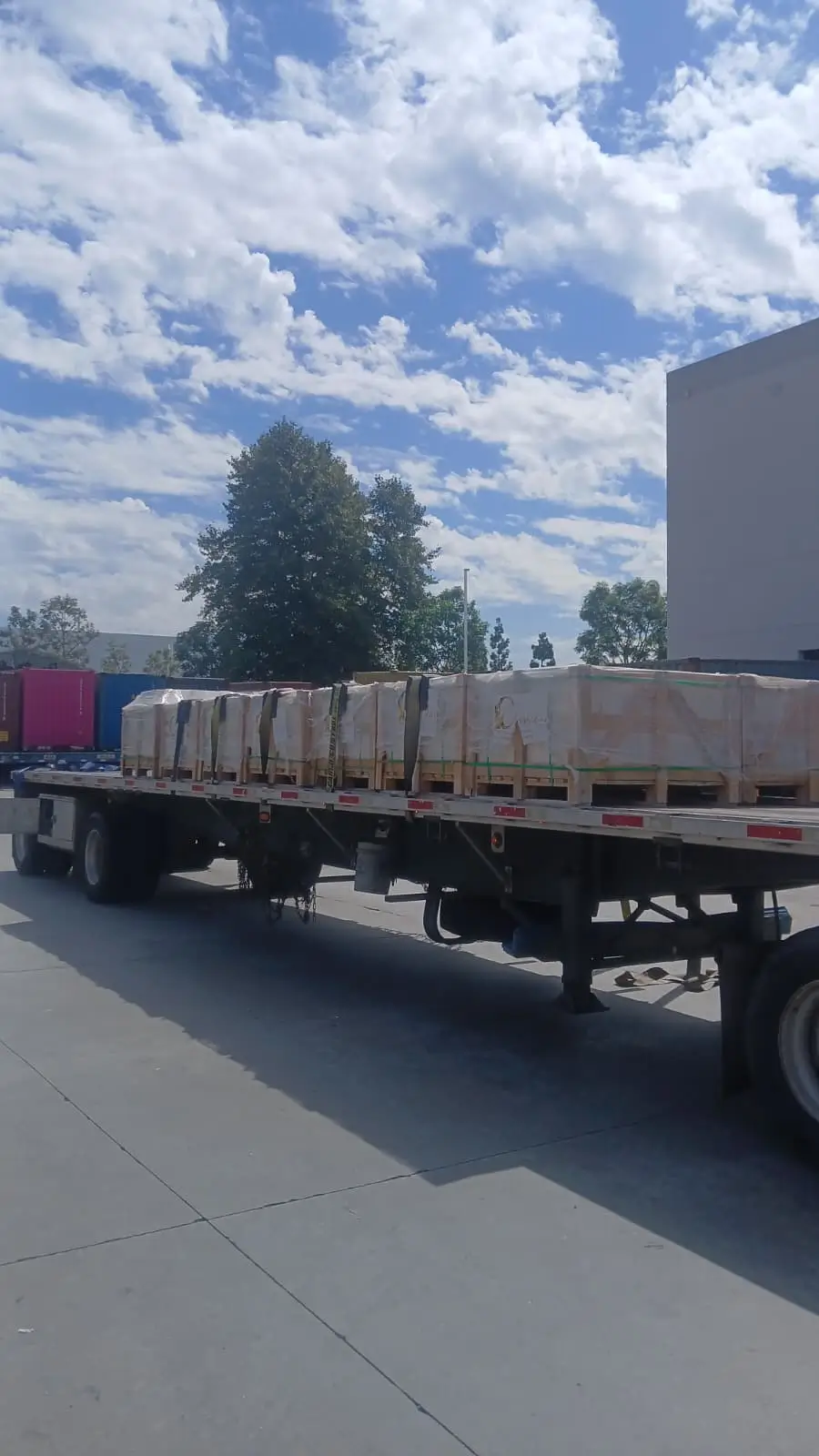
Logistics planning for cobblestone installations in Arizona is more complex than most homeowners anticipate, particularly for hillside or elevated terrain projects where truck access is constrained. Natural cobblestone is dense material — a standard pallet runs between 2,800 and 3,400 pounds depending on stone type and thickness — and delivery truck access to your site directly affects how you sequence the installation.
Standard flatbed or boom truck delivery works well for accessible flat sites, but elevated terrain often means the truck can only reach the street or a staging area, not the installation zone itself. Factor material relocation labor into your project budget if your site has grade changes that prevent direct truck delivery to the work area. Coordinating with your supplier’s warehouse team before scheduling delivery will help you understand what equipment they’re using and what site access dimensions are required — a detail that catches many projects off guard on delivery day.
- Order a 10% overage on your square footage calculation to account for cuts, pattern adjustments, and color variation sorting
- Verify warehouse stock availability for your specific cobblestone type before finalizing your installation start date — special orders for less-common stone types can add 4 to 6 weeks to your timeline
- Schedule delivery for early morning in summer months — unloading cobblestone pallets in direct afternoon sun significantly increases heat stress on laborers and accelerates moisture loss from bedding sand before placement
- Inspect each pallet at delivery for consistent sizing — natural cobblestone has acceptable dimensional variation, but pallets with high variation will require more time to sort and lay consistently
- Stage pallets on solid ground, not on the prepared bedding layer — pallet weight will compress and disturb a screeded sand surface
Parting Guidance
Installing cobblestone surfaces in Arizona successfully comes down to how seriously you treat the terrain assessment phase before any material is ordered or any ground is disturbed. The installations that fail — and fail expensively — are almost always the ones where the base engineering was simplified because the site looked manageable from the surface. Arizona’s terrain doesn’t forgive shortcuts in drainage design or compaction verification, and the consequences show up during the first monsoon season with the precision of a structural test.
Your project’s long-term performance is built in the excavation, confirmed in the compaction, and protected by a well-engineered drainage system that handles the site’s specific elevation and slope profile. The cobblestone itself — properly selected for the application — will outlast every other element of the installation if you give it a base worthy of it. For more detail on material evaluation and cost considerations as you finalize your specification, How to Choose Cobblestone in Arizona: Buyer’s Guide provides additional guidance on navigating Arizona’s cobblestone supply landscape. Homeowners in Flagstaff, Mesa, and Chandler rely on Citadel Stone for cobblestone sourced from select natural stone quarries worldwide, chosen specifically for base stability in Arizona’s desert soil conditions.