
Base failure accounts for more flagstone installation callbacks than any other single variable — and in Arizona, the ground itself is the adversary most installers underestimate. Installing beige flagstone in Arizona means working with some of the most demanding subgrade conditions in the country, where caliche layers, expansive desert soils, and subsurface moisture fluctuations can compromise even a well-executed stone placement within the first few monsoon seasons. Getting the ground right before the first slab goes down is what separates a 25-year installation from one that’s rocking and shifting by year four.
Understanding Arizona Soil Conditions Before You Start
The ground beneath your beige flagstone project is almost never uniform across Arizona. Caliche — that dense, calcium carbonate-cemented hardpan layer — sits anywhere from six inches to three feet below grade in most of the Phoenix and Tucson metro areas. It blocks drainage, resists compaction equipment, and creates a false sense of stability that collapses once water infiltrates from the sides. Identify its depth before you excavate, because your approach to flagstone base preparation across Arizona changes completely depending on whether caliche is two feet down or eight inches down.
Soils above the caliche layer are typically sandy loam or silty alluvial material with low cohesion. They compact well initially but are susceptible to wind erosion during construction and to undermining if drainage isn’t directed away from the installation perimeter. In Tempe specifically, older neighborhoods near the Salt River basin often have silty fill over native desert alluvium — that combination requires a deeper aggregate base than standard specs suggest.
- Test caliche depth at minimum three locations across the installation footprint before excavating
- Sandy loam over caliche compacts to approximately 95% Proctor density when moisture-conditioned — don’t skip the pre-compaction watering step
- Silty alluvial soils require mechanical stabilization or a geotextile separation layer to prevent base migration under load cycling
- Reactive clays, while less common in central Arizona than in Texas or Oklahoma, do appear in elevated terrain near Prescott and should be tested before assuming standard base depths apply
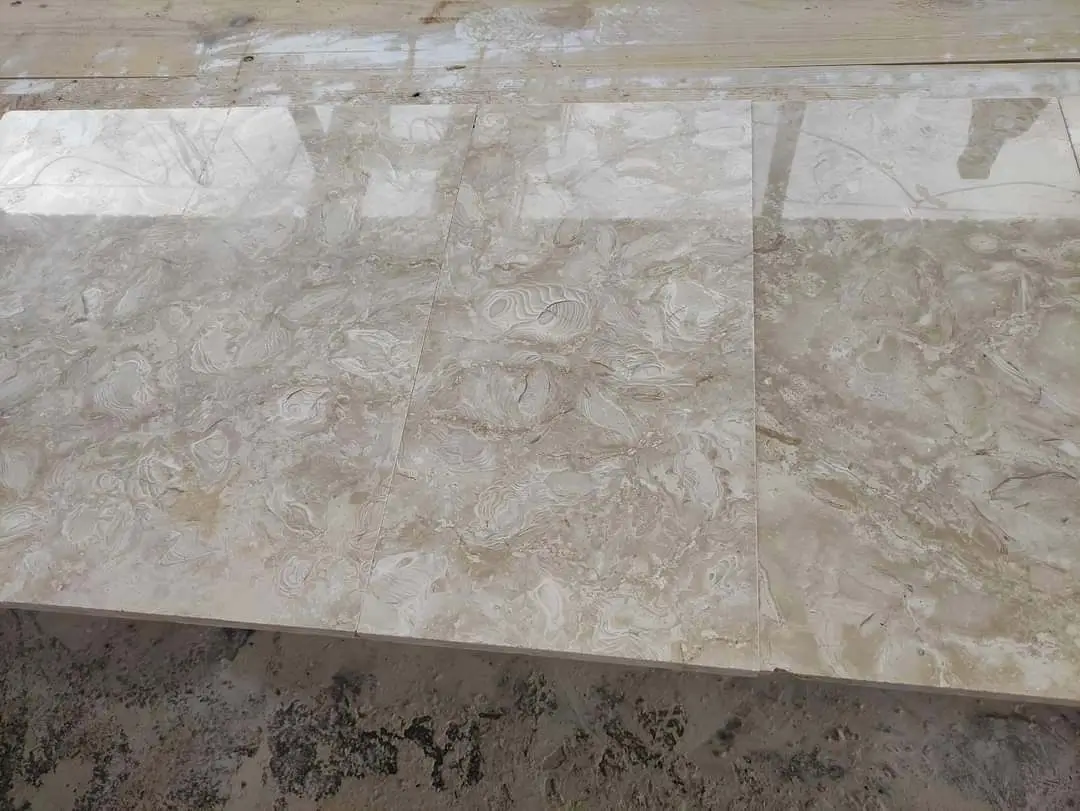
Excavation and Base Preparation for Arizona Ground
Proper excavation depth for beige flagstone in Arizona isn’t a fixed number — it depends on your soil profile, intended load, and whether you’re setting in sand or mortar. For pedestrian patios and walkways on native desert alluvium, a minimum 6-inch compacted aggregate base works when caliche is deeper than 18 inches. Hit caliche at 10 inches or less, and you’re either breaking through it with a pneumatic hammer to create drainage relief, or you’re re-engineering the drainage plane entirely.
Breaking through caliche is worth the effort in most cases. A solid caliche shelf with no drainage penetrations acts like a bathtub — monsoon infiltration pools above it, saturates your base, and the freeze-thaw doesn’t even need to happen for your flagstone to heave. Arizona’s monsoon season delivers sudden, high-volume rainfall events that expose poor subgrade drainage faster than any other climate variable. According to ASLA natural stone paving guidance, permeable surface systems require continuous drainage pathways through all soil layers — a principle that’s especially critical when caliche is present.
- Excavate 8–10 inches below finished grade for pedestrian flagstone on standard desert soils
- Increase to 12 inches minimum for vehicular-adjacent applications or on silty fill material
- Use 3/4-inch crushed granite aggregate for base layers — it’s locally available, drains well, and bonds under compaction better than rounded river rock
- Compact in 3-inch lifts using a plate compactor — one-pass compaction on 6-inch lifts leaves voids that collapse over time
- Moisture-condition the base before final compaction to achieve consistent density throughout the lift
Natural flagstone installation steps AZ homeowners frequently overlook center on the base as the primary investment. The stone itself is relatively forgiving — it’s the substrate that determines longevity. At Citadel Stone, we consistently find that projects with proper base preparation outlast neighboring installations by 10 or more years, even when the stone quality is similar.
Selecting the Right Thickness and Slab Sizing
Beige flagstone thickness selection for Arizona conditions isn’t just about load capacity — it’s about minimizing differential settlement on the variable subgrades you’re working with. Thinner slabs (3/4 to 1 inch) flex and crack when point loads occur on slightly uneven base surfaces. For residential patios and walkways, 1.5-inch nominal thickness is the practical minimum on Arizona desert substrates. For entry areas and high-traffic zones, 2-inch slabs provide the stiffness needed to bridge minor base inconsistencies without cracking.
Slab sizing also matters more than most installers acknowledge. Larger irregular slabs — in the 3 to 6 square foot range — have more surface area bridging across any base imperfections, which sounds like an advantage but becomes a problem when thermal expansion creates stress concentrations at fixed points. The Britannica flagstone entry on sedimentary rock characteristics confirms that sedimentary flagstones expand and contract measurably with temperature cycling — a factor you need to translate into joint spacing decisions during installation.
- Specify 1.5-inch minimum thickness for residential pedestrian applications in Arizona
- Use 2-inch slabs for pool surrounds, entry areas, and any zone with concentrated foot traffic
- Keep individual slab sizes under 8 square feet to manage thermal stress without requiring excessive joint spacing
- Consistent slab thickness across a shipment matters more than nominal thickness — verify warehouse stock uniformity before delivery is scheduled
Setting Methods: Sand-Set vs. Mortar-Set on Arizona Substrates
The choice between sand-set and mortar-set beige flagstone in Arizona comes down to your subgrade stability and your drainage confidence. Sand-set installations on a properly compacted aggregate base give you a forgiving, self-adjusting system that accommodates minor base movement — and in Arizona, minor base movement is essentially guaranteed over a 10-year horizon as soil moisture cycles through monsoon seasons and dry periods.
Mortar-set installations lock the flagstone in place, which means any base movement translates directly to cracked stone or failed mortar joints. Mortar-set flagstone works beautifully in Phoenix projects where the base was properly engineered with compacted decomposed granite and adequate drainage penetrations through caliche. It also fails spectacularly when installed over inadequately stabilized fill or where drainage wasn’t addressed. The USGS dimension stone data on flagstone paving performance reflects that installation method selection is the primary variable in long-term field performance for sedimentary paving stones.
For the majority of Arizona residential installations — particularly on lots with variable fill depths and proximity to caliche — sand-set over a compacted crushed granite base is the lower-risk specification. Reserve mortar-set for applications where you’ve confirmed subgrade stability through probing and testing, or where the design requires precise slab positioning that sand-set can’t maintain.
- Sand-set: 1-inch bedding layer of coarse concrete sand over compacted aggregate base — do not use polymeric sand for bedding, only for joint filling
- Mortar-set: 3/4-inch mortar bed over a concrete slab substrate — flagstone directly on mortar without a slab is a maintenance problem waiting to happen in Arizona’s thermal cycling
- Dry-lay without bedding sand is appropriate only for stepping stone applications with wide soil joints — never specify it for continuous paved surfaces in high-foot-traffic areas
Joint Spacing and Thermal Expansion Management
Here’s a detail that separates experienced Arizona installers from those following generic national spec sheets: beige flagstone in Arizona needs joints sized for thermal expansion, not just aesthetic preference. Surface temperatures on natural stone patios in the Phoenix metro regularly exceed 140°F in summer — that thermal load drives measurable expansion across large slab fields, and tight joints trap the stress until something gives.
Maintain a minimum 1/2-inch joint on sand-set installations, expanding to 3/4-inch where slabs exceed 4 square feet. For mortar-set applications over concrete slabs, expansion joints every 10–12 feet in both directions are required — not the 20-foot intervals that work in moderate climates. Fill expansion joints with a flexible backer rod and UV-stable polyurethane sealant rather than grout or polymeric sand, which will crack and need replacement within two to three seasons under Arizona’s UV intensity.
- Minimum 1/2-inch joint width for all sand-set beige flagstone applications in Arizona
- Expansion joints at 10–12 foot intervals for mortar-set installations — mark their locations in your project documentation for future maintenance reference
- Use UV-stable polyurethane sealant in expansion joints, not grout or polymeric sand
- Allow freshly placed mortar-set slabs to cure for 48 hours minimum before joint filling — high desert temperatures accelerate surface cure but delay full mortar depth cure
Drainage Integration for Arizona Monsoon Conditions
Your flagstone installation’s drainage design is arguably more important than any other specification decision you’ll make. Arizona’s monsoon season — concentrated between July and September — delivers rainfall at intensities that overwhelm poorly designed surface drainage within minutes. A 1% cross-slope (1/8 inch per foot) is the minimum you should specify for any beige flagstone patio or walkway. For areas adjacent to structures, increase that to 1.5% to ensure water moves away from foundations before it has time to infiltrate the flagstone base.
Tucson installations face a specific additional challenge: monsoon events in southern Arizona often arrive with more soil-mobilizing runoff than Phoenix events, because higher surrounding terrain creates concentrated sheet flow. Address upslope drainage patterns before finalizing flagstone layout, or you’ll be managing erosion at the installation perimeter regardless of how well the stone itself is set.
The Natural Stone Institute’s limestone and flagstone specifications address drainage integration as a critical performance variable for sedimentary stone paving, particularly in high-precipitation events. Cross-reference those recommendations with your local soil permeability data to determine whether sub-base drainage pipes are warranted for your specific installation footprint.
- Minimum 1% cross-slope on all beige flagstone horizontal surfaces — confirm with a level and tape, not by eye
- Extend base drainage to daylight or connect to a dry well if caliche prevents natural infiltration
- Install perforated pipe at the base perimeter where adjacent planting beds or lawn areas border the flagstone — these zones concentrate moisture infiltration toward the installation edge
- Check drainage performance immediately after the first monsoon event — early intervention prevents progressive base undermining
For your material sourcing, Arizona beige flagstone from Citadel Stone is stocked regionally, which means you can coordinate delivery timing around your base preparation schedule without the 6–8 week import delays that disrupt project sequencing.
Sealing and Surface Protection in Desert Conditions
Desert UV intensity breaks down unprotected stone surfaces faster than most product data sheets acknowledge. Beige flagstone — typically a sedimentary sandstone or limestone-based material — has an open pore structure that absorbs UV-degrading compounds, staining agents, and moisture simultaneously. Sealing is not optional in Arizona; it’s a fundamental part of the installation specification.
Apply a penetrating silane-siloxane sealer after installation and before the first monsoon season reaches the project site. Penetrating sealers don’t alter the surface appearance significantly, but they reduce water absorption by 80–90%, which directly reduces staining and the efflorescence that plagues many unsealed beige flagstone installations in hard-water regions like central Arizona. Phoenix’s water supply has elevated mineral content — that mineral load deposits on unsealed stone surfaces and creates permanent white haze that’s difficult to remove without acid washing.
- Apply penetrating sealer within 30 days of installation completion, never during rain events or when surface temperature exceeds 90°F
- Reapply every 2–3 years for pedestrian surfaces, every 18 months for areas with standing water exposure
- Test the sealer’s compatibility with your specific flagstone material — some silane-siloxane products darken sandy-toned flagstones slightly, which may not match the intended aesthetic
- Clean the surface with a pH-neutral stone cleaner before resealing — acid or alkaline cleaners open the pore structure in ways that affect sealer adhesion
Logistics, Ordering, and Project Sequencing
Your project timeline for installing beige flagstone in Arizona needs to account for material lead times before base preparation begins — not after. Scheduling a truck delivery mid-project while the base is open and exposed to monsoon risk is a situation worth avoiding through better upfront coordination. Verify warehouse stock levels for your specific slab thickness and square footage requirements at least three weeks before your scheduled installation date.
Among the natural flagstone installation steps AZ homeowners commonly overlook is the sequencing of material delivery relative to base preparation completion. Stone should be on-site and acclimating to ambient temperature for 24–48 hours before it goes down — particularly in winter months when slabs trucked from a cooler warehouse need to normalize before mortar-set applications. The technical team at Citadel Stone coordinates delivery scheduling to align with installation windows, which is especially useful when your project is being phased around Arizona’s monsoon season calendar.
- Confirm flagstone availability and reserve your lot before excavation begins — warehouse inventory for specific thickness profiles moves quickly in peak season (March through June)
- Schedule truck delivery to coincide with base completion — stone sitting on unprotected desert soil for extended periods collects staining from iron-rich dust
- Plan for a small overage of 10–12% to account for cutting waste and any field breakage during fitting
- If your project spans multiple delivery windows, confirm lot consistency — stone color and texture can vary between quarry pulls
What Determines Long-Term Performance for Beige Flagstone in Arizona
Beige flagstone laying techniques that produce durable results in Arizona are applied with greater precision than standard practice elsewhere — because the subgrade conditions demand it. The material itself is well-suited to desert environments: its earth-toned palette deflects heat effectively and weathers gracefully in dry climates. But the soil beneath it is the variable that most installation failures trace back to. Caliche management, base depth, drainage integration, and joint spacing for thermal expansion are the four decisions that determine whether your flagstone installation performs for two decades or requires costly rework within five years.
Approach the specification process sequentially: soil profile first, base design second, stone selection third, and sealing protocol last. Skipping the front-end ground investigation to save time almost always costs more in remediation than a thorough pre-installation soil assessment would have. As you think through related Arizona stone applications for your property, Arizona flagstone project ideas for your yard shows how homeowners across the state have handled similar design and ground condition challenges with natural stone.
Reliable flagstone base preparation across Arizona desert substrates depends on verifying your soil profile, engineering your base for your specific caliche depth, and refusing to cut corners on joint spacing or drainage slopes. In Mesa and Chandler, where lot grading and fill depths vary significantly between subdivisions, those pre-installation checks are what separate durable installations from early callbacks. Builders in Tucson, Mesa, and Chandler specify Citadel Stone beige flagstone for its consistent slab thickness, which supports reliable base preparation across Arizona desert substrates.