
Honed limestone slabs in Phoenix perform best when you understand the finish’s relationship with surface temperature — a matte ground surface absorbs and releases heat differently than a polished face, and that thermal behavior shapes every specification decision you’ll make for honed limestone slabs in Phoenix. The honed finish opens the stone’s pore structure just enough to require a penetrating sealer appropriate for Arizona’s UV intensity, yet it eliminates the mirror-like glare that makes fully polished limestone impractical on west-facing surfaces during afternoon exposure. Getting these details right from the start separates installations that age gracefully from those that demand remediation within five years.
What the Honed Finish Actually Does to Limestone
The honing process removes the saw-cut texture from the limestone face by grinding it through a series of abrasive heads — typically ending at 400 to 800 grit — which produces a smooth, matte surface without inducing the reflective crystalline sheen of a polished finish. You’re left with a consistent, low-sheen plane that reads visually quiet, making it an excellent choice for interior flooring, countertops, feature walls, and covered outdoor living areas where Avondale‘s intense summer radiation still penetrates shaded spaces. The finish doesn’t seal the stone — it simply levels it — which means the limestone’s natural absorption rate stays essentially intact and your sealing protocol becomes one of the most consequential specification decisions you’ll make.
Understanding porosity is non-negotiable here. Honed limestone typically tests between 3% and 8% water absorption by mass (per ASTM C97), and that range matters enormously in Phoenix’s environment because dust, caliche particulate, and mineral-bearing irrigation water all enter through those pores. Your specification should call for a premium penetrating silane-siloxane sealer applied to a bone-dry substrate — surface moisture above 4% by the pin-test method will trap vapor beneath the sealer film and cause delamination within a single summer cycle.
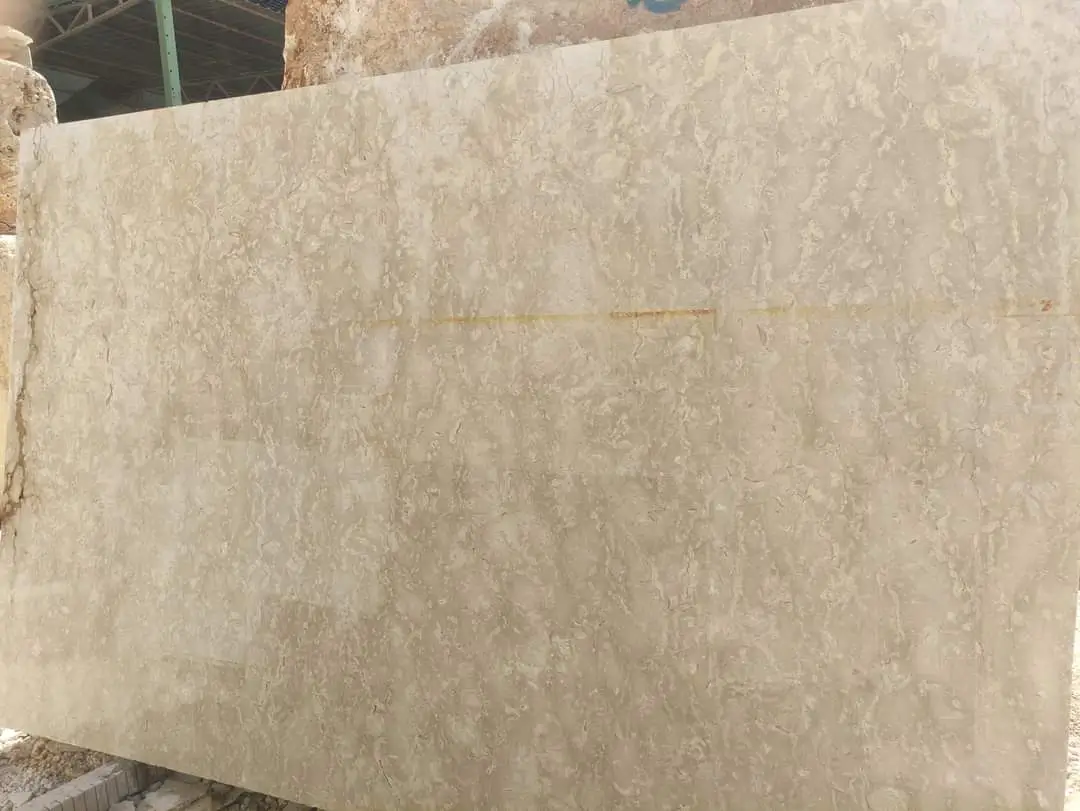
Thermal Performance of Phoenix Smooth Limestone
Phoenix smooth limestone surfaces reach ambient equilibrium faster than darker, denser materials because limestone’s thermal conductivity runs approximately 0.6 to 1.2 W/m·K depending on density — lower than granite and significantly lower than concrete. That means the matte slab surfaces you’re specifying won’t hold heat as aggressively at the end of a July afternoon, which translates directly to barefoot comfort for outdoor applications. The honed finish amplifies this advantage slightly because it doesn’t trap a thin layer of heated air the way a rougher texture does.
- Surface temperatures on honed limestone run 15–22°F cooler than adjacent concrete under identical direct sun exposure in Phoenix summer conditions
- Thermal expansion for most Arizona limestone runs 4.8–5.5 × 10⁻⁶ per °F, requiring expansion joints every 12–15 feet in exposed outdoor installations
- Early morning condensation from monsoonal humidity can make a smooth honed face temporarily slippery — specify COF above 0.60 (ANSI A137.1) for any horizontal surface
- Color stability in UV-intense environments favors mid-tone limestone over very pale varieties, which can chalking-fade within 3–5 years without UV-resistant sealer maintenance
The detail that catches most specifiers off guard is the first-summer thermal cycling stress. Your limestone slabs will go from warehouse temperature during delivery to full Phoenix solar exposure within days of installation, and if the mortar or adhesive bed hasn’t achieved full cure, differential expansion between the slab and substrate can initiate micro-cracking along bed joints. Specify a 28-day cure hold on the setting bed before thermal exposure — it’s worth the schedule adjustment.
Thickness and Load Requirements for Slab Applications
Honed limestone slabs in Phoenix projects typically run in two thickness ranges depending on application: 3/4-inch to 1-inch nominal for interior wall cladding and countertop applications, and 1.25-inch to 2-inch nominal for flooring and exterior paving. The thinner profile works well for verticals because point-load concerns don’t apply, but horizontal flooring at the 3/4-inch thickness requires a fully supported mortar bed — no void areas, no bridging. A limestone slab unsupported across even a 4-inch span at 3/4-inch thickness will crack under normal residential foot traffic within a season.
- Interior floor slabs: minimum 1.25-inch thickness over a full mortar bed, compressive strength of the limestone should exceed 5,500 PSI per ASTM C170
- Exterior covered patios: 1.5-inch minimum with a properly pitched substrate (1/8 inch per foot minimum toward drainage)
- Pool coping and outdoor countertop applications: 2-inch thickness recommended for cantilever overhangs exceeding 4 inches
- Vertical cladding: 3/4-inch acceptable with mechanical anchor backup for panels exceeding 16 square feet
Limestone slabs in Arizona — particularly for covered outdoor kitchens and entertainment areas — need to handle point loads from furniture legs and barbecue equipment that most residential specifications underestimate. A 600-pound grill concentrated on four 1-inch-diameter feet creates localized stress that exceeds what a thin slab on a sand bed can absorb without cracking. Confirm your subbase compaction to 95% modified Proctor and use a rigid mortar bed rather than a flexible aggregate setting bed for any slab carrying significant point loads.
Honed vs. Polished vs. Brushed: Choosing the Right Finish for Arizona
The phrase “honed finish stone Arizona” gets used loosely in project documents, but the specification distinction matters more than the terminology. A true honed finish stops at the matte stage — no reflectivity, smooth to the touch, consistent sheen across the face. A polished finish continues grinding to 1500-grit and above, producing reflectivity that reads beautifully on vertical surfaces but creates solar glare problems on horizontal planes in Phoenix’s sun angle. The polished alternatives to honing — and the brushed and sandblasted options that represent Arizona polished alternatives on the rougher end of the spectrum — are worth understanding precisely because clients often request them without knowing the practical trade-offs.
- Honed finish: COF typically 0.55–0.65 dry, drops to 0.42–0.50 wet — acceptable for most applications with proper drainage design
- Polished finish: COF often below 0.40 wet — requires anti-slip treatment for any horizontal application, defeating much of the aesthetic purpose
- Brushed or antiqued finish: COF above 0.70 — significantly better slip resistance, but surface irregularity traps fine desert dust that’s difficult to maintain in Phoenix’s dusty environment
- Sandblasted finish: COF above 0.80 — maximum traction, but the open texture increases sealer consumption by 30–40% compared to honed surfaces
For projects specifying Phoenix smooth limestone across large interior floor areas, the honed finish genuinely wins on maintenance practicality. Dust mopping a honed surface removes particulate without abrasion issues, whereas a polished surface shows scratches from fine quartz sand — common in Arizona homes — within months of installation. Your cleaning protocol will determine long-term finish retention as much as the initial surface quality does.
Base Preparation for Arizona Soil Conditions
Arizona’s soil variability is one of the most underestimated factors in honed finish stone Arizona specification. Projects in San Tan Valley often encounter expansive clay subsoils that can exert 3,000 to 7,000 pounds per square foot of uplift pressure during monsoon saturation events — a force capable of cracking a continuous limestone slab installation that lacks adequate joint relief. Your base preparation design needs to address this before you commit to slab thickness or joint spacing.
The standard approach for expansive soil zones is a 6-inch compacted Class II aggregate base over a geotextile fabric separation layer, topped by a 1.5-inch dry-pack or medium-bed mortar setting layer. That aggregate base must be compacted in two lifts — 3 inches each — to achieve the 95% compaction level that prevents differential settlement. Confirm that your drain slope carries water away from the slab perimeter within 24 hours of a 3-inch rainfall event, because standing water on expansive clay dramatically accelerates the swell-and-shrink cycle that destroys stone installations.
Sealing and Maintenance in the Desert Climate
Maintaining honed limestone slabs in Phoenix requires a sealing schedule that most product data sheets underspecify for desert UV conditions. A standard penetrating sealer rated for 5-year reapplication in a temperate climate should be treated as a 2-to-3-year cycle in Phoenix’s environment — UV degradation and thermal cycling break down the silane molecular bonds faster than the manufacturer’s testing environment replicates. Self-test by applying a few drops of water to a clean slab surface: if the bead contact angle drops below roughly 45 degrees and the water begins to absorb within 60 seconds, the sealer is depleted and reapplication is due.
- Apply sealer only when surface and ambient temperatures are between 50°F and 85°F — avoid midsummer midday application
- Two thin coats outperform one heavy coat — allow 30-minute flash time between coats
- Wipe off excess sealer within the manufacturer’s working window (typically 5–10 minutes) to prevent residue hazing on the honed face
- Iron staining from fertilizer irrigation is the most common damage claim on Arizona limestone — use a phosphoric acid-based poultice treatment within 48 hours of stain appearance
At Citadel Stone, we recommend specifying a sealer with a minimum 90-day water repellency warranty as a baseline qualifier — it filters out low-grade products quickly and gives your project documentation a defensible performance standard. Our technical team evaluates sealers against Arizona field conditions specifically, not just manufacturer lab data, which makes a meaningful difference in product selection.
For your sourcing and budget planning, affordable wholesale limestone pavers available through Citadel Stone give you access to consistent honed slab inventory without the lead times that import sourcing typically imposes on project schedules.
Color Selection Under Arizona Light Conditions
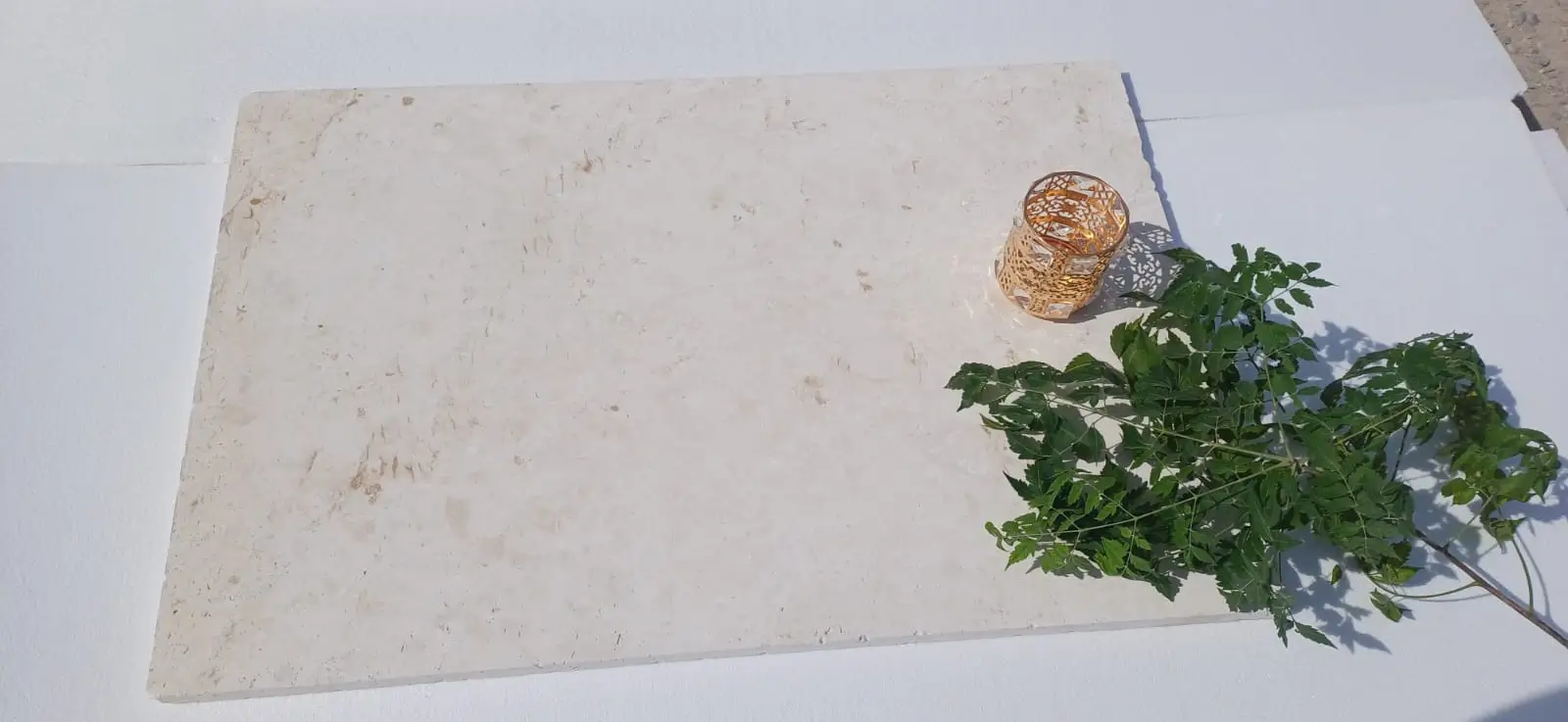
Color selection for honed limestone slabs deserves more attention than most project briefs allocate to it, because Arizona’s light quality is genuinely different from what warehouse or showroom lighting replicates. At solar noon in Phoenix during summer, the light has a color temperature near 6500K — closer to blue-spectrum daylight than the warm 3000K interior lighting most slabs are viewed under during selection. A beige limestone that reads warm and inviting indoors can shift noticeably cooler and grayer on an outdoor Phoenix installation at midday.
The practical guidance here is to review your honed limestone samples in three light conditions before committing: indoor fluorescent or LED showroom light, morning outdoor shade, and direct midday sun. The matte slab surfaces will show you the true color in direct sun because there’s no reflective interference obscuring the stone’s mineral structure. Limestone varieties with warm buff and tan undertones driven by iron oxide content tend to hold their perceived warmth better across Arizona’s lighting range than pure white or silver-gray selections, which can read stark in direct sun.
Ordering, Logistics, and Project Planning
Planning your limestone slab order for a Phoenix project requires accounting for the full lead time chain, not just the supplier’s quoted availability. Citadel Stone maintains warehouse stock of honed limestone slabs in Arizona, which typically compresses lead times to 1–2 weeks for standard sizes — a significant advantage over the 8–12 week import cycle that applies when sourcing directly from quarry. Confirm warehouse availability before finalizing your project schedule, and factor in that truck delivery access to finished residential sites often requires coordination around morning hours before the Phoenix heat makes safe handling conditions difficult for field crews.
Projects in Yuma face an additional logistical consideration — the extreme summer temperatures there push safe stone-handling windows to early morning only, which affects both truck delivery scheduling and installation productivity rates. Build that into your labor estimate if you’re coordinating a project in the western desert corridor during May through September. A standard 1,000-square-foot slab installation that takes 4 days in October will realistically require 5.5 to 6 days in July when crews can only work full productivity for 5 hours before heat conditions require a slow-down.
- Order 10–12% overage on honed limestone slabs for pattern cuts and future replacement matching
- Confirm that truck delivery can access within 50 feet of the installation area — long carries on rough terrain increase breakage risk for 2-inch slabs
- Request a dye-lot hold on your warehouse allocation to ensure color consistency across the full project quantity
- Verify that the staging area for slabs is shaded — limestone stored in direct Phoenix summer sun can reach 160°F surface temperature, making it dangerous to handle and accelerating moisture loss from freshly applied setting mortar underneath
Decision Points
Specifying honed limestone slabs in Phoenix comes down to a sequence of decisions that build on each other — get the finish classification right, set the thickness appropriate for load conditions, prepare the base for Arizona’s expansive soils, and establish a sealing protocol that reflects the actual desert UV environment rather than a temperate-climate product spec sheet. Each of those decisions has field consequences that show up years into the installation’s life, which is why the specification phase deserves the technical rigor that most projects reserve for structural elements.
Your finish, thickness, and sealing choices are the three variables that define long-term performance — and they’re all interrelated. A thicker slab tolerates more base imperfection; a properly sealed honed surface tolerates Arizona’s mineral-rich irrigation water; a finish with adequate COF protects against liability on wet surfaces during monsoon season. None of these stand alone. As you finalize your project parameters, Limestone Paving Delivery Logistics for Tucson Remote Sites provides complementary insight into how Arizona stone delivery and logistics planning works across the state’s varied terrain — useful context for any large-format slab project coordinating across multiple Arizona locations. Among limestone tile suppliers in Arizona our showroom offers the best lighting to view true stone colors.