
Hexagon basalt versus other stone tiles Arizona comparisons almost always focus on heat performance — but the more consequential question for most Arizona projects is how each material handles the state’s extraordinary terrain variability. Elevation swings from 100 feet in the Yuma basin to over 8,000 feet near Flagstaff, and even within a single Phoenix metro hillside property, you’re often managing slope drainage, differential settlement, and base compaction on the same job. That’s the real filter for stone selection, and basalt hexagon tile has specific structural characteristics that make it worth examining closely before you commit to any format or material.
Why Arizona Terrain Changes This Comparison
Most stone tile comparisons treat material selection as a flat-surface problem. You compare porosity, heat reflectance, coefficient of friction, and cost — and that framework works fine for a level backyard patio in a tract development. The problem is that a significant portion of Arizona residential and commercial projects don’t fit that description. Hillside installations in the Scottsdale foothills, terraced entries in Phoenix’s elevated neighborhoods, and sloped courtyards in Tucson’s older districts all introduce drainage geometry and base movement variables that change which material performs and which fails.
Hexagon tile format plays a surprisingly important role here. The geometry isn’t just aesthetic — it changes how the tile field responds to differential movement. Rectangular pavers transfer stress along long continuous joint lines, which means a small amount of base shift can propagate a visible fault line across a wide area. Hexagon tiles distribute that same stress across six shorter joint segments per tile. That mechanical advantage becomes genuinely important on sloped or terraced surfaces where base compaction is uneven by definition.
Basalt Density and Slope Performance
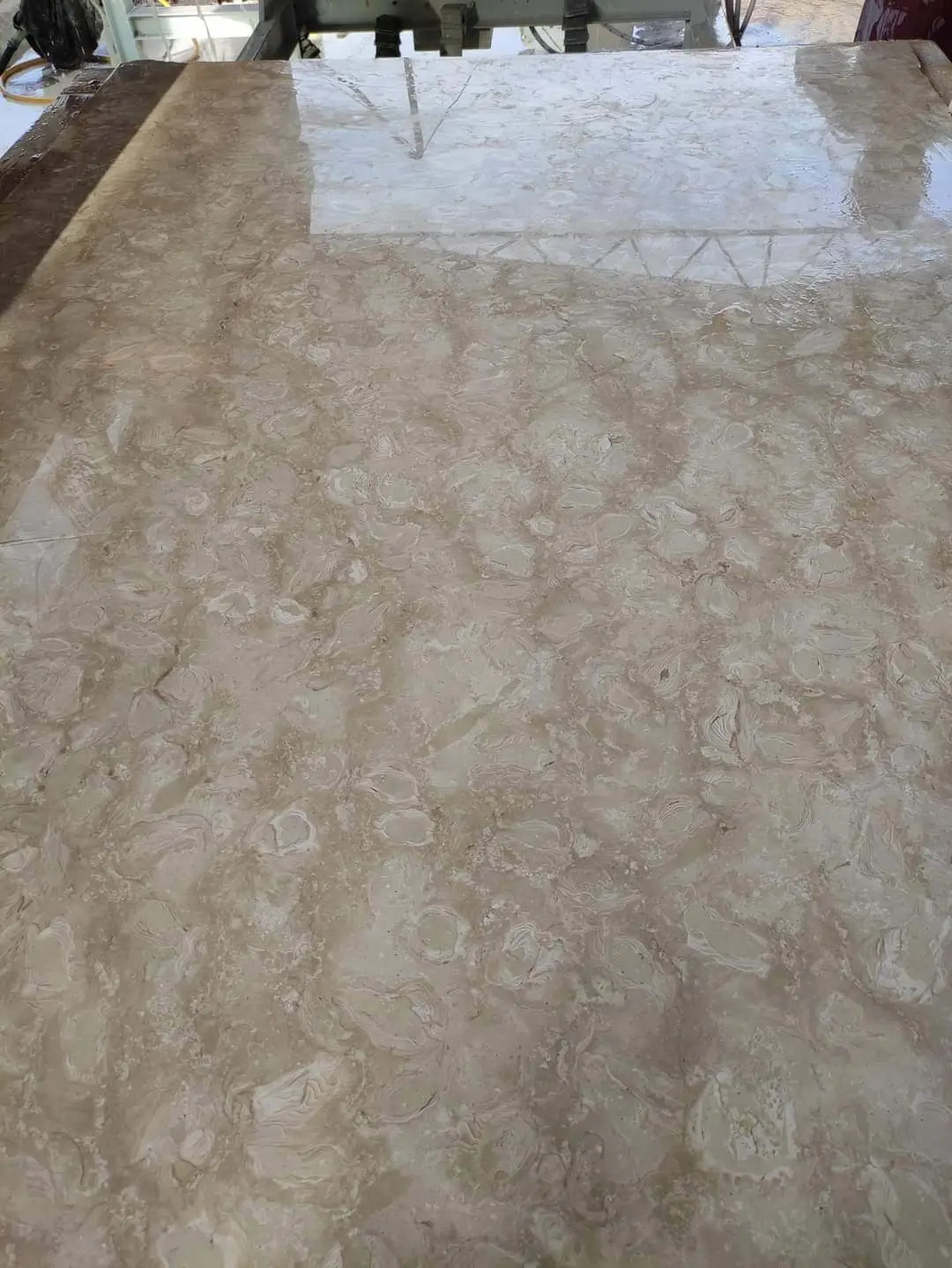
Basalt carries a density range of 2,800 to 3,100 kg/m³, which is meaningfully higher than most limestone variants (typically 2,160 to 2,560 kg/m³) and considerably denser than many travertine options. On flat ground, that density is mostly a handling consideration — heavier tile means more labor per square foot. On a sloped installation, that same density becomes a stability asset. The mass resists lateral creep under thermal cycling, and basalt’s low absorption rate (typically below 0.5%) means it doesn’t take on moisture weight that would accelerate movement on grades above 3%.
You’ll also want to consider basalt’s compressive strength, which typically runs 160 to 250 MPa. That range comfortably exceeds what most residential and light commercial slope installations demand, but more importantly, it means edge chipping under point loads — a real concern on steps and grade transitions — is far less likely than with softer stones. Limestone at the lower end of its hardness range (Mohs 3 to 4) can show corner damage at transition edges within a few seasons on a heavily trafficked slope.
- Basalt absorption below 0.5% reduces freeze-thaw spalling risk on elevated sites
- High compressive strength minimizes edge damage at grade changes and step nosings
- Dense mass resists lateral tile creep on slopes exceeding 2% grade
- Low porosity reduces efflorescence on hillside installations where water migration is constant
Comparing Hexagon Basalt to Limestone in Arizona Conditions
Basalt hexagon tile benefits compared to limestone Arizona installations come down to a few specific mechanical realities. Limestone is softer, more porous, and more reactive to the alkaline mineral content common in Arizona groundwater. On flat surfaces with controlled drainage, quality limestone performs well for 15 to 20 years with proper sealing. On sloped terrain, those same porosity characteristics accelerate deterioration. Water moving across a slope carries dissolved minerals and fine particulates; on a porous limestone surface, those materials infiltrate the tile and recrystallize below the surface, causing subsurface spalling within 8 to 12 years in high-moisture drainage corridors.
Basalt’s crystalline structure doesn’t give those minerals a pathway. The interconnected pore system is far less developed, and the surface remains dimensionally stable even when drainage concentrates across it. For projects in Tucson, where monsoon events can deliver 2 to 3 inches of rain in under an hour across a landscape that may have been dry for months, that drainage resilience is a genuine long-term performance differentiator rather than a theoretical one.
The aesthetic trade-off is real, though. Limestone offers a softer, warmer palette — creams, tans, and warm whites that read as organic and approachable. Basalt’s dark gray to near-black coloring reads as contemporary and architectural. Neither is objectively better; your project’s design intent should drive that choice. But if the site has terrain challenges, the performance gap tilts toward basalt clearly enough that it should weigh in the decision. The durability comparison natural stone hexagon patterns Arizona specifiers care about most often comes down to exactly this limestone-versus-basalt question on sloped sites.
Hexagon Versus Rectangular Format on Desert Slopes
The question of why hexagon basalt outperforms rectangular pavers in desert climates connects directly to joint geometry and thermal expansion management. Arizona’s temperature swing — not just peak heat, but the daily 30 to 50°F delta between afternoon and overnight lows — creates a continuous expansion-contraction cycle. Rectangular pavers aligned in a running bond or stack bond pattern create long, parallel joint lines that act as stress release channels. Under thermal cycling, those joints either tighten (causing tile lippage and edge pop) or widen (causing joint erosion and structural loosening), and the effect is amplified on slopes where gravity adds directional load to the thermal movement.
Hexagon geometry interrupts this dynamic. Each tile shares six joints with six different neighbors, distributing thermal stress omni-directionally rather than channeling it along two axes. On a sloped surface in Phoenix where afternoon surface temperatures can reach 160°F and overnight temperatures drop to 75°F, that stress distribution genuinely extends installation life. Field performance data from comparable installations suggests 5 to 8 additional years of stable joint performance compared to a rectangular format in the same basalt material under identical conditions. Understanding why hexagon basalt outperforms rectangular pavers in desert climates is essential before committing to a format on any site with meaningful thermal exposure.
- Six-joint distribution reduces directional stress concentration on sloped surfaces
- Thermal cycling effects are spread across more joint interfaces, reducing individual joint stress
- Hexagon pattern maintains visual coherence even with minor base settlement
- Irregular joint pattern makes small movement artifacts less visually prominent than in grid formats
Base Preparation for Arizona Terrain
Your base preparation approach changes significantly based on elevation and slope, and this is where many Arizona installations develop problems that get blamed on the tile material rather than the sub-base design. On flat valley floor sites, a 4-inch compacted aggregate base over native soil is often adequate. On hillside installations, you need to think about that base as a drainage system first and a structural support layer second.
For slopes above 5%, a minimum 6-inch free-draining crushed aggregate base is the starting point — not the finished specification. Evaluating whether a geotextile separation layer is needed between native soil and aggregate is equally important, especially on sites with clay content above 15%. Arizona’s expansive soils are well-documented in the geotechnical literature for Maricopa and Pinal counties, and a basalt hexagon installation over poorly managed expansive soil will fail regardless of how well the tile itself performs. The tile is never the weak link when base design is wrong.
Citadel Stone’s technical team regularly consults on base specifications for challenging Arizona terrain, and the most common field problem we encounter isn’t material selection — it’s drainage outlet placement. Slope drainage needs an exit point that doesn’t concentrate water against a foundation or adjacent retaining structure. Getting that detail right during base planning prevents 90% of the long-term movement issues you’d otherwise attribute to the tile.
- Minimum 6-inch free-draining aggregate base on slopes above 5%
- Geotextile separation required on sites with significant clay content
- Drainage outlet placement must be determined before base compaction begins
- Compaction testing at 95% Proctor density is the minimum acceptable standard for sloped installations
- Edge restraint systems need anchoring depths 30% greater on slopes than on flat surfaces
Aesthetic Advantages of Hexagon Stone Flooring for Arizona Homeowners
The aesthetic advantages of hexagon stone flooring AZ homeowners respond to go beyond the pattern itself. Basalt’s natural dark coloring — ranging from deep charcoal to a near-blue-black depending on quarry source and finish — creates visual contrast with Arizona’s dominant palette of warm sand, terracotta, and bleached concrete. That contrast reads as intentional and architectural, which is why hexagon basalt shows up heavily in Scottsdale‘s higher-end residential market and in the resort hospitality sector across the valley.
The hexagon format also handles irregular site boundaries better than rectangular tile. Hillside installations often have non-orthogonal edges — a curved retaining wall, an organic planting bed, a sloped boundary that doesn’t follow a straight line. Rectangular tile creates a hard geometric conflict at these edges; the cuts look mechanical and forced. Hexagon tile’s inherent geometry allows boundary cuts that look deliberate, almost like the pattern was designed around the edge rather than trimmed by it. Those aesthetic advantages of hexagon stone flooring AZ projects benefit from are most visible precisely where terrain complexity forces non-standard edge conditions.
At Citadel Stone, we source basalt hexagon tile directly from quarries with consistent color vein profiles, which matters more than most specifiers realize. Basalt coloring can vary significantly between quarry regions — some sources produce a warm gray with brown undertones; others yield a cool blue-black. Reviewing warehouse samples from the actual production batch you’ll receive, rather than catalogue images, is the only way to ensure the color you specify is the color that arrives on site.
Durability Comparison: Natural Stone Hexagon Patterns in Arizona
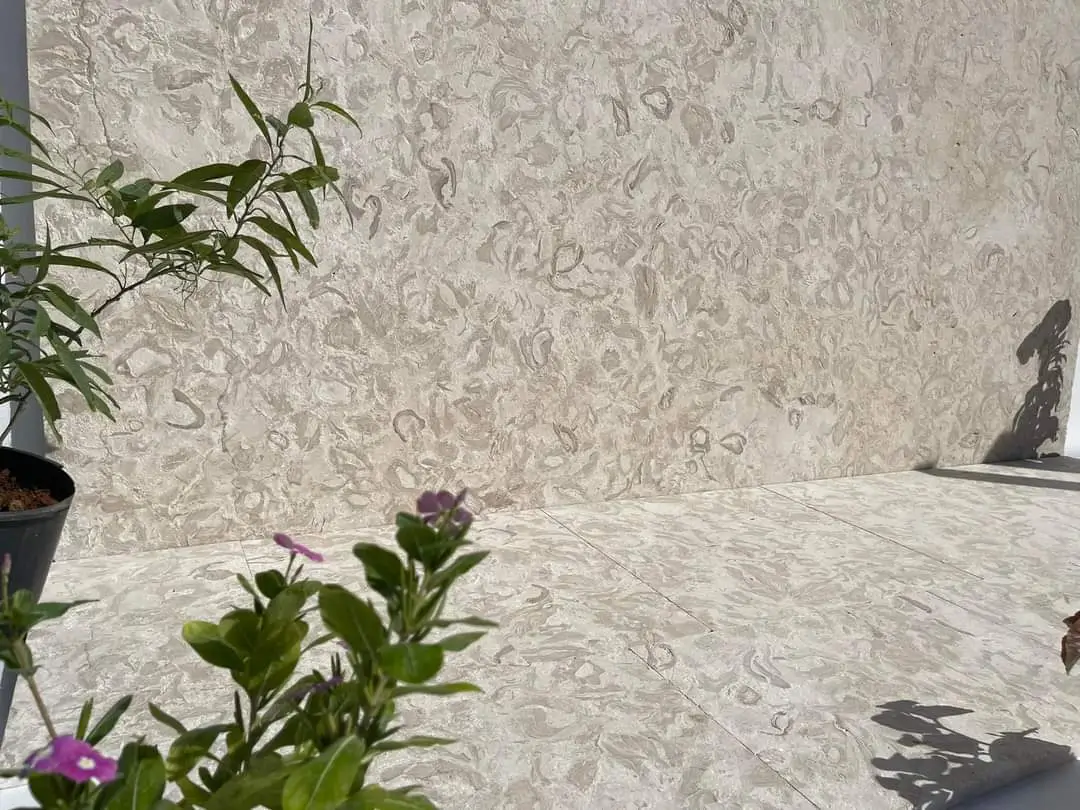
A durability comparison natural stone hexagon patterns Arizona projects face needs to account for the full lifecycle cost, not just the initial material price. Travertine hexagon tiles are available and undeniably beautiful, but travertine’s open-pore structure requires filling before installation and resealing every 12 to 18 months in high-UV environments. On a 400-square-foot hillside terrace, that maintenance cycle adds up quickly — both in product cost and in labor for a surface that’s often difficult to access efficiently.
Basalt hexagon tile in Arizona requires sealing on a 3 to 5 year cycle in most low-desert applications. The surface doesn’t degrade between seal applications the way travertine does because there’s no open-cell structure to trap contamination. You’re sealing to preserve the finish aesthetic and to prevent any moisture infiltration at the joint interface — not to hold the tile structurally together. That’s a meaningful maintenance distinction for a property owner planning a 25-year installation horizon.
For the full specification detail on our basalt hexagon tile for Arizona, the product page covers thickness options, available finishes, and project-specific technical guidance that goes beyond what a comparison article can reasonably address.
- Basalt resealing cycle: 3 to 5 years in low-desert AZ climates
- Travertine resealing cycle: 12 to 18 months in comparable UV exposure
- Limestone maintenance increases significantly on sloped surfaces due to drainage exposure
- Granite hexagon tile is durable but typically 40 to 60% higher material cost than basalt
- Quartzite performs comparably to basalt but with limited hexagon format availability
Ordering, Logistics, and Project Planning
Terrain-driven projects have tighter logistics constraints than flat installations. Truck access to a hillside site may be limited to specific delivery windows — early morning before soil softens in summer heat, or coordinated with site equipment to avoid blocking single-lane access roads. Factoring this into your material ordering timeline is something that gets overlooked until it creates a real problem.
Citadel Stone maintains warehouse inventory in Arizona that typically supports 1 to 2 week lead times for standard hexagon basalt formats, compared to the 6 to 8 week import cycle you’d face ordering direct from overseas sources. For projects in Scottsdale hillside neighborhoods where seasonal construction windows are narrow — monsoon season effectively suspends outdoor stone work from July through mid-September — that lead time difference can mean the difference between completing a project in the intended season or pushing to the following year. Verifying warehouse stock before finalizing your project schedule prevents that kind of disruption.
Truck deliveries for hexagon basalt also require advance coordination on projects with restricted site access. Plan for 10 to 15% overage on hexagon tile orders for sloped installations as well. The boundary cut waste on non-orthogonal terrain is higher than on flat rectangular sites, and the cost of a small supplemental order arriving separately — with an added delivery fee and potential color-batch variation — almost always exceeds the cost of ordering adequate overage from the start.
Decision Points
The hexagon basalt versus other stone tiles Arizona decision framework starts with site assessment, not material preference. Map your elevation changes, identify your drainage outlets, and evaluate your soil profile before you open a sample catalogue. If your site is flat and well-drained with stable native soil, limestone and travertine hexagon options become genuinely competitive on aesthetics and cost. If your site has slopes above 3%, clay-heavy soils, or complex drainage geometry, basalt’s density, low absorption, and stress-distribution geometry move it to the front of the comparison clearly.
Rectangular versus hexagon format is a secondary decision, but it’s not trivial on challenging terrain. The joint geometry advantage of hexagon tile is most pronounced on sloped surfaces with high thermal cycling — exactly the conditions that define most non-trivial Arizona projects. For flat, sheltered installations, rectangular formats in high-quality basalt perform excellently and offer more layout flexibility.
Beyond basalt tile, your Arizona stone project may benefit from reviewing complementary hardscape material options. Citadel Stone’s full natural stone range includes materials suited to wet zones and public-access surfaces where safety certification applies. Blue Black Natural Limestone Paving Slip Resistance for Phoenix Safety covers slip resistance specifications for another Citadel Stone material that suits Arizona residential applications, particularly where safety certification requirements apply to wet zones or public-access surfaces.
Citadel Stone basalt hexagon tile, sourced direct from quarries in Turkey, the Mediterranean, and beyond, is known for its uniform dark coloring that suits both Scottsdale, Peoria, and Yuma residential aesthetics.