
Code Compliance Comes First in Arizona Block Paving
Herringbone block paving durability in Arizona isn’t just a materials question — it starts with whether your specification meets the structural and code requirements Arizona jurisdictions actually enforce. The International Building Code as adopted by Arizona, combined with local amendments, sets minimum base thickness, edge restraint standards, and load-bearing criteria that directly affect how long your installation performs. Get the structural foundation wrong and no pattern, no material density, and no sealer will save you from premature joint failure.
Arizona’s municipalities vary considerably in how strictly they enforce permeable pavement and hardscape standards. Commercial and high-traffic residential projects typically require engineered drawings, and the spec sheets you submit need to demonstrate compliance with ASTM C936 for interlocking concrete pavers or equivalent natural stone standards. Your material choice and your base design are reviewed together — the regulator doesn’t separate them.
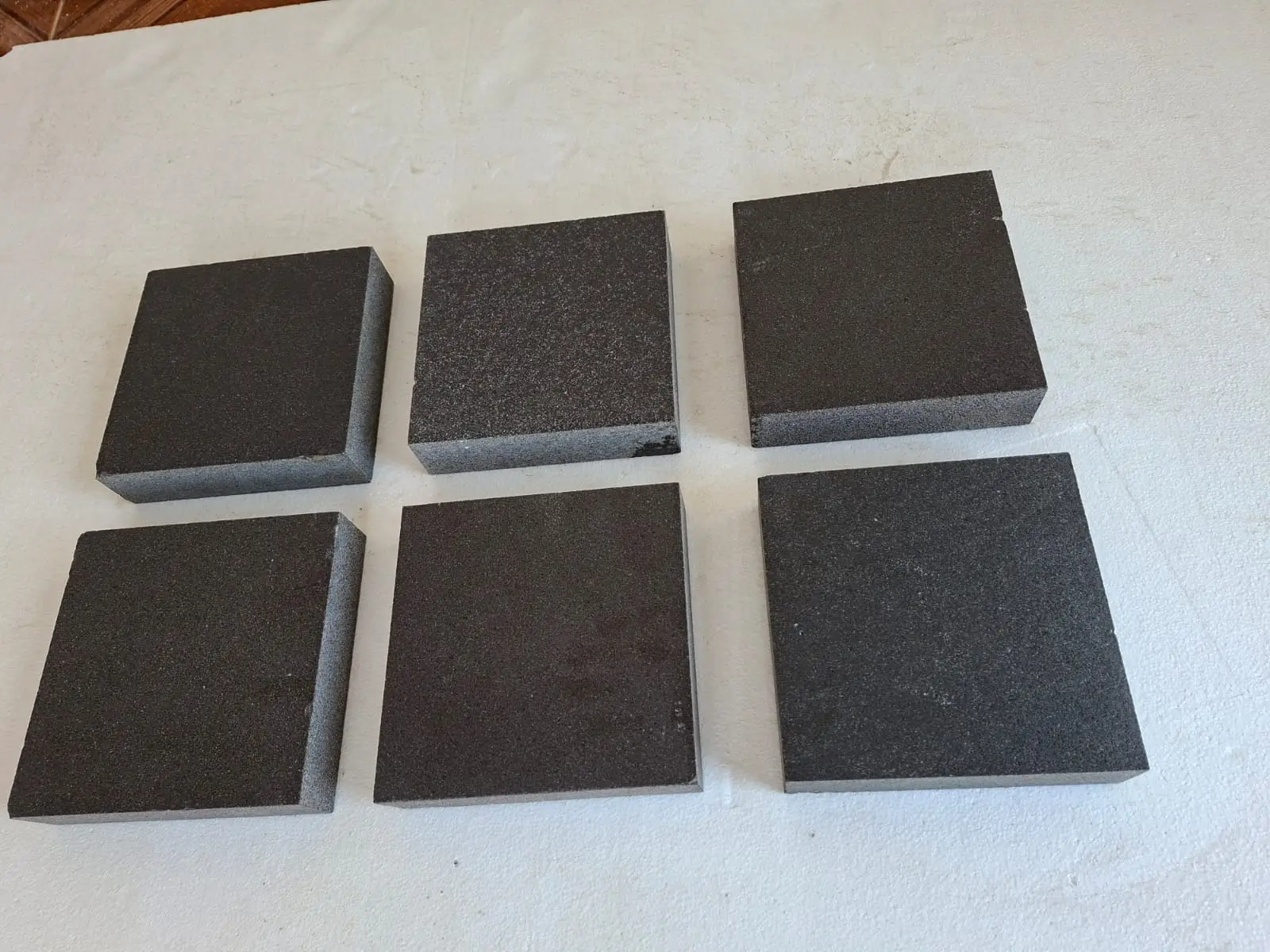
Base Depth and Structural Requirements Across Arizona
The base depth question is where most Arizona paving specifications either succeed or unravel. Unlike frost-belt states where frost line depth drives base design, Arizona’s structural base requirements are governed by soil bearing capacity, expansive clay content, and traffic load classifications. The Arizona Department of Transportation publishes soil classification maps that your geotechnical report should cross-reference — caliche layers, expansive soils, and decomposed granite profiles all require different aggregate compaction depths.
For residential driveways and pedestrian areas, a compacted aggregate base of 4 to 6 inches over prepared subgrade is typical. For light commercial applications or any area seeing delivery truck access, that number moves to 8 to 12 inches, with proof-roll testing often required before bedding sand placement. In Yuma, the highly sandy alluvial soils present a different challenge — they compact well but require geotextile fabric separation to prevent bedding sand migration into the subgrade over time, which is a code compliance detail as much as a performance detail.
- Minimum compacted subgrade bearing capacity: 1,500 lbs per square foot for pedestrian zones, 3,000+ for vehicular
- Aggregate base gradation must meet ASTM D2940 for graded aggregate base course
- Bedding sand layer: 1-inch nominal thickness, ASTM C33 concrete sand specification
- Edge restraint systems must be mechanically anchored, not friction-dependent — spike spacing at 12 inches maximum for vehicular applications
- Herringbone pattern orientation at 45 degrees to traffic direction satisfies ICPI structural distribution guidelines for load transfer
Why the Herringbone Pattern Satisfies Arizona Load Requirements
The 45-degree herringbone configuration isn’t chosen for aesthetics in high-performance installations — it’s chosen because it creates the most effective interlock across all directional load vectors. Arizona’s structural review engineers recognize this, and you’ll find that specifications calling for vehicular-rated paving almost universally default to herringbone over running bond or basketweave. The pattern distributes point loads diagonally, engaging a larger number of surrounding units than any other lay pattern.
From a code perspective, the interlocking geometry means the system acts as a composite rather than individual units. That distinction matters when you’re submitting load calculations for a commercial project or a driveway where truck deliveries are expected. ICPI Tech Spec 4 on structural design explicitly supports herringbone for applications requiring the highest structural rating, and Arizona plan checkers familiar with paver systems will recognize that reference immediately.
Herringbone block paving durability in Arizona also benefits from the pattern’s resistance to creep — the tendency for pavers to migrate laterally under repeated loading. In the high-heat months where joint sand can lose cohesion, the mechanical interlock of the herringbone geometry maintains positional stability better than linear patterns that have continuous longitudinal joints running in the direction of traffic. This resistance to lateral migration is central to interlocking paver shifting prevention across Arizona’s range of soil and climate conditions.
Seismic and Soil Movement Considerations for Arizona Installations
Arizona sits within a seismically active region — the Basin and Range Province generates moderate seismic activity, and the Arizona Geological Survey classifies much of the state as Seismic Design Category B or C. That classification affects how your hardscape connects to structural elements. Pavers adjacent to foundations, retaining walls, or steps need expansion joint detailing that accommodates differential movement without fracturing units or blowing out edge restraints.
Soil expansion is arguably a more consistent concern than seismic events for most projects. Expansive clay soils in the Phoenix basin and parts of the Tucson area can exert uplift pressures exceeding 3,000 psf — enough to heave an improperly designed paver field by half an inch or more during monsoon season saturation cycles. Your specification needs to address this through adequate base depth, proper subgrade moisture management, and edge restraint systems anchored deep enough to resist lateral soil movement rather than just surface loading. Achieving reliable interlocking paver shifting prevention across Arizona’s varied soil profiles depends on getting these anchoring details right at the specification stage.
- Expansion joint locations: every 15 feet in paved fields adjacent to fixed structures, using compressible backer rod and flexible sealant
- Edge restraint spike embedment: minimum 12 inches in expansive soil zones, versus the standard 6-inch depth used in stable soil regions
- Subgrade moisture barrier: 6-mil polyethylene recommended under aggregate base in known expansive soil areas
- Flexible joint sand products (polymer-modified) outperform standard kiln-dried sand in soil-movement zones
UV and Thermal Performance Within a Structural Specification
Arizona’s UV index regularly exceeds 11 during summer months, and surface temperatures on dark-colored pavers can reach 160°F or higher. These aren’t just comfort concerns — they’re structural ones. Thermal cycling between overnight lows and afternoon highs creates expansion and contraction stresses at every joint interface, and your specification needs to account for the coefficient of thermal expansion of your chosen material. Concrete pavers expand at approximately 5.5 × 10⁻⁶ per °F; natural stone varies by type but generally falls in a similar range.
The practical implication is that joint spacing in your herringbone layout needs to be calibrated for Arizona’s thermal range, not for a moderate climate. Standard joint widths of 1/16 to 1/8 inch work in temperate zones, but UV stable block paving solutions for AZ climate conditions benefit from slightly wider joints filled with polymer-modified sand that can accommodate thermal movement without becoming dislodged. In Sedona, where the combination of high UV exposure and dramatic day-to-night temperature swings exceeds even Phoenix conditions on a percentage basis, this joint sand specification detail separates installations that hold up from ones that require remediation within five years. Selecting UV stable block paving solutions for AZ climate conditions isn’t a premium upgrade — it’s baseline specification practice for anything expected to perform beyond a single season.
You can explore our herringbone block paving for Arizona to review material specifications and thickness options calibrated for the state’s demanding thermal environment.
Monsoon Drainage and Joint Stability Requirements
Arizona’s monsoon season delivers intense, short-duration rainfall events that can deposit 1 to 3 inches of rain in under an hour. That hydraulic load is a code concern as much as a performance concern — local jurisdictions require that hardscape design demonstrates adequate drainage capacity and does not increase impervious surface runoff beyond pre-development rates in many areas. Your herringbone block paving layout needs to incorporate calculated slope (minimum 1.5%, ideally 2% across the field) and confirmed drainage outfall capacity before the project gets permitted.
Monsoon-resistant paving options in Arizona share one critical characteristic: they maintain joint integrity under saturation. The interlock of herringbone paving helps here, but joint sand selection is equally important. Polymer-modified jointing sand with a minimum 3,000 psi hardened strength resists washout during high-flow events far better than unmodified sand. Projects that use standard construction sand in the joints will typically need remediation within two to three monsoon seasons — a pattern seen repeatedly across the Phoenix valley and in lower-elevation Tucson installations. Specifying proven monsoon-resistant paving options in Arizona from the outset eliminates that remediation cycle entirely.
- Surface slope minimum: 1.5% perpendicular to the longest paved dimension, increasing to 2% in concentrated flow areas
- Permeable paver options may satisfy local stormwater management requirements and can reduce or eliminate detention basin requirements on some projects
- Drainage inlet spacing for paver fields: consult local municipal standards — Phoenix, Scottsdale, and Tucson each have specific stormwater design requirements
- Subsurface drainage mat systems under the aggregate base improve drainage performance in areas with impermeable soil layers
Material Thickness and Load Class Selection
Arizona’s building departments use traffic category classifications aligned with the ICPI guidelines — and your material thickness must match the load class, not just the aesthetic. Pedestrian-only applications in a residential courtyard can use 2 3/8-inch (60mm) pavers. Driveways where passenger vehicles park and maneuver require 3 1/8-inch (80mm) units. Any application seeing truck access — garbage collection, delivery vehicles, emergency apparatus — moves to 3 1/8-inch minimum and may require 4-inch units depending on the vehicle weight classification.
Herringbone block paving in Arizona specified for mixed residential and light commercial use should default to the 80mm thickness class across the entire project area rather than segmenting by expected use zones. Specifying different thicknesses in adjacent areas creates differential settlement risk and complicates future maintenance significantly. At Citadel Stone, we consistently recommend the heavier thickness class for any project where vehicle access is even possible — the marginal material cost difference is far smaller than a remediation project three years later.
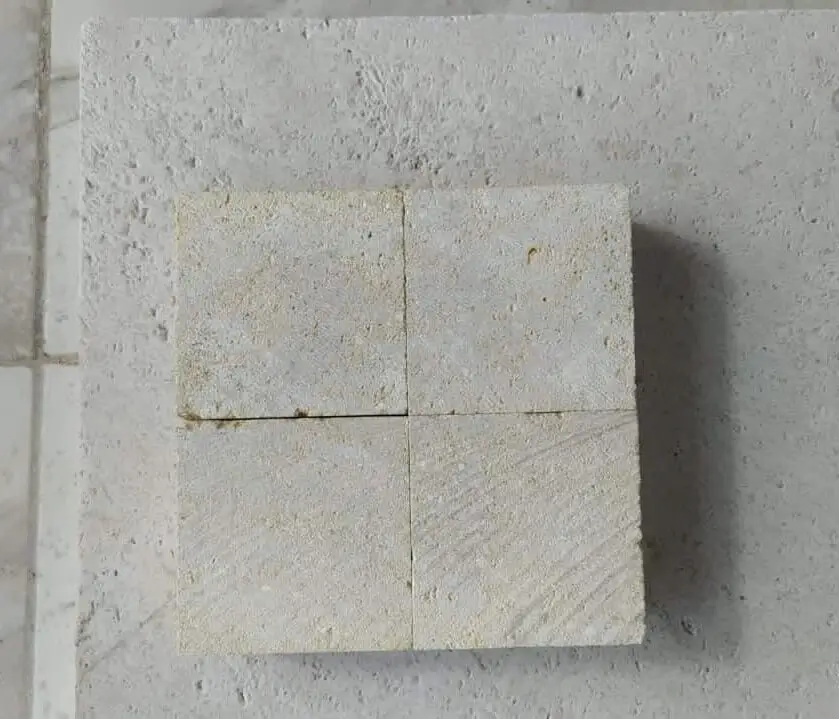
Elevation, Freeze-Thaw Cycles, and Northern Arizona Standards
The frost line variable that most of Arizona ignores becomes genuinely relevant once you’re working above 5,000 feet elevation. Flagstaff sits at 6,900 feet and experiences 100+ freeze-thaw cycles annually — a specification environment closer to Colorado than to Phoenix. The Arizona State Building Code follows IBC freeze protection requirements, and Flagstaff’s frost depth of approximately 18 inches must be reflected in your foundation and base design for hardscape connected to or adjacent to structural elements.
Interlocking paver installations in Flagstaff require a modified approach to managing Arizona weather impact on block paving joints across the state’s elevation range. The aggregate base must extend below the frost depth for edge restraint footer embedment, and the paver units themselves must carry an ASTM C936 freeze-thaw durability rating demonstrating less than 1% weight loss after 28 freeze-thaw cycles. This is a specification requirement, not a recommendation — pavers that meet only the basic compressive strength criteria but fail the freeze-thaw durability test will not survive Flagstaff winters intact.
- Frost line depth for Flagstaff and surrounding high-elevation areas: 18 inches minimum per local code
- Paver freeze-thaw rating: ASTM C936 Section 7.4 test method, maximum 1% weight loss after 28 cycles
- Aggregate base drainage layer critical in freeze-thaw zones — trapped moisture beneath pavers accelerates freeze-thaw heave
- Edge restraint footing depth must extend to frost depth when restraint is adjacent to or connected to structural elements
Supply Logistics and Project Planning for Arizona Timelines
Structural specification decisions need to align with your supply chain reality. Arizona weather impact on block paving joints means that installation timing matters — jointing sand should not be placed during active monsoon season if avoidable, and summer concrete and paver installation in the low desert requires adjusted curing and compaction scheduling. Your project planning timeline needs to account for both the permit review period and the material lead time.
Citadel Stone maintains warehouse inventory in Arizona, which means lead times for standard herringbone block paving products typically run one to two weeks rather than the six to eight weeks associated with imported material sourced internationally. That warehouse availability matters when you’re working against a permit expiration date or a project schedule with downstream trades waiting on your paver installation to complete. Confirming warehouse stock levels before you finalize your submittal documents is standard practice for experienced project managers — it prevents the scenario where your permitted design specifies a unit that’s backordered for three months. Truck delivery scheduling to your site also needs to be coordinated with base preparation completion — receiving palletized pavers before your aggregate base is compacted and ready creates staging logistics that add unnecessary cost and site congestion. Coordinating truck delivery windows with your base contractor directly reduces that risk on projects of any scale.
Completing Your Arizona Block Paving Specification
Getting herringbone block paving durability in Arizona right means starting from the structural and regulatory foundation, not from the surface finish. The state’s code environment, soil variability, seismic classification, and extreme thermal and hydraulic conditions all feed into a specification that either holds up or doesn’t — and the difference is almost always in the engineering details rather than the material category. From base depth through edge restraint embedment to joint sand selection, every specification decision has a code rationale behind it that Arizona’s permitting authorities will expect you to demonstrate.
As you complete your Arizona stone project planning, related hardscape elements often require the same disciplined approach to specification. How to Maintain Bullnose Pool Coping in Arizona’s Climate addresses how Citadel Stone materials perform in a complementary hardscape application — covering pool coping maintenance across the same demanding Arizona conditions — and is worth reviewing alongside your paving specification work. Block paving projects completed in Tucson, Gilbert, and Chandler using Citadel Stone units have demonstrated the interlocking pattern’s ability to resist joint shifting during Arizona’s monsoon season soil movement cycles.