
When you’re managing hardscape material hauling Arizona projects, understanding delivery logistics becomes as critical as selecting the right stone. You need to coordinate timing, equipment, and site access while ensuring your materials arrive intact and ready for installation. Your project timeline depends on reliable transport services that understand both the material characteristics and the unique challenges of Arizona’s urban and remote locations.
Hardscape material hauling Arizona involves more than pointing a truck toward a job site. You’re dealing with palletized loads that can exceed 3,000 pounds per pallet, dimensional constraints that affect truck access, and coordination requirements that span from warehouse inventory checks to crane offload scheduling. The difference between a smooth delivery and a project-delaying disaster often comes down to details most contractors don’t consider until it’s too late.
Transport Logistics Planning
Your delivery planning starts weeks before the first pallet arrives on site. You need to verify three critical elements: material availability at the warehouse, truck access to your specific site, and the equipment required for efficient offloading. Each element affects the others in ways that require careful sequencing.
When you coordinate hardscape material hauling Arizona services, start by confirming warehouse stock levels against your project quantity requirements. Lead times from the warehouse typically range from 2-5 business days for standard items, but custom cuts or special finishes can push that to 10-14 days. Your procurement schedule needs to account for these variables plus a 10-15% buffer for weather delays or transport availability constraints.
- You should request paver shipping quotes at least three weeks before your required delivery date to ensure scheduling flexibility
- Your site access evaluation must include overhead clearance for crane operations if you’re planning crane offload delivery AZ services
- You need to verify that turning radius at your site accommodates flatbed stone delivery vehicles that typically require 45-50 feet for safe maneuvering
- Your delivery timing should avoid peak traffic periods in metro areas where transit delays can add 90-120 minutes to scheduled arrival windows
Material Handling Requirements
The physical characteristics of your selected stone directly impact handling logistics. Dense materials like granite or bluestone require different equipment than lighter travertine or sandstone options. You’ll encounter weight-per-square-foot calculations that determine how many pallets fit on a single truck and whether your delivery requires multiple trips.
Hardscape material hauling Arizona professionals calculate payload distribution to prevent shifting during transport. Your palletized loads need to be secured with industrial strapping that maintains tension across Arizona’s temperature swings—materials expand and contract significantly when moving from climate-controlled warehouse facilities to 115°F ambient conditions. This thermal transition creates stress on securing systems that inadequate strapping can’t accommodate.
Stone drop ship services become particularly valuable when you’re coordinating multiple material types for a single project. Instead of managing separate deliveries for pavers, coping, and wall stone, you can consolidate shipments through coordinated warehouse pulls. This approach reduces site congestion and minimizes the scheduling complexity that comes with sequential deliveries from different suppliers.
Delivery Method Selection
You have three primary delivery methods for hardscape material hauling Arizona projects, each with distinct advantages and limitations. Your selection depends on site access, material quantity, and timeline requirements.
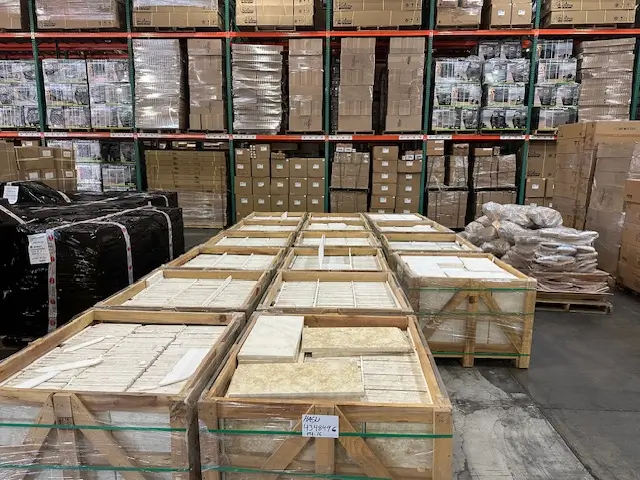
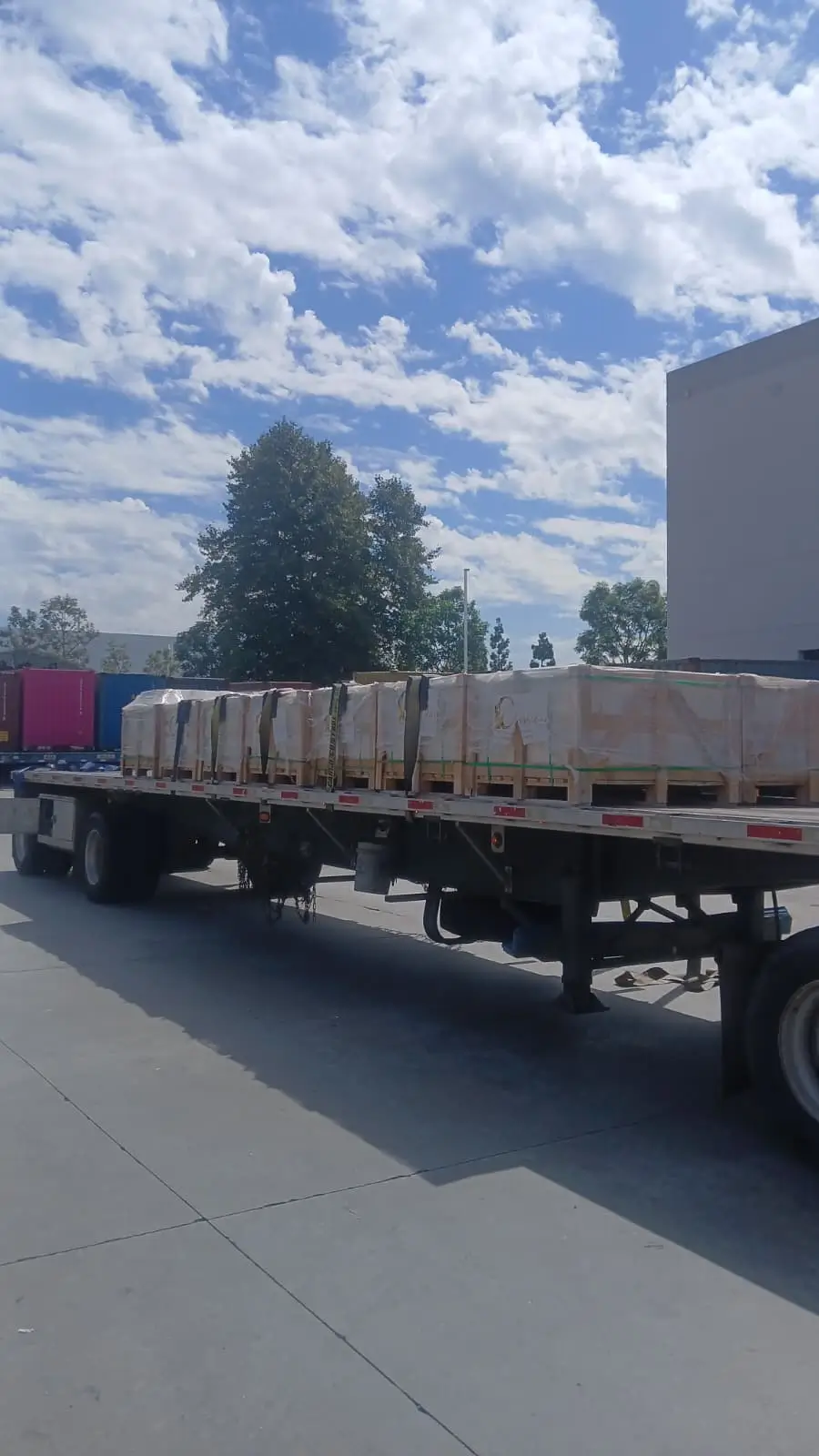
Flatbed stone delivery provides the most versatile option for sites with forklift access or adequate space for manual offloading. You’ll work with standard flatbed trucks that carry 20,000-26,000 pounds of material depending on configuration. The driver typically isn’t responsible for offloading—you need to have equipment and labor ready when the truck arrives. For projects exploring related options, see our patio block wholesale for comprehensive material comparisons.
Crane offload delivery AZ services make sense when you’re working on sites with limited ground access but available overhead clearance. You’ll pay premium rates for crane service—typically $200-350 per hour with 2-hour minimums—but you gain the ability to place materials exactly where you need them. This precision reduces secondary handling and can actually lower total installation costs despite higher delivery fees.
- You should choose boom truck delivery when placing materials over walls, fences, or other obstacles that prevent ground-level access
- Your site needs minimum 16-foot overhead clearance for standard boom operations, increasing to 20-24 feet for extended reach requirements
- You must provide crane operators with precise placement coordinates because repositioning pallets after initial placement incurs additional hourly charges
Scheduling Considerations
Your delivery timing affects more than just convenience—it impacts material condition, labor efficiency, and project sequencing. You need to coordinate deliveries with installation readiness, weather windows, and site preparation completion.
When you schedule hardscape material hauling Arizona services, avoid deliveries during extreme temperature periods. Materials delivered during 110°F+ afternoons absorb heat that makes them uncomfortable to handle for 4-6 hours post-delivery. Your installation crews work more efficiently when materials arrive in early morning hours, allowing thermal equilibration before hands-on work begins.
Lead time requirements vary significantly across Arizona’s geography. You’ll find that metropolitan Phoenix, Scottsdale, and Mesa typically offer next-day or two-day delivery windows for in-stock materials. Remote locations near Sedona, Flagstaff, or Yuma often require 5-7 business days due to route consolidation practices that group deliveries for transport efficiency.
Cost Structure Analysis
Understanding delivery cost components helps you evaluate paver shipping quotes accurately. You’re not just paying for fuel and driver time—you’re covering equipment allocation, insurance, route optimization, and return trip considerations.
Base delivery fees for hardscape material hauling Arizona services typically start at $150-200 for single-pallet loads within 20 miles of the warehouse. That rate increases $0.50-0.85 per mile beyond the base radius, with adjustments for total load weight. Your multi-pallet deliveries benefit from economies of scale—the per-pallet cost decreases as total quantity increases, but only up to truck capacity limits.
- You’ll pay fuel surcharges that fluctuate with diesel prices, typically calculated as 8-12% of base delivery fees
- Your weekend or after-hours deliveries incur premium charges ranging from 25-40% above standard rates
- You should expect minimum delivery charges even for partial loads because truck allocation represents fixed costs regardless of cargo quantity
- Your delivery to construction sites with active security protocols may include gate fees or escort requirements that add $50-150 per delivery
Site Preparation Protocols
Before any truck arrives, you need your site ready for efficient material placement. Inadequate preparation leads to delays that trigger waiting fees—typically $85-125 per hour after the first 30 minutes of on-site time.
Your delivery area requires firm, level surfaces capable of supporting concentrated loads. A fully loaded forklift placing a 3,000-pound pallet creates point loads exceeding 8,000 PSI at the tire contact patches. Soft soil, fresh asphalt, or insufficiently compacted base materials will fail under these loads, potentially damaging both your site and the delivery equipment.
Access path verification prevents the most common delivery failures. You need to physically walk the route from street access to final material placement, measuring clearances and identifying potential obstacles. Tree branches that seem adequate when you’re walking at 6-foot height become problematic when a truck with 13.5-foot maximum height attempts passage.
Material Protection Standards
Proper material handling during hardscape material hauling Arizona operations protects your investment from damage that might not become apparent until installation begins. You should understand how professional haulers secure and protect materials during transport.
Quality stone drop ship services use edge protection on all pallet corners where strapping makes contact with stone. Without this protection, strap tension—which can reach 1,500 pounds of force—creates pressure points that chip or crack individual pieces. Your inspection upon delivery should verify that edge protection was used and that no pieces show strap damage.
Temperature management during transport matters more than most contractors realize. Materials moving from 75°F warehouse conditions to exterior transport at 105°F+ experience thermal shock that can activate latent fractures in the stone. Professional haulers minimize this risk through covered transport or strategic delivery timing, but you can’t eliminate it entirely in Arizona’s climate.
Documentation Requirements
When you receive hardscape material hauling Arizona deliveries, proper documentation protects you from disputes about quantities, condition, or specifications. You need systematic inspection and recording procedures.
Your delivery acceptance checklist should verify pallet counts against the bill of lading before the driver leaves. Shortages discovered after driver departure become disputes that can take weeks to resolve and may leave you short of materials during critical installation phases. Count every pallet, even when time pressure makes this seem inconvenient.
- You must photograph any visible damage immediately upon delivery while the truck is still on site
- Your documentation should include images of strapping configuration and edge protection implementation
- You need to note any pieces with obvious damage on the delivery receipt before signing acceptance
- Your project files should retain all paver shipping quotes and final invoices for warranty claim documentation
Specialized Transport Scenarios
Certain project configurations require hardscape material hauling Arizona approaches beyond standard flatbed delivery. You might encounter situations where conventional methods won’t work and creative solutions become necessary.
Hillside installations with no vehicle access require hand-carry or mechanical lift solutions. Your delivery might involve placing materials at the nearest vehicle-accessible point, then using track loaders, conveyors, or manual labor to move materials to the installation area. This secondary handling adds $0.75-1.50 per square foot to your installed costs but remains the only viable option for certain sites.
Urban infill projects in established neighborhoods often face access restrictions that standard trucks can’t navigate. You’ll need to coordinate smaller vehicle transfers, schedule deliveries during specific time windows, or arrange temporary access permissions. These complications can double your delivery timeline and increase costs by 30-50% compared to open-site deliveries.
Quality Verification Methods
Your material inspection at delivery determines whether you accept the shipment or document discrepancies for resolution. You need systematic methods that identify problems before installation begins.
Visual inspection starts with pallet integrity—you’re looking for shifted loads, broken strapping, or evidence of impact damage during transport. Then you examine individual pieces, checking for chips, cracks, or finish inconsistencies. Your inspection should sample at least 10% of pieces from each pallet, selecting samples from top, middle, and bottom layers.
Dimensional verification matters when you’re working to tight tolerances. Nominal sizes often include ±3% variance, which accumulates across large installations. You should measure a sample of pieces to confirm they fall within acceptable tolerance ranges before you commit crews to installation work based on assumed dimensions.
Citadel Stone — Best Paver Stone Delivery in Arizona Services for Diverse Climates
When you consider Citadel Stone’s paver stone delivery in Arizona for your project, you’re evaluating comprehensive logistics designed for the state’s extreme conditions. At Citadel Stone, we provide technical guidance for hypothetical applications across Arizona’s distinct climate zones. This section outlines how you would approach delivery coordination for six representative cities, each presenting unique challenges that affect hardscape material hauling Arizona planning.
Phoenix Metro Logistics
In Phoenix, you would coordinate deliveries around extreme summer heat that affects both material handling and driver safety. Your optimal delivery windows would fall between 5:00-9:00 AM during May through September when temperatures remain below 95°F. The urban heat island effect in central Phoenix amplifies material surface temperatures by 15-20°F compared to ambient conditions, making afternoon handling problematic. You would need to verify that your installation crews can begin work immediately upon delivery to avoid having materials sit in direct sun for extended periods. Warehouse facilities in the Phoenix metro area typically maintain stock levels that support next-day delivery for standard specifications.
Tucson Desert Considerations
Your Tucson deliveries would account for the city’s basin topography and distinct neighborhood access patterns. You would find that eastside locations generally offer better truck access than older central neighborhoods where street widths and turning radii create challenges for flatbed stone delivery vehicles. The regional soil conditions in Tucson—predominantly caliche-based hardpan—would require you to verify that delivery placement areas can support heavy equipment without excavation damage. Summer monsoon patterns from July through September would necessitate flexible scheduling with 24-48 hour adjustment capabilities to avoid deliveries during active storm periods.
Scottsdale Access Planning
Scottsdale’s mixed urban and resort development patterns would require you to navigate HOA delivery restrictions, gated community protocols, and luxury property access standards. Your delivery coordination would typically involve advance notification to property management, security escort arrangements, and specific time-window compliance. High-end residential projects in North Scottsdale often mandate crane offload delivery AZ services to protect landscaping and hardscaping around delivery routes. You would need to factor these requirements into your project timeline and budget, as coordination delays can extend lead times by 3-5 business days compared to unrestricted sites.
Flagstaff Elevation Factors
Your Flagstaff delivery planning would address elevation-related logistics that don’t affect lower-altitude Arizona locations. At 7,000 feet elevation, you would encounter seasonal access restrictions from November through March when snow and ice make certain routes impassable for loaded trucks. The region’s freeze-thaw cycling would require you to ensure materials remain protected from moisture exposure during transport and storage. You would typically work with extended lead times—7-10 business days—because Flagstaff deliveries often involve route consolidation with other northern Arizona destinations. The cooler climate actually benefits summer handling since materials don’t experience the thermal stress common in desert locations.
Sedona Terrain Challenges
In Sedona, you would navigate some of Arizona’s most challenging delivery terrain. The city’s dramatic topography, winding access roads, and strict aesthetic preservation codes would affect every aspect of your hardscape material hauling Arizona coordination. You would need to verify truck access for specific properties since many luxury homes sit on hillside lots with driveways that exceed standard truck grade limitations. Crane services become essential for approximately 40% of Sedona deliveries where conventional truck access won’t work. Your planning would include detailed site surveys, often with delivery company representatives present, to determine optimal equipment and approach strategies before committing to delivery dates.
Yuma Border Coordination
Your Yuma project deliveries would account for the city’s agricultural economy and border location, which create unique scheduling patterns. Harvest season from November through March brings heavy truck traffic that can delay deliveries by 60-90 minutes beyond normal transit times. You would coordinate around agricultural transport schedules when possible, typically targeting mid-week deliveries that avoid weekend agricultural shipping volumes. The region’s extreme summer temperatures—often exceeding Phoenix by 3-5 degrees—would make early morning deliveries essential from May through September. Distance from primary warehouse facilities would add 1-2 days to standard lead times, requiring you to plan material orders further in advance than Phoenix-area projects.
Communication Protocols
Effective coordination of hardscape material hauling Arizona deliveries requires clear communication between you, the supplier, the hauler, and your site team. Breakdown in any communication link creates delays and complications that affect project timelines.
Your delivery confirmation process should include 48-hour advance notice, 24-hour confirmation, and same-day morning verification before the truck leaves the warehouse. This three-point check system catches scheduling conflicts, site readiness issues, and last-minute changes before they become expensive problems. You should provide direct contact information for on-site personnel who can make real-time decisions if delivery conditions differ from expectations.
Weather monitoring becomes critical for exterior material deliveries. You need to track not just precipitation but wind conditions that affect crane operations, temperature extremes that impact material handling, and dust storms that can damage materials during offload. Your contingency planning should include alternative delivery dates and clear cancellation protocols that protect both parties from weather-related losses.
Risk Mitigation Strategies
Smart contractors build buffers into their hardscape material hauling Arizona planning that account for the various failure modes that can disrupt deliveries. You’re protecting against equipment breakdowns, weather delays, inventory shortages, and site access complications.
- You should maintain 7-10 day scheduling buffers between material delivery and installation start dates to absorb unexpected delays
- Your material orders should include 8-10% overage to account for damage during handling and installation waste factors
- You need backup delivery dates pre-negotiated with suppliers so rescheduling doesn’t require new quotes and approvals
- Your project insurance should specifically address materials in transit and on-site storage before installation
Financial protection through proper payment terms helps you manage delivery risk. You should structure payments so that final material payment occurs upon verified delivery and acceptance, not upon order placement. This approach ensures you have leverage if quantities are short or damage exceeds acceptable limits.
Final Considerations
Your success with hardscape material hauling Arizona projects comes from understanding that delivery logistics represent more than a line item on your budget—they’re a critical project phase requiring the same careful planning you apply to design and installation. You need to integrate delivery planning into your overall project timeline, treating it as a distinct work phase with its own requirements, risks, and success criteria.
The difference between contractors who consistently deliver projects on time and those who struggle with delays often traces back to material logistics. When you master delivery coordination, verify site readiness, and build appropriate buffers into your scheduling, you create project momentum that carries through to successful completion. Your professional reputation benefits from this attention to detail in ways that exceed the relatively small investment in proper delivery planning. For additional insights on material selection that affects delivery planning, review Wholesale pricing strategies for palletized stone pavers in Arizona before you finalize specifications. Membership benefits come through Citadel Stone’s loyalty patio stones wholesale in Arizona programs.