
Soil composition in Arizona is the hidden variable that determines whether your grey paving stones maintenance Arizona comparison ever becomes a real-world success or a recurring headache. While most specifiers jump straight to material finish selection, the ground beneath your pavers is quietly deciding whether joint stability holds, surface drainage works, and long-term performance lives up to expectations. Understanding how Arizona’s soil profile interacts with different paving finishes gives you a significant edge before a single stone gets set.
Arizona Soil and What It Does to Paving Systems
Arizona’s ground conditions vary dramatically across elevation zones, but caliche is the defining challenge across most of the state. This calcium carbonate hardpan layer — common across low and mid-elevation desert basins — sits anywhere from 6 to 36 inches below grade and creates a near-impermeable barrier that redirects subsurface water laterally instead of allowing vertical drainage. For grey paving stones maintenance Arizona comparison purposes, this matters enormously: finishes that trap moisture at the surface become far more problematic when the subgrade beneath them can’t drain freely.
Caliche isn’t uniformly distributed, and that’s where field experience becomes essential. You’ll encounter soft, chalky caliche in some areas that breaks up with a rotary hammer, and in other locations — particularly across central Tucson corridors — a cemented caliche shelf that effectively requires jackhammering or chemical treatment before you can establish proper subgrade depth. Ignoring it and building your aggregate base on top of caliche without addressing drainage routing is one of the primary reasons you see paver installations heaving and shifting within five years.
- Caliche hardpan redirects lateral water movement, causing moisture accumulation beneath base layers
- Uncorrected caliche-related drainage issues accelerate efflorescence on paver surfaces regardless of finish type
- Scarifying caliche to a minimum 4-inch depth before compacting aggregate base significantly improves long-term stability
- Sandy desert soils in lower elevation zones compress unevenly under point load — thermal-mass grey stones require tighter base tolerances than lighter concrete alternatives
Grey Paving Stones Finish Types and Soil Interaction
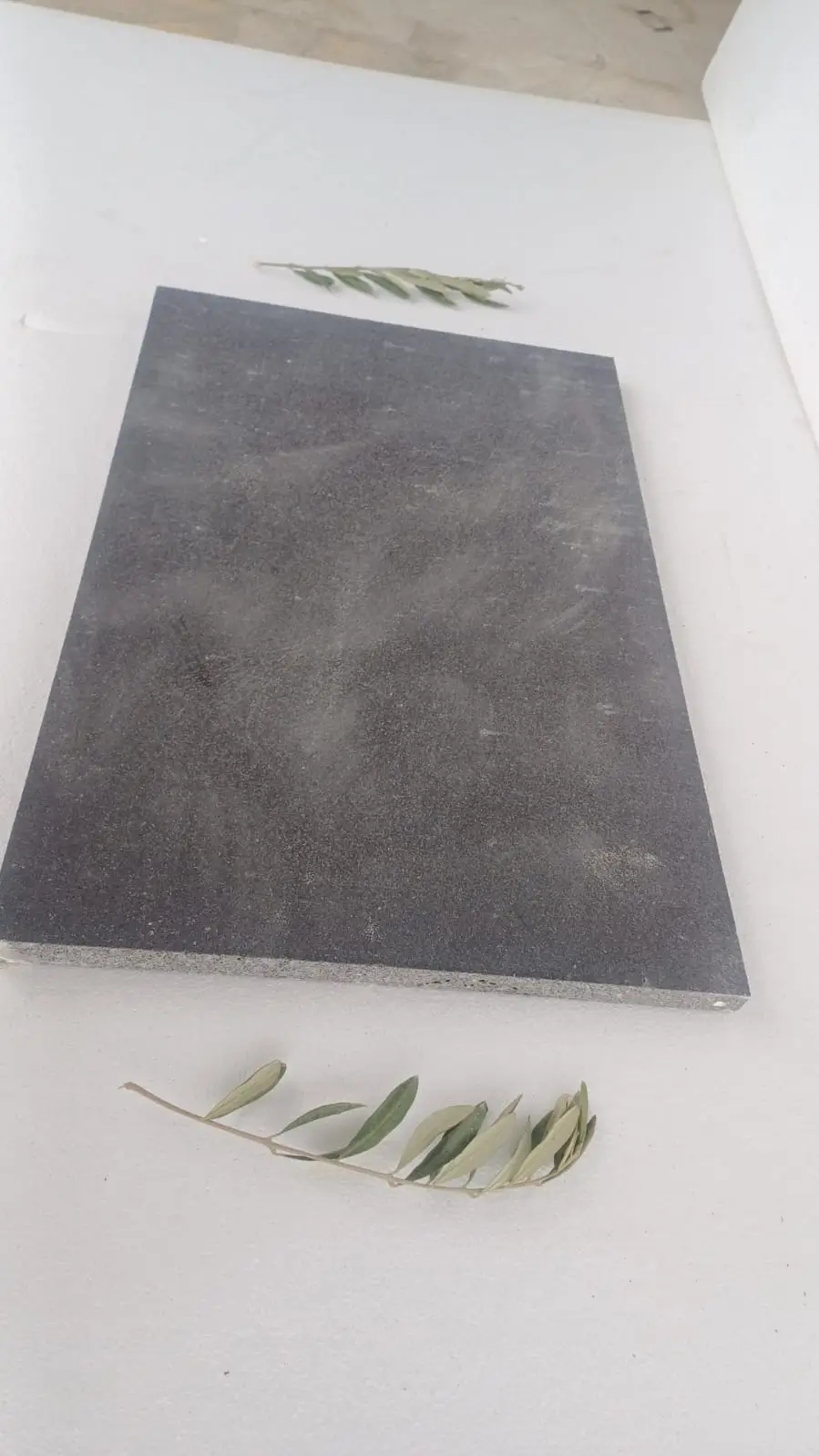
The finish category of your grey stone slab isn’t just an aesthetic decision — it directly controls how moisture interacts with the paver surface and, by extension, how soil movement stress translates into visible damage. Honed, tumbled, sandblasted, and flamed finishes each respond differently when subgrade conditions shift, and that distinction matters throughout a grey paving stones maintenance Arizona comparison.
Honed grey stones offer a tighter surface texture with reduced macro-porosity, making them less susceptible to efflorescence wicking from unstable subgrades. However, they’re less forgiving of differential settlement — minor subgrade movement shows up immediately as lippage on a flat honed surface, whereas a tumbled or sandblasted finish visually absorbs minor variation. In projects across Scottsdale, where sandy desert soils shift subtly with seasonal moisture fluctuation, tumbled finishes consistently outperform honed options for long-term visual stability even when base preparation is technically correct.
- Honed finishes: low visual porosity, high lippage sensitivity, requires tighter base tolerances (±3mm over 3m)
- Tumbled finishes: naturally irregular surface absorbs minor subgrade movement visually, easier maintenance cleaning
- Sandblasted finishes: open texture improves slip resistance but increases surface debris accumulation in dusty desert environments
- Flamed finishes: thermally altered surface closes some pore pathways, reducing moisture uptake from below in damp subgrade conditions
Natural Stone Upkeep in Arizona by Finish Comparison
Natural stone upkeep in Arizona follows different maintenance schedules depending on finish type, and the soil conditions beneath the installation amplify or reduce the frequency of each maintenance task. This isn’t a one-size-fits-all schedule — your maintenance interval should be calibrated to your specific site, not a generic product recommendation.
For honed grey limestone and basalt pavers installed over properly prepared caliche-free bases, a biennial penetrating sealer application typically maintains adequate moisture resistance. Projects where caliche wasn’t fully addressed will show early sealer failure — usually within 8 to 14 months — because capillary moisture from lateral groundwater movement compromises bond adhesion between sealer and stone. You can test this with a simple water-drop absorption test: if surface absorption exceeds 30 seconds at the one-minute mark, resealing is overdue.
- Honed grey stones: reseal every 18–24 months; check joint sand annually for wind and rain erosion
- Tumbled stones: reseal every 24–30 months; inspect edge chips for debris accumulation after monsoon season
- Sandblasted finishes: clean quarterly in low-elevation desert zones; caliche dust staining requires pH-neutral cleaners to avoid etching
- Flamed finishes: least maintenance-intensive; annual inspection for joint integrity is sufficient in stable base conditions
- All finish types: inspect for efflorescence after first monsoon season — early whitish deposits indicate subgrade moisture intrusion, not a product defect
Outdoor Paver Comparison Across Arizona Climates
An outdoor paver comparison across Arizona has to account for the fact that the state spans three distinct climate zones — and soil conditions shift with each one. Low-desert Sonoran basin soils are predominantly sandy loam with caliche intrusion. Mid-elevation transition zones carry more clay-mixed profiles that expand and contract with moisture. High-elevation regions experience actual freeze-thaw cycling that completely changes the performance calculus for grey stone maintenance.
In Flagstaff, where elevations exceed 6,900 feet, freeze-thaw cycles introduce a structural stress that doesn’t exist in Phoenix or Tucson. Grey stones with absorption rates above 0.75% (per ASTM C97) are at genuine risk of spalling in sustained freeze-thaw exposure. This is where material selection diverges sharply from low-desert specification — a honed grey basalt with sub-0.4% absorption is a far better choice for Flagstaff than a more porous grey limestone, even if that limestone performs excellently in Scottsdale. Any thorough outdoor paver comparison for Arizona must treat elevation as a primary variable, not an afterthought.
- Low-elevation desert (Phoenix basin): prioritize drainage routing over caliche, UV-stable sealers, and thermal expansion joint spacing at every 12–15 feet
- Mid-elevation transition (Prescott, Sedona corridors): clay-mixed subgrade requires geotextile separation layer beneath aggregate base to prevent clay pumping
- High-elevation (Flagstaff region): absorption rate below 0.5% is non-negotiable; use ASTM C97 data from your stone supplier before specifying
Grey Stone Slab Durability AZ Climate and Base Preparation
Grey stone slab durability AZ climate performance is only as reliable as the base beneath it. The material data sheet might show 12,000 PSI compressive strength and excellent freeze-thaw ratings, but those numbers assume the slab is properly bedded and supported. In Arizona’s variable soil conditions, the base preparation protocol is where durability is either locked in or compromised.
The standard recommendation of 4 inches of compacted class II base rock works well in stable sandy soils, but in caliche zones or areas with expansive soils, you need to increase that to 6 inches minimum — and in clay-transition zones at mid-elevation, a 2-inch washed angular granite bedding layer over geotextile fabric is worth specifying before your base rock. This combination prevents clay migration upward through the aggregate under hydraulic pressure during monsoon saturation events, which are more intense in central Arizona than most specifiers from other states anticipate. Grey stone slab durability in AZ climate conditions depends as much on this layered base approach as on the stone’s own material properties.
For grey paving stones in Arizona, verifying warehouse inventory of your chosen material before finalizing base preparation schedules is a logistics step that’s often overlooked. Base work completion and material delivery windows need to align — leaving a prepared subgrade exposed through multiple monsoon cycles before installation causes compaction loss and requires re-grading.
Joint Sand Stability in Arizona Soil Conditions
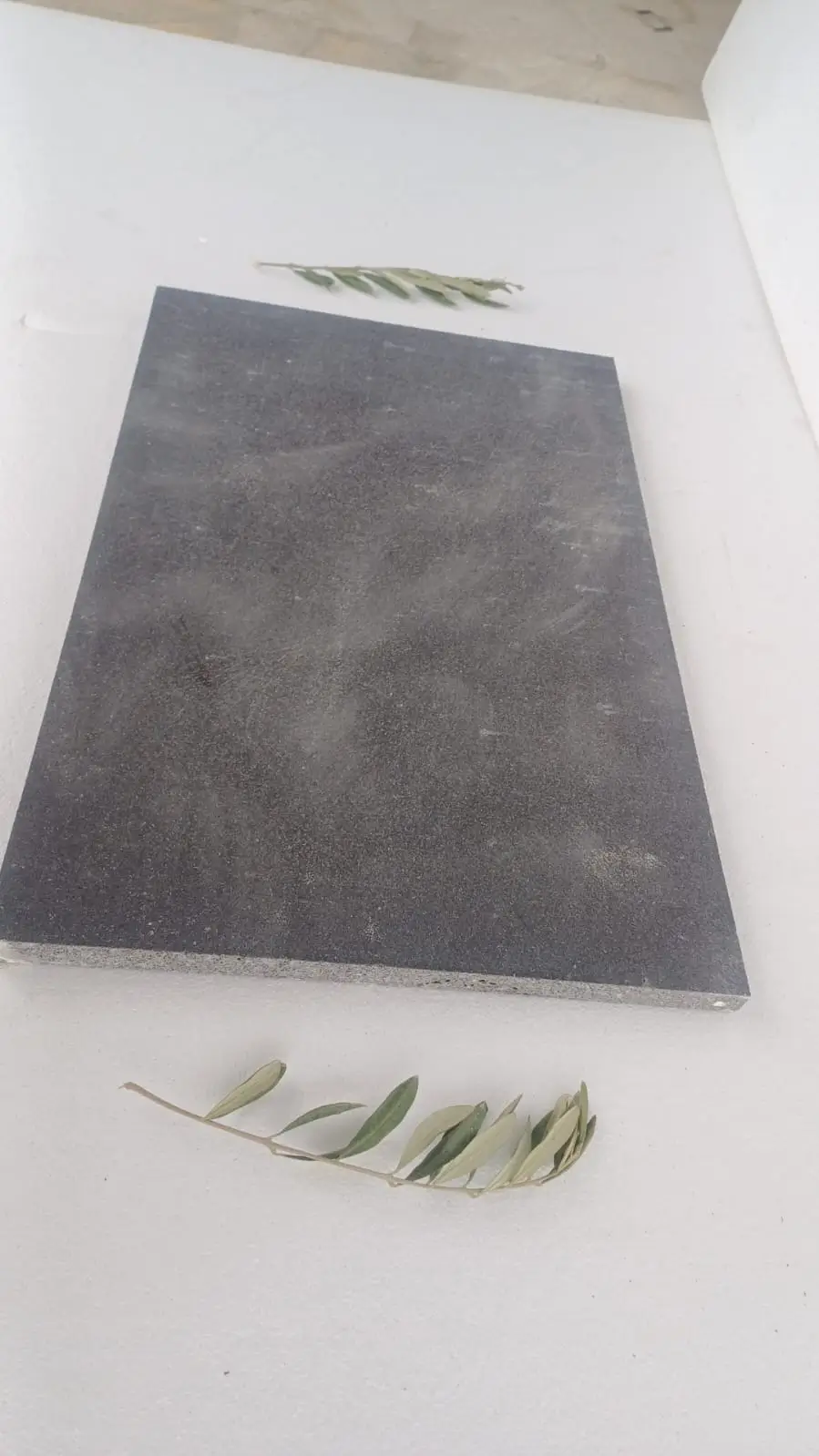
Joint sand is the maintenance component that gets the least attention in product specifications but causes the most field callbacks across grey paving stone installations in Arizona. Desert wind erosion is a consistent threat to polymeric joint sand, and the mechanism is compounded by the caliche-related drainage patterns discussed earlier.
Here’s what most specifiers miss: when lateral moisture from caliche-redirected groundwater migrates beneath pavers and then evaporates through joints, it carries fine particles upward and gradually hollows out joint depth from below. You’ll see it first as surface sand displacement that looks like wind erosion — but when you probe the joint, you’ll find voids starting 1.5 to 2 inches down. The fix at that point requires full joint re-sanding and re-compaction, which is significantly more disruptive than addressing drainage at the subgrade level during installation. For projects in Tucson, where caliche is especially prevalent at shallow depths, this failure pattern appears within 18 to 24 months when subgrade drainage isn’t properly detailed.
- Use polymeric sand with a minimum 15-year UV stability rating for low-desert installations
- Re-compact joint sand with a plate compactor after the first full monsoon season regardless of visible surface condition
- Maintain joint sand at 85–95% depth capacity — not completely flush with the surface, which allows capillary water pullback
- In caliche zones, install perforated subsurface drainage at 8-foot intervals to redirect lateral water away from paver fields
Grey Paving Stones Maintenance Arizona Comparison by Material Family
Different stone families perform differently in Arizona soil conditions, and a material-family comparison adds a dimension to the grey paving stones maintenance Arizona comparison that finish-only analysis misses. Grey limestone, grey basalt, grey slate, and grey concrete pavers each have specific maintenance profiles tied to their density, porosity, and thermal response characteristics.
Grey basalt sits at the high-performance end of the spectrum for Arizona conditions. Its density — typically 2.8 to 3.0 g/cm³ — means minimal moisture uptake from subgrade movement, and its dark mineral composition gives it excellent UV stability without significant color shift over decades. Maintenance is minimal: biennial sealing in low-elevation zones, annual inspection in high-elevation installations. Grey limestone requires more attention — its slightly higher porosity (typically 2–5% compared to basalt’s sub-1%) means that caliche-related moisture migration shows up as efflorescence more readily, requiring quarterly visual inspection and reactive treatment with pH-neutral cleaners when deposits appear.
For current specification support and material data sheets, Citadel Stone paving options in Arizona provides detailed performance comparisons across grey stone family types suited to Arizona’s climate zones.
- Grey basalt: sub-1% porosity, highest freeze-thaw resistance, best performer in Flagstaff-elevation zones, lowest maintenance frequency
- Grey limestone: 2–5% porosity range, excellent UV stability, requires more vigilant sealing schedule in caliche-prone subgrades
- Grey slate: natural cleft face resists slipping, but delamination risk increases in freeze-thaw zones above 5,000 feet elevation
- Grey concrete pavers: lowest upfront cost, highest long-term maintenance burden in alkaline Arizona soils due to accelerated carbonation
Arizona Heat-Rated Stone Paving Maintenance Under Monsoon Stress
The Arizona monsoon season — typically July through mid-September — is the real stress test for any grey paving installation. The combination of rapid thermal cycling (afternoon temperatures drop 20–30°F in under an hour during storm events) and sudden high-intensity precipitation creates conditions that expose every weakness in both material and base preparation. Arizona heat-rated stone paving maintenance scheduling should be structured around monsoon recovery periods, not just calendar intervals.
Thermal shock from cold rain hitting stones that have been baking at 140°F+ surface temperatures is a genuine structural concern for grey stone slabs with absorption rates above 1%. Water penetrates open pores rapidly, then the residual surface heat drives flash evaporation — a process that applies tensile stress to the stone matrix from within. Over multiple monsoon seasons, this cycle contributes to surface micro-cracking that’s often misidentified as installation damage. Specifying grey stones with sub-0.75% absorption rates for exposed installations significantly reduces this risk. Proactive Arizona heat-rated stone paving maintenance — timed to the post-monsoon window — catches early-stage issues before they require costly remediation.
- Schedule joint sand inspection and polymeric re-application within two weeks after each monsoon season ends
- Check drainage outlets after first major storm event — caliche-redirected water often finds new exit paths in the first monsoon season after installation
- Thermal shock resistance correlates directly with absorption rate — always request ASTM C97 data before finalizing material selection
- Staining from desert sediment washed across paver surfaces during monsoon events is best treated with pH-neutral cleaners within 48 hours of storm passage
Ordering Logistics and Project Planning for Grey Stone
Project sequencing in Arizona is tightly constrained by seasonal installation windows and material lead times. The optimal installation window for grey paving stones is late October through early April — after monsoon season and before the extreme heat of late spring. Your material ordering timeline needs to work backward from that window with enough buffer for truck delivery scheduling and on-site acclimation.
At Citadel Stone, we maintain warehouse stock of grey stone materials specifically to support Arizona project timelines, which helps avoid the 6–8 week import lead times that can push installations into less favorable seasonal windows. Coordinating truck delivery to arrive 72 to 96 hours before installation begins gives stone slabs adequate time to acclimate to site temperature and humidity conditions — a detail that affects setting mortar adhesion more than most installers expect. For projects with challenging site access, confirm truck clearance requirements and turning radius at the delivery address well before scheduling, since narrow residential driveways in older Scottsdale neighborhoods frequently require smaller split deliveries rather than full-pallet drops.
Grey Paving Stones: Subgrade to Surface — What Determines Long-Term Performance
The decisions that determine long-term success in any grey paving stones maintenance Arizona comparison start below the surface — in how you’ve addressed caliche, specified drainage, and matched material absorption rates to your elevation zone. Finish selection and sealer scheduling matter, but they’re refinements applied to a foundation that was either built correctly or wasn’t. Getting the subgrade right gives every grey stone finish category — basalt, limestone, tumbled, honed — a genuine chance to deliver its rated performance life.
Arizona’s soil diversity means there’s no universal specification that works from Tucson to Flagstaff without adjustment. Your project’s long-term maintenance burden is directly proportional to how carefully the subgrade was analyzed and prepared before installation began. For a related look at material-level product decisions, How to Choose Grey Block Paving Bricks in Arizona explores cost and specification considerations for grey stone block formats — a complementary dimension of grey stone selection that pairs naturally with the finish and maintenance analysis covered here. Citadel Stone’s grey paving stone range is selected for low-porosity finishes that reduce maintenance frequency in high-UV environments like those in Yuma, Peoria, and Sedona.