
Grey patio slab cost in Arizona swings wider than most homeowners expect — not because of the stone itself, but because UV exposure quietly accelerates material degradation, sealing cycles, and long-term maintenance costs that never show up in the initial quote. Understanding how Arizona’s relentless sun affects the stone you choose is the single most important pricing variable you can control before breaking ground. The difference between a $14-per-square-foot installation and a $22-per-square-foot one often comes down to finish selection, sealer quality, and thickness — not the stone species alone.
Why UV Exposure Drives Arizona Patio Costs
Arizona receives more than 300 days of intense solar radiation annually, and that figure doesn’t capture what it means for stone surfaces at the molecular level. UV degradation in natural stone works through two distinct mechanisms: photooxidation of iron-bearing minerals, which causes color shift and surface bronzing, and thermal microcracking at the crystal grain boundaries, which compromises the surface finish over time. Both processes accelerate grey patio slab cost in Arizona — either through early resealing, surface restoration, or premature replacement.
Grey patio slabs are particularly susceptible to UV-driven color drift. The grey tone in most natural stone comes from clay minerals, silica, and iron compounds that each respond differently to sustained UV exposure. You’ll often see a warm amber cast developing on untreated grey limestone after two or three Arizona summers — a shift that changes the aesthetic entirely and typically requires professional color-enhancement sealing to correct. Budgeting for UV performance from the start is not optional in this climate; it’s a cost you either pay upfront in material selection or pay later in restoration.
The practical cost implication is straightforward: stone with higher density and lower porosity resists UV-driven oxidation more effectively, so it carries a higher per-square-foot price but demands less frequent sealer application. A denser grey basalt at $18–$22 per square foot installed might require sealing every 3–4 years, while a more porous grey limestone at $12–$15 per square foot may need attention every 18 months under the same Arizona sun exposure. Natural stone patio pricing in Arizona consistently reflects this density-to-maintenance tradeoff across all material categories.
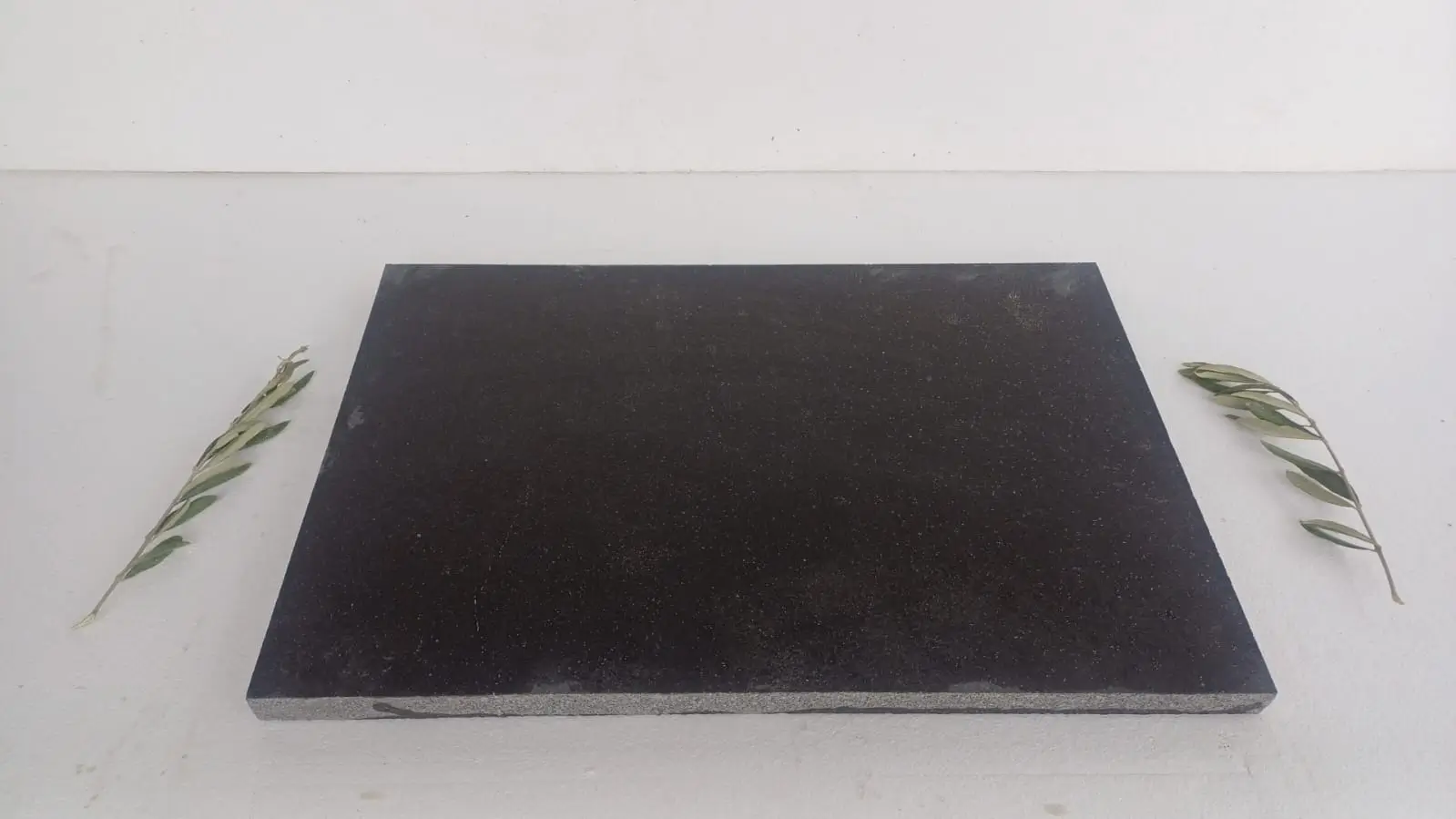
Grey Patio Slab Price Ranges by Material Type
Natural stone patio pricing in Arizona follows the material’s density, finish, and source origin — with UV performance layered on top as a total-cost-of-ownership factor. Here’s how the main grey slab options stack up across the materials most relevant to Arizona outdoor conditions.
- Grey limestone: $10–$15 per square foot installed, moderate UV color stability, requires sealing every 18–24 months in direct Arizona sun
- Grey travertine: $13–$18 per square foot installed, natural fill or unfilled options, UV-stable in brushed and tumbled finishes, less stable in polished
- Grey basalt: $16–$23 per square foot installed, excellent UV and thermal resistance due to dense crystalline structure, sealing intervals extend to 3–5 years
- Grey quartzite: $18–$26 per square foot installed, highest UV resistance of natural grey stone options, minimal color drift even after 5+ years of Arizona exposure
- Grey slate: $11–$17 per square foot installed, laminar structure can delaminate under sustained UV and thermal cycling, requires specific UV-blocking sealers
These ranges reflect supply-and-install costs at current Arizona market rates. Material-only costs run roughly 40–55% of the installed price, with the balance split between base preparation, labor, and finishing. For budget planning for grey slabs across Arizona, it’s worth separating material cost from labor cost explicitly — because labor pricing varies significantly between Phoenix metro contractors and rural project sites.
Finish Selection and UV Resistance
Your choice of surface finish has a direct, quantifiable effect on UV performance — and therefore on your total cost picture. This is the detail that separates informed buyers from homeowners who end up resealing every 12 months wondering why their slab looks washed out.
Polished finishes expose the full crystalline surface to UV radiation with no textural diffusion, which accelerates photooxidation and creates a haze effect that requires professional restoration rather than simple resealing. Honed finishes offer better UV aging characteristics because the micro-roughness of the surface diffuses light rather than concentrating it. Brushed and flamed finishes outperform both in direct Arizona sun — the mechanical texture increases the effective surface area for sealer penetration while reducing the optical concentration effect that drives color fade.
- Polished grey slabs: highest UV fade risk, not recommended for unshaded Arizona patios
- Honed grey slabs: moderate UV stability, acceptable for partially shaded installations
- Brushed or flamed grey slabs: best UV resistance among finish options, recommended for full-sun Arizona exposures
- Tumbled or sandblasted finishes: excellent UV diffusion, adds slip resistance benefit relevant to wet outdoor areas
The cost premium for a brushed or flamed finish over a standard honed finish runs $1.50–$3.00 per square foot. Over a 10-year period in an Arizona climate, that premium typically pays back two to three times over in reduced sealing labor and avoided restoration costs. Arizona outdoor patio stone cost per square foot should always account for finish-driven maintenance differentials, not just material cost alone.
Sealing Schedules and Their Cost Impact
Professional sealing in Arizona runs $1.00–$2.50 per square foot depending on stone type, sealer product, and surface condition at time of application. That number sounds manageable until you multiply it across a 500-square-foot patio on a 12-month resealing cycle — at which point it’s a recurring annual cost of $500–$1,250 that wasn’t in the original budget conversation.
The sealer type matters as much as the application schedule. Penetrating sealers (also called impregnating sealers) work below the surface to repel UV-catalyzed moisture and oxidation without changing the stone’s appearance. Topical sealers create a surface film that provides a higher initial sheen but degrades faster under UV exposure, often within 8–12 months in direct Arizona sun, and can create a cloudy delamination effect that’s more expensive to remove than to prevent. For grey slabs specifically, a high-solids fluorocarbon penetrating sealer applied at the manufacturer’s recommended rate — typically 200–300 square feet per gallon — provides the best UV protection-to-cost ratio available.
In Phoenix, where UV index values regularly exceed 11 during summer months, field experience shows that even premium penetrating sealers on grey limestone require reapplication every 18–20 months rather than the 24–36 months the product label suggests. Factor that into your long-term cost modeling.
When you’re sourcing materials and want verified UV performance data on specific grey slab options, Arizona grey patio stone Citadel Stone provides documented thickness options and material specifications that help you match stone density to your sealing budget and UV exposure conditions.
Thickness Specifications and Installed Cost
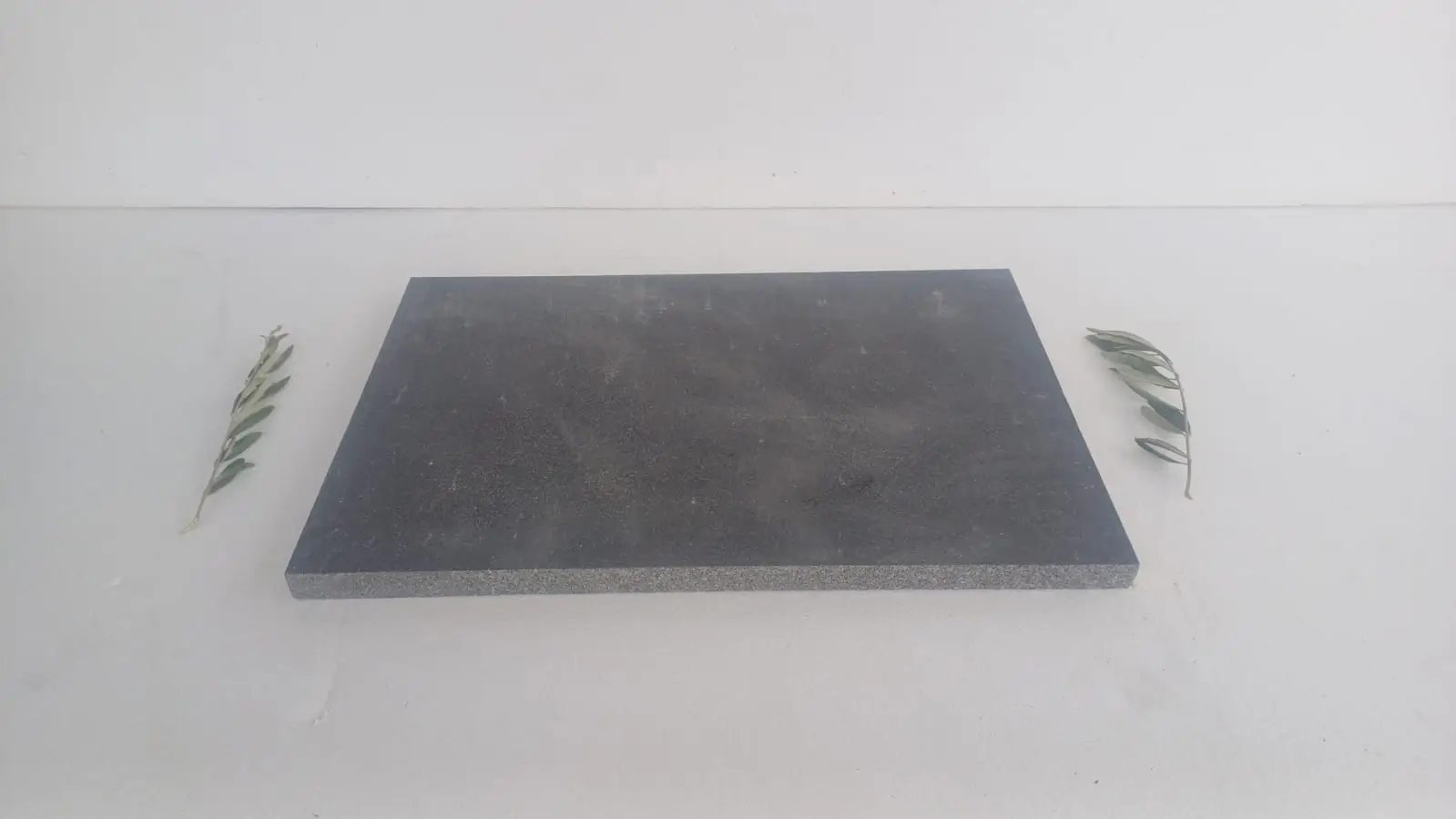
Thickness is one of the most direct levers on grey patio slab cost in Arizona — and it interacts with UV performance in ways that aren’t immediately obvious. Thicker slabs have lower surface-area-to-volume ratios, which means UV-driven oxidation penetrates a smaller percentage of the total stone mass over time. A 2-inch nominal grey basalt slab retains its structural integrity under UV and thermal cycling significantly longer than a 1.25-inch slab of the same material.
- 1.25-inch nominal thickness: lowest per-unit cost, appropriate for pedestrian-only patios with covered or partial shade, requires solid mortar bed installation in Arizona conditions
- 1.5-inch nominal thickness: standard residential patio specification, handles typical point loads and Arizona thermal expansion without issue
- 2-inch nominal thickness: recommended for full-sun Arizona patios, provides thermal mass buffer that moderates surface temperature swings between 6 AM and 2 PM
- 2.5-inch and above: commercial-grade, significant cost premium, justified for high-traffic applications or where the aesthetic weight of thicker slabs matters to the design
The installed cost premium between 1.5-inch and 2-inch slabs typically runs $2.00–$4.00 per square foot, accounting for both the higher material cost per unit and the additional mortar bed adjustment. For most Arizona residential projects, the 2-inch specification is the right balance point between cost and UV-driven longevity. Affordable grey stone paving in Arizona almost always means selecting the thickness that minimizes long-term maintenance rather than simply minimizing upfront material cost.
Base Preparation Costs in Arizona Soil Conditions
Base preparation is the budget line most homeowners underestimate — and in Arizona, it’s where regional soil conditions create genuine cost variability. Decomposed granite is the dominant native material across the low desert, and while it compacts well, it shifts under thermal expansion cycles unless you maintain a minimum 4-inch compacted aggregate base beneath your grey slabs.
In Tucson, soil conditions vary more dramatically than in the Phoenix basin — you’ll encounter expansive clay pockets in some neighborhoods that require compaction testing and potentially a 6-inch stabilized base rather than the standard 4-inch. That adds $1.50–$3.00 per square foot in base prep costs that won’t appear in a generic online estimate. Always get a soil assessment for projects over 200 square feet in the Tucson metro before finalizing your budget.
The base prep cost range for Arizona residential patio projects runs $3.00–$7.00 per square foot depending on existing soil conditions, required excavation depth, and whether you need a sand setting bed or full mortar bed installation. For grey slabs 2 inches and thicker on expansive soils, a full mortar bed over concrete substrate is the specification that protects against slab movement — and that adds $4.00–$6.00 per square foot to the base cost.
Ordering and Logistics Cost Factors
Affordable grey stone paving in Arizona requires thinking about supply chain timing as a genuine cost variable, not an afterthought. Natural stone delivery pricing shifts with project size, site accessibility, and warehouse stock levels — and Arizona’s geography adds specific logistical considerations that urban markets don’t face.
Truck delivery of natural stone in Arizona typically runs $150–$400 for residential quantities in the Phoenix metro area, with costs increasing for Tucson delivery and substantially more for rural sites with restricted access. Your project’s truck access conditions — gate width, driveway surface capacity, distance from the road to the drop point — affect whether a standard flatbed can deliver directly or whether you’ll need a smaller truck with multiple loads, which adds cost. Confirm access dimensions before finalizing your delivery quote.
At Citadel Stone, we maintain Arizona warehouse inventory across a range of grey slab products, which means lead times for stocked material typically run 1–2 weeks rather than the 6–8 week import cycle that custom orders require. For tight project timelines, verifying warehouse availability before committing to a contractor schedule is the step that prevents the most common delay scenario — stone arriving two weeks after the contractor’s window has closed.
- Verify warehouse stock before scheduling installation labor
- Confirm truck access dimensions at your project site early in the planning process
- Order 10% overage on grey slabs to account for cuts, breakage, and future repairs
- Request thickness-verified samples before committing to large-volume orders
UV Color Retention Across Grey Stone Species
The long-term appearance of your grey patio depends on understanding which stone species actually hold their grey tone under sustained UV exposure — and which ones drift toward warm amber, beige, or bleached white over time. This is where hands-on material knowledge matters more than spec sheets.
Grey basalt holds its color better than any other natural stone option under Arizona UV conditions. The dense volcanic matrix has no iron-rich clay minerals to photooxidize, so the grey reads consistently for 10–15 years without color-enhancement sealing. Grey quartzite comes close, with excellent silica density that resists UV color drift. Grey limestone is the most variable — iron content differs significantly between quarry sources, and a high-iron grey limestone can develop pronounced amber tones within three Arizona summers. Always ask for UV color stability documentation from your supplier when specifying grey limestone.
In Scottsdale, where architectural continuity and resale value both depend heavily on exterior aesthetics, UV color drift in a grey patio slab is not just a maintenance issue — it’s a design and property value consideration. Specifying grey basalt or grey quartzite for high-visibility Scottsdale applications is the recommendation our technical team consistently provides for projects where long-term color retention is non-negotiable.
- Grey basalt: best UV color stability, minimal color drift over 10+ years
- Grey quartzite: excellent UV stability, slight variation possible depending on quarry source
- Grey travertine: moderate stability in brushed finish, higher drift risk in honed or polished
- Grey limestone: high variability, iron content determines UV performance, always verify with supplier
- Grey slate: laminar surface can fade unevenly, UV-blocking topical sealer required
Total Cost of Ownership for Arizona Grey Patio Slabs
Grey patio slab cost in Arizona is ultimately a function of three decisions made in sequence: material species and density, finish type and UV resistance, and sealing protocol matched to sun exposure. Getting all three right means your installed cost is the actual total cost — not the starting point for a cascade of maintenance expenses that arrive within two years. The pricing ranges across natural stone patio options for Arizona projects are real and defensible, but they only mean something when you’ve matched material performance to your specific site conditions, shade coverage, and long-term budget tolerance.
Finish selection for UV resistance should drive your material conversation before price does. A grey slab that costs $4 more per square foot but holds its color for 12 years without restoration is measurably cheaper over the project lifecycle than the lower-cost option that requires professional color-enhancement treatment every two seasons. That math works consistently across Arizona’s climate zones — from the low desert through mid-elevation sites. Budget planning for grey slabs across Arizona becomes most accurate when total cost of ownership — not just installed price — anchors the material selection process from the start.
As you explore complementary stone applications for your Arizona property, 8 Grey Brick Driveway Design Ideas for Arizona covers related grey stone applications that often inform patio material decisions when you’re coordinating hardscape aesthetics across your property. Homeowners in Scottsdale, Tempe, and Peoria regularly reference Citadel Stone when comparing grey patio slab costs, as each stone type is available in documented thickness options that directly affect installed price per square foot.