
Grey limestone timeless Gilbert projects succeed or fail based on a factor most specifiers underestimate: the cumulative mechanical stress from thermal cycling rather than peak temperature alone. Gilbert’s desert climate swings from overnight lows in the low 40s°F to afternoon highs pushing 110°F during summer — that’s a 65–70°F daily range that forces stone and substrate through thousands of expansion-contraction cycles over a 20-year installation lifespan. Understanding how those cycles interact with joint geometry, base compaction, and stone density is what separates installations that look great in year fifteen from ones that show edge lift and joint failure by year six.
Why Thermal Cycling Is Your Specification’s Foundation
Grey limestone carries a linear thermal expansion coefficient of approximately 4.5 × 10⁻⁶ per °F — lower than concrete at 6.0 × 10⁻⁶ and significantly more stable than most ceramic tile options. Translate that into real numbers for your project: a 20-foot run of grey limestone paving in Gilbert will expand and contract roughly 0.065 inches across a full day-night cycle in peak summer. That seems minor until you multiply it by 180+ high-swing days per year and recognize that the substrate beneath the stone doesn’t respond at the same rate.
The substrate lag creates differential movement at the bond interface — compacted aggregate base expands more slowly than the stone surface exposed to direct solar radiation. Your joint spacing needs to account for this differential, not just the stone’s own movement. Field performance on grey paving classic look Arizona projects consistently shows that installations with joints at 1/8 inch or less develop micro-cracking within three years in Gilbert’s climate range. Spec your joints at 3/16 to 1/4 inch for runs under 12 feet, and open that to 5/16 inch for longer continuous sections.
Desert night cooling adds another layer of complexity. Radiative cooling after sunset can drop surface temperatures 15–20°F below ambient air temperature, meaning the stone contracts faster than the base material retains daytime heat. This asymmetric cycling — rapid surface cooling over a warm substrate — concentrates stress at the perimeter of each paver. Edge chipping in grey limestone installations almost always traces back to this mechanism, not to impact loads.
Stone Density and Porosity in the Arizona Temperature Range
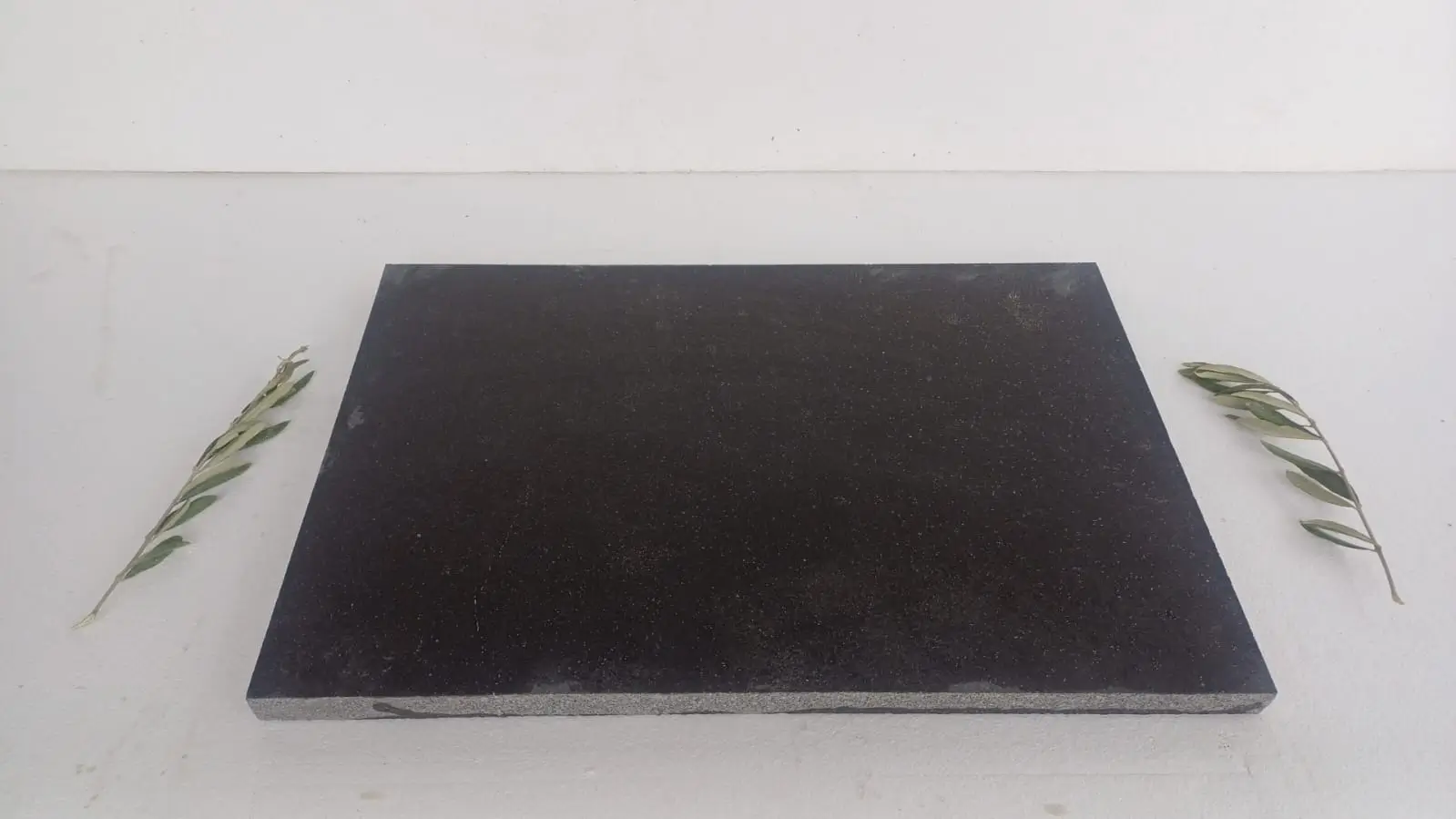
Not all grey limestone performs equally under Gilbert’s thermal cycling demands. The material’s internal pore structure determines how moisture — even trace atmospheric moisture — behaves under repeated heating and cooling. Limestone with interconnected porosity above 8% allows capillary absorption that creates hydrostatic pressure during rapid heating cycles, gradually weakening the crystalline matrix at grain boundaries.
For Arizona traditional appeal in a lasting design, specify grey limestone with a water absorption rate below 5% and a compressive strength above 8,000 PSI. These aren’t arbitrary thresholds — they reflect the minimum performance envelope needed to survive 50+ years of desert thermal stress without requiring structural rehabilitation. Here’s what to verify before your order ships from the warehouse:
- Water absorption rate: under 5% per ASTM C97 testing protocols
- Compressive strength: minimum 8,000 PSI, ideally 10,000–12,000 PSI for vehicular applications
- Modulus of rupture: 1,500 PSI minimum for pedestrian paving, 2,000 PSI for driveway applications
- Thermal shock resistance: stone should show no cracking after 25 freeze-thaw cycles per ASTM C99
- Finish texture: honed or brushed finishes maintain slip resistance better than polished under thermal cycling conditions
The freeze-thaw specification matters even in Gilbert. Elevation-adjacent communities and winter nights that dip below freezing — Gilbert averages 18–22 nights per year below 32°F — create enough freeze-thaw cycles to matter for marginal-quality stone. A limestone that passes 25 cycles without degradation gives you meaningful long-term confidence in the material’s grain cohesion.
Base Preparation That Accommodates Thermal Movement
Your base system does more work in Gilbert than in most U.S. climates. The goal isn’t just load distribution — it’s creating a stable, semi-flexible platform that allows the stone surface to move slightly without building up concentrated stress at edges and corners. A rigid, perfectly locked base can actually work against you in high-thermal-swing environments.
In Chandler and the broader East Valley, expansive clay soils present an additional challenge: the subgrade itself swells and contracts seasonally, adding a second layer of movement beneath your aggregate base. Standard 4-inch compacted aggregate base is insufficient where clay content exceeds 30% — you’ll need 6–8 inches of well-graded crushed aggregate, with a geotextile separation layer between native soil and aggregate to prevent clay migration upward over time.
- Subgrade compaction: minimum 95% Proctor density before any base material is placed
- Aggregate base: 3/4-inch crushed angular aggregate, not rounded river gravel — angular particles lock under load
- Base depth: 4 inches minimum for pedestrian, 6 inches for light vehicular, 8 inches for driveway applications
- Setting bed: 1-inch compacted coarse sand or fine crushed aggregate, not mortar for standard installations
- Geotextile: 4-oz non-woven fabric at the subgrade-aggregate interface in clay-prevalent areas
One detail that consistently gets missed in the field: the transition zone between your paved area and any adjacent concrete structure — a foundation wall, pool deck edge, or driveway apron — needs an isolation joint. Concrete expands at a different rate than grey limestone, and without that joint, you’re setting up a stress concentration point that thermal cycling will exploit within two to three seasons.
Joint Sand and Sealant Specifications for Desert Climates
Polymeric joint sand behaves differently under Gilbert’s temperature extremes than manufacturers’ printed data suggests. Standard polymeric sand activates and cures during installation, but Gilbert’s summer conditions can accelerate that cure dramatically — you’re working with roughly half the open time you’d have in a moderate climate. Your crew needs to plan installation sequencing accordingly, working in smaller sections and completing the water activation process before direct sun hits finished joints.
For grey paving classic look Arizona projects, consider hybrid joint sand products formulated for hot-climate cure rates. These products maintain workability up to 95°F surface temperature versus the 85°F limit of standard formulations. The difference matters when you’re installing on a July morning that hits 90°F surface temperature by 9 a.m.
Sealant selection follows a similar logic. Penetrating silane-siloxane sealers outperform film-forming acrylic sealers in high-thermal-swing conditions because penetrating products don’t create a surface layer that can delaminate under rapid temperature change. Film-forming sealers can blister when moisture trapped beneath the stone film tries to escape through the surface coating during rapid heating — a failure mode common enough in Gilbert installations that it’s worth specifying explicitly in your materials schedule.
Reapplication intervals for penetrating sealers in Gilbert’s UV and temperature environment run 18–24 months rather than the 36–48 months that manufacturers cite for moderate climates. Factor that into your maintenance specification and communicate it clearly to property owners — a missed sealing cycle in year three can mean accelerated surface weathering that compresses the stone’s effective lifespan by five or more years.
Selecting the Right Thickness for Your Loading Conditions
Grey limestone timeless Gilbert installations typically specify 1.25-inch to 2-inch nominal thickness, but the right choice depends on your load scenario and joint spacing working together. Thinner stone — 1.25 inch — performs well for pedestrian patios and pool decks where point loads are limited and the base is well-compacted. Move into any application with regular vehicular traffic, heavy furniture, or concentrated equipment loads, and you’ll want 1.5 to 2 inches minimum.
Here’s a nuance that field experience reveals quickly: under-bed support consistency matters more than thickness alone. A 2-inch slab with a void beneath it will crack under load far sooner than a 1.25-inch slab with 100% bedding contact. The setting bed preparation — screeding it level and verifying full contact before setting each paver — is where thickness decisions either pay off or get undermined. Take the time to tap-test each paver after setting. A hollow sound indicates a void that thermal cycling will turn into a stress fracture within two seasons.
Color Stability and Surface Character Under UV and Thermal Cycling
Grey limestone’s color stability in direct Arizona sun is genuinely one of its strongest attributes for lasting design. Unlike sandstone or certain travertine varieties that bleach significantly under sustained UV exposure, well-sourced grey limestone maintains its tonal range because the grey coloration comes from mineral composition — calcite matrix with distributed clay minerals and iron compounds — rather than surface pigmentation that UV can degrade.
That said, you’ll notice a gradual lightening in the first 12–18 months as fresh cut surfaces weather to their natural patina. This isn’t deterioration — it’s the stone finding its stable surface chemistry under local conditions. Projects in Tempe show this weathering pattern consistently, with final tonal values typically landing 10–15% lighter than the material’s appearance in covered warehouse storage. If color consistency is critical to your design intent, specify the material’s weathered tone rather than its freshly quarried color when reviewing samples.
The thermal cycling dynamic affects surface texture over time as well. Honed grey limestone develops a natural micro-texture through years of expansion and contraction that can actually improve slip resistance compared to the initial honed finish. This is a positive long-term characteristic for pool decks and outdoor pathways — the material self-improves in the slip-resistance dimension as it ages in Arizona conditions. For projects where you need to explore material options in detail, our ash grey limestone paving materials page covers the full specification range available for Arizona applications.
Drainage and Slope Requirements in the Desert Context
Arizona’s monsoon season delivers rainfall at intensities that exceed what most paving systems are designed to handle — 1–2 inches per hour is common during July and August storm events in Gilbert. Your surface drainage design needs to handle this peak intensity, not just average annual rainfall. A 1.5% minimum slope toward defined drainage paths is the floor spec; 2% is more reliable in practice for grey paving classic look Arizona installations where joint sand settling can reduce effective drainage gradient over time.
The combination of intense but infrequent rainfall and extreme heat creates a specific problem for grey limestone installations: thermal shock. Stone that reaches 140–150°F surface temperature during a summer afternoon and then receives cold monsoon rain undergoes a rapid 80–100°F temperature drop in seconds. Most well-specified limestone handles this without issue, but marginal-quality material with higher porosity can develop surface spalling from the differential contraction stress. It’s another reason the water absorption spec under 5% isn’t negotiable for Arizona work.
Slope your installations away from structures and toward permeable zones where possible. Gilbert’s caliche hardpan at shallow depths limits vertical drainage in many areas, so lateral surface drainage becomes the primary moisture management strategy. Design your paving layout to direct water efficiently to pervious edges, lawn areas, or drainage structures rather than relying on infiltration through the paving bed.
Ordering, Logistics, and Project Timeline Planning
Material availability planning for grey limestone timeless Gilbert projects deserves more attention than most project schedules give it. Natural stone lead times vary significantly depending on whether inventory is available in a regional warehouse or requires an international order cycle. Domestically stocked material typically ships within one to two weeks; imported material on a project-specific order can run eight to twelve weeks from quarry to job site. Your project timeline needs to reflect which scenario applies to the specific material you’ve specified.
At Citadel Stone, we maintain Arizona warehouse inventory of grey limestone in the most commonly specified thicknesses and finishes, which keeps lead times short for the majority of residential and commercial projects. Our technical team can confirm current stock levels and help you calculate quantities before you commit to a project schedule — a step that avoids the common problem of discovering a material shortage after site preparation is complete.
Truck delivery logistics for larger projects in suburban Gilbert and Surprise require attention to site access constraints. Natural stone pallets for a typical patio project weigh 2,000–3,000 lbs each, and standard flatbed truck delivery requires reasonable driveway or street access for a forklift offload. Confirm your delivery zone’s access conditions — gate widths, overhead clearances, surface load ratings — before scheduling the truck. Material staged too far from the installation area increases handling damage risk and adds significant labor cost.
- Calculate 10% material overage for cuts, pattern adjustments, and future repairs
- Confirm warehouse stock for your specified thickness and finish before finalizing the project schedule
- Verify truck access dimensions at the delivery site: minimum 10-foot clearance width, 14-foot overhead clearance
- Store delivered pallets on level, firm ground — grey limestone pallets on soft soil can tip under the weight of upper layers
- Allow 24–48 hours for stone to acclimate to ambient temperature before installation in extreme heat conditions
Getting Grey Limestone Timeless Gilbert Specifications Right
The lasting design case for grey limestone in Gilbert rests on physics that work in your favor — lower thermal expansion than concrete, stable mineral coloration, and surface character that improves with age under Arizona sun. But those advantages only fully materialize when your specification addresses the thermal cycling mechanics from the base up: proper joint spacing, correctly specified polymeric sand, penetrating sealers applied on the right schedule, and stone density specs that exclude marginal material before it reaches the truck.
Gilbert enduring style in hardscape comes from installations that were designed for their actual climate, not for a generic moderate-climate template. The temperature ranges here — daily swings of 60–70°F, occasional winter freeze nights, and monsoon thermal shocks — are demanding but entirely manageable when your specification is built around them rather than retrofitted to them. Specifiers and contractors who understand those cycling demands consistently produce grey limestone timeless Gilbert installations that outperform concrete alternatives by a decade or more. For those planning projects across broader urban contexts in the East Valley, Grey Limestone Paving Urban Landscape for Chandler City Spaces explores how these same materials perform across commercial and civic-scale installations. Citadel Stone guarantees the durability of our dove grey limestone paving slabs in Arizona.