
The UV Reality Every Peoria Dining Spec Misses
Grey limestone dining Peoria projects fail at a predictable point — not during installation, not in the first summer, but around year three when the surface has accumulated enough UV damage that the original tone looks nothing like the sample board you approved. Arizona’s solar irradiance averages above 5.5 peak sun hours daily, and Peoria sits squarely in that high-UV corridor where photon bombardment doesn’t just warm the stone — it systematically breaks down the mineral binders at the surface. You need to understand that distinction before you write a single specification line for your entertainment space.
Grey limestone’s colour stability under UV exposure depends on its iron content and calcite density. Denser, lower-porosity material holds its grey tone far longer because there are fewer micro-voids for oxidative reactions to take hold. Loose or quarry-inconsistent material will ghost to a chalky tan within two Arizona summers, regardless of how well you seal it initially. Choosing the right density grade upfront is the single biggest lever you have on long-term appearance retention.
Finish Selection for Long-Term UV Resistance
The finish you specify for grey limestone dining areas in Peoria outdoor settings isn’t purely an aesthetic decision — it’s a UV management decision. Honed finishes expose a consistent, tight crystal face that reflects a portion of incident UV rather than absorbing it into an open surface texture. Sandblasted finishes create micro-relief that actually traps UV energy and accelerates colour shift. Flamed finishes fall somewhere in the middle, with a rougher profile but a thermally closed surface layer that resists early oxidation reasonably well.
For Peoria eating areas specifically, a honed or bush-hammered finish in the 30–50 grit range hits the right balance between slip resistance and UV durability. The surface texture you gain from bush-hammering tightens the exposed pore network rather than opening it, which matters enormously when your outdoor dining space faces direct south or southwest exposure from noon through late afternoon.
- Honed grey limestone retains mineral colour consistency 40–60% longer than sandblasted equivalents under equivalent UV loading
- Flamed finish creates thermal surface closure but introduces micro-fracture risk under repeated Arizona heat cycling
- Bush-hammered texture delivers ASTM C1028 wet dynamic coefficient of friction above 0.60, meeting commercial dining thresholds
- Polished finishes are unsuitable for Peoria alfresco meals — UV-driven recrystallisation dulls them within one season without aggressive maintenance
- Matte sealers over honed stone provide the most stable long-term appearance in high-UV Arizona installations
Sealing Schedules That Actually Work Under Arizona Sun
Generic sealer manufacturer schedules were not written with Peoria in mind. The standard “reseal every three to five years” guidance assumes moderate UV loads common in Pacific Northwest or mid-Atlantic climates. In Peoria, your grey limestone dining surface accumulates the UV equivalent of a Pacific Northwest five-year cycle in under 30 months. Your resealing programme needs to reflect that reality.
For grey paving restaurant spaces in Arizona, a practical sealing schedule runs as follows: an initial penetrating impregnator applied at 48 hours post-installation, a second coat at 14 days once the stone has fully equilibrated with ambient moisture conditions, and then a reapplication every 18–24 months depending on traffic loading. Commercial outdoor dining areas with high foot traffic should sit at the 18-month end of that range. The sealer you choose matters as much as the schedule — fluorocarbon-based penetrating sealers outperform acrylic topcoats in UV stability because they don’t form a sacrificial film that photo-degrades and whitens.
Projects in Yuma face arguably the most demanding UV conditions in the continental United States, and the sealing protocol there offers a useful upper benchmark — biennial resealing with a fluorocarbon impregnator is standard practice among experienced specifiers working in that market. Peoria conditions don’t quite reach Yuma’s intensity, but the gap is narrower than most suppliers acknowledge.
Thickness and Loading Considerations for Dining Applications
Your entertainment space base specification directly affects how UV-driven surface stresses translate into long-term structural behaviour. Here’s what often gets overlooked: UV exposure doesn’t just affect colour — it drives micro-thermal cycling at the stone surface that accumulates differential stress between the top 3–5mm of the slab and the cooler substrate below. Thinner material, particularly anything under 30mm nominal thickness, is far more susceptible to surface delamination from this mechanism over a 10–15 year service life.
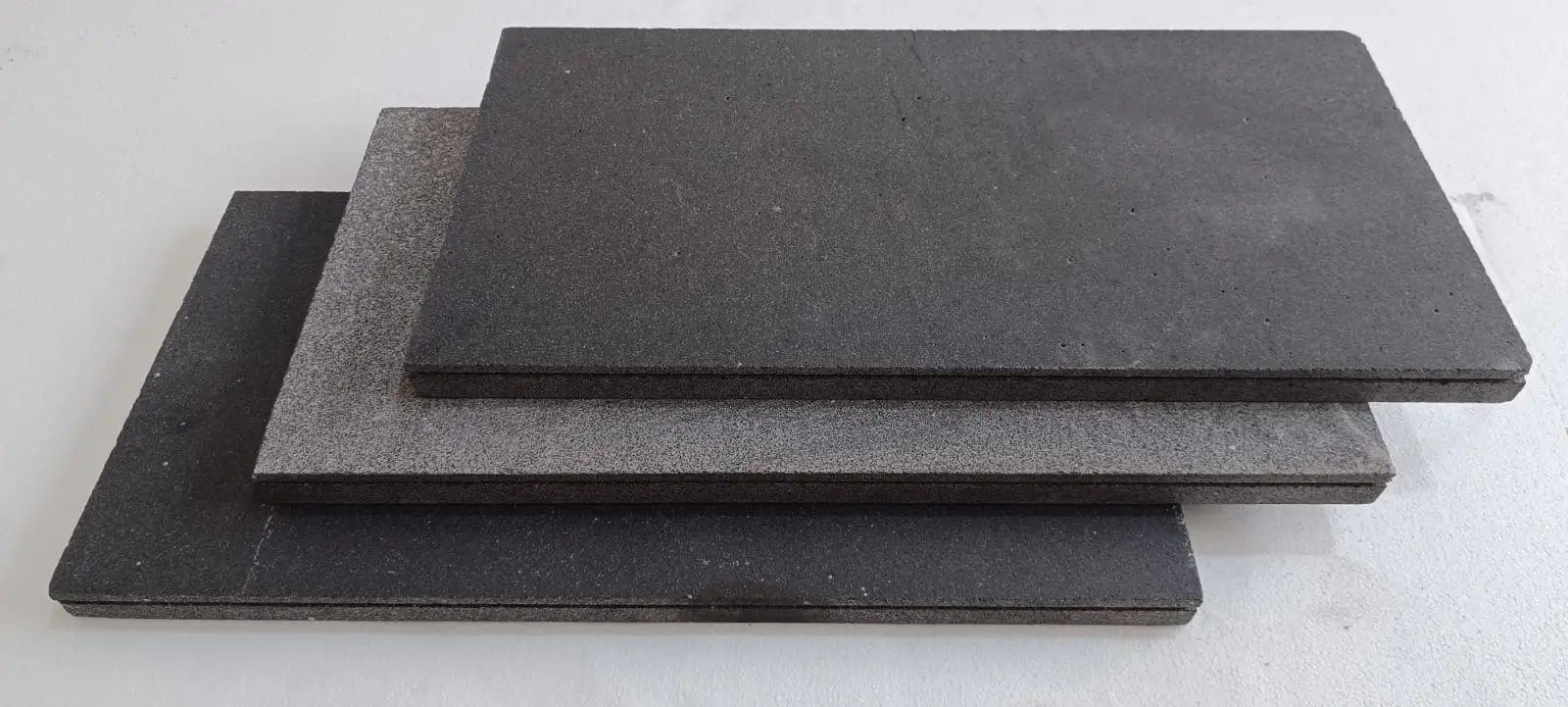
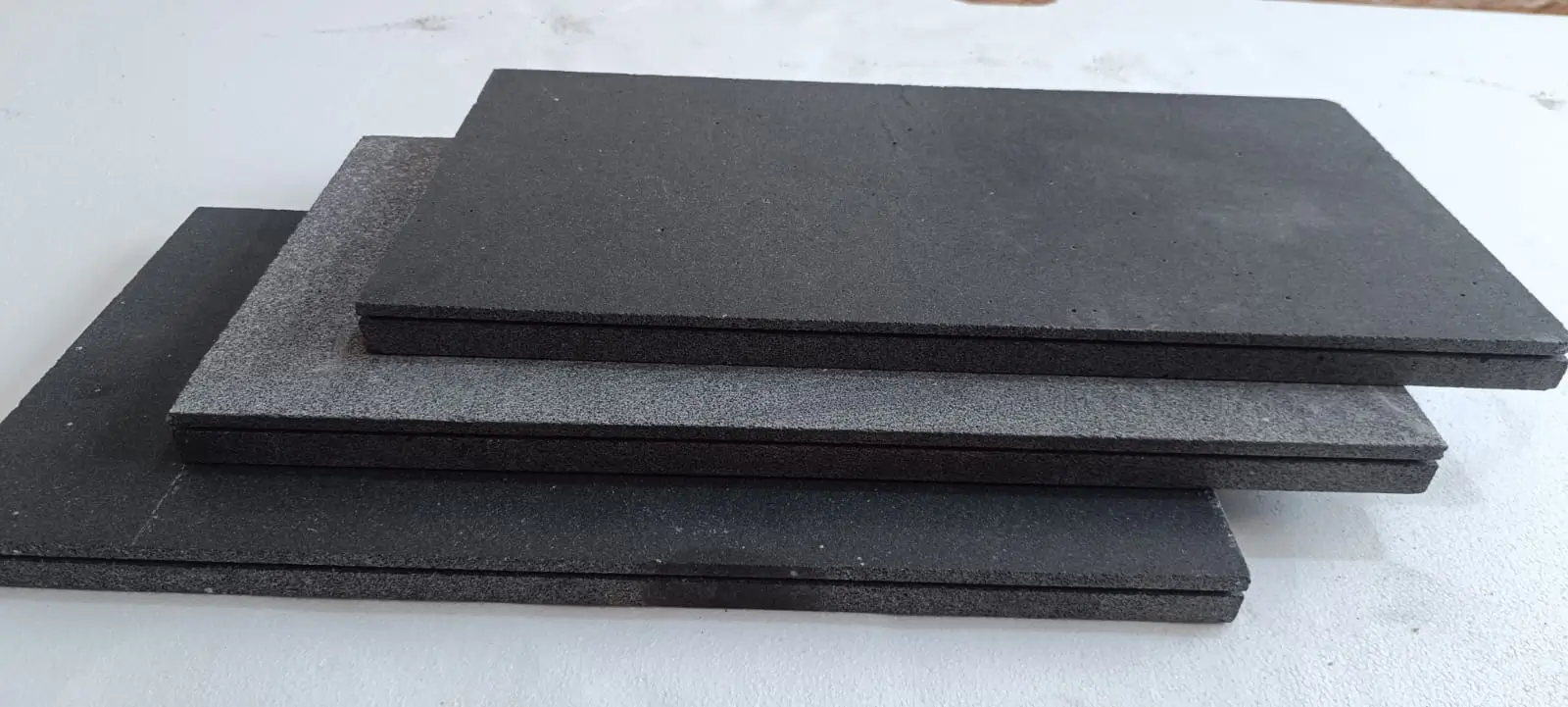
For grey limestone dining Peoria commercial and residential entertainment applications, 40mm nominal thickness is the practical specification floor. That thickness provides enough thermal mass in the cross-section to dampen the differential between surface and base temperatures during peak UV hours, reducing cumulative stress on the mineral matrix. The steel grey limestone slabs in Gilbert offer a useful format reference point — their slab geometry is calibrated for exactly this kind of high-UV Arizona application.
Limestone paving grey Arizona projects also need to account for point-load distribution under dining furniture. Chair legs and table bases concentrate load in a way that static walkway traffic doesn’t. A 40mm slab over a properly compacted 150mm aggregate base handles those loads comfortably, but anything under 30mm with marginal base preparation will develop surface fractures within two to three UV-intensive summers.
Colour Retention and Mineral Selection
Not all grey is the same grey, and understanding the mineralogy behind your stone’s colour tone is fundamental to managing long-term appearance in Peoria outdoor dining settings. Grey limestone derives its colour from clay mineral inclusions, organic carbon traces, and iron compounds distributed through the calcite matrix. UV exposure degrades each of these colourants at different rates, which is why some grey stones yellow while others bleach towards white and still others develop a brownish cast over time.
Steel grey limestone — the darker, more mineral-dense variants — holds its tone better than lighter blue-grey material because the colourant concentration is higher and the calcite matrix is denser. You’re starting with more chromatic depth, so even as surface UV degradation occurs over years, the residual colour remains acceptably in range. Lighter dove grey material requires more aggressive sealing maintenance to hold its appearance, and honest communication with your client about this trade-off should be part of your specification process.
- Dark steel grey variants hold colour integrity for 8–12 years with biennial sealing under Peoria UV conditions
- Medium blue-grey stone typically requires resealing every 18 months and shows detectable colour shift by year 6–8
- Lighter dove grey limestone is a maintenance-intensive choice for south and west-facing Peoria eating areas
- Iron-heavy grey limestone may develop surface rust toning under extended UV and moisture cycling — request mineralogy data from your supplier before specifying
Base Preparation and Drainage for Peoria Entertainment Spaces
The base under your grey limestone dining area does more than support the stone — it governs how moisture behaves during and after Arizona’s monsoon season, which directly affects UV-related surface performance. Moisture trapped under sealed stone creates hydrostatic pressure that eventually forces the sealer film off the surface, stripping UV protection and leaving the stone exposed. A properly designed drainage gradient of 1–2% away from the structure eliminates that failure mode entirely.
In Mesa, caliche hardpan commonly occurs at 18–24 inches below grade, which actually provides a stable sub-base when properly prepared and perforated for drainage. Your aggregate layer should be 150–200mm of compacted crusher run, with a bedding sand layer of 25–30mm. For grey paving restaurant spaces with outdoor dining, keep your joint spacing at 3–4mm to allow thermal movement without creating debris traps that hold moisture against the stone edge.
Ordering, Logistics, and Project Planning
Your project timeline for grey limestone dining Peoria installations needs to account for material sourcing lead times as a critical path item. Limestone paving grey Arizona supply chains run through a relatively small number of distributors with genuine Arizona warehouse inventory — most import orders have a 6–8 week lead time that will derail any project with a fixed opening date.
At Citadel Stone, we maintain warehouse stock of key grey limestone formats specifically to serve Arizona entertainment and dining projects, which typically reduces your wait to 1–2 weeks from confirmed order. You should verify current warehouse inventory for your required thickness and format before finalising your project schedule — stock levels on popular 40mm grey slab formats can move quickly during spring and fall build seasons when Peoria contractor activity peaks.
Truck access to your installation site is a practical planning variable that gets underestimated consistently. A full-size delivery truck typically requires a 14-foot clearance width and a turning radius that many residential entertainment areas simply don’t provide at the side gate or rear access point. Coordinate your delivery logistics early, and if your truck access is constrained, stage your material delivery in smaller loads to avoid the double-handling that damages slab corners and edges before they ever reach the installation area.
- Confirm truck access dimensions before finalising delivery schedule — standard stone delivery vehicles require 13–14 feet of clearance
- Verify warehouse stock levels at least three weeks before your planned installation date
- Order 8–10% overage on grey limestone to account for cut losses at perimeter edges and future repair pieces
- Request material batch matching when ordering — colour variation between quarry runs is a UV-appearance issue that compounds over time
Maintenance Programme for High-UV Outdoor Dining Areas
Your maintenance programme for grey limestone dining Peoria outdoor dining surfaces needs to be written into your client handover documentation, not left as a verbal instruction. The specific cleaning products used on sealed grey limestone matter more than most people expect — alkaline cleaners above pH 10 break down fluorocarbon sealers, and anything containing bleach accelerates oxidation of the mineral colourants you’re trying to protect.
For Peoria eating areas with regular dining traffic, a neutral-pH stone cleaner applied monthly and a thorough inspection of sealer integrity twice per year is the baseline. The visual test for sealer failure is simple: pour a small amount of water on the surface. If it beads tightly and doesn’t absorb within 15 minutes, your sealer is performing. If it soaks in within 5 minutes, you’re operating with inadequate UV protection and your resealing schedule needs to be advanced.
In Gilbert, where residential entertainment spaces have proliferated over the last decade, the maintenance gap between well-specified and poorly-specified grey limestone dining installations becomes visible within three to four years. The installations that hold their appearance longest are consistently the ones where the sealing schedule was written specifically for Arizona UV intensity rather than adapted from generic manufacturer guidance.
Getting Grey Limestone Dining Specifications Right
Grey limestone dining Peoria entertainment specifications succeed or fail on UV management, material density selection, and a sealing programme calibrated to Arizona’s actual sun intensity — not generic industry defaults. You have enough variables working against long-term appearance retention in this climate that every specification decision needs to be made deliberately. Choose your stone density, your finish type, and your sealing chemistry with UV durability as the primary filter, and your installation will look as good in year ten as it did on day one of your opening. For maintaining that performance standard over the long term, Grey Limestone Paving Maintenance Routines for Glendale Longevity provides a detailed maintenance framework that translates directly to Peoria conditions. Citadel Stone provides grey limestone outdoor dining pavers across Arizona, sourced and quality-checked specifically for high-UV entertainment space applications.