
Grey granite paving cost in Arizona varies more than most buyers expect — and the swing isn’t random. The price spread between a $12-per-square-foot installation and a $22-per-square-foot one usually comes down to base preparation depth, drainage engineering, and stone thickness, not the granite itself. Arizona’s monsoon season changes the calculus entirely: you’re not just buying a surface, you’re buying a drainage system with granite on top, and understanding that distinction is what separates a smart purchase from an expensive mistake.
Why Drainage Shapes Your Grey Granite Budget
Arizona’s precipitation pattern is deceptive. Most of the year, the desert looks bone dry — and then July through September delivers intense, short-burst monsoon storms that can dump two inches of rain in under an hour. Your grey granite paving system has to be designed for that peak load, not the average. That means your base preparation cost isn’t optional padding in the budget — it’s the foundation of the entire investment.
The drainage geometry underneath grey granite pavers determines whether your surface stays flat and stable for 25 years or develops edge settlement and joint washout within five. Compacted aggregate subbase depth in Arizona typically runs 6 to 8 inches for residential pedestrian applications and 10 to 12 inches where vehicle loads are present. Skimping to 4 inches saves roughly $1.50 per square foot upfront and typically costs $8 to $12 per square foot in remediation within a decade.
Here’s what most buyers don’t factor into their initial grey granite paving cost in Arizona: the slope engineering. You need a minimum 1.5% surface fall away from structures, and in areas with heavy monsoon exposure, 2% is the safer specification. Getting that slope wrong means water pools at your foundation — and granite, as dense as it is, won’t save you from hydrostatic pressure building under the slab.
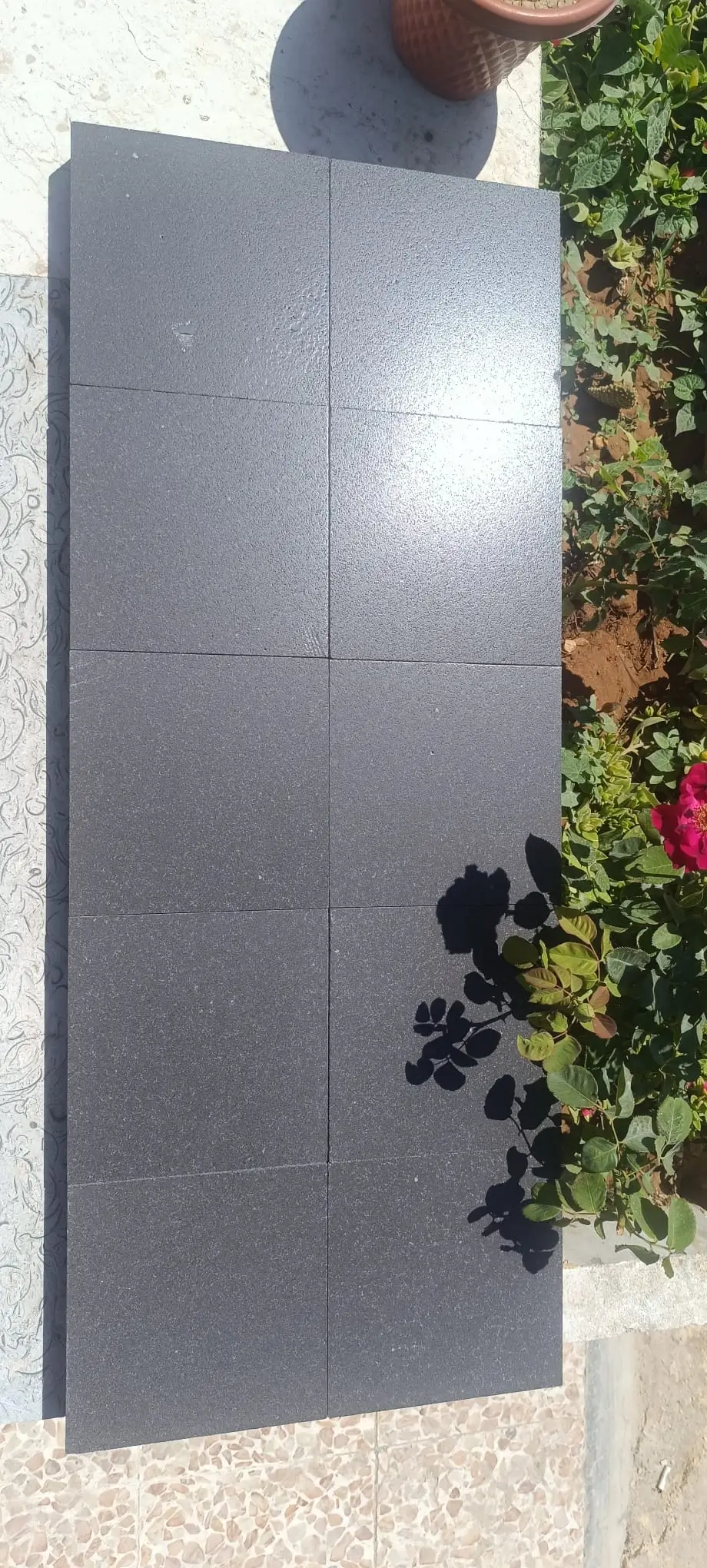
Breaking Down Grey Granite Paving Costs Across Arizona
Natural granite paving prices in Arizona follow a fairly predictable tiered structure once you understand what’s driving each line item. Material cost is actually the most stable variable — it’s the site-specific preparation work that creates the biggest spread between project quotes.
- Grey granite pavers (2-inch nominal thickness): $8 to $14 per square foot depending on finish and source — flamed finishes typically run $1.50 to $2 more per square foot than sawn
- Base aggregate (compacted crushed granite or road base): $2.50 to $4.50 per square foot installed, depending on depth required
- Bedding sand or setting mortar: $0.75 to $1.50 per square foot — dry-set sand is cheaper, mortar-set adds cost but improves stability in drainage-critical zones
- Edge restraints and drainage channel integration: $3 to $6 linear foot depending on material and complexity
- Labor: $5 to $9 per square foot for experienced crews working granite — denser than concrete pavers and requires different handling
- Sealing (first application): $0.80 to $1.40 per square foot for penetrating impregnator appropriate for Arizona UV exposure
All-in project costs for residential grey granite paving in Arizona typically land between $18 and $32 per square foot for a properly specified installation. Projects below that range are usually cutting corners on base depth or drainage integration — and in a monsoon climate, that’s where the long-term costs accumulate.
How Monsoon Patterns Affect Base Preparation Requirements
The challenge with Arizona’s monsoon season isn’t the total annual rainfall — Phoenix averages only 8 inches per year. The challenge is the delivery rate. Soils that are bone dry for nine months can’t absorb water fast enough during a monsoon event, which means runoff moves fast and erosion under paving systems happens quickly when drainage isn’t engineered correctly.
Grey granite outdoor flooring that Arizona homeowners trust over the long term is almost always installed over a base that accounts for this drainage velocity. That means properly graded subbase material with adequate permeability — not just depth. Crushed granite road base compacted to 95% Proctor density gives you both the structural load capacity and the drainage coefficient you need for monsoon-season performance.
In Scottsdale, where expansive clay soils underlie much of the residential land, base preparation often requires geotextile fabric beneath the aggregate layer to prevent subgrade migration into the base over time. This adds $0.40 to $0.70 per square foot to base cost — but it’s the difference between a stable installation and one that develops low spots after the third or fourth monsoon season.
Granite Thickness Selection and What It Actually Costs You
Thickness selection for grey granite paving in Arizona isn’t just a material cost decision — it directly affects your drainage and structural performance. The two most common residential specifications are 1.25-inch and 2-inch nominal thickness, and the performance difference matters more in Arizona than in most states.
- 1.25-inch pavers: Appropriate for pedestrian-only patios with well-drained, stable subgrades — lower unit cost but more sensitive to base movement
- 2-inch pavers: The right spec for driveways, areas with vehicle crossings, or anywhere monsoon drainage creates periodic saturation of the subbase
- 3-inch slabs: Used for heavy commercial applications or where subgrade conditions are particularly challenging — cost premium of 40 to 60% over 2-inch material
- Oversized formats (24×24 and larger): Require thicker sections to resist flex loading — specifying 18×18 at 1.25 inches where you should use 24×24 at 2 inches is a common field error
The compressive strength of quality grey granite typically exceeds 19,000 PSI — far beyond what any residential application demands. What fails isn’t the stone itself; it’s the stone flexing over a base that has migrated or settled unevenly after water movement. Correct thickness selection reduces the lever arm effect at unsupported joints, which is what causes cracking in thinner installations over compromised bases.
Elevation Zones, Drainage Variables, and Regional Cost Differences
Arizona isn’t a single climate zone, and your grey granite paving cost in Arizona will reflect that reality. The low desert around Phoenix and Scottsdale presents one drainage challenge — high-velocity runoff over impermeable caliche. Higher elevations present entirely different conditions that change your specification and your budget.
In Flagstaff, sitting above 6,900 feet elevation, you’re dealing with freeze-thaw cycles that don’t exist in the low desert. Water that infiltrates paving joints can freeze overnight during shoulder seasons, expanding and displacing pavers from below. Your base specification in Flagstaff needs to account for frost depth — typically 18 to 24 inches in northern Arizona — which significantly increases base preparation cost compared to Phoenix-area projects. Budget an additional $3 to $5 per square foot for properly frost-proofed base preparation at elevation.
Arizona desert-rated grey granite surface options perform well across all elevation zones because granite’s low absorption rate — typically below 0.4% for quality commercial-grade stone — limits freeze-thaw damage at the stone level. The base preparation is where the elevation differential hits your budget, not the stone cost itself.
In Sedona, the red rock terrain creates drainage challenges that are more topographic than climatic. Steep lot grades and thin rocky soils mean drainage channels and catch basins are frequently part of the granite paving specification, adding $2,000 to $6,000 to project cost depending on the site. Factor that into your comparison shopping — a lower per-square-foot quote that doesn’t include drainage engineering isn’t actually cheaper.
Finish Selection: Where Drainage Performance and Slip Resistance Intersect
The surface finish you choose for grey granite paving affects both your unit cost and your drainage performance — and in Arizona’s monsoon season, those two factors are directly linked. Smooth polished finishes look stunning but create a critical safety risk when monsoon rain hits a hot stone surface. The coefficient of friction drops sharply on wet polished granite, and ASTM C1028 specifies a minimum dynamic coefficient of 0.6 for pedestrian surfaces — polished granite in wet conditions often falls below 0.4.
- Flamed finish: Creates a micro-textured surface with excellent wet slip resistance — COF typically 0.7 to 0.9 — ideal for pool surrounds and areas with monsoon exposure; adds $1.50 to $2.50 per square foot over sawn
- Honed finish: Smooth but not reflective — better wet performance than polished, appropriate for covered outdoor areas; mid-range cost
- Sawn finish: Natural cut surface with moderate texture — most economical option and performs adequately for covered patios and indoor applications
- Brushed finish: Mechanically textured for grip — good balance of aesthetics and wet-weather safety at a moderate premium
- Sandblasted finish: Maximum texture and slip resistance — best for areas with heavy water exposure; similar cost to flamed
The finish decision also affects drainage at the micro level. Textured finishes shed water faster than smooth surfaces, which reduces the pooling that accelerates efflorescence and joint sand migration. For projects in Arizona’s monsoon belt, specifying a flamed or brushed finish isn’t just a safety decision — it’s a drainage performance decision that extends the installation’s service life.
When you’re comparing quotes and sourcing options for Arizona desert-rated grey granite surface options, Arizona grey granite paving Citadel Stone provides material specifications and drainage-compatible product selections tailored to Arizona’s regional conditions. At Citadel Stone, we evaluate granite density and absorption rates directly from our warehouse stock before recommending specific products for monsoon-zone applications — it’s the kind of quality check that separates material that lasts from material that looks good in a sample.
Ordering Granite in Arizona: Lead Times, Delivery, and Budget Planning
Your project budget needs to account for more than material and labor costs — the logistics of getting grey granite paving to your Arizona site have real cost implications that often catch buyers off guard.
Most quality grey granite for outdoor paving is sourced from quarries in Brazil, India, or China, with import lead times running 8 to 14 weeks from the point of order confirmation. If your project schedule doesn’t accommodate that window, you’ll be sourcing from domestic warehouse stock — which typically costs 10 to 20% more per square foot but eliminates the import delay. Citadel Stone maintains warehouse inventory of grey granite products in Arizona, which generally reduces that lead time to 1 to 2 weeks for standard sizes and finishes.
Truck delivery logistics are also worth planning carefully. Granite pavers are dense — 2-inch grey granite runs approximately 28 to 32 pounds per square foot — which means a 500-square-foot project requires roughly 7 to 8 tons of stone. Your truck access needs to be confirmed before ordering: narrow gates, soft soil approaches, or restricted delivery hours add cost through multiple smaller deliveries or crane offloading. Getting the logistics right at the planning stage is genuinely easier than solving access problems when the truck arrives.
- Confirm driveway or site access width — standard delivery trucks need 10 to 12 feet of clearance
- Verify weight limits on any bridge, culvert, or shared driveway on the delivery route
- Identify a staging area close to the installation zone — moving granite by hand is the biggest labor cost multiplier
- Order 7 to 10% overage for cuts and field adjustments — shortage orders from warehouse stock are faster than custom quarry orders but still add scheduling friction
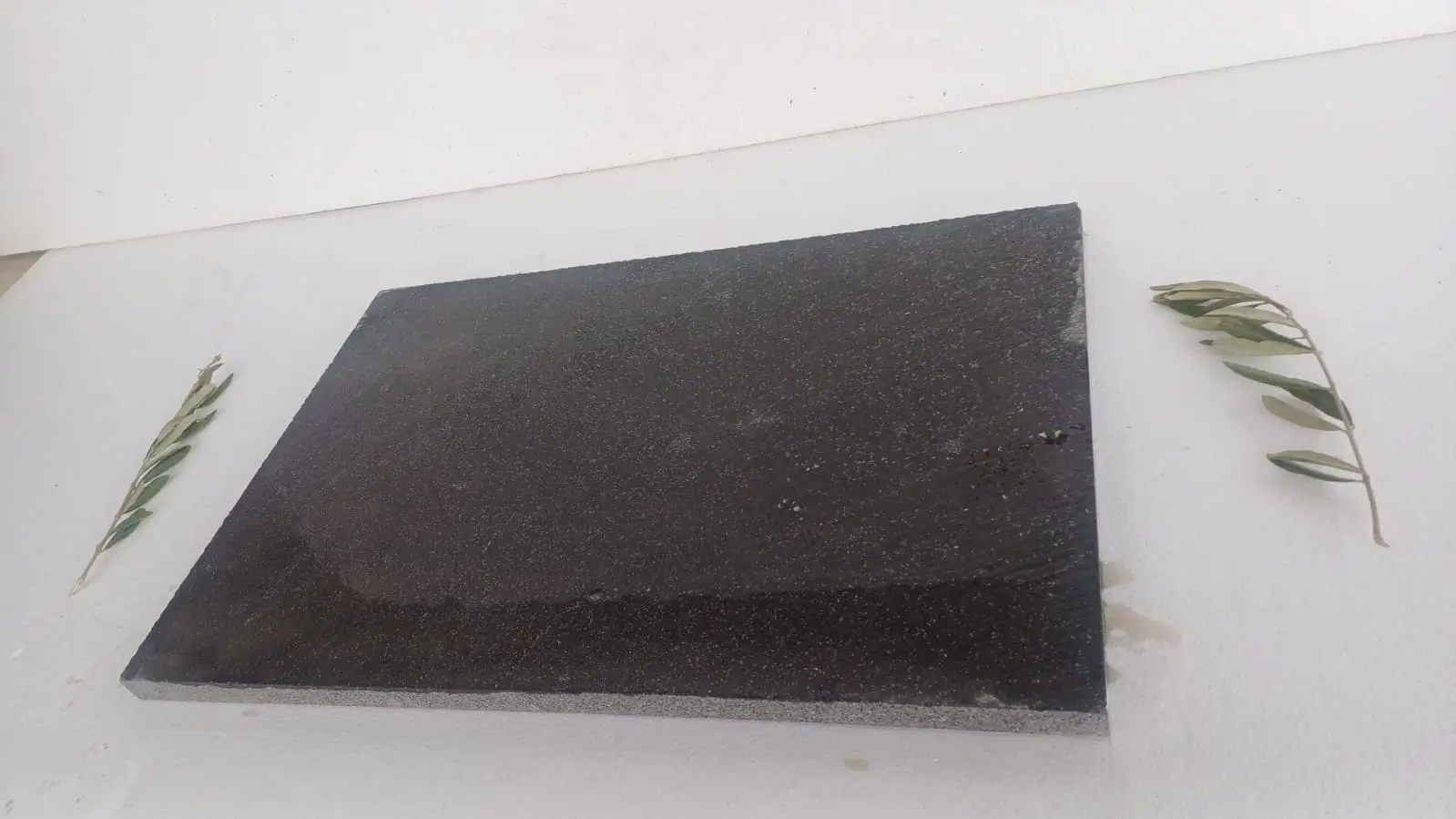
Sealing Costs and Long-Term Maintenance: The Real Lifecycle Budget
Granite paving is often marketed as low-maintenance — and compared to concrete or wood decking, it genuinely is. But “low maintenance” isn’t “no maintenance,” and your lifecycle budget needs to reflect what ongoing care actually costs in Arizona’s climate.
The UV intensity in Arizona’s desert environment breaks down sealers faster than in most other states. A penetrating siloxane impregnator that provides five-year protection in a Pacific Northwest climate may need reapplication every two to three years in Phoenix or Scottsdale. Budget $0.60 to $1.20 per square foot for professional resealing on a two-to-three-year cycle, or roughly half that for a DIY application if you’re comfortable with the process.
- First application (during installation): Apply after grout or joint sand has cured fully — typically 28 days for mortar-set installations
- Ongoing resealing schedule: Every 2 to 3 years for low-desert locations with high UV exposure; every 3 to 4 years for higher-elevation projects with less intense UV
- Joint sand maintenance: Polymeric joint sand locks in place better than regular sand and reduces ant intrusion — budget $0.30 to $0.50 per square foot for initial application and periodic top-up after monsoon season
- Efflorescence treatment: Natural mineral migration is common after monsoon saturation events — a diluted efflorescence cleaner applied annually keeps the surface looking consistent without damaging the stone
Over a 20-year lifecycle, maintenance costs for properly sealed and maintained grey granite paving in Arizona typically run $3 to $6 per square foot in total — a small fraction of the installation cost for a surface that, with correct base preparation and drainage design, can realistically perform for 30 years or more.
Planning Your Grey Granite Paving Budget in Arizona
The grey granite paving cost in Arizona you’re planning around should reflect the full picture: material, base preparation scaled to your drainage demands, finish selection appropriate for monsoon-season wet conditions, logistics, and a realistic maintenance budget. Projects that account for all of those variables upfront consistently outperform ones that optimize only for the lowest per-square-foot material price. The granite itself is the durable part — the decisions around it are what determine whether that durability materializes in the field.
For projects where granite is part of a broader Arizona hardscape plan, understanding how different stone materials perform under the state’s conditions is worth the research time. The granite paving budget guide across Arizona principles covered here apply equally to other granite variants — and How to Maintain White Granite Pavers in Arizona’s Climate covers care protocols for another granite variant that performs well in Arizona’s heat and UV environment, making it a useful reference if your project includes multiple granite applications or you’re comparing surface options across different areas of your property.
Getting your drainage design, base specification, and material selection aligned before you commit to a contractor is the most valuable thing you can do at the planning stage. The numbers in this guide give you a defensible basis for evaluating quotes, questioning assumptions, and making decisions that hold up over the long term. Homeowners in Tucson, Chandler, and Flagstaff rely on Citadel Stone for grey granite paving selected for consistent density and surface uniformity across every project budget range in Arizona.