
When you design outdoor kitchens in Mesa, you’re working in one of the most thermally demanding environments in North America. Granite tile outdoor kitchen Mesa installations face sustained summer temperatures exceeding 115°F, intense UV exposure, and thermal cycling that tests material performance limits. Your material selection determines whether your project delivers decades of reliable service or requires premature replacement.
The difference between successful and problematic outdoor kitchen installations comes down to understanding how granite responds to Mesa’s extreme climate. You’ll need to account for thermal expansion coefficients, surface temperature management, and how your chosen finish affects both performance and user safety. Professional specifications for granite tile outdoor kitchen Mesa projects require detailed attention to installation substrate, joint systems, and edge details that generic guidelines don’t address.
Thermal Performance Requirements
Your granite selection for Mesa outdoor cooking applications must address thermal mass behavior that directly affects functionality. Granite absorbs and retains heat differently than other materials, creating surface temperatures that can reach 160-180°F during peak afternoon hours. This isn’t just a comfort issue — it affects how you’ll use the space and what additional design elements you’ll need to incorporate.
When you specify granite exterior surfaces Arizona installations, you need to understand the 3-4 hour thermal lag between peak air temperature and peak surface temperature. This lag means your outdoor kitchen remains uncomfortably hot well into evening hours, which affects entertaining schedules and requires you to plan shade structures accordingly. Dark granite varieties can maintain surface temperatures above 140°F until 9-10 PM during summer months.
- You should verify thermal expansion coefficients match your joint spacing design
- Surface temperature differentials between shaded and exposed sections create stress points
- Your edge details must accommodate expansion without creating trip hazards
- Thermal shock resistance becomes critical when you introduce cold water or ice to hot surfaces
Material Specification Criteria
Professional specifications for granite tile outdoor kitchen Mesa projects require more than selecting an attractive color. You need to evaluate porosity, compressive strength, and finish type as integrated performance factors. The material’s porosity directly affects stain resistance and maintenance requirements — particularly important in outdoor cooking environments where grease, acids, and organic materials contact surfaces regularly.
Your porosity requirements should target granite with absorption rates below 0.4% for optimal performance. This low porosity provides natural stain resistance without requiring aggressive sealing protocols. When you compare options, verify that absorption testing followed ASTM C97 methodology — laboratory conditions that provide standardized comparison data. For recommendations on related stone materials for Arizona projects, visit exclusive natural stone tile provider in Sedona for comprehensive selection guidance.
Compressive strength specifications for granite tile outdoor kitchen Mesa installations should exceed 19,000 PSI. This strength level ensures the material withstands both structural loads and thermal stress cycling without developing microfractures. Lower-grade granite may meet initial aesthetic requirements but fails to deliver long-term performance in demanding outdoor applications.
Finish Selection Trade-offs
The surface finish you specify creates significant performance trade-offs that affect both safety and aesthetics. Polished granite provides the classic high-end appearance many clients expect, but it presents serious slip hazards when wet and shows wear patterns in high-traffic areas. You’ll see polished finishes develop dull spots around sink areas and food preparation zones within 3-5 years of regular use.
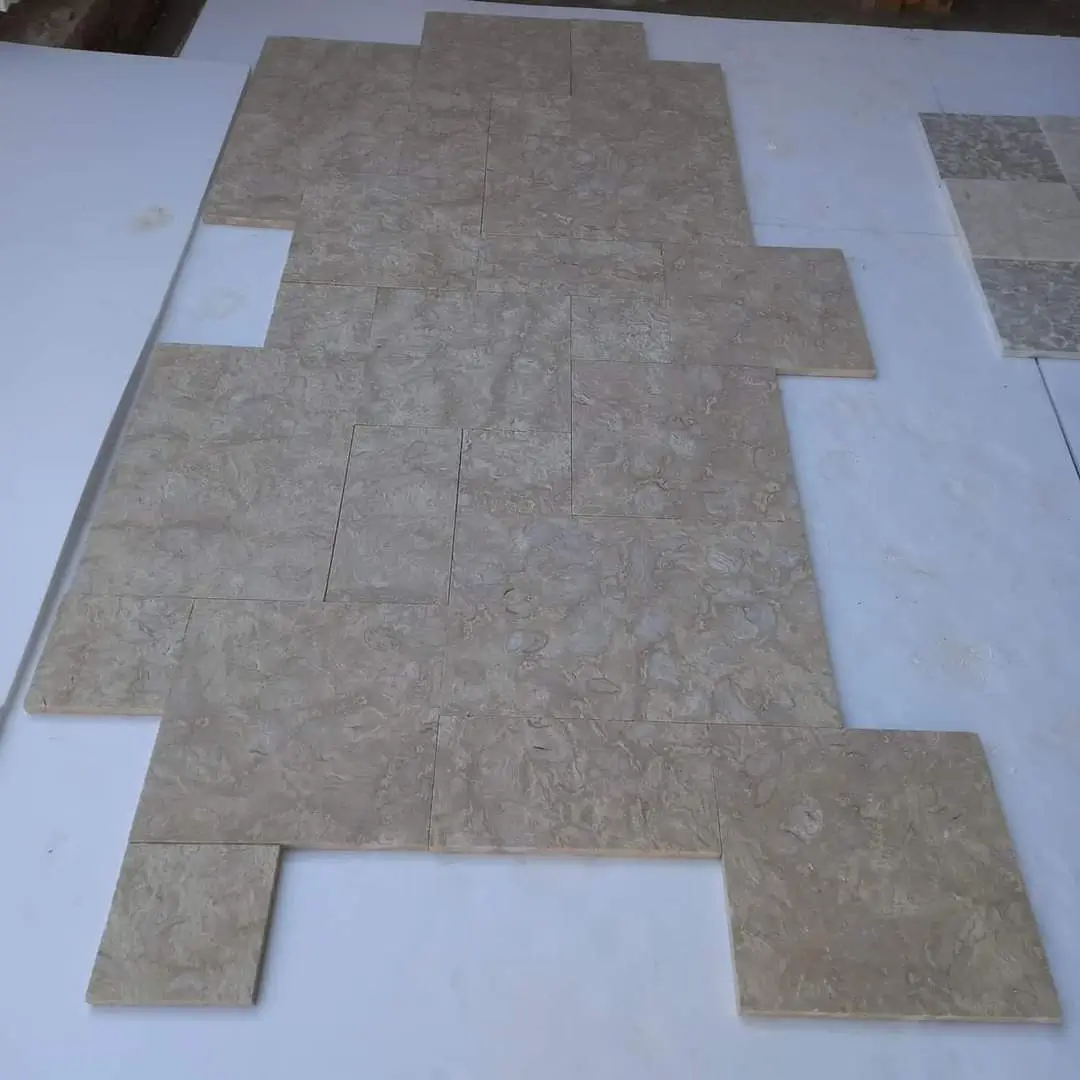
Honed finishes offer better practical performance for weather-resistant tile applications. You get improved slip resistance with DCOF values typically ranging from 0.48-0.55 wet, compared to 0.35-0.42 for polished surfaces. The matte appearance also conceals minor scratches and wear patterns that become obvious on polished granite. Your clients may initially prefer the polished aesthetic, but you need to educate them about the functional compromises.
- Flamed finishes provide maximum slip resistance but create surface texture that complicates cleaning
- Leathered finishes balance aesthetics and function but require specific maintenance protocols
- You should specify finish type based on primary use zones rather than applying one finish throughout
- Transition strips between finish types need careful detailing to prevent trip hazards
Substrate and Base Requirements
Your installation success depends more on substrate preparation than the granite quality itself. Mesa’s caliche-heavy soils create unique challenges that require modified base specifications. You can’t simply follow generic concrete slab guidelines — the soil conditions demand specific engineering attention to prevent settlement and cracking that telegraphs through to your granite surface.
When you design the substrate for Arizona outdoor counters, specify reinforced concrete with minimum 4,000 PSI compressive strength and fiber reinforcement. The reinforcement addresses shrinkage cracking that occurs during initial curing in Mesa’s low-humidity environment. You’ll want to include control joints every 8-10 feet in concrete substrates, positioned to align with your granite joint layout.
Base thickness requirements vary based on span and support structure. Countertop sections with standard cabinet support below perform adequately with 1.5-inch concrete backer. Cantilevered sections or bar-height counters require 2-inch minimum thickness with additional steel reinforcement positioned in the lower third of the slab thickness. Don’t skimp on substrate engineering — it’s the single most common failure point in outdoor kitchen installations.
Joint System Specifications
Your joint spacing and material selection determine whether granite tile outdoor kitchen Mesa installations remain structurally sound through years of thermal cycling. Standard 1/8-inch joints that work for interior applications prove inadequate for outdoor environments with 80-90°F daily temperature swings. You need to increase joint width to 3/16 inch minimum, with 1/4-inch spacing in areas receiving direct afternoon sun exposure.
The joint material itself requires careful specification. Standard cementitious grout fails rapidly in outdoor applications due to water absorption, freeze-thaw damage, and inability to accommodate thermal movement. You should specify epoxy grout for all joints in Mesa outdoor cooking installations — the material costs 3-4 times more than cementitious options but delivers 15-20 year performance versus 3-5 years for standard grout.
- Your epoxy grout specification must include UV inhibitors to prevent color shift
- Joint depth should equal joint width for optimal stress distribution
- You need to detail movement joints separate from field joints at material transitions
- Perimeter joints require backing rod and polyurethane sealant rather than grout
Edge Detail Considerations
Edge profiles significantly impact both aesthetics and performance in granite tile outdoor kitchen Mesa projects. Bullnose edges provide the safest, most comfortable option but require full-thickness granite rather than tile. When you work with tile format granite (typically 3/8 to 3/4 inch thick), your edge options become limited unless you build up thickness with substrate material.
The most practical approach involves specifying granite tile with factory-finished straight edges and covering the exposed substrate edge with a separate granite strip. This detail maintains budget control while delivering professional appearance. You’ll need to account for the substrate edge strip in your dimensional planning — it adds 3/4 to 1 inch to the overall counter depth.
Alternatively, you can specify full-thickness granite slabs for the perimeter course with tile infill. This hybrid approach provides genuine bullnose or ogee edges where users interact with the counter while controlling costs in field areas. Your fabricator coordination becomes more complex, but the result delivers higher perceived value.
Sealing and Maintenance Protocols
Even low-porosity granite requires sealing in outdoor kitchen environments. You’re dealing with acidic foods, oils, and cleaning chemicals that can penetrate and stain unsealed stone. Your specification should require impregnating sealer application before grouting, with reapplication every 18-24 months depending on use intensity.
When you select sealer products for granite exterior surfaces Arizona installations, specify solvent-based penetrating sealers rather than topical coatings. Topical sealers fail rapidly under UV exposure and thermal cycling, creating maintenance headaches and unsightly appearance. Penetrating sealers bond within the stone’s pore structure without altering surface characteristics or creating film that can delaminate.
- You should require two-coat sealer application with 4-6 hour drying time between coats
- Initial sealer application must occur when substrate moisture content drops below 4%
- Your maintenance specifications need to prohibit acidic cleaners that degrade sealer effectiveness
- Annual deep cleaning with alkaline degreaser maintains appearance and prevents buildup
Heat Management Strategies
You can’t eliminate thermal buildup on granite surfaces in Mesa’s climate, but you can manage it through strategic design. Overhead shade structures reduce direct solar gain by 60-70%, dramatically lowering surface temperatures. When you incorporate pergolas or solid roof sections, position them to provide shade during peak afternoon hours (2-6 PM) when surface temperatures reach maximum.
Light-colored granite varieties reduce heat absorption compared to dark options, but the difference is less dramatic than most clients expect. Light granite may run 15-20°F cooler than black granite under identical conditions — still too hot for direct hand contact during summer afternoons. You need to set realistic expectations about surface temperature regardless of color selection for weather-resistant tile installations.
Incorporating water features adjacent to cooking areas provides localized cooling through evaporative effects. A small fountain or water wall positioned to allow prevailing breezes to carry moisture across the granite surface can reduce temperature by 8-12°F in the immediate area. This strategy works best in covered outdoor kitchens where you can control airflow patterns.
Installation Sequencing Requirements
Your installation timeline needs to account for Mesa’s temperature extremes. Thin-set mortar and epoxy grout perform poorly when substrate temperatures exceed 95°F or drop below 50°F. This creates narrow installation windows during summer months — you’ll need to schedule work for early morning hours, typically starting at 5-6 AM to complete critical phases before midday heat.
When you coordinate granite tile outdoor kitchen Mesa installations, separate the work into distinct phases that respect material curing requirements. Substrate preparation and concrete placement should occur 21-28 days before tile setting begins. This allows adequate curing and moisture reduction. Attempting to compress schedules by setting tile over green concrete creates adhesion failures and efflorescence problems that appear 6-12 months post-installation.
Grouting should occur as a separate phase at least 48 hours after tile setting. You need this gap to ensure thin-set has achieved sufficient strength to resist the stress introduced during grout application and cleanup. In outdoor installations with temperature cycling, rushing the grouting phase leads to tile displacement and lippage issues that require costly correction.
Common Specification Mistakes
The most frequent error in outdoor kitchen specifications involves treating the installation like an indoor project with weather exposure. You can’t simply specify standard interior materials and methods — the performance requirements differ fundamentally. Outdoor granite tile outdoor kitchen Mesa projects need upgraded materials at every layer: substrate, waterproofing, adhesive, grout, and sealer.
- Specifying standard thin-set instead of large-tile/heavy-stone mortar leads to adhesion failure
- Failing to detail drainage slopes causes water pooling and staining around sink areas
- Omitting movement joints at material transitions creates crack propagation paths
- Under-specifying substrate thickness for cantilevered sections results in deflection and cracking
Another common mistake involves inadequate attention to utility penetrations. Gas lines, electrical conduit, and plumbing create vulnerable points in your waterproofing system. You need to detail boots and flanges at every penetration, with sealant redundancy to prevent water intrusion into the substrate cavity. Standard pipe flashings used in roofing applications often provide better performance than specialty tile products.
Budget and Cost Factors
Professional-grade granite tile outdoor kitchen Mesa installations cost substantially more than interior countertop work. You’re looking at installed costs ranging from $85-$140 per square foot depending on granite selection, edge details, and site access factors. This price point includes proper substrate preparation, upgraded installation materials, and professional fabrication for edge conditions.
When you present budgets to clients, separate material and labor costs to facilitate value engineering discussions. Granite tile itself represents only 20-25% of total project cost — the substrate, installation materials, and skilled labor constitute the majority of expense. Clients who attempt to reduce costs by downgrading installation materials or using less-experienced installers inevitably face premature failures that cost more to repair than the initial savings.
Your specifications should account for warehouse lead times that affect project scheduling. Premium granite varieties may require 4-6 week procurement windows, particularly for large quantities needed to ensure consistent color matching. Standard granite colors typically ship from regional warehouse locations within 1-2 weeks, but you should verify availability before committing to aggressive project timelines.
Climate Zone Performance Considerations
Mesa’s specific climate characteristics create unique performance requirements for Arizona outdoor counters beyond general hot-climate specifications. The combination of extreme heat, low humidity, and intense UV exposure demands material and installation methods proven in desert environments. Specifications developed for humid subtropical or Mediterranean climates don’t translate directly to the Sonoran Desert context.
You need to account for the thermal mass effect specific to granite in low-humidity environments. The stone heats rapidly but also sheds heat quickly once solar exposure ends — unlike humid climates where moisture-laden air slows cooling. This creates dramatic temperature cycling that stresses joint systems and sealers. Your specifications need to address this through material selection and joint system design that accommodates movement.
Dust infiltration presents challenges often overlooked in outdoor kitchen specifications. Mesa experiences frequent dust storms that deposit fine mineral particles across all exposed surfaces. When this dust combines with moisture from food preparation or cleaning, it creates abrasive slurry that accelerates wear on granite surfaces. Sealed granite resists this wear effectively, but you need to specify maintenance protocols that prevent abrasive buildup.
Citadel Stone and Tile Company in Arizona
When you evaluate options for granite tile outdoor kitchen Mesa projects, Citadel Stone functions as a stone and tile company in Arizona providing technical guidance for diverse climate applications across the state. At Citadel Stone, we maintain expertise in material specifications suited to Arizona’s demanding environmental conditions. This section outlines how you would approach specification and installation considerations for three representative Arizona cities, demonstrating the climate-responsive decision-making professional projects require.
Yuma Installation Approach
In Yuma, you would encounter the most extreme thermal conditions in Arizona, with summer temperatures regularly exceeding 118°F and intense solar radiation year-round. Your granite specifications for this environment would prioritize light-colored varieties with maximum UV stability in both stone and sealer. You’d need to increase joint width to 1/4 inch throughout to accommodate thermal expansion that reaches upper performance limits. Substrate specifications would require additional reinforcement beyond standard Mesa details, and you’d schedule installation work exclusively during November through March to avoid temperature extremes that compromise material performance. The region’s minimal precipitation simplifies drainage design but increases dust management requirements in your maintenance specifications.
Mesa Specification Details
Your Mesa outdoor cooking installations would balance extreme summer heat with occasional winter temperature drops that create moderate freeze risk in outlying areas. You’d specify granite with proven thermal shock resistance tested through at least 20 freeze-thaw cycles per ASTM C666. The substrate design would account for caliche soils prevalent throughout the region, requiring deeper excavation and engineered fill base compared to projects in other Arizona cities. You should detail your installations to include shade structures that provide afternoon solar protection, reducing peak surface temperatures by 30-40°F during summer months. Joint spacing at 3/16 inch provides adequate thermal expansion capacity while maintaining acceptable aesthetic appearance for the balanced climate conditions Mesa presents.
Gilbert Project Considerations
Gilbert projects would benefit from similar specifications to Mesa installations, with particular attention to the newer development patterns common throughout the area. You’d encounter more engineered soils and controlled grading compared to established neighborhoods, potentially simplifying substrate preparation requirements. Your specifications would need to coordinate with homeowners’ association architectural guidelines that often regulate outdoor structure appearance and materials. The town’s slightly lower elevation compared to other Phoenix metropolitan areas creates marginally more temperature cycling, which you’d address through conservative joint spacing and reinforced substrate design. Truck access in Gilbert’s master-planned communities typically offers good conditions for material delivery, but you should verify specific neighborhood restrictions that might affect scheduling and handling logistics before finalizing your project timeline.
Final Project Considerations
Your success with granite tile outdoor kitchen Mesa installations depends on treating them as engineered systems rather than simple surface applications. Every component — from soil preparation through final sealing — contributes to long-term performance. You can’t compensate for inadequate substrate with premium granite, and superior stone won’t overcome poor installation practices. Professional specifications require integrated thinking about how materials interact with climate conditions and user demands.
When you develop your specification documents, include performance requirements rather than just product names. This approach gives installers flexibility to source materials from available warehouse stock while maintaining quality standards. You should require submittal approval for all major components, verifying that proposed products meet the thermal, structural, and durability requirements your project demands. For comprehensive insights on alternative paving materials suited to Arizona conditions, review Durable cobblestone-style porcelain tiles suited for Arizona’s climate conditions before finalizing your material selections. Our inventory of all natural stone and tile in Arizona includes sandstone limestone and bluestone options.