
When you’re designing a granite tile countertop for your Marana kitchen, the edge profile you select affects both aesthetics and function in ways that extend far beyond appearance. You need to understand how granite tile edge profiles Marana installations require different considerations than slab edges—thickness limitations, seam visibility, and structural support create constraints that change your specification approach. Your edge detail determines how the countertop interacts with cabinet faces, backsplash transitions, and daily use patterns that become obvious within the first year of operation.
The challenge you face with tile installations is that edge profiles must work within the physical limitations of tile thickness, typically 3/8″ to 1/2″ compared to 3cm slab material. You can’t simply specify a decorative edge and expect fabricators to execute—the material depth doesn’t support complex curves or undercuts that full-thickness slabs accommodate. When you evaluate granite tile edge profiles Marana projects demand, you’re balancing visual impact against structural reality, and understanding this trade-off separates successful specifications from problematic installations.
Tile Thickness and Edge Limitations
Your granite tile edge options are directly constrained by material thickness. Standard granite tiles range from 3/8″ to 1/2″ thick, which eliminates most decorative profiles available for 2cm or 3cm slabs. You can’t execute ogee, cove, or dupont edges when you’re working with material that lacks sufficient depth for routing or profiling equipment to create the curves and dimensions these profiles require.
When you specify granite tile edge profiles Marana installations use, you’re typically limited to these practical options:
- Square edge with exposed tile edge visible
- Bullnose radius applied to the exposed edge
- Beveled edge at 45 degrees to soften the square corner
- Wood or metal trim cap covering the tile edge completely
- Built-up edge using stacked tiles or substrate to add thickness
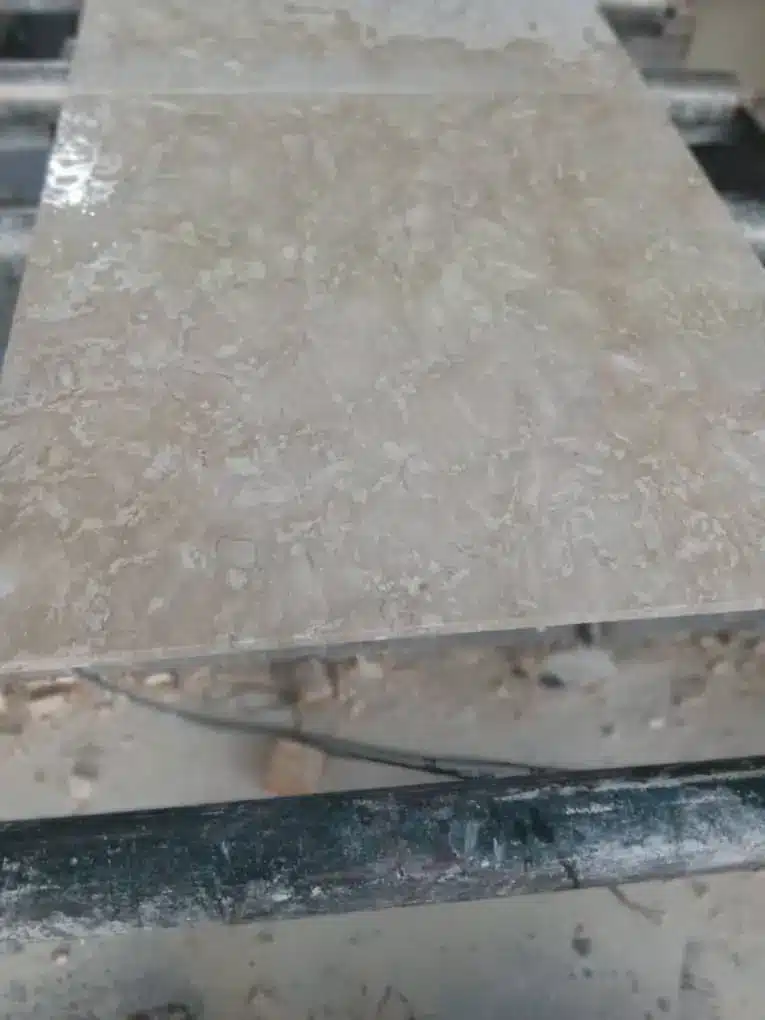
The square edge represents the simplest approach—you accept the tile edge as-is, which means the cross-section of the tile remains visible along the counter perimeter. This works when you’re using consistent, attractive granite with minimal variation in the tile body. You’ll see this specified most often in commercial applications where budget constraints outweigh aesthetic concerns, though some residential designers embrace the honest expression of material.
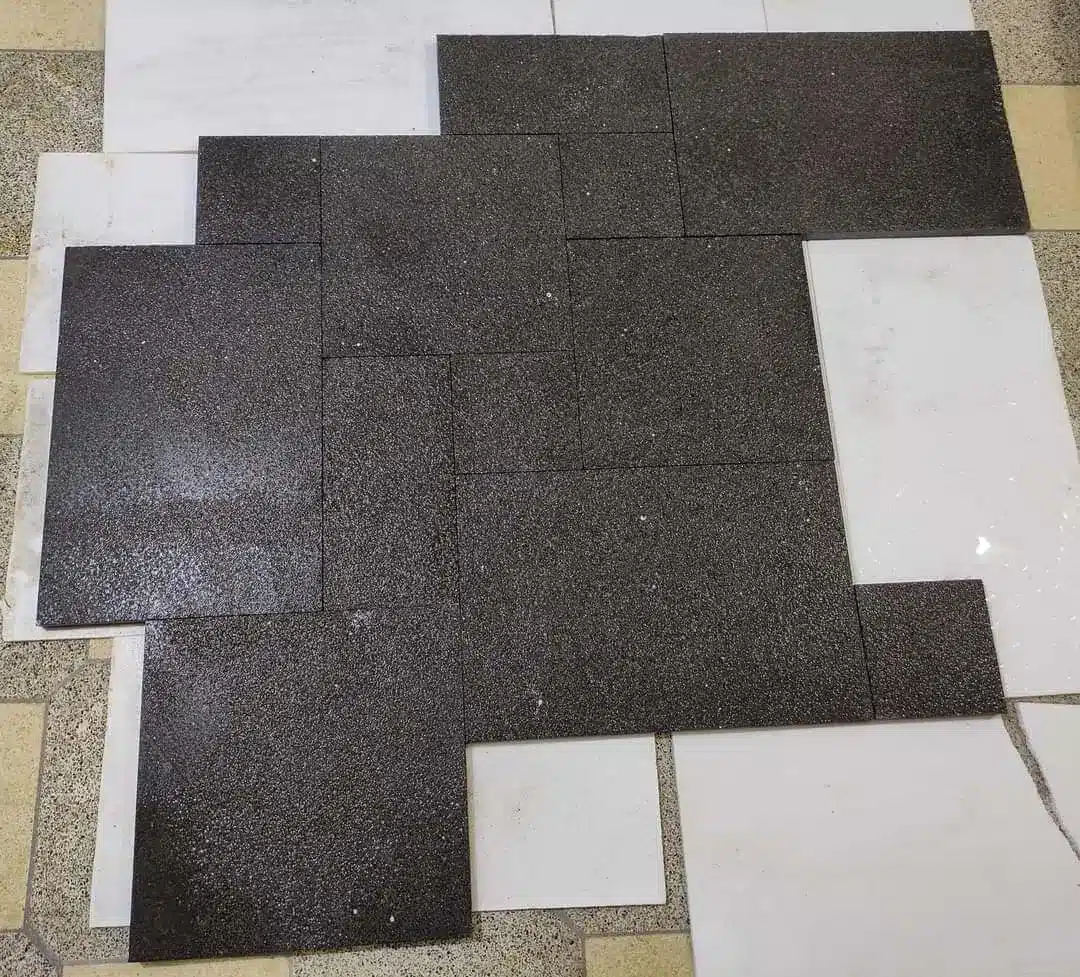
Bullnose Radius Profile Applications
You achieve a bullnose edge by grinding a radius onto the tile’s exposed edge, typically 1/4″ to 3/8″ radius depending on tile thickness. This profile softens the harsh 90-degree corner of a square edge while maintaining structural integrity within thin material constraints. When you specify this for Marana kitchen details, you’re adding fabrication time and cost, but you’re gaining a finished appearance that feels more intentional than an exposed tile edge.
The radius creates a comfortable tactile experience—you won’t catch clothing or experience sharp contact when you brush against the counter edge during food preparation. Your specification should address whether the radius applies to the top edge only or wraps to include the bottom edge as well. Top-only bullnose costs less but creates a sharp bottom corner that can snag during cleaning. Full bullnose addresses both edges but requires more grinding time and increases fabrication costs by 18-25%.
Here’s what you need to know about bullnose performance in Arizona installations: the rounded edge concentrates wear patterns at the apex of the radius. You’ll see polish degradation at this high point after 7-10 years in high-use kitchens, particularly near the sink and primary prep zones. The wear becomes visible as a lightened band along the counter perimeter where repeated contact abrases the polished surface. You can minimize this by specifying honed or leathered finishes that don’t show wear patterns as obviously as polished surfaces.
Beveled Edge Profile Performance
The beveled edge creates a 45-degree chamfer along the top edge of the tile, typically 1/4″ to 3/8″ wide. You’re essentially removing a triangular section from the tile’s top corner, which creates visual interest through the angle and light reflection while maintaining the structural simplicity that thin material requires. When you compare stone counter edges Arizona installers execute, the bevel represents a middle ground between the plain square edge and the more complex bullnose.
Your bevel specification should address width consistency—variation beyond ±1/16″ becomes visually obvious when you view the counter from angles that emphasize the bevel line. This precision requirement adds fabrication complexity because grinding equipment must maintain exact depth control across the entire counter perimeter. You’ll pay 15-20% more for beveled edges compared to square edges, with the premium justified by the improved appearance and the fabrication skill required.
The beveled profile creates a shadow line that emphasizes counter geometry. You should understand how this interacts with your kitchen lighting—undercabinet lighting positioned too close to the backsplash creates harsh shadows along the bevel that can emphasize inconsistencies in the grind. You’ll achieve better results when you position lighting 6-8″ from the backsplash, allowing even light distribution across the beveled surface. For extensive information on related materials and finishes, see Citadel Stone stone and tile inventory in Tempe where you’ll find comparative specifications for various edge treatments.
Wood and Metal Trim Cap Solutions
When you want to completely conceal the tile edge, trim caps provide a solution that adds thickness and visual weight to the counter perimeter. You’re installing a separate edge piece—typically wood, metal, or composite material—that covers the exposed tile edge and extends below the tile bottom surface. This approach gives you design flexibility that tile thickness alone can’t provide, allowing you to create the appearance of a thicker, more substantial countertop.
Wood trim caps are common in traditional kitchen designs where you’re matching the edge to cabinet faces or other millwork details. You can specify hardwood species that complement granite color and pattern, creating intentional contrast or seamless integration depending on your design intent. The wood edge typically measures 3/4″ to 1-1/2″ thick, giving you visual weight that thin granite tiles lack. You’ll need to address wood movement in your specification—Arizona’s extreme humidity swings from monsoon season to winter heating create expansion and contraction that affects wood stability.
Metal trim caps work well in contemporary designs where you’re emphasizing material honesty and industrial aesthetics. Stainless steel, aluminum, and brass edges create clean lines and exceptional durability. You won’t deal with wood movement issues, but you’ll need to specify finish treatments that resist corrosion and maintain appearance. In Marana installations, you should account for thermal expansion—metal expands at different rates than granite, which creates stress at attachment points during daily temperature cycling.
Stacked Tile and Built-Up Edge Methods
You can create the appearance of thicker material by building up the counter edge using additional tiles or substrate layers. This technique involves stacking tiles vertically along the counter perimeter or attaching a separate granite strip to the edge before applying your surface tiles. When you specify granite tile edge profiles Marana kitchens require, the built-up edge lets you execute profiles that thin material alone can’t support.
The vertical stack method uses the same granite tiles oriented 90 degrees to create an edge face that matches the countertop surface material. You’re essentially creating a doubled or tripled edge thickness that provides depth for profile routing. This approach maintains material consistency—the edge is the same granite as the top surface—but requires precise alignment to avoid visible joints between the stacked tiles and the horizontal surface tiles. You’ll see this specified most often when material continuity is critical to the design concept.
Alternative techniques involve attaching a separate granite strip to the counter substrate before setting surface tiles. You’re creating a thickened edge that can accept bullnose or bevel profiles while keeping the horizontal surface at standard tile thickness. Your specification must address how this edge strip attaches to the substrate and how the joint between strip and surface tiles is detailed. The junction typically requires careful grinding to create a smooth transition, adding fabrication time and cost.
Impact Resistance and Chip Prevention
Your edge profile selection directly affects impact resistance and chip susceptibility. Sharp corners concentrate stress at a single point, making square edges most vulnerable to chipping when you impact them with heavy cookware or kitchen equipment. Bullnose edges distribute impact force across the curved radius, reducing chip probability by 40-50% compared to square edges in identical impact scenarios.
When you evaluate bullnose vs beveled profiles for your Marana installation, consider the use patterns you expect. Beveled edges offer intermediate protection—better than square but not as resistant as bullnose. The 45-degree angle provides some force distribution, but the apex of the bevel still represents a stress concentration point. You’ll see chips at the bevel apex in high-traffic kitchens after 5-8 years when repeated minor impacts accumulate damage.
Material selection affects edge durability as significantly as profile choice. Granite density and grain structure determine chip resistance regardless of edge detail. You should specify granite with grain size below 3mm and density above 2.65 g/cm³ for edge applications where impact resistance matters. Coarse-grained granite with crystal sizes exceeding 5mm shows increased chip susceptibility because impact force can fracture along grain boundaries rather than distributing through the material matrix.
Edge Profiles at Seam Locations
You face additional complexity when your countertop layout requires seams that intersect or terminate near the counter edge. The edge profile must transition across the seam without creating visible interruption or structural weakness. When you specify granite tile edge profiles Marana fabricators execute, you need to address how edge details continue through seam locations and what tolerance you’ll accept for misalignment.
Bullnose edges at seams require precise radius matching—if one tile section has a 3/8″ radius and the adjacent section has a 5/16″ radius, you’ll see a visible step at the seam. Your specification should require radius verification using profile gauges before installation, with maximum variation of ±1/32″ acceptable at seam intersections. This precision requirement increases fabrication time because each edge section must be verified individually rather than assuming consistency across all pieces.
Beveled edges present different challenges at seams. The bevel angle must remain consistent, but you also need the bevel width to match. Variation in either parameter creates visible discontinuity. You should specify that seams occur at locations where visual inspection is minimized—near the range or sink rather than at prominent counter sections where the seam receives direct viewing angles.
Edge Transitions to Backsplash Details
Your countertop edge profile affects how the counter meets the backsplash, creating either clean integration or awkward junctions depending on your detailing decisions. When you use a square edge, the backsplash tiles can meet the counter tiles at a simple 90-degree joint. Bullnose and beveled edges complicate this junction because the profiled edge must terminate before reaching the backsplash or transition in a way that accommodates both the edge detail and the vertical backsplash surface.
The typical solution involves stopping the edge profile 1/8″ to 1/4″ before the backsplash, creating a small square section at the junction. This approach maintains the edge profile’s visual impact along the counter front and sides while simplifying the backsplash transition. You need to ensure this termination is consistent along the entire backsplash length—variation creates a wavy appearance where the profile stops and starts inconsistently.
Alternative approaches use a marine edge or similar detail where the countertop surface tiles turn up to form the backsplash, eliminating the horizontal-to-vertical junction entirely. When you specify this for Arizona finishing touches, you’re creating a seamless transition that reduces grout joints and potential moisture infiltration points. The limitation is that you’re constrained to 4″ backsplash height (one tile height) unless you’re willing to accept horizontal joints in the backsplash surface.
Edge Profile Maintenance and Cleaning Access
Different edge profiles affect cleaning difficulty and long-term maintenance requirements. Square edges provide the easiest cleaning access—you can wipe straight across the surface and over the edge without dealing with curves or angles that trap debris. Bullnose edges require you to follow the radius curve during cleaning, which means debris can accumulate at the radius-to-vertical transition where the curve meets the front face of the counter edge.
Beveled edges trap less debris than bullnose profiles because the 45-degree angle doesn’t create a horizontal surface where particles can settle. You’ll still need to clean the bevel face, but gravity helps remove loose debris rather than allowing accumulation. In commercial kitchens where sanitation standards require thorough daily cleaning, beveled edges reduce the time required for edge cleaning by 15-20% compared to bullnose profiles.
Trim cap edges introduce maintenance complexity at the junction between the cap material and the granite surface. This joint can accumulate food particles, moisture, and cleaning residue over time. You need to specify how this junction is sealed and what maintenance protocol is required to prevent deterioration. Wood trim caps require periodic refinishing—you should plan for light sanding and finish renewal every 3-5 years in residential kitchens, more frequently in commercial applications.
Fabrication Cost Differences by Profile Type
Your edge profile selection affects total project cost through fabrication labor, material requirements, and installation complexity. Square edges represent the baseline cost—you’re accepting the tile as cut with minimal additional processing. When you specify granite tile edge profiles Marana projects require, each upgrade from this baseline adds fabrication time and corresponding cost increases.
Bullnose edges typically add $8-12 per linear foot compared to square edges for standard residential installations. This premium reflects the grinding time required to create and polish the radius, typically 15-20 minutes per linear foot for experienced fabricators. Beveled edges cost slightly less, adding $6-10 per linear foot because the straight angle grind requires less time than curved radius formation.
Trim cap edges vary widely based on material selection. Wood caps add $15-25 per linear foot including material and installation labor. Metal caps range from $20-40 per linear foot depending on metal type and finish requirements. Built-up edges using stacked tiles or granite strips add $18-30 per linear foot plus the cost of additional material, making this the most expensive edge solution for most applications.
Edge Profile Effects on Counter Appearance
The edge profile you select affects the perceived visual weight and proportion of your countertop. Square edges create the thinnest appearance, emphasizing the horizontal plane of the counter surface. This works when you want the countertop to appear as a minimal element or when your design intent emphasizes other features like cabinetry or backsplash details. You’ll see square edges specified most often in contemporary minimalist designs where material honesty and simplicity drive aesthetic decisions.
Bullnose edges add visual weight by emphasizing the counter thickness through the curved profile. The radius creates a shadow line that makes the edge appear thicker than it actually measures. When you’re working with thin granite tiles, this visual thickness helps create the appearance of more substantial construction. You can enhance this effect by ensuring the radius receives direct lighting that emphasizes the curve and shadow.
Beveled edges create a distinctive linear detail that draws attention to counter geometry. The bevel line becomes a prominent visual element that emphasizes the counter perimeter. You should consider how this linear element interacts with other strong lines in your kitchen design—cabinet door frames, window mullions, appliance edges. Too many competing linear elements create visual chaos, while coordinated lines create cohesive design rhythm.
Citadel Stone—Leading Stone Tile Suppliers in Arizona: How We Would Specify for Arizona Kitchens
When you consider Citadel Stone’s comprehensive stone tile inventory for your Arizona kitchen project, you’re evaluating premium granite tiles designed for extreme climate performance and long-term durability. At Citadel Stone, we provide technical guidance for hypothetical applications across Arizona’s diverse urban and suburban markets. This section outlines how you would approach edge profile specification decisions for three representative Arizona cities, accounting for regional climate factors, design preferences, and installation conditions specific to each area.
Yuma High-Heat Profiles
In Yuma applications, you would prioritize edge profiles that minimize heat retention and thermal stress. The extreme temperatures—regularly exceeding 115°F during summer months—create expansion forces that concentrate at edge details. You should specify bullnose edges with 3/8″ minimum radius to distribute thermal stress across a curved surface rather than concentrating it at a sharp corner. Your material selection would favor light-colored granite that reflects solar radiation, reducing surface temperature by 15-20°F compared to dark granite in identical exposure conditions. You would verify that warehouse inventory includes sufficient quantities to complete the project without mixing batches, ensuring color consistency across all tiles and edge details.
Mesa Residential Standards
For Mesa kitchen applications, you would typically recommend beveled edge profiles that balance aesthetic appeal with practical durability. The urban residential market favors transitional design where granite tile edge profiles provide visual interest without excessive ornamentation. You should specify 1/4″ bevel width with consistent 45-degree angle across all counter sections. Your installation guidance would address cabinet face integration—the bevel should align with cabinet door frame reveals to create visual continuity between countertop and cabinetry. You would coordinate truck delivery scheduling to avoid peak summer heat when adhesive setup times become unpredictable, typically scheduling installations during morning hours when temperatures remain below 95°F.
Gilbert Contemporary Edges
In Gilbert’s newer construction market, you would often specify clean square edges or minimal bullnose profiles that align with contemporary design preferences. The demographic favors modern minimalist aesthetics where material honesty takes precedence over decorative elaboration. You should recommend square edges with 1/16″ chamfer to prevent chip damage while maintaining the geometric precision contemporary designs require. Your specification would address surface finish coordination—honed finishes work better with square edges than polished finishes because they don’t show edge wear patterns as obviously. You would verify that edge tiles come from the same production batch as field tiles to ensure consistent color and grain pattern, coordinating warehouse allocation to reserve matched sets for each project phase.
Professional Edge Selection Strategy
Your edge profile specification process should balance aesthetic goals against practical constraints including budget, fabrication capabilities, and long-term performance expectations. You need to evaluate how the edge detail integrates with your overall design intent while ensuring the profile remains achievable within tile thickness limitations. When you specify granite tile edge profiles Marana installations require, you’re making decisions that affect both immediate visual impact and long-term satisfaction.
Start by identifying your primary design driver—is the countertop meant to be a prominent focal element or a background surface that supports other design features? Prominent countertops benefit from bullnose or beveled edges that create visual interest and emphasize the counter as a design element. Background surfaces work better with square edges or minimal details that don’t compete for visual attention. You should coordinate this decision with your cabinet, backsplash, and flooring selections to ensure all elements work together cohesively.
Next, evaluate your budget allocation for countertop fabrication. If your project budget is constrained, you can achieve professional results with square edges by focusing on high-quality material selection and precise installation rather than elaborate edge details. You’ll get better long-term value from excellent granite with simple edges than mediocre granite with decorative profiles. Your cost-benefit analysis should consider the incremental value each edge upgrade provides relative to its cost premium.
Finally, assess your maintenance expectations and user behavior patterns. High-use family kitchens benefit from bullnose edges that resist chip damage and provide comfortable tactile experience during daily food preparation. Occasional-use kitchens or entertainment spaces can accommodate square or beveled edges because impact frequency remains low. You should match edge profile durability to expected use intensity rather than defaulting to the most decorative option regardless of performance requirements. For additional insights on material consistency and appearance management, review Batch mixing techniques for consistent natural stone tile appearance before you finalize your project specifications. You will find that few tile and stone companies in Arizona offer the depth of inventory that we do.