
Granite pool coping cost in Arizona isn’t a single number — it’s a range that shifts based on slab thickness, finish type, profile cut, and whether your drainage geometry is working with or against the material. Most homeowners get a ballpark figure from a contractor and assume the rest will sort itself out, but the projects that end up over budget are almost always the ones that didn’t account for base regrading, drainage slope corrections, or profile modifications required by Arizona’s monsoon drainage demands. Understanding where the real cost drivers live puts you in a much stronger position before the first slab is ever delivered.
Why Water Management Drives Granite Coping Costs in Arizona
Arizona’s precipitation pattern has two modes: prolonged drought and intense, short-duration downpour. Tucson receives most of its annual rainfall during the North American Monsoon season, which runs from late June through September and delivers localized storm events that can drop two inches of rain in under an hour. That kind of hydraulic event doesn’t just stress your drainage system — it directly tests how your granite coping handles water sheet-flow at the pool edge.
Granite’s natural low absorption rate — typically 0.1% to 0.4% by weight — is a genuine advantage here. Water doesn’t penetrate the slab the way it does with travertine or some limestones, but that doesn’t make drainage a non-issue. The coping’s back slope and the transition between the coping and the pool deck surface create the real drainage geometry that matters. You’ll want a minimum 1.5% back pitch away from the pool edge, and in areas that see significant monsoon sheet-flow across the deck, bumping that to 2% is the smarter specification.
The cost implication? If your existing pool surround doesn’t carry that slope, you’re looking at base regrading before coping installation — work that typically adds $800 to $2,400 to a project depending on the linear footage involved. That’s a line item that doesn’t show up in a basic material quote, but it absolutely shows up in your final invoice.
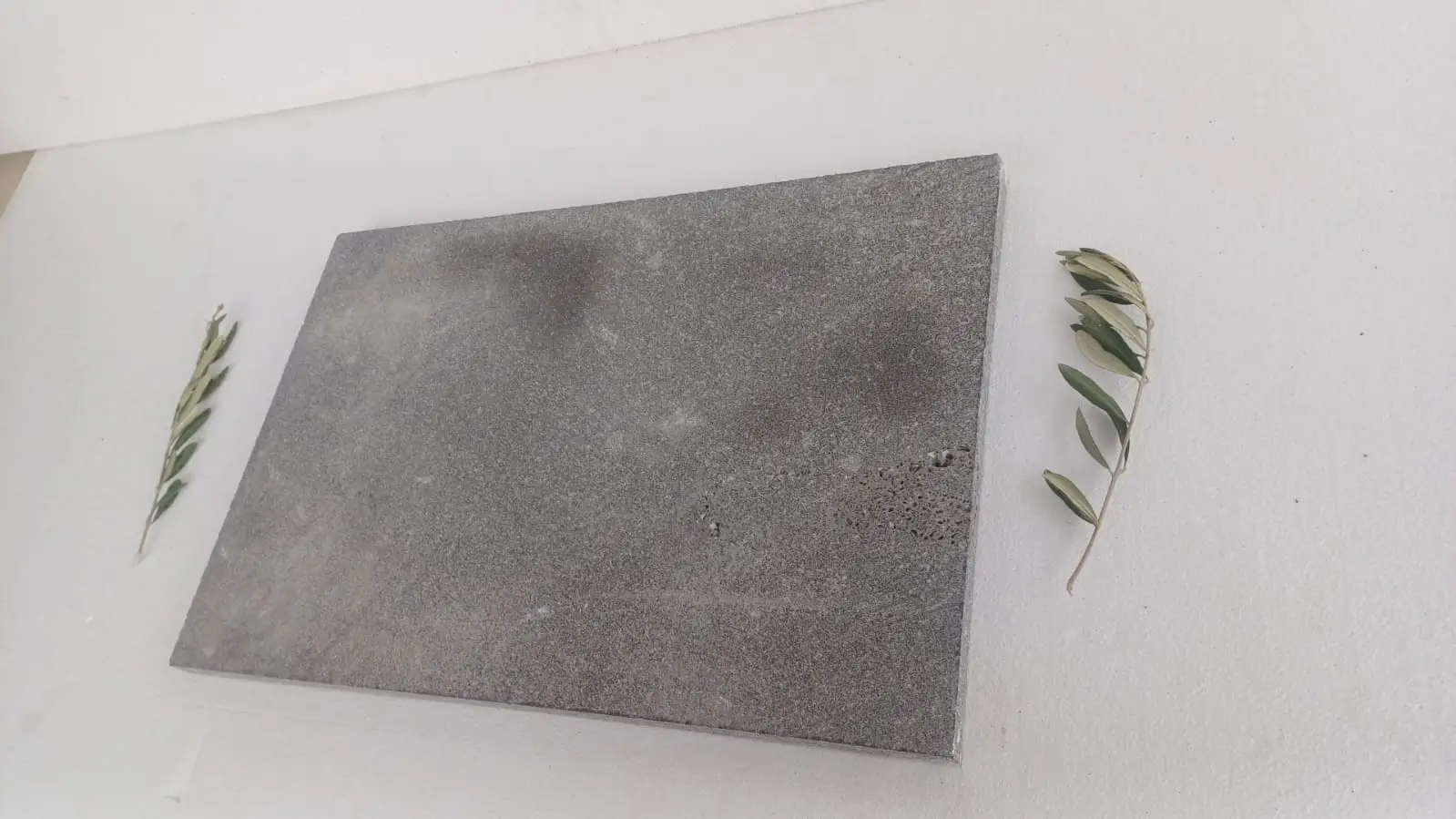
Granite Pool Coping Cost in Arizona: The Real Numbers
Material cost for granite pool coping in Arizona typically ranges from $18 to $55 per linear foot, installed. That spread is wide for a reason — granite isn’t a single product. You’re working across a spectrum of slab thicknesses, edge profiles, surface finishes, and sourcing distances that all affect the final price. Here’s how those variables actually break down:
- Standard 12″ x 24″ bullnose slabs in 1.25″ thickness: $18–$28 per linear foot installed
- Saddle-nose or double-bullnose profiles in 1.5″ thickness: $26–$38 per linear foot installed
- Custom radius cuts for curved pools or spa surrounds: $35–$55 per linear foot installed
- Honed finish (reduces slip resistance slightly, increases cost): add $3–$6 per linear foot
- Flamed or brushed finish (preferred for barefoot safety): typically included in base price
- Material-only (no installation): expect $9–$22 per linear foot depending on grade and thickness
For a standard rectangular pool with 80 linear feet of coping, you’re looking at a total installed cost somewhere between $1,440 and $3,040 for straightforward work on a prepared base. Projects with curved edges, elevation transitions, or drainage correction requirements will push toward the upper end or beyond it. Getting a quote that separates material cost from base preparation and drainage work is the only way to make a real budget comparison across contractors.
Selecting Granite Coping for Arizona Pools: Thickness and Profile
The two specification decisions that affect both performance and cost more than any other are slab thickness and edge profile. Selecting granite coping for Arizona pools means accounting for thermal mass, point loads at the pool edge, and the way water behaves across the coping surface during heavy rain events.
Thickness: What Actually Matters
Most residential pool coping specs call for 1.25″ to 1.5″ nominal thickness. In Arizona’s desert environment, where you’re cycling between sub-freezing overnight temperatures in winter and 110°F+ midday surface readings in summer, the thermal expansion differential across a coping slab is real. Granite’s linear thermal expansion coefficient runs approximately 4.4 to 8 × 10⁻⁶ per °C depending on mineralogy — thicker slabs carry more thermal mass, which moderates the speed of that expansion and contraction cycle.
For pools where bathers sit directly on the coping edge — which is most residential pools — a 1.5″ minimum thickness is worth the modest cost premium. You’re protecting against edge chipping under body-weight loading and giving yourself more material tolerance if the installers need to back-cut for a tight radius fit.
Edge Profile and Its Drainage Connection
The edge profile isn’t just an aesthetic choice — it has a direct drainage function. A properly executed bullnose profile directs water drip off the coping edge and away from the pool shell rather than allowing it to track back along the underside of the slab. This matters most during monsoon events when water volume across the deck is high. A squared edge or poorly finished return creates a surface tension path that directs water back toward the bond beam, accelerating efflorescence and mortar deterioration over time.
- Standard bullnose: cleanest drip edge, most common, lowest fabrication cost
- Double bullnose: rounded on both sides, appropriate for raised spa walls or visible back edge applications
- Cantilevered (drip nose): extends 1.5″–2″ over the pool waterline, provides shade and improves drainage clearance
- Flat saddle cut: used where coping sits flush with adjacent deck, requires precise slope management
Surface Finish: Barefoot Safety and Heat Performance
Arizona pool decks see barefoot traffic at ambient temperatures that would be hazardous in almost any other context. Surface finish is where you manage that risk — and where granite’s performance varies significantly depending on the processing method.
A flamed or thermally treated finish creates a roughened surface texture that improves slip resistance to a coefficient of friction above 0.6 (wet), which meets or exceeds pool application safety thresholds. This finish also slightly lightens the surface tone of darker granite, which has a meaningful effect on surface temperature. Field measurements on mid-gray flamed granite in Scottsdale conditions have shown midday surface temperatures running 15–22°F cooler than smooth-polished slabs of the same material under identical solar exposure — not because of reflectivity alone, but because the textured surface interrupts the thermal boundary layer at the stone surface.
A honed finish sits between polished and flamed — it’s smooth but matte, and while it looks excellent, it requires more maintenance attention in pool environments because it tends to show calcium deposits more visibly. A honed surface in a high-splash zone will also require resealing every 18–24 months rather than the 36-month cycle appropriate for flamed granite.
Understanding Pool Edge Stone Material Costs AZ Homeowners Face
Beyond the per-linear-foot figures, Arizona homeowners consistently encounter cost variables that don’t show up in initial quotes. Understanding pool edge stone material costs AZ homeowners face requires looking at the full scope of project requirements — not just the stone itself.
- Demolition of existing coping: $4–$9 per linear foot, depending on thickness and adhesion
- Bond beam repair or leveling: $200–$800 for typical residential pools before new coping can be set
- Mortar bed preparation: $2–$5 per linear foot, often bundled but sometimes quoted separately
- Expansion joint material and installation: $1.50–$3 per linear foot — spec these at 12-foot intervals minimum
- Deck resurfacing at coping transition: varies widely, but budget $500–$1,500 if your existing deck doesn’t meet the new coping height cleanly
- Drainage slope correction: $800–$2,400 for regrading work before coping installation
The projects that stay on budget are the ones where the site visit included a level check on the bond beam and a drainage flow assessment before the quote was written. If a contractor skips that step and gives you a number over the phone based on linear footage alone, treat that number as a starting point rather than a commitment.
For product selection and technical consultation on your pool project, Arizona granite pool coping Citadel Stone provides a range of slab options matched to Arizona’s specific drainage and climate requirements.
Drainage Design and Base Preparation as Cost Factors
The base beneath granite coping isn’t just structural — it’s your primary drainage management layer. A proper mortar setting bed for pool coping in Arizona should be composed of a Portland cement-sand mix at approximately a 1:3 ratio, with the bed pitched to maintain the coping’s back slope consistently across the full run. You’re not relying on the stone itself to direct water — you’re relying on the bed geometry, which means any deviation in the base preparation shows up in pooling or drainage failure at the surface level.
Here’s a detail that separates experienced pool coping contractors from general tile setters: expansion joint placement at regular intervals along the coping run is as much a drainage management decision as it is a thermal movement accommodation. Joints set every 12 feet in a straight run — or at every change of direction in a curved or L-shaped pool — allow for controlled movement but also create a managed pathway for water that penetrates behind the coping face to exit rather than build up hydrostatic pressure behind the mortar bed.
In clay-heavy soils common to parts of the Phoenix basin, seasonal moisture variation causes measurable vertical movement in the soil layer beneath pool decks. That movement transmits through the aggregate base and can create differential settlement at the pool edge — exactly where your coping sits. Scottsdale projects on expansive soil profiles benefit from a minimum 4″ compacted aggregate base beneath the mortar bed, with a geotextile fabric layer to prevent fine soil migration into the aggregate over time. That specification adds modest cost upfront but prevents the edge heaving and coping lift that generates the most expensive repair calls five to eight years post-installation.
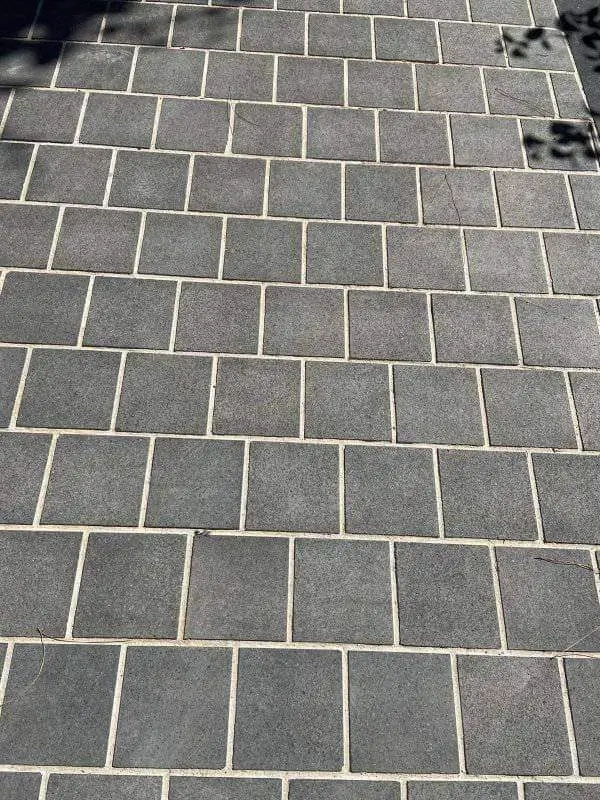
Granite Coping Stone Price Range in Arizona: Grade and Sourcing Considerations
Granite isn’t graded on a universal standard the way dimensional lumber is, but the trade does use a tiered pricing structure that reflects material quality, slab consistency, and sourcing origin. The granite coping stone price range in Arizona reflects what those tiers actually represent in practical terms for residential and commercial pool projects alike.
Commercial Grade vs. Standard Grade
Commercial-grade granite coping is cut to tighter dimensional tolerances — typically ±1/16″ on thickness versus ±1/8″ for standard grade. That tolerance difference matters more than most homeowners realize. When you’re setting 80 linear feet of coping at a consistent height, a 1/16″ variation in slab thickness means your installer can compensate with mortar bed adjustment. A 1/8″ variation across multiple slabs creates a visible lippage problem at the coping surface that no amount of grinding will fully resolve without significant additional labor cost.
Imported vs. Domestic Granite and Lead Times
A significant portion of the granite coping available in the Arizona market is imported — primarily from Brazil, India, and China. Lead times for special-order imported material typically run six to eight weeks from order to delivery, which creates project scheduling challenges that drive up effective cost when you’re coordinating pool renovations or new construction timelines. Domestic and regionally warehoused granite coping reduces that exposure considerably.
At Citadel Stone, we maintain warehouse inventory of granite coping profiles specifically selected for Arizona pool applications, which allows us to deliver on timelines that work with standard construction schedules rather than requiring you to build a two-month buffer into your project plan. That warehouse depth is a direct cost management tool for homeowners and contractors alike.
- Imported granite (special order): $14–$22 per linear foot material only, 6–8 week lead time
- Warehoused domestic/regional granite: $16–$26 per linear foot material only, 1–2 week delivery typical
- Premium architectural granite (exotic colors, tight tolerance): $22–$38 per linear foot material only
- Truck delivery to most Arizona metro areas: typically included or minimal surcharge within 60 miles of warehouse
Arizona Desert Pool Coping Budget Guide: Planning by Project Type
Your budget planning approach should differ based on whether you’re replacing existing coping on a mature pool, adding coping to a new construction shell, or doing a full pool renovation that includes coping, deck resurfacing, and drainage corrections simultaneously. Each scenario carries a different cost structure and a different risk profile for unexpected expenses.
Coping Replacement on an Existing Pool
This is the most common scenario and the one with the highest likelihood of cost surprises. Once existing coping is removed, you frequently discover bond beam irregularities, previous repair patches that don’t sit at consistent height, and in older pools, waterproofing membrane damage that needs remediation before new coping can be set. Budget 15–20% contingency over your base quote for replacement work — that’s not pessimism, it’s realistic project management for Arizona desert pool coping budget planning.
New Construction Coping
New construction gives you the cleanest starting conditions — a freshly formed bond beam at consistent height, no demolition cost, and the ability to design drainage slopes from scratch. This is where investing in wider coping (14″ or 16″ rather than standard 12″) pays the biggest dividend relative to cost, because you’re establishing the drainage geometry once and living with it for 20+ years.
Full Renovation Projects
Higher-elevation Arizona communities such as Flagstaff face a different renovation calculus than low-desert pools — freeze-thaw cycling at 6,900 feet elevation introduces expansion stresses that require closer attention to joint spacing and mortar formulation. At those elevations, a full renovation is often the more cost-effective path versus piecemeal repairs, because freeze-thaw damage tends to be progressive and systemic rather than localized.
- Coping replacement only (80 LF pool): $2,500–$5,500 total installed, including demolition
- New construction coping (80 LF pool): $1,600–$3,800 total installed, no demolition cost
- Full renovation with drainage correction: $4,500–$9,000+ depending on scope and base conditions
- Annual maintenance budget (sealing, joint sand replenishment): $300–$600 per year
Sealing and Long-Term Cost of Ownership
Granite’s low porosity means sealing is less urgent than with limestone or travertine, but it isn’t optional in Arizona pool environments. Pool water chemistry — specifically the chlorine and pH management cycles — creates a surface chemistry attack on granite over time if the stone isn’t sealed. A penetrating silane-siloxane sealer applied within 30 days of installation establishes the base protection layer, and reapplication every 24–36 months maintains it.
The cost of maintaining granite pool coping in Arizona is modest relative to the replacement cost it prevents. A professional sealing application for a standard residential pool typically runs $180–$350 depending on coverage area and whether the deck is included. Skipping this maintenance cycle for more than three years in Arizona’s UV environment accelerates surface oxidation in granite with iron-rich mineral content — you’ll see it as a subtle reddish discoloration along the surface that’s cosmetic at first and structural eventually.
Granite hardscape maintenance follows consistent principles whether you’re working with pool coping or patio surfaces. As part of your overall stone maintenance planning, How to Maintain Granite Patio Pavers in Arizona’s Climate covers the sealing schedules and surface treatment protocols that apply to granite hardscape across Arizona conditions — much of that guidance applies directly to pool coping maintenance as well.
What Determines Your Granite Pool Coping Cost in Arizona
Granite pool coping cost in Arizona lands where your drainage geometry, base preparation quality, slab specification, and material grade intersect. The homeowners who get the most value out of their investment are the ones who treat the drainage design as the foundation of the entire specification — not an afterthought. Your coping’s ability to manage Arizona’s monsoon sheet-flow and resist the moisture cycling between wet season and prolonged drought determines the long-term performance of the mortar bed, the expansion joints, and the slab surface itself. Material cost is one variable; total cost of ownership over 20 years is the number that actually matters. Verify warehouse stock before locking in your installation schedule, get a site assessment that includes a level check and drainage flow review before accepting any quote, and spec your slab thickness and finish for the actual conditions at your pool edge rather than the lowest acceptable standard. Homeowners in Tucson, Mesa, and Gilbert rely on Citadel Stone for granite pool coping selected for consistent slab thickness and heat-cycle stability across Arizona’s demanding desert climate.