
Geometric limestone patterns in Carefree demand a level of layout precision that standard random ashlar work doesn’t — and that gap between casual installation and truly refined patterning is where most projects either succeed or struggle. The desert context here isn’t just aesthetic backdrop; Carefree‘s dramatic boulder terrain and low-density residential character create a specific visual tension that geometric limestone arrangements are uniquely positioned to resolve. You’re working with a material that has inherent natural variation, then asking it to perform in mathematically disciplined compositions — and managing that interplay is the real craft.
Why Geometric Layouts Excel in Carefree’s Design Context
The prevailing architectural language in Carefree leans toward clean horizontal lines, warm desert palettes, and generous outdoor living spaces that blur the boundary between interior and exterior. Geometric limestone patterns speak directly to that vocabulary. Unlike organic flagstone work, a well-executed grid, pinwheel, or running bond arrangement creates a visual anchor — a plane of human order set against the chaotic beauty of native saguaro and granite outcroppings. Carefree modern layouts consistently benefit from this contrast between structured stone planes and the raw desert surroundings.
Field performance data on limestone slabs in Arizona climates shows that geometric layouts with consistent joint lines actually outperform random patterns in thermal movement management. Uniform joint spacing lets you predict and control expansion behavior, which matters significantly when surface temperatures swing from 50°F at dawn to 140°F+ on the slab face by mid-afternoon. Your pattern choice isn’t just aesthetic — it’s a structural decision.
- Grid and modular patterns allow precise expansion joint placement at regular intervals, typically every 12–15 feet in Arizona heat zones
- Running bond and stacked bond configurations simplify base load distribution calculations compared to irregular cuts
- Herringbone and diagonal layouts increase perceived visual area, making mid-sized Carefree patios read as more expansive
- Pinwheel compositions with a central feature stone create focal points that work with — rather than against — existing landscape boulder placements
Pattern Families That Define Carefree Modern Layouts
There are roughly four pattern families worth serious consideration for Carefree contemporary yards, and each carries different material yield requirements, cutting complexity, and visual weight. Understanding those trade-offs before you commit to a design prevents the mid-project specification changes that drive cost overruns.
Grid and Modular Systems
The straight-coursed grid — whether square format or rectangular slab — is the workhorse of limestone pattern design Arizona homeowners keep returning to, and for good reason. It’s the most forgiving layout to execute in the field, produces the least material waste, and photographs exceptionally well against the clean lines of contemporary desert architecture. For Carefree projects, a 24×24-inch or 24×36-inch module in a cream or golden limestone typically aligns with the scale of the spaces you’re working with.
Material yield with a straight grid runs approximately 10–12% waste factor on standard rectangular slabs, accounting for cuts at boundaries and any custom radii around pool edges or planters. That’s a manageable number. Specifying limestone slabs in Arizona for grid applications is straightforward — the key variable is thickness consistency, and you’ll want to confirm with your supplier that slab-to-slab thickness tolerance is within ±3mm to avoid lippage problems in the finished plane.
Herringbone and Diagonal Patterns
Herringbone and 45-degree diagonal layouts introduce dynamic movement into an otherwise static plane. These patterns read very differently from the street and from the house, which makes them effective for entries and motor courts where you want directional emphasis. The trade-off is material waste — diagonal cuts at perimeters push waste factors to 15–20%, so takeoff quantities need to account for that honestly.
In Chandler and across the broader East Valley, diagonal limestone arrangements on larger estate lots work particularly well when oriented to direct the eye toward a focal element — a fireplace wall, a water feature, or a mountain view corridor. The pattern creates implied vectors that you can use intentionally in your design composition. These contemporary slab arrangements reward the extra planning time that diagonal geometry requires.
Pinwheel and Feature Compositions
Pinwheel layouts center a larger format stone surrounded by four smaller surrounding pieces, creating a medallion effect that repeats across the field. This is where contemporary slab arrangements in Arizona really start to separate themselves from generic paving work. The pattern demands careful color matching between field stones and the central feature piece — if your supplier’s warehouse inventory isn’t consistent across that lot, the repetition reads as patchy rather than intentional.
- Central feature stones for pinwheel patterns typically run 18×18 or 24×24 inches; surrounding pieces work at 9×18 or 12×24 inches
- Color variance within a single limestone lot can exceed 15–20 Delta-E units, so visual pre-sorting at the warehouse level is essential before delivery
- Pinwheel layouts require precise cutting tolerances — field cutting with a wet saw introduces cumulative error if not checked against chalk line every third course
- The pattern works best at scales above 400 square feet; below that threshold, it reads as busy rather than architectural
Slab Thickness and Structural Considerations for Arizona Artistic Paving
Thickness specification for Arizona artistic paving directly determines longevity under the concentrated loads and thermal stress that Carefree conditions impose. The standard residential specification in Arizona is 1.25-inch (32mm) nominal thickness for pedestrian applications and 1.5-inch (38mm) for areas with vehicle overhang or golf cart access — which covers a significant percentage of Carefree properties.
For geometric limestone patterns specifically, thickness consistency matters more than it does in random flagstone applications because joint lines in a geometric pattern are continuous and will reveal any substrate settlement or slab warping far more visibly. Base prep needs to reflect that. A minimum 4-inch compacted Class II base at 95% proctor density is the floor specification, with 6 inches recommended where native soil has any expansive clay content. Carefree’s granitic decomposed granite soils are generally favorable, but it’s worth running a simple Atterberg limit test on any native material you’re compacting into the sub-base.
- 1.25-inch slabs: suitable for pedestrian patios, pool surrounds, and covered outdoor rooms
- 1.5-inch slabs: recommended for entry courts, areas with equipment access, or any slope exceeding 2% grade where point loads concentrate at step-downs
- 2-inch slabs: specify for driveways, motor courts, or anywhere delivery truck access is a regular occurrence
- Setting bed depth should be 1-inch dry-set mortar or polymer-modified thinset at 3/8-inch for dimensional slabs
Color Palette and Finish Selection for the Desert Environment
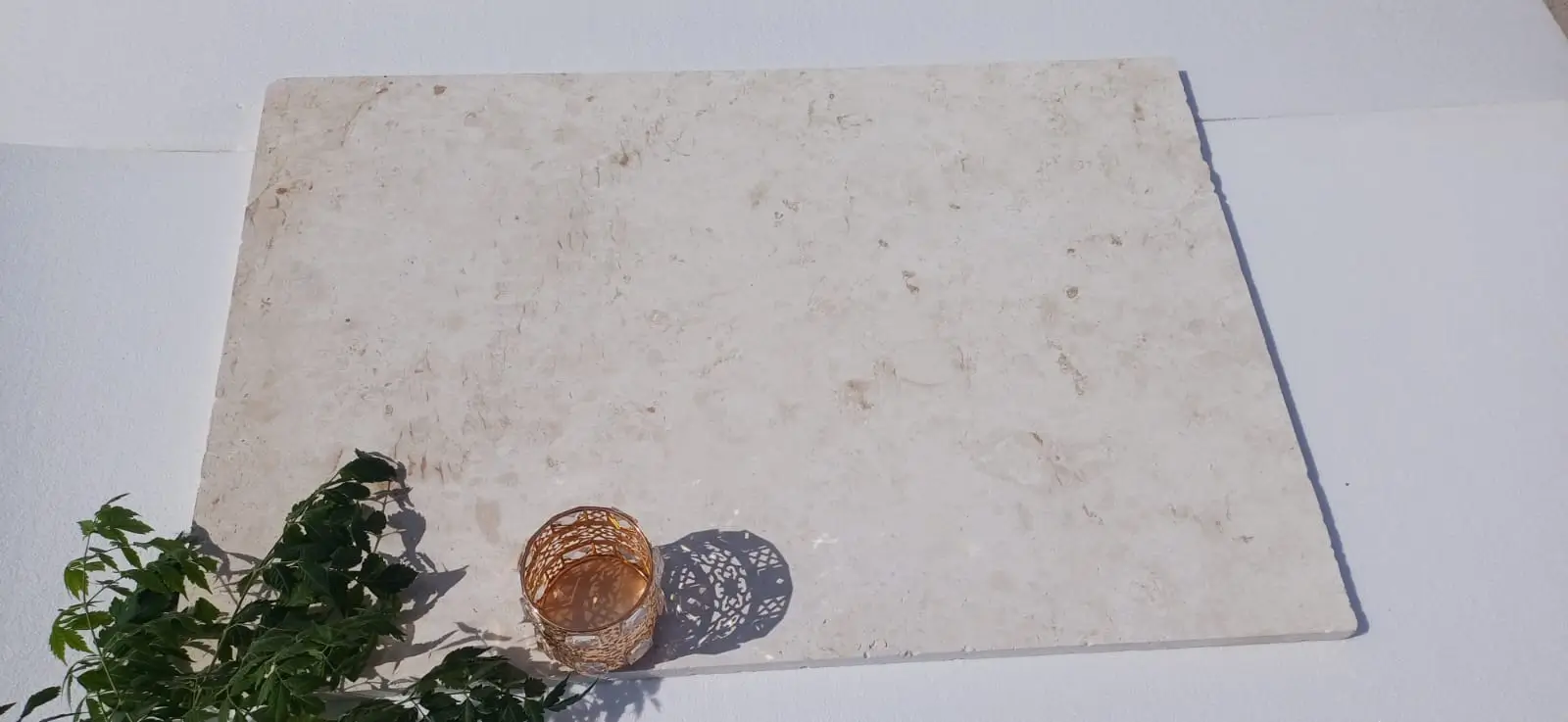
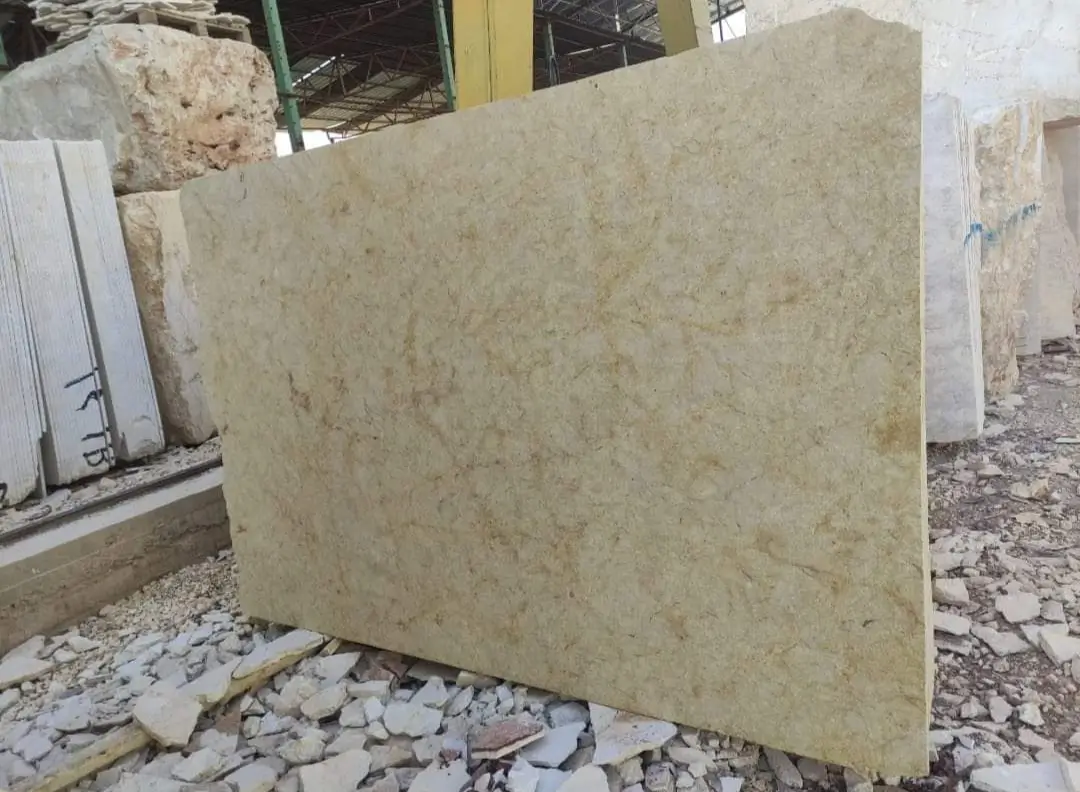
Limestone pattern design Arizona projects tend to gravitate toward the warm buff, cream, and golden ranges — and that instinct is correct for a functional reason, not just aesthetics. Light-colored limestone reflects 55–70% of solar radiation versus 15–25% for concrete or dark stone, which keeps surface temperatures in the 110–120°F range rather than the 150–160°F readings you’ll get off exposed concrete in full Carefree summer sun. That 30–40°F differential is the difference between a patio you actually use at 4pm and one you abandon until after sunset.
Finish texture is the other variable that deserves more attention than it usually gets. A natural cleft finish reads beautifully and provides inherent slip resistance — ASTM C1028 wet dynamic coefficient of friction values for cleft limestone typically run 0.65–0.80, well above the 0.60 minimum for pool surrounds and outdoor applications. Honed finishes drop that number to 0.50–0.65 range when wet, which is still acceptable for most applications but warrants a sealer with silica aggregate additive in zones that get regular irrigation spray.
At Citadel Stone, we recommend reviewing physical samples in direct afternoon sun before finalizing your color selection — warehouse and showroom lighting consistently makes limestone appear cooler and lighter than it reads outdoors, and the difference can be dramatic enough to change your pattern composition decisions.
Joint Design and Grout Selection for Geometric Precision
Joint width in geometric limestone work is a design decision, not an afterthought. The contemporary aesthetic in Carefree leans toward tight joints — 3/16 to 1/4 inch — that emphasize the stone plane rather than the grid of mortar. That’s achievable and looks excellent, but it requires dimensional consistency in your stone that you need to verify before the truck unloads on site.
For Tempe and similar Valley communities with higher ambient humidity from urban heat island effects and irrigation, a polymer-modified sanded grout at 3/16-inch joint width provides adequate thermal movement accommodation while maintaining the clean linear aesthetic. In drier, more exposed Carefree sites, you have more flexibility — even a 1/8-inch joint with non-sanded grout performs well because the thermal cycling is more predictable and the site drains aggressively.
- Joint widths under 1/8 inch require precision-cut stone with ±1mm tolerance — verify this spec with your supplier before ordering
- Sanded grout is required for joints 1/8 inch or wider; non-sanded for joints under 1/8 inch
- Epoxy grout resists staining better than cementitious grout but requires controlled temperature during installation — avoid application above 90°F ambient
- Expansion joints every 12–15 feet are non-negotiable in Arizona; use a backer rod and flexible sealant color-matched to grout
- Dark grout colors can read as a dominant design element in geometric patterns — a neutral gray or buff grout typically reads as the stone first, pattern second
Sealing Protocols That Protect Your Pattern Investment
Sealing limestone in Carefree’s climate is straightforward, but the timing and product selection matter more than most installation guides acknowledge. New limestone slabs need a minimum 28-day cure after setting before you apply any penetrating sealer — the residual alkalinity from the setting bed will interfere with sealer chemistry if you rush that window. You’ll see the evidence as white efflorescence ghosting through the surface, which is nearly impossible to address without stripping and resealing.
A high-quality silane-siloxane penetrating sealer applied in two coats — first coat to saturation, second coat within 2–4 hours while the substrate is still tacky — provides the best combination of vapor permeability and stain resistance. That breathability matters in Arizona because even in Carefree’s low-humidity environment, moisture can wick upward from the base in irrigation-adjacent areas. A film-forming sealer traps that moisture and creates delamination over 3–5 years. Penetrating sealers avoid that failure mode entirely. Reapplication every 2–3 years is a realistic maintenance schedule for Carefree conditions.
Budget and Supply Chain Planning for Geometric Projects
Geometric limestone work carries a material premium over random flagstone of roughly 15–25% — not because the stone itself costs more, but because pattern work requires more consistent sizing, color matching, and often a higher cut-to-order percentage. Build that into your project budget from the initial estimate, not at the order stage.
Supply chain timing for Arizona projects has tightened over recent years. Standard limestone slab inventory moves quickly through distributor warehouses during the fall and spring building seasons, which in Arizona run roughly September through November and February through May. If your project falls in those windows, placing your material order 4–6 weeks ahead of installation is prudent. For the Surprise and West Valley market, truck delivery logistics from East Valley distribution points add 1–2 business days to standard lead times, which is worth factoring into your schedule.
Projects requiring custom sizes or precision cuts for complex geometric limestone patterns in Carefree — octagonal arrangements, diagonal medallions, radial fan compositions — typically require 3–4 weeks of additional lead time beyond standard slab orders. Confirm that timeline with your supplier before committing a project schedule to a client. For cost-conscious projects without compromising on visual impact, sourcing through economical wholesale limestone channels can meaningfully reduce the material line item while maintaining specification quality.
Installation Sequencing for Complex Geometric Patterns
The sequence you establish before the first stone goes down determines whether a complex geometric layout finishes cleanly or reveals accumulated error at the perimeter. For any pattern with continuous joint lines — grid, running bond, herringbone — snap your primary control lines first, dry-lay a full section to confirm your module works out to the boundaries, and only then commit to the setting bed. This dry-lay step gets skipped under schedule pressure, and it’s where most geometric pattern failures originate.
Center-out sequencing works best for pinwheel and medallion compositions. Establish your geometric center, set the feature stone with a level check in all four directions, and build outward in quadrants. This distributes any cumulative tolerance error evenly toward all four perimeter edges, where it’s easiest to absorb with a cut course. Edge-in sequencing on medallion patterns pushes all your error toward the center feature — exactly where you don’t want it.
- Snap chalk lines on the setting bed, not just the sub-base — thermal movement can shift a dry-set bed between layout and installation
- Check squareness with a 3-4-5 triangle at minimum; for large installations, use a laser level for primary control lines
- Set pattern stones with consistent back-butter coverage — minimum 85% mortar contact per TCNA guidelines to prevent hollow spots
- Let complex pattern sections cure 24 hours before walking on them; full compressive strength for grouting requires 72 hours minimum in summer temperatures
- Keep cut pieces away from direct sun during staging — thermal expansion of partially cut stone can shift tolerances before setting
Final Considerations
Executing geometric limestone patterns in Carefree at a level that holds up over decades comes down to the decisions you make before installation begins — pattern selection relative to space scale, thickness specification matched to actual use, base preparation appropriate to site soil conditions, and supply chain timing that keeps the project on schedule without substituting inferior material under pressure. These aren’t independent choices; they compound on each other, and the projects that look exceptional five years after installation are the ones where every decision was made in context of all the others.
Your design development process should run the pattern layout to confirm module fit at the actual boundary conditions of the space before finalizing the stone order. Field adjustments to a geometric pattern are far more costly in labor and material than a thorough pre-order layout verification. If your project includes elevated areas, terracing, or multi-level transitions, complementary stone details like stair elements need to be specified in the same design phase — Limestone Slab Stair Treads for Queen Creek Multi-Story Homes covers the specification considerations for those transitions in detail, and the principles apply broadly across Arizona multi-level projects. At Citadel Stone, we work directly with specifiers from early design through final delivery to ensure the material you’re ordering matches the pattern composition you’ve designed. Citadel Stone updates our inventory of limestone paving slabs for sale in Arizona monthly with new arrivals.