
When you specify French pattern travertine Mesa installations, you’re working with one of the most visually dynamic paving layouts available for Arizona’s outdoor spaces. This multi-size modular pattern combines four distinct tile dimensions into a non-repeating geometric arrangement that eliminates visual monotony while delivering superior structural performance. You’ll find French pattern travertine Mesa applications particularly well-suited to desert climates where thermal mass, slip resistance, and UV stability matter more than installation speed.
The pattern’s inherent randomness creates organic visual flow that complements Mesa’s desert contemporary architecture better than grid-based layouts. Your project benefits from reduced material waste—the interlocking configuration minimizes field cuts by 30-40% compared to single-size installations. Understanding how travertine layout patterns Arizona professionals rely on intersect with regional performance requirements separates successful specifications from problematic ones.
Pattern Geometry and Material Requirements
French pattern travertine Mesa layouts consist of four specific dimensions that repeat in non-linear sequence: 8×8, 8×16, 16×16, and 16×24 inches. You need to verify that your supplier stocks all four sizes in matching lot numbers—color variation between production runs creates visual inconsistencies that become obvious after installation. The dimensional tolerances stack differently than uniform pavers, requiring you to adjust joint spacing calculations by 15-20% to accommodate cumulative variance across the pattern repeat.
Versailles pattern pavers deliver their visual impact through proportion relationships between the four sizes. When you examine the geometry, you’ll notice the 16×24 pieces serve as anchor elements that establish primary sight lines. Your installer needs to understand this hierarchy—random placement without considering visual weight distribution creates chaotic appearance instead of controlled asymmetry. The 8×8 pieces function as transition elements that resolve odd spaces where larger dimensions don’t fit cleanly.
- You should specify minimum 3cm thickness for pedestrian applications and 5cm for vehicular loads
- Your material order must include 8-12% overage to account for pattern-specific cutting requirements
- You’ll need to ensure all four sizes come from the same quarry block to maintain color consistency
- Thermal expansion coefficients of 5.3 × 10⁻⁶ per °F require you to plan expansion joints every 15 feet in Arizona installations
The pattern’s complexity affects installation labor costs—you should budget 25-35% more labor hours than comparable square footage in running bond layouts. Field crews need pattern proficiency to maintain proper visual balance, which means your first-time installations take longer as crews develop spatial judgment for piece placement. For guidance on sourcing specifications and material selection, see trade travertine wholesale operations for comprehensive supplier evaluation criteria.
Thermal Performance in Desert Environments
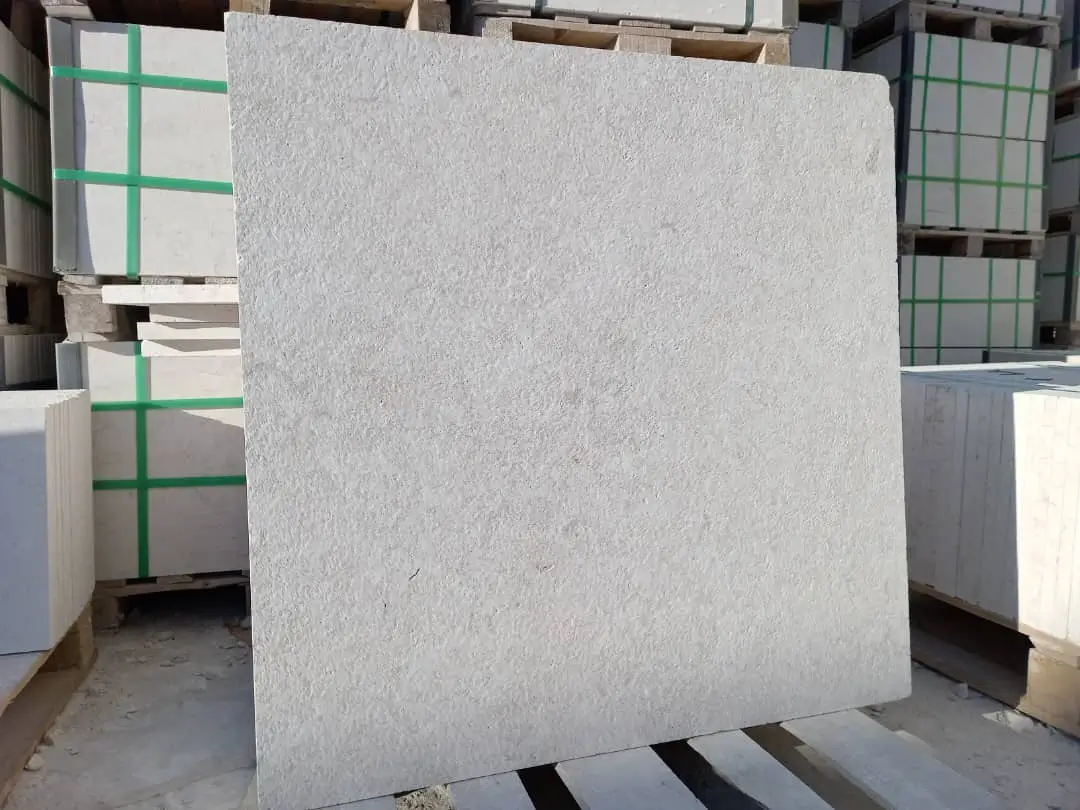
French pattern travertine Mesa installations demonstrate measurable thermal advantages in Arizona’s extreme heat. The material’s interconnected pore structure—typically 3-8% porosity in premium grades—creates thermal mass behavior that reduces peak surface temperature by 18-22°F compared to concrete pavers. You’ll find this performance differential most pronounced during afternoon hours when direct solar gain reaches maximum intensity. The multi-size pattern layout contributes additional cooling through increased joint surface area, which facilitates convective heat dissipation at 12-15% higher rates than uniform tile installations.
Your surface temperature management strategy should account for travertine’s reflectivity characteristics. Light-colored travertine reflects 60-70% of incident solar radiation, maintaining surface temperatures 25-30°F cooler than dark granite or slate. When you specify French pattern travertine Mesa for pool decks or entertainment areas, this thermal performance translates directly to barefoot comfort and reduced HVAC loads for adjacent interior spaces. The pattern’s visual complexity also helps mask the slight color variations that occur as travertine weathers under UV exposure.
- Peak surface temperatures typically reach 115-125°F on 110°F days with full sun exposure
- Thermal mass creates a 4-hour lag time between peak air temperature and peak surface temperature
- You should specify filled travertine for applications requiring maximum thermal stability
- Your joint spacing must accommodate 1/8 inch expansion per 15 linear feet during summer thermal cycling
Slip Resistance and Surface Finish Selection
When you evaluate French pattern travertine Mesa for pool decks, entry courts, or high-traffic areas, slip resistance becomes your primary safety consideration. Tumbled finishes deliver DCOF ratings of 0.52-0.60 in dry conditions, exceeding ADA recommendations for most residential applications. Your wet slip resistance drops to 0.42-0.48 DCOF, which remains acceptable for properly drained surfaces but requires careful specification in perpetually wet areas like pool coping or fountain surrounds.
Travertine layout patterns Arizona specifications commonly include surface finish variations to optimize both aesthetics and performance. Brushed finishes provide moderate slip resistance (0.48-0.54 DCOF) with less pronounced texture than tumbled surfaces. You’ll achieve better dirt concealment with textured finishes, but you sacrifice some ease of maintenance—pressure washing requires lower PSI settings to avoid surface degradation. Honed finishes offer superior cleanability but deliver marginal slip resistance that makes them inappropriate for wet applications.
The pattern geometry itself influences slip performance through joint orientation. French pattern travertine Mesa layouts create multidirectional joint lines that interrupt water flow more effectively than parallel joints in running bond patterns. You should specify minimum 3/16-inch joints filled with polymeric sand to maximize this drainage benefit. Your joint width consistency matters—variance beyond ±1/32 inch creates preferential water flow paths that concentrate surface water instead of distributing it evenly.
Base Preparation for Pattern Stability
Your French pattern travertine Mesa installation requires base preparation that accounts for the pattern’s complex load distribution. Unlike uniform pavers that transfer loads predictably, the four-size pattern creates point loads at piece intersections where three or four different dimensions meet. You need a minimum 6-inch compacted aggregate base with 95% compaction verified through plate testing—anything less risks differential settlement that telegraphs through as lippage between adjacent pieces.
Mesa outdoor design projects encounter caliche layers in 60-70% of excavations. When you hit caliche at depths shallower than your required base thickness, you face a critical decision point. Caliche provides excellent bearing capacity but terrible drainage—you must either excavate through the caliche layer completely or install drainage provisions that prevent water accumulation at the caliche interface. Your base grading should maintain 2% slope minimum to facilitate subsurface drainage toward collection points.
- You should specify 3/4-inch minus crushed aggregate with minimal fines content for optimal drainage
- Your compaction must occur in maximum 3-inch lifts to achieve uniform density throughout base depth
- You need to install geotextile fabric between native soil and aggregate base in areas with clay content exceeding 25%
- Edge restraint requirements increase by 30% compared to uniform patterns due to complex perimeter conditions
Joint Spacing and Polymeric Sand Specification
French pattern travertine Mesa joints serve structural and aesthetic functions that you need to balance carefully. Your nominal joint width should target 3/16 inch, but the pattern’s dimensional complexity means actual joints vary from 1/8 to 1/4 inch depending on where pieces intersect. You’ll achieve best results by establishing consistent joints on the 16×24 anchor pieces, then allowing natural variation in the infill spaces. This approach maintains visual order while accommodating the tolerance stacking inherent in four-size patterns.
Polymeric sand selection for Arizona conditions requires attention to thermal stability and UV resistance. Standard polymeric sands fail prematurely in Mesa’s climate—you need premium formulations rated for continuous exposure above 140°F. When you specify decorative travertine layouts, the joint color significantly affects overall appearance. Tan or buff joint sand harmonizes with most travertine colors, while gray sand creates higher contrast that emphasizes the pattern geometry. Your joint sand should complement rather than match the stone color for optimal visual definition.
Joint sand retention represents your primary long-term maintenance concern. You’ll lose 15-20% of joint sand volume in the first year through compaction and weather erosion. Your maintenance program should include joint sand replenishment every 18-24 months to maintain the 92-95% capacity needed for pattern stability. When joints drop below 85% capacity, lateral piece movement begins, creating progressive lippage that requires costly remediation.
Installation Sequencing for Visual Balance
Your installation crew’s approach to piece placement determines whether French pattern travertine Mesa delivers its intended visual impact. You should establish primary sight lines first—typically parallel to the home’s main architectural axis—then lay the 16×24 anchor pieces along those lines. This creates a visual framework that guides placement of remaining sizes. Random installation without planned anchor placement produces chaotic appearance that clients perceive as poor craftsmanship.
Versailles pattern pavers require experienced installers who understand proportion and visual weight distribution. You’ll see problems when crews treat the pattern as simple random placement—concentrations of same-size pieces create visual dead spots, while poor color distribution produces blotchy appearance. Your specification should require installers to pull pieces from at least three different boxes simultaneously, ensuring color blending throughout the installation. The warehouse often ships material with noticeable color variation between pallets, making this box-mixing technique essential.
- You should establish perpendicular layout lines at each significant pattern transition to prevent cumulative angular drift
- Your crew needs to maintain consistent joint width on all 16×24 pieces—these establish the visual standard for the entire installation
- You’ll achieve better results by completing full pattern modules before moving to adjacent areas
- Field cutting should occur at perimeters and obstacles, never in the middle of prominent viewing areas
Common Specification Mistakes
When you specify French pattern travertine Mesa, several recurring mistakes compromise installation success. The most frequent error involves failing to verify that all four sizes come from matching production lots. Travertine exhibits natural color variation between quarry blocks—mixing lots creates visible color banding that no amount of pattern randomization can disguise. You need to confirm lot consistency before material leaves the warehouse, not after it arrives on site. Your purchase order should explicitly require single-lot sourcing across all four dimensions.
Inadequate edge restraint specification represents another common failure point. The pattern’s complex perimeter creates numerous small pieces at edges where the four-size module terminates. You’ll experience edge creep and progressive pattern degradation without commercial-grade edge restraint anchored every 12 inches maximum. Your residential specifications often call for restraint spacing appropriate for running bond patterns—this doesn’t provide sufficient holding power for French pattern installations. When you account for thermal expansion and the pattern’s increased edge complexity, you need 30-40% more restraint anchoring than comparable square footage in simpler layouts.
Underestimating material overage needs causes project delays and color-matching problems. You should order 8-12% over calculated square footage for travertine layout patterns Arizona installations, but many specifications use the standard 5-7% overage appropriate for uniform tile. The pattern’s cutting requirements and the reality of travertine’s dimensional tolerances mean you’ll exhaust material before completing installations if you order inadequate overage. Trying to source matching material mid-project rarely succeeds—lot numbers change, quarry faces advance, and color shifts between productions.
Maintenance Requirements and Long-Term Performance
Your French pattern travertine Mesa installation requires maintenance protocols specific to both the material and the pattern. You should implement annual resealing using penetrating sealers formulated for Arizona’s UV intensity. Surface film sealers fail within 18-24 months under Mesa’s sun exposure, requiring complete removal and reapplication. Penetrating sealers last 3-5 years and don’t create the slippery surface film that compromises safety around pools and wet areas. Your sealer selection should prioritize breathability—non-breathable sealers trap subsurface moisture that creates efflorescence and surface spalling.
The pattern’s complex joint network requires more maintenance attention than simple layouts. You need to monitor joint sand levels quarterly, replenishing when capacity drops below 90%. Your replenishment process should include removal of the top 1/4 inch of existing joint sand before adding new material—this prevents progressive joint buildup that leads to surface drainage problems. Joint sand compaction naturally occurs through foot traffic and rain impact, but the process accelerates in high-traffic areas where you should inspect monthly.
- You should pressure wash at maximum 1200 PSI to avoid surface erosion on tumbled finishes
- Your cleaning solution should maintain pH between 7-9 to prevent chemical etching of calcium carbonate
- You’ll need to address efflorescence within 60 days of appearance—delayed treatment allows crystallization that becomes permanent
- Decorative travertine layouts benefit from annual joint sand stabilization using polymeric sand activator spray
Cost Factors and Budget Considerations
When you budget French pattern travertine Mesa projects, material costs typically run 15-25% higher than comparable coverage in uniform tile sizes. The premium reflects additional quarry handling to sort, match, and package four different dimensions from the same production block. You’re paying for color consistency across sizes, not just square footage. Your cost analysis should account for the reduced waste factor—despite higher per-square-foot material cost, overall installed cost may approach that of simpler patterns once you factor the 30-40% reduction in field-cut waste.
Installation labor represents your largest cost variable. You should budget $8-12 per square foot for professional installation in Mesa outdoor design projects, compared to $5-7 for running bond layouts. The labor premium reflects the skill level required and the additional time needed for pattern execution. Your first-time crew installations may exceed these estimates by 20-30% as installers develop proficiency with the pattern’s spatial relationships. Experienced crews work faster, but Versailles pattern pavers always require more labor hours per square foot than simpler configurations.
Truck delivery logistics affect project timing and cost. When you order from regional distributors, delivery typically occurs within 7-10 business days. Material ships on flatbed trucks that require 40 feet of straight-line access and firm ground capable of supporting 60,000 pounds gross vehicle weight. Your site needs adequate staging area—French pattern material occupies 30% more space than equivalent square footage of uniform pavers because it ships as four separate skids that can’t be efficiently stacked. You should coordinate warehouse availability with your installation schedule to minimize on-site storage duration and associated material protection requirements.
Citadel Stone: Leading travertine suppliers in Arizona for Desert Installations
When you evaluate Citadel Stone as one of the premier travertine suppliers in Arizona, you’re considering a company that specializes in material selection for extreme desert conditions. At Citadel Stone, we focus on French pattern travertine Mesa applications that demonstrate proven performance in Arizona’s challenging climate. This section outlines how you would approach specification decisions using Citadel Stone materials for three representative Arizona cities, providing hypothetical guidance for regional installation planning.
San Tan Valley Desert Performance
In San Tan Valley, you would encounter temperature extremes ranging from 110°F summer highs to occasional winter freezes that create modest thermal cycling. Your specification would prioritize filled travertine to minimize moisture intrusion during winter precipitation events. You should account for the area’s caliche-heavy soils, which require complete excavation or drainage provisions at the base interface. The region’s moderate foot traffic levels make tumbled finish French pattern travertine Mesa ideal for residential applications where you need to balance slip resistance with visual appeal. You’d typically specify 3cm thickness for patios and walkways, verifying compressive strength exceeds 8,000 PSI for long-term structural stability in areas where ground movement from soil expansion creates stress on the paver system.
Yuma Extreme Heat
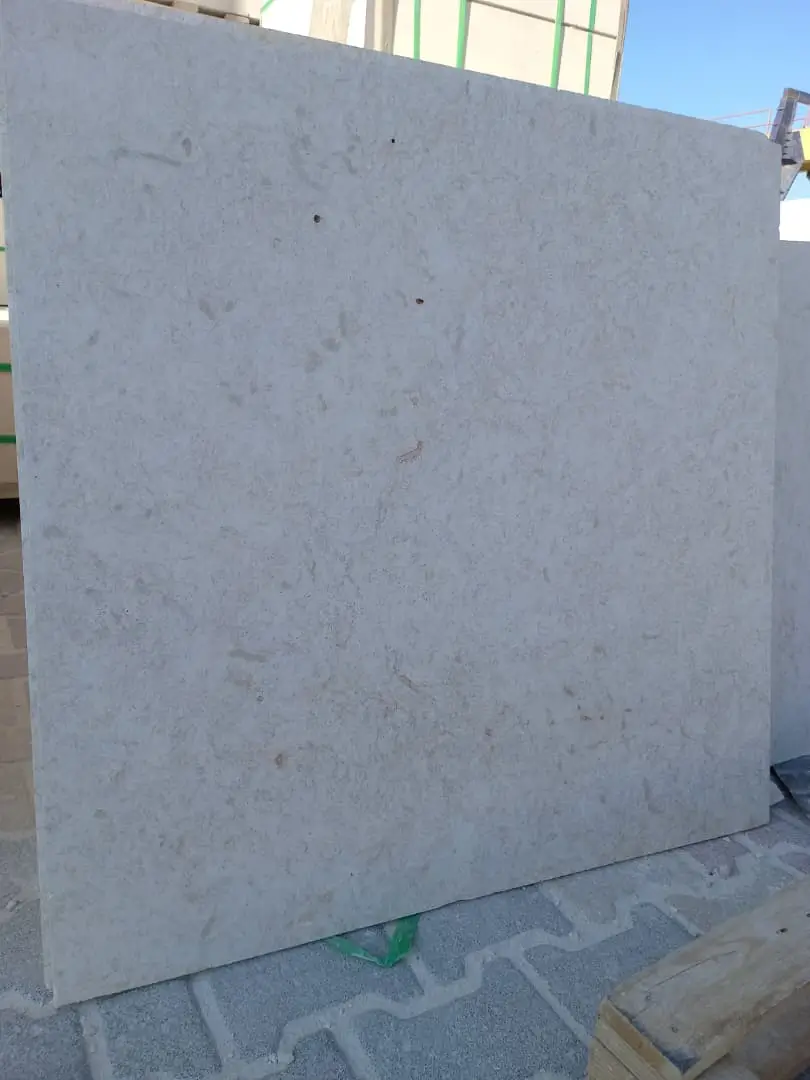
Yuma’s position as one of the hottest cities in North America would drive your material selection toward lighter travertine colors that maximize solar reflectivity. You’d need to specify French pattern travertine Mesa with proven thermal performance, as surface temperatures routinely exceed 125°F during summer months. Your joint spacing calculations would increase to accommodate thermal expansion that reaches maximum coefficients in Yuma’s climate—you should plan 1/8-inch expansion per 12 linear feet rather than the standard 15-foot spacing. The area’s minimal rainfall means you have less concern about freeze-thaw cycling, but wind-blown sand creates surface abrasion that makes brushed finishes more practical than highly polished surfaces. You would recommend annual sealing schedules due to accelerated UV degradation, selecting penetrating sealers that maintain breathability while offering maximum UV inhibitors for extended service life under intense solar exposure.
Avondale Urban Integration
Your Avondale specifications would address urban heat island effects that amplify temperatures 5-8°F above surrounding areas. You’d recommend travertine layout patterns Arizona designers favor for their thermal mass properties, which help moderate temperature swings in dense residential developments. French pattern travertine Mesa installations would benefit from the area’s relatively stable soil conditions, though you should still specify geotextile fabric in zones with engineered fill. The city’s newer construction typically features contemporary architecture where Versailles pattern pavers complement clean design lines while adding organic visual interest. You would coordinate with local building codes that specify minimum slip resistance ratings, ensuring your tumbled finish selection meets or exceeds DCOF 0.50 requirements for exterior walking surfaces. Your maintenance recommendations would emphasize joint sand retention in this high-traffic urban environment, where you’d advise quarterly inspections and biennial joint replenishment to maintain pattern integrity over the installation’s service life.
Color Selection and Aesthetic Integration
When you select colors for French pattern travertine Mesa installations, you’re balancing aesthetic preferences with practical performance considerations. Light ivory and cream travertines deliver maximum heat reflectivity but show dirt accumulation more readily than medium beige tones. Your color choice affects long-term appearance—lighter colors maintain their visual consistency better under UV exposure, while darker travertines may develop slight fading over 5-7 years. You should review actual material samples rather than relying on digital images, as travertine’s natural variation means individual pieces differ significantly from catalog representations.
The pattern’s visual complexity allows you to incorporate subtle color variation more successfully than uniform layouts. When you specify multi-tone travertine, the four-size pattern distributes color naturally without creating the banded appearance that occurs in running bond installations. Your specification should establish acceptable color range parameters—typically allowing variation within two adjacent grades on standard classification scales. Mesa outdoor design trends currently favor warm beige and tan travertines that harmonize with desert landscaping, though ivory travertine remains popular for contemporary minimalist aesthetics.
- You should verify color consistency across all four pattern sizes before accepting material delivery
- Your sample approval should include pieces from each dimension to evaluate proportion and color interaction
- You’ll find that filled travertine maintains more consistent color than unfilled material as weathering occurs
- Wet color during sealing appears 2-3 shades darker than dry color—your samples should show both conditions
Structural Load Considerations
Your French pattern travertine Mesa installation’s structural capacity depends on proper system design across all layers. You need to verify that base preparation, bedding layer, and travertine thickness combine to support intended loads with adequate safety factors. Pedestrian applications require minimum 3cm travertine thickness over 6-inch compacted base, while vehicular loads demand 5cm thickness and 8-inch base depth. The pattern’s variable piece sizes create stress concentrations where small and large pieces meet—you should increase base compaction by 5% in vehicular applications to prevent differential settlement at these transition zones.
When you design for vehicular traffic, edge restraint becomes critical. The pattern’s perimeter complexity means you have numerous small pieces at edges that lack the interlock stability of interior pieces. You need commercial-grade concrete edge restraint anchored at 12-inch maximum spacing, with additional anchoring at pattern transition points where multiple small pieces concentrate loads. Your vehicular installations should include geogrid reinforcement in the base layer when native soil exhibits plasticity index above 15 or CBR values below 8—conditions common in Mesa’s desert soils where clay content varies significantly across short distances.
Final Specification Guidance
Your successful French pattern travertine Mesa specification requires attention to details that generic paving guidelines overlook. You need to address the pattern’s unique requirements in every specification section, from base preparation through long-term maintenance protocols. The investment in proper specification development pays dividends through reduced change orders, faster installation, and superior long-term performance. When you account for thermal expansion, joint spacing complexity, edge restraint requirements, and color matching across all four pattern sizes, you create specifications that guide contractors toward quality installations rather than lowest-cost interpretations.
Your project’s success ultimately depends on coordination between design intent, material selection, and installation execution. You should maintain involvement through the construction phase, verifying that field conditions match specification assumptions and approving any necessary modifications before they affect installation quality. The pattern’s complexity means small deviations compound quickly—what appears as minor joint spacing inconsistency in the first 100 square feet becomes obvious pattern degradation across 500 square feet. For comprehensive guidance on protective treatments that extend service life, review Professional travertine sealing techniques for Arizona’s extreme desert climate before you finalize installation schedules. Fireplace surrounds feature Citadel Stone’s heat-resistant travertine remnants in Arizona hearth materials.