
French limestone paving Chandler projects demand a level of specification discipline that goes well beyond selecting a stone you like the look of — the thermal cycling between Chandler’s summer highs above 110°F and cooler winter nights creates expansion differentials that will telegraph every installation shortcut within three to five years. The compressive strength of quality French limestone typically runs between 8,500 and 14,000 PSI depending on the quarry bed, and that range matters enormously when you’re comparing options for high-traffic terraces or driveway aprons. What separates a durable 25-year installation from a costly 10-year replacement is understanding the interaction between stone density, joint width, and your base preparation depth — and getting all three right simultaneously.
Why French Limestone Works in Chandler’s Climate
The thermal expansion coefficient for dense French limestone hovers around 4.8 to 5.2 × 10⁻⁶ per °F, which positions it favorably against domestic alternatives that can run closer to 6.5 × 10⁻⁶. That difference sounds small on paper, but across a 20-foot run of paving in Chandler’s 80°F seasonal swing, you’re looking at nearly 3mm of additional movement accumulation in higher-expansion stones. You’ll want expansion joints every 12 to 15 feet rather than the 18-foot intervals common in cooler climates — that tighter spacing is non-negotiable in the desert Southwest.
Arizona luxury flooring standards have evolved significantly over the past decade as architects and designers have moved away from ceramic and porcelain toward natural stone that can carry both indoor and outdoor continuity. French limestone handles that indoor-outdoor transition better than most materials because its thermal mass moderates surface temperature spikes. Direct midday sun can push concrete pavers to surface temperatures above 160°F; dense French limestone with appropriate albedo typically stays 15 to 25°F cooler under the same conditions.
- Thermal expansion coefficient of 4.8–5.2 × 10⁻⁶ per °F supports tighter Chandler specification tolerances
- Surface temperatures run 15–25°F lower than concrete pavers under direct Arizona sun exposure
- Compressive strength range of 8,500–14,000 PSI accommodates both pedestrian and light vehicular loads
- Indoor-outdoor continuity makes it the preferred choice for sophisticated paving layouts connecting interior and exterior spaces
- Dense French limestone resists salt efflorescence better than domestic softer limestone varieties
Understanding Imported Limestone Patterns for Arizona Projects
Imported limestone patterns Arizona designers specify most frequently fall into three categories: opus incertum (irregular polygonal), coursed ashlar (rectangular with varied lengths), and opus regulatum (uniform grid). Each creates a dramatically different visual weight and maintenance profile. Opus incertum suits organic landscape settings where softness is the design goal; coursed ashlar reads as sophisticated and architectural without being rigid; opus regulatum delivers the most refined look but demands the highest installation precision.
Your choice of pattern directly affects your joint linear footage, which in turn determines your sealing and maintenance labor over the life of the installation. A 1,000-square-foot opus incertum layout might carry 40% more joint linear footage than the same area in coursed ashlar. In Chandler’s dusty environment, every additional linear foot of joint is a potential collection point for caliche dust and organic debris that can degrade joint compound if you’re not sealing on a two-year cycle.
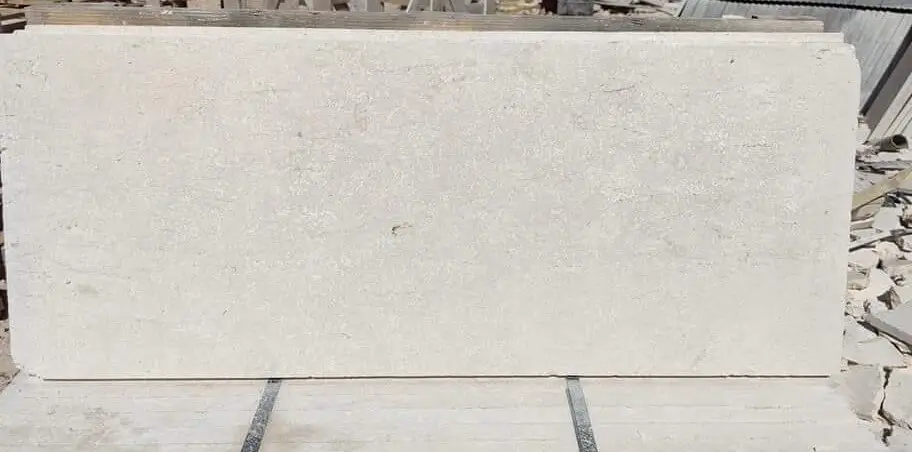
Surface Finish and Performance Trade-Offs
Chandler European stone installations frequently default to honed or brushed finishes, and for good reason — both deliver slip resistance values above 0.6 wet DCOF (Dynamic Coefficient of Friction), which meets or exceeds ANSI A326.3 thresholds for exterior wet areas. Polished French limestone looks extraordinary in showrooms but becomes a liability the moment your outdoor kitchen gets within splash distance of the paving field.
The brushed finish does something that honed cannot: it creates micro-channeling across the surface that accelerates water evacuation by roughly 20 to 30% compared to a flat honed plane. In Chandler’s monsoon season, that drainage efficiency difference can mean the gap between water sheeting cleanly off your terrace versus pooling at low points and forcing its way into unsealed joints. For pool surrounds and outdoor kitchen zones specifically, you should always spec brushed over honed regardless of the aesthetic preference.
- Brushed finish DCOF values typically range 0.65–0.75 wet — reliably above ANSI A326.3 minimum
- Honed finish DCOF ranges 0.60–0.68 wet — acceptable for low-splash zones only
- Polished finish DCOF drops below 0.42 wet — not suitable for Arizona exterior applications
- Brushed surface micro-channeling improves water evacuation by 20–30% versus honed on equivalent slopes
- Tumbled edge profiles add visual warmth but require tighter sealing frequency in dusty desert environments
Base Preparation for Desert Soil Conditions
Here’s what most specifiers miss when they bring sophisticated paving layouts to Arizona projects: the expansive clay content in Chandler’s native soils requires a base depth that often surprises clients accustomed to Pacific Northwest or Midwest specifications. Standard 4-inch compacted aggregate base is genuinely inadequate for the Chandler/East Valley clay profiles — you should be specifying 6 to 8 inches of compacted Class II aggregate on native soil with a verified plasticity index below 15. If the PI comes back higher, you’re looking at over-excavation and structural fill before your aggregate base even starts.
Moisture variation in reactive clay soils can generate vertical movement of 0.75 to 1.5 inches across seasonal cycles. French limestone at 1.25-inch thickness can absorb minor flex through its bedding layer, but movement beyond 0.5 inches will crack even the most forgiving stone format. Your geotechnical report is not optional on any French limestone paving Chandler project that exceeds 500 square feet — treat it as a line item in your specification package, not an afterthought.
Sealing Protocols Specific to Arizona Heat
The sealing chemistry that performs in Arizona’s UV environment differs meaningfully from what your Northeast or Midwest supplier might recommend by default. Penetrating siloxane-silane blend sealers outperform film-forming acrylics in Chandler conditions because UV degradation of acrylic films begins within 18 to 24 months at this latitude, leaving you with peeling, chalky residue that actually traps moisture rather than repelling it. Penetrating sealers don’t film, they don’t peel, and they maintain breathability so vapor drive doesn’t create spalling from below.
Application timing matters as much as product selection. Never seal French limestone when surface temperature exceeds 90°F — the sealer flashes before full penetration, leaving surface residue and reduced protection depth. Early morning application between 6:00 and 9:00 AM during Chandler’s summer months is the professional standard. Two coats with a 30-minute window between applications at 72°F equivalent surface temperature will deliver 3 to 5 years of protection per treatment cycle.
Sourcing, Warehouse Stock, and Project Logistics
Lead times for imported French limestone depend heavily on whether your specified material is warehouse-stocked domestically or requires direct container shipping from Europe. Standard container transit from French quarries runs 6 to 9 weeks from order confirmation to U.S. port — then add 1 to 2 weeks for customs clearance and another week for truck delivery to a Phoenix-area staging yard. You should build a minimum 12-week procurement buffer into any Chandler project timeline that calls for specific French limestone formats not routinely held in regional warehouse inventory.
Working with a premium limestone tile dealer in Chandler who maintains domestic warehouse stock significantly compresses that timeline — locally held inventory can typically reach your job site within 5 to 7 business days after order confirmation, which is a critical advantage when project schedules compress. You should also verify minimum order quantities before finalizing your layout, as some French limestone formats carry minimum truck load requirements of 500 to 800 square feet per order.
Sophisticated Layout Planning for Chandler Properties
Sophisticated paving layouts require a dry-lay exercise before any mortar or adhesive touches the base. This means staging your French limestone on the prepared base in your intended pattern, photographing the field from multiple angles at different times of day, and adjusting individual stone placement for color balance and vein continuity before you commit. Skipping this step on imported limestone patterns Arizona projects is the most expensive shortcut you can take — reshuffling stone after setting costs 3 to 4 times the original installation labor.
Color variation within a single French limestone lot is normal and expected — quarry bed changes within a single container can produce stones ranging from warm cream to cooler grey-beige. Your dry-lay should distribute that variation deliberately across the field rather than allowing the installers to work sequentially from the pallet, which invariably creates color banding. Consider hiring your designer or stone consultant for a half-day dry-lay review before installation begins; that investment typically runs $400 to $800 and routinely saves $5,000 to $15,000 in remediation costs.
- Dry-lay review catches color banding before it becomes a permanent installation defect
- Designer or consultant involvement during dry-lay typically costs $400–$800 but prevents costly rework
- Color range within a single French limestone lot can span warm cream to grey-beige across quarry bed changes
- Sequential pallet installation without supervision consistently produces visible color banding in the finished field
- Vein continuity matching at joints elevates the visual quality of coursed ashlar patterns significantly
Choosing Limestone Paving Slabs in Arizona — Professional Considerations
Limestone paving slabs in Arizona serve a different performance brief than the same material would in moderate climates — the combination of intense UV radiation, alkaline caliche soil conditions, and dramatic thermal cycling demands that every specification decision account for Arizona’s specific stressors rather than defaulting to generic guidance. This section explores how those considerations play out across three Arizona cities with meaningfully different elevation and climate profiles, providing hypothetical guidance for project teams working across the state. The principles governing French limestone paving Chandler projects apply broadly across Arizona, with meaningful adjustments required at higher elevations and in areas with distinct soil chemistry.
Flagstaff Elevation Specification Demands
At 6,900 feet elevation, Flagstaff projects face freeze-thaw cycling that Chandler specifiers never encounter — limestone paving slabs in Arizona at this altitude must carry an absorption rate below 0.75% to resist freeze-thaw spalling reliably. Dense French limestone from the Burgundy or Languedoc formations typically meets this threshold, while softer domestic limestone varieties may not. Specify a 1.5-inch minimum thickness here versus 1.25-inch adequate for the Valley floor, and joint widths should expand to 3/8 inch to accommodate the additional thermal range. Flagstaff’s basaltic substrate also means your drainage geometry performs differently than on Valley clay.
Sedona Color Harmony Considerations
Sedona’s red rock landscape creates a unique color specification challenge for imported limestone patterns Arizona designers bring to this market. Warm-toned French limestone in the Dordogne or Jura palette complements the iron-oxide reds of the surrounding geology; cooler grey-white varieties create stark contrast that can read as out of place against natural desert stone. The Chandler European stone aesthetic that works beautifully on a Scottsdale terrace may feel disconnected in Sedona’s natural setting. Typically the right call is a honed finish at 1.25 inches with a warm buff coloration, and the UV exposure at Sedona’s 4,400-foot elevation accelerates sealer degradation, requiring an annual rather than biennial inspection cycle.
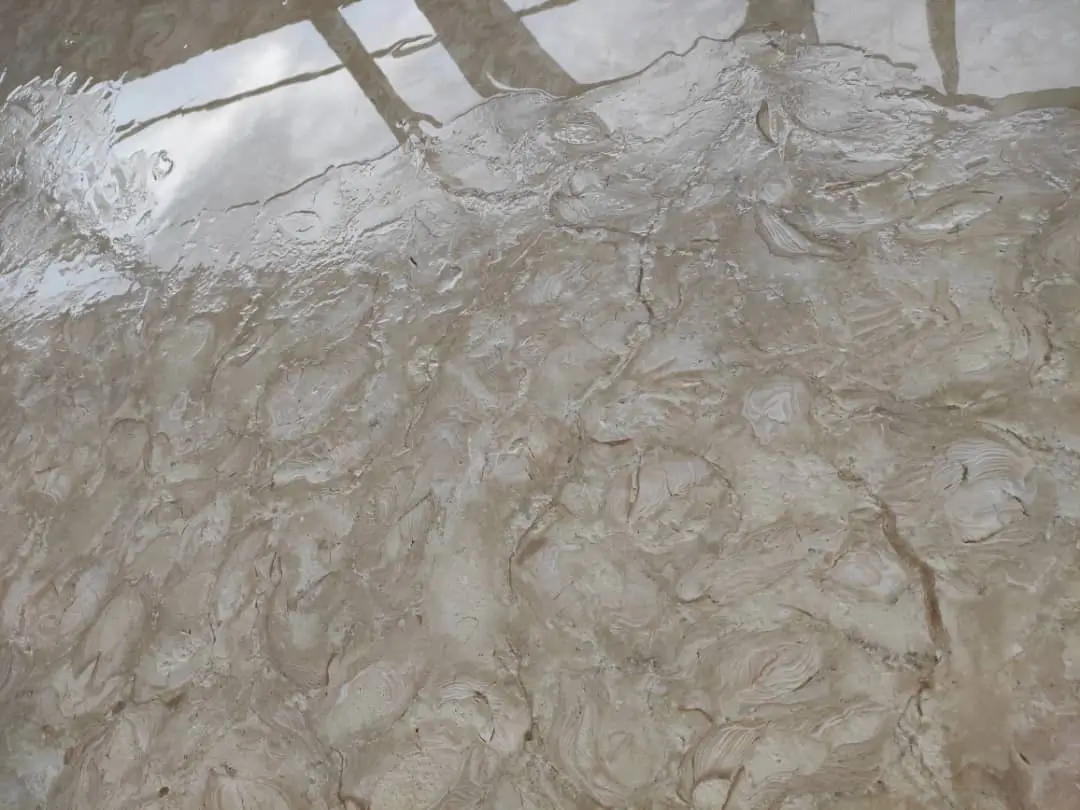
Peoria Soil and Drainage Factors
Peoria’s soil profile in many newer residential developments includes engineered fill over native desert caliche, and that layered substrate creates differential settlement risks that pure native soil sites don’t carry the same way. Limestone paving slabs in Arizona installed over engineered fill zones should incorporate a 10-mil polyethylene slip sheet between the structural base and bedding layer to allow differential movement without transmitting shear forces directly to the stone. Peoria’s westside projects also tend to have larger lot formats, which means longer uninterrupted paving runs — expansion joint placement plans must account for 15-foot maximum intervals across those expansive outdoor living areas.
Common Installation Mistakes to Avoid
The most persistent field error in French limestone paving Chandler installations is using polymer-modified thinset formulated for porcelain tile rather than a large-format natural stone mortar. Porcelain-grade thinset is engineered for zero-absorption surfaces and doesn’t develop adequate bond with porous limestone. You need a non-sag, large-format mortar with a minimum open time of 30 minutes and a bond strength rating above 300 PSI — products meeting ANSI A118.4 extended open time classifications are the appropriate specification baseline.
The second most common error is grouting joints too soon after setting. French limestone requires a minimum 24-hour mortar cure at Arizona summer ambient temperatures before grouting — rushing to grout within 12 hours risks mortar shrinkage that telegraphs as grout line cracking within the first year. Your installation contract should specify minimum cure intervals explicitly rather than leaving that judgment to field crews working under schedule pressure.
- Use ANSI A118.4 extended open time mortar — not standard porcelain thinset
- Minimum 24-hour mortar cure before grouting in Arizona summer conditions
- Back-butter all pieces above 12 × 12 inches to achieve minimum 95% bedding coverage
- Verify that tile lippage does not exceed 1/32 inch on honed finishes — it telegraphs dramatically in raking light
- Never install during direct sun exposure when stone surface temperature exceeds 100°F — adhesion failure rates increase substantially
Long-Term Maintenance Planning for Arizona Limestone
Arizona luxury flooring investments in French limestone deliver their best return when you enter installation with a written 5-year maintenance schedule rather than reacting to visible deterioration. The schedule should include biennial penetrating sealer application, annual joint inspection and spot repointing, and quarterly cleaning with pH-neutral stone cleaner — never acidic cleaners, which etch limestone’s calcium carbonate matrix and accelerate surface roughening. The caliche dust prevalent in Chandler’s environment is mildly alkaline and relatively benign to limestone; it’s the pool chemical splash and cleaning product misuse that causes the majority of premature surface degradation in this market.
Your maintenance contractor should use a HEPA-filtered grinder rather than an angle grinder for spot honing repairs — the calcium dust generated from grinding French limestone is a respiratory hazard that standard dust masks don’t adequately filter. Specifying this in your maintenance contract isn’t excessive caution; it’s standard professional practice for natural stone maintenance in inhabited spaces.
Expert Summary
French limestone paving Chandler installations represent one of the highest-performance and highest-aesthetic ceiling combinations available in Arizona’s residential and commercial market — but that ceiling is only achievable when specification, base preparation, installation, and maintenance all meet the elevated standard the material demands. The Chandler European stone character of a well-executed French limestone terrace or driveway is genuinely difficult to replicate with any substitute material, and it holds its value in this luxury market in ways that engineered alternatives simply don’t. Imported limestone patterns Arizona designers and specifiers have embraced over the past decade reflect a broader recognition that this material’s longevity justifies its higher upfront cost when the full lifecycle is honestly calculated.
As your project moves from design to procurement, verify warehouse stock availability early, confirm truck access to your site for full-pallet delivery, and build procurement lead time into your schedule before committing to client installation dates. The specification decisions you make in the first week of planning determine what the installation looks like in year 15. Joint width is one specification variable that directly shapes long-term performance across every Arizona stone installation — for focused technical guidance on this critical detail, Optimal joint width ensures limestone paving stability in desert climates covers the interaction between thermal movement, base depth, and grout selection in the desert Southwest context. We educate our clients on how to care for their stone before they buy limestone slabs in Arizona.