
Budget conversations for flagstone white versus stone pavers Arizona projects almost always start in the wrong place — homeowners focus on per-square-foot material cost and miss the variables that actually determine total project spend. Freight distance from the quarry or warehouse, regional labor market rates, and local material availability can swing your final number by 30–45% compared to a comparable project in a different state. Understanding those dynamics before you commit to a material is where real value engineering happens.
The Real Cost Drivers in Arizona Stone Projects
Arizona’s geography creates a two-tier market that most homeowners don’t anticipate until they’re deep into bidding. Material sourced from domestic quarries in the Southwest typically arrives at competitive freight rates, while imported stone — even high-quality white limestone — carries a logistics premium that compounds with project size. For a 600-square-foot patio, that freight delta can represent $800–$1,400 in additional cost before a single paver is set.
Labor market conditions add another layer. The Phoenix metro corridor, including communities like Mesa and Chandler, runs a tighter skilled mason market than most comparable Sun Belt metros. Experienced natural stone setters command $65–$85 per hour here, and the ratio of labor cost to material cost on a flagstone white versus stone pavers Arizona installation typically runs 1.2:1 to 1.5:1, depending on the complexity of the pattern and the base preparation required. That ratio matters when you’re deciding between a premium material with lower installation complexity versus a budget material that demands more labor hours to set properly.
Flagstone White Material Cost Breakdown
White flagstone compared to slate in Arizona shows a clear cost divergence at the point of sourcing. Domestic white limestone flagstone typically runs $4.50–$7.00 per square foot at the supplier level, while imported white quartzite or white sandstone flagstone can reach $9–$14 per square foot before freight. The finish specification — natural cleft versus honed versus brushed — adds $1.50–$3.00 per square foot to the base price and directly affects how the stone performs underfoot in Arizona’s UV environment.
- Natural cleft finish: lowest cost, highest slip resistance, most variation in thickness requiring skilled setting
- Honed finish: mid-range price, consistent thickness simplifies installation, requires sealing every 18–24 months in desert conditions
- Brushed finish: premium cost tier, excellent texture retention in heat cycles, minimal thickness variation
- Tumbled finish: comparable to honed pricing, aged aesthetic, most forgiving for DIY-adjacent projects
Your finish choice also affects long-term maintenance budgeting. According to NSI limestone specifications, honed limestone surfaces in high-UV environments show measurably higher weathering rates than textured alternatives — a detail worth factoring into your 10-year cost model, not just the upfront number. When comparing outdoor stone surfaces across Arizona yards, finish selection is one of the most consequential decisions you’ll make before breaking ground.
Concrete Pavers Versus Natural Stone: The Full Cost Picture
Manufactured concrete pavers start at $2.50–$4.00 per square foot installed and top out around $8–$10 for premium tumbled finishes. That initial spread makes them look compelling on a bid sheet. The calculation shifts when you account for the full lifecycle — concrete pavers in Arizona’s heat cycle fade within 8–12 years and often require full replacement rather than spot repair, while properly specified flagstone white in Arizona can deliver 25–35 year performance with standard maintenance.
Natural stone paving material options AZ homeowners weigh most often come down to this: a lower upfront cost for concrete versus a higher upfront cost for natural stone that amortizes favorably over a 20-year horizon. For a 500-square-foot installation, the 20-year maintenance and replacement differential commonly favors natural stone by $3,000–$6,000 in present value terms. Natural stone paving material options AZ homeowners evaluate should always account for this lifecycle math before committing to a bid.
- Concrete pavers: $2.50–$4.00/sq ft material, $3–$5/sq ft install, replacement at 10–12 years in harsh UV zones
- White limestone flagstone: $4.50–$7.00/sq ft material, $5–$8/sq ft install, 25+ year lifespan with biennial sealing
- White quartzite flagstone: $9–$14/sq ft material, $6–$9/sq ft install, 30+ year lifespan, minimal maintenance
- Porcelain pavers: $6–$11/sq ft material, $5–$7/sq ft install, fade-resistant but brittle in point-load scenarios
Regional Availability and How Sourcing Decisions Affect Your Budget
Comparing outdoor stone surfaces across Arizona yards reveals a sourcing pattern that smart project managers exploit: materials with regional warehouse presence cost less to deliver and carry shorter lead times. Stone sitting in a Phoenix-area warehouse arrives in days rather than weeks — that matters enormously for project sequencing and cash flow management.
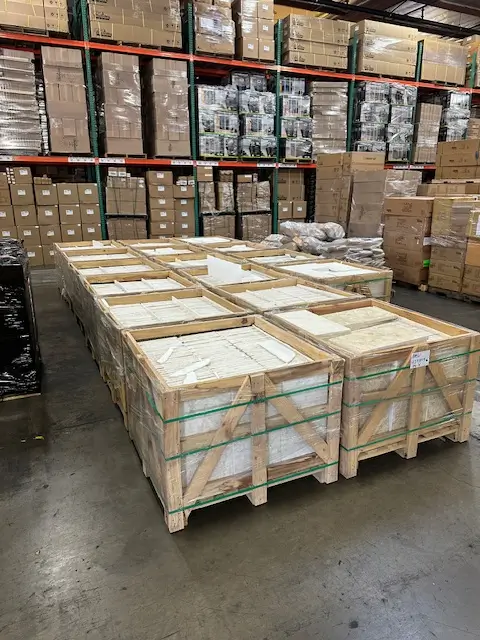
At Citadel Stone, we maintain warehouse inventory of flagstone white in Arizona specifically to reduce the 6–8 week import lead time that catches many project timelines off guard. When your contractor sequences concrete, base prep, and stone delivery within a tight construction window, having truck-accessible warehouse stock nearby is the difference between a smooth installation and a costly schedule delay that runs up temporary labor costs.
Gilbert contractors have noted that locally stocked stone reduces their contingency pricing by 8–12% on fixed-bid projects — that savings passes through to your total project cost without any reduction in material quality. Verify warehouse stock levels with your supplier before locking in a project schedule, because lead time variability is the most underestimated cost risk in Arizona stone projects.
Performance Comparison: Heat, Thermal Cycling, and Surface Stability
Arizona’s thermal environment creates performance demands that directly affect your material-to-labor cost ratio. A stone that expands and contracts predictably across a 110°F temperature swing requires fewer maintenance interventions over its life — and maintenance labor in this market isn’t cheap. White limestone has a thermal expansion coefficient of approximately 4.4 × 10⁻⁶ per °F, which allows it to handle Arizona’s desert temperature cycles without the edge chipping that plagues thinner concrete pavers in exposed installations.
The USGS dimension stone production data confirms that sedimentary stone like limestone maintains structural integrity under repeated thermal cycling better than engineered alternatives in high-temperature zones. For outdoor applications in Mesa, where ground surface temperatures regularly exceed 150°F in July, this matters for long-term joint stability and surface retention.
- White limestone: thermal expansion 4.4 × 10⁻⁶/°F, compressive strength 8,000–12,000 PSI, moderate absorption requiring sealing
- White quartzite flagstone: thermal expansion 6.2 × 10⁻⁶/°F, compressive strength 20,000+ PSI, low absorption, minimal maintenance
- Concrete pavers: thermal expansion 5.5 × 10⁻⁶/°F, compressive strength 8,000 PSI typical, color degradation in UV exposure
- Slate flagstone: thermal expansion 5.0 × 10⁻⁶/°F, delamination risk in freeze-thaw cycles at higher Arizona elevations such as Flagstaff
Base Preparation and Its Direct Impact on Labor Costs
Your base preparation specification determines more of your total project cost than most homeowners realize — and it’s the area where Arizona conditions diverge most sharply from national installation guidelines. Arizona’s expansive soils, particularly in Chandler where clay content runs high in many residential lots, require a compacted aggregate base of 6–8 inches rather than the 4-inch standard you’ll see in most generic installation specs.
That additional base depth adds $1.50–$2.50 per square foot in excavation and material cost before the first stone goes down. Skipping it — or reducing it to hit a budget target — is the single most common cause of flagstone failure in this region. A sunken or cracked installation that costs $4,000 to repair in year three was never actually the cheaper option.
- Minimum 6-inch compacted class II base in clay soil zones
- Geotextile fabric mandatory where soil plasticity index exceeds 15
- 1-inch sand setting bed for irregular flagstone; mortar set for pavers in vehicular applications
- Expansion joints every 12–15 feet in exposed Arizona installations, not the 20-foot spacing in generic specs
- Verify base compaction at 95% Proctor density before stone placement
For our Arizona flagstone white paving selection, review our Arizona flagstone white paving selection to compare finish options and thickness specifications that affect your base depth requirements.
Value Engineering Without Compromising Performance
Experienced specifiers know that value engineering on natural stone projects means optimizing the right variables — not just selecting a cheaper material. One underused approach in Arizona is mixing material formats: using full flagstone white slabs in the primary visual field and smaller cut pavers in border or transition zones where pattern complexity drives up installation labor. That combination can reduce total labor cost by 15–20% while preserving the premium aesthetic.
Thickness specification is another lever. For a residential patio with pedestrian-only traffic, 1.5-inch nominal flagstone delivers all the performance you need. Specifying 2-inch thickness adds material cost without a corresponding performance benefit in that application. Reserve 2-inch specification for driveway aprons, vehicular crossings, or areas with concentrated point loads from outdoor furniture with narrow leg profiles.
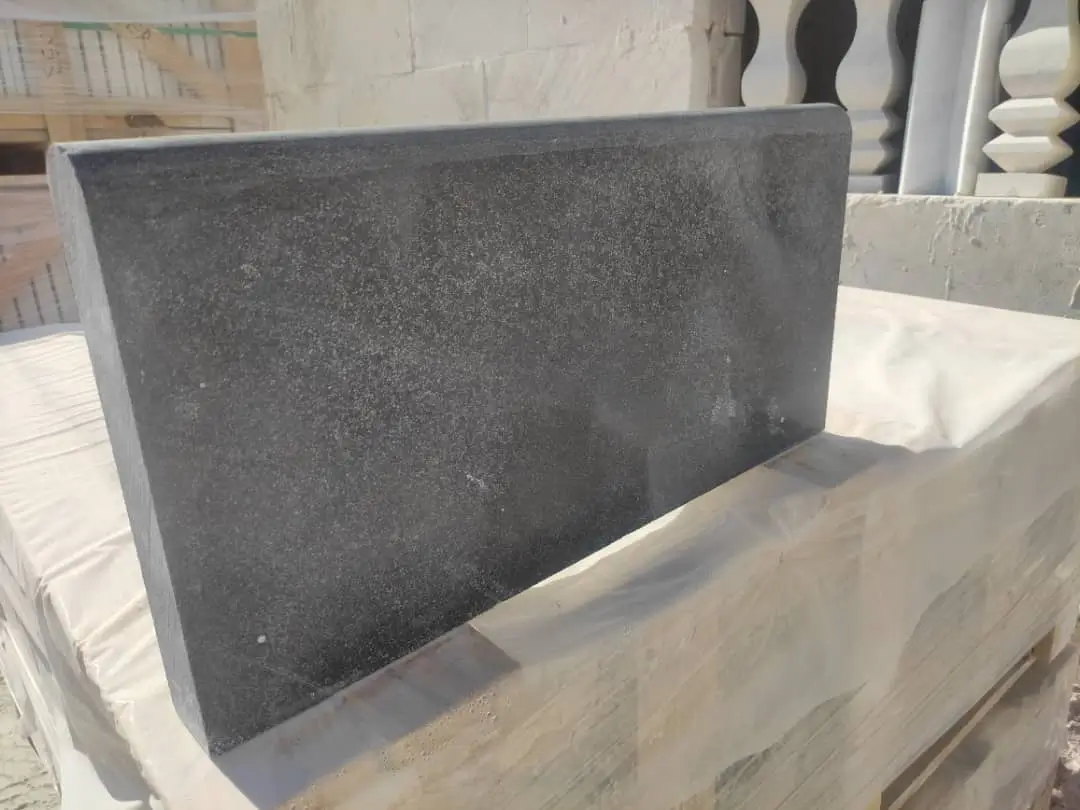
- 1.25-inch thickness: stepping stone applications, light pedestrian areas, decorative borders
- 1.5-inch thickness: standard residential patio and pool deck, the most cost-effective specification for most projects
- 2-inch thickness: driveway aprons, heavy-use commercial patios, vehicular crossings
- Irregular flagstone: lower material cost but higher labor cost — net savings only when labor rates are below $55/hour
Sealing, Maintenance, and Long-Term Cost Factors
The Britannica reference on flagstone sedimentary characteristics notes that calcium carbonate-based flagstones have inherent porosity that requires management in outdoor environments — and Arizona’s dust, UV intensity, and occasional monsoon saturation create a specific maintenance cycle distinct from what you’d plan for in a milder climate.
Budget for penetrating sealer application every 18–24 months for honed white limestone in Arizona conditions. A quality penetrating silane-siloxane sealer costs $0.15–$0.25 per square foot per application — modest compared to the $3–$5 per square foot cost of stain remediation or repointing failed joints. Sealing also preserves the reflective quality of white stone, which has practical value in Arizona beyond aesthetics: white flagstone reflects 60–70% of solar radiation, reducing radiant heat load at the surface and keeping the surrounding space measurably cooler during peak afternoon hours. This thermal performance advantage is why white flagstone compared to slate in Arizona so consistently favors the limestone option in Scottsdale’s exposed backyard installations.
Getting Your Flagstone White Versus Stone Pavers Arizona Specification Right
The flagstone white versus stone pavers Arizona decision resolves most clearly when you build a total cost model rather than comparing line-item material prices. Your freight exposure, local labor rates, soil conditions, and maintenance commitment over a 20-year horizon all carry more weight than the per-square-foot sticker price at the supplier. Projects that get this right — specifying the correct thickness, base depth, finish, and sealing protocol for Arizona conditions — consistently outperform budget-engineered installations on both longevity and resale contribution.
Beyond patio and walkway applications, Arizona property owners often find that complementary stone features add cohesive value to the overall hardscape investment. For a related perspective on how natural stone performs in a dedicated outdoor living context, limestone decking for Cave Creek outdoor living offers a useful reference point for understanding how similar materials translate across different application types in the Arizona climate. Our technical team is available to help you work through the sourcing and specification decisions that make the difference between a project that performs and one that requires costly correction within a decade. Citadel Stone stocks flagstone white in surface finishes ranging from natural cleft to honed, giving property owners in Scottsdale, Mesa, and Flagstaff a direct comparison point when evaluating outdoor stone options for Arizona conditions.