
When you evaluate natural stone options for Arizona projects, understanding the flagstone granite comparison Arizona becomes critical to specification success. You need to recognize that flagstone and granite represent fundamentally different material classifications with distinct performance characteristics. Flagstone describes sedimentary stone that splits into flat layers — typically sandstone, quartzite, or limestone — while granite is an igneous stone formed from cooled magma with interlocking crystalline structure.
Your material selection directly impacts project longevity, thermal performance, and maintenance requirements. Flagstone density differences create variations in weight, porosity, and structural capacity that you must account for during base preparation. Meanwhile, flagstone hardness comparison reveals why certain applications favor one material over another in high-traffic commercial environments versus residential patios.
The flagstone durability contrast becomes particularly significant in Arizona’s extreme climate. You’ll encounter daily temperature swings exceeding 40°F, intense UV exposure, and minimal precipitation that concentrates salts and minerals at the surface. These conditions expose performance differences that might remain hidden in temperate climates. Understanding flagstone strength differences helps you specify appropriate thickness, support requirements, and joint spacing for long-term stability.
Material Classification Fundamentals
The flagstone granite comparison Arizona starts with geological formation processes that determine every subsequent performance characteristic. Granite forms when molten rock cools slowly beneath Earth’s surface, allowing large mineral crystals to develop and interlock. This creates exceptional compressive strength typically ranging from 19,000 to 25,000 PSI. You’ll find granite composed primarily of quartz, feldspar, and mica in varying proportions that affect color, hardness, and weathering resistance.
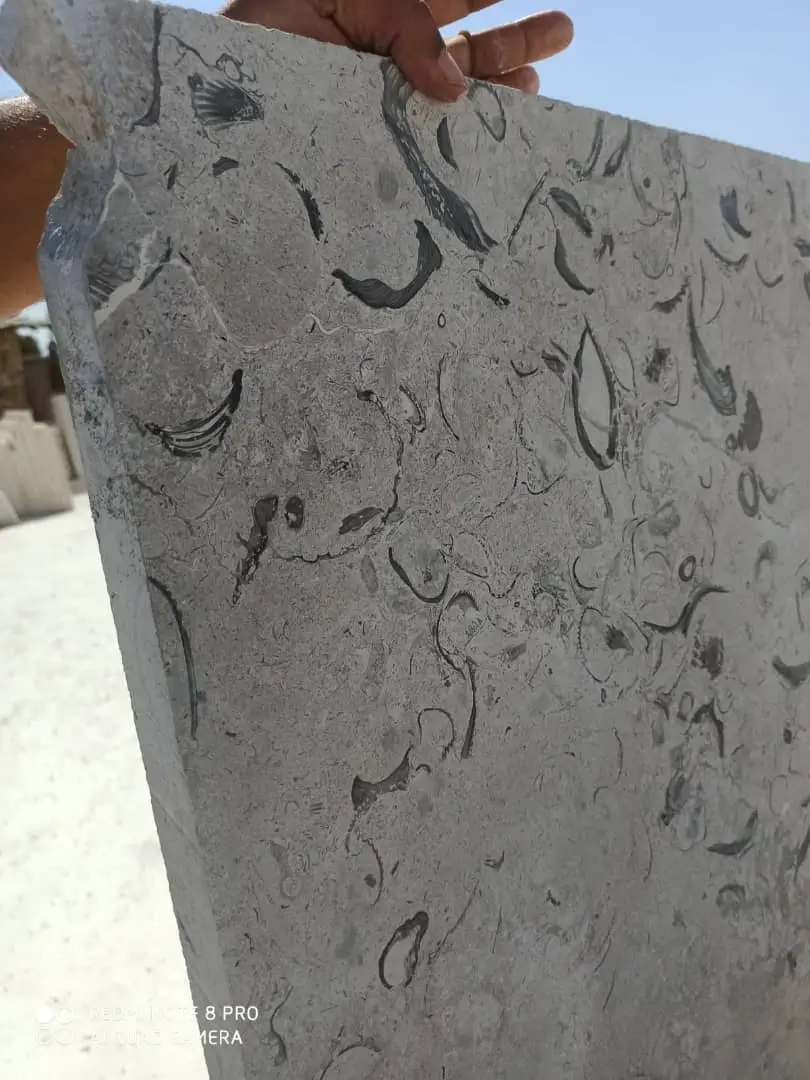
Flagstone forms through sedimentary processes where mineral particles accumulate in layers, compress over millions of years, and develop natural cleavage planes. When you specify flagstone, you’re typically working with sandstone (quartz-based), quartzite (metamorphosed sandstone), or limestone (calcium carbonate). Compressive strength varies dramatically based on composition — sandstone flagstone ranges from 8,000 to 14,000 PSI, while quartzite flagstone can reach 18,000 to 22,000 PSI, approaching granite performance.
Flagstone density differences emerge directly from these formation processes. Granite density consistently measures 165-170 pounds per cubic foot due to tight crystalline structure. Sandstone flagstone density ranges from 135-150 pounds per cubic foot, while quartzite flagstone approaches 160-165 pounds per cubic foot. This 20-35 pound difference per cubic foot significantly impacts structural load calculations, transportation costs, and installation labor requirements for your projects.
Thermal Performance Analysis
Arizona’s extreme heat environment makes thermal behavior a critical factor in the flagstone granite comparison Arizona. You need to understand how each material absorbs, stores, and releases heat throughout daily cycles. Granite’s dense crystalline structure creates high thermal mass with slow heat transfer. Surface temperatures on dark granite can exceed 160°F in direct summer sun, and that heat penetrates deeply into the material. You’ll find granite retains heat well into evening hours, making barefoot traffic uncomfortable until 9-10 PM.
Flagstone thermal performance varies by composition and color. Light-colored sandstone flagstone reflects 45-55% of solar radiation, keeping surface temperatures 15-25°F cooler than dark granite under identical conditions. The flagstone durability contrast becomes evident when you examine thermal cycling effects — granite’s uniform density handles expansion and contraction with minimal stress, while layered flagstone can develop delamination if moisture penetrates cleavage planes during temperature extremes.
Your specification must address thermal expansion coefficients that differ between materials:
- Granite expands at approximately 4.7 × 10⁻⁶ per °F, requiring expansion joints every 20-25 feet in Arizona installations
- Sandstone flagstone expands at 5.8-6.2 × 10⁻⁶ per °F, necessitating joints every 15-18 feet to prevent buckling
- Quartzite flagstone demonstrates 5.1-5.4 × 10⁻⁶ per °F expansion, performing between granite and sandstone
- You should increase joint frequency by 20-30% for dark-colored materials that experience greater temperature extremes
Porosity and Water Absorption Characteristics
The flagstone granite comparison Arizona reveals significant differences in how materials interact with water — critical in a desert environment where occasional monsoon downpours create intense localized moisture exposure. Granite porosity typically ranges from 0.4% to 1.2%, making it nearly impervious to water absorption. This low porosity prevents freeze-thaw damage, limits efflorescence, and reduces maintenance requirements. You’ll find granite suitable for pool decks, fountain surrounds, and other applications with frequent water contact.
Flagstone density differences directly correlate with porosity variations. Sandstone flagstone exhibits 3-12% porosity depending on grain size and cementation quality. Higher porosity allows water absorption that can reach 2-4% by weight during sustained exposure. In Arizona’s climate, this characteristic actually provides benefits — absorbed moisture evaporates quickly, creating evaporative cooling that reduces surface temperatures by 8-12°F compared to impervious granite.
However, you need to account for potential complications. Water absorption combined with dissolved minerals creates efflorescence risk in flagstone. You’ll see white salt deposits emerge on surfaces within 6-18 months post-installation if you don’t address three critical factors: proper base drainage, appropriate sealer selection, and adequate curing time before sealing. The flagstone hardness comparison becomes relevant here — softer sandstone accepts sealers more readily but requires reapplication every 2-3 years, while denser quartzite flagstone resists sealer penetration but maintains protection for 4-6 years once properly sealed.
Hardness and Scratch Resistance
When you conduct a flagstone hardness comparison using the Mohs scale, you’ll discover granite consistently rates 6-7, placing it among the hardest common building stones. This hardness provides exceptional scratch resistance for high-traffic applications. You can specify polished granite for commercial entries, retail spaces, and other environments where wheeled carts, furniture movement, and abrasive dirt won’t visibly damage surfaces over decades of use.
Flagstone hardness varies dramatically based on composition. Sandstone flagstone typically rates 6-7 on the Mohs scale when composed primarily of quartz grains, but softer calcite-cemented varieties may rate only 4-5. You’ll notice visible wear patterns develop in these softer materials within 5-8 years in commercial applications. Quartzite flagstone rates 7-8 on the Mohs scale, actually exceeding granite hardness and providing superior scratch resistance. This makes quartzite flagstone ideal when you need the aesthetic of layered stone with performance approaching granite.
The flagstone strength differences extend beyond simple hardness measurements. You need to consider abrasion resistance, which depends on mineral composition and crystalline bonding. Granite’s interlocked crystal structure resists abrasion more effectively than sandstone’s cemented grain structure, even when initial hardness ratings appear similar. For guidance on material performance characteristics, see Citadel Stone flagstone manufacturing for comprehensive specification data.
Structural Load Capacity
Your structural calculations must account for the flagstone strength differences that affect load-bearing capacity. Granite’s compressive strength of 19,000-25,000 PSI allows you to specify thinner sections for equivalent load capacity. You can use 1.25-inch granite pavers for residential pedestrian traffic, 1.5-inch for light vehicular access, and 2-inch for standard driveway applications. The material’s uniform density ensures consistent performance across the entire installation.
Flagstone structural capacity requires more nuanced analysis. Sandstone flagstone with 10,000 PSI compressive strength needs thickness increases of 30-40% compared to granite for equivalent applications. You’ll specify 1.75-inch minimum for pedestrian traffic and 2.5-3-inch for vehicular access. The layered structure creates additional considerations — loading perpendicular to bedding planes provides maximum strength, while edge loading parallel to layers can initiate splitting in thinner sections.
The flagstone durability contrast becomes critical when you evaluate flexural strength, which determines crack resistance under spanning loads. Granite flexural strength typically ranges from 1,800 to 2,400 PSI, while sandstone flagstone measures only 800-1,400 PSI. You need to reduce allowable spans by 40-50% when substituting flagstone for granite in applications like bridge treads, cantilevered steps, or pavers over pedestal systems. Quartzite flagstone performs between these extremes, with flexural strength reaching 1,600-2,000 PSI depending on metamorphic grade.
Surface Finish Options and Slip Resistance
The flagstone granite comparison Arizona must address available surface finishes and their impact on slip resistance — critical for pool decks, entries, and commercial applications. You can specify granite in multiple finishes that dramatically alter performance characteristics. Polished granite creates DCOF (Dynamic Coefficient of Friction) ratings of 0.38-0.42 when dry, dropping to 0.28-0.32 when wet. You should avoid polished finishes for exterior applications where water exposure occurs.
Honed granite provides better traction with DCOF ratings of 0.48-0.52 dry and 0.38-0.42 wet. Thermal-finished granite (flame-finished) creates textured surfaces rating 0.58-0.64 dry and 0.48-0.54 wet, suitable for pool decks and ramps. You’ll find thermal finishing available only on granite and some dense quartzite — the process requires material that can withstand rapid heating and cooling without fracturing.
Flagstone naturally provides excellent slip resistance due to its layered, textured surface. Natural cleft sandstone flagstone rates 0.62-0.68 DCOF when dry and maintains 0.52-0.58 when wet. You don’t need additional texturing processes, which reduces fabrication costs. However, the flagstone hardness comparison reveals a trade-off — the textured surface that provides traction also collects dirt, organic matter, and staining compounds more readily than smooth granite. Your maintenance specifications should include pressure washing annually for flagstone versus bi-annual cleaning for honed granite.
Color Stability and UV Resistance
Arizona’s intense UV exposure — averaging 90-95% of possible sunshine in Phoenix and Tucson — makes color stability a crucial factor in the flagstone granite comparison Arizona. Granite color derives from mineral composition locked in crystalline structure. You’ll find granite maintains color stability indefinitely under UV exposure, with zero fading over decades. Iron-containing minerals may develop slight surface oxidation (rust tones) in the first 12-18 months, then stabilize permanently.
Flagstone color stability varies by mineral composition. Sandstone flagstone colored by iron oxides (reds, oranges, browns) demonstrates excellent UV stability with minimal fading. You can expect these warm tones to remain consistent for 20-30+ years. However, sandstone containing clay minerals or organic matter may experience subtle fading within 3-5 years of UV exposure. Buff and tan flagstones typically lighten by half a shade, while some gray flagstones shift slightly toward warmer tones as trace iron oxidizes at the surface.
The flagstone durability contrast appears when you examine color consistency throughout material thickness. Granite maintains uniform color through its entire depth — if surface damage occurs, the exposed substrate matches surrounding surfaces. Flagstone color often varies between layers, so you need to specify consistent surface selection during installation. Chips or delamination may expose lighter or darker layers that contrast with the original surface appearance, creating visual inconsistencies that require replacement rather than simple repair.
Installation Complexity Considerations
When you plan installation logistics, the flagstone granite comparison Arizona reveals significant differences in handling, cutting, and setting requirements. Granite’s uniform density and lack of cleavage planes allow precision cutting with minimal waste. You’ll achieve clean edges with standard diamond blades, and the material won’t spontaneously split during cutting or installation. Granite’s weight (165-170 lbs/cubic foot) requires appropriate equipment — a 2×3-foot paver at 2-inch thickness weighs approximately 85 pounds, necessitating two-person crews or mechanical handling.
Flagstone density differences reduce individual piece weight by 15-25%, making manual handling more feasible. A comparable 2×3-foot sandstone flagstone paver at 2-inch thickness weighs 68-75 pounds. However, you’ll encounter increased complexity from natural cleavage planes. Material can split unexpectedly during cutting if you don’t orient blades perpendicular to bedding planes. You should expect 8-12% waste from splitting during fabrication and installation, compared to 4-6% for granite.
Your installation timeline requires adjustment based on material characteristics. Granite’s precision edges allow tight joint spacing (1/8 to 1/4 inch) with minimal adjustment during layout. Flagstone’s irregular cleavage and thickness variations require wider joints (3/8 to 5/8 inch) and more extensive field-fitting. Installation productivity for flagstone typically runs 60-70% of granite productivity for equivalent square footage. You should verify warehouse stock levels well in advance, as flagstone sorting and selection processes take longer than granite preparation.
Maintenance and Lifecycle Costs
The flagstone granite comparison Arizona extends beyond initial material costs to encompass long-term maintenance requirements. Granite’s low porosity and hard surface require minimal maintenance. You’ll specify annual cleaning with pH-neutral detergent and pressure washing not exceeding 1,500 PSI. Sealing is optional for most Arizona applications — you can apply penetrating sealers every 5-7 years if you want enhanced stain resistance, but unsealed granite performs adequately in most residential and commercial applications.
Flagstone maintenance demands more attention due to higher porosity and softer surface characteristics. You should specify sealing within 30 days of installation using breathable penetrating sealers that don’t trap subsurface moisture. Resealing frequency depends on traffic levels and sealer quality — plan for every 2-3 years in high-traffic areas, 4-5 years in moderate-use applications. The flagstone durability contrast becomes evident in cleaning requirements. You’ll need to clean flagstone quarterly in dusty environments, as the textured surface traps particulates that become embedded and require increasingly aggressive cleaning as time passes.
Your lifecycle cost analysis should account for these maintenance factors:
- Granite requires minimal intervention over 30+ year service life, with cleaning costs of approximately $0.15-0.25 per square foot annually
- Flagstone requires regular sealing and more frequent cleaning, totaling $0.35-0.55 per square foot annually in maintenance costs
- You need to factor replacement rates — granite typically sees less than 2% replacement over 30 years, while flagstone may require 5-8% replacement from delamination or cracking
- Your long-term cost calculations should include these maintenance differentials, which can offset lower initial flagstone material costs over extended project lifecycles
Edge Detail and Fabrication Options
When you develop detail specifications, the flagstone strength differences affect available edge treatments and fabrication complexity. Granite’s uniform structure allows precise edge fabrication. You can specify bullnose edges, beveled edges, ogee profiles, and other decorative treatments that maintain dimensional stability. These edges resist chipping even in high-traffic applications, and you’ll find fabrication costs reasonable due to efficient machining processes.
Flagstone’s layered structure limits edge treatment options. You typically specify natural cleft edges or simple chamfered edges that respect bedding plane orientation. Attempting complex edge profiles risks splitting along cleavage planes during fabrication or subsequent impact. The flagstone hardness comparison becomes relevant when you evaluate edge durability — softer sandstone edges chip more readily than granite under equivalent impact forces, particularly at corners where two edges meet.
Your specifications should address edge protection strategies. For flagstone, you’ll want to increase edge thickness by 20-30% compared to field thickness, specify protective edge restraints in vehicular applications, and avoid sharp 90-degree corners that concentrate stress. Granite allows more aggressive design approaches with thinner edges and sharper corners that maintain structural integrity under normal use conditions.
Citadel Stone — Best Flagstone Manufacturers in Arizona: Regional Specification Guidance
At Citadel Stone, we provide technical guidance for flagstone and granite specification across Arizona’s diverse climate zones. When you consider our premium flagstone manufacturers materials for your Arizona project, you’re evaluating options engineered specifically for extreme desert conditions. This section outlines how you would approach the flagstone granite comparison Arizona for three representative cities, providing hypothetical specification frameworks that address regional performance requirements.
Arizona’s varied elevation, precipitation, and urban heat island effects create distinct microenvironments that influence material selection. You need to account for temperature extremes, UV intensity, soil conditions, and water exposure patterns that vary significantly across the state. These regional differences make the flagstone durability contrast particularly relevant to specification success.
Chandler Commercial Applications
In Chandler’s rapidly developing commercial districts, you would typically encounter projects requiring high-traffic durability with aesthetic appeal. The flagstone granite comparison Arizona would favor granite for primary pedestrian zones experiencing 5,000+ daily foot traffic counts, while quartzite flagstone would provide cost-effective performance for secondary circulation areas. You should account for Chandler’s urban heat island effects that add 4-8°F to ambient temperatures, making light-colored materials essential. Your specifications would address thermal expansion with joints every 16-18 feet for flagstone versus 22-24 feet for granite. Warehouse delivery logistics to Chandler typically accommodate 2-3 week lead times for specialty flagstone selections, while granite availability remains more consistent year-round.
Tempe Institutional Settings
Tempe’s university and institutional environments would require materials balancing performance, budget constraints, and maintenance accessibility. You would specify the flagstone hardness comparison when evaluating courtyard applications where aesthetic consistency matters more than maximum durability. Sandstone flagstone performs well in these moderate-traffic settings, providing 15-20 year service life at 40-50% lower material cost than granite. Your specifications should address Tempe’s alkaline soils (pH 7.8-8.4) that accelerate efflorescence in porous materials. You would recommend enhanced base drainage and breathable sealers applied after 60-90 day curing periods. At Citadel Stone, we maintain diverse flagstone inventory to accommodate large institutional projects requiring consistent material lots across phased construction timelines.
Surprise Residential Development
In Surprise’s expanding residential communities, you would balance homeowner preferences for natural aesthetics with long-term performance requirements. The flagstone granite comparison Arizona would typically favor flagstone for patios, walkways, and decorative applications where the natural cleft texture and warm color palette complement desert landscaping. You should specify 1.75-2-inch thickness for pedestrian areas and 2.5-3-inch for driveway approaches. Your material selection would account for Surprise’s slightly lower average temperatures (2-3°F cooler than Phoenix) that reduce thermal stress and extend service life. Flagstone density differences affect foundation requirements — you would design base assemblies for 145 lbs/cubic foot sandstone loading versus 168 lbs/cubic foot granite loading, potentially reducing excavation depth by 1-2 inches. Truck access in residential neighborhoods requires coordination with HOA restrictions and staging area identification during planning phases.
Cost Analysis and Value Engineering
Your budget development must reflect the complete cost picture revealed by the flagstone granite comparison Arizona. Granite material costs typically run $12-22 per square foot for standard colors and finishes, increasing to $25-45 per square foot for exotic colors or complex fabrication. You’ll find this material cost premium of 40-60% over flagstone represents only part of the economic equation.
Flagstone material costs range from $7-14 per square foot for sandstone, $10-18 per square foot for quartzite. However, the flagstone strength differences create installation cost variables. Labor productivity differences add $1.50-2.50 per square foot to installation costs due to increased fitting time and higher waste factors. Your total installed cost differential often narrows to 25-35% rather than the 40-60% suggested by material costs alone.
Value engineering should account for lifecycle performance. Granite’s minimal maintenance requirements and 30-40+ year service life create lower annualized costs in high-traffic commercial applications. You’ll find granite cost-effective for projects where you amortize initial investment over extended project lifecycles. Flagstone provides better value in moderate-traffic residential applications where lower initial costs outweigh higher maintenance requirements, and 20-25 year service life meets typical homeowner ownership periods.
Common Specification Errors
When you conduct the flagstone granite comparison Arizona, avoid these specification mistakes that lead to performance failures and cost overruns. First, don’t specify flagstone thicknesses based on granite standards — the flagstone strength differences require 30-40% greater thickness for equivalent load capacity. You’ll see premature cracking within 2-4 years if you underspecify flagstone thickness in vehicular applications.
Second, your joint spacing requirements must reflect different thermal expansion rates. Using granite joint spacing (20-25 feet) for flagstone installations creates buckling and edge spalling within the first summer. You need 15-18 foot spacing for sandstone flagstone to accommodate higher expansion coefficients. Third, don’t specify identical sealing protocols for both materials. Flagstone density differences require breathable sealers that allow moisture vapor transmission, while granite accepts film-forming sealers without subsurface moisture complications.
Fourth, your maintenance specifications should differentiate pressure washing protocols. Flagstone tolerates maximum 1,200-1,500 PSI to avoid surface erosion, while granite handles up to 2,500 PSI without damage. Fifth, avoid specifying polished flagstone for exterior applications — the process weakens surface layers along cleavage planes and accelerates weathering. Natural cleft or honed finishes provide optimal durability for Arizona installations.
Performance Verification and Testing
Your quality assurance program should include material testing that validates the flagstone granite comparison Arizona performance predictions. You need to verify compressive strength meets minimum thresholds — 8,000 PSI for sandstone flagstone, 18,000 PSI for quartzite flagstone, 19,000 PSI for granite. Testing should follow ASTM C170 protocols with samples representing actual material lots rather than idealized specimens.
Water absorption testing following ASTM C97 confirms porosity specifications. You should establish maximum absorption limits of 3% for granite, 8% for quartzite flagstone, and 12% for sandstone flagstone. Specimens exceeding these thresholds indicate quality issues that compromise freeze-thaw durability and efflorescence resistance. The flagstone hardness comparison requires abrasion testing per ASTM C241, particularly for commercial applications. Establish minimum abrasion resistance values based on traffic projections — heavy commercial traffic requires abrasion indices below 15, moderate traffic allows up to 25.
Your specifications should require slip resistance verification using DCOF AcuTest following ANSI A326.3 standards. Establish minimum wet DCOF values of 0.42 for ADA-compliant surfaces, 0.50 for pool decks and ramps. Test both as-manufactured surfaces and field samples after 12-18 months to verify long-term performance matches initial values. For additional comparative analysis, review Comparing porosity and water absorption rates between flagstone and travertine before you finalize material selection protocols.
Professional Specification Framework
When you conduct the flagstone granite comparison Arizona, use a systematic evaluation framework that weights performance factors according to project priorities. Begin by establishing traffic projections that determine whether granite’s superior hardness justifies cost premiums. High-traffic commercial applications exceeding 3,000 daily passages favor granite’s minimal maintenance and extended service life. Moderate-traffic residential applications allow flagstone’s lower initial costs to provide better value over typical ownership periods.
Your second evaluation criterion should address aesthetic requirements. Flagstone’s natural cleft texture and warm color variations complement organic design themes, while granite’s uniform appearance suits contemporary architecture. The flagstone durability contrast becomes less significant when visual character drives design intent, provided you specify appropriate thickness and installation protocols for expected service conditions.
Third, evaluate maintenance capabilities and budget commitments. Organizations with established maintenance programs can manage flagstone’s regular sealing and cleaning requirements cost-effectively. Projects lacking dedicated maintenance resources should favor granite’s minimal intervention requirements. Your fourth consideration addresses project timelines and material availability. Granite offers more consistent warehouse stock availability, while specialty flagstone selections may require extended lead times that you must verify before committing to project schedules. Whether you are designing a desert patio or a custom walkway, Citadel Stone offers Arizona’s most diverse inventory of authentic flagstone pavers, ensuring superior craftsmanship for projects of any scale.