
When you specify fire rated stone materials Arizona for wildfire-prone communities, you’re making decisions that directly affect building survival and occupant safety. Arizona’s expanding wildland-urban interface creates unprecedented exposure to wildfire threats, and you need to understand how natural stone performs under extreme thermal stress. The state’s building codes increasingly mandate fire-resistant assemblies in designated hazard zones, and you’ll find that fire rated stone materials Arizona offer inherent advantages that manufactured products can’t replicate.
Your material selection process should account for wildfire behavior patterns unique to Arizona’s climate. Desert vegetation burns at temperatures exceeding 2,000°F, and radiant heat exposure extends 50-70 feet beyond active flame fronts. When you evaluate fire rated stone materials Arizona for exterior cladding, hardscaping, or structural applications, you’re addressing both direct flame contact and prolonged radiant heat exposure that can ignite combustible assemblies through conductive transfer.
Material Testing and Combustibility Classifications
You need to understand ASTM E136 testing protocols when you specify fire rated stone materials Arizona. This standard determines combustibility through controlled furnace exposure at 1,382°F for 30 minutes, measuring temperature rise, flame presence, and weight loss. Natural stone consistently achieves noncombustible classification because it doesn’t support combustion, doesn’t release flammable gases, and maintains structural integrity under test conditions that cause most building materials to fail.
Your specification documents should reference Class A fire ratings per ASTM E84 (Steiner Tunnel Test), which measures flame spread and smoke development. Fire rated stone materials Arizona typically exhibit flame spread indexes below 25 and smoke development indexes near zero. These aren’t theoretical ratings—they represent real performance when you face direct flame impingement from wind-driven embers and sustained radiant heat during wildfire events.
- You should verify that quarry certifications include ASTM E136 combustibility documentation
- Your project specifications must address both surface flame spread and through-thickness thermal properties
- You’ll need to evaluate how mortar joints and setting materials affect overall assembly fire performance
- Your material selection should account for post-fire structural integrity and serviceability
Thermal Performance Under Radiant Heat Exposure
The critical factor you’re addressing isn’t just flame resistance—it’s thermal mass behavior during sustained radiant heat exposure. Fire rated stone materials Arizona provide thermal conductivity values between 1.2-2.8 BTU·in/hr·ft²·°F, which creates significant heat absorption capacity before interior surface temperatures reach ignition thresholds for underlying combustible materials. When you specify 2-inch thick stone cladding, you’re creating a thermal barrier that delays heat transfer by 90-140 minutes compared to fiber cement or stucco assemblies.
You’ll encounter situations where radiant heat flux exceeds 40 kW/m² at property lines in high-density wildland-urban interface developments. At these exposure levels, combustible siding materials reach ignition temperatures within 4-8 minutes. Your specification of fire rated stone materials Arizona extends this window to 35-50 minutes, providing critical time for fire suppression response and reducing structure-to-structure ignition probability.
What often surprises specifiers is how stone porosity affects fire performance. Dense limestone and granite with porosity below 3% demonstrate superior thermal resistance compared to sandstone varieties with 8-12% porosity. Higher porosity materials experience accelerated heat transfer through air-filled pore spaces and risk spalling when trapped moisture converts to steam under rapid heating. You should specify dense, low-porosity fire rated stone materials Arizona for maximum wildfire protection performance.
Building Code Compliance in Wildfire Hazard Zones
Arizona’s adoption of International Wildland-Urban Interface Code (IWUIC) creates specific requirements you must address in fire-prone jurisdictions. When you work in areas designated as Wildland-Urban Interface zones, you’re required to specify ignition-resistant construction for exterior walls within specific distances from property lines. Fire rated stone materials Arizona satisfy Class 1 ignition-resistant material requirements without additional treatments or protective coatings.
Your compliance documentation needs to demonstrate that wall assemblies meet flame-spread limitations and resist ember intrusion. The code requires noncombustible materials or approved ignition-resistant materials on exterior walls in moderate and high hazard areas. When you specify fire rated stone materials Arizona, you’re providing inherent compliance without relying on applied treatments that degrade over time or require maintenance verification.
- You must verify local amendments to IWUIC that may impose stricter material requirements
- Your specifications should address joint detailing to prevent ember penetration through gaps
- You need to coordinate with architects to ensure fire safety extends to window assemblies and roof-wall intersections
- Your submittal packages must include manufacturer certifications for fire rating classifications
Ember Resistance and Ignition Vulnerability Assessment
The primary wildfire threat you’re defending against isn’t direct flame contact—it’s wind-borne ember accumulation. Research from wildfire events demonstrates that 60-80% of structure ignitions result from embers landing on combustible surfaces or entering buildings through vents and gaps. When you specify fire rated stone materials Arizona for exterior applications, you’re eliminating ignition points where embers accumulate in corners, transitions, and horizontal surfaces.
You should understand that ember accumulation creates localized heating that sustains combustion for 20-40 minutes after initial ember deposition. Standard wood siding ignites when surface temperatures reach 500-600°F, which occurs within 8-12 minutes of ember pile formation. Fire rated stone materials Arizona resist this ignition mechanism because surface temperatures must exceed 1,400°F before any thermal degradation occurs, and the material provides no fuel source to sustain combustion.
Your detailing specifications need to address vulnerable transitions where stone meets wood framing, windows, or roof assemblies. The best fire rated stone materials Arizona won’t protect your structure if embers penetrate through inadequately sealed joints. You should specify fiber-reinforced mortar joints, metal flashing systems, and noncombustible backer materials at all stone terminations to maintain continuous ignition resistance throughout the building envelope.
Limestone and Granite Fire Performance Characteristics
When you compare material options within fire rated stone materials Arizona, you’ll find significant performance differences between limestone and granite under fire exposure. Granite’s crystalline structure provides superior thermal shock resistance, maintaining structural integrity through rapid heating and cooling cycles that occur during wildfire passage. Dense granite exhibits minimal spalling and maintains compressive strength above 18,000 PSI even after exposure to 1,800°F temperatures.
Limestone varieties demonstrate excellent fire resistance but require you to specify carefully based on mineral composition. Calcitic limestone performs reliably under fire exposure, while dolomitic limestone with higher magnesium content can experience surface deterioration at temperatures above 1,600°F. You should request petrographic analysis for fire rated stone materials Arizona to verify mineral composition before specifying limestone in extreme wildfire hazard zones.
The practical difference you’ll observe in post-fire assessments relates to surface aesthetics rather than structural performance. Granite maintains original appearance through fire exposure, while limestone may exhibit surface discoloration or texture changes that don’t compromise structural integrity. If you’re specifying for commercial applications where post-fire appearance affects property value, you should favor granite. For residential applications where fire safety takes priority over aesthetics, both materials provide equivalent life-safety performance as fire rated stone materials Arizona.
Installation Requirements for Maximum Fire Resistance
Your fire-resistance strategy fails if installation practices compromise the inherent benefits of fire rated stone materials Arizona. You need to specify noncombustible setting materials throughout the assembly, including polymer-modified mortars with Class A flame spread ratings and metal lath systems for veneer applications. Standard organic mastics and wood-based substrates create vulnerability points that negate the fire protection you’re trying to achieve.
When you detail installation specifications, you should require continuous air barriers behind stone veneer that prevent ember penetration while allowing moisture vapor transmission. The gap between stone and substrate becomes a chimney effect pathway during fire exposure if you don’t specify fire-stopping materials at vertical intervals. You’ll want to mandate horizontal fire blocking every 10 feet of vertical rise and at all floor levels to compartmentalize potential air movement behind fire rated stone materials Arizona assemblies.
- You must specify Type N or Type S mortar with Portland cement base for fire resistance
- Your details should show metal lath mechanically fastened to noncombustible sheathing
- You need to require weep screeds and drainage provisions that don’t compromise fire resistance
- Your installation specifications should mandate inspection of backing materials before stone placement
The workforce executing your installation requires specific training on fire-resistant assembly techniques. You should verify that masonry contractors understand the fire safety intent behind specification requirements, because field substitutions of materials or shortcuts in detailing can eliminate the protection you’ve designed into the building envelope. For guidance on related structural considerations, see professional masonry stone products in Chandler for comprehensive material integration strategies.
Insurance Implications and Premium Reductions
Your specification of fire rated stone materials Arizona directly affects property insurance costs in wildfire-prone areas. Insurance carriers now use sophisticated wildfire risk models that evaluate construction materials, defensible space, and proximity to wildland vegetation. When you document noncombustible exterior cladding in insurance applications, you’re positioning your client for premium reductions that can reach 15-25% compared to combustible siding materials.
You should advise your clients that insurance companies distinguish between ignition-resistant treatments applied to combustible materials and inherently noncombustible materials like fire rated stone materials Arizona. Applied treatments require ongoing maintenance verification and may lose effectiveness over time, creating policy complications during claims. Natural stone provides permanent fire resistance that doesn’t require recertification or maintenance documentation, simplifying insurance compliance throughout the building’s service life.
The insurance industry increasingly restricts coverage availability in high-risk wildfire zones, and some carriers now mandate specific construction standards as conditions of coverage. When you specify fire rated stone materials Arizona, you’re meeting or exceeding Firewise USA standards and Insurance Institute for Business & Home Safety (IBHS) recommendations. This specification choice can mean the difference between obtaining affordable coverage and facing policy non-renewal in areas where wildfire risk continues to escalate.
Long-Term Durability and Post-Fire Performance
What you need to understand about fire rated stone materials Arizona extends beyond initial fire resistance to post-exposure structural integrity. After wildfire passage, many approved ignition-resistant materials require replacement due to thermal degradation, smoke damage, or compromised structural capacity. Natural stone maintains load-bearing capability and weather resistance after fire exposure, reducing reconstruction costs and enabling faster property recovery.
You’ll observe that fire rated stone materials Arizona subjected to direct flame contact may exhibit surface sooting or temporary discoloration that pressure washing removes without affecting material performance. The stone’s mineral structure remains unchanged by fire exposure temperatures below 2,200°F, which exceeds typical wildfire intensity even in extreme fuel loading conditions. This means you can clean and reuse existing stone after fire events, rather than demolishing and replacing entire facade assemblies.
Your long-term cost analysis should account for this durability advantage. While initial material costs for fire rated stone materials Arizona exceed vinyl or fiber cement alternatives, the permanent fire resistance and post-fire serviceability create lifecycle cost advantages. When you factor in insurance premium reductions, avoided replacement costs after fire exposure, and elimination of maintenance requirements for applied fire treatments, stone becomes the most cost-effective solution over a 30-50 year building lifespan.
Mortar Joint Systems and Fire Performance Integration
The weakest link in your fire-resistant assembly isn’t the stone itself—it’s the mortar joint system connecting individual units. You need to specify Portland cement-based mortars that achieve noncombustible classification and resist thermal degradation under fire exposure. Polymer-modified mortars provide enhanced bond strength and flexibility but must maintain Class A flame spread ratings to preserve overall assembly fire resistance.
Your joint width specifications affect fire performance in ways that aren’t immediately obvious. Joints exceeding 1/2 inch width create thermal bridging pathways that accelerate heat transfer through the assembly. You should specify 3/8 inch joints for most applications of fire rated stone materials Arizona, balancing installation tolerance requirements with fire resistance optimization. Tooled or raked joints that create recessed profiles perform better than flush joints because they reduce surface area exposed to direct flame contact.
- You must verify that mortar formulations exclude organic additives that compromise fire ratings
- Your specifications should require testing of proposed mortar mixes for ASTM E136 compliance
- You need to mandate proper curing procedures that develop full fire-resistant properties
- Your quality control program should include visual inspection of joint tooling and consistency
Defensible Space Requirements and Material Integration
Your specification of fire rated stone materials Arizona works in conjunction with defensible space requirements mandated by Arizona Revised Statutes. The state requires property owners to maintain 30-foot clearance zones around structures in wildfire-prone areas, and some jurisdictions mandate extended 100-foot zones in extreme hazard areas. When you use noncombustible hardscape materials in these zones, you’re creating fire breaks that reduce radiant heat exposure and eliminate fuel sources that could sustain fire progression toward structures.
You should coordinate exterior stone paving and wall applications to maximize fire safety integration. Stone retaining walls at property perimeters create both physical barriers to flame spread and thermal mass that absorbs radiant heat before it reaches structures. When you specify fire rated stone materials Arizona for patios, walkways, and landscape walls in the 30-foot immediate zone, you’re eliminating ignition sources while creating functional outdoor spaces that enhance property value.
The key consideration you’re addressing is vegetation management adjacent to stone hardscape elements. Your landscape coordination should ensure that plantings near stone walls and paving consist of fire-resistant species with moisture content above 60% and minimal dead material accumulation. Fire rated stone materials Arizona provide permanent noncombustible surfaces, but if you allow combustible vegetation or mulch to accumulate against stone walls, you’ve created the ignition pathway you were trying to prevent.
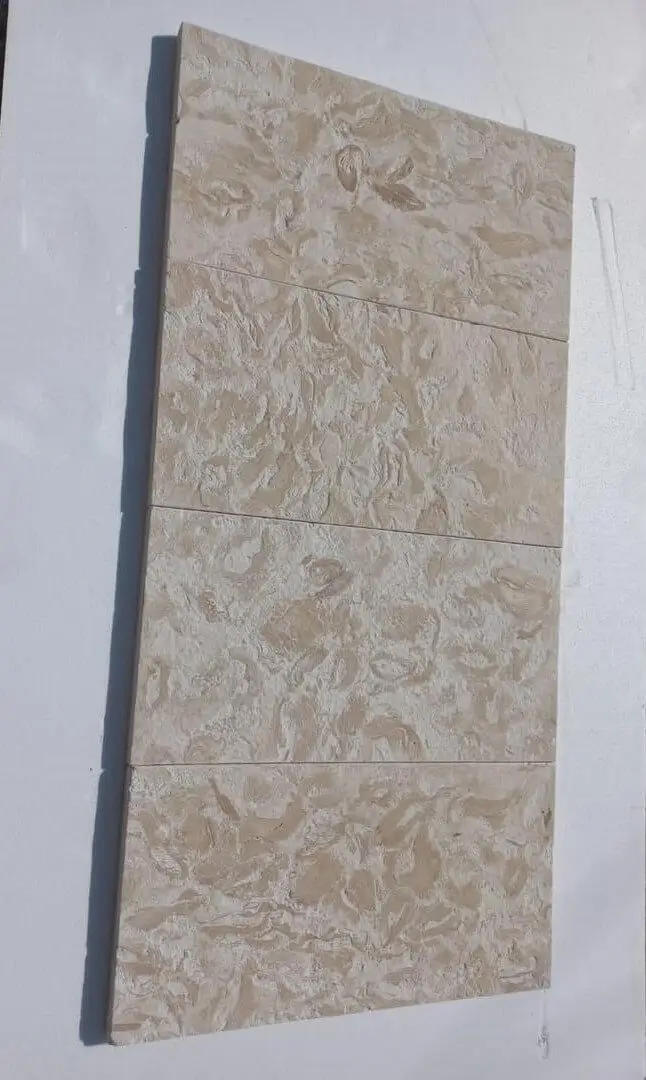
Premium Stone Building Materials Arizona: Citadel Stone Specification Guidance for Fire-Prone Regions
When you consider Citadel Stone’s stone building materials Arizona for your wildfire protection strategy, you’re evaluating quarried materials specifically selected for extreme climate performance and fire resistance characteristics. At Citadel Stone, we provide technical guidance for hypothetical applications across Arizona’s diverse wildfire risk zones. This section outlines how you would approach fire-resistant specification decisions for three representative communities facing different wildfire exposure conditions.
Phoenix Urban Interface
In Phoenix’s expanding urban interface areas, you would need to address wildfire threats from desert vegetation that creates rapid fire spread conditions with flame lengths exceeding 8 feet. Your specification of fire rated stone materials Arizona would focus on dense limestone or granite with thermal conductivity below 2.0 BTU·in/hr·ft²·°F to provide maximum radiant heat protection. You should verify that your selected materials maintain structural integrity at temperatures above 1,800°F, which represents worst-case exposure from creosote bush and palo verde fuel loads. Your installation details would require noncombustible mortar systems and metal lath backing to prevent ember penetration through wall assemblies. Climate considerations include extreme summer heat that can pre-stress materials before fire exposure, making material quality verification essential.
Tucson Hillside Development
Your Tucson applications would address wildfire behavior on sloped terrain where fire spreads three times faster uphill than on flat ground. You would specify fire rated stone materials Arizona with proven thermal shock resistance because rapid heating during upslope fire progression creates severe thermal gradients within wall assemblies. Your material selection should favor granite varieties that resist spalling under rapid temperature change, maintaining facade integrity through fire passage and subsequent cooling. You need to coordinate with architects to ensure roof-wall intersections receive special detailing attention, because wind-driven embers accumulate in these vulnerable locations. Your specifications would mandate continuous fire blocking behind stone veneer at horizontal intervals not exceeding 10 feet vertically to prevent chimney effect during fire exposure.
Scottsdale Desert Preserve Interface
When you work in Scottsdale’s desert preserve interface communities, you would encounter stringent wildfire protection requirements due to proximity to pristine desert vegetation and limited fire suppression access. Your specification would emphasize fire rated stone materials Arizona that satisfy both ignition resistance requirements and aesthetic standards for high-value properties. You should select materials that maintain appearance through fire exposure, because post-fire property values depend on minimizing visible fire damage. Your installation specifications would require premium-grade mortar systems with color consistency and fire resistance, since joint visibility affects overall aesthetic success. You would coordinate with insurance carriers to document that your material selections qualify for maximum available premium reductions, because owners in these areas face insurance costs exceeding $8,000 annually for standard coverage.
Maintenance and Inspection Protocols for Fire Safety
Your long-term fire safety strategy requires ongoing maintenance protocols that preserve the fire resistance you’ve specified. You should establish annual inspection programs that verify mortar joint integrity, identify areas where combustible debris has accumulated against stone surfaces, and confirm that vegetation clearance requirements remain satisfied. Fire rated stone materials Arizona require minimal maintenance compared to treated wood products that need periodic reapplication of fire retardant chemicals, but you can’t assume that initial installation quality persists without verification.
You need to educate building owners about activities that compromise fire resistance. Common mistakes include attaching combustible elements like wood trellises directly to stone facades, allowing mulch or vegetation to accumulate against foundation walls, and storing firewood or combustible materials within the defensible space zone. Your maintenance documentation should include specific prohibitions against these practices and explain how they create ignition pathways that bypass the fire protection provided by stone construction.
- You should schedule biennial professional inspections of mortar joints and stone attachment systems
- Your maintenance program must include removal of vegetation and debris from stone wall bases
- You need to verify that property owners haven’t modified wall assemblies by penetrating stone with combustible attachments
- Your inspection protocols should document any fire exposure incidents and assess whether repairs are necessary
Cost Analysis and Fire Safety Value Proposition
When you present fire rated stone materials Arizona to clients concerned about initial costs, you need to frame the discussion around total lifecycle value rather than first-cost comparisons. Stone cladding systems typically cost $28-45 per square foot installed, compared to $8-15 for fiber cement and $12-22 for stucco systems. However, your cost analysis should include insurance premium differences, reduced wildfire damage risk, elimination of periodic fire treatment maintenance, and property value premiums in fire-prone areas.
You’ll find that insurance premium reductions alone can justify the incremental cost of fire rated stone materials Arizona over a 15-20 year period. If you’re working on a 3,000 square foot home with 2,400 square feet of exterior wall area, the stone premium over fiber cement totals approximately $48,000. Annual insurance savings of 20% on a $4,500 premium yield $900 per year, recovering the premium in 53 years. However, you should also factor in avoided replacement costs if a wildfire occurs, which for fiber cement siding would exceed $65,000 for complete facade replacement. This creates a risk-adjusted payback period of 8-12 years depending on wildfire probability in the specific location.
Your value proposition strengthens when you account for property marketability. Homes constructed with fire rated stone materials Arizona in wildfire-prone areas sell faster and command premium pricing compared to combustible construction. Real estate data from recent years shows that documented fire-resistant construction increases property values by 5-8% in high-risk areas where buyers prioritize safety and insurance availability. For additional precision in material specification, review Dimensional tolerance specifications for precision cut building stone before you finalize your project documents. Citadel Stone stocks full-range as comprehensive building stone for sale in Arizona inventory depth.