
Travertine’s thermal expansion coefficient of roughly 4.7 × 10⁻⁶ per °F puts it in an ideal range for Arizona’s brutal temperature swings — but that number only matters if the fill material in your filled travertine pavers Arizona heat performance equation is properly matched to the stone. Unfilled travertine lets heat sink into open voids and accelerate edge spalling; filled and grouted versions distribute thermal load across the entire slab face, which changes everything about long-term behavior. Understanding what that distinction actually means in a desert climate — not just on paper, but across a full seasonal cycle — is where most specifications either hold up or fall apart.
What Filling Actually Does to Heat Performance
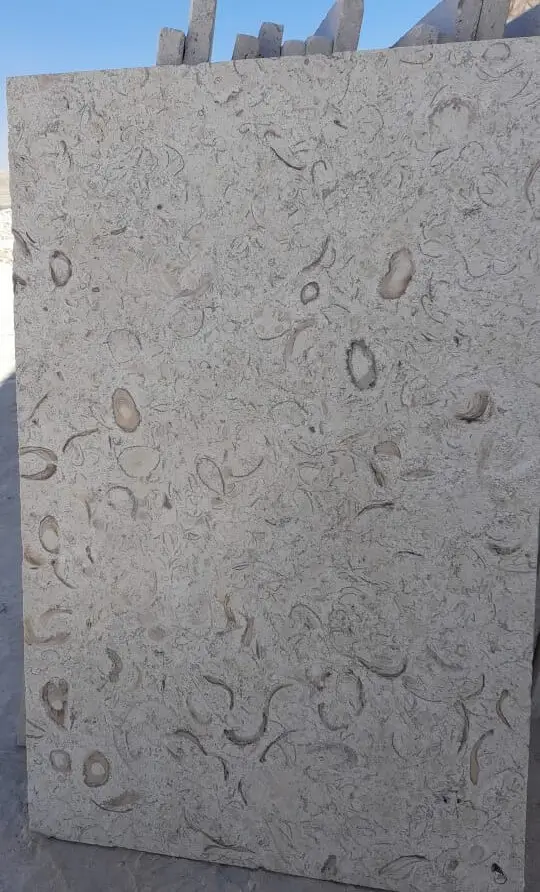
The fill in filled travertine paving slabs in Arizona isn’t cosmetic. Portland cement-based grout or epoxy fills seal the interconnected pore network that runs through travertine’s vuggy structure, and in Arizona heat, that network is either your biggest liability or a non-issue depending on how well it’s managed. Unfilled voids trap moisture during monsoon season, and when surface temperatures hit 140–160°F on unshaded hardscape, that trapped moisture flash-vaporizes and creates micro-fracture pressure at void edges.
Filled pavers eliminate most of that mechanism. You’re not just getting an aesthetically smoother surface — you’re fundamentally changing how the stone handles thermal cycling. Field measurements on heat-resistant natural stone pavers AZ homeowners choose consistently show that filled travertine surfaces maintain structural integrity longer under repeated heat-moisture cycling than unfilled equivalents installed on identical bases.
Surface Temperature Data Under Arizona Conditions
Raw surface temperature is the number Arizona homeowners ask about most, and the data is genuinely useful when you interpret it correctly. Travertine’s relatively high albedo — typically 0.35–0.45 for classic ivory and walnut tones — means it reflects a meaningful portion of solar radiation rather than absorbing it. Concrete flatwork in the same sun exposure commonly runs 15–25°F hotter at peak afternoon hours.
Your barefoot comfort threshold matters here too. At surface temps above 130°F, most people can’t stand on a surface for more than a few seconds. An arizona desert-rated filled travertine surface in full summer sun typically peaks around 115–125°F on light-colored material. That’s still hot, but it’s a functional difference from the 145–155°F readings you’ll get off dark concrete or asphalt.
- Light ivory and cream tones run 10–15°F cooler than walnut or noce finishes in direct sun
- Tumbled or brushed finishes scatter light more effectively than honed, dropping surface temps an additional 5–8°F
- East-facing installations in shade by early afternoon perform measurably better than west-facing exposures
- Pool deck layouts with 40%+ covered pergola area can reduce peak surface temps by 20–30°F
- Adjacent water features create localized cooling that extends the comfortable-use window by 1–2 hours daily
Porosity, Absorption, and the Desert Heat Cycle
Travertine’s natural porosity rate runs between 3–8% depending on quarry origin and cut orientation. For any Arizona desert-rated filled travertine surface, that porosity number needs to be understood in context of two competing demands: drainage speed during monsoon rain events and resistance to moisture retention that accelerates thermal damage.
In Yuma, where annual rainfall averages around 3 inches but arrives in intense burst events, drainage speed is the dominant concern. The fill material in grouted travertine actually helps here — it stabilizes the surface plane while the stone’s remaining micro-porosity still allows faster moisture dissipation than dense concrete. You get a surface that sheds water quickly without the pooling risk that comes with fully impervious materials.
The critical installation variable is grout joint width and fill depth. Fills that don’t reach within 1/8 inch of the surface face leave a recessed channel that collects debris and moisture — a slow-motion moisture trap that defeats most of the thermal protection the filling provides. Spec your fill flush to within 1/16 inch of the stone face on Arizona projects.
Joint Spacing and Thermal Expansion in Arizona Climates
Here’s what most specifiers get wrong with grouted travertine paver durability across Arizona: they apply joint spacing guidelines developed for mid-Atlantic or Pacific Coast climates, where the temperature delta between winter low and summer high is roughly 60–80°F. In Phoenix or Tucson, that delta is closer to 100–110°F across the year, and daily cycling from 55°F predawn to 115°F afternoon creates compounding fatigue stress at grout joints.
Standard recommendations call for expansion joints every 10–12 feet in concrete flatwork. For filled travertine paving slabs in Arizona, the more conservative field-tested approach is every 8–10 feet, with a soft joint (backer rod plus flexible sealant) rather than a rigid mortar fill at those control points. Rigid fills at expansion intervals crack within 2–3 seasons under Arizona thermal cycling — that’s not a materials failure, it’s a specification failure.
- Use a polyurethane sealant rated for 300–400% elongation at expansion joints
- Backer rod diameter should be 25% larger than joint width to ensure proper compression
- On slopes greater than 2%, add an expansion joint parallel to the grade break line
- Perimeter joints at wall and structure interfaces are non-negotiable — plan 3/8 inch minimum
- Grout between pavers should be a sanded exterior-rated mix, not standard interior tile grout
Base Preparation for Arizona Soil Conditions
Your base system determines whether a filled travertine installation lasts 8 years or 25. Arizona soils create a specific challenge set that diverges from national installation standards in ways that matter. Expansive clay soils in the Valley produce vertical movement of 1–3 inches seasonally; caliche layers interrupt drainage at variable depths; and the extreme evaporation rate means subgrade moisture content fluctuates more dramatically than in humid climates.
In Flagstaff at 7,000 feet elevation, you’re adding freeze-thaw cycling to an already demanding soil environment. The ponderosa pine root systems common in residential areas also create differential settlement risk under flatwork. For northern Arizona projects, compacted crushed granite base depth should increase to 8–10 inches from the 4–6 inch standard used in the low desert, and a geotextile separation fabric between native soil and base aggregate is worth specifying on any site with organic soil content above 3%.
- Compact base aggregate to 95% Proctor density — not the 90% standard acceptable for light-traffic applications
- Use 3/4 inch minus crushed granite, not river rock or smooth aggregate, for interlock between particles
- Setting bed should be 1 inch of dry-mixed sand and Portland cement (6:1 ratio), not wet mortar on Arizona projects over 500 square feet
- Verify subgrade drainage before pour — standing water at 18 inches below finish grade during monsoon will cause heaving
- Travertine supplier specifications in Arizona should confirm minimum 2 cm thickness for pedestrian applications and 3 cm for light vehicular
Sealing Protocols Specific to Desert Climate Performance
Sealing filled travertine pavers in Arizona isn’t optional — it’s part of the performance system, not a finishing touch. The question isn’t whether to seal, but which chemistry to use and how frequently to maintain the seal layer under UV conditions that degrade most sealers 40–60% faster than temperate-climate ratings suggest.
Penetrating impregnator sealers (silane-siloxane chemistry) outperform topical film-forming sealers in Arizona for one practical reason: they don’t create a surface film that can delaminate, bubble, or whiten under UV exposure. Topical sealers look great at installation and start showing stress within 18–24 months in full Arizona sun. Penetrating sealers work within the stone matrix and don’t create that visual failure mode. Apply at least two coats at installation — the first coat raises the absorption rate for the second, which is where you actually get full depth penetration.
Maintenance sealing frequency for an Arizona desert-rated filled travertine surface depends on sun exposure and foot traffic. Full-sun pool decks need resealing every 12–18 months. Covered patio areas with moderate foot traffic can stretch to 24–30 months between applications. You’ll know the sealer is failing when water no longer beads on the surface and the stone starts showing absorption darkening within 30 seconds of water contact.
Slip Resistance and Wet Condition Safety
The DCOF (Dynamic Coefficient of Friction) rating system replaced the older COF standard, and for Arizona pool deck applications, you need filled travertine meeting DCOF ≥ 0.42 for wet conditions per ANSI A137.1. Most tumbled and brushed finish travertine meets this threshold; honed finishes can drop below it when wet, which is why finish selection isn’t just aesthetic for pool surround applications.
Filled travertine paving slabs in Arizona perform consistently in wet-condition slip resistance testing because the fill eliminates the irregular surface voids that create localized slip risk on unfilled material. An unfilled travertine surface has micro-topography that provides grip when dry but channels water into voids during rain or splashing, creating inconsistent traction. The filled version offers more predictable wet-surface performance — not necessarily higher peak grip, but more consistent grip across the surface area.
For pool decks specifically, request test certification from your supplier, particularly if specifying honed finish for its appearance. At Citadel Stone, we recommend tumbled or brushed finishes for any application within 8 feet of water — the DCOF margin above the 0.42 threshold is substantially better, and the texture holds up longer under the chemical exposure from pool water.
Ordering, Logistics, and Project Timeline Planning
Lead time management is where Arizona projects most commonly run into trouble, and it’s entirely preventable with the right planning sequence. Travertine is a natural material with quarry-to-project lead times that vary significantly based on whether your specified material is in domestic warehouse inventory or requires a direct import order.
Citadel Stone maintains warehouse inventory of standard filled travertine sizes and finishes in Arizona, which typically reduces lead times to 1–2 weeks for common specifications. Custom sizes, rare finishes, or large-format slabs above 24×24 inches often require 6–8 week import lead times. Verify warehouse stock levels before locking in your project schedule — a 6-week lead time discovered after contractor mobilization creates real cost exposure.
Truck access planning matters as much as your order timing. Travertine pallets run 2,200–2,800 pounds each, and a typical 1,000 square foot project requires 4–6 pallets depending on thickness. Confirm whether your site can accommodate a flatbed truck with liftgate or whether a boom truck is needed. Residential sites with narrow driveways, low overhead lines, or soft soil shoulder conditions need early logistics coordination — the material delivery is often the critical-path item that doesn’t get enough attention in the project schedule.
- Order 10–12% overage on fill-and-grout travertine to account for cutting waste and pattern matching
- Verify lot consistency — request all material from the same production lot to minimize color variation
- Stage pallets on plywood sheets on finished surfaces to prevent point-load damage during installation
- Check warehouse lead times for your specific finish and size combination before issuing purchase orders
Comparing Filled Travertine to Competing Surface Materials
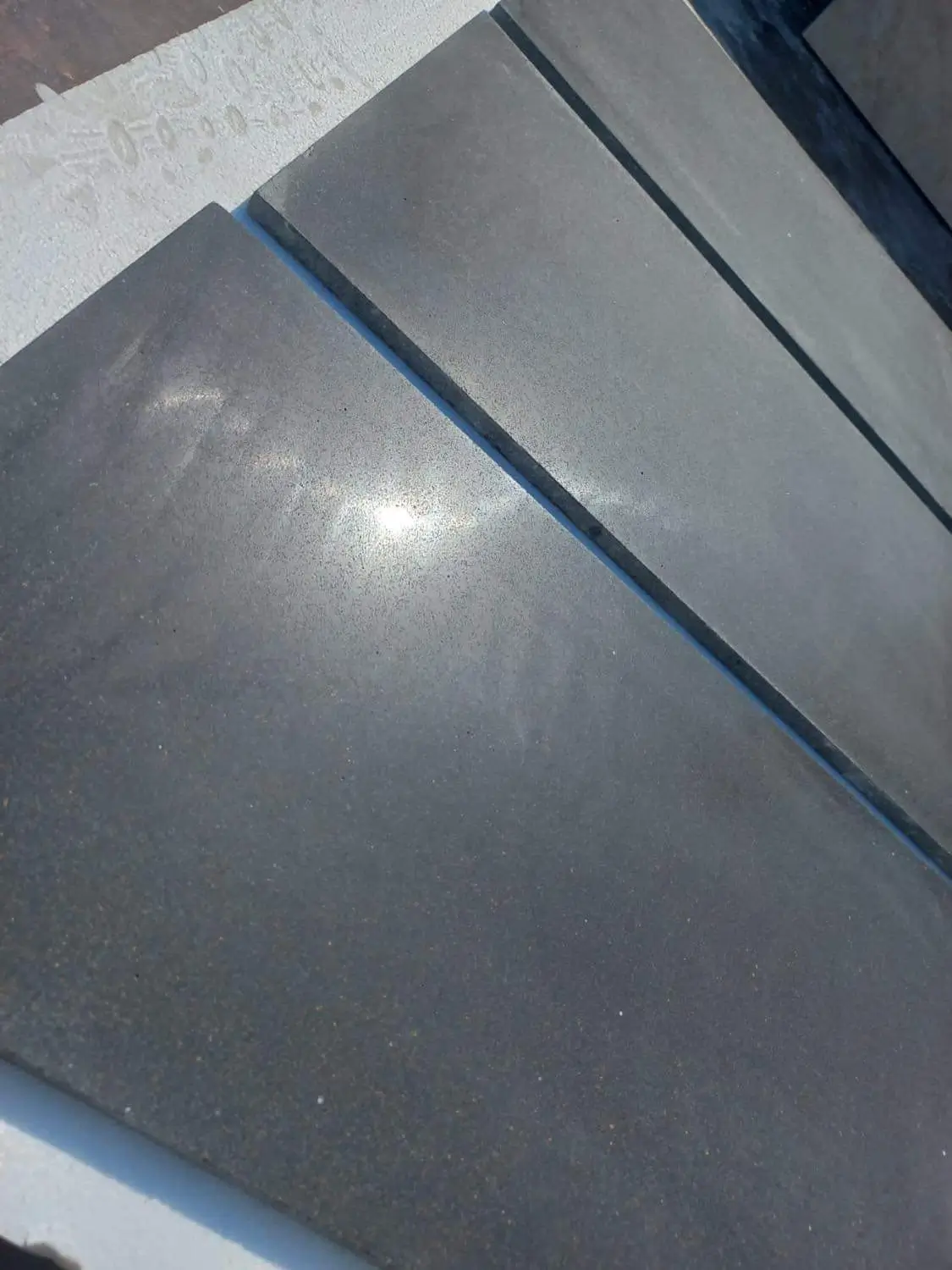
The heat-resistant natural stone pavers AZ homeowners choose most frequently come down to three real competitors for filled travertine: porcelain tile, concrete pavers, and unfilled travertine. Each has a legitimate argument in specific conditions, and being honest about those trade-offs is more useful than a one-sided comparison.
Porcelain delivers higher compressive strength (typically 18,000–22,000 PSI vs. travertine’s 8,000–12,000 PSI) and near-zero absorption, which simplifies maintenance. The trade-off is thermal conductivity — porcelain runs hotter underfoot in direct sun and has less acoustic warmth. For pool decks and barefoot-traffic areas, filled travertine pavers Arizona heat performance advantages are real and functional, not just marketing language.
Concrete pavers offer excellent dimensional consistency and lower material cost, but they absorb significantly more heat and lack travertine’s natural color variation. In Sedona, where the red-rock landscape context pushes most design programs toward earth tones and natural materials, the aesthetic argument for travertine is practically self-evident — the material belongs to that visual vocabulary in a way concrete never quite achieves.
- Filled travertine vs. porcelain: travertine wins on surface temperature; porcelain wins on long-term stain resistance
- Filled travertine vs. concrete pavers: travertine wins on heat performance and aesthetics; concrete wins on initial cost and installation speed
- Filled travertine vs. unfilled travertine: filled wins in every Arizona performance category — moisture management, thermal stability, slip consistency, and maintenance frequency
- Travertine suppliers in Arizona should be able to provide comparative absorption and compressive strength data on request — if they can’t, treat that as a quality signal
Long-Term Maintenance and Realistic Performance Expectations
Grouted travertine paver durability across Arizona is achievable at the 20–25 year range with realistic maintenance investment. That’s not a guarantee — it’s a realistic expectation based on properly specified installations with adequate base preparation, appropriate fill materials, and consistent sealing maintenance. Installations that skip any of those elements consistently underperform.
The maintenance schedule for an Arizona filled travertine installation looks like this in practice: annual cleaning with a pH-neutral stone cleaner (never acidic cleaners — they etch the calcium carbonate matrix), resealing on the schedule your sun exposure and traffic dictate, prompt attention to any cracked grout joints before moisture infiltration begins at those points, and periodic inspection of perimeter and expansion joint sealant for signs of hardening or cracking. Flexible sealant at expansion joints typically needs replacement every 5–7 years regardless of traffic, because UV degradation alone breaks down polyurethane chemistry over time.
For a resource that covers related Arizona stone applications in detail, Travertino Pavers Arizona: A Complete Local Guide provides additional context on material selection and regional performance factors worth reviewing alongside this specification data.
Parting Guidance
Filled travertine pavers Arizona heat performance data consistently supports one conclusion: this material is well-matched to desert conditions when the full specification — not just material selection — is executed correctly. The fill chemistry, joint spacing, base depth, sealing regimen, and finish selection all interact as a system. Getting three of five right still produces an underperforming installation.
Be skeptical of any contractor or supplier who reduces the selection decision to material cost per square foot alone. The performance gap between a properly specified filled travertine installation and a generic one is measured in years of service life, not just aesthetics. Explore our Arizona heat-resistant travertine pavers for specific product options that meet the performance criteria outlined throughout this article. Citadel Stone provides grouted travertine paver solutions proven across Arizona’s desert climate, supporting long-term outdoor installations for homeowners in Phoenix, Mesa, and Peoria.