
When you select masonry materials for Arizona construction, you’re working in one of the most demanding environments in North America. The combination of intense UV exposure, extreme temperature swings, and low humidity creates conditions that accelerate efflorescence and salt migration in ways that catch even experienced specifiers off-guard. Understanding efflorescence prevention stone Arizona applications requires you to think beyond standard specifications and address the specific mechanisms that cause white crystalline deposits to appear on finished surfaces months or even years after installation.
You need to recognize that efflorescence prevention stone Arizona projects demand a different approach than similar installations in temperate climates. The state’s unique geology, with alkaline soils ranging from pH 7.8 to 9.2 across most regions, means you’re dealing with naturally high soluble salt content before you even begin construction. Your material selection and installation protocols must account for this baseline condition, or you’ll face costly remediation work when those salts migrate to visible surfaces.
Understanding Salt Migration Mechanisms in Desert Climates
Salt migration occurs through a specific sequence that you need to understand to implement effective efflorescence prevention stone Arizona strategies. Water acts as the transport vehicle, dissolving soluble salts from substrates, mortar, groundwater, or the stone itself, then carrying those salts through the material’s pore structure. When that water reaches the surface and evaporates — which happens rapidly in Arizona’s arid climate — it leaves behind crystalline salt deposits that appear as white, gray, or sometimes brown discoloration.
What makes Arizona installations particularly challenging is the evaporation rate. You’re dealing with relative humidity that regularly drops below 15% during summer months, creating wicking action that pulls moisture and dissolved salts toward any exposed surface. This process accelerates dramatically when you have temperature differentials between substrate and surface, which is constant in desert environments where ground temperatures can be 20-30°F cooler than surface temperatures during peak sun exposure.
Your specification must address three distinct salt sources. Primary efflorescence comes from salts within the stone material itself, released during the curing process or through ongoing moisture exposure. Secondary efflorescence develops from external sources — substrate materials, groundwater, deicing salts, or atmospheric deposition. The third category, what industry professionals call cryptoflorescence, occurs beneath the surface when salts crystallize within the pore structure rather than at the surface, causing structural degradation that’s harder to detect but more damaging long-term.
Material Selection Criteria for Efflorescence Resistance
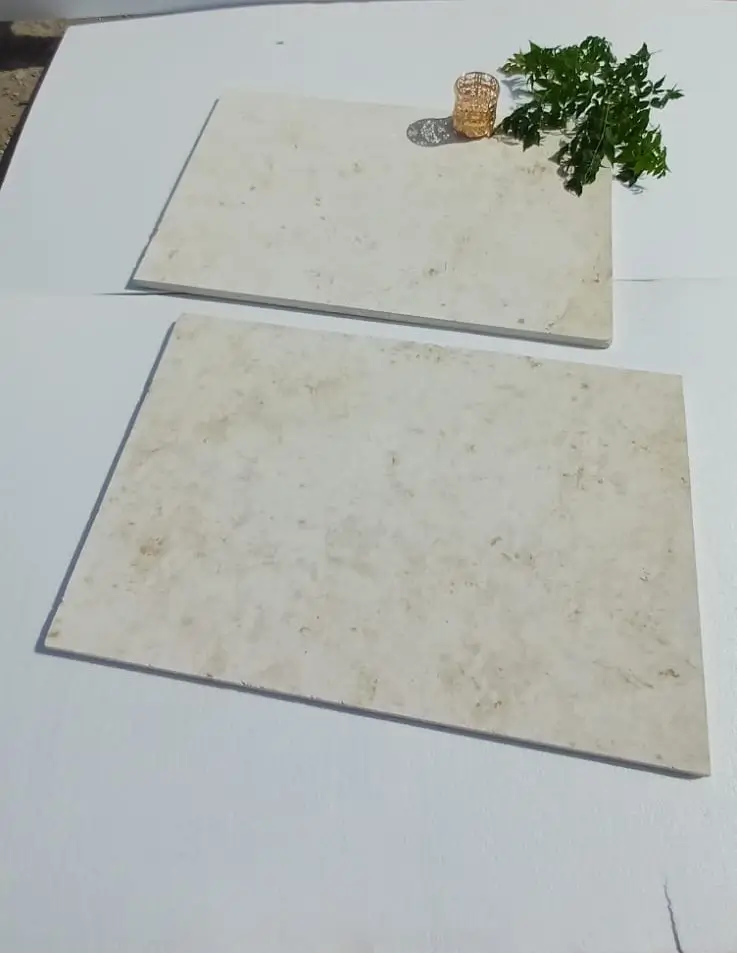
When you evaluate building materials for efflorescence prevention stone Arizona applications, you need to start with porosity characteristics. The relationship between total porosity, pore size distribution, and pore connectivity determines how readily the material will transport moisture and dissolved salts. You want materials with total porosity below 5% for optimal performance, but what matters more than the percentage is the pore structure itself.
You’ll find that materials with predominantly closed-cell or discontinuous pore structures resist salt migration far better than those with interconnected capillary networks. Dense limestone with tight crystalline structure typically exhibits porosity around 2-4% with minimal connectivity, making it superior for efflorescence prevention stone Arizona projects compared to more porous sedimentary alternatives. Testing protocols should include mercury intrusion porosimetry to map actual pore size distribution, not just bulk porosity measurements.
The material’s chemical composition plays an equally critical role. You need to verify calcium carbonate content, clay mineral presence, and soluble sulfate levels before specification. Materials containing more than 0.2% water-soluble sulfates will almost certainly develop efflorescence in Arizona’s alkaline soil conditions. Clay minerals, particularly montmorillonite and illite, contribute to salt migration because they exhibit hygroscopic properties that attract and retain moisture even in low-humidity environments.
- You should specify materials with water absorption rates below 3% by weight under ASTM C97 testing protocols
- Your selected material must demonstrate sulfate content below 0.15% when tested according to ASTM C1580 procedures
- You need to verify that capillary rise height remains under 40mm after 24-hour immersion testing
- Alkaline resistance testing should confirm minimal deterioration after exposure to pH 9.0 solutions for extended periods
Substrate Preparation Requirements
Your substrate preparation has more impact on long-term efflorescence prevention stone Arizona performance than most specifiers realize. The base materials you select establish the foundation for moisture management, and mistakes here create problems that no amount of surface treatment can remediate. You need to address both vertical and horizontal installations differently, because gravity and drainage patterns create distinct challenges for each orientation.
For horizontal applications like plaza paving or terrace installations, you should spec a drainage aggregate base with particle sizes ranging from 3/4″ to 1-1/2″ clean crushed stone. The critical specification is cleanliness — your aggregate must contain less than 2% fines passing the #200 sieve. Higher fines content creates capillary pathways that wick groundwater upward through the installation, bringing dissolved salts with it. You’ll want to verify warehouse stock meets this specification before delivery, because aggregate washing quality varies significantly between suppliers.
Vertical applications demand different protocols. When you install stone veneer or masonry walls, the drainage plane behind the stone becomes your primary defense against efflorescence. You need a complete separation between the stone and backup wall, typically achieved with a 1″ minimum air gap and properly detailed weep holes at 32″ maximum spacing. The mortar bed should incorporate water-repellent admixtures, but you also need to ensure those admixtures don’t increase soluble salt content — some waterproofing compounds contain sulfates that worsen the problem they’re meant to solve.
Surface defects in substrate preparation frequently occur when crews rush the drying process. You should specify minimum 28-day cure times for concrete substrates, with moisture content verified below 4% using calcium chloride testing before stone installation begins. Accelerated schedules that compress this timeline create trapped moisture conditions that guarantee efflorescence development within the first 18 months.
Mortar and Setting Bed Specifications
The mortar you specify has the potential to be either your best defense or your worst enemy in efflorescence prevention stone Arizona installations. Portland cement, which forms the base of most mortar mixes, contains soluble alkalis and calcium hydroxide that readily dissolve in mixing water and migrate through porous materials. When you use standard Type I/II portland cement without modifications, you’re introducing significant salt sources directly into the installation.
You need to specify low-alkali cement formulations with total alkali content below 0.6% when expressed as sodium oxide equivalent. Additionally, replacing 25-35% of portland cement with pozzolanic materials like Class F fly ash or silica fume significantly reduces efflorescence potential. These supplementary cementitious materials react with calcium hydroxide during hydration, converting it to calcium silicate hydrate that’s far less soluble and mobile.
Your mortar mix design should incorporate polymer-modified formulations that reduce water permeability while maintaining necessary workability. The trade-off you’re managing is between flowability during installation and long-term impermeability after curing. Too much water in the mix creates easy migration pathways; too little water prevents proper cement hydration and creates weak bonds prone to cracking that allows water infiltration. The target water-to-cement ratio should remain between 0.40 and 0.45 for optimal performance.
- You should verify that sand aggregates contain less than 0.05% water-soluble chlorides and sulfates before mixing
- Your mixing water must meet potable water standards with total dissolved solids below 500 ppm
- You need to specify admixtures that are sulfate-free and have been tested for efflorescence contribution
- Mortar joint tooling should be completed when mortar reaches thumbprint hardness to seal the surface without causing tearing
Drainage Design Considerations
Effective drainage design represents your primary defense in efflorescence prevention stone Arizona installations because you’re eliminating the transport mechanism that enables salt migration. Water that never contacts the stone can’t dissolve and carry salts to visible surfaces. Your drainage strategy needs to address both bulk water movement and capillary moisture migration, which require different approaches.
You should design surface drainage with minimum 2% slopes for pedestrian surfaces and 1.5% for plaza or terrace applications where accessibility standards limit gradient options. These slopes need to direct water away from vertical surfaces and toward dedicated drainage collection points. The common mistake is specifying adequate slope without verifying that adjacent landscaping maintains those gradients — irrigation systems and organic soil settlement often create low spots that pool water against stone surfaces.
Subsurface drainage requires equal attention. When you install stone pavements, you need a complete drainage path from the setting bed through the base course to perforated collector pipes or drainage structures. This means your base aggregate must maintain 40% minimum void space, and you can’t allow fines migration from subgrade soils to clog those voids. A properly specified geotextile fabric between subgrade and base course prevents this infiltration while allowing water to pass downward.
For guidance on comprehensive drainage integration with architectural building stone materials in Lake Havasu, see architectural building stone materials in Lake Havasu for detailed specification frameworks. You’ll find that drainage design intersects with structural requirements, accessibility standards, and aesthetic goals in ways that require careful coordination across disciplines.
Chemical Prevention Strategies
Chemical prevention approaches for efflorescence prevention stone Arizona applications involve both reactive treatments that address existing conditions and proactive measures that prevent salt migration before it occurs. You need to understand that sealers, water repellents, and crystallization inhibitors all function through different mechanisms and deliver distinct performance characteristics.
Penetrating water repellents, typically silane or siloxane formulations, work by lining the pore structure with hydrophobic molecules that prevent water absorption while allowing vapor transmission. When you apply these treatments to low-porosity materials like dense limestone, you’re creating a barrier that reduces water-borne salt migration by 80-90%. The critical specification detail is penetration depth — you need products that achieve 3-8mm penetration to be effective, which requires specific application techniques and surface preparation.
Film-forming sealers create a surface barrier that blocks both liquid water and water vapor. You should be cautious with these products in Arizona applications because blocking vapor transmission can trap moisture within the material if any water does penetrate through cracks or joints. This trapped moisture can cause subsurface salt crystallization that leads to spalling and delamination. Film-forming sealers work best on vertical surfaces with good drainage design where water entry is minimal.
Crystallization inhibitors represent a different approach. These chemical treatments, usually phosphate or citrate-based formulations, alter the way salts crystallize when water evaporates. Instead of forming visible surface deposits, treated materials develop salt crystals that remain smaller and more dispersed, making them less noticeable and easier to remove during routine cleaning. Professional installations in high-salt environments often combine penetrating repellents with crystallization inhibitors for comprehensive protection.
Installation Timing Protocols
When you schedule stone installation in Arizona, you’re working against environmental conditions that can either support or undermine efflorescence prevention stone Arizona strategies. Temperature and humidity during installation affect mortar hydration rates, water evaporation patterns, and salt mobilization in ways that have long-term consequences for material performance.
You should avoid installation during summer months when ambient temperatures exceed 95°F and relative humidity drops below 20%. These conditions cause mortar to lose moisture faster than cement can hydrate properly, creating weak bonds and leaving excess unhydrated cement particles that contribute to efflorescence. The rapid evaporation also draws water and dissolved salts from substrates toward the surface at accelerated rates, concentrating salts at the stone-mortar interface where they’ll eventually migrate to visible surfaces.
Optimal installation windows in Arizona occur during fall and spring months when daytime temperatures range from 60-85°F and humidity remains above 25%. These conditions allow controlled mortar curing, giving you 7-10 day hydration periods before significant moisture loss occurs. You need to protect fresh installations from direct sun exposure during this curing period using shade cloth or temporary structures that don’t trap heat.
- You should specify morning installation schedules that allow mortar to achieve initial set before peak afternoon temperatures
- Your installation protocol must include misting procedures for substrates that prevent premature moisture extraction from mortar
- You need to require covering of fresh installations overnight to prevent rapid temperature drops that cause condensation
- Warehouse delivery timing should account for material acclimation periods of 48-72 hours before installation begins
Joint Design and Detailing
Your joint design directly impacts efflorescence prevention stone Arizona performance because joints create controlled pathways for water movement and salt accumulation. When you detail joints properly, they become drainage routes that evacuate moisture before it can transport salts to visible surfaces. Poorly designed joints become reservoirs where water accumulates and concentrates dissolved salts.
Joint width needs to balance several competing requirements. Wider joints provide better drainage and accommodate thermal expansion, but they also expose more mortar surface area where efflorescence can develop. Narrower joints minimize mortar exposure but restrict drainage and increase stress during thermal cycling. You’ll find that 3/8″ to 1/2″ joints represent the optimal range for most Arizona applications, providing adequate drainage while limiting mortar visibility.
Joint depth matters as much as width. You should specify full-depth mortar joints for wet-set installations, but the final 1/4″ to 3/8″ of that depth needs to be recess-pointed with modified mortar that includes water-repellent admixtures. This creates a surface layer with superior resistance to water penetration while the deeper mortar provides structural support. The recess pointing must be completed after the main mortar bed has cured for at least 7 days to prevent the modified surface layer from pulling moisture from uncured bedding mortar.
Surface defects in joint finishing create long-term problems. When tooling compresses and seals the joint surface properly, you create a skin that resists water penetration. Rough or torn joint surfaces allow water entry and provide irregular surfaces where salt crystals can anchor and accumulate. You need to specify joint tooling when mortar reaches thumbprint firmness — soft enough to compress without tearing, firm enough to hold the tooled profile.
Preventative Maintenance Programs
Preventative maintenance represents your long-term strategy for efflorescence prevention stone Arizona installations. Even properly specified and installed materials require ongoing attention to maintain performance, because environmental conditions constantly challenge even the best initial work. You need to establish maintenance protocols that address emerging issues before they develop into visible problems requiring costly remediation.
Your maintenance program should begin with quarterly visual inspections that identify early signs of salt accumulation, moisture infiltration, or drainage problems. You’re looking for white crystal deposits, dark staining that indicates moisture retention, joint deterioration, or vegetation growth that signals persistent dampness. Catching these indicators early allows you to implement corrective measures before salts concentrate to levels that require aggressive cleaning or material replacement.
Cleaning protocols need to avoid methods that worsen the problem. Pressure washing might remove surface efflorescence temporarily, but it drives water deep into the material where it dissolves additional salts that will migrate back to the surface within weeks. You should specify dry brushing for light efflorescence, followed by pH-neutral cleaners applied at low pressure for heavier deposits. Acidic cleaners can be effective for calcium carbonate-based efflorescence, but they require careful selection to avoid damaging the stone or creating new soluble salts through chemical reactions.
Preventative maintenance includes reapplication of water repellents every 3-5 years, depending on exposure conditions and initial treatment quality. You need to clean surfaces thoroughly before reapplication and verify that existing treatments have degraded sufficiently to allow new product penetration. Applying new repellent over intact old treatment creates surface buildup without improving performance.
- You should establish inspection schedules that increase frequency during monsoon season when moisture exposure peaks
- Your maintenance specifications must prohibit use of deicing salts or other salt-based treatments on or near stone surfaces
- You need to verify that irrigation systems maintain 24-inch minimum clearance from stone installations and don’t create overspray conditions
- Joint sand or mortar integrity should be verified annually and repaired immediately when deterioration appears
Soil Conditions and Groundwater Impacts
Arizona soil conditions create unique challenges for efflorescence prevention stone Arizona applications because of naturally high alkalinity and soluble salt content. When you’re working in areas with caliche deposits — calcium carbonate hardpan that occurs throughout much of the state — you’re dealing with a massive salt reservoir directly beneath your installation. Water moving through this material dissolves calcium carbonate and carries it upward through capillary action during evaporation cycles.
You need to test soil conditions before finalizing your specifications. Soil pH above 8.0 indicates alkaline conditions that will contribute to efflorescence, while electrical conductivity measurements above 4 dS/m signal high soluble salt concentrations. When test results show these conditions, you must implement additional barriers between groundwater and your stone installation. This typically means complete waterproof membranes beneath the entire assembly, not just standard moisture barriers.
Groundwater depth affects your risk profile significantly. When the water table sits within 8 feet of finished grade, you’re in a high-risk zone for capillary rise that will transport dissolved salts upward continuously. Deeper water tables reduce this risk, but even seasonal high water that temporarily rises to within 10 feet of grade can cause problems during wet years. You should request historical groundwater data for the site and design for worst-case seasonal conditions, not average depths.
The interaction between irrigation practices and soil chemistry deserves particular attention in Arizona applications. When you add irrigation water with 400-600 ppm total dissolved solids to alkaline soils with existing high salt content, you’re creating a compound problem. Each irrigation cycle deposits additional salts while providing the water that transports both new and existing salts toward your stone installation. Working with landscape architects to establish irrigation setbacks and design drainage patterns that move water away from hardscape becomes essential.
Citadel Stone: building stone for sale in Arizona — Efflorescence Prevention Specification Guidance
When you consider Citadel Stone’s building stone for sale in Arizona for your commercial or residential project, you’re evaluating materials selected specifically for desert climate performance and efflorescence resistance. At Citadel Stone, we provide technical guidance for material specification across Arizona’s diverse climate zones. This section outlines how you would approach specification decisions for three representative cities, demonstrating the climate-specific considerations that affect efflorescence prevention stone Arizona applications.
Your material selection process would need to account for regional variations in temperature extremes, soil alkalinity, groundwater chemistry, and precipitation patterns. Each city presents distinct challenges that require you to modify standard specifications to address local conditions effectively.
Chandler Commercial Applications
In Chandler, you would encounter alkaline soils with pH typically ranging from 8.2 to 8.8 and groundwater with elevated sulfate concentrations. Your specification would need to address these conditions by selecting materials with porosity below 3.5% and verified sulfate resistance. The area’s rapid development means you’re often working with disturbed soils where salt concentrations vary unpredictably, requiring comprehensive soil testing before finalizing base specifications. You would specify enhanced drainage design with synthetic drainage composites beneath paving installations and complete waterproof membranes for vertical applications. Temperature extremes that regularly exceed 115°F would require you to adjust thermal expansion joint spacing to every 12 feet rather than the 15-foot intervals used in moderate climates.
Tempe Heat Island Considerations
Tempe’s urban heat island effect creates surface temperatures that can reach 165°F on dark pavements during summer months. Your material specification would emphasize light-colored stone with high solar reflectance to reduce heat absorption and minimize thermal stress that accelerates salt migration. You would need to account for proximity to landscaped areas around Arizona State University and residential districts where irrigation water quality varies. The combination of alkaline irrigation water and intense heat creates accelerated evaporation that concentrates salts rapidly. Your specification would include mandatory water repellent treatments and joint designs that facilitate rapid drainage. Preventative maintenance protocols would require quarterly inspections during summer months when salt mobilization peaks, rather than the semi-annual schedules used in more moderate environments.
Surprise Residential Development
In Surprise, you would address soil conditions typical of northwest Phoenix suburbs, where caliche deposits often occur within 18-36 inches of grade. Your specification would require excavation below the caliche layer with replacement using engineered fill that provides both structural support and capillary break functionality. The area’s residential development patterns mean you’re often coordinating with landscape contractors whose irrigation designs can compromise hardscape performance. You would specify minimum 36-inch setbacks between irrigation zones and stone installations, with grading that creates positive drainage away from hardscape. Material selection would favor dense limestone with demonstrated performance in high-alkalinity conditions. Chemical prevention strategies would include both penetrating water repellents and crystallization inhibitors applied before grouting to address the aggressive soil chemistry typical of this region.
Testing Protocols and Verification
Your specification should mandate specific testing protocols that verify material performance characteristics relevant to efflorescence prevention stone Arizona applications. Standard industry tests don’t always address the particular conditions that cause problems in desert environments, so you need to supplement basic requirements with climate-specific verification procedures.
Water absorption testing under ASTM C97 provides baseline porosity data, but you should also require capillary rise testing that measures how far water wicks upward through the material over 24-hour and 7-day periods. This vertical migration potential predicts efflorescence risk better than simple absorption percentages because it simulates actual field conditions where groundwater rises through capillary action. Materials that show capillary rise exceeding 50mm in 24 hours warrant additional scrutiny or rejection for ground-contact applications.
Salt crystallization testing according to ASTM C88 evaluates freeze-thaw durability in cold climates, but the same test methodology reveals susceptibility to salt damage in hot climates when you modify the testing protocol. You should specify extended cycle testing with sodium sulfate solution at elevated temperatures (95-105°F) that simulate Arizona summer conditions. Materials that show more than 1% weight loss or any surface defects after 50 cycles at these temperatures will likely develop problems in service.
- You need to verify initial rate of absorption (IRA) values remain below 0.025 oz/in² per minute for veneer applications
- Your specifications should require sulfate content analysis showing less than 0.12% water-soluble sulfates by weight
- You should mandate accelerated weathering tests that expose materials to combined UV radiation and salt spray for 1000-hour minimum periods
- Chemical resistance testing should verify that materials maintain structural integrity after 30-day immersion in pH 9.0 alkaline solutions
Remediation Strategies for Existing Efflorescence
When you encounter existing efflorescence on installed materials, you need to approach remediation systematically to address root causes rather than just removing visible symptoms. Surface cleaning without correcting underlying moisture and salt sources guarantees recurrence within months. Your remediation strategy should begin with diagnostic investigation that identifies whether you’re dealing with primary efflorescence from the stone itself, secondary efflorescence from external sources, or subsurface crystallization causing structural damage.
You should start with dry methods — stiff brushing with natural fiber brushes removes loose surface crystals without introducing additional water. This approach works for light efflorescence where salt accumulation remains minimal. For heavier deposits, you’ll need chemical cleaning, but product selection depends on salt composition. Calcium carbonate efflorescence responds to dilute acidic cleaners (pH 2-3), while sodium or potassium sulfate efflorescence requires pH-neutral chelating agents that dissolve salts without attacking the stone.
The critical mistake in remediation is stopping after surface cleaning. You need to identify and correct the moisture source driving salt migration. This might require drainage improvements, irrigation modifications, waterproofing enhancements, or joint repairs. Without addressing these underlying conditions, efflorescence will return as soon as environmental conditions mobilize the next batch of salts. Professional remediation protocols include moisture monitoring over 60-90 day periods after cleaning to verify that corrections have eliminated the moisture infiltration that caused the original problem.
For severe cases involving subsurface crystallization and material deterioration, you may need to remove and replace affected areas. This becomes necessary when salt accumulation has created structural damage through freeze-thaw action of crystallized salts or chemical reactions between salts and stone minerals. You can identify these conditions through delamination, spalling, or progressive strength loss that shows up in impact resistance testing.
Long-Term Performance Expectations
When you specify materials for efflorescence prevention stone Arizona installations, you need to set realistic performance expectations with clients and establish maintenance requirements that support long-term success. Even optimal material selection and installation practices can’t eliminate all efflorescence risk in Arizona’s challenging environment — you’re managing the condition, not preventing it absolutely.
Professional installations using low-porosity materials, proper drainage design, and appropriate chemical treatments should remain free of visible efflorescence for 5-8 years under normal conditions. After this period, you should expect minor surface deposits to appear periodically, particularly after unusually wet seasons or irrigation system failures. These deposits should respond readily to routine cleaning and shouldn’t indicate system failure or material degradation.
Your long-term maintenance specifications need to account for treatment degradation. Water repellents applied during initial installation typically maintain effectiveness for 3-5 years, after which reapplication becomes necessary to sustain performance. You should establish inspection and reapplication schedules in project closeout documents so property managers understand ongoing requirements. Deferred maintenance inevitably leads to accelerated efflorescence development and more costly remediation.
The relationship between installation quality and long-term performance is direct and predictable. Installations that meet specification requirements for material porosity, drainage design, joint detailing, and chemical treatment will outperform budget installations by 10-15 years of service life. When you’re evaluating value engineering proposals that reduce initial costs by eliminating water repellent treatments or reducing drainage provisions, you need to quantify the lifecycle cost implications. The apparent savings rarely justify the accelerated maintenance requirements and shortened service life that result from those compromises. For additional installation insights, review Privacy berm construction using natural stone in Arizona landscapes before you finalize your project documents. BBQ islands feature Citadel Stone’s entertainment stone hardscape in Arizona outdoor cooking.