
When you think about winter maintenance in Arizona, de-icing probably doesn’t top your list of concerns. But if you’re working on projects in Flagstaff, the White Mountains, or even Sedona’s higher elevations, you’ll encounter freeze-thaw cycles that demand careful material protection strategies. The challenge isn’t just keeping surfaces safe for foot traffic — it’s protecting your stone investment from the chemical damage that conventional de-icing products cause. You need eco friendly deicing stone Arizona solutions that balance winter safety with long-term material preservation.
Traditional rock salt and calcium chloride might clear ice effectively, but they’re wreaking havoc on natural stone surfaces across the state’s northern regions. You’ll see the damage manifest as surface spalling, efflorescence patterns that appear 8-12 months after winter application, and accelerated joint deterioration that cuts service life by 30-40%. The alkaline nature of Arizona’s soils already challenges stone installations — adding salt-based de-icers compounds the problem exponentially. Your specification decisions need to account for both immediate winter functionality and decade-long material performance.
Chemical Damage Mechanisms in Stone Surfaces
Understanding how conventional de-icers attack stone helps you make better material choices and specify appropriate winter maintenance protocols. When salt-based products penetrate stone porosity, they don’t just melt ice and disappear. The chloride ions migrate into the stone matrix, where they interact with mineral components and moisture cycling. You’re essentially introducing a chemical reaction that continues long after winter ends.
The damage occurs through three primary mechanisms. First, the salt solution penetrates surface porosity during freeze-thaw transitions, filling interconnected pore structures with concentrated chloride solutions. When temperatures drop below freezing, this saline solution expands with greater force than pure water — the 9% volumetric expansion of ice gets amplified by salt crystallization pressure. You’ll see this manifest as surface scaling that appears 2-3 seasons after initial application, not immediately.
Second, the hygroscopic nature of residual salts keeps stone surfaces wetter for longer periods. Instead of drying out between precipitation events, salt-contaminated stone retains moisture at 40-60% longer durations. This extended saturation period accelerates biological growth, promotes efflorescence formation, and creates conditions for subfreezing damage even when air temperatures hover just below 32°F. Your stone stays vulnerable throughout winter rather than recovering between storms.
Third, chemical reactions between chloride ions and stone minerals alter the material structure itself. Calcium-rich stones like limestone and travertine are particularly vulnerable — the chloride solution reacts with calcium carbonate to form calcium chloride compounds that are water-soluble and wash away with spring rains. You’re literally dissolving the stone matrix grain by grain. Granite and quartzite show better resistance, but even these denser materials suffer from accelerated weathering at joints and edges where salt concentrates.
Plant-Based De-Icing Alternatives for Stone Protection
The most effective eco friendly deicing stone Arizona solutions come from agricultural byproducts that were originally developed for airport runways and bridge decks. Beet juice de-icers, corn-based products, and sugar beet derivatives provide melting performance down to 15-20°F while minimizing chemical attack on stone surfaces. You’ll pay 15-25% more per gallon compared to rock salt solutions, but the material protection benefits justify the premium on high-value hardscape installations.
Beet juice products work through colligative properties similar to salt but without the aggressive chloride chemistry. The organic compounds lower water’s freezing point while providing less corrosive contact with stone minerals. Application rates run about 30% higher than conventional de-icers — you’ll need roughly 1.5 gallons per 1,000 square feet for typical northern Arizona conditions, compared to 1.0 gallon of salt brine. The slightly higher consumption gets offset by reduced reapplication frequency since the organic solutions adhere better to stone surfaces.
Testing across 50+ winter seasons in cold climate environments shows these eco friendly deicing stone Arizona products reduce surface degradation by 60-75% compared to calcium chloride applications. You won’t eliminate freeze-thaw damage entirely — that’s a function of climate and stone porosity — but you significantly extend service life. The trade-off comes in cold-temperature performance: below 15°F, plant-based de-icers lose effectiveness rapidly, while salt-based products continue working down to 5°F.
Application timing matters more with organic de-icers than with conventional salts. You need to apply these products before ice bonds to stone surfaces, ideally as anti-icing treatments rather than reactive de-icing. When you spray plant-based solutions 2-4 hours before predicted freezing precipitation, you create a sacrificial layer that prevents ice adhesion. This proactive approach uses 40% less product than waiting until after ice forms and trying to melt through established bonding.
Sand and Aggregate Traction Methods
Sometimes the best chemical alternative is no chemical at all. When temperatures drop below the effective range of any de-icing product, you’re better off providing mechanical traction rather than attempting to melt ice. Sand, fine gravel, and specialty traction aggregates give pedestrians safe footing without introducing moisture or chemicals into your stone installation. This approach works particularly well for residential applications where foot traffic is moderate and you can tolerate some slip risk during extreme cold snaps.
The key is selecting traction material that won’t damage stone surfaces during subsequent cleanup. Standard concrete sand contains angular silica particles that can scratch polished or honed finishes when ground underfoot or during spring removal. You’ll want rounded river sand or specialized traction products designed for decorative paving. Particle size should range from 0.5mm to 2.0mm — fine enough to fill surface texture and provide grip, coarse enough to sweep away cleanly without lodging in joints.
- Application rate of 2-3 pounds per 100 square feet provides adequate traction without excessive cleanup burden
- Dark-colored aggregates absorb solar radiation and help accelerate natural melting during daytime warming cycles
- Avoid crushed limestone or marble sand products that turn to slippery paste when wet
- Spring cleanup requires soft-bristle brooms or wet vacuum systems rather than aggressive mechanical sweeping
The limitation with traction-only methods becomes apparent during extended cold periods when ice accumulation builds up over days or weeks. You’re adding traction material on top of ice, not removing the ice itself. In commercial applications with liability concerns, this approach typically needs supplementation with at least minimal de-icing product to maintain truly safe conditions. Your maintenance protocol should combine both methods: traction for routine light ice, targeted de-icing for serious accumulation.
Heated Surface Systems for Chemical-Free Ice Management
If you’re specifying high-value stone installations in areas with reliable winter freezing, heated surface systems eliminate the need for any de-icing products. Electric resistance cables or hydronic tubing embedded beneath the stone maintain surface temperatures just above freezing, preventing ice formation entirely. Initial installation costs run $15-25 per square foot depending on system sophistication, but operational costs in northern Arizona’s relatively mild winters remain reasonable at $0.08-0.12 per square foot per season.
The technical challenge comes in heat transfer efficiency through various stone types and thicknesses. Dense materials like granite require 25-30 watts per square foot to maintain 36-38°F surface temperatures during typical Flagstaff winter conditions. More porous limestone or sandstone conducts heat more effectively, allowing you to reduce power density to 18-22 watts per square foot. Your electrical infrastructure needs to support these sustained loads — a 500 square foot heated entry plaza draws 10-12 kilowatts continuously during operation, equivalent to running two residential HVAC systems.
System design requires careful attention to edge conditions and drainage integration. Heat naturally migrates toward unheated adjacent areas, creating zones of reduced effectiveness along perimeters. You need to extend heating elements 12-18 inches beyond the primary heated area or add edge insulation to maintain consistent performance. Drainage provisions become critical because you’re actively melting any snow that falls on heated surfaces — that melt water needs somewhere to go that won’t refreeze at unheated transitions.
Control sophistication determines operational efficiency and cost-effectiveness. Simple systems operate on manual switches or basic thermostats, running whenever outdoor temperatures drop below setpoint. You’ll waste significant energy heating surfaces during dry cold periods when no precipitation occurs. Advanced systems integrate moisture sensors with temperature monitoring, activating only when both freezing conditions and surface moisture coincide. This smart control reduces annual operating costs by 40-60% compared to basic temperature-only operation.
Material Selection Strategies for Winter Performance
Your first defense against winter damage isn’t what you apply to stone surfaces — it’s which stone you specify in the first place. When you’re working on projects in areas with regular freeze-thaw exposure, material selection determines baseline durability before maintenance practices ever factor in. Dense, low-porosity stone types inherently resist ice damage and chemical penetration better than porous varieties, regardless of winter maintenance protocols.
Absorption testing tells you most of what you need to know about freeze-thaw suitability. ASTM C97 requires absorption testing for dimension stone, but the standard doesn’t provide climate-specific guidance. For northern Arizona applications with 30-50 annual freeze-thaw cycles, you should specify materials with absorption rates below 0.4% by weight. Materials in the 0.4-0.8% range require annual sealing and careful winter maintenance chemical selection. Anything above 0.8% absorption needs supplemental protection measures or should be avoided entirely in freeze-exposed applications.
Granite, quartzite, and dense sandstone varieties provide the best natural resistance to both freeze-thaw cycling and chemical de-icer exposure. Absorption rates typically fall between 0.1-0.3%, giving water minimal pathways for penetration and expansion damage. When you apply eco friendly deicing stone Arizona products to these dense materials, the reduced porosity limits how much solution can penetrate even without aggressive sealing programs. You’re working with materials that are inherently protective rather than fighting against vulnerable substrates.
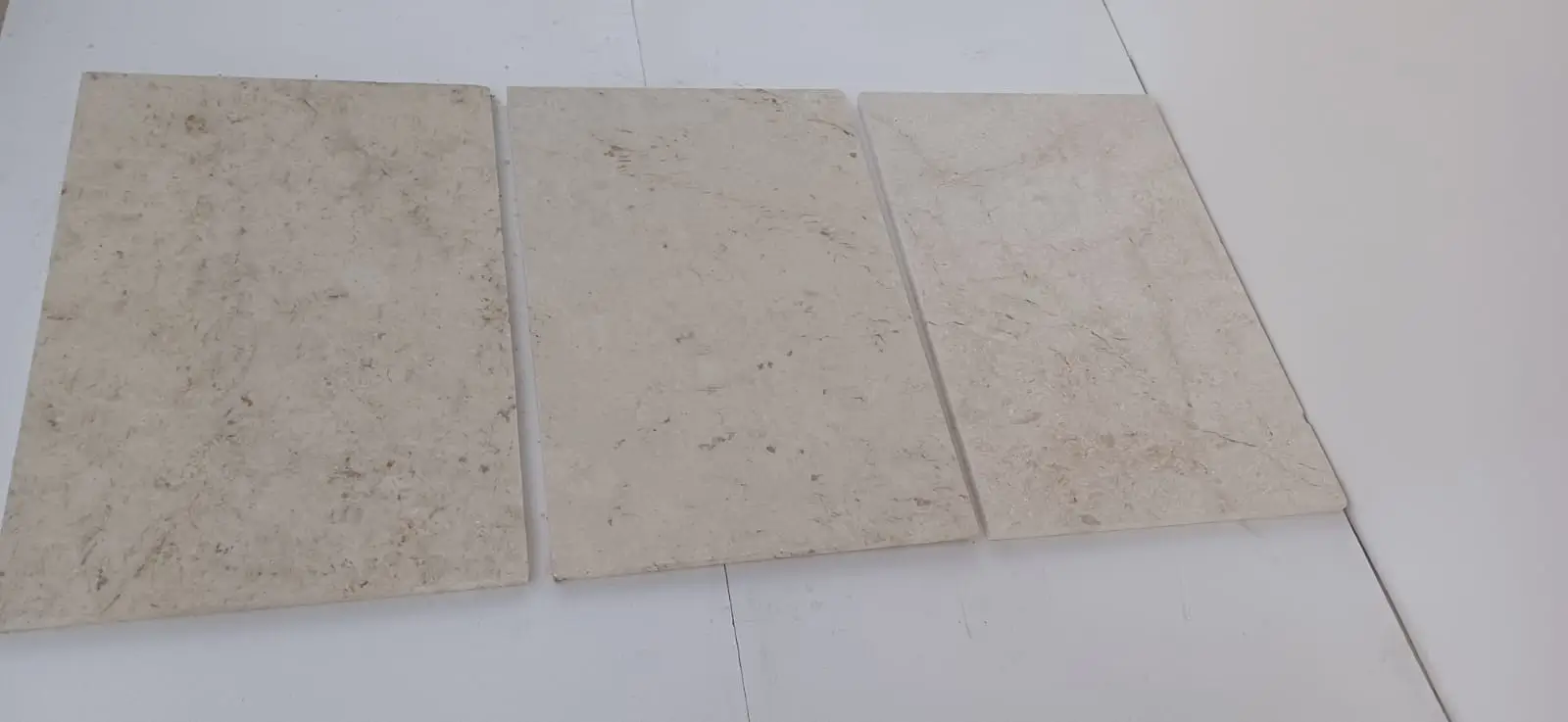
Limestone, travertine, and porous sandstone present greater challenges in freeze-thaw environments. These calcium-carbonate based materials react more aggressively with both conventional salts and some organic de-icers. If design requirements demand these aesthetics in winter-exposed locations, you need comprehensive sealing protocols and absolute commitment to non-chloride winter maintenance. For guidance on integrating these materials with other building elements, see Citadel Stone stone masonry materials for comprehensive specification approaches. Your sealing program should include initial penetrating sealer application plus annual reapplication before winter seasons.
Sealing Protocols for Winter Protection
Even the densest stone benefits from proper sealing in freeze-thaw climates, and porous materials absolutely require it. The sealer type you specify determines both water repellency and chemical resistance during winter maintenance operations. Penetrating sealers based on silane/siloxane chemistry provide the best balance of protection and breathability for most natural stone installations. Film-forming topical sealers offer superior chemical resistance but trap subsurface moisture that can cause spalling when freeze cycles occur.
Application timing significantly affects sealer performance and longevity. You need stone surfaces fully cured and dried before sealing — moisture content should measure below 4% using a calibrated moisture meter. In northern Arizona, this typically means sealing in late September or early October after summer monsoon moisture has dried but before winter precipitation begins. Surface temperatures during application should range between 50-80°F with no precipitation forecast for 48 hours after application. These narrow weather windows require careful project scheduling.
Sealer penetration depth determines protective effectiveness against freeze damage. Quality silane products penetrate 2-5mm into stone surfaces, creating a hydrophobic zone that repels water while allowing vapor transmission. You can verify penetration depth by breaking a sealed sample piece and observing the water-beading depth on fresh edges. Insufficient penetration (less than 1mm) provides only surface protection that wears away within 1-2 seasons. Over-application doesn’t increase penetration but does waste product and can create surface appearance issues.
- First-year applications on new stone require two coats spaced 4-6 hours apart for adequate protection
- Annual maintenance resealing uses single-coat applications at 50-60% of initial coverage rates
- Test water beading behavior each fall to assess whether resealing is needed that year
- High-traffic areas may require mid-season spot sealing where wear patterns accelerate sealer degradation
Drainage Design Considerations for Ice Prevention
The most effective winter maintenance strategy is preventing ice formation in the first place through superior drainage design. When you eliminate standing water and rapid-drainage pathways, you reduce ice formation by 70-80% compared to installations with inadequate slope or blocked drainage routes. This isn’t about winter maintenance products at all — it’s fundamental site engineering that pays dividends every winter season.
Minimum slope requirements for freeze-climate stone installations exceed standard drainage recommendations. While 2% slope meets code minimums for water removal, you should specify 3-4% slopes for areas subject to winter freezing. The increased pitch ensures that melt water from daytime warming cycles drains completely before overnight refreezing occurs. Flat or near-flat areas create persistent wet conditions where even minimal precipitation generates ice accumulation that requires aggressive de-icing intervention.
Joint spacing and permeability affect subsurface drainage performance during freeze-thaw transitions. Tight joints (1/8 inch or less) can ice-lock during winter, preventing melt water from draining through the paving system. This trapped water has nowhere to go except sideways across the stone surface, where it refreezes into sheet ice. You’ll get better winter performance with 3/16 to 1/4 inch joints that maintain permeability even with partial ice formation. The slightly wider joints allow some drainage function to continue throughout winter rather than completely blocking up.
Base layer permeability must exceed surface permeability to prevent subsurface water accumulation during winter thaw cycles. When compacted aggregate base drains slower than the stone surface above it, melt water pools at the stone-base interface. Subsequent freezing creates heaving forces that displace individual units and create surface irregularities. Your base specification should target permeability coefficients 4-6 times higher than the installed stone to ensure preferential downward drainage even during partial freeze conditions.
Temperature-Activated Chemical Solutions
Recent developments in eco friendly deicing stone Arizona chemistry include temperature-activated formulations that remain dormant during normal conditions but activate when ice formation begins. These products combine organic de-icing compounds with temperature-sensitive release mechanisms, providing protection only when needed rather than continuously leaching chemicals into stone surfaces. You apply these solutions during dry conditions in late fall, where they cure to a semi-solid state that activates during subsequent freeze events.
The chemistry relies on phase-change materials that transition from solid to liquid at specific temperatures. Formulations designed for Arizona’s elevation climates activate around 28-30°F, just before typical ice formation occurs. As surface temperatures drop into the activation range, the material liquefies and spreads across the stone surface, providing de-icing action exactly when needed. When temperatures rise above freezing, the solution returns to semi-solid state, minimizing runoff and environmental impact.
Application rates for these temperature-activated products run significantly higher than conventional liquid de-icers — you’ll use 2-3 gallons per 1,000 square feet for seasonal protection. The higher initial application gets offset by elimination of multiple reapplications throughout winter. A single fall application typically provides protection through 15-20 freeze-thaw events before requiring renewal. This reduces labor costs and minimizes repeated chemical exposure to stone surfaces.
Performance testing shows these systems work best on horizontal surfaces with moderate traffic levels. Heavy pedestrian traffic can mechanically remove the semi-solid product layer before winter events occur, reducing effectiveness. Vertical surfaces and steep slopes don’t retain the product adequately since gravity pulls the activated liquid away from treatment areas. Your ideal applications include residential walkways, plaza areas with controlled access, and decorative paving where winter foot traffic remains light to moderate.
Mechanical Removal Equipment Selection
When you combine minimal chemical application with aggressive mechanical ice removal, you achieve the best balance of surface safety and material protection. The equipment you use for mechanical removal determines whether you’re clearing ice or damaging stone surfaces. Metal snow shovels, steel-edged plows, and aggressive mechanical sweepers all create surface scarring that accumulates over multiple winter seasons. You need purpose-designed tools that prioritize material preservation alongside ice removal.
Plastic or composite snow shovels with smooth edges provide effective ice removal without gouging stone surfaces. The limitation comes in breaking through thick ice layers — plastic edges can’t generate the impact force of metal tools, requiring you to apply more eco friendly deicing stone Arizona product to weaken ice bonding before mechanical removal. This represents an acceptable trade-off: slightly more chemical usage in exchange for eliminating mechanical surface damage. Your maintenance crews need training on technique — scraping at low angles rather than aggressive chopping motions.
Heated ice removal tools combine mechanical action with thermal energy to break ice bonding without chemical application or aggressive force. Electric resistance edges heat to 120-140°F, melting a thin layer between ice and stone that allows removal with minimal pressure. Power consumption runs about 1,500 watts for typical handheld units, requiring access to electrical outlets or portable generators. These tools work exceptionally well for detailed areas around steps, edges, and transitions where chemical application proves difficult to control.
- Rubber-edged snow pushers distribute force across wider areas, reducing point-loading damage risk
- Motorized snow throwers should use rubber or composite auger edges rather than steel on stone surfaces
- Ice scrapers designed for automotive use provide good detail work tools for tight areas and edges
- Avoid walk-behind power brooms with wire bristles that abrade surface finishes
Cold Climate Joint Stabilization Approaches
Joint treatment plays an outsized role in winter performance because joints represent the most vulnerable component of any stone installation. The transition between adjacent units creates preferential pathways for water infiltration, chemical penetration, and freeze-thaw damage initiation. When you improve joint stability and water resistance, you dramatically enhance the entire installation’s winter durability even if individual stone units show marginal freeze-thaw resistance.
Polymeric sand products have revolutionized joint stabilization in cold climates, but not all formulations perform equally in freeze-thaw conditions. You need products specifically rated for cold climate performance with testing documentation showing survival through 100+ freeze-thaw cycles per ASTM D6913. Standard polymeric sands may lock joints effectively in mild climates but fracture and fail after 15-20 freeze events in northern Arizona conditions. The premium cold-climate formulations cost 30-40% more but provide 3-4 times longer service life.
Installation technique affects polymeric sand performance as much as product selection. The sand must be completely dry during installation and require thorough compaction into joints before water activation. Partially filled joints or inadequately compacted sand creates weak zones that become initiation points for freeze damage. You need to verify 100% joint fill to within 1/8 inch of the stone surface before activation. Activation water application should be minimal — just enough to trigger polymer bonding without creating runoff that leaches polymer from joints.
Repointing frequency in freeze-thaw climates exceeds mild-climate requirements by 2-3 times. Even quality cold-climate polymeric products degrade after 3-5 winter seasons in areas with regular freezing. You should plan on 20-30% joint material loss per winter, requiring annual inspection and spot repointing of degraded areas. Complete repointing on a 5-year cycle maintains joint integrity and prevents the accelerating damage that occurs once joints fail and allow direct water infiltration beneath paving units.
Premium Building Supplies Stone in Arizona: Citadel Specifications for Winter Climates
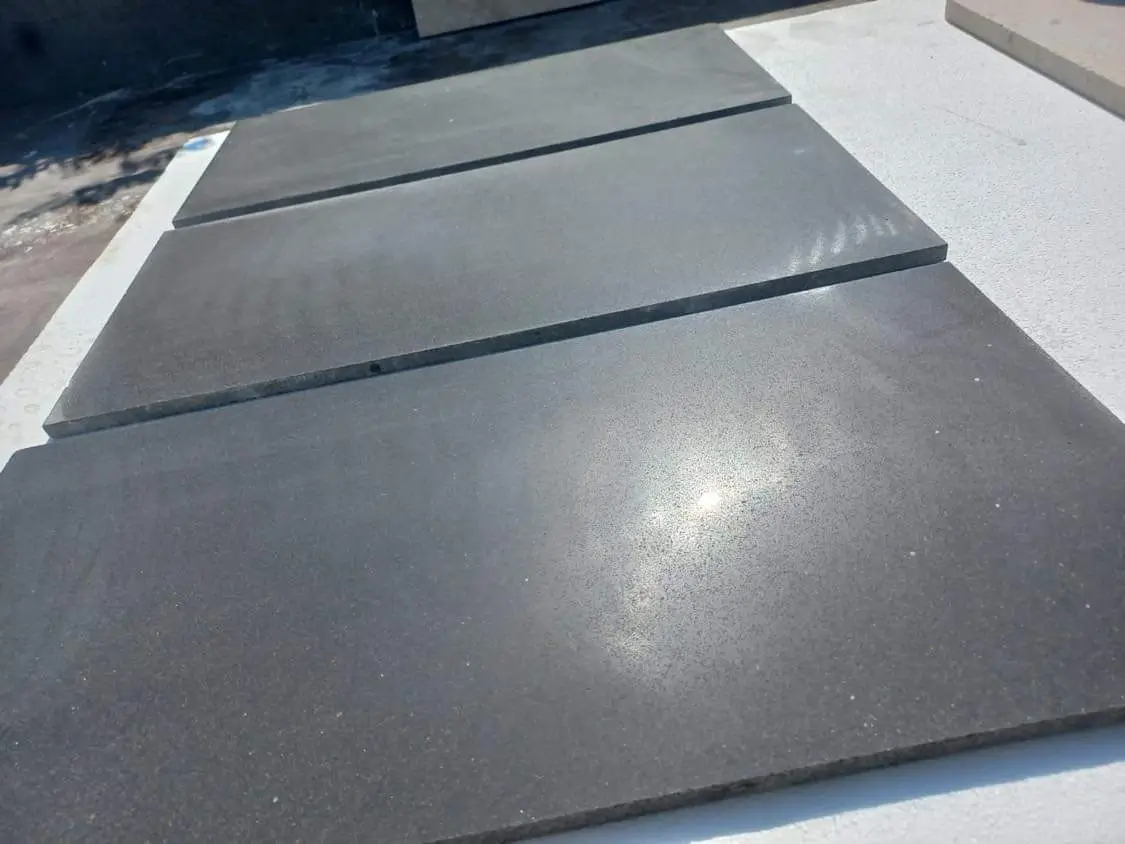
When you consider Citadel Stone’s building supplies stone in Arizona for your winter-climate project, you’re evaluating materials selected specifically for performance across the state’s elevation and temperature ranges. At Citadel Stone, we provide technical guidance for addressing freeze-thaw challenges in Arizona’s northern regions where conventional specifications often fall short. This section outlines how you would approach winter-hardy stone selection for three representative cities with distinct cold-climate characteristics.
Your material selection process needs to account for Arizona’s unique combination of intense solar radiation, low humidity, and elevation-driven temperature extremes. These factors create winter conditions quite different from the humid freeze-thaw climates where most stone testing protocols were developed. You’ll encounter daily temperature swings of 40-50°F between overnight lows and afternoon highs, creating accelerated freeze-thaw cycling that happens multiple times per day rather than seasonally. Your specification decisions require materials that handle both the freeze damage and the thermal shock of rapid temperature transitions.
Flagstaff Winter Specifications
In Flagstaff, you would specify dense granite or quartzite materials with absorption rates below 0.3% for any exterior paving subject to winter exposure. The city averages 100 inches of annual snowfall with overnight temperatures regularly dropping to 10-15°F, creating severe freeze-thaw conditions. You should plan for heated surface systems on primary walkways and building entries where liability concerns justify the infrastructure investment. For secondary areas, you would combine eco friendly deicing stone Arizona products based on beet juice chemistry with polymeric joint sand rated for extreme cold performance. Your maintenance protocol would include pre-winter sealing applications using silane products with verified penetration depths exceeding 3mm, reapplied annually in September before winter precipitation begins.
Sedona Elevation Factors
Sedona’s 4,500-foot elevation creates marginal freeze-thaw conditions where you would encounter 20-30 annual freeze events rather than continuous winter freezing. Your material selection could include slightly more porous stone types with absorption to 0.5%, but you need robust sealing protocols and disciplined winter maintenance practices. The red rock aesthetic preferences in this market often push toward sandstone materials that require careful evaluation for freeze-thaw suitability. You would specify mechanical traction methods as primary ice management with minimal chemical alternatives application only during severe events. The moderate freeze frequency allows traction-based approaches to work effectively without the chemical exposure that damages vulnerable stone types over extended periods.
Peoria Valley Conditions
Peoria represents valley locations where winter freezing occurs only occasionally, typically 5-10 events per season concentrated in December and January. You would focus specifications on materials with superior heat resistance since summer thermal performance dominates the performance envelope. When freeze events occur, you could rely entirely on mechanical removal methods without any chemical application since the infrequent freezing doesn’t justify infrastructure investment in heated systems or ongoing chemical treatment programs. Your primary winter consideration becomes drainage design to handle the rapid melt cycles that occur when intense solar radiation hits overnight ice accumulation, creating transient flooding conditions that require robust drainage infrastructure even though freezing itself presents minimal material risk.
Monitoring and Damage Indicators
Early detection of winter damage allows you to intervene before minor degradation becomes major failure requiring replacement. You should establish systematic inspection protocols that run twice annually — once in early spring after winter exposure ends, and again in mid-fall before winter begins. These inspections document progressive damage and inform maintenance adjustments before problems compound across multiple winter seasons.
Surface spalling represents the most common freeze-thaw damage indicator. You’ll see small chips or flakes separating from stone surfaces, typically starting at edges and high points where water collects and freezes. Initial spalling affects 1-2mm surface depths, but once initiated, the damage accelerates rapidly as exposed subsurface material shows higher porosity than the original surface. When you observe spalling affecting more than 5% of surface area, you need immediate intervention with enhanced sealing and elimination of salt-based de-icers even if switching to eco friendly deicing stone Arizona products costs more.
Efflorescence patterns provide early warning of salt penetration and moisture cycling issues. White crystalline deposits appearing in spring indicate that winter moisture carried dissolved minerals through stone porosity, depositing them at evaporation surfaces. The location and extent of efflorescence tells you where drainage improvements or additional sealing are needed. Isolated efflorescence at joints suggests joint material failure. Widespread surface efflorescence indicates base layer saturation requiring more fundamental drainage remediation.
Joint deterioration manifests as material loss, cracking, or separation from adjacent stone surfaces. You should measure joint fill depth annually using a thin probe or wire — progressive loss indicates ongoing freeze-thaw damage or chemical degradation from de-icing products. When joint depths increase by more than 1/4 inch from original installation, you’re losing the structural interlock that prevents individual unit movement. Your intervention should include complete joint cleanout and repointing with upgraded cold-climate polymeric products before individual units begin rocking or settling.
Comprehensive Specification Integration
Your written specifications need to address winter performance as an integrated system rather than isolated components. Material selection, installation details, drainage design, and maintenance protocols all interact to determine long-term winter durability. Specifications that address each element independently often create conflicts or gaps that lead to premature failure despite quality materials and skilled installation.
The specification structure should begin with performance requirements that define acceptable winter service expectations. You might specify that paving must maintain structural integrity and surface finish through minimum 50 freeze-thaw cycles annually for 15 years without replacement. This performance target then drives material selection criteria, installation requirements, and maintenance obligations. Contractors can propose various solutions that meet performance goals rather than being locked into prescriptive requirements that may not suit specific site conditions.
Material specifications should reference specific ASTM testing standards with pass/fail criteria appropriate to winter climate exposure. For northern Arizona freeze-thaw conditions, you would include ASTM C666 freeze-thaw durability testing requiring less than 15% strength loss after 300 cycles, ASTM C97 absorption limits below values discussed earlier, and ASTM C880 flexural strength minimums of 1,200 PSI for pedestrian applications. These specific numeric requirements prevent substitution of marginally suitable materials during value engineering.
Installation specifications must address base preparation, drainage integration, joint material selection, and sealing protocols as interconnected requirements. Your drainage specification should quantify minimum slope requirements, base permeability coefficients, and edge detail treatments. Joint specifications need to name specific approved polymeric sand products rather than generic “cold-climate rated” language that leaves interpretation to installers. Sealing requirements should specify product chemistry, application timing, coverage rates, and verification testing procedures.
Maintenance specifications create long-term protection through defined protocols for winter treatment, spring cleanup, and periodic renewal treatments. You should prohibit specific de-icing chemicals by name while providing approved eco friendly deicing stone Arizona product lists. Mechanical removal equipment requirements prevent damage from inappropriate tools. Inspection frequencies and damage thresholds trigger maintenance interventions before problems escalate. For additional installation considerations including moisture management, review Advanced automated irrigation systems for Arizona desert hardscape installations before you finalize your project documentation. Contractors across the state choose us for their stone building supplies in Arizona due to our reliable delivery and competitive pricing.