
Why Width Decisions Define Driveway Stone Width Paradise Valley Projects
What separates durable driveway stone width Paradise Valley installations from premature failures often has nothing to do with material quality. The specification decisions made before the first delivery arrives — base depth, joint width, drainage slope — determine long-term performance more than the stone itself. Paradise Valley’s luxury home market demands proportional design that balances visual scale with functional access, and getting driveway stone width wrong creates problems that are expensive to correct after installation. Your width specification sets the foundation for every downstream decision, from truck access during material delivery to long-term surface performance.
Arizona’s thermal cycling creates surface temperature differentials of up to 70°F between early morning and peak afternoon, stressing every joint and edge detail in your driveway stone width Paradise Valley layout. Desert conditions amplify the consequences of undersized driveways — narrow configurations trap heat differently, accelerate edge deterioration, and create drainage channels that concentrate erosion at the worst possible locations. Understanding how width requirements interact with Arizona’s climate is the starting point for any serious specification.
Paradise Valley Driveway Sizing: What the Numbers Actually Mean
Paradise Valley driveway sizing isn’t just about fitting two cars side by side. The municipality sits at the intersection of Scottsdale’s urban density and the open desert estate tradition, which means your driveway needs to function as both a practical access route and a visual statement proportional to homes that regularly exceed 5,000 square feet. Width requirements in this context aren’t optional guidelines — they’re the difference between a driveway that looks designed and one that looks retrofitted.
Standard residential driveway widths run 10 to 12 feet for single-lane access and 18 to 24 feet for two-lane configurations. Paradise Valley luxury home access demands recalibrating those baselines. Estate driveways in this market typically target 24 to 30 feet of clear paved width, with motor court configurations reaching 40 feet or more where circular or courtyard layouts are involved. You should treat these as starting points, not maximums — the proportional design relationship between gate opening width, home facade width, and driveway width creates a visual hierarchy that directly affects property perception and resale value.
- You need to verify local setback requirements before finalizing width — Paradise Valley code restricts impervious surface coverage in ways that directly affect your available driveway stone area
- Your gate opening should be 4 to 6 feet wider than your driveway surface to avoid the pinched-entry visual that undermines luxury proportional design
- Width requirements Arizona sets for fire apparatus access — typically 20 feet minimum clear width — often become the practical floor for estate driveways in this market
- Luxury home access in Paradise Valley frequently involves delivery vehicles, catering trucks, and service equipment that require turning radius accommodations beyond standard residential assumptions
Thermal Expansion and Driveway Stone Width in Arizona’s Desert Climate
Arizona proportional design principles for driveway stone have to account for thermal expansion in ways that most specification guides understate. At surface temperatures reaching 160°F on dark stone finishes during peak July afternoons, the expansion differential between a 12-foot driveway section and a 30-foot section is significant — and it compounds across every joint and edge condition in your layout.
Thermal expansion coefficients for natural stone used in driveway applications typically range from 4.5 to 6.8 × 10⁻⁶ per °F depending on mineral composition. For a 24-foot-wide driveway stone width Paradise Valley specification, that translates to dimensional movement of roughly 0.08 to 0.12 inches across the full width during peak thermal cycling. Your joint design needs to absorb that movement without allowing settlement migration that destabilizes your base course.
You should specify expansion joints perpendicular to the driveway length at intervals no greater than 15 feet in full-sun Arizona installations. In sections receiving direct solar exposure for more than 7 hours daily — common in Paradise Valley’s open estate settings — reduce that interval to 12 feet. The additional joints add material and labor cost, but the alternative is reflective cracking that propagates from thermal stress concentrations within three to five years of installation.
- You’ll find that lighter-colored stone finishes reduce surface temperature by 15 to 25°F compared to dark materials, directly reducing thermal expansion stress across your full driveway stone width Paradise Valley layout
- Edge conditions at driveway borders experience the highest thermal stress — your edge restraint specification must accommodate lateral movement without cracking adjacent landscape elements
- Width requirements Arizona climate zones impose on joint spacing mean wider driveways require proportionally more expansion joint planning, not the same joint count as narrower configurations
- Base course compaction to 95% Modified Proctor density provides the stable platform your stone needs to absorb thermal movement without base migration
Width Requirements Arizona Code Compliance for Luxury Driveways
Navigating width requirements Arizona municipalities enforce on luxury driveways requires understanding the difference between what’s technically permitted and what actually performs. Paradise Valley maintains its own development standards that interact with Maricopa County regulations, and the intersection of those two regulatory frameworks creates specific constraints you need to address early in your specification process.
Fire access requirements set the practical minimum for most estate driveways — 20 feet of clear, unobstructed width with 13.5 feet of vertical clearance is the baseline most Paradise Valley projects must meet. Your landscaping plan, gate pillar placement, and stone edge restraint details all need to account for these clearances. The common mistake is designing to the nominal driveway width without subtracting for gate pillar intrusions and plant material overhang that reduces effective clear width by 2 to 4 feet.
You should verify warehouse stock levels for your selected stone before committing to a project timeline. Larger driveway stone width Paradise Valley projects — particularly those exceeding 2,000 square feet of surface area — can exhaust local inventory for specific stone types and require lead times of 3 to 6 weeks for restocking. Coordinating your specification approval with warehouse availability prevents the common scenario where a project stalls mid-installation because the selected material isn’t available in sufficient quantity to complete the work.
Luxury Home Access and Arizona Proportional Design Standards
Luxury home access in Paradise Valley operates by visual rules that aren’t written into any code document but are enforced by the market. Homes in the $3 million to $15 million range have established aesthetic conventions for driveway proportions that your stone width specification needs to respect — or deliberately depart from with a clear design rationale.
Arizona proportional design for estate driveways typically follows a ratio relationship between home facade width and driveway approach width. A home with a 60-foot primary facade looks balanced with a driveway approach of 18 to 22 feet. Scale that facade to 100 feet and the driveway needs to respond — approaches of 24 to 32 feet maintain proportional design integrity while accommodating the vehicle volumes these homes generate.
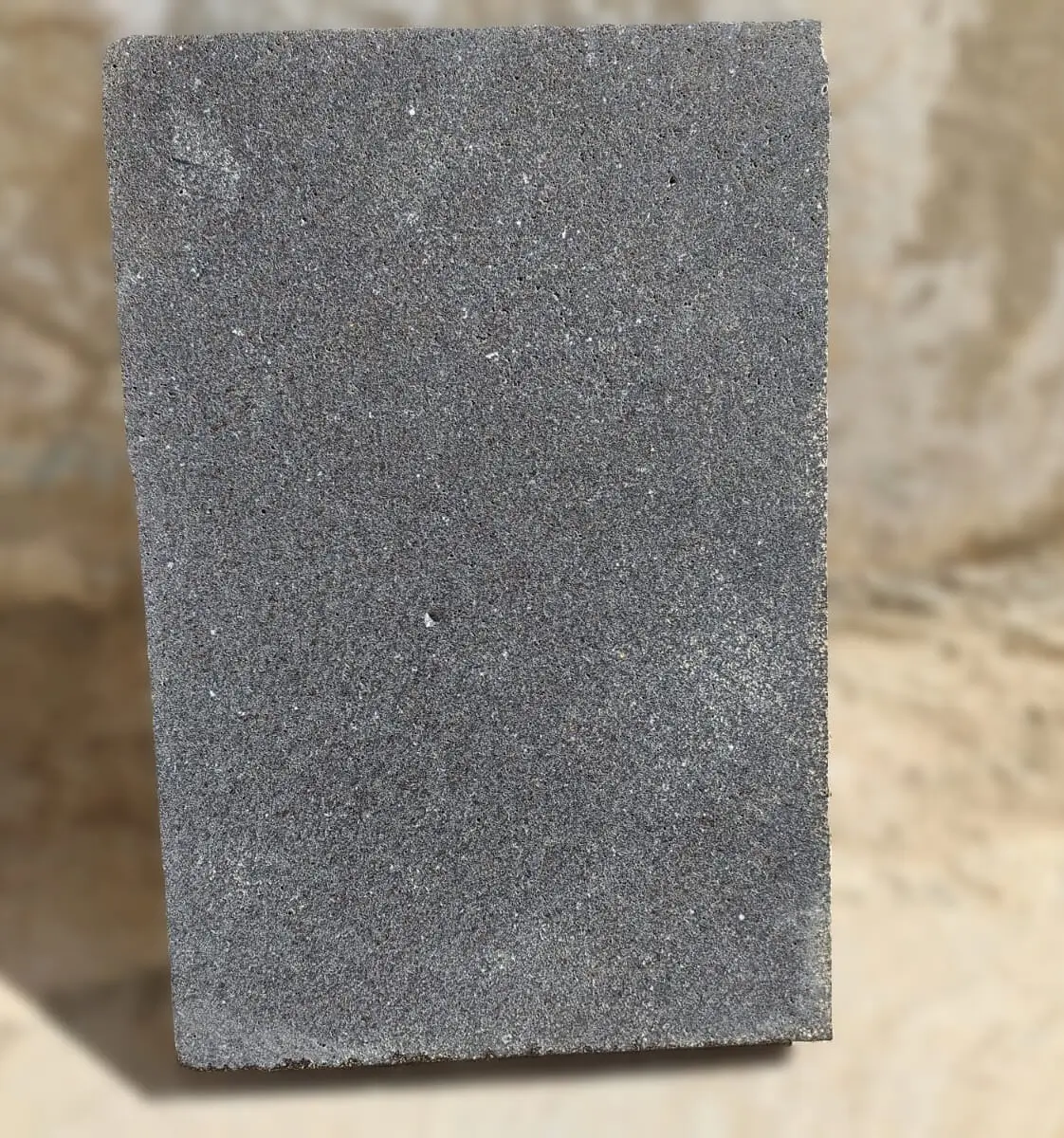
Motor court configurations require a different analysis. Circular motor courts that allow vehicles to enter and exit without reversing need a minimum turning radius of 18 feet from center point to inner curb — which typically results in overall motor court diameters of 40 to 50 feet for full-size vehicles. Your driveway stone width Paradise Valley specification for a motor court configuration needs to account for this full diameter, not just the approach lane width. For guidance on selecting the right material for these large surface areas, consult Citadel Stone driveway stone supplier in Tempe for comprehensive material options suited to Paradise Valley’s scale requirements.
- You should plan for service vehicle access separate from primary entry whenever site geometry allows — separating catering truck and delivery routes from the formal entry preserves the luxury home access experience
- Proportional design relationships between pillar height and driveway width affect the perceived scale of the entry — taller pillars require wider driveway approaches to avoid the visual compression that makes entries feel smaller than they are
- Your lighting plan interacts with driveway stone width in ways that affect nighttime proportional design — edge lighting reveals width differently than center-line lighting and should be considered during width specification
Base Preparation for Wider Driveway Stone Installations in Arizona
Wider driveway stone width Paradise Valley installations demand proportionally more robust base preparation — a relationship that doesn’t scale linearly and catches many specifiers off guard. A 10-foot driveway can tolerate base imperfections that a 30-foot driveway will amplify into visible surface undulation within the first two years.
Arizona’s desert soils present a specific challenge: expansive clay subgrades are common in Paradise Valley’s lower elevation areas, and their behavior under seasonal moisture variation creates differential heave that destroys surface uniformity. Your base specification should include a geotextile separation layer between native subgrade and aggregate base wherever soil plasticity index exceeds 15 — which covers a significant portion of Paradise Valley’s residential land area.
Aggregate base depth for driveway stone width Paradise Valley applications should target 8 inches minimum for pedestrian-scale stone, increasing to 10 to 12 inches for applications that will see regular delivery truck traffic. Paradise Valley estate driveways regularly accommodate service vehicles exceeding 26,000 pounds GVW — a loading condition that requires base design beyond standard residential assumptions. Your truck access analysis should happen during base design, not after surface installation is complete.
- You need to compact aggregate base in lifts no greater than 4 inches, testing each lift to confirm 95% Modified Proctor before placing the next — thicker lifts create internal voids that collapse under vehicle loading
- Drainage slope across your driveway stone width should target 2% minimum perpendicular to travel direction — insufficient cross-slope allows ponding that softens base material and accelerates surface deterioration
- Your base permeability needs to exceed your stone surface permeability by at least 3 to 4 times — this prevents subsurface saturation during Arizona’s monsoon precipitation events
- Width requirements Arizona’s climate imposes on base drainage design are more demanding than national standards — monsoon rainfall intensity of 1.5 to 2.5 inches per hour requires your drainage system to move water immediately, not gradually
Stone Selection for Your Driveway Stone Width Paradise Valley Specification
Material selection for driveway stone width Paradise Valley applications narrows significantly when you apply Arizona’s climate conditions as filters. Not every stone type that looks appropriate in a Paradise Valley showroom will perform across 20+ years of desert thermal cycling, UV exposure, and occasional monsoon saturation.
Decomposed granite — particularly stabilized decomposed granite — remains the dominant choice for Paradise Valley estate driveways precisely because its performance characteristics match the climate demands. Stabilized DG with polymer binders achieves compressive strength of 1,500 to 2,500 PSI after cure, sufficient for residential and light service vehicle loading while maintaining the permeable surface characteristics that support Paradise Valley’s water-harvesting ordinance requirements.
Natural flagstone and cut stone pavers offer the premium aesthetic that luxury home access demands, but they require more exacting base preparation and expansion joint design to perform across Arizona’s temperature range. You should specify stones with minimum compressive strength of 8,000 PSI for paver applications, targeting the 12,000 to 15,000 PSI range for sections that will see regular vehicle loading. Porosity should remain below 5% to limit water absorption that can destabilize the setting bed during monsoon events.
- You should verify that your selected stone’s thermal expansion coefficient is within 15% of your base material’s expansion rate — mismatched expansion rates create interfacial stress that dislodges pavers at joints
- Surface finish selection affects both aesthetics and function — honed finishes achieve DCOF values of 0.52 to 0.58 for adequate traction, while polished finishes require anti-slip treatments to meet the same threshold
- Your stone thickness specification should account for the widest loading condition — 1.5 inches is appropriate for pedestrian areas, 2.375 inches minimum for vehicle traffic across your full driveway stone width
Drainage Design Across Full Driveway Stone Width in Desert Conditions
Drainage design for driveway stone width Paradise Valley projects is where most specifications underperform relative to the climate. Arizona’s monsoon season delivers precipitation at intensities that overwhelm drainage systems designed to national averages — and wider driveways collect proportionally more runoff volume that has to move quickly to prevent ponding damage.
Paradise Valley’s luxury home access zones often feature elaborate landscaping on both sides of driveway approaches. That landscaping intercepts some rainfall but also creates berm conditions that direct concentrated flow onto your driveway surface. Your drainage design needs to account for tributary area beyond the driveway footprint itself — this often increases design storm flow by 40 to 60% compared to calculations that consider only the driveway surface area.
Channel drains perpendicular to driveway travel direction provide the most effective drainage solution for wider driveway configurations. Size channel drain capacity for a 10-year storm event at minimum — in Paradise Valley’s Maricopa County location, that corresponds to approximately 2.8 inches per hour precipitation intensity. Your channel spacing should not exceed 30 feet along the driveway length, with additional drains placed at low points created by your driveway’s crown or cross-slope geometry.
Driveway Stone Width and Gate Entry Coordination
Gate entry design and driveway stone width Paradise Valley specifications need to be developed simultaneously, not sequentially. The most common specification error in luxury home access projects is finalizing the gate system before confirming how vehicle queuing, gate swing clearance, and pillar placement interact with your selected driveway width.
Sliding gates require driveway stone width to accommodate the gate panel in its open position — a 12-foot gate opening requires a 12-foot panel that needs clear space alongside the driveway when open. Swing gates require confirmation that the full swing arc clears vehicle mirrors and doesn’t encroach on planting areas or site features. Your gate consultant and stone contractor need to coordinate on these geometric relationships before either system is installed.
Vehicle stacking distance between the street and gate keypad location determines how much driveway stone width Paradise Valley projects need to provide for queuing. A standard single-family estate should provide 20 to 25 feet of queuing distance so entering vehicles don’t block the street while accessing the gate system. Properties receiving regular catering truck or service vehicle deliveries should extend that queuing distance to 40 feet minimum to accommodate longer wheelbases.
Maintenance Requirements Vary by Driveway Stone Width in Arizona
Maintenance programs for driveway stone width Paradise Valley installations scale with surface area in ways that affect long-term ownership cost. Wider driveways aren’t simply more of the same maintenance — they introduce edge conditions, drainage structures, and joint lengths that require specific attention programs beyond what a narrower driveway demands.
Sealer reapplication is the highest-impact maintenance activity for most natural stone driveway applications. Arizona proportional design for maintenance schedules should target biennial sealer reapplication for most stone types, with annual inspection of joint sand levels across your full driveway stone width. Joint sand depletion of more than 25% creates conditions for paver rocking under vehicle loads that accelerates edge chipping — a repair cost that compounds if addressed late.
- You should inspect expansion joints annually for debris accumulation — filled joints can’t accommodate thermal movement and transfer stress into adjacent stone units
- Your maintenance program should include quarterly inspection of drainage structures across your full driveway width, particularly after monsoon events that can deposit sediment in channel drains
- Edge restraint inspection every 18 to 24 months catches lateral movement before it cascades into surface disruption — edge failures are always easier to correct early
- Width requirements Arizona’s UV environment places on sealer performance mean you need a UV-stable penetrating sealer, not a film-forming product that chalks and requires mechanical removal
Driveway Stone for Sale in Arizona: How Citadel Stone Would Specify for Estate Driveways Across the State
Citadel Stone’s driveway stone for sale in Arizona encompasses stabilized decomposed granite and natural stone options engineered for the state’s demanding thermal and UV conditions. This section provides hypothetical specification guidance for how you would approach driveway stone width Paradise Valley-style projects in three representative Arizona cities. At Citadel Stone, we provide this guidance as a framework for understanding how regional climate variables shape specification decisions — these are advisory scenarios, not documentation of completed installations.
Flagstaff Climate Considerations
Flagstaff’s elevation of 6,900 feet creates freeze-thaw cycling conditions that fundamentally change your driveway stone width specification relative to lower Arizona elevations. You would target stone with porosity below 3.5% to limit water absorption ahead of freeze events, and your base course would need to extend below the frost depth of approximately 18 inches. Paradise Valley driveway sizing conventions for width remain applicable in Flagstaff’s luxury home market, but your joint design would need to accommodate the combined stresses of thermal expansion from summer heat and freeze-thaw movement — requiring tighter joint spacing than Arizona proportional design guidelines developed for Phoenix’s climate would suggest.
Sedona Stone Specification
Sedona’s red rock aesthetic creates strong design pressure toward earth-tone stone selections for luxury home access driveways. You would need to verify that naturally colored stone options perform under Sedona’s UV intensity — at 4,500 feet elevation, UV exposure is approximately 15% higher than Phoenix, which accelerates color fade in pigmented materials. Your driveway stone width Paradise Valley specification adapted for Sedona would maintain the same base preparation standards but adjust sealer selection toward UV-stabilized formulations rated for high-altitude exposure. Width requirements Arizona’s monsoon system places on drainage design apply in Sedona with additional consideration for the higher-gradient terrain that accelerates runoff across driveway surfaces.
Peoria Valley Floor Performance
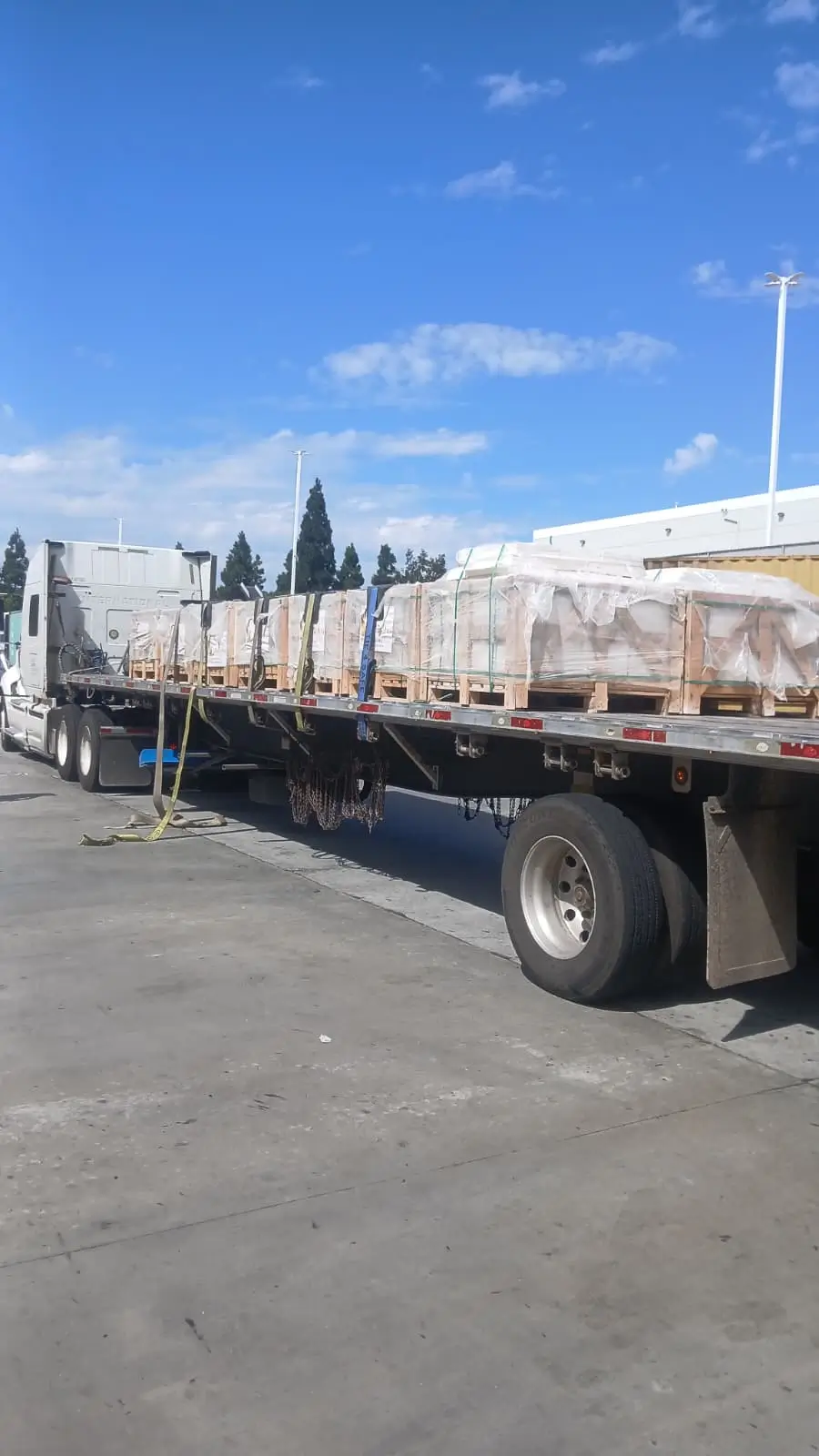
Peoria’s valley floor location exposes driveway stone installations to peak desert thermal stress — summer surface temperatures regularly exceed 155°F on darker stone finishes. Your specification for a luxury home access driveway in Peoria would prioritize light-colored stone that reflects rather than absorbs solar radiation, reducing surface temperature by 20 to 30°F and proportionally reducing thermal expansion stress across your full driveway stone width. At Citadel Stone, we maintain warehouse inventory in the Phoenix metro area that serves Peoria projects efficiently, allowing you to confirm material availability before finalizing project timelines. Arizona proportional design standards for this market are consistent with Paradise Valley conventions, though Peoria’s newer subdivision context creates specific setback and impervious coverage constraints your width specification must address.
Common Specification Mistakes in Driveway Stone Width Paradise Valley Projects
Specification mistakes in driveway stone width Paradise Valley projects tend to cluster around a handful of recurring issues that show up consistently across luxury home access installations. Understanding these patterns helps you avoid the remediation costs that follow from getting them wrong.
The most common error is specifying driveway width in isolation from gate system geometry. Designers finalize the stone layout, then discover the selected gate configuration requires pillar placement that reduces effective drive width by 3 feet on each side — transforming a 24-foot nominal driveway into an 18-foot functional one that can’t accommodate two vehicles passing simultaneously. Your coordination checklist should include gate geometry confirmation before stone quantity takeoffs are completed.
- You should never confirm final width dimensions without a truck access review — delivery vehicle wheelbases and turning radii need verification against your driveway geometry before installation begins
- Underestimating base material quantity for wider driveways is a recurring procurement error — warehouse orders that come up short mid-project force schedule delays while additional material is sourced
- Neglecting to specify surface cross-slope creates ponding conditions that weren’t apparent during dry-season installation but emerge dramatically during the first monsoon event
- Your edge restraint specification should be sized for the maximum anticipated lateral load, not average conditions — edge failures under occasional heavy vehicle loads are the most common driveway stone width failure mode in luxury home applications
Key Takeaways
Driveway stone width Paradise Valley specifications require integrating proportional design principles, Arizona climate performance requirements, and luxury home access functional demands into a coherent set of decisions made before the first stone is placed. Your width selection drives joint design, base preparation depth, drainage capacity, and maintenance program scope — all of which determine whether your installation delivers 20-year performance or requires remediation within five years. Paradise Valley driveway sizing conventions in the luxury market consistently exceed standard residential minimums, and your specification needs to match the scale of the homes these driveways serve. Width requirements Arizona’s regulatory and climate environment impose on your project aren’t obstacles — they’re the framework that ensures your installation performs as designed across the full service life. For additional insights on complementary hardscape elements that complete your project scope, review Professional stone capping techniques for retaining wall longevity in Arizona before you finalize your project documents. Citadel Stone provides stabilized decomposed granite Driveway Stone for sale in Arizona.