
Why Driveway Stone Options Phoenix Residential Projects Demand Differ From Other Markets
Not all driveway stone options Phoenix residential projects fail for the reasons most specifiers assume. Compressive strength is rarely the limiting factor — it’s the relationship between porosity, thermal expansion, and base preparation that determines real-world service life. Arizona’s Sonoran Desert climate creates material stress cycles that expose specification weaknesses within the first two to three summers, often long before aesthetic wear becomes apparent. Your selection process needs to account for surface temperatures exceeding 160°F, UV degradation rates roughly triple those of northern climates, and expansive soil movement that can destabilize even well-compacted bases. Understanding these Phoenix-specific failure modes before you finalize your material list is what separates a 10-year driveway from a 30-year one.
Thermal Performance and Arizona Property Access Requirements
Surface temperature behavior is the single most consequential performance variable for any home driveway solutions in Phoenix. Stone surfaces in direct afternoon sun routinely reach 155°F to 165°F between June and September, while nighttime lows drop to 75°F to 85°F during the same months. That’s a daily thermal cycling range of 70°F to 90°F, repeated 120 or more times per year across the peak season alone.
Your specification must address thermal expansion coefficients precisely. Dense limestone and quartzite products typically expand at 4.8 to 5.6 × 10⁻⁶ per °F, while some sandstone varieties run higher, around 6.2 to 7.0 × 10⁻⁶ per °F. In Phoenix conditions, that difference translates to measurable joint movement — enough to pop unsecured edge restraints or create edge lift along the perimeter if your expansion joint layout doesn’t account for it. Professional practice shows that expansion joints spaced every 12 feet in direct-exposure zones outperform the 15-foot spacing common in generic specification guides by reducing cumulative joint stress by nearly 25% over a ten-year period.
- You should specify expansion joints at 12-foot intervals for full-sun Phoenix driveways
- Your base aggregate must achieve 95% modified Proctor density before any stone placement
- Thermal expansion coefficients should be verified against product-specific test data, not category averages
- You’ll need to confirm that edge restraints are rated for lateral loads generated by high-temperature expansion cycles
- Surface albedo ratings influence long-term heat absorption and should factor into your residential stone choices Arizona
Phoenix Driveway Materials: Understanding Compressive Strength vs. Real-World Durability
Most product literature leads with compressive strength, and most specifiers treat it as the primary durability indicator. That’s an oversimplification that costs residential clients real money. Compressive strength tells you how much load a stone can bear before it crushes — useful, but not the complete story for Phoenix driveway materials subjected to thermal cycling and UV exposure rather than pure static loading.
The performance variables that actually predict service life in Arizona’s climate are density, porosity, and flexural strength working together. A stone with 12,000 PSI compressive strength but 9% porosity will absorb more moisture during monsoon season and experience greater freeze-thaw stress than a 9,000 PSI product with 4% porosity — even though Phoenix doesn’t see hard freeze cycles, the rapid temperature differentials between summer rain events and sun-heated surfaces create micro-stress conditions that degrade high-porosity materials over time. Your specification should require porosity below 6% for Phoenix residential applications.
- Compressive strength minimum: 8,000 PSI for residential driveway applications
- Flexural strength minimum: 900 PSI to handle vehicle load distribution across base irregularities
- Porosity target: below 6% to limit moisture absorption during monsoon events
- Density target: above 155 lbs/ft³ for standard passenger vehicle traffic
- You should request product-specific test certificates, not just category specification sheets
Residential Stone Choices Arizona: Evaluating the Main Material Categories
Decomposed granite remains the most widely used material for home driveway solutions across Phoenix metro properties, and it earns that position through sheer practicality. DG compacts well, drains effectively, and costs significantly less per square foot than cut stone alternatives. The trade-off is maintenance intensity — you’ll need to top-dress DG driveways every two to three years as material migrates and compaction degrades under vehicle traffic. Stabilized DG with a polymer binder reduces this maintenance cycle substantially, though it raises upfront material cost by roughly 30 to 40%.
Crushed granite and quartzite aggregates offer a middle ground between DG and full-cut stone. These residential stone choices Arizona properties benefit from include excellent drainage, thermal stability, and natural aesthetics that blend with desert landscaping. Your drainage slope needs to be a minimum 2% to prevent surface ponding during monsoon events when rainfall intensity can exceed 2 inches per hour.
Cut stone pavers — travertine, limestone, and quartzite formats — represent the premium tier of driveway stone options Phoenix residential buyers select when long-term aesthetics matter as much as performance. Cut stone requires more precise base preparation, but it delivers superior surface consistency, better slip resistance control, and easier individual unit replacement when damage occurs. For driveway stone options Phoenix residential projects with strong curb appeal requirements, cut travertine and quartzite consistently outperform other categories over 20-plus year timeframes.
Slip Resistance Specifications for Arizona Driveways
Slip resistance is frequently underspecified for residential driveways, and Phoenix conditions create two distinct hazard scenarios that your specification needs to address separately. The first is dry surface traction on sun-heated stone — not typically a slip hazard, but relevant to tire grip on steep driveway grades. The second is wet traction during monsoon rain on a surface that’s been UV-weathered and potentially sealed.
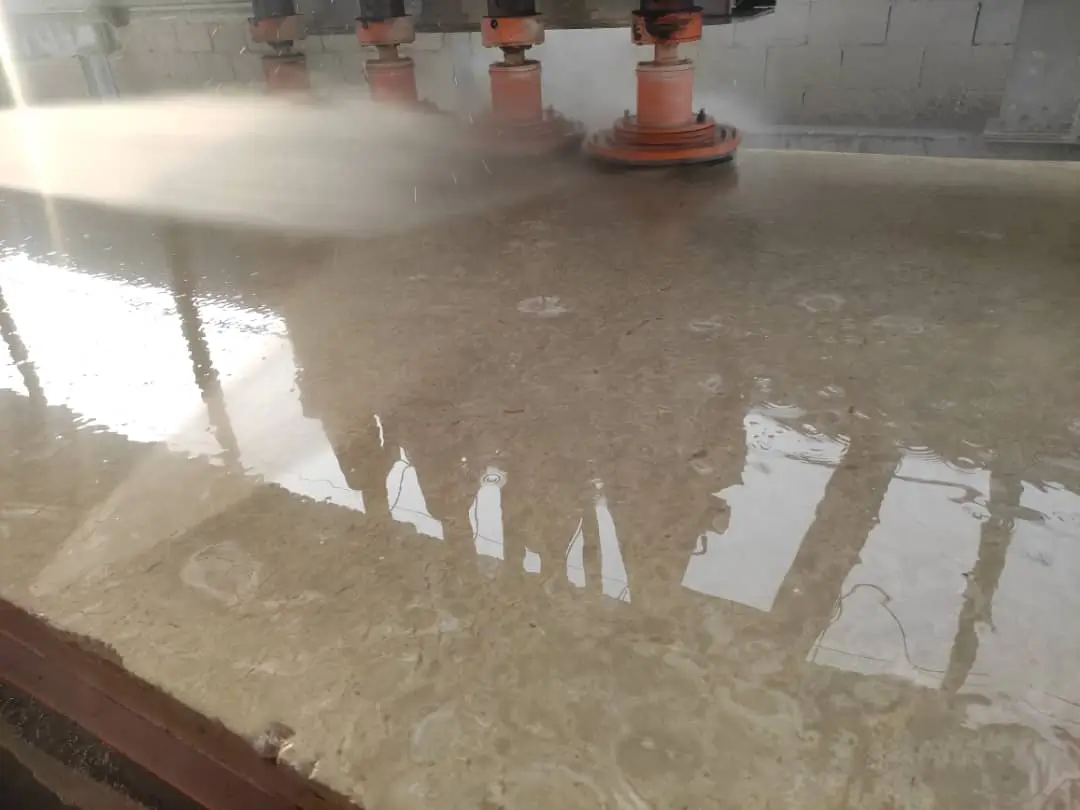
Industry standards reference DCOF (Dynamic Coefficient of Friction) measured under wet conditions. For residential driveways, you should specify a minimum DCOF of 0.42 on wet surfaces per ANSI A137.1 standards. Honed travertine typically measures 0.48 to 0.55 DCOF wet, while tumbled stone surfaces reach 0.55 to 0.65 DCOF wet due to their irregular texture. Polished finishes frequently fall below 0.42 DCOF when wet — making them inappropriate for driveway applications regardless of how appealing they look in a showroom.
- Specify minimum 0.42 DCOF wet for all residential driveway surface materials
- You should test sealed stone surfaces separately — sealers can reduce DCOF by 0.08 to 0.15
- Tumbled and brushed finishes provide superior wet traction without sacrificing aesthetics
- Your specification should require post-installation DCOF verification before final acceptance
- UV exposure over three to five years can alter surface texture and DCOF values — plan for periodic reassessment
Base Preparation Standards for Home Driveway Solutions in Phoenix
Base preparation determines long-term performance more than any single material decision. Phoenix soils present a specific challenge: expansive clay content in many East Valley and West Valley locations creates seasonal movement that can exceed 1.5 inches of vertical displacement. Your geotechnical assessment should identify PI (Plasticity Index) values above 15 as a trigger for enhanced base design — and in much of the Phoenix metro, you’ll encounter PI values between 18 and 28.
Standard base depth for residential driveways in non-expansive soils runs 4 to 6 inches of compacted Class II aggregate base. In expansive soil zones, professional practice shows that 8 to 10 inches of base with a geotextile separation layer between native soil and aggregate significantly reduces surface movement and extends installation life. You should verify warehouse stock of the specified aggregate base material before your installation schedule is locked in, because supply disruptions can add three to six weeks to project timelines in peak construction seasons.
Subgrade moisture content at time of compaction matters more than most residential specifications address. Compaction at moisture content more than 2% above optimum reduces achievable density by 5 to 8% — a deficit that translates to settlement under vehicle loads within the first eighteen months. Your compaction testing protocol should include Proctor moisture verification, not just density measurement.
Sealing and Maintenance Protocols for Phoenix Driveway Materials
Sealing decisions for Phoenix driveway materials involve trade-offs that generic product literature doesn’t fully address. Penetrating sealers — silane-siloxane chemistry — provide excellent moisture resistance without altering surface texture or DCOF values. They’re the appropriate choice for most natural stone driveway applications and typically require reapplication every four to six years in Arizona’s UV-intense environment.
Topical acrylic sealers create a surface film that enhances color depth and provides strong stain resistance, but they reduce wet DCOF as noted above and tend to degrade visibly within two to three years under Phoenix sun exposure. You’ll need to factor reapplication labor into your maintenance budget if your client selects a topical sealer — the reapplication cycle is significantly shorter than for penetrating products.
- Penetrating silane-siloxane sealers: reapply every 4 to 6 years in Phoenix climate
- Topical acrylic sealers: reapply every 2 to 3 years, verify DCOF compliance after application
- You should apply sealers when surface temperature is below 90°F — early morning application only during summer months
- Joint sand replenishment should occur annually in the first two years, then every two to three years thereafter
- Your maintenance schedule should include annual inspection of edge restraints and expansion joints
Procurement and Logistics for Driveway Stone Options Phoenix Residential Projects
Material procurement timing significantly affects project success for driveway stone options Phoenix residential contractors working in a competitive market. Phoenix construction activity peaks between October and April — the same window when material demand is highest and warehouse inventory turns fastest. You should verify warehouse stock levels at least six to eight weeks before your planned installation date, not the week before.
Truck access planning is equally important. Residential driveways in established Phoenix neighborhoods — particularly in areas like Arcadia, Ahwatukee, and North Scottsdale — often have constrained street access. Your delivery coordination should confirm truck turning radius requirements against street geometry and overhead obstruction clearances before scheduling. A standard flatbed delivery truck requires approximately 40 to 45 feet of straight clearance for pallet offloading, and you’ll find that narrow cul-de-sacs in older subdivisions frequently create access problems that require smaller delivery vehicles and higher per-unit freight costs.
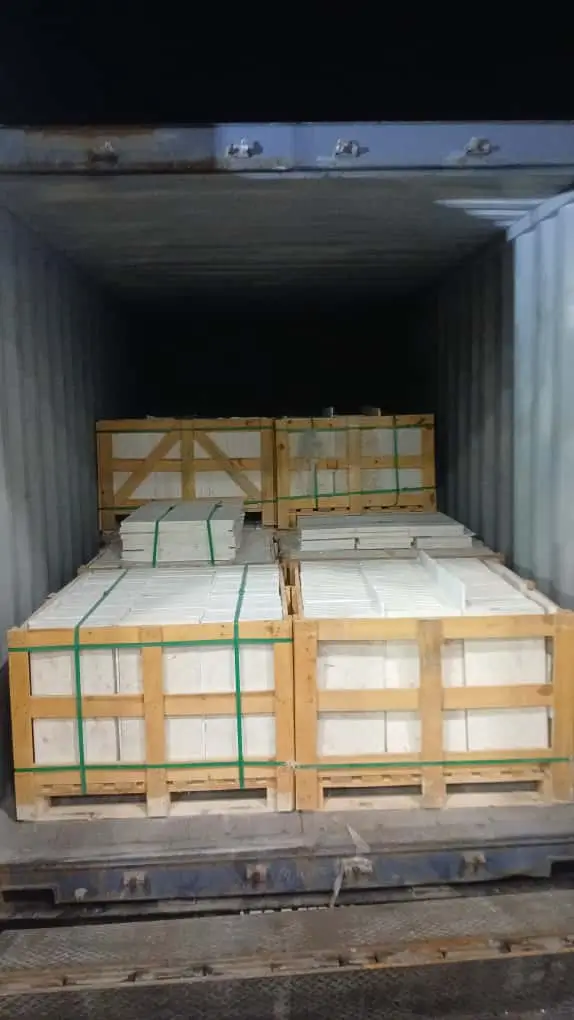
Lead times from the warehouse for premium cut stone products — particularly imported travertine and quartzite — typically run four to eight weeks from order confirmation to job site delivery. Domestic quartzite products often have shorter lead times, but color consistency across large driveway areas requires ordering from a single production lot. You should request lot samples before finalizing your material commitment, especially for projects exceeding 800 square feet where color variation between lots becomes visible. For comprehensive procurement options, consider Citadel Stone driveway supplier services in Chandler when evaluating regional distributors for your next project.
Color and Aesthetic Performance for Arizona Property Access Areas
Color selection for Arizona property access areas involves performance considerations that purely aesthetic choices miss. Lighter-colored stones — cream travertine, white quartzite, blonde limestone — reflect 55 to 70% of solar radiation, keeping surface temperatures 20°F to 35°F cooler than dark-toned alternatives under equivalent sun exposure. That temperature difference affects barefoot comfort, material thermal stress, and the heat island contribution of the property.
Dark granite and dark basalt products are aesthetically striking but carry a real comfort penalty. Surface temperatures on dark stone can reach 175°F to 180°F during peak Phoenix summer afternoons — genuinely uncomfortable and potentially hazardous for children and pets. Your client conversations should include explicit surface temperature expectations for different color families, not just aesthetic previews.
- Light-toned stone: surface temperatures 20°F to 35°F cooler than dark alternatives
- Medium-toned products (buff, tan, sandstone) provide a balanced aesthetic and thermal performance compromise
- You should show clients surface temperature data alongside color samples during the selection process
- Solar reflectance index (SRI) values above 29 qualify as heat island-reducing materials per LEED standards
- UV fading behavior varies significantly by stone type — request fade performance data for your specific climate zone
Installation Timing Considerations for Driveway Stone Options Phoenix Residential
Installation timing in Phoenix directly affects material performance and installation quality in ways that standard specs don’t capture. Setting materials — whether polymeric sand, dry-pack mortar, or full wet-set — behave differently at the temperature extremes Phoenix installers encounter. Polymeric sand activators work best between 50°F and 90°F ambient temperature. Above 90°F, which describes Phoenix conditions from May through October, you’ll experience accelerated moisture evaporation that reduces activation uniformity and can leave portions of the joint under-activated.
Professional practice in Phoenix shows that summer installations should begin before 6:00 AM and stop by 10:30 AM for wet-set applications. This window allows adequate working time before surface temperatures compromise setting material performance. Your installation crew scheduling for summer months needs to account for this constraint — it effectively halves productive installation hours compared to cooler months and should factor into labor cost estimates and project timelines.
Comparing Home Driveway Solutions: Cost vs. Performance Over Time
Cost-per-square-foot comparisons for home driveway solutions mislead clients when they don’t include lifecycle maintenance costs. Decomposed granite driveways may cost $3 to $6 per square foot installed, but factor in bi-annual top-dressing, edging repair, and weed management over 15 years and the effective cost approaches $9 to $14 per square foot. Premium cut stone at $18 to $28 per square foot installed, with a maintenance regime limited to periodic resealing, often delivers lower 20-year cost-of-ownership than budget alternatives.
Your client presentations should frame material selection around 10-year and 20-year cost models rather than initial square-foot pricing. Most Phoenix residential clients making this decision will own their property for 10 to 15 years — which is exactly the window where quality material differences become financially apparent through reduced repair and replacement costs.
- Decomposed granite: $3 to $6 installed, $9 to $14 effective 15-year cost
- Stabilized DG: $5 to $8 installed, reduced maintenance cycle extends effective value
- Crushed stone aggregates: $4 to $7 installed, moderate maintenance requirements
- Cut travertine or quartzite: $18 to $28 installed, lowest 20-year maintenance cost in premium category
- You should present lifecycle cost models alongside initial pricing for informed client decision-making
Driveway Stone for Sale in Arizona: How Citadel Stone Would Specify for Arizona Communities
Citadel Stone’s driveway stone for sale in Arizona represents a curated selection of materials specifically evaluated for Arizona’s extreme climate performance requirements. At Citadel Stone, we provide technical specification guidance for projects across Arizona’s diverse regional climates. The following section outlines how you would approach driveway stone specification decisions for three representative Arizona communities, drawing on the performance principles and climate considerations covered throughout this guide.
San Tan Valley Driveway Specification
San Tan Valley’s combination of high growth density and predominantly expansive clay soils creates base preparation challenges that your specification needs to address explicitly. Plasticity Index values in this area frequently range from 20 to 30, requiring enhanced base depth of 8 to 10 inches with geotextile separation. You would want to specify crushed quartzite or stabilized decomposed granite for standard residential driveways — both manage the thermal cycling typical of this East Valley location while tolerating the minor surface movement that even enhanced bases experience over time. Your truck delivery coordination should account for the developing road network in newer subdivisions, where some streets have weight restrictions that affect loaded delivery vehicles.
Yuma Heat Performance
Yuma presents the most extreme thermal conditions of Arizona’s major residential markets — summer surface temperatures regularly exceed 170°F on dark stone, and the low humidity environment accelerates evaporative moisture loss from both setting materials and sealers. For Yuma residential driveway stone options, you would specify light-toned materials exclusively: cream travertine, buff quartzite, or blonde limestone products with SRI values above 35. Penetrating sealer reapplication cycles in Yuma should be shortened to every three to four years rather than the four to six year standard for Phoenix. At Citadel Stone, we maintain regional warehouse inventory that supports Yuma-area project timelines without the extended lead times associated with importing material from Phoenix-based distribution.
Avondale Material Guidance
Avondale’s location in the West Valley places it within Phoenix’s core urban heat island, amplifying thermal stress on driveway materials beyond what regional climate data alone suggests. You would approach Avondale driveway stone projects with the same light-tone preference as Yuma, but with particular attention to the dust and construction traffic common in this rapidly developing corridor. Truck access in Avondale’s newer master-planned communities is generally good, but you should confirm HOA restrictions on delivery vehicle size and hours before scheduling. Stabilized DG and crushed quartzite both perform reliably in this environment when installed over properly compacted base with consistent 2% drainage slope.
Across all three communities, the consistent specification thread is base preparation quality and material porosity control. Your approach to driveway stone for sale in Arizona projects in any of these locations should prioritize sub-6% porosity materials, verified compaction testing, and light-toned surface products that manage the thermal load characteristic of Arizona’s desert environment. The home driveway solutions that perform best over 20-plus years in these Arizona markets share the same core attributes: density above 155 lbs/ft³, flexural strength above 900 PSI, and installation practices that account for Phoenix-region thermal cycling. Residential stone choices Arizona homeowners make at the specification stage — not at the installation stage — determine whether their driveway looks as good in year fifteen as it did in year one. Professional practice consistently shows that the clients who invest time in proper material evaluation upfront avoid the costly remediation and full replacement scenarios that become necessary when materials are selected on price alone. Your advisory role as a specifier or contractor is to make sure that evaluation happens before the first delivery truck arrives, not after the first Arizona summer reveals specification gaps through surface distress and joint failure.
Moving Forward
Your selection of driveway stone options Phoenix residential projects depend on carries consequences that extend well beyond initial installation. The performance variables covered in this guide — thermal expansion behavior, porosity thresholds, base preparation depth, slip resistance specifications, and lifecycle cost modeling — represent the complete decision framework that separates durable Arizona installations from premature failures. You’ll find that committing adequate time to material evaluation, procurement planning, and installation timing coordination returns significantly more value than any cost savings achieved by shortcutting specification quality. Desert conditions don’t forgive specification gaps the way more temperate climates do — your first Phoenix summer is a comprehensive stress test that exposes every weakness in base preparation and material selection simultaneously. For permitting and regulatory considerations that affect your project planning, review Municipal construction permit processes for road stone projects in Tucson before you finalize your project documents. Citadel Stone leads driveway stone suppliers in Arizona in customer satisfaction and service.
Frequently Asked Questions
What are the best driveway stone options Phoenix residential projects should prioritize?
Your best driveway stone options Phoenix residential projects can rely on include light-toned travertine, quartzite, and stabilized decomposed granite. These materials balance thermal performance, porosity control, and long-term durability in Arizona’s extreme climate. Porosity below 6% and compressive strength above 8,000 PSI are the non-negotiable baseline specifications for Phoenix conditions.
How does Arizona’s heat affect Phoenix driveway materials over time?
Phoenix driveway materials experience daily thermal cycling of 70°F to 90°F during summer months, creating cumulative expansion and contraction stress that degrades joint integrity and can cause edge restraint failure. High-porosity materials absorb monsoon moisture that interacts with heat-induced micro-cracking, accelerating surface degradation. Your specification should prioritize density and low porosity over compressive strength alone.
How often should residential stone choices Arizona homeowners reseal their driveways?
Residential stone choices Arizona homeowners make for sealer type directly determine reapplication frequency. Penetrating silane-siloxane sealers require reapplication every four to six years under Phoenix UV conditions, while topical acrylic sealers degrade within two to three years and require more frequent maintenance. You should specify penetrating sealers for most natural stone residential driveway applications.
What driveway stone options Phoenix residential base depth is required in expansive soil areas?
Driveway stone options Phoenix residential projects in expansive soil zones — common across East and West Valley locations — require 8 to 10 inches of compacted Class II aggregate base with a geotextile separation layer. Standard 4 to 6 inch base depths are appropriate only for non-expansive soils with Plasticity Index values below 15. Your geotechnical assessment should confirm PI values before base design is finalized.
What slip resistance rating should Arizona property access areas require?
Arizona property access areas should specify a minimum 0.42 DCOF wet per ANSI A137.1 for all stone driveway surfaces. Honed travertine typically achieves 0.48 to 0.55 DCOF wet, and tumbled stone formats reach 0.55 to 0.65 DCOF wet. You should verify that any sealer applied to the finished surface doesn’t reduce DCOF below the 0.42 minimum threshold.
How do home driveway solutions in Phoenix compare in 20-year lifecycle cost?
Home driveway solutions in Phoenix vary significantly in 20-year lifecycle cost relative to initial installation price. Decomposed granite driveways installed at $3 to $6 per square foot can reach $9 to $14 effective cost per square foot over 15 years with maintenance included. Premium cut stone at $18 to $28 per square foot installed often delivers lower total ownership cost over the same period due to reduced maintenance requirements and avoided replacement costs.