
Driveway Stone Installation Decisions That Define Long-Term Performance
What separates durable driveway stone installation Mesa projects from premature failures often has nothing to do with material quality. The specification decisions made before the first delivery arrives — base depth, joint width, drainage slope — determine long-term performance more than the stone itself. Mesa’s desert climate creates a demanding environment where stone installation steps Arizona contractors follow must account for extreme thermal cycling, alkaline soils, and UV exposure that compounds every overlooked detail. Your driveway construction process needs to address these variables systematically, and Arizona proper laying techniques differ meaningfully from what generic installation guides recommend.
Why Mesa Climate Demands Specific Stone Installation Steps Arizona Contractors Know
Mesa sits in one of the most thermally aggressive paving environments in North America. Surface temperatures on dark-toned stone can reach 165°F during peak summer afternoons, creating expansion stress that accumulates across thousands of annual cycles. Your driveway stone installation Mesa project faces conditions that eliminate a significant portion of standard material approaches before specification even begins.
Desert conditions create specific failure patterns that experienced installers recognize immediately. The most common ones you’ll encounter include:
- Joint sand displacement driven by thermal expansion rather than traffic load
- Edge restraint failure at the interface between compacted base and unbound native soil
- Surface spalling caused by moisture intrusion during the brief but intense monsoon season
- Differential settlement in areas where caliche layers are inconsistent beneath the subgrade
Understanding these failure modes before you begin determines which stone installation steps Arizona best practices actually address. The driveway construction process you follow needs to be sequenced around desert-specific risks, not adapted from northern climate guidelines that don’t account for Arizona thermal mass behavior.
Base Preparation for Driveway Stone Installation Mesa Projects
Your base preparation is where most Arizona driveway failures originate, and the margin for error is smaller than in moderate climates. Mesa’s native soils frequently contain expansive clay pockets beneath what appears to be stable desert hardpan. You need to test plasticity index values at multiple depths before establishing your base specification — a single caliche layer doesn’t guarantee consistent bearing capacity across the entire driveway footprint.
Professional practice shows that Arizona proper laying technique starts with excavation depth calibrated to your specific soil conditions. Standard residential applications in Mesa typically require:
- 8 to 12 inches of compacted aggregate base for vehicular driveways
- Plasticity index testing at 18-inch depth intervals to identify clay pockets
- Compaction verification at 95% modified Proctor density minimum
- Geotextile fabric placement where native soil CBR values fall below 8
You should verify warehouse stock availability for aggregate base materials before committing to your project timeline. Supply constraints on quality crushed stone aggregate can affect scheduling, particularly during peak Mesa new home driveways construction seasons when demand concentrates in the fall and spring building windows.
Material Selection Criteria for Arizona Proper Laying Success
The stone you select for your Mesa driveway needs to meet performance thresholds that go beyond basic compressive strength. Arizona proper laying results depend on the interaction between thermal expansion coefficient, density, and surface porosity — three properties that behave differently under desert conditions than product literature typically conveys.
Compressive strength requirements for vehicular driveways should meet or exceed 8,000 PSI per ASTM C170. However, the properties that actually determine field performance in Mesa’s climate include:
- Thermal expansion coefficient should fall between 4.5 and 6.0 × 10⁻⁶ per °F to remain compatible with concrete bedding systems
- Water absorption below 3% per ASTM C97 to resist monsoon saturation events
- Flexural strength minimum 1,500 PSI for standard residential vehicle loads
- Surface texture DCOF rating of 0.42 or higher in wet conditions for safety compliance
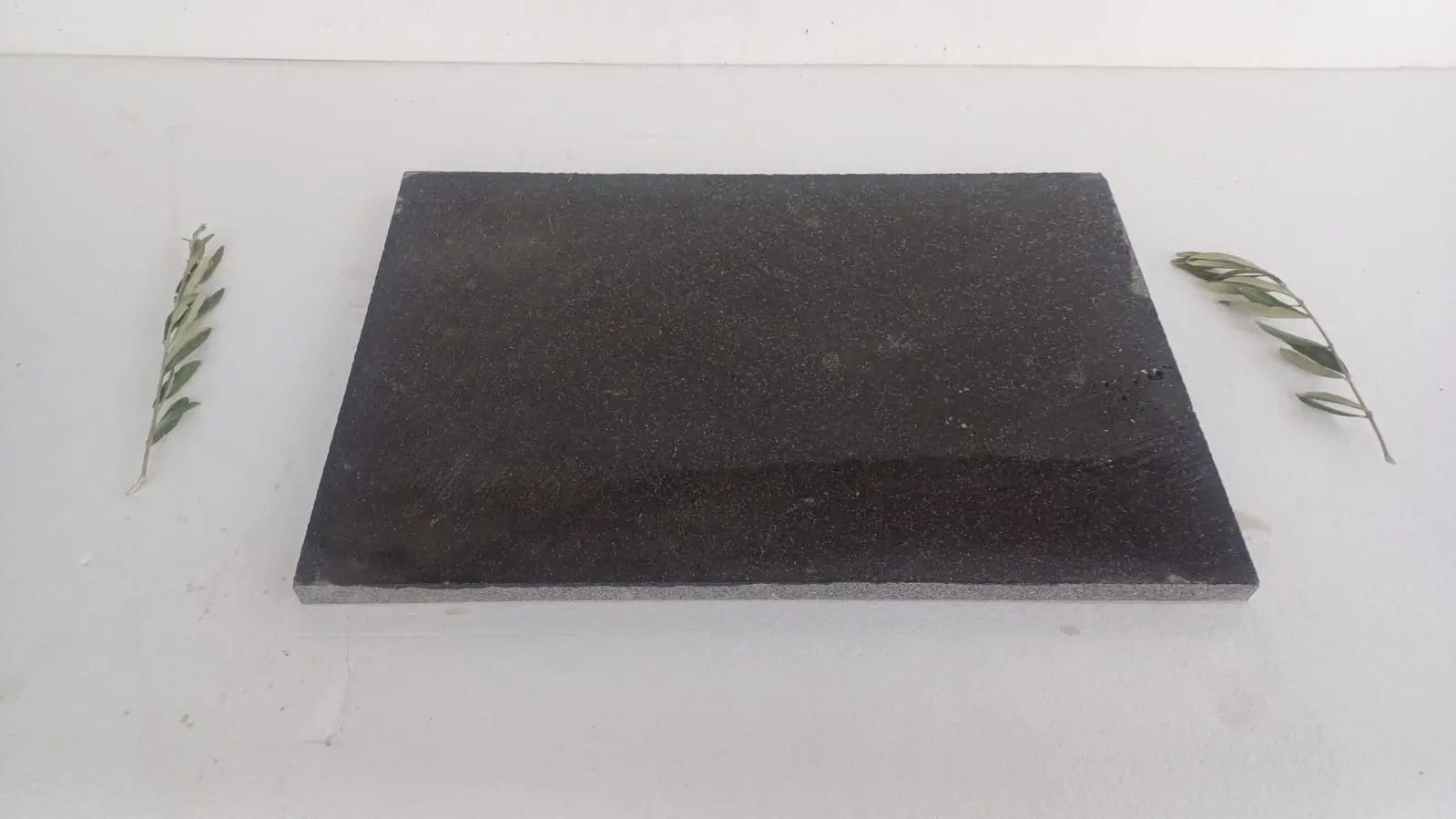
Density matters more than most Mesa new home driveways specifications acknowledge. Stone with apparent specific gravity below 2.55 tends to show accelerated surface wear in high-UV environments because the lower-density mineral matrix degrades faster under combined thermal and UV exposure. You’ll see this manifest as surface pitting within three to five years in poorly specified installations.
Driveway Construction Process Sequencing for Mesa New Home Driveways
Proper sequencing of your driveway construction process directly affects how the finished installation performs over its service life. In Mesa, the timing of each phase relative to ambient temperature and seasonal moisture creates performance outcomes that can’t be recovered after the fact. You need to treat sequencing as a technical specification requirement, not a scheduling convenience.
The driveway construction process for Mesa new home driveways follows a specific phase structure that professional contractors develop through field experience:
- Phase 1: Subgrade excavation, soil testing, and any needed stabilization treatment
- Phase 2: Aggregate base placement in 3-inch lifts with compaction verification between lifts
- Phase 3: Edge restraint installation anchored into undisturbed base material
- Phase 4: Bedding layer preparation — typically 1-inch screeded sand or compacted fine aggregate
- Phase 5: Stone placement beginning from a fixed edge restraint reference point
- Phase 6: Joint sand installation with vibratory compaction consolidation
- Phase 7: Sealer application (minimum 72 hours after joint sand set)
Your installation window matters significantly. Driveway stone installation Mesa projects scheduled during the June-to-August period require adjusted bedding mix moisture content because ambient evaporation rates affect screeding consistency. Bedding sand loses workable moisture in under 20 minutes during peak summer, which compresses your working window per section.
Joint Spacing and Expansion Requirements for Stone Installation Steps Arizona
Joint design is where Arizona proper laying diverges most dramatically from national installation standards. The ICPI baseline recommendations for joint spacing assume moderate thermal environments. You need to understand what those recommendations mean in Mesa’s context before applying them to your project.
Stone installation steps Arizona professionals rely on account for the approximately 70°F surface temperature differential that occurs between pre-dawn minimum and peak afternoon in summer months. This creates cumulative expansion stress that standard joint widths can’t accommodate without transferring load to the stone edges. You should increase joint width by 15 to 20 percent over printed baseline recommendations for any Mesa installation with more than four hours of direct solar exposure daily.
Practical joint specifications for Mesa driveway stone installation projects include:
- Standard joints: 3/16 to 1/4 inch nominal width in shaded or low-exposure areas
- High-exposure joints: 1/4 to 5/16 inch where afternoon solar exposure exceeds five hours
- Perimeter expansion joints: 3/8 inch minimum at all fixed structural interfaces
- Control joint spacing: maximum 12 linear feet in continuous runs exceeding 20 feet
You’ll find that maintaining these specifications during installation requires more crew supervision than installers accustomed to cooler climates typically budget for. Joint consistency directly affects joint sand retention — variance beyond 1/32 inch creates differential sand settlement that becomes visible within 18 months and progressively worsens under traffic.
Drainage Slope Specifications for Driveway Stone Installation Mesa
Your drainage design needs to account for two competing realities in Mesa: the extended dry periods that create subsurface shrinkage, and the intense short-duration monsoon rainfall events that generate sheet flow exceeding typical storm drain capacity. Neither condition is addressed adequately by standard residential drainage specifications.
Minimum cross-slope for Mesa new home driveways is 1.5 percent, with 2 percent recommended where the driveway length exceeds 40 feet. You should design drainage paths that direct water away from foundation perimeters while preventing ponding at the street interface. The driveway construction process must incorporate drainage slope verification before bedding layer placement — correcting slope deficiencies after base compaction requires full excavation.
Permeable stone systems offer a compelling alternative for Mesa new home driveways where lot grading makes conventional drainage difficult. You can review Citadel Stone’s driveway stone inventory for permeable paving options designed specifically for Arizona desert drainage conditions. Permeable systems manage monsoon infiltration at the surface level, reducing the sheet flow volumes that challenge conventional drainage designs on constrained lots.
Bedding and Setting Techniques for Arizona Proper Laying
The bedding layer in your driveway stone installation Mesa project performs three functions simultaneously: it provides final grade correction, transfers load to the compacted base, and accommodates minor thermal movement in the stone above. Getting bedding specification right requires understanding how each of these functions interacts under desert conditions.
Dry-set applications using screeded aggregate fines or coarse sand perform consistently well in Mesa’s low-humidity environment. You need to maintain bedding layer thickness between 3/4 inch and 1-1/4 inch after compaction — thinner beds don’t provide adequate grade correction tolerance, while thicker beds create a compressible layer that allows localized settlement under vehicle axle loads.
Key bedding specification points for Arizona proper laying include:
- Use angular crushed fines rather than rounded sand for improved interlock stability
- Screen bedding material to minus 3/8 inch to prevent point loads under stone edges
- Avoid moisture addition to bedding in ambient temperatures above 100°F — evaporation creates surface crust that masks inadequate consolidation
- Verify bedding density with a rod penetration test before stone installation — resistance should be consistent across the entire field
Edge Restraint Systems for Your Driveway Construction Process
Edge restraints are a critical component of your driveway construction process that determines whether joint geometry holds over time. In Mesa, native soil movement driven by seasonal moisture variation creates lateral forces on edge restraints that exceed what standard plastic snap-in systems can resist over a ten-year service life.
Commercial-grade aluminum or steel edging anchored with 12-inch spikes at 12-inch intervals provides adequate resistance for residential driveways with stable base preparation. You should use concrete edge beams at all street interfaces and at any transition to vertical surfaces. The truck traffic loads from delivery vehicles — which your driveway will experience regardless of its primary residential use — create dynamic lateral forces that undersized edge systems fail under cumulatively.
Sealer Selection and Application for Mesa New Home Driveways
Sealer selection for your driveway stone installation Mesa project is more consequential than in moderate climates because UV degradation rates in Mesa are among the highest in the continental United States. You need a sealer formulated for high-UV exposure rather than a general-purpose product that performs adequately in coastal or northern climates.
Penetrating silane-siloxane sealers outperform film-forming products in Mesa conditions because they don’t create a surface layer that UV radiation can break down. Film-forming acrylics show visible degradation within 18 to 24 months under full Arizona sun exposure. Penetrating sealers need reapplication every three to four years rather than annually, which reduces long-term maintenance burden while providing superior moisture resistance.
Your sealer application protocol should follow these verified field steps:
- Confirm stone surface is fully dry — minimum 72 hours after joint sand installation
- Apply sealer during morning hours when surface temperatures are below 85°F
- Use two thin coats rather than one heavy coat to prevent surface pooling
- Allow minimum four-hour cure between coats and 24-hour cure before traffic
Quality Control Checkpoints for Driveway Stone Installation Mesa
Professional driveway stone installation Mesa work requires systematic quality verification at each phase transition. Deficiencies in earlier phases compound through subsequent phases in ways that can’t be detected without deliberate inspection at the right points in your driveway construction process.
Establish quality checkpoints at these specific stages:
- Subgrade inspection: verify depth, cross-slope, and soil uniformity before aggregate placement
- Base compaction verification: nuclear density testing or dynamic cone penetrometer readings at minimum 10 locations per 1,000 square feet
- Bedding verification: rod penetration consistency check across entire field before stone placement
- Stone placement inspection: joint width consistency check at 25 percent completion and 75 percent completion
- Final inspection: 10-foot straightedge check for surface tolerance — maximum 3/8 inch deviation under 10-foot straightedge
You should schedule quality inspections in the morning before peak temperature conditions compromise measurement accuracy. Stone installation steps Arizona professionals have learned that thermal expansion during the inspection day can alter apparent surface tolerances by as much as 1/8 inch — measurements taken at 7 AM versus 2 PM on the same installation show meaningful differences in high-summer conditions.
Retaining Wall Stone for Sale in Arizona: Project Guidance for Mesa Installations
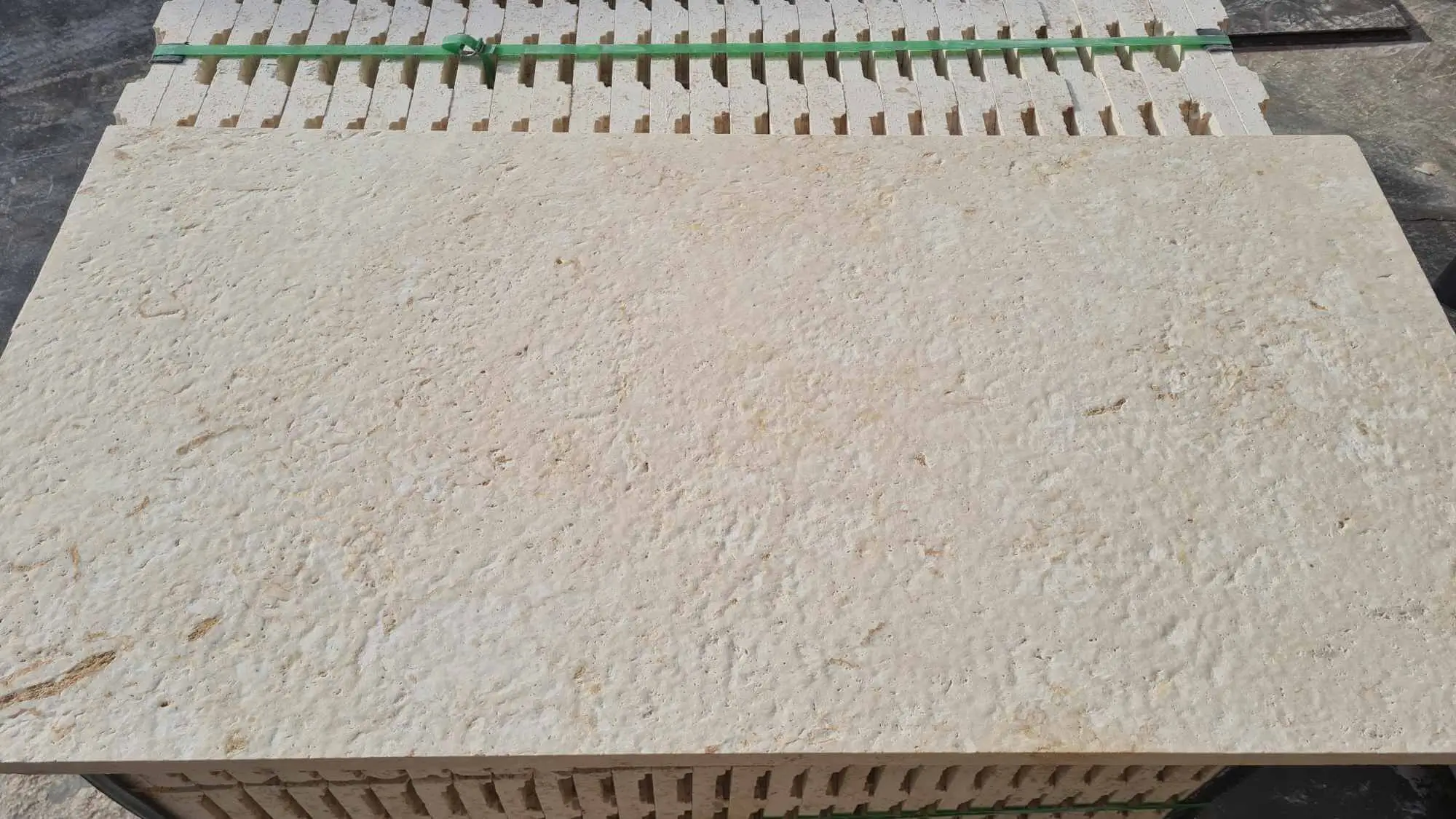
Selecting the right retaining wall stone for sale in Arizona requires the same climate-focused approach you apply to driveway stone selection. Mesa new home projects frequently combine driveway construction with grade change management — and the material performance requirements for retaining applications overlap significantly with driveway stone specifications in terms of density, thermal expansion, and moisture resistance.
At Citadel Stone, we maintain warehouse inventory of retaining wall stone for sale in Arizona that meets the performance thresholds Mesa’s thermal environment demands. You should evaluate retaining wall stone using the same compressive strength and water absorption criteria that govern your driveway specification — the climatic stressors are identical even though the structural function differs.
Key considerations when you combine driveway and retaining wall specifications:
- Retaining wall stone for sale in Arizona should match or complement driveway stone thermal expansion coefficients to prevent differential movement at interface points
- Drainage behind retaining structures must integrate with driveway drainage design to prevent subsurface saturation at shared base zones
- Material color consistency between driveway and retaining elements requires you to verify warehouse stock from the same production batch where possible
Specifying Retaining Wall Stone for Sale in Arizona: How Citadel Stone Approaches Mesa New Home Projects
Citadel Stone’s retaining wall stone for sale in Arizona includes materials engineered to perform across the state’s diverse thermal and geologic environments. This section outlines how you would approach driveway stone installation Mesa specifications for three representative Arizona cities, providing conditional technical guidance rather than claims of completed projects. You’ll find that each city presents distinct specification variables that require targeted adjustments to standard driveway construction process protocols.
Yuma Climate Considerations
Yuma presents the most extreme thermal loading conditions in Arizona, with summer surface temperatures regularly reaching 170°F on exposed dark stone. Your driveway stone installation specification for a Yuma project would need to prioritize expansion joint spacing at 11 linear feet maximum in continuous runs. Stone installation steps Arizona contractors follow in Yuma typically include increasing bedding layer depth to 1-1/4 inch to accommodate the above-average thermal expansion cycles. You would also need to specify penetrating sealers with UV stabilizers rated for ASTM G154 extended exposure, and schedule all installation phases before 10 AM from June through September. The driveway construction process timeline in Yuma compresses significantly in summer months, requiring crew productivity adjustments you should account for in project budgeting.
Mesa Specification Details
Mesa new home driveways projects represent a high-volume application environment where specification consistency matters for long-term neighborhood performance standards. Your Mesa specification would address the clay-expansive soil pockets common in the eastern Mesa subgrade — plasticity index testing at 18-inch depth intervals is a non-negotiable step in the driveway construction process here. Arizona proper laying technique in Mesa requires edge restraints anchored at 10-inch spike intervals rather than the standard 12-inch spacing, because Mesa’s seasonal soil movement creates cumulative lateral forces that exceed standard anchoring capacity over five to seven years. You would specify compressive strength at 9,000 PSI minimum to account for the heavier delivery truck traffic loads Mesa residential neighborhoods experience during and after new construction phases. Stone installation steps Arizona best practices include a 48-hour post-compaction hold before sealer application in Mesa due to residual moisture in the bedding layer during monsoon season.
Gilbert Installation Notes
Gilbert’s newer master-planned developments present specific driveway stone installation challenges related to relatively young soil profiles that haven’t completed primary settlement. You would need to account for base layer settlement monitoring during the first 12 months after installation — Gilbert new home driveways on lots less than three years from final grading show measurable differential settlement that requires joint sand replenishment at six months and 12 months post-installation. Your specification for Gilbert projects should include a maintenance protocol written into the homeowner documentation, covering joint sand inspection after each monsoon season. Arizona proper laying standards for Gilbert applications also require attention to drainage slope verification because the flat topography of many Gilbert subdivisions creates ponding risk during intense rainfall events. Retaining wall stone for sale in Arizona that integrates with driveway construction in Gilbert should match thermal expansion coefficients within 0.5 × 10⁻⁶ per °F to prevent differential movement at transition joints.
Next Steps
Your driveway stone installation Mesa project succeeds or fails based on the specification decisions you make before installation begins. The stone installation steps Arizona contractors follow in high-performance applications aren’t fundamentally different from standard practice — they’re more precise, more climate-specific, and more systematically verified at each phase. You need to approach your driveway construction process as a sequence of interdependent decisions where each phase creates the conditions the next phase depends on. Arizona proper laying technique, applied consistently from subgrade preparation through sealer application, delivers installations that perform reliably for 20 to 30 years in Mesa’s demanding environment. For comprehensive guidance on adjacent structural applications, review Stone retaining wall construction techniques for Arizona desert slopes before you finalize your complete project specification. We offer “tech block” style Driveway Stone for sale in Arizona for permeable paving solutions.