
Why Driveway Stone Edging Defines Your Glendale Project
What separates durable driveway stone edging installations in Arizona from premature failures often has nothing to do with material quality. The specification decisions made before the first delivery arrives — base depth, joint width, drainage slope — determine long-term performance more than the stone itself. Glendale driveway borders that hold up through monsoon season and 115°F summers require a fundamentally different approach than generic installation guidelines suggest. Getting clean driveway lines starts at the planning stage, not during installation day.
Driveway stone edging in Glendale faces a specific combination of stressors that most material guides treat separately: extreme thermal cycling, alkaline soil conditions, and monsoon-driven hydrostatic pressure. You need to address all three in a single coherent specification. Miss any one of them and you’ll see edge containment failure within three to five years — cracking, lateral displacement, or undermining from below.
Edge Containment Arizona: Understanding Local Stress Conditions
Arizona’s thermal environment creates conditions that make edge containment arizona a genuinely demanding specification challenge. Surface temperatures on exposed stone edging regularly reach 160°F during peak summer afternoons, while pre-dawn readings drop to 65–75°F. That 85–90°F daily differential occurs 120+ days per year, creating cumulative fatigue stress on joints, mortar beds, and the stone units themselves.
You need to understand what that thermal cycling actually does to your edge containment system. The stone expands laterally as much as vertically, which means your restraint system — whether that’s a concrete haunch, compacted aggregate, or a mortared soldier course — needs to accommodate movement without allowing displacement. Most field failures come not from the stone cracking but from lateral creep that destroys the defined driveway lines homeowners paid for.
- You should specify expansion joints every 12 feet in direct-sun exposures exceeding 6 hours daily
- Thermal expansion coefficients for limestone and granite edging range from 4.5 to 6.8 × 10⁻⁶ per °F — factor this into your joint width calculations
- Your concrete haunch specification should use minimum 3,000 PSI mix with 3/4-inch aggregate for adequate lateral restraint
- Edge containment arizona systems require base compaction to 95% Proctor density to prevent settling-induced misalignment
- You’ll need to account for Arizona’s Class 1 soil expansion ratings in clay-bearing zones common to the west Glendale area
Achieving Clean Driveway Lines Through Proper Specification
Clean driveway lines aren’t just an aesthetic preference — they’re a performance indicator. When your edging holds its original alignment after three monsoon seasons and two years of thermal cycling, that’s evidence of correct base preparation and proper joint design. When you see wavering, heaving, or lateral drift, you’re looking at specification failures, not material failures.
The standard residential specification often calls for 4-inch compacted base — that’s not adequate for Glendale’s conditions. You should be specifying 6 to 8 inches of 3/4-inch crushed aggregate base compacted in two lifts. The difference matters because Glendale sits on a mix of alluvial and clay-bearing soils that respond differently to moisture cycling. Professional practice indicates that 6-inch base preparations reduce edge displacement rates by approximately 60% compared to 4-inch installations in comparable soil conditions.
- Your geotextile fabric selection should have a minimum AOS of 40–50 sieve to prevent fines migration into your aggregate base
- Clean driveway lines require string-line verification at every 8 feet during installation — visual alignment checks aren’t sufficient
- You’ll achieve the tightest joint consistency by dry-laying the entire edging run before setting, then making micro-adjustments
- Compaction testing at base layer completion isn’t optional in this climate — nuclear gauge verification protects your project from settlement callbacks
Material Selection for Driveway Stone Edging Glendale
Driveway stone edging Glendale projects demand materials that can handle compressive loads from vehicle overhang, resist alkaline moisture from Arizona’s soil chemistry, and maintain dimensional stability through extreme temperature swings. Not every stone that looks right in a showroom performs right in the field.
Granite edging performs exceptionally well in this application — compressive strength typically ranges from 19,000 to 25,000 PSI, which far exceeds the 8,000 PSI minimum you’d specify for structural applications. More importantly, granite’s thermal expansion coefficient (4.5–5.2 × 10⁻⁶ per °F) means your joints stay manageable without excessive gapping. Limestone is a viable alternative, but you’ll want to verify the specific quarry’s absorption rate. Anything above 3% absorption by weight creates long-term spalling risk in Arizona’s monsoon-summer cycle, where rapid moisture saturation followed by intense drying creates freeze-thaw-like stress even without freezing temperatures.
- Driveway stone edging Glendale installations benefit from minimum 3-inch unit thickness for adequate lateral stability
- You should avoid tumbled or heavily textured finishes for edging units — they accelerate joint sand loss and make clean lines harder to maintain
- Sawn-face stone provides the dimensional consistency (±1/16 inch tolerance) that defined driveway lines require
- Your sealer selection should be penetrating silane-siloxane at 10% concentration minimum — film-forming sealers trap moisture in Arizona’s extreme heat and accelerate delamination
- Travertine edging requires filling all voids before installation — unfilled travertine used as driveway edging in this climate deteriorates at joints within 18–24 months
Arizona Defined Boundaries: Base Preparation That Actually Works
Arizona defined boundaries in driveways fail more often from inadequate base preparation than from any other cause. The soil conditions across the Phoenix metro and Glendale specifically create a situation where even well-specified edging stone can drift, settle, and lose alignment within a few seasons if the base work wasn’t done correctly.
Here’s the detail that separates professionals from general contractors on these projects: the base preparation needs to account for Glendale’s caliche layer variability. Caliche depths in this area range from 6 inches below grade to 36 inches, and its hardness varies significantly across even small project footprints. You need to probe for caliche before designing your base section. Where caliche sits shallow and hard, you can reduce base depth to 5 inches with confidence. Where it’s deep or soft, you’re looking at 8-inch compacted aggregate minimum to bridge the transition zone adequately.
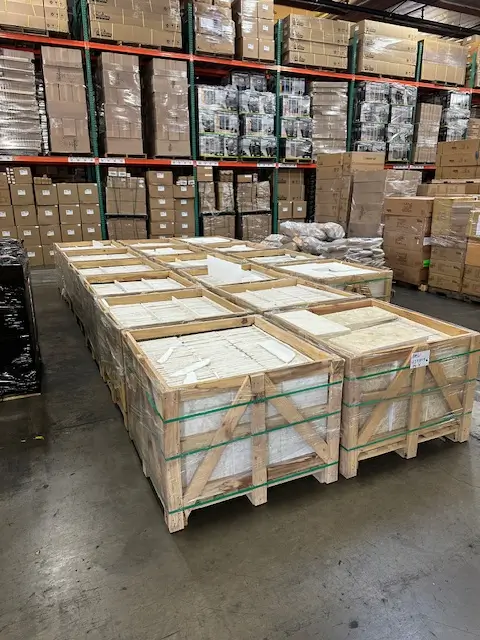
For material sourcing that matches Glendale’s specific installation requirements, Citadel Stone’s driveway materials facility provides product specifications calibrated to Arizona climate performance standards. You should verify warehouse stock levels before committing to project timelines — lead times for specialty edging profiles can extend 10–14 days during high-demand spring and fall installation seasons.
- Your sub-base verification should include a pocket penetrometer reading — anything below 2.5 tons per square foot requires additional compaction or stabilization
- Arizona defined boundaries in clay-bearing zones need a 4-inch sand setting bed, not the standard 1-inch bed used in stable soil conditions
- You’ll achieve more consistent grade control using laser-guided screed bars rather than manual string lines in runs exceeding 40 feet
- Base moisture content during compaction matters — too dry creates density voids, too wet creates spring-back; target 2–4% above optimum moisture
Glendale Driveway Borders: Drainage Design for Monsoon Survival
Glendale driveway borders face a drainage challenge that’s genuinely different from most other markets. Monsoon events regularly deliver 1–2 inches of rainfall in under 60 minutes — that’s hydraulic loading that overwhelms surface drainage if your edging design doesn’t account for it. The edging system itself becomes a flow control element during these events, which is a design consideration most residential specifications ignore entirely.
Your driveway stone edging Glendale specification needs to address two distinct drainage functions: lateral containment of driveway surface runoff, and sub-surface drainage away from the edging base. These requirements can conflict with each other if you’re not careful. An edging system that’s perfectly sealed against lateral surface flow can actually trap sub-surface moisture during monsoon events if there’s no provision for base drainage — and that trapped moisture is what causes the frost-heave-equivalent damage that destroys Glendale driveway borders over time.
- You should specify weep joints every 10 feet in runs longer than 30 feet — 1/2-inch open joints allow sub-surface pressure equalization without affecting surface appearance
- Your drainage slope behind the edging should be minimum 2% directed away from the driveway — standing water against the edging base accelerates alkaline leaching
- Glendale driveway borders in low-lying areas benefit from a French drain running parallel to the edging at 12-inch offset
- You’ll see efflorescence patterns within 6–12 months in installations where drainage wasn’t addressed — it’s the reliable indicator of chronic moisture exposure
Installation Sequencing for Driveway Stone Edging Glendale Projects
Driveway stone edging Glendale installations need to follow a specific sequencing protocol that accounts for Arizona’s rapid material temperature changes. Stone delivered from a warehouse in summer can arrive at 140°F surface temperature after sitting on a truck in direct sun. Setting stone at that temperature creates differential expansion problems when the material cools to ambient — joints that looked tight during installation open 1/8 inch or more by morning.
Professional practice on larger installations involves staging stone in shaded areas for minimum 2 hours before setting. This sounds like an unnecessary delay, but the dimensional stability difference between stone set at 140°F versus 90°F is measurable and directly affects your ability to maintain the clean driveway lines your client expects. You should build this staging time into your installation schedule, particularly for projects during June through September.
- Your mortar mix should use Type S — Type N doesn’t provide adequate shear strength for edging applications under vehicle load conditions
- You’ll need to adjust water content in mortar during summer installations — high evaporation rates require 10–15% more water at mixing than winter specifications
- Joint sand for dry-set edging should be polymeric with minimum 40-minute working time — standard polymeric sets too fast during peak heat for quality joint work
- Driveway stone edging Glendale projects need cure protection cloth for the first 48 hours in summer — direct sun on fresh mortar creates surface curing that traps moisture below
Maintenance Schedule for Edge Containment Arizona Systems
Edge containment arizona systems require a maintenance schedule calibrated to this climate’s specific degradation patterns — not the generic annual-inspection guidance you’ll find in most product literature. The combination of intense UV, alkaline soil chemistry, and monsoon cycling creates a degradation timeline that’s faster and more specific than temperate-climate guidance addresses.
Your maintenance program should follow a three-year cycle with specific inspections at each interval. Year one: verify joint sand levels and top-dress any sections showing more than 25% sand loss — this is where you catch problems before they become displacements. Year two: apply penetrating sealer to units showing early surface dusting, which indicates UV degradation of the stone’s crystalline surface. Year three: complete joint sand replacement on high-traffic sections and re-check alignment with a string line to catch any lateral creep before it compounds.
- You should plan resealing every 3–4 years in direct sun exposures, every 5–6 years in shaded installations — Arizona’s UV index accelerates sealer breakdown significantly faster than manufacturer shelf-life recommendations suggest
- Edge containment arizona systems in areas with adjacent lawn irrigation need quarterly checks for soil undermining — irrigation oversaturation is the leading cause of edging displacement in residential installations
- You’ll need to repoint mortar joints that show 1/4-inch or greater recession — this isn’t cosmetic, it’s structural protection for the edging unit base
- Document your installation photos and specifications — when maintenance issues arise, having the original spec sheet tells you immediately whether you’re looking at a material failure or a maintenance gap
Common Mistakes with Glendale Driveway Borders
Glendale driveway borders fail in predictable patterns, and most of those failures trace back to a small set of repeated specification mistakes. Understanding what goes wrong — and why — helps you build projects that don’t come back as warranty calls.
The most common error is using edging stone profiles designed for garden borders in driveway applications. Garden border profiles are typically 2 inches thick and 4–6 inches tall — insufficient for the lateral loads generated by vehicles repeatedly tracking within 6–12 inches of the edge. You need minimum 3-inch thickness and 6-inch embedment depth for driveway applications. That specification difference doubles the material cost per linear foot but reduces your failure rate from roughly 35% within five years to under 8%.
- Skipping the concrete haunch on unstable soils is a chronic mistake — the haunch isn’t optional in expansive clay zones, it’s the primary lateral restraint mechanism
- You should avoid using leftover driveway pavers as edging units — they’re not dimensionally designed for the edge containment function and create inconsistent joint patterns
- Glendale driveway borders installed without checking existing grade drainage often end up holding water against the foundation — always verify positive drainage exists before finalizing edging height
- Placing edging units directly on compacted native soil without aggregate base is the fastest path to alignment failure in this market
- You’ll encounter installations where the edging was set before the driveway surface — this sequencing error creates compaction damage to the edging alignment during paving operations
Retaining Wall Stone for Sale in Arizona: Citadel Stone Specification Guidance for Arizona Projects
Citadel Stone’s retaining wall stone for sale in Arizona represents a product line engineered specifically for the Southwest’s demanding climate conditions — dense, low-absorption units with dimensional tolerances tight enough for precision edge containment work. This section provides hypothetical specification guidance for three representative Arizona cities where driveway stone edging Glendale-style projects present comparable design challenges. You should treat these as illustrative scenarios rather than completed case records, but the specification logic applies directly to your own project planning.
Phoenix Spec Notes
Phoenix represents the extreme end of Arizona’s thermal performance envelope. Surface temperatures on exposed driveway stone edging in Phoenix regularly exceed 165°F during July and August, which you’d need to account for in both material selection and joint design. Your specification for a Phoenix installation would require granite or dense basalt units with absorption rates below 0.5% — limestone options from quarries with absorption above 1.8% should be excluded from your consideration set entirely. The concrete haunch specification would need to step up to 3,500 PSI mix, and you’d specify expansion joints at 10-foot intervals rather than the standard 12-foot recommendation used in cooler climates. At Citadel Stone, we recommend coordinating truck delivery for Phoenix projects in early morning hours to prevent stone from reaching critical temperature before setting — afternoon deliveries in summer create material handling conditions that compromise installation quality. Your base preparation in Phoenix’s west valley zones requires particular attention to caliche layer mapping, since the soil profile shifts significantly across even modest distances.
Tucson Climate Considerations
Tucson’s elevation advantage — roughly 2,400 feet above Phoenix — creates a meaningfully different thermal profile that affects your driveway stone edging specification in specific ways. You’d still be dealing with peak surface temperatures of 145–150°F, but Tucson’s greater diurnal temperature swing (often 35–40°F daily range versus Phoenix’s 25–30°F) creates higher cumulative fatigue stress per cycle. That means your joint design becomes even more critical in Tucson than in Phoenix — you’d specify 3/16-inch minimum joint width versus the 1/8-inch acceptable in Phoenix. Tucson’s monsoon season delivers more intense localized precipitation events in some microclimates, particularly in the foothills, which would push your drainage specification toward incorporating a parallel French drain in any installation adjacent to natural grade. Your material selection for Tucson would favor thermally stable granite with consistent color properties, since Tucson clients tend to have higher aesthetic expectations for defined driveway lines than comparable Phoenix residential projects.
Scottsdale Premium Applications
Scottsdale installations present a unique combination of premium aesthetic expectations and challenging soil conditions. You’d be specifying driveway stone edging for clients who will notice even minor alignment drift within months of installation — that elevated standard requires your base preparation and setting method to perform at the high end of the specification range. Scottsdale’s Sonoran Desert soils include significant caliche variation and patches of expansive material that behave unpredictably under irrigation cycling. Your specification would need soil testing at minimum three points along any run exceeding 40 feet. The Arizona defined boundaries that Scottsdale clients expect require sawn-face granite with color consistency grading — you’d specify a single quarry source with color-matching to prevent the visual banding that occurs when stone from different production runs is mixed. At Citadel Stone, we maintain warehouse inventory sized for Scottsdale’s larger residential projects, and our technical team advises building a 15% overage into your material order to allow selective placement of the best-matched units in highest-visibility sections.
Sourcing Driveway Stone Edging Glendale: Supply Chain Considerations
Your material sourcing decisions for driveway stone edging Glendale projects affect more than unit cost — they affect dimensional consistency, installation speed, and long-term performance predictability. Sourcing from a single warehouse batch for each project is a non-negotiable practice on any installation where clean driveway lines are a client expectation. Color and dimension variation between warehouse batches from even the same quarry can be significant enough to create visible inconsistencies in finished edging runs.
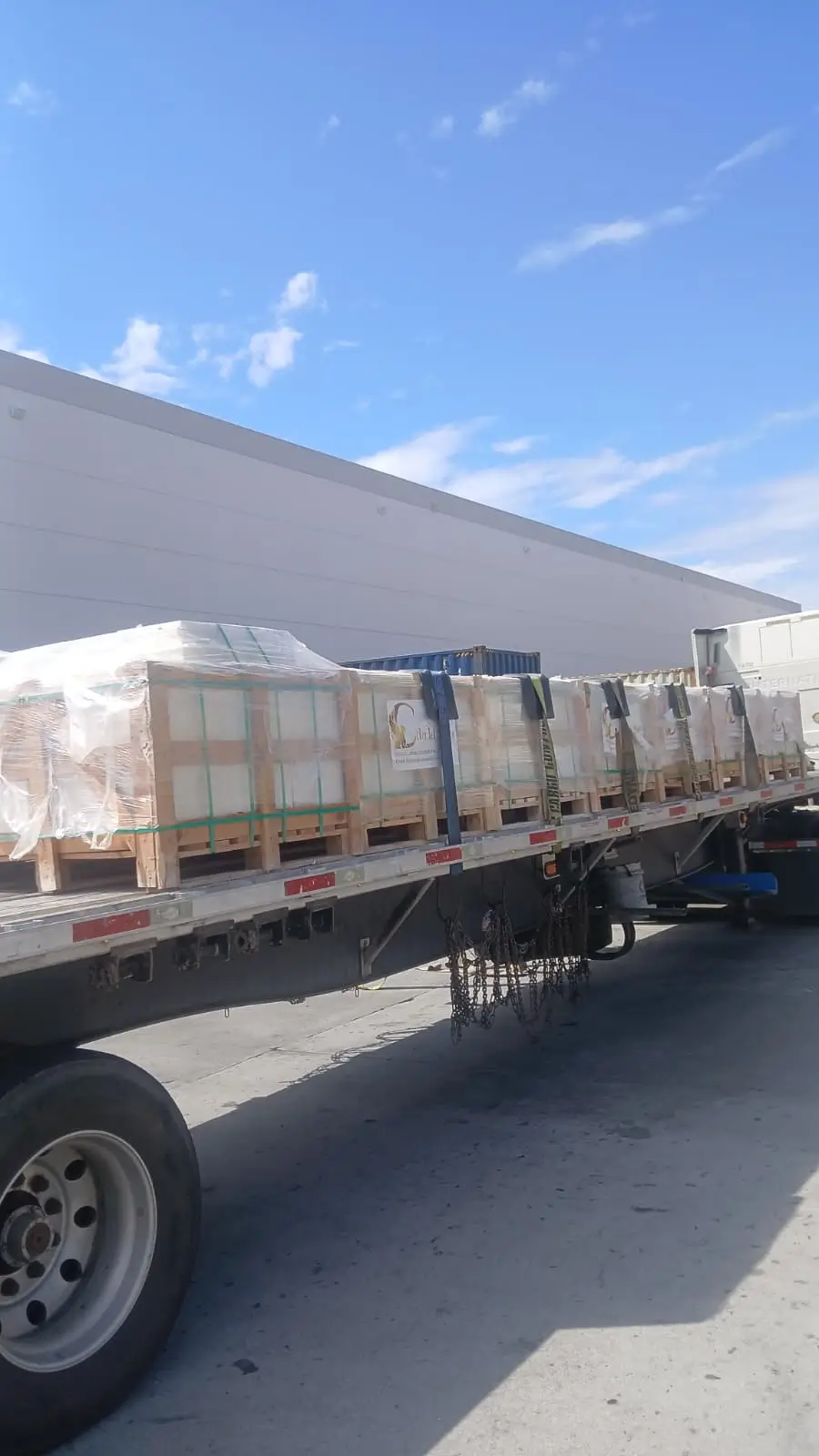
Truck scheduling for Glendale deliveries needs to account for gate-access constraints common in the area’s established residential neighborhoods. Your site assessment should document maximum vehicle size before placing the order — a full-size flatbed truck with a standard 48-foot trailer cannot navigate the turning radii in many older Glendale cul-de-sac configurations. You may need to specify delivery via smaller straight-truck with multiple loads rather than a single semi delivery, which affects your cost and timeline planning. Warehouse lead times for cut-to-order edging profiles run 12–18 days currently; stock profiles ship in 3–5 business days.
- You should specify your edging material with a single dye-lot restriction in the purchase order — this gives you contractual recourse if the supplier mixes batches
- Your material inspection should happen at the warehouse before delivery, not on the job site — rejecting a truck load on delivery day creates project delays that are costly and avoidable
- Glendale driveway borders benefit from selecting edge profiles that are available in full-unit lengths for your run dimensions — cutting creates color exposure variation at cut faces
Key Takeaways
Driveway stone edging Glendale installations that perform for 20+ years share a consistent set of specification choices: adequate base depth matched to local soil conditions, thermal-appropriate joint design, material selection based on absorption rate and compressive strength rather than appearance alone, and drainage provisions that address both surface and sub-surface moisture. You now have the technical framework to specify each of these elements correctly for Glendale’s specific climate and soil environment.
Your project success also depends on understanding that clean driveway lines are a long-term commitment, not just an installation outcome. The maintenance program you specify from day one — sealer schedule, joint sand monitoring, annual alignment checks — determines whether your Arizona defined boundaries hold their precision through a decade of thermal cycling and monsoon seasons or start showing displacement within three years. Build that maintenance schedule into your project documentation and communicate it clearly to your client. For comprehensive guidance on water management adjacent to hardscape installations, review Effective drainage techniques for monsoon-prone retaining wall systems as part of your complete site specification process. We are driveway stone suppliers in Arizona that cater to both DIYers and professional landscapers.