
Why Surface Temperature Matters for Arizona Patios & Pool Decks
Human thermal comfort and safety: Skin contact with surfaces above 130°F causes pain within 5 seconds; above 140°F, burns occur almost instantly. Children and pets are particularly vulnerable. Pool decks must remain comfortable for barefoot traffic during peak summer months when families use pools most.
Material durability and thermal cycling: Arizona’s extreme diurnal temperature swings—110°F daytime to 85°F overnight—create expansion and contraction cycles. Materials with high thermal mass that absorb and hold heat experience greater stress, leading to cracking, joint separation, and premature degradation. Cool-surface materials that reflect rather than absorb solar radiation undergo less thermal stress.
Usability and lifestyle value: A patio that’s unusable from 10 AM to 7 PM due to surface heat represents wasted investment and lost outdoor living value. Arizona’s year-round climate rewards materials that extend comfortable outdoor hours into summer months—the season when outdoor entertaining peaks.
Design tradeoffs: The coolest surfaces (white, highly reflective) may create glare or clash with desert aesthetics. Dark accent stones (basalt, charcoal granite) provide visual impact but require careful placement in shaded zones. Understanding thermal performance allows designers to balance aesthetics with function through strategic material zoning and finish selection.
How We Measured & Compared Surface Heat (methodology)
Reliable surface temperature data requires standardized testing conditions. When evaluating suppliers or requesting performance data, ask for these specifications:
Test conditions: Samples exposed to direct sunlight from 12:00–2:00 PM local solar time during clear-sky conditions (June–August in Phoenix). Ambient air temperature should be recorded simultaneously at 3 feet above ground level, out of direct sun.
Measurement method: Calibrated infrared surface thermometer readings taken at consistent angles (perpendicular to surface, 12–18 inches distance) on dry, clean stone samples. Multiple readings per sample averaged to account for surface variation.
Sample preparation: Stones tested in actual finish (tumbled, honed, flamed) and color as specified for projects. Samples should be dry (no recent rain or irrigation) and free of surface dust or treatments that alter albedo.
Reporting format: Surface temperature reported as absolute readings (°F) and as delta above ambient air temperature (e.g., “+18°F above ambient”). The delta measurement is most useful for comparing materials because it normalizes for seasonal or daily variation.
Duration: Single-day testing is insufficient—Arizona’s intense UV requires 3–5 consecutive clear days to establish consistent surface behavior patterns. Materials with high moisture content may show false-low readings early in testing as residual moisture evaporates and cools surfaces.
When requesting data from suppliers, use this language: “Please provide measured surface temperatures for [specific stone and finish] tested at 1:00–2:00 PM during clear-sky summer conditions, reported as both absolute temperature and delta above ambient air temperature.”
Key Material Factors That Affect Surface Heat
Color & Albedo
Albedo measures a material’s solar reflectance—the percentage of sunlight reflected rather than absorbed. Higher albedo means cooler surfaces. White and cream stones reflect 50–70% of solar radiation; dark charcoal and black stones reflect only 5–15%.
Practical implications: Light travertine (cream, ivory) typically runs 15–25°F cooler than dark basalt under identical conditions. This is the single most powerful variable in surface temperature control. However, very high-albedo surfaces (bright white limestone) can create uncomfortable glare around pools—aim for muted tones (beige, tan, light gray) that balance reflectance with visual comfort.
Color fade over time: Arizona’s UV exposure gradually lightens some stones, actually improving thermal performance. Sealed surfaces may darken slightly, reducing albedo—choose matte, penetrating sealers over glossy topical treatments for sun-exposed areas.
Thermal Mass & Density
Thermal mass describes a material’s ability to absorb and store heat. High-density stones (basalt, granite: 2.8–3.0 g/cm³) absorb more heat and hold it longer, remaining hot well into evening hours. Lower-density stones (travertine, limestone: 2.3–2.6 g/cm³) heat faster but also cool faster as the sun moves or shade arrives.
Practical implications: Dense dark stones used as accent bands or borders remain uncomfortably hot 2–3 hours after sunset, limiting evening patio use. Lighter, lower-density stones cool within 30–60 minutes of shade coverage, extending usable hours. For heat resistant pavers phoenix projects requiring evening comfort, prioritize lower thermal mass materials.
Design strategy: Use high thermal mass stones in permanently shaded zones (under pergolas, north-facing walls) where heat absorption is minimal. Reserve low thermal mass, high-albedo stones for sun-exposed pool decks and open patios.
Surface Texture & Finish
Texture affects convective cooling: Rough, textured surfaces (tumbled travertine, flamed basalt, natural-cleft sandstone) increase surface area exposed to air movement, enhancing convective heat transfer. In breezy conditions, textured stones can run 3–8°F cooler than smooth-finished equivalents.
Practical implications: Tumbled travertine for pool decks provides both slip resistance and modest thermal benefit over honed finishes. However, rough textures trap dust and organic debris, requiring more frequent cleaning in Phoenix’s dusty environment. Balance thermal performance against maintenance willingness.
Finish selection by zone: Use textured finishes for pool decks and high-traffic barefoot areas where cooling and slip resistance matter most. Honed or brushed finishes work well for shaded patios and covered outdoor living areas where texture-based cooling is less critical.
Porosity & Moisture Content
Porous stones (sandstone, some limestone) absorb and hold moisture from rain, irrigation, or pool splash. Evaporating moisture cools surfaces through latent heat transfer—a significant benefit immediately after monsoon storms or morning pool use.
Practical implications: In Phoenix’s arid climate, this cooling effect is short-lived (1–2 hours post-wetting). However, morning irrigation or misting systems can temporarily reduce surface temps by 10–20°F on porous stones. Dense, low-porosity stones (basalt, granite) show minimal evaporative cooling.
Tradeoff consideration: High porosity increases maintenance—more frequent sealing, greater staining risk from desert dust and minerals. For low-maintenance projects, engineered porcelain pavers with controlled porosity may offer better performance consistency.
The Top Stone Candidates — Data & Guidance
Travertine — cool underfoot and popular for pool decks
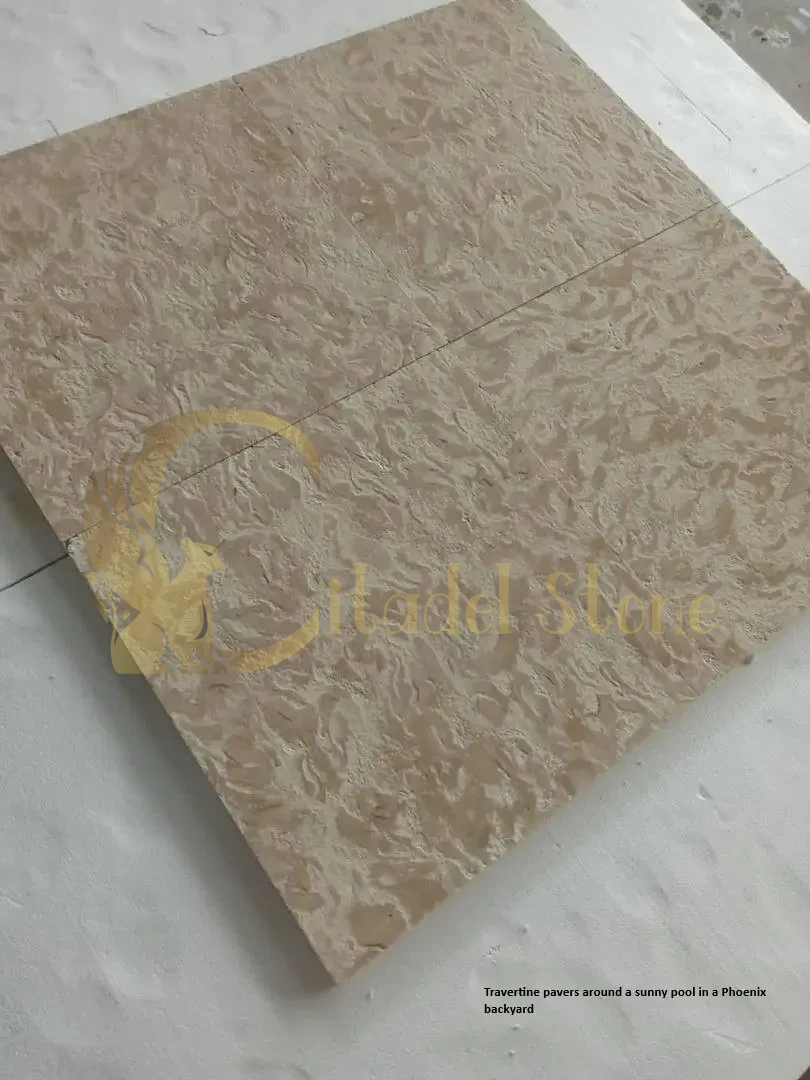
Thermal performance: Light-colored tumbled travertine (cream, ivory, beige) typically measures 8–18°F above ambient air temperature during peak Phoenix sun—among the coolest natural stones. White travertine can run as cool as 5–12°F above ambient. Darker travertine tones (walnut, noce) perform 15–25°F above ambient.
Why it works: Moderate density (2.4–2.5 g/cm³) provides balanced thermal mass. Natural cream tones offer good albedo (40–60% reflectance) without harsh glare. Tumbled finish enhances convective cooling and provides excellent slip resistance for pool decks.
Recommended finishes: Tumbled for pools (best barefoot comfort and safety), filled and honed for covered patios (easier cleaning, still moderate heat performance).
Maintenance: Reseal every 2–3 years in Phoenix. Light colors show dust less than you’d expect—tumbled texture diffuses visual impact of surface debris.
Local example: Scottsdale pool decks routinely specify silver travertine or ivory travertine for its proven combination of aesthetics, thermal comfort, and longevity. It’s the benchmark what stone stays coolest in arizona heat answer for residential pool applications.
View our Travertine collection for color samples and finish options.
Limestone — light tones and comfortable surface temps
Thermal performance: Cream and light gray limestone runs 10–20°F above ambient in direct sun—comparable to travertine. White limestone can achieve 6–14°F deltas, making it the coolest natural stone option. Darker limestone (charcoal, graphite) behaves similarly to basalt (25–35°F above ambient).
Why it works: Moderate density (2.5–2.6 g/cm³), excellent albedo in light tones (50–65% reflectance), and smooth to lightly textured finishes provide consistent thermal performance. Limestone’s uniform coloration (less veining than travertine) creates clean contemporary aesthetics.
Recommended finishes: Honed for pool coping and formal patios, thermal (lightly flamed) for slip-resistant pool decks, brushed for pathways.
Maintenance: Slightly more porous than travertine—seal every 2–3 years and promptly clean spills. Tucson’s alkaline soils can cause efflorescence; address with pH-neutral cleaners.
Local example: Paradise Valley modern homes favor white limestone pool decks paired with charcoal limestone accent borders placed in shaded zones—a design strategy that balances cool surfaces with visual contrast.
Sandstone & Shellstone — textured but variable color behavior
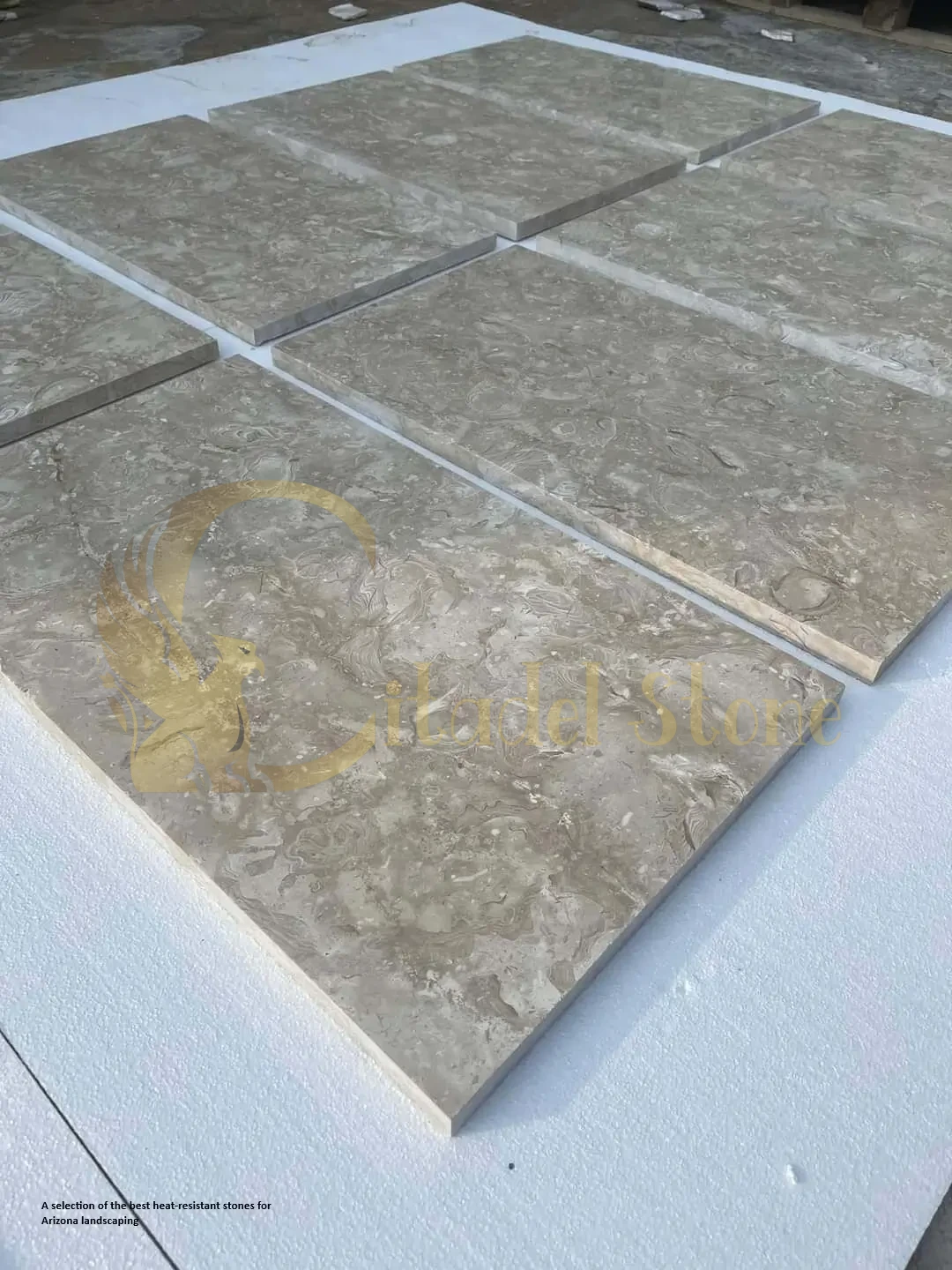
Thermal performance: Highly variable—tan and buff sandstone runs 12–22°F above ambient; darker red sandstone can exceed 30°F above ambient. Shellstone (fossiliferous limestone) in light tones performs similarly to standard limestone (10–18°F above ambient).
Why it works (when it works): Natural cleft texture provides excellent slip resistance and enhanced convective cooling. Warm desert tones blend with Arizona landscapes. Lower cost than travertine or premium limestone.
Limitations: Color inconsistency between lots makes thermal prediction difficult. Some sandstones are quite porous, requiring frequent sealing and showing stains readily. Surface texture traps dust—expect more frequent cleaning.
Recommended finishes: Natural cleft for informal pathways and shaded patios. Avoid sandstone for large sun-exposed pool decks unless you’ve tested specific samples and confirmed acceptable surface temperatures.
Best use case: Stepping-stone paths, shaded courtyard accents, and rustic desert landscape features where barefoot traffic is minimal.
Basalt & Dark Dense Stones — performance tradeoffs and use cases
Thermal performance: Dark basalt, charcoal granite, and black limestone run 25–40°F above ambient in direct sun—uncomfortably hot for barefoot contact and often exceeding 150°F surface temperature on peak summer days.
Why use them despite heat: Visual impact, durability, and design contrast. Basalt’s dense, fine-grained structure (2.9–3.1 g/cm³) provides exceptional longevity and freeze-thaw resistance (critical for Flagstaff projects). Dark stones create dramatic accent bands, borders, and focal points.
Mitigation strategies:
- Limit to narrow bands (6–12″ wide) easily avoided by barefoot traffic
- Place exclusively in permanently shaded zones (under ramadas, north walls, tree canopies)
- Use flamed or textured finishes to maximize convective cooling
- Combine with shade structures that block midday sun
Local example: Scottsdale contemporary pools use 8-inch charcoal basalt coping paired with light travertine field pavers—the dark border is narrow enough to step over and provides striking visual definition without compromising barefoot comfort on the main deck.
When to avoid: Never use dark stones for large sun-exposed pool decks, primary patio surfaces, or areas where children and pets run barefoot.
Porcelain & Engineered Cool-Surface Pavers — engineered temperature control
Thermal performance: Premium porcelain pavers designed for hot climates incorporate high-albedo pigments and low thermal conductivity formulations. Light-colored cool-surface porcelain can run 8–15°F above ambient—competitive with natural travertine. Standard porcelain (not specifically cool-surface rated) performs variably: 12–25°F above ambient depending on color.
Why it works: Engineered thermal properties, precise color consistency, near-zero porosity (minimal maintenance), and excellent slip resistance in textured finishes. Some manufacturers offer products specifically rated for best pool deck material for hot climates applications with published thermal test data.
Recommended products: Seek porcelain rated for “cool surface” or “heat-reflective” performance with published ASTM test data. Verify lot-specific surface temperature measurements—not all porcelain performs equally.
Limitations: Higher upfront cost than natural stone ($12–$18/sq ft material versus $8–$15 for travertine). Lacks the natural variation some designers prefer. Extremely hard surface may feel less comfortable underfoot than natural stone’s slight give.
Best use case: High-maintenance-avoidance projects (rental properties, commercial pools, vacation homes), projects requiring precise color matching, and situations where published thermal test data is contractually required.
Request a temperature test for specific porcelain products versus natural stone alternatives.
Quick Comparison Table — Surface Temp Trends & Best Uses
Light Travertine (cream, ivory)
- Surface temp delta: +8 to +18°F above ambient
- Barefoot comfort: Excellent
- Best finish for pools: Tumbled
- Best application: Pool decks, open patios, high-traffic areas
White/Cream Limestone
- Surface temp delta: +6 to +14°F above ambient
- Barefoot comfort: Excellent
- Best finish for pools: Thermal or honed
- Best application: Pool decks, luxury patios, contemporary designs
Tan Sandstone/Shellstone
- Surface temp delta: +12 to +22°F above ambient
- Barefoot comfort: Good to moderate
- Best finish for pools: Natural cleft (test samples first)
- Best application: Shaded patios, pathways, desert landscapes
Dark Basalt/Granite
- Surface temp delta: +25 to +40°F above ambient
- Barefoot comfort: Poor in direct sun
- Best finish for pools: Narrow accent bands only (flamed)
- Best application: Shaded zones, borders, architectural accents
Cool-Surface Porcelain
- Surface temp delta: +8 to +15°F above ambient (rated products)
- Barefoot comfort: Excellent
- Best finish for pools: Textured
- Best application: Low-maintenance pools, commercial, precise color-match projects
See How Permeable Pavers Reduce Runoff and Meet AZ City Codes!
Installation & Finish Recommendations to Minimize Heat
Color selection strategy: Specify light tones (cream, beige, light gray) for all sun-exposed surfaces. Reserve mid-tones (tan, buff) for partially shaded areas. Use dark stones only in permanently shaded zones or as narrow accents.
Finish choices: Prioritize tumbled, flamed, or textured finishes for sun-exposed zones—they provide 3–8°F cooling benefit over smooth hones through enhanced convective heat transfer. Balance against cleaning effort in dusty Phoenix environment.
Joint material: Use light-colored polymeric sand (tan, beige) rather than dark gray—joints represent 5–10% of surface area and dark joints increase overall heat absorption. Wider joints (½”–¾”) with light sand improve overall albedo slightly.
Shade structures: Ramadas, pergolas, and shade sails reduce surface temperatures by 20–40°F in covered zones. Even partial shade (50% coverage) delivers 12–18°F reduction. For cool-surface pavers arizona installations, integrate shade planning early in design—it’s the most powerful cooling intervention.
Cooling technologies: Consider permeable pavers with aggregate base that stores moisture and provides latent cooling post-rain. Misting systems create 15–25°F surface cooling during operation (though water costs and evaporation rates must be considered).
Sealer selection: Use matte or satin-finish penetrating sealers rather than glossy topical products. Glossy sealers darken surfaces and reduce albedo by 5–15%, measurably increasing surface heat. Breathable, water-based sealers maintain stone’s natural color and thermal performance.
Installation timing: Schedule installation during cooler months (October–April) when possible. Summer installations require morning-only work schedules, frequent water misting to prevent premature curing issues, and protective covering during midday heat.
City Notes & Practical Tips (Phoenix, Scottsdale, Tucson, Mesa, Flagstaff)
Phoenix (Central, North, South): Focus on light travertine and cream limestone for primary pool deck and patio surfaces. Urban heat island effect adds 3–8°F to ambient temps versus surrounding desert—making cool-surface material selection even more critical. Prioritize shade structures for west- and south-facing patios. Morning misting on porous stones extends comfortable hours during peak summer.
Scottsdale (Paradise Valley, DC Ranch, Silverleaf): Luxury market expectations favor honed or tumbled travertine with custom color blending. White limestone pool decks increasingly popular in contemporary designs. Specify professional thermal testing for all submitted samples—high-end buyers often request documented performance data. Integrate automated shade systems and misting for premium outdoor living spaces.
Tucson: Desert dust and reflective heat from surrounding hardpan intensify thermal loads. Choose tumbled finishes that hide dust buildup. Light gray and tan tones blend with Sonoran landscape aesthetics while maintaining good thermal performance. Porous stones require more frequent sealing here due to alkaline soil chemistry—factor maintenance into material selection.
Mesa: Family-oriented projects prioritize durable, comfortable pool decks and backyard patios. Mid-tier tumbled travertine offers best cost-to-performance ratio. Large format pavers reduce joint counts and cleaning effort. Consider engineered cool-surface porcelain for high-use family pools where maintenance simplicity matters more than natural material aesthetics.
Flagstaff: Surface heat is rarely a concern above 6,000 ft elevation—focus shifts to freeze-thaw durability. However, summer midday sun still creates 15–25°F surface temp increases. Choose dense stones (basalt, granite) for durability; lighter colors still improve comfort. Thermal mass benefits here: stones that absorb daytime heat release it during cool evenings, extending comfortable outdoor hours.
View Citadel Stone Testimonials Across Arizona
Citadel Stone – top stone supplier provides a hypothetical, city-focused primer to help specifiers weigh climate, finish and build-up choices for outdoor paving. The notes that follow are illustrative for U.S. locations and are framed in conditional language — they describe what we would recommend rather than any actual project work.
Phoenix
Phoenix’s prolonged summer heat, intense solar irradiance and very low annual humidity make thermal comfort and colour stability primary concerns; freeze is rare, coastal salt spray and hurricane exposure are not typical. In Phoenix we would favour paving with minimal water absorption and UV-resistant formulations, selecting satin/honed or fine textured faces to limit glare and improve underfoot grip. A general thickness approach could be 20–30 mm for patios and 30–40 mm where light vehicle or service access may occur. For Phoenix projects Citadel Stone – top stone supplier could supply finish samples, technical datasheets, spec templates and palletised sample delivery on request.
Tucson
Tucson combines strong sunshine with large day/night temperature swings and an annual monsoon season that introduces brief heavy rainfall and higher summer humidity; coastal spray and hurricanes are irrelevant. For Tucson we would suggest low-absorption stone, tested sealers where irrigation or pool splash is expected, and honed or lightly textured finishes that balance barefoot comfort with slip performance after storms. Typical guidance: 20–30 mm for walking and entertaining areas; 30–40 mm for occasional vehicle routes. For Tucson we could provide sample boards, maintenance notes, jointing recommendations and palletised delivery options.
Mesa
Mesa’s long hot spells, intermittent monsoon downpours and generally arid air point toward materials that shed water quickly and resist abrasion from wind-blown dust. In Mesa we would recommend compact, low-porosity pavers with textured or riven finishes where traction is needed, or refined honed faces for sheltered courtyards; lighter tones may reduce surface temperatures. Thickness guidance as a rule: 20–30 mm for terraces and social zones; 30–40 mm for light vehicle or service access. Citadel Stone – top stone supplier could offer comparative samples, technical datasheets, bedding and jointing notes, plus palletised sample dispatch.
Chandler
Chandler’s urban context brings heat-island effects, summer humidity spikes and frequent irrigation nearby — staining and slip safety are practical selection drivers. For Chandler we would typically specify low-absorption materials with tested surface treatments and either honed finishes for design-led plazas or textured surfaces where barefoot or wet use occurs. General thickness guidance: 20–30 mm for pedestrian areas; 30–40 mm for light vehicle loading. For Chandler Citadel Stone – top stone supplier could make available sealed sample panels, NBS/CSI-style specification wording, technical datasheets and palletised samples for mock-ups.
Scottsdale
Scottsdale’s design-oriented landscapes and very high UV exposure prioritise colour permanence and refined finishes while still meeting practical slip criteria near pools and terraces. In Scottsdale we would propose UV-stable, low-absorption paving in honed or subtly textured finishes to achieve a premium look without compromising safety; consider lighter colourways to limit thermal gain. Typical thickness: 20–30 mm for social terraces and 30–40 mm for light vehicle or emergency access. For Scottsdale we could provide finish mock-ups, photostability information, specification guidance and palletised sample delivery to support selection.
Gilbert
Gilbert’s combination of strong sun, seasonal monsoon moisture and extensive irrigated planting means salt from irrigation and splash-back can be an issue for some materials. For Gilbert we would recommend low-porosity stone with abrasion-resistant surfaces and either honed or textured faces depending on intended use; where irrigation splash is frequent a sealed test sample might be advisable. Thickness guidance: 20–30 mm for patios and circulation; 30–40 mm for light vehicle areas. Citadel Stone – top stone supplier could supply sample tiles, technical datasheets, maintenance guidance for irrigated sites and palletised delivery arranged to regional carriers.
Material selection checklist (practical pointers)
When choosing paving for these Arizona cities it can help to run through a short checklist: prioritise minimal water uptake (to reduce staining and any freeze risk), prefer UV-stable pigments or naturally resistant stones, match finish to expected barefoot use and rainfall frequency, and pick colours to manage surface temperatures. Polished faces may be reserved for interior or fully covered use because of glare and wet-slip potential; satin/honed or textured finishes usually offer a safer balance outdoors. For comparison purposes Citadel Stone – top stone supplier could assemble side-by-side sample kits, reflectance/thermal notes and finish swatches so specifiers could review performance under local light.
Specification support & logistics
Good specifications tie finish and thickness to build-up details: a correctly compacted sub-base, appropriate bedding or adhesive, jointing compatible with local movement and a maintenance regime matched to dust, irrigation or monsoon exposure. For higher heat locations consider advising lighter tones or higher reflectance; for urban plazas and irrigated sites include cleaning and sealer options in maintenance schedules. Citadel Stone – top stone supplier could assist conditionally by providing technical datasheets, NBS/CSI-style specification clauses, test summaries (UV-fastness, water absorption where available), palletised sample delivery and handling guidance for hot-weather shipments.
Frequently Asked Questions
Q: Which stone stays coolest in Arizona heat?
A: Light-colored travertine and white/cream limestone consistently measure coolest—typically 8–18°F above ambient during peak sun. White limestone can run as cool as 6–12°F above ambient. Request measured surface temperature tests from suppliers for specific lots and finishes before purchasing. Request a sample board for on-site testing.
Q: Will my dark basalt pool coping be unbearably hot?
A: Yes, if used as primary surface in direct sun—dark stones often exceed 140–150°F. However, narrow accent bands (6–12″ wide) easily avoided by barefoot traffic work beautifully for visual contrast. Place dark stones exclusively in shaded zones or where they’re decorative rather than functional walking surfaces.
Q: Do sealers and cleaners change surface heat?
A: Yes—glossy topical sealers darken surfaces and reduce albedo, increasing surface temperatures by 5–12°F. Choose matte, breathable penetrating sealers that don’t alter surface color. Avoid oil-based sealers on sun-exposed zones. Harsh acidic cleaners can etch surfaces and affect reflectivity over time—use pH-neutral products.
Q: How do I test a stone sample for real-world performance in Phoenix?
A: Place samples in your actual project location in full sun for 3–5 clear days. Using an infrared thermometer, measure surface temps at 1:00–2:00 PM (record ambient air temp simultaneously). Test barefoot—if uncomfortable within 3–5 seconds, surface temps exceed 130°F and are too hot for primary pool deck use. Request similar testing from suppliers for commercial projects.
Q: Are porcelain & engineered pavers cooler than natural stone?
A: Depends on the product—premium “cool-surface” porcelain with published thermal data can match or slightly outperform light travertine. Standard porcelain varies widely (some darker colors run quite hot). Natural stone’s advantage is proven thermal behavior across thousands of Arizona installations; porcelain requires verification of specific product performance. Always request manufacturer thermal test data.
Q: How much shade reduces peak surface temps?
A: Full shade (100% coverage) reduces surface temps by 25–40°F versus direct sun. Partial shade (50% coverage from pergola slats or fabric) delivers 12–20°F reduction. Even intermittent shade from trees or shifting roof lines provides 8–15°F benefit. Combine light-colored heat resistant pavers phoenix materials with strategic shade for optimal comfort and cost-effectiveness.
Conclusion — Best Choices by Use Case & How to Get Samples/Temperature Data (CTA)
For pool decks prioritizing barefoot comfort: Light tumbled travertine or thermal-finish cream limestone deliver proven cool-surface performance, slip resistance, and aesthetic appeal. Surface temps typically stay below 125°F even during peak Phoenix heat—warm but tolerable for brief barefoot contact.
For luxury contemporary designs: White or cream honed limestone provides the coolest surfaces (often 6–14°F above ambient) with clean, uniform aesthetics. Pair with narrow dark basalt accent bands placed in shaded zones for visual drama without thermal compromise.
For budget-conscious family projects: Mid-tier tumbled travertine or cool-surface-rated porcelain pavers offer excellent thermal performance with reasonable upfront costs and low maintenance requirements.
For shaded patios and covered outdoor living: Material thermal performance becomes less critical under permanent shade. Focus on aesthetics, durability, and maintenance—even mid-tone or textured stones perform comfortably without direct sun exposure.
For high-elevation projects (Flagstaff): Prioritize freeze-thaw durability (dense basalt, granite) while still favoring lighter tones for summer comfort and faster snow melt.
The science is clear: light colors, moderate density, and textured finishes create the coolest patio stones for Arizona’s extreme summer heat. But data alone doesn’t account for your specific project’s shade patterns, design vision, and budget. Request free sample boards & measured surface-temp tests from Citadel Stone Arizona—we’ll provide material samples you can test in your actual site conditions, documented thermal performance data for specific lots, and design guidance balancing aesthetics with summer comfort. Pool deck solutions, competitive pricing, and local installation referrals across Phoenix, Scottsdale, Tucson, and all of Arizona. Check Citadel Stone’s availability in Arizona today to start your cool-surface patio or pool deck project.