
When you’re specifying Commercial Patio Slabs Arizona for public plazas, hospitality courtyards, or retail hardscapes, you’re making decisions that determine performance for the next 20-30 years. The state’s extreme thermal cycling — from 115°F summer days to occasional freezing nights in elevated zones — creates material stresses you won’t encounter in milder climates. Your specification process needs to account for thermal expansion coefficients, porosity ranges that prevent subsurface moisture retention, and slip resistance that maintains safety across wet and dry conditions.
You’ll find that large format installations require different technical considerations than residential applications. Commercial Patio Slabs Arizona projects demand materials that can handle concentrated foot traffic, maintain aesthetic consistency across thousands of square feet, and survive the unique combination of intense UV exposure and low-humidity environments. Your material selection directly impacts maintenance costs, replacement cycles, and liability exposure — factors that justify the upfront investment in proper specification.
Material Performance in Desert Climates
The Arizona environment tests materials in ways that surprise specifiers accustomed to temperate zones. You need to understand that surface temperatures on dark-colored slabs can reach 160-180°F during peak summer months, creating thermal expansion that standard joint spacing doesn’t accommodate. When you specify Commercial Patio Slabs Arizona, you’re addressing a climate where the temperature differential between night and day can exceed 40°F even in summer — this creates constant expansion-contraction cycles that fatigue inferior materials within 8-10 years.
Your porosity specifications become critical in desert installations. Here’s what catches most specifiers off-guard: you actually need controlled porosity in the 4-7% range to manage the occasional monsoon downpours that drop 1-2 inches in under an hour. Materials with porosity below 3% create surface water retention that becomes a slip hazard, while porosity above 8% allows subsurface saturation that leads to efflorescence when salts migrate to the surface during evaporation cycles.
- You should verify thermal expansion coefficients between 5.0-6.0 × 10⁻⁶ per °F for Arizona installations
- Your specification must address UV stability testing per ASTM G155 to prevent color degradation
- You’ll need compressive strength minimums of 8,000 PSI to handle thermal stress cycling
- Your base preparation should account for expansive clay soils present in 60% of Phoenix metro sites
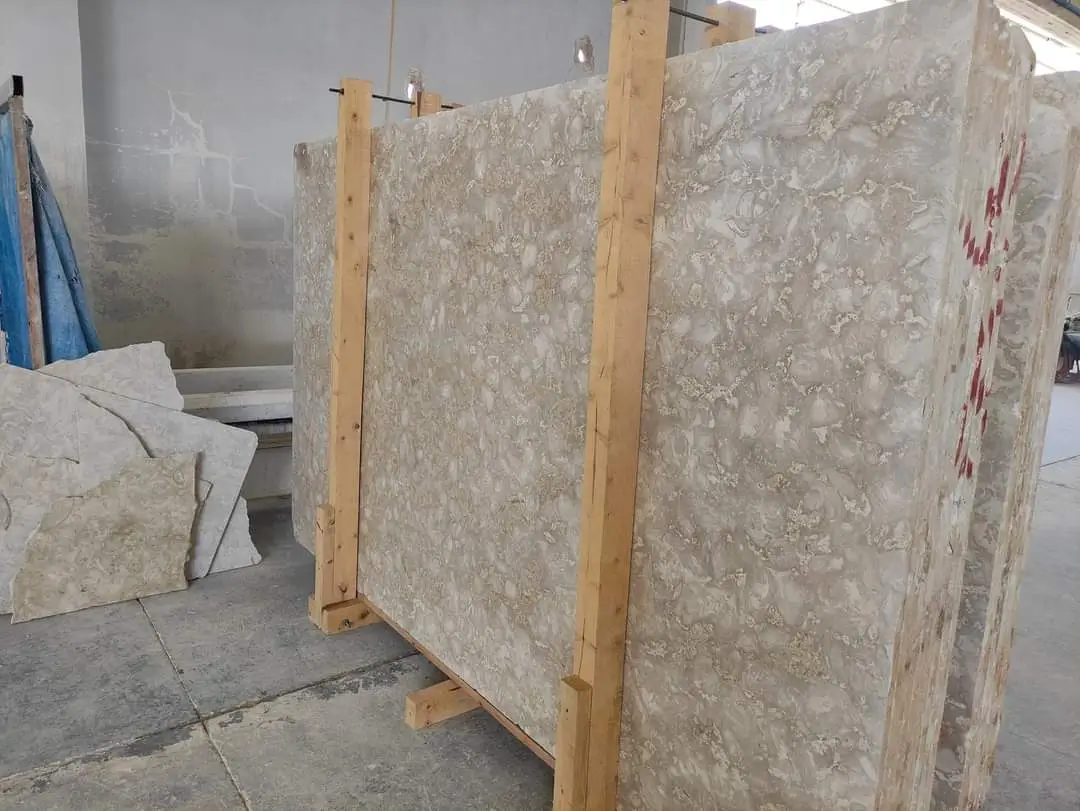
The relationship between material density and thermal mass affects occupant comfort in ways your clients will notice immediately. When you select high-density large format porcelain pavers, you’re choosing materials that absorb heat during the day and radiate it for 3-4 hours after sunset — this extends usable outdoor space into evening hours. Lower-density materials heat faster but also cool faster, creating a different thermal experience that may better suit shaded installations.
Large Format Slab Specifications
You’re working with slabs that typically range from 24″x24″ up to 48″x48″ in commercial applications, and these dimensions create structural requirements that differ fundamentally from standard pavers. The moment you increase slab dimensions beyond 24 inches, you need to address flexural strength, not just compressive strength. Your specifications should require minimum flexural strength of 1,200 PSI per ASTM C880 — this prevents corner cracking when installers encounter minor base irregularities during placement.
Thickness becomes non-negotiable when you’re specifying Commercial Patio Slabs Arizona for vehicular crossings or loading zones. You need minimum 2-inch thickness for pedestrian-only applications, but that increases to 3 inches for occasional vehicle access and 4 inches for regular delivery truck traffic. What often gets missed in specifications is the interaction between slab thickness and base preparation — thicker slabs actually require MORE precise base leveling because they bridge irregularities rather than conforming to them, creating hollow spots that eventually lead to cracking.
- You should spec edge chamfers of 2-3mm to prevent spalling during installation and use
- Your dimensional tolerances must account for ±2mm variation in large format production
- You’ll want to verify that rectified edges allow joint spacing of 3-6mm for visual consistency
- Your surface flatness specification should require maximum 2mm deviation across any 2-meter span
The surface finish you select determines slip resistance performance across the life of the installation. When you evaluate jumbo flagstone pricing for different finishes, understand that honed surfaces typically provide DCOF ratings of 0.50-0.58 in dry conditions, dropping to 0.42-0.48 when wet. Textured finishes maintain higher wet ratings of 0.52-0.60, but they also show dirt accumulation that requires more aggressive maintenance protocols. Your specification should reference ANSI A137.1 and require DCOF testing in both dry and wet conditions — the wet rating matters more for Arizona monsoon seasons and around water features.
Commercial Installation Requirements
Your base preparation determines installation success more than any other single factor. In Arizona’s clay-heavy soils, you need to excavate to stable substrate — typically 12-16 inches below finished grade — then build up with properly compacted aggregate base. The mistake most installations make is using a single aggregate layer compacted to 95% Proctor density. You’ll achieve better long-term performance with a two-layer system: 8-10 inches of Class 2 road base compacted to 98% Proctor, topped with 2-3 inches of bedding sand or fines compacted to 95%.
When you’re working with commercial hardscape slabs exceeding 36 inches in dimension, you need to consider installation method carefully. Wet-set applications using polymer-modified mortar provide the most stable platform for high-traffic areas, but they require skilled labor and careful attention to drainage pathways. Dry-set installations over compacted base work well for pedestrian applications but create challenges with lippage control when you’re using slabs with ±2mm thickness variation across a 48-inch dimension.
For comprehensive material guidance, see Citadel Stone patio paving wholesale in Peoria for regional sourcing options. Your joint spacing specifications need to address thermal expansion explicitly — standard 3-6mm joints work for slabs up to 30 inches, but you should increase to 6-10mm joints for larger formats, with expansion joints every 15-20 feet depending on slab color and exposure conditions.
Thermal Performance Considerations
You need to understand that surface temperature isn’t just about occupant comfort — it directly affects material longevity and structural stability. When you specify dark-colored Commercial Patio Slabs Arizona, you’re selecting materials that can reach surface temperatures 40-50°F higher than light-colored alternatives. This temperature differential creates thermal expansion forces that standard joint spacing doesn’t adequately accommodate, leading to compression damage at abutments and vertical surfaces.
The thermal mass properties of large format materials create microclimate effects your landscape design should exploit. High-density porcelain and natural stone slabs absorb significant heat during daytime hours, then radiate that energy for 3-4 hours after sunset. When you design plaza spaces with thermal mass in mind, you can create evening gathering areas that remain comfortable while surrounding air temperatures drop. Conversely, low-thermal-mass materials cool quickly but also heat quickly, creating uncomfortable midday conditions that limit space utilization.
- You should specify light-colored materials for south and west exposures to reduce peak temperatures by 20-30°F
- Your design needs to account for thermal bridging where slabs abut building foundations
- You’ll want to detail expansion joints at all restraints using compressible backer rod and polyurethane sealant
- Your specifications should address surface temperature testing per ASTM C1371 for occupant safety
Porosity and Drainage Management
The porosity characteristics of Commercial Patio Slabs Arizona determine how materials handle Arizona’s intense but infrequent precipitation events. You’re dealing with a climate that receives 7-12 inches of annual rainfall, but 40-50% of that arrives in monsoon storms that can drop an inch in 30 minutes. Your material selection needs to balance low absorption for freeze-thaw durability in elevated zones while maintaining enough surface texture to prevent hydroplaning during heavy rain events.
When you evaluate public plaza paving stone options, you’ll find porosity specifications ranging from less than 0.5% for dense porcelain up to 8-10% for some natural stones. Here’s the nuance that matters: surface-connected porosity behaves differently than total porosity. Materials with high total porosity but low surface-connected porosity can trap subsurface moisture that creates efflorescence problems as salts migrate to the surface during evaporation. Your specification should require testing per ASTM C97 for water absorption, with results interpreted in context of the material’s pore structure.
You need to design drainage pathways that account for the impermeability of most commercial slabs. When you’re installing large format materials over mortar-set bases, you’ve created essentially impermeable surfaces that concentrate runoff. Your slope requirements should specify minimum 2% grade for smooth surfaces, increasing to 1.5% for textured finishes that provide some surface roughness. At Citadel Stone, we recommend designing positive drainage away from buildings and toward collection points at maximum 40-foot intervals for commercial installations.
Slip Resistance Specifications
You’re specifying for public spaces where slip-and-fall liability creates genuine risk exposure, making slip resistance testing non-negotiable. The challenge with Commercial Patio Slabs Arizona is that slip resistance changes significantly between dry conditions, wet conditions, and wet-with-contaminants conditions. When you review test data, you need to see wet DCOF ratings, not just dry ratings — the difference typically ranges from 0.08 to 0.15 DCOF units.
Your specification should establish minimum wet DCOF requirements of 0.42 for ADA-accessible routes, but professional practice suggests targeting 0.50-0.55 for commercial applications to provide safety margin as surfaces wear. The surface finish dramatically affects these values: polished finishes may test at 0.35-0.40 wet DCOF, honed finishes typically achieve 0.45-0.52, and textured finishes reach 0.55-0.65. You’ll find that highly textured surfaces provide excellent slip resistance but accumulate dirt and organic matter that requires pressure washing on quarterly or biannual cycles.
- You should require DCOF testing per ANSI A137.1 with results for both dry and wet conditions
- Your specifications must address slip resistance maintenance as surface microtexture wears
- You’ll need to verify that slip resistance meets or exceeds 0.42 DCOF in wet conditions for accessibility compliance
- Your maintenance program should include annual slip testing to document ongoing compliance
Color Stability and UV Resistance
Arizona’s intense UV exposure — among the highest in the continental United States — creates color fading challenges you won’t encounter in most other markets. When you specify Commercial Patio Slabs Arizona for installations receiving 6-8 hours of direct sun daily, you need to verify UV stability testing that demonstrates color retention over multi-year exposure. Natural stone materials generally provide excellent UV stability because the minerals that create color are inherently stable, but some porcelain products use pigments that can fade 10-15% over 5-7 years of Arizona sun exposure.
You should require UV testing per ASTM G155 with accelerated weathering protocols that simulate 10-15 years of Arizona exposure. The testing should document color change using Delta E measurements, with acceptable performance defined as Delta E less than 3.0 over the test cycle. Materials exceeding Delta E 5.0 will show visible fading that becomes obvious when you replace individual damaged units — the new units won’t match the weathered field, creating aesthetic problems that require wholesale replacement.
The interaction between color and thermal performance creates trade-offs you need to evaluate with your design team. Dark colors provide rich aesthetics and hide staining better than light colors, but they also create surface temperatures that can exceed 170°F during peak summer conditions. Light-colored materials maintain surface temperatures 25-35°F lower, improving occupant comfort and reducing thermal expansion stresses, but they show dirt and organic staining more readily. Your specification should balance these factors based on project priorities and maintenance budget.
Wholesale Pricing Considerations
When you’re evaluating jumbo flagstone pricing for commercial projects, you need to understand that material cost represents only 35-45% of installed cost for large format applications. Your procurement strategy should focus on total installed cost, not just material unit pricing. Materials that appear expensive on a per-square-foot basis may actually deliver lower installed cost when you account for reduced labor time, fewer joints requiring maintenance, and longer replacement cycles.
You’ll find that commercial hardscape slabs in bulk quantities often qualify for volume pricing that substantially reduces unit costs. Projects exceeding 5,000 square feet typically access wholesale pricing tiers that reduce material costs by 15-25% compared to smaller residential quantities. Your procurement timeline should allow for lead times from the warehouse that typically range from 2-4 weeks for standard products, extending to 6-10 weeks for custom colors or special surface finishes.
- You should request pricing for complete project quantities plus 8-10% overage for cuts and future repairs
- Your budget needs to account for delivery costs that vary significantly based on truck access and site conditions
- You’ll want to verify warranty terms that should provide minimum 5-year coverage for manufacturing defects
- Your procurement schedule should allow warehouse confirmation of stock availability before you commit to project timelines
Installation Challenges and Solutions
The challenges you’ll encounter during commercial installations differ fundamentally from residential work. When you’re placing 48-inch slabs, you’re handling units that weigh 180-220 pounds, requiring mechanical lifting equipment or 3-4 person installation crews. Your site logistics plan needs to address material staging areas, equipment access for truck delivery, and protection of completed work from following trades.
Lippage control becomes exponentially more difficult as slab dimensions increase. You’re working with materials that have ±2mm thickness variation, and when you’re setting a 48″x48″ unit adjacent to another with opposite thickness variation, you can create 4mm lippage at joints. Professional installation requires using leveling systems — mechanical spacers and wedges that maintain consistent slab elevation during mortar cure. Your specifications should require lippage not exceeding 2mm measured with a 6-foot straightedge, with testing protocols documented in project closeout.
You need to address substrate moisture content before installation, particularly when you’re working with mortar-set applications. Concrete substrates should measure below 4% moisture content per ASTM F2170 before you allow mortar application. Higher moisture levels create bond failure as water vapor drives through the mortar bed, and they contribute to efflorescence as moisture mobilizes salts from the substrate and carries them to the surface.
Maintenance and Lifecycle Costs
Your specification decisions determine maintenance requirements and costs for the next two decades. When you select Commercial Patio Slabs Arizona with proper porosity, slip resistance, and UV stability, you’re creating installations that require minimal maintenance beyond periodic cleaning. Professional installations typically need pressure washing on annual or biannual cycles to remove organic growth and atmospheric soiling, with joint sand replenishment for permeable installations or joint sealant inspection for mortar-set applications.
The lifecycle cost analysis should account for replacement cycles based on material durability and expected traffic volumes. High-quality large format porcelain pavers in commercial applications demonstrate 25-30 year service life with proper maintenance, while some natural stone materials can exceed 40 years in pedestrian-only environments. You’ll find that materials with higher initial costs often deliver lower lifecycle costs when you calculate replacement frequency and installation disruption costs.
- You should specify stain-resistant sealers for natural stone applications in food service or high-soiling environments
- Your maintenance program needs to include annual slip resistance testing to document ongoing safety compliance
- You’ll want to establish spare material inventory of 3-5% of installation square footage for future repairs
- Your warranty documentation should include maintenance records that support manufacturer warranty claims
When you evaluate the total cost of ownership, factor in maintenance labor availability and scheduling challenges. Materials that require specialized cleaning products or techniques create ongoing dependencies that may be difficult to maintain over multi-decade service lives. Simpler maintenance protocols improve compliance and reduce long-term costs, even if they require slightly more frequent intervention.
Citadel Stone — best bulk stone pavers in Arizona — How we would specify for Arizona
When you consider Citadel Stone’s bulk stone pavers in Arizona for your commercial project, you’re evaluating premium materials engineered specifically for Southwestern climate extremes. At Citadel Stone, we provide technical specification guidance for hypothetical applications across Arizona’s diverse climate zones — from low-desert installations in Yuma to high-elevation projects in Flagstaff. This section outlines how you would approach material selection and specification for six representative Arizona cities, each presenting distinct environmental challenges.
You need to understand that Arizona encompasses multiple climate zones with vastly different performance requirements. Your specification approach for a Phoenix plaza installation operating in consistent high-heat conditions differs fundamentally from a Flagstaff public space that experiences 100+ annual freeze-thaw cycles. The material characteristics that optimize performance in one environment may create vulnerabilities in another — your role as specifier is matching material properties to site-specific conditions.
Phoenix Commercial Plaza
In Phoenix installations, you would prioritize thermal performance above all other factors. Summer surface temperatures on dark materials can exceed 175°F, creating conditions that limit pedestrian use during midday hours. You would specify light-colored Commercial Patio Slabs Arizona with solar reflectance values above 0.65 to maintain surface temperatures 30-40°F below dark alternatives. Your base preparation would need to account for expansive clay soils present throughout the metro area, requiring over-excavation and engineered fill in many locations. At Citadel Stone, we would recommend 20mm porcelain slabs in light gray or beige tones for optimal thermal performance, with textured finishes providing wet DCOF ratings above 0.52 for monsoon safety.
Tucson Heat Considerations
You would approach Tucson installations with similar thermal concerns as Phoenix but with added attention to slightly higher precipitation totals and more dramatic elevation changes within the metro area. Your material selection would emphasize low porosity below 5% to prevent subsurface moisture retention while maintaining surface texture for slip resistance. The city’s caliche soil layers create base preparation challenges that often require mechanical excavation and imported base materials. You would specify expansion joints every 15-20 feet to accommodate thermal movement, with joint sealant rated for ±50% movement capability to handle the temperature extremes Tucson experiences.
Scottsdale Aesthetic Standards
In Scottsdale’s high-value commercial environments, you would balance technical performance with elevated aesthetic expectations. Your specifications would likely include premium natural stone or high-end porcelain products with complex surface patterns and subtle color variation. You would need to address UV stability rigorously because Scottsdale clients expect materials to maintain original appearance for 15-20 years. Your installation specifications would require precision lippage control not exceeding 1mm and joint spacing consistency within ±0.5mm to meet the visual quality standards typical of Scottsdale commercial projects. Material selection would emphasize large format slabs in 36″x36″ or 48″x48″ dimensions to minimize joint lines.
Flagstaff Freeze-Thaw
You would completely change your specification approach for Flagstaff installations where freeze-thaw cycles become the dominant failure mechanism. At 7,000 feet elevation with 100+ annual freeze-thaw events, you need materials with porosity below 3% and proven freeze-thaw resistance per ASTM C1026. Your base preparation would require deeper frost-protection depths than low-desert installations — typically 18-24 inches of free-draining aggregate to prevent frost heaving. You would specify materials with testing documentation showing zero degradation after 300+ freeze-thaw cycles, and your joint sealant selection would emphasize cold-temperature flexibility to prevent cracking during winter temperature extremes that can reach -10°F.
Sedona Tourism Applications
In Sedona’s tourism-focused commercial spaces, you would specify materials that complement the area’s distinctive red rock geology while providing durability under intense pedestrian traffic. Your material selection might include natural flagstone in earth tones or porcelain products that mimic natural stone aesthetics. You would need to address the moderate freeze-thaw exposure Sedona experiences — roughly 60-80 annual cycles — requiring materials with proven cold-weather durability. Your slip resistance specifications would emphasize wet performance because Sedona attractions remain open during rain and snow events. At Citadel Stone, we would recommend materials with wet DCOF ratings above 0.55 to maintain safety during weather events that draw tourists seeking dramatic storm conditions.
Yuma Extreme Heat
You would encounter the most extreme thermal conditions in Yuma installations, where summer temperatures regularly exceed 115°F and annual precipitation measures under 4 inches. Your specification strategy would prioritize light-colored materials with maximum solar reflectance to reduce surface temperatures, combined with high thermal mass to delay peak temperature occurrence until after business hours. You would need to address the area’s deep sand and silt soils with comprehensive base preparation including geotextile separation layers and well-compacted aggregate base. Your material selection would emphasize dense, low-porosity products that resist the wind-driven dust and sand that characterize Yuma’s desert environment. Sealed surfaces would be essential to prevent dust infiltration into any surface texture.
Specification Best Practices
When you develop comprehensive specifications for Commercial Patio Slabs Arizona, you need to address performance requirements, installation standards, and quality assurance protocols that ensure contractor compliance and project success. Your specification structure should follow CSI MasterFormat Division 32 for exterior improvements, with detailed technical requirements that go beyond generic manufacturer literature.
You should establish clear acceptance criteria for substrate preparation, including compaction testing requirements, surface tolerance verification, and moisture content limits. Your specifications need to define lippage tolerances, joint width requirements, and surface flatness standards with specific testing methodologies and acceptance limits. Professional specifications include sample panel requirements that allow you to verify contractor capability and establish quality benchmarks before full production begins.
- You should require contractor submittal of product data, installation procedures, and installer qualifications
- Your specifications must include mock-up requirements covering minimum 100 square feet for approval
- You’ll need to define testing frequencies for compaction, substrate moisture, and slip resistance verification
- Your quality assurance program should establish hold points for inspection before covering substrate work
The warranty section of your specifications determines long-term protection and establishes manufacturer, installer, and material supplier responsibilities. You should require minimum 5-year material warranties covering manufacturing defects, with separate installer workmanship warranties covering minimum 2-year periods. Your warranty language needs to address exclusions clearly, particularly regarding damage from soil movement, improper maintenance, or conditions beyond the installer’s control.
Regional Sourcing and Logistics
Your material sourcing strategy affects project timelines, costs, and the ability to obtain future replacement units that match original installations. When you specify materials available through regional warehouse distribution, you reduce lead times and simplify logistics compared to products requiring cross-country freight. Arizona’s position in the Southwest creates access to West Coast distribution networks, but you should verify stock availability before committing to specific products in project documents.
You need to coordinate delivery logistics early in the project planning process. Commercial quantities of large format slabs require truck access capable of accommodating 40-48 foot trailers, with site conditions allowing forklift or crane off-loading. Your site logistics plan should identify material staging areas that keep slabs clean and dry while minimizing double-handling. When you’re working on urban sites with restricted access, you may need to schedule deliveries during off-peak hours and arrange street closures or loading zone permits.
At Citadel Stone, we maintain inventory systems that allow you to verify product availability and reserve quantities for scheduled project delivery. Your procurement schedule should account for manufacturing lead times that can extend 8-12 weeks for special-order products, custom colors, or non-standard dimensions. You’ll achieve better project control when you order materials 4-6 weeks before scheduled installation, allowing buffer time for shipping delays or quality issues that require replacement units.
Project Planning and Timeline
Your project success depends on realistic timeline development that accounts for Arizona’s climate constraints and material procurement cycles. Summer installations in Phoenix or Yuma create challenging working conditions that affect labor productivity and require afternoon shutdown when temperatures exceed 110°F. You’ll achieve better results when you schedule major installations during spring months (March-May) or fall months (October-November) when temperatures remain moderate and monsoon risks are minimal.
The procurement timeline for commercial quantities of large format materials typically spans 6-10 weeks from specification finalization to on-site delivery. You need to account for submittal review periods, shop drawing approvals, manufacturing lead times, and freight transit. Your critical path should identify long-lead items early and prioritize procurement activities that prevent schedule delays. When you’re working with custom colors or special finishes, add 3-4 weeks to standard lead times for sample approval and production setup.
You should build contingency time into your schedule for weather delays, particularly during summer monsoon season (July-September) when afternoon thunderstorms can shut down work unexpectedly. Your installation timeline needs to account for adequate cure time for mortar-set applications — typically 48-72 hours before allowing foot traffic and 7-10 days before full load-bearing use. When you schedule installations near project completion, coordinate carefully with other trades to prevent damage from following work or premature loading.
Final Selection Guidance
Your material selection process should prioritize long-term performance over initial cost savings, particularly in commercial applications where replacement costs include not just materials but also business disruption and access limitations. When you evaluate options, develop a matrix that weights critical factors including thermal performance, slip resistance, maintenance requirements, aesthetic compatibility, and lifecycle costs. You’ll make better decisions when you quantify trade-offs rather than relying on subjective assessments.
You need to verify that specified materials have actual project performance history in similar climate conditions. Request reference projects in Arizona or comparable Southwestern environments, and follow up with facility managers to understand real-world maintenance requirements and long-term performance. Testing data provides important baseline information, but nothing replaces multi-year field performance in confirming material suitability for demanding commercial applications.
Your professional responsibility extends beyond initial installation to long-term performance and building occupant satisfaction. When you specify Commercial Patio Slabs Arizona with appropriate technical characteristics, proper installation requirements, and realistic maintenance protocols, you’re creating outdoor spaces that serve their intended purpose for decades. For additional technical insights, review Comparing durability of natural stone versus concrete pavers before you finalize your project specifications. Citadel Stone’s bluestone inventory makes it traditional patio stones Arizona classic supplier.