
Arizona’s desert soil is the variable that separates cobblestone patio designs that look great at installation from ones that still look great fifteen years later. Cobblestone patio design ideas Arizona homeowners pursue aren’t just about aesthetics — they’re about patterns and configurations that accommodate the ground movement, drainage demands, and subgrade complexity this state delivers in abundance. Before you fall in love with a particular layout or stone finish, you need to understand what’s happening beneath the surface, because in most of Arizona, the ground itself has a strong opinion about your design choices.
Arizona Soil: What You’re Actually Building On
Caliche is the defining challenge of desert patio construction, and if you haven’t encountered it yet, you will. This calcium carbonate hardpan layer sits anywhere from 6 inches to 4 feet below the surface across much of southern and central Arizona, and it changes almost every calculation you’d otherwise make for base preparation. The good news is that properly prepared caliche can actually function as a near-ideal sub-base — dense, stable, and resistant to settling. The bad news is that it’s nearly impermeable, which means drainage has to be engineered around it rather than through it.
Projects in Yuma deal with some of the most compact caliche profiles in the state, often hitting hardpan within the first 12 inches of excavation. In those conditions, you’ll need to rethink your drainage geometry entirely — cross-slope grading of at least 2% becomes non-negotiable, and perimeter French drain systems become a standard spec rather than an upgrade. Factor this into your cobblestone pattern selection early, because certain outdoor cobblestone patio layouts in Arizona handle grade changes more gracefully than others.
Idea 1: Herringbone Pattern for Subgrade Stability
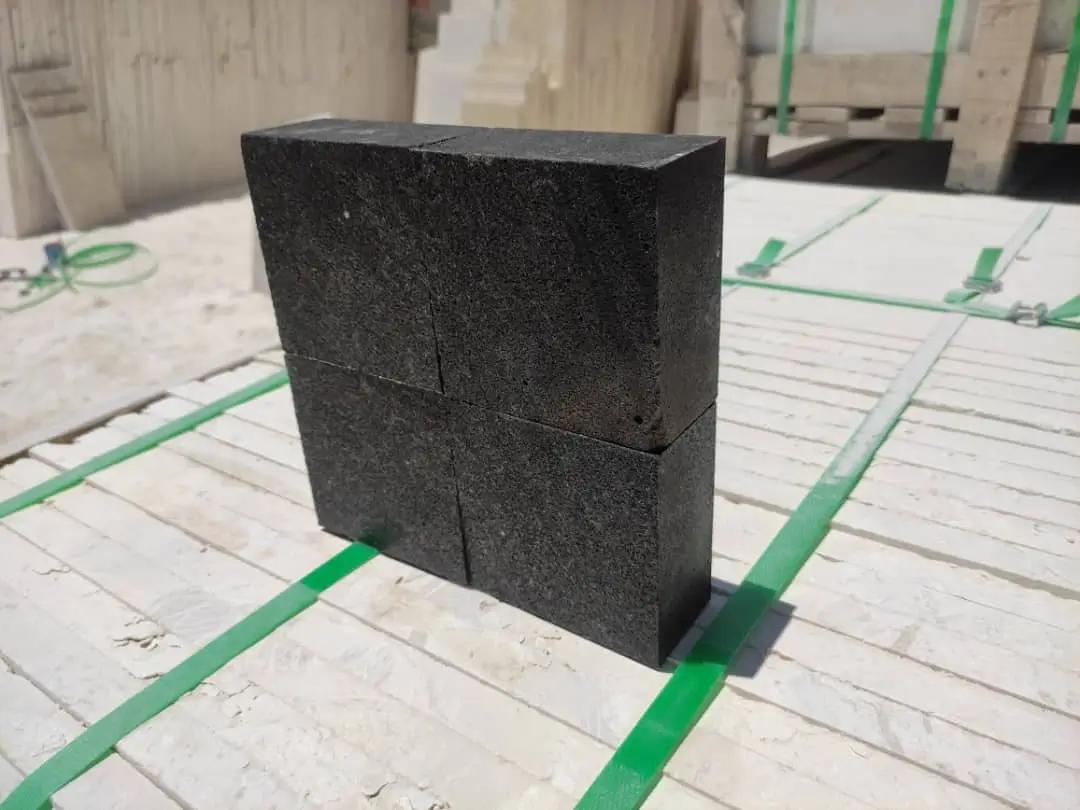
Herringbone is the most mechanically efficient pattern you can choose when subgrade conditions are unpredictable — which describes most of Arizona. The interlocking 45-degree or 90-degree brick orientation distributes point loads laterally across adjacent stones rather than concentrating stress at individual units. On a site with variable caliche depth or pockets of sandy fill, this load distribution characteristic keeps the surface looking level long after a running bond or stacked pattern would have developed lippage.
- 90-degree herringbone is slightly easier to cut at borders, reducing waste on complex patio shapes
- 45-degree herringbone creates stronger diagonal load transfer, preferred on slopes exceeding 1% grade
- Consistent 3/8-inch joint spacing is critical — don’t let installers widen joints to compensate for cutting errors
- Polymeric sand performs better than standard joint sand in this pattern due to the higher number of joints per square foot
Idea 2: Running Bond With Raised Section Transitions
A running bond layout with deliberate raised platform sections gives you design flexibility while solving a real engineering problem. In areas where caliche depth varies across your patio footprint, building a raised platform over the deeper excavation zone lets you maintain a level surface without hauling in excessive base material. You’re essentially designing around the soil profile rather than fighting it.
The transition between grade levels also creates natural drainage breaks, directing water away from the primary seating area before it reaches the low perimeter. For the desert-style cobblestone patio AZ homeowners love in contemporary ranch-style homes, the raised platform adds architectural definition without requiring additional wall construction — the cobblestone height change reads as an intentional design element rather than a workaround.
Idea 3: Radial Fan Pattern for Circular Courtyard Designs
Circular and semicircular patio layouts with a radial fan pattern have been gaining traction in Mesa neighborhoods where Spanish Colonial and Territorial-style homes create a natural affinity for curved stonework. The radial pattern requires more cutting labor than rectangular layouts, but it offers a structural advantage on sites where soil expansion pressure radiates from a central point — often the case near older irrigation infrastructure or mature tree root systems.
Here’s what most specifiers miss with radial designs: the center point of the fan pattern should never land directly over a subsurface irrigation line or tree root zone. Mark your underground utilities before establishing your layout center — a 6-inch offset from center can be the difference between a stable installation and one that develops a settlement depression within three years. For cobblestone patio pattern inspiration across Arizona’s curved courtyard tradition, this layout rewards the extra planning investment.
- Use a laser level rather than a string line to establish your center point on uneven caliche terrain
- Minimum 4-inch compacted aggregate base, increasing to 6 inches where soil transition zones are detected
- Cut cobblestones at the perimeter ring should maintain at least 40% of full unit width — smaller cuts are prone to displacement
Idea 4: Ashlar Pattern for Formal Outdoor Living Spaces
The ashlar layout — mixing three or more cobblestone sizes in a controlled random pattern — creates a naturally sophisticated aesthetic that suits the upscale outdoor living spaces popular in Gilbert’s newer developments. From a soil-performance standpoint, the varied unit sizes actually distribute ground movement stress more effectively than uniform-size patterns because differential settling doesn’t create continuous fault lines through the surface.
You’ll want to confirm warehouse stock levels across all three size variants before finalizing your installation schedule. Running out of one size mid-project and substituting a slightly different thickness causes lippage problems that are almost impossible to correct without lifting sections. At Citadel Stone, we recommend confirming your full square footage across all sizes is available before the truck delivery is dispatched — this is especially important on larger patio projects exceeding 500 square feet. A second warehouse inventory check closer to your install date is worth the extra step on projects of this scale.
Idea 5: Cobblestone Border With Decomposed Granite Field
This hybrid approach is one of the most practical outdoor cobblestone patio layouts in Arizona for managing the soil drainage challenge. You install a full cobblestone perimeter — typically 24 to 36 inches wide — with a compacted decomposed granite field in the center. The cobblestone border handles the structural load zones (chairs, tables, foot traffic paths) while the DG field provides a semi-permeable interior that allows some water infiltration.
The critical detail here is the transition edge between cobblestone and DG. You need a physical edging restraint — steel, aluminum, or a mortared cobblestone soldier course — to prevent the DG from migrating under the cobblestone border over time. Ground movement cycles in Arizona’s expansive clay pockets (you’ll find these in parts of the East Valley) will work at that transition edge relentlessly without a solid restraint system. Check our Arizona patio cobblestone designs for border configuration options that work specifically with DG field applications.
Idea 6: Basket Weave for Adobe and Pueblo-Style Architecture
The basket weave pattern — pairs of cobblestones set perpendicular to adjacent pairs — reads as organically traditional in adobe and Pueblo-style settings that are common throughout the Phoenix metro area and rural Arizona communities. It’s a relatively forgiving pattern to install on sites with minor grade variation because small adjustments in joint width are less visually noticeable than in geometric patterns like herringbone.
In Tucson, where soil profiles often include layers of sandy loam over caliche, the basket weave’s tolerance for minor differential settling makes it a strong practical choice alongside its aesthetic compatibility. Arizona cobblestone outdoor patio design concepts rooted in the region’s vernacular architecture almost always look best with this pattern, particularly in warm sandstone or buff-toned cobblestone finishes. Compacting your base material in 2-inch lifts rather than one deep pass matters more on sandy subgrades, where single-pass compaction leaves voids that consolidate under load after installation.
- Pair sets of 4×8 cobblestones in alternating orientations for the classic basket weave effect
- On sandy subgrades, increase aggregate base depth to 5–6 inches minimum
- Soldier course borders in a contrasting stone color define the pattern edge and reinforce perimeter stability
Idea 7: Random Flagstone-Cobblestone Hybrid Layout
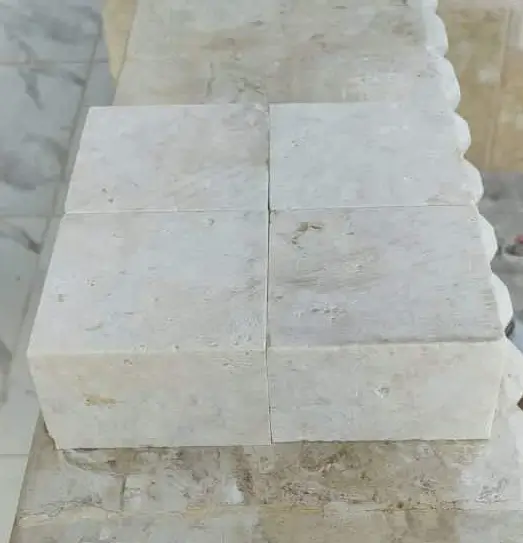
Combining large irregular flagstone pieces with cobblestone infill creates one of the most visually dynamic and geotechnically sensible designs for sites with highly variable soil conditions. The large flagstones bridge minor subgrade inconsistencies by spanning across them rather than conforming to them, while the cobblestone infill fills gaps and creates perimeter stability. This is particularly effective on sites where soil testing reveals pockets of different density — a common finding on infill lots or properties with previous construction activity.
Your base preparation needs to be especially thorough with this hybrid approach because you’re setting two different unit thicknesses side by side. The bedding sand or compacted fines layer has to be calibrated to bring both the flagstone and cobblestone surfaces to the same finished plane — typically this means setting flagstones first and dry-fitting cobblestone infill before committing to the bedding depth. Citadel Stone maintains warehouse stock of both cobblestone and coordinating flagstone in complementary finishes, which simplifies sourcing for this layout considerably. A third warehouse confirmation at the midpoint of large hybrid projects helps catch any allocation gaps before they affect your install schedule.
Idea 8: Modular Grid With Integrated Planting Pockets
A modular cobblestone grid with intentional planting pockets distributed throughout the surface is both a design statement and a drainage engineering solution. The planting pockets — typically 12 to 24 inches square — function as distributed infiltration points that reduce surface runoff velocity across the patio. On sites where caliche prevents vertical drainage, this distributed infiltration approach manages storm water more effectively than a solid hardscape surface with a single perimeter drain.
The soil within the planting pockets also needs to be considered as part of your subgrade system. You’ll want to line planting pockets with a geotextile fabric barrier at the cobblestone interface to prevent root intrusion from migrating under the pavers over a 10 to 15 year horizon. Desert-adapted plantings with non-aggressive root systems — ornamental grasses, succulents, low-growing herbs — work best for this configuration. For your cobblestone patio design ideas in Arizona, this approach also reduces the surface heat load slightly, since the planted areas stay cooler than fully paved sections throughout peak summer hours.
- Space planting pockets no more than 6 feet apart for effective distributed drainage on caliche sites
- Use a 3-inch layer of gravel beneath planting pocket soil to create a temporary reservoir above caliche
- Mortar the cobblestone edges adjacent to planting pockets to prevent edge displacement from irrigation moisture cycles
- Select cobblestone colors that contrast with your planting selections for maximum visual definition
Selecting the Right Cobblestone Patio Design for Arizona Conditions
The eight designs covered here represent a range of approaches to Arizona’s specific ground conditions — from caliche management to sandy subgrade compensation to distributed drainage engineering. What all of them share is the recognition that cobblestone patio design ideas in Arizona have to start below grade before they can succeed above it. Your material selection, pattern choice, and base specification need to work together as a unified system, not as independent decisions.
As you finalize your design direction, it’s worth understanding how cobblestone grade and finish selection interact with your chosen pattern — some finishes perform better in joints-heavy layouts, while others are optimized for large-format hybrid designs. The cobblestone patio pattern inspiration across Arizona’s diverse architectural styles runs deep, and matching finish to pattern is as important as matching pattern to soil. Cobblestone Paver Grades vs Finishes: Which Is Better for Arizona Homeowners? provides a practical breakdown that complements the layout decisions you’ve worked through here. Homeowners planning a cobblestone patio in Scottsdale, Flagstaff, and Tucson can select from Citadel Stone’s range of natural surface finishes that suit both contemporary and traditional desert architecture.