
When you’re specifying architectural stone for complex projects in Arizona, you need fabrication capabilities that go beyond basic cutting and polishing. CNC precision stone fabrication Arizona technology delivers the intricate profiles, custom radii, and dimensional accuracy that modern architectural designs demand. You’ll find that computer-numerically-controlled equipment transforms dense natural stone into components that meet tolerances previously impossible with manual fabrication.
Your project’s success depends on understanding how advanced fabrication technology intersects with material properties, installation logistics, and long-term performance requirements. The difference between specifying standard-cut stone and CNC-fabricated components affects everything from installation labor costs to weathering performance over decades.
CNC Capabilities for Architectural Stone
CNC precision stone fabrication Arizona systems operate with five-axis control, allowing you to specify complex three-dimensional profiles that manual fabrication cannot achieve. You’re looking at positional accuracy within ±0.010 inches across spans exceeding 10 feet — precision that matters when you’re coordinating stone cladding with curtainwall systems or creating interlocking modular components.
The technology enables several fabrication operations you should consider for your specifications:
- You can specify custom edge profiles with consistent geometry across hundreds of linear feet, eliminating the dimensional variance inherent in hand-profiling
- Your design can incorporate through-holes, anchor recesses, and drainage channels positioned with sub-millimeter accuracy for mechanical attachment systems
- You’ll achieve repeatable curved profiles for column covers, balustrades, and decorative elements that require identical geometry across multiple pieces
- Fabrication technology allows you to create interlocking joint geometries that improve installation speed and eliminate visible fasteners
What separates professional-grade CNC precision stone fabrication Arizona from basic cutting is the ability to maintain tolerances while working with natural material. Stone exhibits density variations, embedded inclusions, and directional grain structures that affect how cutting tools interact with the material. Advanced fabrication requires adaptive toolpath programming that accounts for these variables.
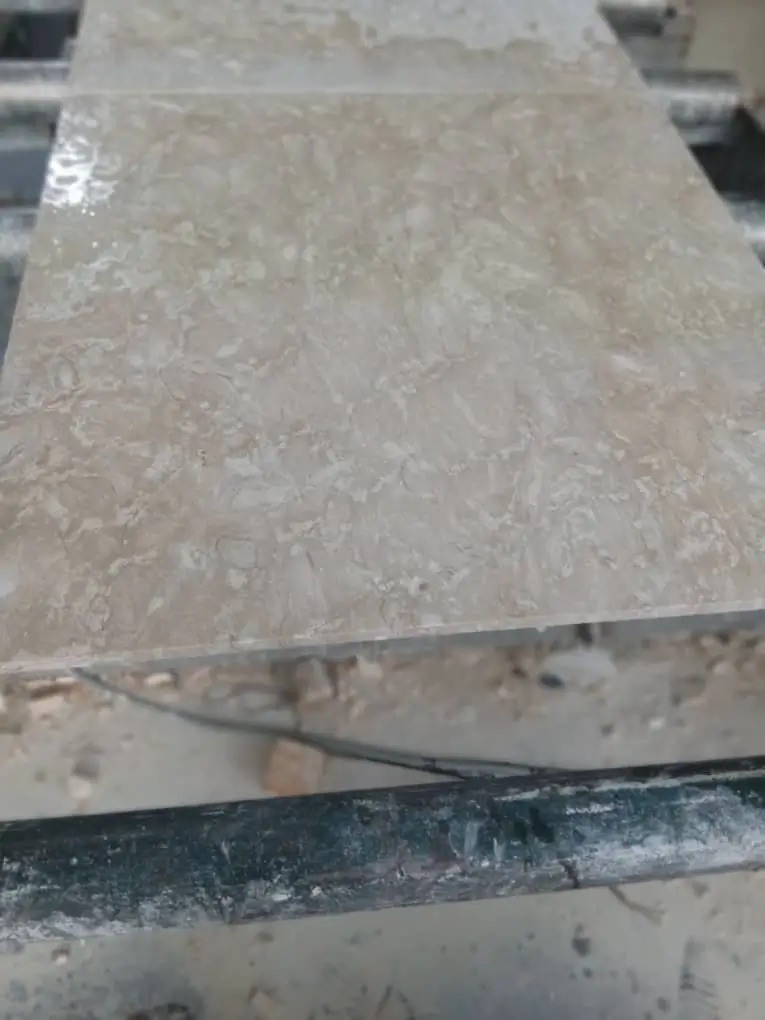
Material Selection for Fabrication Complexity
Your material choice directly affects what fabrication complexity you can specify. Dense limestone and sandstone varieties respond differently to precision manufacturing techniques, and you need to understand these interactions before finalizing design details.
When you evaluate materials for CNC applications, consider these performance factors:
- Compressive strength above 8,000 PSI provides the structural integrity needed for thin-profile fabrication without edge failure during machining
- Your selected material’s Mohs hardness affects tool wear rates and achievable surface finishes — softer stones allow finer detail but may weather faster in exposed conditions
- Porosity below 5% reduces water absorption that can cause dimensional changes during fabrication and installation cycles
- Homogeneous grain structure without large inclusions allows consistent machining without unexpected tool deflection or material fracture
The relationship between density and machinability becomes critical when you specify intricate profiles. Materials with density exceeding 155 lb/ft³ provide excellent edge retention for detailed work but require slower feed rates and more frequent tool changes. You’ll find that specifying appropriate material hardness for your design complexity prevents fabrication delays and cost overruns.
Thermal Considerations for Precision Work
Arizona’s temperature extremes create thermal expansion effects you must account for in precision fabrication. When you specify tight tolerances, understand that limestone expands at approximately 5.3 × 10⁻⁶ per °F. A 10-foot component experiencing a 60°F temperature swing between climate-controlled fabrication and Arizona summer installation will change dimension by 0.038 inches.
Your specifications need to address this reality. You should detail joint spacing that accommodates thermal movement without compromising the visual precision CNC fabrication delivers. For components with interlocking geometries, you’ll want to specify installation temperature ranges that minimize field fitting requirements.
Design Integration with Modern Techniques
When you incorporate CNC precision stone fabrication Arizona into your project, you’re enabling design approaches that weren’t feasible with conventional stone cutting. The technology supports parametric modeling workflows where digital design transfers directly to fabrication equipment without manual interpretation.
You can coordinate stone components with other building systems using shared 3D models. This integration allows you to identify conflicts between stone cladding and structural framing, waterproofing details, or mechanical penetrations before fabrication begins. The result is fewer field modifications and reduced installation time.
Modern techniques support these design capabilities:
- You’re able to specify non-repeating patterns where each stone unit has unique geometry while maintaining consistent installation dimensions
- Your design can include gradient transitions in profile depth or surface texture that would require prohibitive manual labor
- You’ll achieve precise coordination between stone components and adjacent materials like glass, metal panels, or precast concrete
- Fabrication technology enables you to create test mockups that exactly match production pieces for approval processes
Joint Detailing for Precision Fits
The accuracy of CNC precision stone fabrication Arizona allows you to rethink traditional joint details. Instead of specifying wide mortar joints that accommodate dimensional variance, you can design tighter reveals that emphasize the stone’s mass and reduce visual interruption.
You should consider these joint approaches for precision-fabricated work:
- Dry-set installations with 1/16-inch to 1/8-inch joints that rely on fabrication accuracy rather than mortar bed adjustment
- Ship-lap or tongue-and-groove edge profiles that create self-aligning installation and eliminate visible joint lines
- Recessed joints with consistent depth and width that create shadow lines without mortar discoloration issues
- Keyed mechanical connections that transfer loads between adjacent units while maintaining hairline visual joints
- Open joints with precise spacing for drainage and ventilation in rainscreen applications
When you detail these precision joints, remember that installation tolerance stacking still occurs. Your specifications should allow ±1/8-inch field adjustment capacity across typical panel dimensions while maintaining the refined appearance precision fabrication enables.
Installation Requirements for Complex Geometry
Precision-fabricated components require installation expertise that matches the fabrication quality. You can’t expect standard masonry crews to handle intricate CNC-cut stone without specific training in alignment techniques and specialized setting methods.
Your installation specifications should address several critical factors. When you detail setting procedures, you need to account for the fact that precision-fabricated stone exposes installation errors that conventional joints would hide. A 1/16-inch alignment error becomes immediately visible with tight joints, whereas a 3/8-inch mortar joint would accommodate the same variance.
For projects utilizing our masonry stone materials collection, you’ll want to verify that installation teams understand the relationship between fabrication accuracy and field tolerances. The installation process needs to preserve the precision that CNC precision stone fabrication Arizona technology delivers.
Setting Bed Preparation
You’ll find that conventional mortar beds introduce too much variability for precision-fabricated stone. The material’s exact dimensions mean you should specify setting methods that provide consistent support without requiring field shimming or adjustment during cure.
Professional installations typically use these approaches:
- You can specify thin-set polymer-modified mortars with maximum 1/8-inch bed thickness that minimize adjustment requirements
- Your details might incorporate mechanical anchoring systems where stone units attach to structural backing without relying on adhesive bed thickness for alignment
- You should consider dry-set installations for interior applications where units rest on precision-leveled support angles or shelf angles
- Epoxy setting beds provide high bond strength with minimal thickness variation for demanding applications
Cost Implications of Precision Fabrication
When you evaluate CNC precision stone fabrication Arizona for your project, understand that unit costs increase compared to standard-cut stone, but total installed costs often decrease. The trade-off between material pricing and installation efficiency determines overall project economics.
Precision-fabricated components typically cost 40-65% more per square foot for the material itself. This premium reflects several factors you’re paying for: programming time for custom toolpaths, slower feed rates for detailed work, increased tool wear from intricate cutting, and quality control verification at tighter tolerances.
However, you’ll see cost recovery in these areas:
- Your installation labor decreases by 25-40% because pieces require minimal field fitting and adjustment
- You eliminate specialized skilled labor for field cutting of complex profiles or custom details
- Your project schedule shortens due to faster installation, reducing general conditions costs and accelerating building occupancy
- You’ll have fewer warranty callbacks for joint alignment issues or component fit problems
- Warehouse inventory management becomes more predictable when components are prefabricated to exact quantities
Procurement and Lead Times
You need to account for extended lead times when you specify precision-fabricated components. Standard-cut stone might ship from warehouse stock within days, but CNC precision stone fabrication Arizona requires 6-10 weeks from approved shop drawings to delivery.
The fabrication process includes several time-consuming steps you should understand for schedule planning. After you approve shop drawings, fabricators need to program toolpaths, set up specialized workholding fixtures, perform test cuts to verify accuracy, execute production runs with quality checks, and package components for damage-free shipping. Each phase requires time that compressed schedules cannot eliminate without sacrificing quality.
Quality Control and Verification
When you specify CNC-fabricated stone, your quality control protocols need to match the precision level you’re expecting. Standard masonry inspection procedures don’t adequately verify the tolerances that justify the cost premium for precision manufacturing.
You should require these verification steps in your specifications:
- Dimensional inspection of first-article samples using calibrated measuring equipment, not tape measures or carpenter’s squares
- Your specifications should mandate verification of edge profiles against approved templates at multiple points along each component
- You need to require photographic documentation of completed components showing dimensional accuracy and surface finish quality
- Specify that fabricators provide material certifications confirming species, density, and compressive strength for traceability
- Your quality program should include pre-shipment inspection rights to verify components before they leave the fabrication facility
The inspection process becomes critical because you’re often unable to verify precision until components arrive on site. If you discover dimensional errors after delivery, you’re facing project delays while replacement pieces go through the entire fabrication cycle again. Upfront verification prevents costly schedule impacts.
Surface Finish Options with Fabrication Technology
CNC precision stone fabrication Arizona equipment enables surface finishing that goes beyond standard honed or polished treatments. You can specify texture variations, relief patterns, and dimensional transitions that create visual interest while maintaining the geometric accuracy complex designs require.
The technology supports several finish applications you should consider. Thermal finishing creates slip-resistant texture on horizontal surfaces while maintaining edge geometry. Water-jet texturing produces patterns impossible to achieve manually. CNC routing creates recessed relief designs with consistent depth across large areas. You can even specify gradient transitions where surface finish gradually changes from polished to textured within a single component.
Finish Durability Considerations
Your surface finish selection affects long-term performance in Arizona’s climate. Polished finishes on vertical surfaces maintain appearance for 15-20 years with minimal maintenance, but you’ll see etching from windblown dust in high-exposure locations. Honed finishes show less wear pattern development but may require periodic cleaning to remove embedded particulates.
When you specify textured finishes created through precision manufacturing, understand that the texture depth affects cleaning requirements and weathering patterns. Shallow relief details (under 1/8-inch depth) accumulate less debris but show wear more quickly. Deeper textures (1/4-inch or greater) maintain appearance longer but require pressure washing to prevent organic growth in shaded areas.
Structural Attachment Systems for Precision Components
The accuracy of CNC precision stone fabrication Arizona allows you to design sophisticated attachment systems that would be impractical with conventionally-cut stone. You can specify concealed mechanical anchors, keyed connections, and load-transfer details that rely on precise hole placement and edge geometry.
Modern attachment approaches include these systems:
- You can detail undercut anchors in drilled holes positioned with CAD-specified accuracy for concealed support of cladding panels
- Your design might incorporate continuous kerf slots that accept structural rails for adjustable vertical and horizontal positioning
- You’ll achieve reliable performance with point-supported systems where each anchor location is CNC-drilled to exact coordinates
- Fabrication technology enables dowel connections between adjacent units that create shear transfer without visible fasteners
When you specify these attachment systems, coordinate hole locations and edge details with your structural engineer. The precision that makes these systems work also means that field modifications to correct coordination errors become extremely difficult. You should require full-scale mockup testing to verify that attachment hardware functions as detailed before committing to production fabrication.
Moisture Management in Precision Assemblies
Tight joints and precision-fitted components change how you need to address moisture management compared to conventional stone installations. You can’t rely on mortar joint width to accommodate water drainage and vapor movement when you’re working with 1/16-inch reveals.
Your water management strategy needs to account for these factors. Arizona’s low humidity means vapor drive is typically outward, but you’ll still encounter condensation conditions during temperature swings. Water that enters precision joint systems doesn’t have the evaporation capacity that wide mortar joints provide. You need to detail positive drainage paths and ventilation routes that prevent water accumulation behind stone assemblies.
Professional moisture management for precision stone includes:
- You should specify continuous drainage planes behind stone cladding with minimum 3/8-inch clear airspace
- Your details must include weep locations at regular intervals with adequate cross-sectional area for drainage flow
- You need to coordinate flashing details that direct water to weep locations without relying on mortar joint absorption
- Ventilation openings should be sized to allow air circulation that dries any moisture that penetrates the assembly
Digital Workflow Integration
When you specify CNC precision stone fabrication Arizona, you’re engaging a digital workflow that extends from design through installation. Understanding how file formats, modeling procedures, and fabrication data transfer work helps you avoid common problems that cause delays and errors.
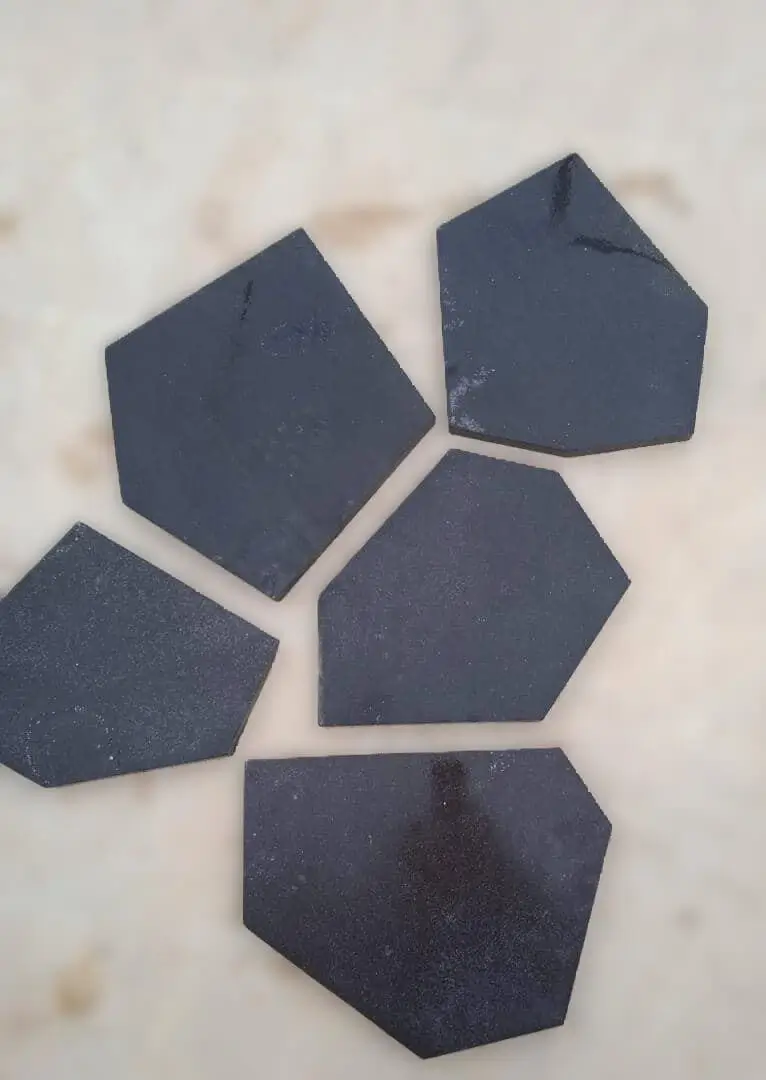
You’ll typically work with 3D solid models or parametric surface definitions that describe component geometry. Fabricators translate these models into toolpath instructions using CAM software that accounts for tool diameter, cutting depth, and material properties. The accuracy of final components depends on how well your design files communicate intent and how effectively fabricators interpret that information.
File Format Requirements
Your digital models need to be delivered in formats that fabrication equipment can process. Most CNC precision stone fabrication Arizona facilities work with STEP, IGES, or native CAD formats from major platforms. You should avoid exporting models as mesh files (STL) unless fabricators specifically request them, as mesh formats lose the mathematical precision that defines curved surfaces accurately.
When you prepare files for fabrication, verify that all dimensions are in consistent units, coordinate systems align with installation requirements, and component orientations match how pieces will be cut from raw blocks. These details seem minor but cause significant problems when fabricators interpret files differently than you intended.
Common Specification Mistakes
After working with precision-fabricated stone across numerous projects, certain specification errors appear repeatedly. You can avoid these problems by understanding where conventional stone detailing practices break down when applied to CNC-fabricated components.
The most common mistakes include:
- You might specify tolerances tighter than fabrication equipment can reliably achieve, creating rejection criteria that no fabricator can meet
- Your details may show precision joints without accounting for building structure deflection that will open those joints over time
- You could fail to specify surface preparation at anchor points, leading to bond failure at mechanical connections
- Specifications sometimes omit shipping and handling requirements specific to precision components with delicate edges
- You may not address measurement protocols for field verification, creating disputes about whether components meet tolerances
Another frequent error involves specifying Easy Installation without detailing the precision setting beds and alignment procedures that make easy installation possible. Precision-fabricated components don’t automatically install easily — you need to specify the methods that leverage their accuracy.
Performance Testing and Verification
When you’re investing in CNC precision stone fabrication Arizona for demanding applications, you should require performance testing that verifies components will function as designed. Standard material certifications confirm basic properties, but they don’t validate that fabricated assemblies perform under actual loading and environmental conditions.
You can specify several test protocols depending on application requirements. Structural testing verifies that anchor systems develop rated capacity without stone failure. Thermal cycling confirms that assemblies accommodate expansion and contraction without distress. Water penetration testing demonstrates that joint details prevent moisture intrusion under wind-driven rain conditions.
For critical applications, you should require full-scale mockup testing before production begins. This approach identifies problems when solutions are still feasible rather than discovering issues during installation when corrections become extremely expensive.
Citadel Stone’s hardscape stone in Arizona — How we would specify for Arizona
When you consider Citadel Stone’s hardscape stone in Arizona for your precision fabrication requirements, you’re evaluating materials engineered for advanced manufacturing techniques combined with extreme climate performance. At Citadel Stone, we provide technical guidance for hypothetical applications across Arizona’s diverse project types. This section outlines how you would approach CNC precision stone fabrication Arizona specification decisions for three representative cities.
Arizona’s climate creates specific challenges you need to address when combining precision manufacturing with long-term durability requirements. You’ll encounter temperature differentials exceeding 60°F between summer days and winter nights, intense UV radiation that degrades some sealers, and minimal precipitation that concentrates salts at the surface. Your material selection and fabrication details must account for all these factors simultaneously.
Yuma Specifications
In Yuma’s extreme heat environment, you would specify materials with proven thermal stability for CNC applications. Your component design should account for thermal expansion across 120°F+ summer temperatures. You’ll want to detail expansion joints every 12 feet rather than the 15-20 feet typical in moderate climates. For precision-fabricated cladding systems, you would specify light-colored limestone that reflects solar radiation while providing the density needed for detailed fabrication. Your attachment systems should incorporate slotted connections that allow thermal movement without distorting precision-fitted joints. When you detail projects for this region, consider how warehouse staging and truck delivery scheduling affect material temperature at installation.
Mesa Applications
Mesa’s urban environment creates heat island effects you must consider for precision stone applications. You would specify CNC precision stone fabrication Arizona for architectural details that maintain dimensional accuracy despite temperature cycling. Your material selection should prioritize homogeneous limestone varieties without large inclusions that create stress points during thermal expansion. For commercial building cladding, you’ll detail precision-fabricated panels with mechanical attachment systems that accommodate differential movement between stone and structural backing. Your specifications would include surface finish requirements that reduce heat absorption while maintaining the refined appearance precision manufacturing delivers. You should account for how modern techniques enable efficient production of custom profiles that meet design intent while accommodating thermal performance requirements.
Gilbert Detailing
In Gilbert’s residential and mixed-use developments, you would specify precision-fabricated stone for detailed architectural elements that require dimensional consistency. Your approach should leverage fabrication technology to create repeatable profiles for column covers, entry features, and facade details. You’ll want to detail materials with compressive strength exceeding 9,000 PSI that support intricate edge profiles without failure during fabrication or installation. For these applications, you would specify quality control procedures that verify dimensional accuracy before components ship from warehouse facilities. Your installation details should address the precision setting methods needed to maintain tight reveals and aligned joints that justify the fabrication investment.
Project Planning Considerations
When you integrate CNC precision stone fabrication Arizona into your project timeline, you need to understand how fabrication sequences affect overall scheduling. The process isn’t simply ordering material with longer lead time — it requires coordination between design development, structural engineering, fabrication planning, and installation preparation.
You should structure your project phases to allow adequate time for shop drawing development and review. Fabricators need complete design intent before they can generate detailed manufacturing drawings. You’ll review those drawings to verify that fabrication approach matches design requirements. After approval, fabricators program toolpaths and execute test cuts. Only then does production fabrication begin.
This sequence typically requires 10-14 weeks from design completion to component delivery. You can’t compress this timeline without accepting increased risk of errors or reduced quality. Your project schedule should reflect these realities rather than attempting to force precision fabrication into timeframes appropriate for standard-cut stone.
Final Considerations
Your successful specification of precision-fabricated stone requires understanding how fabrication technology, material properties, installation methods, and performance requirements interact throughout the project lifecycle. You need to approach these projects with clear recognition that precision manufacturing enables design possibilities unavailable with conventional techniques, but that precision also demands corresponding rigor in detailing, procurement, and quality control.
When you detail CNC precision stone fabrication Arizona applications, focus on how each decision affects the others. Your material selection influences achievable fabrication detail. Your fabrication complexity affects installation requirements. Your joint detailing determines moisture management strategy. Professional specifications address all these factors as an integrated system rather than isolated components.
For specialized applications requiring exceptional material density and radiation attenuation properties, review High-density stone materials for radiation shielding in medical bunkers before you finalize structural specifications. We are dedicated to supporting local trades by supplying professional-grade stone masonry materials in Arizona for every scale of construction.