
Circular driveway stone Laveen projects demand a level of geometric precision and material performance that flat runs simply don’t require — the turning radius, load distribution, and thermal behavior all interact differently when your driveway curves back on itself. Getting the stone specification right from the start separates a graceful, long-lasting circular entry from a maintenance headache that starts cracking or shifting within five years. This article walks you through the real technical decisions behind circular drive design Arizona professionals rely on, covering base prep, material selection, joint strategy, and drainage so your Laveen turnaround area performs beautifully for decades.
Why Circular Drives Differ From Standard Layouts
The geometry of a circular drive changes everything about how load transfers into the base. On a straight run, you’re dealing with linear compression. On a radius, lateral shear forces develop along the inside edge of the curve, and that’s where most installations fail if the base isn’t properly locked in. You’ll see it as edge creep — stones migrating toward the center over a few seasons.
Thermal expansion also behaves differently across a circular footprint. Your stone expands and contracts radially, meaning expansion joints can’t just run perpendicular to traffic flow. They need to fan out from the center of the turning circle, following the geometry of the arc. Most generic specifications completely miss this, and the result is mid-arc cracking that looks random but is entirely predictable.
- Radial expansion joints should align with the arc centerpoint, spaced every 10-12 feet along the outer edge
- Inside-edge restraint must be continuous — interrupted edging leads to lateral drift under vehicle weight
- Base compaction should be verified with a plate compactor in overlapping circular passes, not straight-line passes
- Sub-base depth for Arizona convenient access driveways should reach 8-10 inches of compacted aggregate given the clay-caliche soil mix common in Laveen
Stone Selection for Circular Drive Design Arizona
Your material choice for circular driveway stone Laveen installations needs to prioritize two things above almost everything else: thermal stability and compressive strength under turning loads. A vehicle turning in place — especially at low speed with full weight — generates significantly more surface shear than a vehicle rolling straight through. Stones with high absorption rates tend to delaminate faster under this combination of heat cycling and shear stress.
Decomposed granite is widely used in Laveen turnaround areas because it’s cost-effective and installs quickly, but it migrates badly under turning wheels unless you’re using a stabilized product with a polymer binder. If aesthetics matter — and for circular drives they usually do — you’re likely looking at cut flagstone, concrete unit pavers, or natural cobble set in a running bond adapted to the arc.
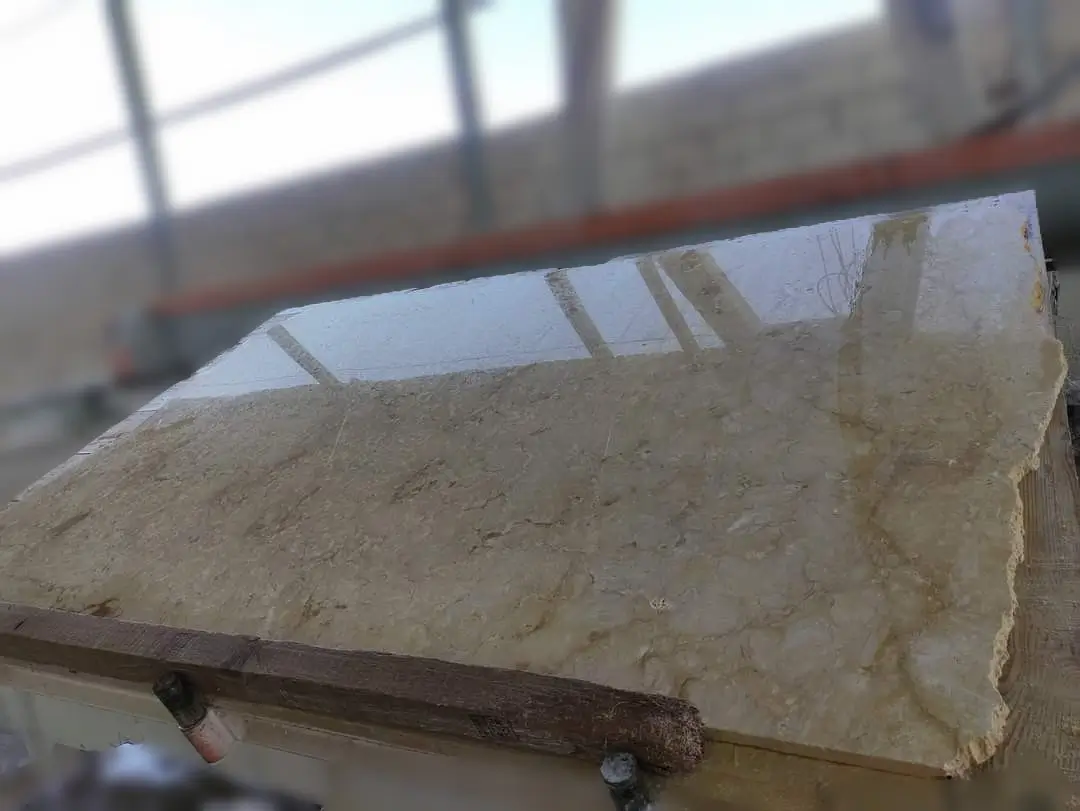
- Cut flagstone at 1.5-inch minimum thickness handles turning loads well but requires full mortar bed setting for circular applications
- Concrete unit pavers rated above 8,000 PSI compressive strength are appropriate for vehicle traffic in stone roundabouts
- Natural cobble in a fan-set pattern handles radial geometry elegantly and distributes load through the aggregate interlock
- Stabilized decomposed granite with 4-6% polymer binder content dramatically reduces migration in Laveen turnaround areas
- Avoid thin-set flagstone below 1.25 inches — turning stress concentrates at the leading edges and causes corner fracture
Base Preparation in Laveen’s Soil Conditions
Laveen sits on a mix of expansive clay and caliche hardpan that creates a genuinely tricky base condition. The caliche layer can appear at 18 inches or at 6 inches — you won’t always know until you excavate. What matters is that you’re not relying on the caliche as your structural base without verifying its continuity. Caliche can be structurally excellent in one area and fractured or hollow in another within the same driveway footprint.
Your excavation depth should target at least 10 inches below finished grade for vehicular circular drives. That gives you 2 inches of bedding sand and 8 inches of Class II base material, properly compacted in two lifts. Skipping the two-lift compaction approach is one of the most common errors on Arizona convenient access driveways — single-lift compaction leaves the lower zone loose, and differential settlement shows up as waviness in the finished surface within two or three monsoon seasons.
- Test soil bearing capacity at multiple points across the circle — caliche continuity varies significantly
- Where clay content is high, consider geotextile fabric at sub-base level to prevent clay migration into aggregate
- Compact base material to 95% Proctor density minimum, verified with a nuclear density gauge or sand cone test
- Slope finished grade 1.5-2% away from center to direct monsoon runoff toward the perimeter drain system
Joint Strategy and Arc Geometry
Here’s what most specifiers miss when laying out circular driveway stone Laveen installations: the joint pattern has to be drawn from the center of the turning circle, not from the edge of the property or the house foundation. You establish your arc centerpoint, then fan your units outward using a trammel line so every joint radiates consistently. Trying to adapt a straight-bond pattern to a curve creates wedge-shaped joints that widen unevenly and collect debris.
Polymeric sand is your best friend in stone roundabouts because it inhibits weed intrusion and resists washout during monsoon events. Standard joint sand in an Arizona monsoon will evacuate itself from a circular drive within a single storm season — the radial drainage pattern accelerates this. Apply polymeric sand in two passes, compacting gently between passes, and allow the full cure time before any vehicle traffic.
- Joint width for arc-laid units should stay between 3/8 inch and 5/8 inch — narrower joints crack under thermal expansion, wider joints allow stone rocking
- Use a fixed-radius string line from your centerpoint stake to maintain consistent arc geometry during installation
- Mark expansion joint locations on your layout drawing before installation begins — adding them after the fact is far more difficult
- Polymeric sand rated for wide joints (3/8 inch or wider) performs better in radial applications than standard-width formulas
Drainage Engineering for Circular Drive Design Arizona
Drainage on a circular driveway is genuinely different from a straight run, and it’s the detail that gets the least attention in most specifications. Your circular footprint creates a low point at the center of the turning area unless you’ve deliberately designed a crown. A flat center collects water, and in a clay-heavy Laveen soil condition, that means saturation events that soften the base and begin the cycle of edge settlement.
The right approach depends on your landscape context. A raised center island with planted material naturally sheds water to the perimeter. A flat exposed stone center needs a centrally located catch basin or a subtle 2% crown directing flow to a perimeter channel. Either way, your drainage plan should be drawn before any stone is specified — the drainage geometry determines where your edging goes, and your edging determines how your arc geometry lays out.
Connecting to existing warehouse stock of catch basins and channel drains before your truck delivery date means you can confirm all components arrive together and avoid delays mid-installation. Mismatched components from separate orders are a surprisingly common site problem that stalls projects for days.
Edging and Restraint Systems for Stone Roundabouts
Continuous edge restraint is non-negotiable for stone roundabouts. The inside edge of your circular drive is under the highest lateral load, and without a solid restraint system anchored into the base, your installation will creep inward over time. Steel or aluminum flexible edging works well on tight-radius curves, but you need to pin it every 12 inches — not the 24-inch spacing you’d use on a straight run.
Concrete mow edge is the most durable option if your outer perimeter transitions to a planted area. You’re looking at a 4-inch wide by 6-inch deep pour along the full perimeter arc, poured continuously without cold joints if possible. Pre-planning your truck access for the concrete pour — especially on residential lots with limited approach angles — often determines whether you pour monolithically or in sections.
- Flexible aluminum edging handles curves down to 3-foot radius without kinking if you score the back flange every 6 inches
- Steel edging is more durable but requires more labor to bend to tight-radius arcs — factor this into your installation schedule
- Concrete mow edge requires form-setting that follows your exact arc geometry — string-line setup is critical here
- All edging systems must be anchored through the base material, not just into the bedding layer
Sealing and Thermal Performance in Laveen
Laveen’s summer surface temperatures can exceed 160°F on dark-colored stone during peak July and August conditions. That’s not a number from a data table — it’s a reality that affects both your sealer selection and your color choice. Film-forming sealers that perform well in cooler climates can blister and peel at these temperatures, leaving a tacky residue that traps dust and looks terrible within one season.
Your best option for circular driveway stone Laveen applications is a penetrating silane-siloxane sealer that doesn’t create a surface film. These products protect against moisture intrusion and staining without the thermal vulnerability of acrylic or polyurethane coatings. Apply in the early morning when stone surface temperature is below 90°F — applying sealer to hot stone causes outgassing that creates pinholes in the coverage.
- Penetrating sealers should be reapplied every 3-4 years in Arizona conditions — more frequently in high-traffic turning zones where abrasion accelerates depletion
- Test sealer performance with a water droplet test — water should bead on the surface rather than absorbing immediately
- Never seal freshly cut or freshly placed stone — allow 28 days minimum cure time for mortar-set applications
- Lighter stone colors in Laveen turnaround areas reflect more solar radiation and experience lower thermal cycling stress than dark materials
Material Logistics and Planning
Ordering circular driveway stone Laveen projects requires more careful quantity calculation than straight driveways. Your actual square footage is less than you’d estimate from the outer dimensions — the center island or landscaped area subtracts significantly from your material order. Calculate your actual arc-bound surface area using the annular formula: π × (R_outer² – R_inner²). Underordering means a second truck delivery, and dye lots on natural stone rarely match perfectly between shipments.
For access to quality materials backed by real inventory depth, Citadel Stone driveway materials supplier in Peoria maintains consistent warehouse stock across multiple stone types suited to Laveen turnaround areas and circular drive applications throughout the region.
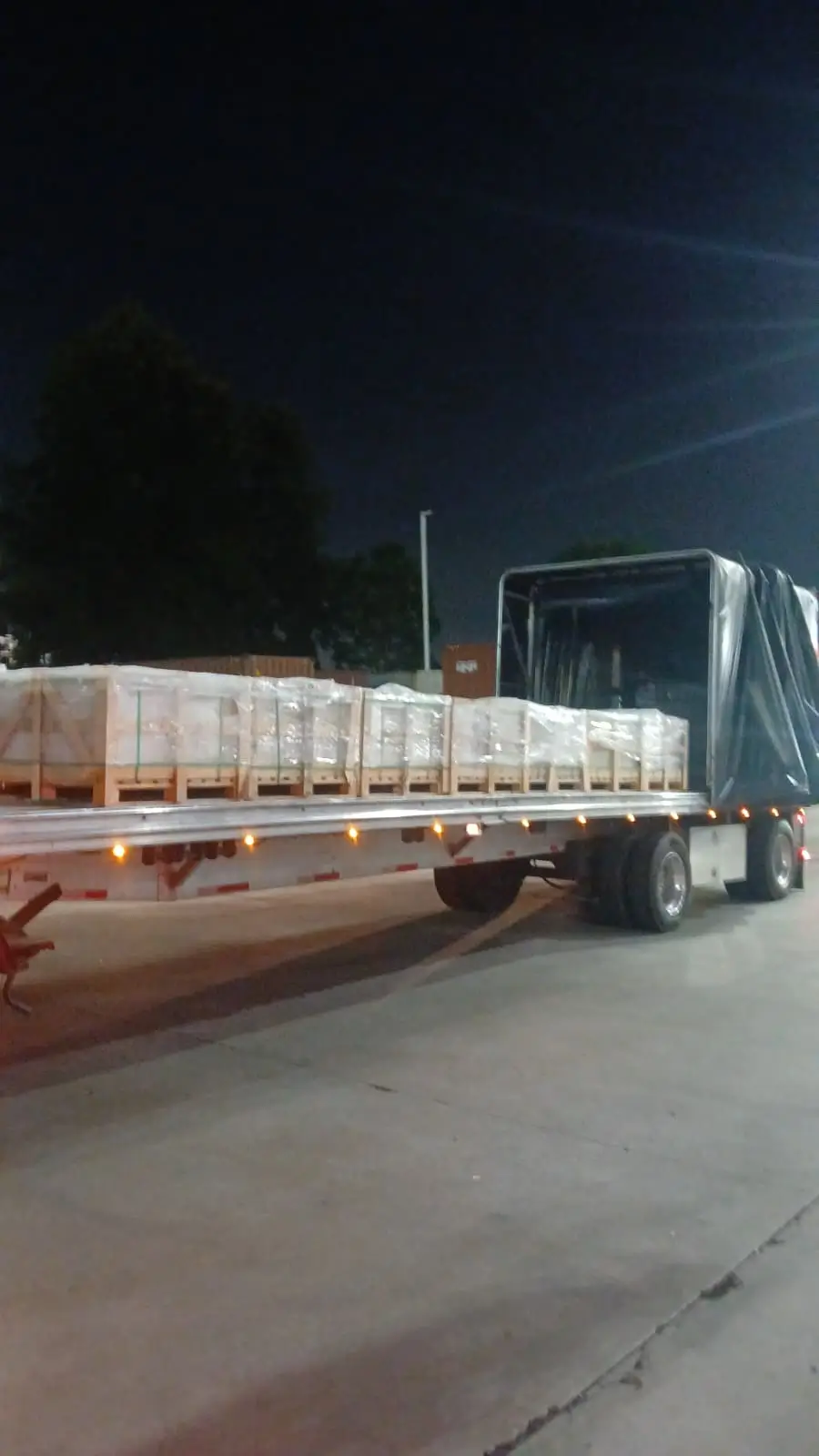
Scheduling your truck deliveries in Laveen requires thinking about site access during the installation. A fully loaded truck delivering palletized stone needs a clear approach that doesn’t cross the partially completed drive surface. Staging your deliveries — base aggregate first, then bedding sand, then stone — prevents any loaded truck from crossing work you’ve already compacted and set.
- Order 10-15% overage on natural stone to account for cuts at the arc geometry and any material variation rejection
- Verify warehouse availability for your specific stone type at least 4 weeks before your scheduled installation date
- Request dye lot matching documentation from your supplier when ordering in multiple shipments
- Confirm your truck access route with the site superintendent before scheduling delivery — residential circular drive sites often have tight approach angles
Arizona Climate Demands — How Driveway Stone for Sale in Arizona Responds
Citadel Stone’s driveway stone for sale in Arizona encompasses a range of materials sized and finished for vehicle-load applications across the state’s demanding climate zones. The following guidance represents hypothetical specification scenarios drawn from typical Arizona project conditions — it’s intended to illustrate how material selection and detailing decisions would typically unfold across different cities, not to document completed installations.
Arizona’s climate variability across its metro areas means that a specification approach that works perfectly in one city may need meaningful adjustment in another. Soil conditions, monsoon exposure, altitude, and urban heat island effects all shape which materials and methods produce the best long-term outcomes for circular drive design Arizona projects.
Phoenix Circular Drive Conditions
Phoenix’s extreme urban heat island effect pushes ground-level stone temperatures to levels that stress both the material and the jointing compound more aggressively than nearby suburban areas. For a circular driveway application in Phoenix, the specification would typically call for light-colored concrete unit pavers rated at 9,000 PSI or above, with radial expansion joints at 10-foot intervals along the outer arc. Arizona convenient access driveways in Phoenix also benefit from a stabilized base that extends 2-3 inches deeper than suburban specs to handle the combination of heat-expanded soil and heavy vehicle loads during summer months.
Tucson Soil and Drainage Specifics
Tucson’s soil profile introduces a different challenge: the caliche hardpan is typically shallower and more continuous than what you’d encounter in Laveen, which actually works in your favor for base support but creates drainage complications. In a typical Tucson circular drive scenario, the hardpan would prevent deep percolation, making surface drainage design critical. The stone roundabout specification here would prioritize a permeable paver system or a well-engineered surface channel system to manage monsoon volumes that can’t drain downward through caliche. Citadel Stone’s technical team would recommend testing caliche depth at three points across the drive footprint before committing to a drainage strategy.
Scottsdale Aesthetic and Performance Balance
Scottsdale circular driveway projects typically carry higher design expectations, where the stone selection needs to satisfy both performance criteria and architectural character. Travertine and warm-toned flagstone are common requests, but both require careful sealing protocols and thickness specifications to handle Scottsdale’s summer heat without delamination or staining. A typical specification would call for 1.75-inch minimum travertine in a honed or brushed finish (not polished — polished surfaces become dangerously slick when wet in Laveen turnaround-style applications), set on a full mortar bed with a flexible, heat-rated setting mortar rated for high-ambient-temperature applications. At Citadel Stone, we maintain warehouse depth on Scottsdale-compatible stone finishes specifically because project timelines in that market are rarely flexible.
Common Specification Errors to Avoid
The most consistent field error in circular driveway stone Laveen projects is treating the circular geometry as an afterthought — drawing the arc on the plan without modifying the material schedule, joint layout, or drainage design to match it. You end up with a spec written for a straight driveway that someone is trying to adapt on-site, and the results show it within a few years.
The second most common problem is underestimating the thermal expansion demand. Arizona convenient access driveways that run through full sun exposure cycle through 80-100°F temperature differentials between winter nights and summer afternoons. At a thermal expansion coefficient of roughly 6 × 10⁻⁶ per °F for concrete-based pavers, a 30-foot arc span moves about 0.2 inches seasonally. That number sounds small until you’ve seen the buckling that results from ignoring it.
- Don’t use the same joint spacing specification from a straight driveway project — recalculate for radial geometry
- Don’t specify rigid grout in joints for circular drives in Arizona — thermal cycling will crack it within two seasons
- Don’t skip the geotextile separation layer in clay-heavy Laveen soil conditions — base contamination is difficult and expensive to correct after installation
- Don’t schedule installation during peak summer — mortar and polymeric sand products have temperature limitations that affect bond strength and cure quality
Installation Timing in Arizona’s Climate
Scheduling your circular drive installation for October through April gives you the best working conditions and the best product performance during installation. Polymeric sand requires ambient temperatures below 95°F for proper activation, and most setting mortars have similar constraints. Installing in July or August in Laveen means you’re fighting those limits all day, which typically results in rushed work and suboptimal outcomes.
Natural stone sitting on a pallet in direct Arizona sun during summer can reach surface temperatures above 140°F — handling that material without gloves is genuinely dangerous, and setting it immediately from those temperatures can affect mortar bond. Staging your warehouse-delivered pallets in a shaded area or scheduling truck deliveries for early morning significantly improves both safety and installation quality.
Final Field Notes
Circular driveway stone Laveen installations reward detailed upfront planning more than almost any other residential hardscape project. The geometry demands precision in layout, the soils demand depth in base preparation, and the climate demands thoughtfulness in material selection and joint design. Your specification document should address all three before a single truck arrives on site. For broader wall and landscape reinforcement needs surrounding your circular drive project, Geogrid reinforcement strengthens tall retaining walls in Arizona landscapes — a detail worth coordinating early when your driveway design includes grade changes or raised planting borders. Citadel Stone stocks gabion retaining wall stone for sale in Arizona for modern industrial looks.