
When you’re choosing stone yard Arizona contractors rely on, you’re making a decision that affects project timelines, material quality, and installation success for the next 20-30 years. You need a systematic vetting process that separates professional-grade suppliers from retail operations masquerading as wholesale stone yards. The difference becomes obvious when you encounter delivery delays, inconsistent material batches, or inadequate technical support during critical installation phases.
Your selection criteria should address specific operational capabilities that directly impact project outcomes. You’ll want to evaluate warehouse inventory depth, because a stone yard in Arizona selection guide starts with verifying whether suppliers maintain consistent stock or rely on just-in-time ordering that introduces 3-6 week lead times. This distinction matters when you’re coordinating multi-phase commercial projects where material continuity determines visual consistency across thousands of square feet.
Inventory Depth Verification
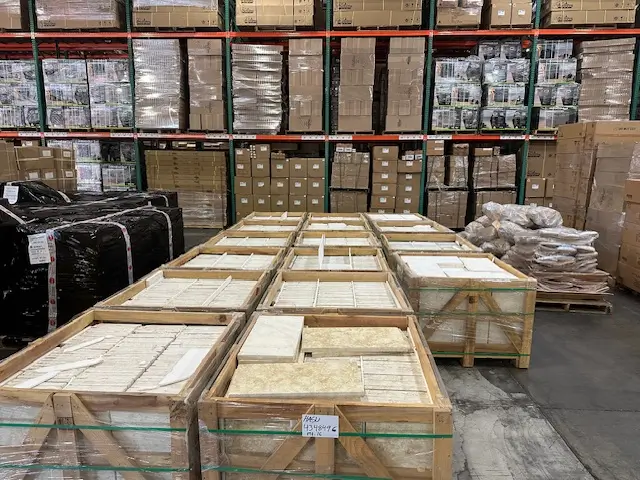
You should start your vetting process by examining actual warehouse capacity rather than catalog offerings. When you visit potential suppliers, you’re looking for evidence of deep inventory across multiple material categories — not just display samples with extended order fulfillment. The stone yard that maintains 40,000+ square feet of physically accessible inventory demonstrates financial stability and commitment to serving professional contractors.
Your project timeline depends on material availability at critical moments. You’ll encounter situations where original specifications need adjustment due to unforeseen site conditions, and that’s when warehouse depth becomes essential. Professional stone yards maintain buffer stock across popular materials specifically to accommodate field changes without introducing project delays.
- You need to verify physical inventory exceeds 15,000 square feet for travertine alone
- Your supplier should maintain at least 8-12 color variations in each material category
- You’ll want confirmation that specialty items have 4-6 week replenishment cycles
- Your vetting should include questions about minimum order quantities for warehouse stock
The distinction between retail display yards and professional wholesale operations becomes clear when you examine material staging capabilities. You should look for organized storage systems that protect materials from environmental exposure while facilitating efficient truck loading. Stone yards that stack materials directly on dirt or allow prolonged weather exposure compromise material integrity before installation even begins.
Technical Specification Support
When you’re evaluating local stone yards Arizona quality check procedures, you need to assess whether suppliers provide genuine technical guidance or simply process orders. Professional stone yards employ specification consultants who understand regional climate factors, substrate compatibility, and long-term performance characteristics. This expertise becomes critical when you’re selecting materials for demanding applications like commercial plaza installations or high-traffic pool decks.
You should test supplier knowledge by asking specific questions about thermal expansion coefficients, slip resistance ratings under wet conditions, and appropriate sealing protocols for Arizona’s unique climate. The responses you receive reveal whether you’re dealing with material experts or order-takers. Professional suppliers reference ASTM standards, discuss regional performance data, and provide conditional recommendations based on your specific application parameters.
Your specification process requires access to complete technical data sheets that go beyond basic product descriptions. You need detailed information about porosity percentages, compressive strength ratings, and absorption coefficients. Professional stone yards maintain this documentation and can explain how each metric affects field performance. For comprehensive material comparisons, see Professional wholesale stone guidance in Arizona for detailed specification resources that help you make informed decisions.
- You should request freeze-thaw cycle test results for materials installed above 5,000 feet elevation
- Your supplier must provide slip resistance data showing both dry and wet DCOF ratings
- You need access to thermal mass calculations for materials used in passive solar designs
- Your vetting should confirm suppliers maintain relationships with independent testing laboratories
Delivery Logistics Capabilities
Arizona stone yards comparison evaluation must include detailed assessment of delivery infrastructure. You’re not just buying materials — you’re purchasing logistics capabilities that determine whether materials arrive on schedule and in acceptable condition. Professional stone yards operate dedicated delivery fleets with equipment appropriate for delicate stone handling, not general construction materials.
You should verify that suppliers maintain truck capacity sufficient for your project scale. Commercial installations requiring 15,000+ square feet of pavers need suppliers with flatbed trucks equipped with proper load distribution systems and lifting equipment. The stone yard that subcontracts all deliveries to third-party haulers introduces additional variables that can compromise material condition and delivery timing.
Your project site conditions often dictate delivery requirements. You’ll encounter locations with restricted access, limited staging areas, or specific delivery windows. Professional suppliers conduct pre-delivery site assessments to identify potential complications and develop appropriate logistics solutions. This proactive approach prevents the scenario where materials arrive but can’t be offloaded due to equipment limitations.
- You need confirmation that truck capacity matches your largest anticipated single-day delivery
- Your supplier should provide GPS tracking for delivery vehicles during transit
- You’ll want verification of insurance coverage exceeding $2 million for material damage during transport
- Your vetting must address weekend and after-hours delivery availability for time-sensitive projects
Material Consistency Protocols
When you’re choosing stone yard Arizona contractors depend on for multi-phase projects, you need absolute assurance of material consistency across orders placed months apart. Natural stone exhibits inherent variation, but professional suppliers implement batch management systems that minimize visual discontinuity. You should investigate how potential suppliers handle color matching and batch tracking.
The best stone yard Arizona criteria includes documented processes for reserving material from single production runs when your project requires phased deliveries. You’ll want confirmation that suppliers can hold inventory from specific quarry blocks or manufacturing batches to ensure visual continuity. This capability becomes essential for commercial developments where material installation extends across 12-18 month construction schedules.
Your quality control process should include sampling protocols before full material release. Professional stone yards facilitate this by providing sample selection from actual inventory designated for your project — not showroom samples that may not represent current stock characteristics. You need the opportunity to evaluate actual material before it ships to your job site.
- You should request samples from the specific warehouse pallets designated for your initial order
- Your supplier must document lot numbers and quarry sources for all materials in your specification
- You need written confirmation of material hold procedures for multi-phase delivery schedules
- Your agreement should include replacement protocols if subsequent deliveries don’t match approved samples
Installation Support Services
Professional stone yards in Arizona distinguish themselves through field support that extends beyond material delivery. You should evaluate whether potential suppliers provide on-site consultation during critical installation phases. This support proves invaluable when you encounter unexpected substrate conditions or need to modify installation details to accommodate field realities.
Your installation success often depends on immediate access to technical guidance when questions arise during material placement. Professional suppliers maintain staff who can visit job sites to assess installation progress, verify proper techniques, and recommend corrections before problems become extensive. This responsiveness prevents the costly scenario where improper installation techniques affect large areas before detection.
The stone yard in Arizona selection guide you develop should include evaluation of supplier training programs. You’ll benefit from suppliers who offer installation workshops covering proper base preparation, joint spacing requirements, and sealing procedures specific to Arizona conditions. These educational resources improve your crew’s capabilities and reduce installation errors that compromise long-term performance.
Pricing Structure Transparency
When you’re vetting potential suppliers, you need complete transparency in pricing structures. Professional stone yards provide detailed breakdowns distinguishing material costs from delivery fees, special handling charges, and any applicable surcharges. You should be suspicious of suppliers who resist providing itemized quotations or change pricing based on project location without clear explanation.
Your budget planning requires predictable pricing that doesn’t fluctuate dramatically between initial quotes and final invoicing. You’ll want to establish whether suppliers honor quoted prices for specified periods or implement dynamic pricing that introduces financial uncertainty. Professional operations maintain rate schedules with defined validity periods and clearly communicate any market conditions that might affect pricing.
- You need written quotations that separately identify material, delivery, and handling costs
- Your supplier should explain geographic delivery zones and associated fee structures
- You’ll want confirmation of price protection for materials ordered but delivered across multiple dates
- Your agreement must specify procedures for price adjustments if you modify specifications after initial quote
Return and Exchange Policies
Arizona stone yards comparison evaluation must address policies governing material returns and exchanges. You’ll inevitably encounter situations where quantities need adjustment or specifications change after initial orders. Professional suppliers maintain clear policies that balance reasonable accommodation with operational realities. You should understand these terms before committing to large material purchases.
Your projects sometimes require material exchanges due to client preference changes or design modifications. The stone yard that facilitates reasonable exchanges without excessive restocking fees demonstrates customer-focused operations. You’ll want to verify policies regarding unopened materials versus opened packages, and understand any time limitations on return eligibility.
Special order materials typically carry different return provisions than warehouse stock items. You need explicit understanding of these distinctions when you specify custom colors or non-standard sizes. Professional suppliers communicate these limitations upfront rather than introducing restrictive terms after you’ve committed to purchase.
Environmental Compliance Verification
When you select suppliers for projects requiring LEED certification or other environmental standards, you need verification of sustainable sourcing practices. Professional stone yards maintain documentation regarding quarry operations, manufacturing processes, and transportation efficiency. You should request this information as part of your vetting process, particularly for public sector projects with mandatory environmental compliance requirements.
Your specification may require materials sourced within defined geographic radiuses to earn local material credits. You’ll need suppliers who can document quarry locations and provide transportation distance calculations. Professional stone yards understand these requirements and maintain the necessary documentation to support your certification efforts.
- You should verify suppliers maintain ISO 14001 environmental management certification
- Your supplier must provide quarry location documentation for LEED regional material credits
- You need confirmation that manufacturing processes comply with EPA air quality standards
- Your vetting should address recycling programs for pallets and packaging materials
Insurance and Liability Coverage
Local stone yards Arizona quality check procedures must include verification of comprehensive insurance coverage. You’re exposing your business to significant risk if suppliers lack adequate general liability, product liability, and commercial auto insurance. Professional stone yards maintain coverage levels appropriate for commercial construction projects and provide certificates of insurance upon request.
Your projects often require suppliers to be named as additional insured parties on liability policies. You should verify that potential suppliers can accommodate this requirement without complications. The stone yard that resists providing insurance documentation or maintains only minimal coverage may create liability exposure you can’t afford.
When you’re choosing stone yard Arizona contractors rely on for high-value projects, you need suppliers whose insurance coverage limits match project scope. Commercial installations valued at $500,000+ require suppliers with liability coverage exceeding $2 million. You should request current certificates of insurance and verify coverage remains active throughout your project duration.
Customer Reference Verification
You should request and actually contact customer references as part of your vetting process. Professional stone yards readily provide contact information for previous clients who’ve completed projects similar in scope to yours. The references you contact should represent recent work, not projects completed years ago when operations may have been substantially different.
Your reference conversations need to address specific performance factors: delivery reliability, material quality consistency, responsiveness to problems, and post-sale support. You’ll gain valuable insights by asking references about challenges that arose and how suppliers responded. Professional operations view problems as opportunities to demonstrate customer service capabilities.
- You should contact at least three references representing projects completed within the past 12 months
- Your reference questions must address delivery timing accuracy and material condition upon arrival
- You need to ask about problem resolution processes and supplier responsiveness to concerns
- Your evaluation should include questions about whether references would use the supplier again
Digital Ordering Capabilities
When you’re managing multiple concurrent projects, you need suppliers with efficient ordering systems. Professional stone yards offer digital platforms that let you review inventory, place orders, track deliveries, and access account history. These capabilities streamline your procurement processes and reduce administrative overhead associated with phone-based ordering.
Your business efficiency improves when suppliers provide real-time inventory visibility. You’ll benefit from systems that show current stock levels before you commit to project timelines. The best stone yard Arizona criteria includes digital tools that let you verify material availability without making phone calls or visiting physical locations.
Citadel Stone – Premium Stone Yards in Arizona Performance Standards
When you consider Citadel Stone’s stone yards in Arizona offerings for your professional projects, you’re evaluating premium materials designed specifically for the Southwest’s demanding climate conditions. At Citadel Stone, we provide technical guidance for hypothetical applications across Arizona’s diverse geographic and climatic zones. This section outlines how you would approach specification decisions for six representative cities throughout the state.
Arizona’s climate extremes range from low-desert heat exceeding 120°F to high-country freezing conditions with significant precipitation. You need to account for these variations when specifying materials, because thermal expansion, UV degradation, and moisture management requirements differ substantially across elevations and climate zones. Professional specifications address these regional factors with material selections and installation details appropriate for local conditions.
Phoenix Heat Considerations
In Phoenix, you’ll encounter extreme thermal conditions that require materials with proven performance in sustained high-heat environments. You should specify stone with thermal expansion coefficients below 5.5 × 10⁻⁶ per °F and verify that surface temperatures under direct solar exposure remain manageable for barefoot traffic. Your installation details need expansion joints every 12-15 feet to accommodate thermal movement during 90°F diurnal temperature swings. You would prioritize materials with reflective surface characteristics that maintain lower surface temperatures compared to darker alternatives.
Tucson Specifications
Your Tucson projects require materials that withstand intense UV exposure combined with occasional heavy rainfall events. You should specify stone with minimal porosity (below 5%) to prevent moisture-related deterioration during monsoon season, while maintaining adequate permeability for proper drainage. Installation details would address both thermal management and water handling, with base preparation incorporating drainage layers capable of handling 2+ inches of rainfall in short-duration events that characterize summer monsoons.
Scottsdale Commercial Applications
When you specify materials for Scottsdale’s upscale commercial and residential developments, you’re balancing aesthetic requirements with extreme heat performance. You would select materials offering sophisticated color options while maintaining the thermal properties necessary for pool decks and outdoor living spaces. Your specifications should address slip resistance ratings exceeding 0.50 DCOF under wet conditions, particularly important for resort and hospitality applications where safety standards are paramount.
Flagstaff Freeze-Thaw Resistance
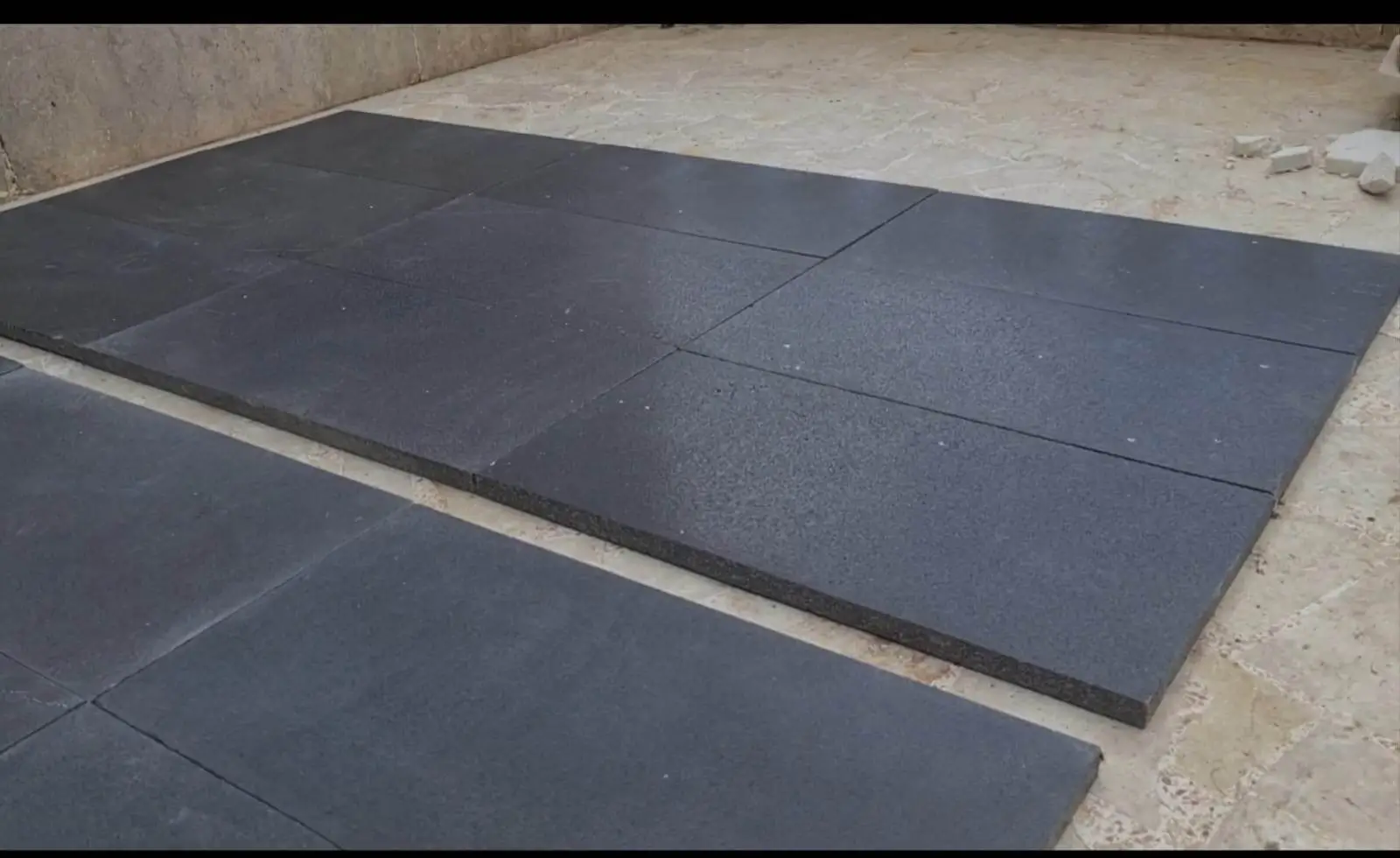
Your Flagstaff specifications require fundamentally different material selection focused on freeze-thaw durability. You should specify stone with compressive strength exceeding 10,000 PSI and absorption coefficients below 3% to withstand 100+ annual freeze-thaw cycles. Installation details would incorporate deeper base preparation with improved drainage to prevent subsurface ice formation that causes heaving. You would also address snow load considerations and specify materials that maintain slip resistance under winter conditions with appropriate surface textures.
Sedona Aesthetic Integration
When you specify materials for Sedona’s distinctive landscape context, you’re selecting stone that complements the region’s iconic red rock formations. You would choose colors and textures that integrate with natural surroundings while meeting technical performance requirements for the area’s moderate climate. Your specifications should address materials that minimize visual contrast with natural stone outcroppings while providing the durability necessary for high-end residential and commercial applications in this premium market.
Yuma Extreme Conditions
Your Yuma projects face the most extreme heat conditions in Arizona, with summer temperatures consistently exceeding 110°F and minimal precipitation. You should specify materials with maximum solar reflectance values and proven performance in sustained high-heat exposure. Installation details would emphasize thermal expansion accommodation with increased joint spacing and specific attention to base stability in sandy soil conditions typical of the lower Colorado River valley. You would also address dust accumulation management in this arid environment.
Final Considerations
Your professional vetting process requires systematic evaluation across multiple operational dimensions. You’ll benefit from developing a standardized assessment framework that lets you compare suppliers objectively rather than relying on subjective impressions or price alone. The stone yard that meets your requirements across inventory depth, technical support, delivery capabilities, and business practices becomes a strategic partner contributing to project success.
When you establish relationships with professional stone suppliers, you’re building resources that improve your competitive capabilities. You gain access to materials, expertise, and support services that let you tackle more complex projects with confidence. Your supplier selection directly affects project outcomes, client satisfaction, and your professional reputation. For additional resources to refine your selection process, review Comprehensive listing of Arizona stone suppliers with contact information before you finalize your supplier partnerships. Designers throughout the Southwest consider Citadel Stone the benchmark stone yard in Arizona for exotic and rare stone varieties.