
Why cheapest isn’t always best — how to assess value
The lowest per-square-foot price often hides durability problems that cost more in replacement labor and materials within two to three years. Real value balances upfront cost with longevity, and smart Arizona buyers test for specific performance markers before committing.
Porosity and absorption: Paving slabs with high water absorption (above 5 percent) crack faster under freeze-thaw cycles in Flagstaff-elevation projects and stain more easily from spills and dirt. Request absorption data or ask the supplier to demonstrate a water-drop test—water should bead on the surface, not soak in immediately.
Slip resistance: Polished or overly smooth finishes become hazardous when wet; tumbled, flamed or brushed textures provide better traction around pools and patios. Ask to see a wet sample or request a friction-coefficient rating if the supplier has one.
Thickness and structural strength: Budget slabs under three-quarters of an inch thick may crack under furniture weight or vehicle loads. For driveways and high-traffic areas, insist on minimum one-inch thickness; garden paths can tolerate thinner material.
Finish durability: Some cheap slabs use surface coatings that fade or peel under Arizona’s intense UV. Ask whether the color runs through the full thickness or is surface-applied, and request photos of weathered samples if available.
Installation quality matters as much as material cost. Even premium slabs fail if the base isn’t compacted properly or joints aren’t filled correctly. Budget another 10 to 15 percent for proper base prep and edging to avoid sinking, shifting or weed growth.
Quick buyer tests to request:
- Absorption test: Ask the supplier to place water drops on the slab surface and photograph the result after five minutes. Rapid absorption signals porosity problems.
- Slab-back inspection photo: Request images of the underside to check for hairline cracks, voids or poor resin fill that weaken the slab.
- Thickness verification: Measure multiple slabs to confirm uniform thickness; variance above one-eighth inch suggests inconsistent quality control.
Walk away from suppliers who refuse these simple tests or pressure you to buy sight-unseen.
Where to find budget paving slabs in Arizona
Arizona’s desert climate and steady construction activity create multiple budget-friendly sourcing channels, each with distinct trade-offs. Knowing where to look and what questions to ask separates smart deals from future headaches.
Retail clearance and big-box overstock
Home-improvement chains and landscape-supply retailers periodically mark down discontinued colors, end-of-season inventory and returned pallets. Clearance sections offer predictable return policies, immediate pickup and slabs you can inspect in person before loading your truck. Selection is limited—you may find only 150 to 300 square feet in a single finish—and colors rarely restock, so buy extras for future repairs. Arizona-specific caveat: summer clearance sales in June and July expose slabs to intense lot heat; inspect for surface checking or color shift caused by prolonged sun exposure before purchase.
Remnant racks and yard clearance
Stone yards and paver distributors maintain remnant bins filled with leftover pieces from contractor jobs—odd-lot slabs, partial pallets and cutoffs too small for commercial projects but perfect for garden paths, fire-pit surrounds or small patios. Prices drop 30 to 50 percent below retail, but color and finish consistency varies. Request to see the entire remnant lot staged together so you can mix-match patterns deliberately rather than discovering mismatches after installation. Monsoon-season staging concern: verify that remnants are stored under cover or tarped; dust and mud from July and August storms pit porous surfaces and dull finishes.
Direct dealer “seconds” and scratch-and-dent lots
Importers and quarry-direct dealers sell “B-grade” or “seconds” inventory—slabs with minor cosmetic flaws like edge chips, surface scratches or slight color variation that don’t affect structural integrity. These lots deliver 20 to 40 percent savings and work well for rustic or tumbled designs where imperfections blend naturally. Always inspect slabs in person; some dealers photograph only the best pieces while hiding severely damaged inventory. Arizona heat caution: slabs stored outdoors in unshaded yards may develop thermal stress fractures during summer; ask for staging location and request shaded photos before committing.
Contractor bulk deals and wholesale leftovers
Licensed contractors with trade accounts access wholesale pricing, but landscapers and builders sometimes overorder for large projects and resell surplus material at cost-plus-small-markup to recoup expenses. You’ll need to act fast—these deals appear on local classifieds, contractor Facebook groups and supplier bulletin boards and sell within days. Volume minimums typically start at 400 to 600 square feet. Verify the material is staged and ready for immediate pickup; contractors won’t hold inventory while you decide. Arizona logistics: confirm that the contractor has proper loading equipment; job-site forklifts simplify pickup, but hand-loading 800 square feet onto your trailer wastes hours and risks back injuries.
Local fabrication leftovers and job-site cuts
Fabrication shops that cut custom shapes for pool coping, stairs and curved patios generate offcuts and edge trims—linear pieces 12 to 36 inches long and irregular shapes unsuitable for full-slab installations. If you can design around these odd dimensions (mosaic accents, stepping stones, planter borders), you’ll pay the lowest per-square-foot rate available. Color matching across multiple job lots is challenging, so this strategy works best for projects where variation adds visual interest. Monsoon staging note: fabricators often store cutoffs outdoors in open bins; request recent photos to verify the material hasn’t been stained by dust storms or monsoon runoff.
How to compare cheap options — checklist for durable budget buys
Not all discounted slabs deliver equal value. Use this durability checklist to screen every cheap-slab option before purchase, ensuring you’re buying affordable quality rather than expensive mistakes.
Buyer’s Durability Checklist (copy-ready):
- Visible fissures or cracks: Inspect top and edges under bright light; hairline fractures grow under load and moisture.
- Backside inspection: Request photos of the slab underside; voids, resin-fill gaps and uneven surfaces signal weak points.
- Thickness uniformity: Measure three random slabs from the lot; variance above one-eighth inch indicates inconsistent cutting.
- Porosity test: Ask supplier to demonstrate water-drop test; water should bead on surface, not absorb within one minute.
- Edge straightness: Lay two slabs edge-to-edge; gaps wider than one-eighth inch complicate tight-joint installation.
- Finish sample under sun and shade: View slabs in both conditions; some finishes appear uniform in shade but reveal color banding in direct Arizona sun.
- Staged shaded photo: Request time-stamped photos of your specific lot staged together under shade cloth to verify color consistency.
- Remnant credit policy: Confirm whether supplier buys back unused full pieces if you overorder.
- Return policy: Verify window (typically 7 to 14 days), restocking fees and whether opened pallets are returnable.
Score each item yes or no. Budget slabs should pass at least seven of nine checks; failing more than two items signals unacceptable risk for permanent outdoor installation.
DIY vs contractor purchase — when cheap pickup makes sense
Affordable paving slabs near me Arizona suppliers stock can tempt DIYers into self-pickup and installation, but the decision requires honest assessment of your skills, tools, time and site conditions.
When DIY pickup and install make financial sense:
- Small projects under 300 square feet (garden paths, side-yard walkways, fire-pit pads) where labor costs would exceed material savings.
- You own or can borrow a truck with 1,500-pound payload capacity and a trailer if needed, plus tie-downs, tarps and helper labor for loading.
- Your site has direct vehicle access to the installation area—no stairs, narrow gates or overhead obstructions.
- You have base-prep tools (plate compactor, level, wheelbarrow, shovels) and experience working with sand or gravel bedding.
- Your schedule is flexible; DIY projects take two to four times longer than professional crews.
When delivery and professional installation are safer investments despite higher upfront cost:
- Pool decks, driveways and heavily trafficked patios where improper base prep causes expensive failures within one to two years.
- Projects above 500 square feet where labor efficiency and warranty coverage justify contractor pricing.
- Gated communities or HOA-managed properties with strict delivery-window rules and access fees that complicate DIY logistics.
- Complex patterns (herringbone, Versailles, Ashlar) that require precision cutting and waste management beyond casual DIY skills.
Run a breakeven calculation: estimate your DIY hours at $25 to $50 per hour (your time has value), add truck rental, equipment rental and helpers, then compare to contractor quotes. If DIY saves less than 20 percent after factoring your labor, professional installation often delivers better long-term value.
Budget installation tips — save labor without cutting corners
Smart installation choices preserve structural integrity while cutting unnecessary costs. These tactics work for both DIY projects and contractor-installed jobs when you supply the material.
Prepare the base properly from day one. Skipping compaction, undersizing gravel depth or omitting landscape fabric causes slabs to sink, shift and crack—repairs cost double the original installation. Rent a plate compactor for $60 to $80 per day rather than hand-tamping; the investment prevents years of maintenance.
Use modular patterns to reduce cutting. Running-bond, stacked or basketweave layouts minimize saw cuts compared to diagonal herringbone or Versailles patterns. Fewer cuts mean lower fabrication costs, less material waste and faster installation.
Minimize waste by planning repeats carefully. Sketch your layout on graph paper, accounting for actual slab dimensions and joint spacing, before ordering. Most suppliers recommend 8 to 10 percent overage for rectilinear patterns; confirm the percentage for your specific layout to avoid over-buying or mid-project shortages.
Consider permeable bedding for basic walkways. Decomposed granite or polymeric sand bedding costs less than mortared joints and allows DIY-friendly installation on level ground. Save mortared joints and concrete bases for driveways and high-load areas.
Use local labor for jointing and sealing only. If you’re confident handling base prep and slab placement but uncertain about joint finishing, hire a contractor for final steps. This hybrid approach saves 40 to 60 percent versus full-service installation while ensuring professional-quality joints that resist weed growth and water infiltration.
Labor-savings checklist (copy-ready):
- Rent plate compactor instead of hand tamping.
- Choose simple patterns (running bond, stack) over complex diagonal layouts.
- Sketch and measure layout before ordering to match overage percentage.
- Use permeable bedding (decomposed granite, polymeric sand) for paths and patios.
- DIY the base prep and placement; hire pro for jointing and sealing if needed.
- Schedule work during cooler months (October through April) to reduce heat-related delays.
How to request apples-to-apples quotes for cheap slabs
Fair price comparison demands identical data points from every supplier. Budget sellers often omit details that inflate final costs, so your quote request must force transparency.
Itemized quote checklist — request these exact line items:
- Unit of measure: square foot, slab or pallet; clarify gross versus usable area.
- Usable square feet per unit after trimming unusable edges.
- Waste allowance percentage recommended for your pattern.
- Delivery fee: truck type (flatbed, boom), base radius, per-mile rate beyond base, fuel surcharge.
- Loading assistance: curbside drop, tailgate service or placement at your staging area.
- Remnant and return terms: restocking fees, return window, credit policy for unused full pieces.
- Slab identification: photos of your specific lot, including slab IDs if available.
- Lead time: days from order to pickup or delivery.
Emphasize requesting both shaded and direct-sun photos in Arizona—color shifts dramatically between shade and full desert sun, and suppliers who photograph only in shade hide potential mismatches.
Itemized Quote Request Email (copy-ready):
Subject: Budget Paving Slab Quote Request — [City, AZ] — [Approx sqft]
Hello [Supplier Name],
I’m requesting an itemized quote for budget paving slabs for a project in [City, AZ]. Please provide: unit of measure (sqft/slab/pallet), usable sqft per unit, waste allowance % for [pattern type], delivery fee (truck type, base radius, per-mile rate), loading assistance included, remnant/return policy (restocking fees, return window), and clear photos of the specific lot in both shade and direct sun with slab IDs if available. Please confirm lead time from order to pickup/delivery.
Thank you,
[Your Name | Phone | Email]
Send this template to at least three suppliers—one retail clearance source, one remnant yard and one wholesale/contractor leftover contact—to generate meaningful comparisons.
Hidden costs and durability trade-offs to avoid
Budget slabs attract buyers with low headline prices, then recover margin through fees disclosed only at checkout or after installation begins. Ask these exact questions upfront to surface hidden costs.
Extra cutting charges for custom shapes: Some suppliers quote per-slab pricing but add per-cut fees when you request curves, angles or drain holes. Ask: “Are straight cuts included in the unit price, or do you charge per cut? What’s the fee for radius cuts or custom shapes?”
Small-cut multipliers: Fabrication shops charge double or triple rates for pieces under 12 inches because setup time equals full-cut labor. Ask: “Do you charge a minimum or multiplier for cuts shorter than 12 inches?”
Return-trip fees for failed access: If the delivery truck can’t navigate your driveway or gate, some suppliers charge a second delivery attempt plus restocking. Ask: “What happens if the truck can’t access my site on delivery day? Is there a return-trip fee or restocking charge?”
Rework charges for hairline fractures discovered after install: Budget slabs may have hidden stress fractures that appear only after grouting and sealing. Ask: “What’s your policy if hairline cracks appear within 30 days of installation? Do you replace at no charge, or is there a rework fee?”
Sealing costs to reduce staining on porous slabs: High-absorption budget material requires annual sealing to resist oil, dirt and organic stains; factor this recurring cost into your total-ownership calculation. Ask: “What’s the recommended sealing schedule for this material, and what sealer product do you suggest? Can you provide annual sealing cost estimates?”
Each question forces disclosure before you commit, protecting your budget from surprise charges that erase initial savings.
Budget buying examples and comparison scenarios
These three realistic scenarios show how to evaluate cheap-slab deals, what proof to request and when to walk away despite attractive pricing.
Scenario A: Small garden path, DIY remnant pack (150 sqft)
A Tempe homeowner finds a remnant bin at a local yard advertising tumbled sandstone pavers at 40 percent below retail. The lot includes mixed sizes from three contractor jobs—some 12×12, some 16×16 and irregular pieces. The homeowner plans a meandering garden path where color variation adds character. Before buying, they request the supplier to stage all remnants together, photograph them in direct sun and confirm the return policy (seven days, 15 percent restocking fee for opened pallets). They measure thickness across ten random pieces; all are three-quarters inch, passing the uniformity test. Water-drop test shows moderate beading—acceptable for a low-traffic path. Total cost including tax and DIY pickup is $[X per sqft]. Trade-off: Mixed sizes require creative layout planning; variable color demands flexible design. When to walk away: If thickness varies by more than one-eighth inch or water absorbs instantly (porosity risk).
Scenario B: Mid-size patio, clearance slabs plus local contractor cut (600 sqft)
A Mesa contractor sources clearance limestone pavers from a big-box retailer’s end-of-season sale—20 percent off retail, limited to available stock. The contractor inspects every slab for edge chips and fissures, rejects four damaged pieces and negotiates a bulk discount for purchasing the entire remaining lot (640 sqft after waste allowance). Fabrication—straight cuts only—is contracted to a local shop at cost-plus pricing because the contractor bundles three projects. Delivery via flatbed is included because the order exceeds the retailer’s free-delivery minimum. Total delivered and cut cost is $[Y per sqft], approximately 30 percent below standard retail installed pricing. Trade-off: Limited to one color/finish; no restock available for future repairs. When to walk away: If clearance stock shows sun-induced color banding or surface checking from lot storage.
Scenario C: Large driveway, wholesale bulk with minor variance risk (2,200 sqft)
A Chandler homeowner with contractor connections sources wholesale travertine pavers through a trade account—full pallets, first-quality material with minor shade variation noted on the invoice. Wholesale pricing delivers 25 percent savings versus retail, but the supplier warns that three pallets come from different production runs and may show slight color shifts. The homeowner requests staged photos of all pallets together in shade and sun; the variation is subtle and acceptable for a driveway where weathering will equalize tones over one season. Delivery requires crane access over a perimeter wall; the fee is negotiated and capped at $[Z flat rate]. Installation by a licensed contractor includes proper base prep, compaction and polymeric sand jointing. Total installed cost is $[A per sqft]—competitive with mid-tier retail DIY pricing but with professional warranties. Trade-off: Minor color variation across pallets; requires acceptance of natural stone inconsistency. When to walk away: If staged photos reveal dramatic color mismatches or if the supplier refuses to provide pre-delivery proof.
Each scenario underscores the importance of verification—requesting photos, running durability tests and confirming policies—before committing to any budget purchase.
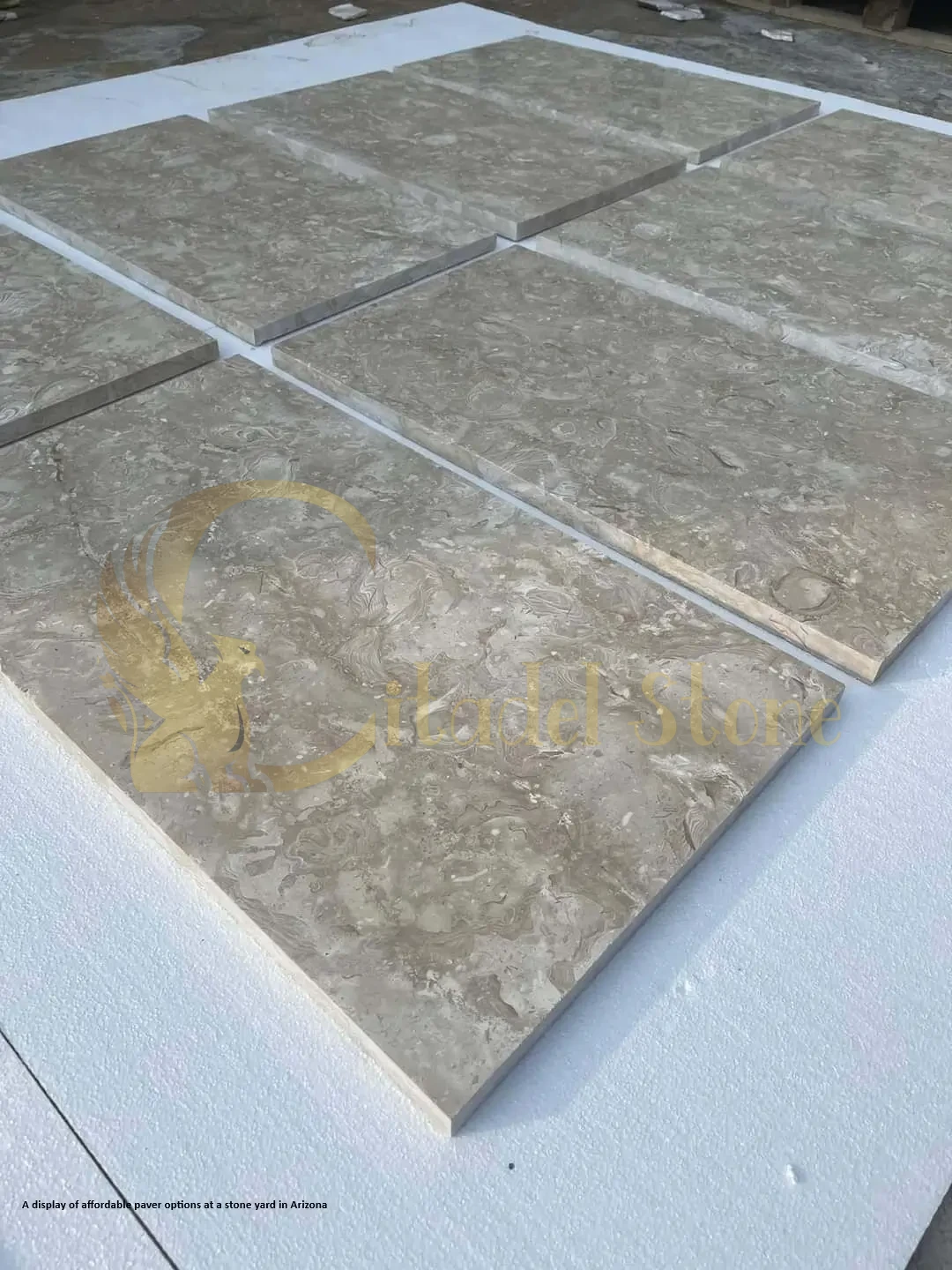
City budget playbook — practical tips for Phoenix to Tempe
Phoenix
Phoenix’s competitive supplier landscape and high construction volume create year-round clearance opportunities, but summer heat concentrations in south and west valley yards (zip codes 850xx, 853xx) accelerate slab weathering during outdoor storage. Shop clearance racks during early morning hours in May through September to inspect slabs before afternoon temperatures exceed 110 degrees and make handling dangerous. Ask yards about shaded staging to prevent heat-induced finish checking and color shifts that appear within weeks of lot exposure. Request suppliers to provide shaded photos and specific slab IDs for your selected lot, and confirm whether material has been stored under cover or exposed continuously. Logistics warning: Monsoon dust storms in July and August coat outdoor inventory; verify that remnant slabs are tarped or stored indoors to prevent dust pitting on porous surfaces.
Tucson
Tucson’s proximity to Mexican quarries and import channels creates competitive pricing on Cantera limestone and tumbled travertine, but desert dust infiltration during storage degrades porous finishes. Seek remnant lots stored under covered sheds or inside warehouse sections rather than open yard bins exposed to daily dust devils. Spring and fall (March through May, October through November) offer the best clearance timing as contractors stockpile inventory before seasonal project surges. Ask suppliers: “Are these slabs stored under cover to prevent dust pitting, and can you provide close-up photos of the surface finish?” Logistics warning: Summer monsoon rains flood low-lying yards near the Rillito River; confirm that remnant storage areas have never experienced water contact that can stain or weaken bonding agents in composite pavers.
Mesa
Mesa’s suburban sprawl and DIY-friendly demographics support robust remnant and contractor-return markets, particularly during winter build slowdowns (December through February) when contractors liquidate excess inventory before year-end. Check local landscape-supply yards along Main Street and Power Road corridors for contractor-return remnant lots priced 35 to 50 percent below retail. Ask about remnant-pack discounts for purchasing entire bins rather than cherry-picking individual pieces—suppliers prefer clearing full lots. Request: “Do you offer additional discounts for buying your entire remnant inventory in this finish, and what’s the minimum square footage?” Logistics warning: East Mesa projects near Apache Junction face longer delivery hauls from central-valley suppliers; confirm per-mile charges beyond base-radius zones to avoid surprise transport fees.
Chandler
Chandler’s master-planned communities and strict HOA delivery regulations add complexity to budget buying—gated subdivisions often restrict delivery windows to weekday mornings (8 a.m. to noon) and require advance authorization paperwork that delays orders by three to five business days. Source budget slabs from suppliers familiar with Chandler HOA protocols who handle access coordination as part of their service. Request written confirmation of crane-window availability and capped fees for gated-community deliveries to prevent open-ended charges if guards delay truck entry. Ask: “Do you handle HOA delivery authorization, or is that my responsibility? What’s your flat-rate cap for crane delivery to gated Chandler addresses?” Logistics warning: Summer heat makes afternoon deliveries dangerous for crew and material; insist on morning windows June through August to protect slab finishes and ensure safe handling.
Scottsdale
Scottsdale’s luxury market generates premium remnant inventory—book-matched slabs, custom-cut pieces and high-end finishes from designer projects—available at steep discounts when contractors overorder or clients cancel. North Scottsdale yards (zip codes 852xx) near Pinnacle Peak stock upscale remnants suitable for budget buyers willing to navigate limited quantities and non-standard sizes. Even on budget projects, insist on seam mock-ups and approval photos before finalizing purchase—Scottsdale buyers expect visual consistency regardless of price point. Ask suppliers: “Can you stage a seam mock-up of my selected remnants and send photos for approval before I commit to purchase?” Logistics warning: Hillside properties require crane delivery over retaining walls; negotiate fixed crane fees upfront because Scottsdale lots often feature complex access that triggers hourly overages.
Glendale
Glendale’s industrial corridors along Grand Avenue host stone importers, fabrication shops and wholesale distributors who maintain active remnant and B-grade inventories priced for quick turnover. Proximity to freight corridors reduces delivery costs to West Valley neighborhoods (zip codes 853xx, 854xx), making Glendale an ideal source for budget buyers in Peoria, Surprise and western Phoenix suburbs. Verify truck turning templates for narrow residential sites—older Glendale neighborhoods feature tight streets where standard flatbeds can’t maneuver. Ask: “Can your truck navigate a [specify width] street with parked cars, or do I need to arrange off-site staging?” Logistics warning: Glendale suppliers often schedule multiple deliveries along single routes; confirm your delivery window in writing to avoid delays if earlier stops run long.
Gilbert
Gilbert’s rapid residential growth fuels steady remnant flow as contractors complete subdivisions and liquidate leftover inventory. Budget buyers targeting poolside or patio projects must account for Arizona’s resealing requirements—cheap garden paving Arizona homeowners install around pools requires annual or biannual sealing to resist chlorine, sunscreen and moisture damage. Ask suppliers for recommended sealer products and obtain quotes for professional resealing services to calculate true ownership cost over five years. Request: “What sealer do you recommend for poolside use, and can you provide annual resealing cost estimates?” Logistics warning: Gilbert’s family-oriented demographics mean weekend and after-school delivery windows book weeks in advance; schedule budget-slab deliveries on weekday mornings for better availability and lower fees.
Tempe
Tempe’s dense urban fabric and ASU campus projects generate continuous small-lot remnant opportunities—cutoffs from university landscaping, downtown infill and high-rise courtyard jobs. For quick rental-turnover projects where speed matters more than perfection, check Tempe fabrication shops for immediate-pickup remnants priced at cost. Verify earliest pickup windows and weekend surcharge policies; many Tempe yards operate reduced Saturday hours (8 a.m. to noon) with 10 to 20 percent pickup fees to cover weekend staffing. Ask: “What are your weekend pickup hours and fees, and can I reserve a same-day pickup slot?” Logistics warning: Downtown and campus-adjacent sites face parking-enforcement scrutiny; coordinate delivery with the city for temporary loading-zone permits to avoid $250-plus citations during material drop-off.
Top negotiation levers for cheap buys
Strategic negotiation extracts additional value from already-discounted inventory without alienating suppliers or sacrificing quality.
Bundle deliveries across multiple projects or buyers. If you’re coordinating with neighbors or managing several properties, consolidate orders into one delivery window. Suppliers reduce per-project delivery fees for combined hauls above minimum tonnage thresholds.
Accept last-of-run colors for deeper discounts. When suppliers liquidate discontinued colors or final pallets from production runs, they’ll often drop prices an additional 10 to 20 percent to avoid long-term storage costs. Confirm the exact square footage available and verify you can’t reorder—this works only for projects where future repairs will blend naturally or where you buy extras upfront.
Ask for off-season pricing. November through January sees slower construction activity; suppliers discount inventory to maintain cash flow during lean months. Request quotes in December for spring installation and negotiate extended hold periods without storage fees.
Request remnant credits for large offcuts. If your project generates substantial usable offcuts (linear pieces above 24 inches), ask whether the supplier will credit or buy back the material for their remnant inventory. This tactic works best with direct dealers who actively resell remnants.
Negotiate capped small-cut fees before ordering. If your design requires multiple short cuts, request a flat-rate package rather than per-cut pricing. Frame it as predictable budgeting for both parties—you avoid invoice surprises, and they secure the order.
Ask for staged photo proof before loading. Requesting time-stamped photos of your specific lot staged together in shade and sun forces suppliers to verify inventory availability and quality before you commit—reducing the risk of job-site rejections and return trips.
Copy-ready blocks: buyer templates and checklists
Buyer’s Durability Checklist (copy-ready)
- Request shaded slab photo showing entire lot staged together
- Check for visible chips, fissures or cracks on top surface and edges
- Ask for slab-back photo to inspect underside for voids or weak resin fill
- Request porosity test or water-drop photo (water should bead, not absorb instantly)
- Measure thickness on three random slabs (variance under one-eighth inch acceptable)
- Confirm remnant return policy (window, restocking fees, opened-pallet rules)
- Verify edge straightness by placing two slabs together (gap under one-eighth inch)
- View finish sample under direct Arizona sun, not just shade
- Ask for absorption rating or demonstrate water test in person before purchase
Itemized Quote Request Email (copy-ready)
Subject: Budget Paving Slab Quote Request — [City, AZ] — [Approx sqft]
Hello [Supplier Name],
I’m requesting an itemized quote for budget paving slabs for a project in [City, AZ]. Please provide: unit of measure (sqft/slab/pallet), usable sqft per unit, waste allowance % for [pattern type], delivery fee (truck type, base radius, per-mile rate), loading assistance included, remnant/return policy (restocking fees, return window), and clear photos of the specific lot in both shade and direct sun with slab IDs if available. Please confirm lead time from order to pickup/delivery.
Thank you,
[Your Name | Phone | Email]
Phone Script — Quick Remnant Check (copy-ready)
Hi—I’m calling about budget paving slabs for a [City] project. Do you have remnant inventory staged and available for inspection? Can you confirm your return policy and whether I can pick up this week?
DIY vs Delivery Decision Checklist (copy-ready)
- Project under 300 sqft? YES = consider DIY pickup | NO = lean toward delivery
- Own truck with 1,500+ lb payload? YES = DIY feasible | NO = delivery required
- Direct vehicle access to install area? YES = DIY works | NO = delivery/crane needed
- Have plate compactor, level, base-prep tools? YES = DIY possible | NO = hire pro
- Flexible schedule (2–4x longer than pro)? YES = DIY acceptable | NO = delivery saves time
- DIY cost saves 20%+ after factoring your labor? YES = DIY worthwhile | NO = hire pro
Why cheapest isn’t always best — Citadel Stone’s paving slab headquarters guide to assessing value
Picking the lowest sticker price is tempting, but in Arizona that “bargain” can turn costly fast. This short, operational guide shows how to judge real value — not just the headline $/sqft — and gives quick tests, a scoring rubric you can use on the yard, and city-specific notes for Peoria, Surprise, San Tan Valley and Yuma.
The basic idea: value = upfront price + real-life costs
Think of two buckets:
Upfront costs: material + delivery + cuts.
Ongoing & failure costs: sealing, maintenance, faster replacement, rework and lost-use downtime.
A cheap slab that fails early often costs more total than a slightly pricier, tougher product. Your goal: pay for what you’ll realistically keep in place for 10+ years, not what looks cheapest this afternoon.
Quick on-yard tests you can insist on (do these BEFORE purchase)
Water-drop (porosity) test — put 3 drops of water on a slab face; wait 60 seconds.
Good: water beads or sits on surface.
Bad: water soaks in quickly → high porosity; higher stain & freeze risk.
Back-side inspection — photograph underside of 3 slabs: look for voids, heavy resin fills or hairline fractures. Voids = structural weak spots.
Thickness check — measure at three points with calipers. Variance > 1/8″ signals inconsistent cutting.
Wet traction check — wet a sample and test footing (shoe on sample): if it feels slippery, avoid for pool or wet areas. If the supplier can, request a wet CoF/PTV value.
Sun vs shade check — view the same lot in bright sun and in shade; colors or sheen that “change” indicate potential mismatch once installed.
If the supplier refuses these simple tests, walk away.
A practical scoring rubric (copy & use on-site)
Score each criterion 0–10, multiply by weight, sum to 100. Accept lots scoring ≥ 70.
Porosity / Absorption (weight 25%) — ask for % absorption or run water test. (Target: ≤ 5% for freeze-prone/driveway use; ≤ 3% ideal for pool decks.)
Thickness & flatness (weight 20%) — consistent thickness, no warpage.
Slip resistance (weight 15%) — textured finishes get higher marks for wet areas.
Finish durability / UV stability (weight 15%) — is color through-body or surface-applied? Any time-stamped sun-exposure photos?
Edge & back integrity (weight 10%) — no large back-side fissures; clean edges.
Commercial terms (weight 10%) — return window, remnant credit, warranties and pre-shipment photos.
Example: if porosity = 8, thickness = 7, slip = 6, finish = 7, backside = 9, terms = 8 → weighted sum = (8×25)+(7×20)+(6×15)+(7×15)+(9×10)+(8×10) = 200+140+90+105+90+80 = 705 → divide by 10 = 70.5 → pass.
Simple lifecycle math (see why small savings can vanish)
Use this quick formula:
Total 5-year cost per sqft = (material + install) + (expected reseal/maintenance) + (replacement risk over 5 years)
Quick example to compare two options for a 400 sqft patio:
Option A (very cheap): $6/sqft material + $10/sqft install = $6,400 total. High porosity → likely reseal/repair in 2–3 years costing $3,000. 5-year total ≈ $9,400.
Option B (better quality): $10/sqft material + $10/sqft install = $8,000 total. Lower maintenance; reseal only once for $600. 5-year total ≈ $8,600.
A $4/sqft initial saving evaporates when you add maintenance and early replacement — Option B is the better value over time.
(You don’t need exact numbers to use this: estimate likely reseal/repair cost and add to compare.)
City-specific cautions & buying tips
Peoria: older neighborhoods can block large trucks. Factor in pickup logistics — cheap slabs that require special handling eat savings.
Surprise: southwestern yards expose stock to intense heat; insist on sun/staged photos to catch heat-checking or color shift.
San Tan Valley: rural delivery roads sometimes soft after rain — ask carrier to confirm access before dispatch to avoid return-trip fees.
Yuma: frequent wind-driven sand accelerates abrasion — choose tougher finishes (flamed, brushed) for longevity.
Red flags that mean “don’t buy”
No photo of the actual lot staged together in shade and sun.
Supplier won’t let you run a simple water-drop or thickness check.
No written return policy or restocking fee that eats any perceived savings.
“Too-good-to-be-true” per-sqft price but only partial pallets available (you’ll pay more for multiple trips).
No documented recommendation for sealing and maintenance — cheap stone without care instructions is a liability.
Negotiation asks to extract real value
Ask the seller to confirm, in writing: absorption rating (or willingness to perform the water-drop test on your lot), slip-rating or sample wet test, pre-shipment staged photos with slab IDs, return window for opened pallets, and a capped delivery/retrip fee. These small commitments protect your purchase without costing the supplier much.
Bottom line — a one-line test before you buy
If a low-price lot passes 3 quick yard tests (water, backside, thickness) and scores ≥ 70 on the rubric above, it’s worth buying for low-traffic or decorative areas. If it fails any of those, treat the price as a red flag and budget for a stronger product.
Use this page-insert as your on-site cheat sheet at yards and remnant racks across Peoria, Surprise, San Tan Valley and Yuma — it turns headline bargains into lasting value, which is the whole point of Citadel Stone’s paving slab headquarters approach to smart buying.
Conclusion and immediate action plan
Finding budget paving slabs Phoenix Scottsdale suppliers and yards across Arizona offer requires diligence, testing and smart negotiation—but the payoff is durable outdoor spaces installed at 30 to 50 percent below retail pricing without sacrificing longevity or safety.
Three immediate actions to start your budget-slab search:
- Shortlist two remnant or clearance yards in your metro. Call using the Quick Remnant Check phone script to verify current inventory, staging availability and return policies. Schedule in-person inspections during cooler morning hours if shopping between May and September.
- Send the Itemized Quote Request Email to each shortlisted supplier. Demand identical data points—unit measure, usable square footage, waste allowance, delivery fees, remnant policies and shaded plus direct-sun photos—so you can compare true landed costs, not just headline prices.
- Plan one on-site durability test before committing to bulk purchase. Bring a water bottle and tape measure to the yard. Run the porosity water-drop test, measure thickness on multiple slabs and inspect backsides for voids or cracks. Walking away from a bad deal costs nothing; discovering structural failures after installation costs thousands.
Budget buying in Arizona’s desert climate demands verification at every step, but homeowners and contractors who invest time in due diligence secure affordable, durable paving that performs for decades—not seasons. From Phoenix to Flagstaff, Citadel Stone manufactures and supplies top-grade paving slabs across Arizona for all landscapes.