
Charcoal Black Limestone Litchfield Park projects consistently reveal a specification gap that shows up after the first summer — most designers select the material for its dramatic visual contrast but fail to account for how dark stone behaves thermally in Litchfield Park’s west valley heat corridor. Surface temperatures on unshaded charcoal limestone slabs can reach 160°F by early afternoon in July, which creates both a comfort consideration and a thermal cycling stress that directly affects mortar bond integrity over time. Your specification decisions around thickness, joint design, and surface finish determine whether this material performs elegantly for 25 years or starts showing stress fractures at year eight.
Why Charcoal Limestone Works in Transitional Design
Transitional design in the Arizona market occupies a specific visual territory — it bridges the warmth of Southwestern architecture with the clean geometry of contemporary construction. Charcoal Black Limestone Litchfield Park projects fit this aesthetic precisely because the material carries enough tonal depth to anchor a space without the visual aggression of pure black basalt. The natural variation in the stone’s gray-to-charcoal palette reads differently under morning light than afternoon shade, which is exactly the kind of material behavior that distinguishes a thoughtfully designed exterior from a flat, static one.
Litchfield Park’s architectural character leans toward structured, refined exteriors — larger homes with covered outdoor living areas, formal entry sequences, and pool decks that connect interior and exterior spaces. Charcoal limestone slabs in honed or brushed finishes complement that vocabulary without competing with warm stucco tones or the earth palette of the surrounding desert. The material’s inherent variation does the design work so your color selections don’t have to carry the entire visual load.
Surface Finish Selection for Arizona Conditions
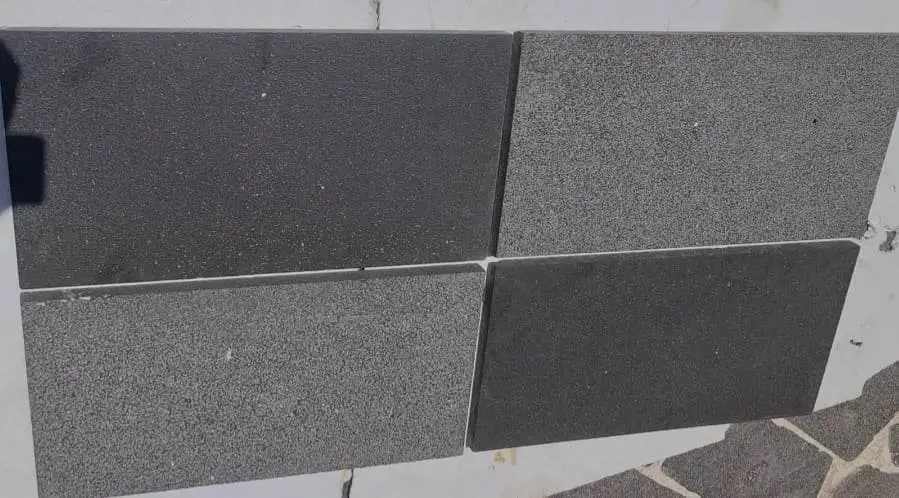
The finish you specify on charcoal limestone slabs Arizona installations matters more than most designers realize at the outset — and it affects more than just aesthetics. Three finishes dominate Arizona outdoor applications, and each creates a different performance profile.
- Honed finish delivers a smooth, matte surface with a reflectance value around 15–20%, which is lower than tumbled or brushed options — that matters for heat absorption in direct-sun applications
- Brushed finish opens the surface texture slightly, improving slip resistance ratings to DCOF values above 0.42 when wet — the threshold most Arizona pool deck specifications require
- Sandblasted or antiqued finish provides the highest slip resistance but also the most aggressive texture, which can trap fine desert dust and require more frequent maintenance in Litchfield Park’s windy spring conditions
- Polished finishes are rarely appropriate for outdoor Arizona applications — they create glare, heat retention, and slip hazards that make them a liability in uncovered installations
For most Litchfield Park transitional design applications, a brushed or lightly honed finish on charcoal limestone slabs Arizona installations hits the right balance between the material’s aesthetic character and real-world performance demands. You’ll get the refined look the transitional style requires without sacrificing the functional properties the climate demands.
Thickness and Slab Sizing for Transitional Spaces
The sizing decisions you make early in a project have downstream consequences that show up in freight costs, installation time, and long-term performance. Charcoal Black Limestone Litchfield Park projects typically work best with 30mm (1.25-inch) nominal slabs for pedestrian applications and 40mm (1.5-inch) for vehicular or mixed-use areas.
Larger format slabs — 24×24 inches and 24×48 inches — are popular in transitional design because the oversized geometry reinforces the contemporary side of the aesthetic. But larger slabs impose specific base preparation requirements: your compacted aggregate base needs to be within 3mm of consistent grade across the full slab footprint, or you’ll see corner lippage within the first thermal cycle season. In San Tan Valley, expansive clay soils at shallow depths mean base preparation often requires an additional 2–3 inches of compacted material beyond standard specifications — a detail that catches projects unprepared when the base engineer hasn’t been looped into early planning.
- 24×24 inch slabs: standard for pool decks and covered patios, manageable installation weight for two-person teams
- 24×48 inch slabs: ideal for formal walkways and entry sequences, requires mechanical lifting assists for safe placement
- 12×24 inch modular: works well for borders, transitions, and areas with non-standard geometry
- Random rectangular patterns: achievable with a mix of sizes, adds organic quality that softens the contemporary edge in transitional spaces
Thermal Performance and Joint Spacing
Litchfield dark gray stone in outdoor applications undergoes daily thermal cycling that would stress-fracture most materials over time — but properly specified limestone handles it well because of the material’s moderate thermal expansion coefficient, approximately 4.5 × 10⁻⁶ per °F for dense gray limestone. The field performance of charcoal limestone slabs Arizona projects depends heavily on whether your installation joints are sized to absorb that movement.
A common specification error on transitional design projects is minimizing joint widths to achieve the seamless appearance that contemporary aesthetics favor. You can achieve narrow joints — down to 3mm — in covered applications with controlled temperature ranges. For exposed outdoor slabs in Litchfield Park, your minimum joint width should be 6mm, and sections longer than 12 linear feet need a full expansion joint at 3/8-inch minimum width filled with compatible backer rod and sealant. Skipping that expansion joint detail because it interrupts the visual flow is a trade-off that consistently shows up as cracked slabs at the third or fourth year.
For projects where the surface finish and jointing treatment are critical design decisions, honed black limestone paving slabs provides deeper technical guidance on achieving the refined surface quality transitional spaces require without compromising structural performance in Arizona heat.
Arizona Blend Styles and Material Pairings
The Arizona blend styles that work best with charcoal limestone slabs lean into material contrast rather than uniformity. Charcoal limestone against warm buff travertine coping creates a layered depth that reads as intentional and architectural — the dark field plane receding while the lighter coping defines the spatial boundary. This pairing shows up consistently in Litchfield Park pool environments and covered outdoor living areas where the design goal is sophisticated restraint.
Pairing charcoal limestone with pale cream or ivory limestone in border or inset applications delivers a different effect — higher contrast, more graphic, more directly contemporary. The transitional design principle here is restraint: use the contrast as punctuation, not as the entire composition. One or two inset bands in a contrasting material at key spatial transitions — entry threshold, pool coping edge, outdoor dining perimeter — creates the definition transitional design relies on without tipping into visual noise.
In Avondale, where newer residential construction often features large outdoor entertaining areas with direct indoor-outdoor connection, charcoal limestone slabs that continue from interior large-format tile through sliding glass doors create a visual expansion of interior square footage — one of the most effective tools in transitional design for making outdoor spaces feel architecturally deliberate rather than added-on.
Sealing, Maintenance, and Long-Term Performance
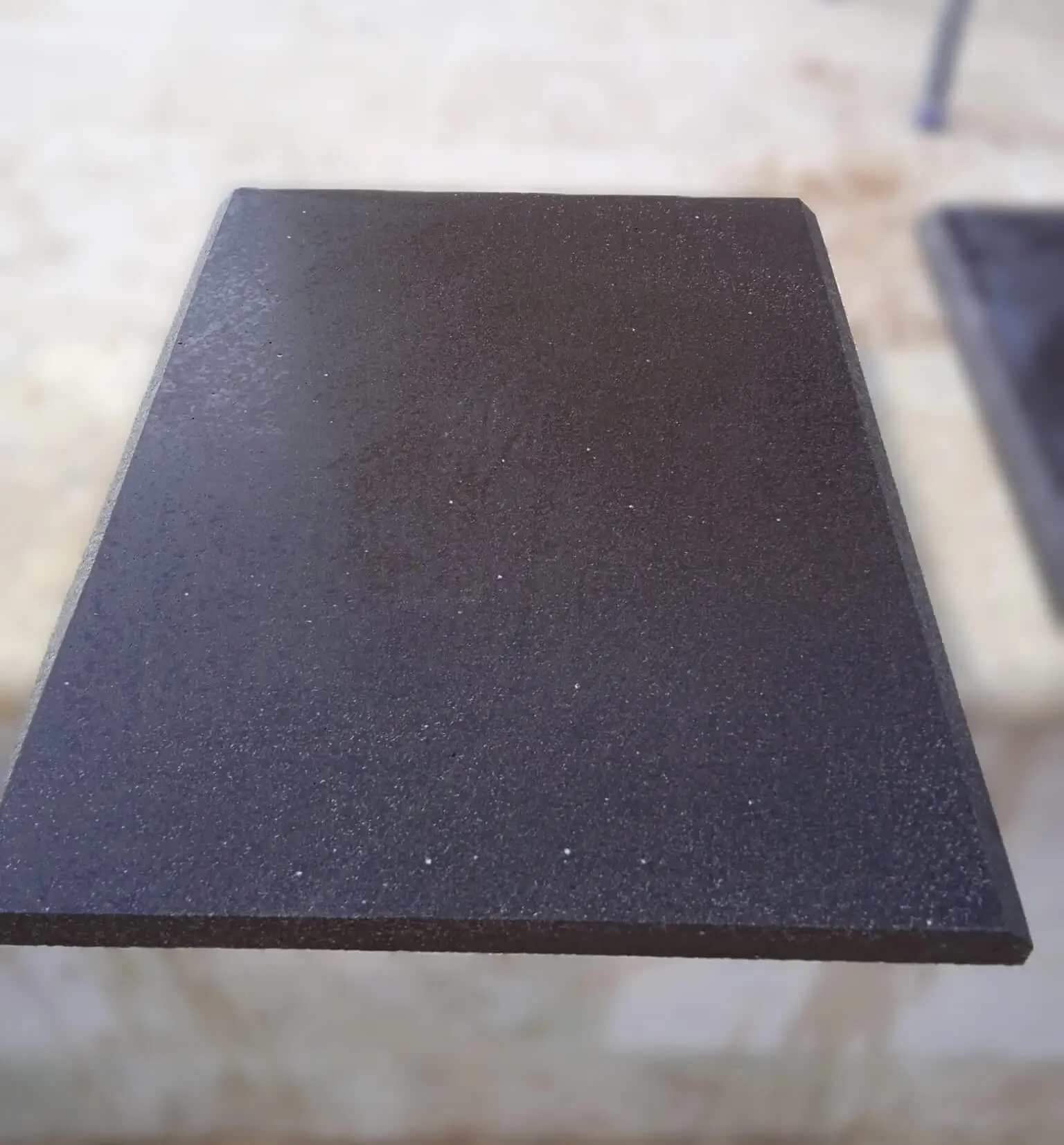
Charcoal Black Limestone Litchfield Park installations require a sealing protocol that’s more deliberate than what most homeowners expect after working with concrete or porcelain. Dense dark limestone has a porosity range of 3–8%, which is relatively low compared to travertine but still sufficient to absorb pool chemicals, irrigation mineral deposits, and sunscreen oils — all common in Arizona outdoor applications.
- Apply a penetrating silane-siloxane sealer before the installation is exposed to any moisture — ideally within 24 hours of grouting completion
- Reapply sealer every 18–24 months in direct-sun exposed areas, every 3 years for covered or shaded applications
- Avoid topical acrylic sealers outdoors — they trap moisture under the film layer and cause surface spalling in Arizona’s thermal cycling conditions
- Test sealer compatibility with your specific limestone batch — darker stones sometimes have mineral inclusions that react with certain sealer chemistries and create white haze
- Clean with pH-neutral stone cleaners only — acidic cleaners etch the surface and strip sealer penetration, creating maintenance cycles that compound over time
Realistic performance expectations for properly sealed and maintained Litchfield dark gray stone outdoor installations are 25–35 years before any resurfacing consideration is warranted. That lifespan assumes biennial resealing, proper drainage maintaining positive slope away from structures, and base preparation that prevents differential settlement. No sealing program compensates for base failure — that remains the primary cause of premature limestone surface deterioration in Arizona projects.
Ordering, Logistics, and Project Planning
Transitional design Arizona blend styles often involve multiple stone types, which means your ordering sequence needs to account for lead times across different materials. Charcoal limestone slabs generally ship from warehouse stock faster than specialty formats — standard sizes in 30mm and 40mm thicknesses are typically available with 1–2 week lead times from domestic warehouse inventory, compared to the 6–8 week window for custom sizing or thickness orders.
Your project’s truck delivery requirements deserve early attention on Litchfield Park residential projects. Many neighborhoods in this area have street weight restrictions or gated access points that limit large flatbed deliveries. Confirm truck access dimensions before finalizing your delivery schedule — a standard 48-foot flatbed carrying a full pallet order of charcoal limestone slabs Arizona may require alternative delivery staging on projects with narrow entry points or low-clearance gates. At Citadel Stone, we coordinate truck delivery logistics proactively because discovering an access constraint on delivery day creates delays that compress installation timelines unnecessarily.
Calculating material quantities requires factoring in a 7–10% overage for cuts, pattern layout adjustments, and breakage during handling. For large-format slabs in complex geometric layouts — L-shaped patios, pool decks with curved coping transitions, or formal entry sequences with diagonal patterns — budget the overage at the higher end of that range. In Yuma, where outdoor living areas frequently span larger square footages due to the extended outdoor season, accurate quantity estimation up front prevents costly mid-project reorders that can’t always be color-matched from the same batch.
Our warehouse team verifies stone calibration and color consistency before shipment — batch matching across multiple pallets is something we handle during quality checks so your installation team isn’t managing color variation corrections on-site.
Moving Forward with Charcoal Black Limestone
The specification decisions that define long-term success with Charcoal Black Limestone Litchfield Park projects aren’t particularly complicated — but they do require deliberate attention at each phase rather than defaulting to generic stone installation protocols. Your surface finish selection, joint design, base preparation depth, and sealing program each carry weight, and the compounding effect of getting those decisions right from the start is what separates installations that look exceptional at the 15-year mark from ones that need remediation by year seven. Transitional design in the Arizona market rewards material honesty — charcoal limestone slabs Arizona projects that lean into the material’s natural thermal and tonal behavior rather than fighting it deliver the most lasting aesthetic results.
As your planning moves into material coordination and complementary design elements, Citadel Stone’s range of natural stone options for Arizona projects extends across multiple applications and aesthetics. Black Limestone Slab Circular Patterns for Carefree Focal Points explores another dimension of how dark Arizona limestone creates architectural focal points — a useful reference as you consider the full spatial sequence of your project beyond the primary surface planes. Our Black Limestone Paving Arizona customers appreciate our honesty.