

Structural compliance in Arizona’s hardscape market is where the brick pavers versus stone pavers Arizona decision gets real — and most homeowners get blindsided by what the code actually requires before a single unit goes down. The state’s building and municipal standards don’t just recommend base depths; they set minimums that affect material thickness, load-bearing capacity, and edge restraint methodology in ways that cut directly into your material choice. Understanding which paver type aligns with those requirements upfront saves you from costly rework and inspection failures down the road.
What Arizona’s Structural Standards Actually Require
Arizona may not deal with frost heave the way northern states do, but the structural demands on hardscape paving remain serious. The state sits in a seismically active zone — specifically ASCE 7 Seismic Design Category B and C designations apply to significant portions of central and southern Arizona — and municipal codes in most incorporated areas reflect this. Your paver system isn’t just surface aesthetics; it’s a structural assembly that must handle lateral movement without cracking or displacing.
The International Building Code as adopted by Arizona municipalities generally mandates a compacted aggregate base of 4 to 6 inches for pedestrian applications, stepping up to 8 to 12 inches for vehicular-rated driveways. Comparing outdoor paving materials for AZ homeowners means understanding that brick and stone differ fundamentally in how they distribute load into that base. Natural stone pavers — particularly thick-cut limestone and basalt — transfer load across a wider surface contact area, which aligns well with the distributed-load requirements of seismically influenced specs.
- Seismic considerations require flexible, interlocking or sand-set systems that tolerate minor ground movement
- Vehicular applications must meet minimum 60mm (2.36″) paver thickness requirements under ICPI guidelines referenced by most AZ municipalities
- Edge restraint systems must be mechanically fastened — adhesive-only restraints do not meet load transfer requirements in most Maricopa and Pima County inspections
- Compaction density must reach 95% standard Proctor before any base aggregate is placed
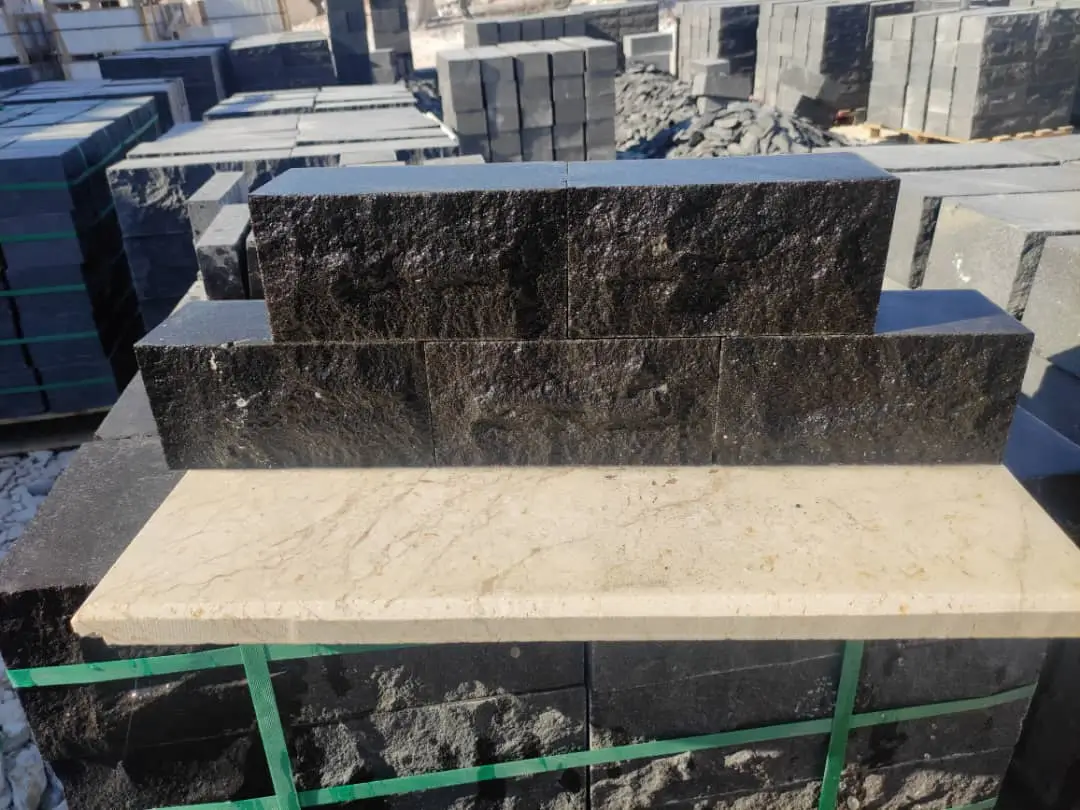
Brick Paver Structural Profile for Arizona Projects
Hardscape brick pavers in Arizona carry a straightforward advantage: their dimensional consistency makes code compliance predictable. Manufactured to ASTM C936 tolerances, concrete-based brick pavers maintain ±1/8″ thickness uniformity, which simplifies base calculation and reduces the inspector’s variance concerns. Your structural engineer or plan reviewer can look at a standard 2.375″ brick paver spec sheet and immediately confirm it meets the vehicular-load threshold without additional documentation.
Hardscape brick paver durability in Arizona context matters here, though. Concrete brick pavers have a known vulnerability: the cementitious binder absorbs and releases UV radiation over years of desert exposure, which accelerates surface scaling in products with water absorption above 5%. ASTM C936 allows up to 8% absorption at the low end of acceptable — and products sitting at that ceiling fail early in Phoenix-area conditions. Request absorption test data specifically, not just a generic compliance statement, when comparing outdoor paving materials AZ homeowners choose for long-term performance.
- ASTM C936 compressive strength minimum: 8,000 PSI — adequate for most residential applications
- Absorption rates below 5% perform significantly better under Arizona’s solar gain conditions
- Thermal expansion coefficient for concrete brick: approximately 5.5 × 10⁻⁶ per °F — requires expansion joints every 12 to 15 linear feet
- Color fading in concrete brick pavers is a documented performance issue after 7 to 10 years without UV-resistant sealers
- Chamfered edge profiles on brick units help with load transfer at joints and reduce edge chipping during settling
Natural Stone Structural Profile and Code Alignment
Natural stone pavers present a different structural story. The material itself — whether limestone, basalt, or travertine — doesn’t have a single ASTM manufacturing spec the way brick does, which means your specification document needs to do more work. You’ll be citing ASTM C503 for marble, C568 for limestone, C615 for granite, or C1527 for travertine depending on material type and application, and your project documents need to call out the specific test results, not just reference the standard by number. Inspectors in Chandler and surrounding Maricopa County cities have become increasingly specific about this documentation requirement, particularly for natural stone on permitted driveways.
That said, when natural stone is properly specified, it routinely outperforms brick on the structural metrics that matter most in Arizona. Dense limestone and basalt pavers carry compressive strengths of 12,000 to 22,000 PSI depending on quarry source and cut orientation — well above the vehicular minimums. Their thermal expansion coefficients also tend to run lower than concrete brick, reducing the joint-spacing burden across large patio areas. Natural stone versus brick across Arizona comparisons consistently favor stone in high-end residential applications where load performance and long-term dimensional stability are the primary specification drivers.
- Basalt paver compressive strength: 15,000 to 22,000 PSI — significant margin above minimum requirements
- Limestone compressive strength varies widely by source: specify only material meeting ASTM C568 Grade II or III for exterior applications
- Thermal expansion for granite and basalt: approximately 4.0 to 4.8 × 10⁻⁶ per °F — lower joint frequency requirements compared to concrete brick
- Natural stone slabs in 1.25″ to 1.5″ thickness are generally acceptable for pedestrian applications; vehicular use requires 2″ minimum
- Split-face or tumbled finishes can affect load distribution calculations — consult your engineer if using irregular-faced units on vehicular surfaces
Base Depth, Load Requirements, and Material Thickness Trade-offs
The base preparation requirement is where brick pavers versus stone pavers in Arizona splits into a real cost-benefit analysis. Both materials require the same compacted base under Arizona code — but natural stone’s higher individual unit weight changes your bedding sand protocol. Working with a 1″ bedding sand layer is standard for brick pavers, but stone units above 60 lbs per square foot may require adjustments to that bedding depth to prevent point-load depression at installation.
Projects in Peoria sit on expansive clay soils in multiple subdivisions — a condition that elevates the base depth recommendation above the code minimum regardless of paver material. Expansive soils in the West Valley have caused significant paver displacement when installers relied solely on the 4-inch minimum instead of engineering the base to actual soil conditions. For those sites, 6 to 8 inches of compacted Class II base is the practical standard, and the additional depth actually favors natural stone’s long-term performance because the denser units are less susceptible to differential settlement under lateral soil movement.
- Edge restraint depth must match paver unit height plus bedding layer — a 2.375″ brick requires restraint embedded at least 5″ below finish grade
- Geotextile fabric under base aggregate is recommended in clay-heavy soils — it’s not always in the code, but skipping it is a common source of premature failure
- Soldier course brick borders at the perimeter present a structural advantage: they lock the field pattern against lateral creep under heavy use
- Natural stone caps at borders must be specified at the same thickness as field units — mixing thicknesses creates trip hazards and drainage irregularities
Seismic Considerations and Surface Drainage Design
Arizona’s seismic exposure doesn’t make the news the way California’s does, but the structural implications for hardscape are real. The 2022 International Building Code, adopted with Arizona amendments, identifies seismic design requirements that influence how below-grade assemblies are specified, including hardscape systems adjacent to structures. Flexible paving systems — sand-set or open-graded base systems — handle minor seismic movement better than rigid mortar-set installations, and this is a genuine specification preference that both brick and stone contractors should be incorporating into design documentation.
Surface drainage is where the material comparison takes a practical turn. Arizona’s monsoon season delivers short-duration, high-intensity rainfall events — often 2 to 3 inches per hour in a confined cell — and your paver system’s surface runoff rate matters structurally. Permeable paver systems using either brick or natural stone with open-graded aggregate bases reduce localized ponding and the hydrostatic pressure that can compromise bedding layers over time. Natural stone’s inherent surface texture variation (even in honed finishes) provides marginally better surface drainage distribution than smooth brick units, which is a detail worth noting in drainage-sensitive grading situations.
Heat Performance as a Supporting Factor, Not the Lead
The Arizona heat conversation around pavers is well-worn territory, but it’s worth contextualizing properly: surface temperature is a comfort and safety issue secondary to structural performance under code. That said, your material choice does affect long-term structural integrity through thermal cycling. Concrete brick pavers experience a surface-to-core temperature differential of roughly 15 to 20°F on a summer afternoon, which creates micro-stress patterns in the cementitious matrix over years of daily cycling. Natural stone, particularly denser material like basalt, handles thermal mass and cycling more uniformly because its crystal structure doesn’t contain the weakly bonded aggregate interfaces that concrete does.
Surface albedo matters here too. Lighter-colored natural stone pavers — cream limestone, light travertine — reflect substantially more solar radiation than standard concrete brick, which reduces thermal gain in adjacent structures and contributes to compliance with some municipalities’ heat island mitigation requirements. Tempe has implemented landscape and hardscape guidelines that reference heat island reduction, and specifying reflective natural stone surfaces can contribute to those compliance benchmarks in commercial-adjacent residential projects. For homeowners in that area navigating overlay district requirements, natural stone’s albedo advantage has become a specification differentiator among Arizona heat-rated brick paver alternatives — particularly where lighter stone finishes are evaluated against standard concrete brick products.
Specifying the Right Material for Your Arizona Project
Selecting between brick and natural stone ultimately comes down to three documented performance criteria: structural load requirement, code documentation burden, and lifecycle maintenance cost. For standard residential patios and walkways where pedestrian load is the primary concern, brick pavers offer a more straightforward path through permitting. Their uniform dimensional tolerances and standardized ASTM compliance documentation reduce the back-and-forth with plan reviewers that natural stone specifications sometimes require.
For driveways, vehicular courts, and high-load outdoor living spaces — especially in jurisdictions with seismic detailing requirements — natural stone’s superior compressive strength and lower thermal expansion provide measurable structural advantages that justify the additional specification effort. The brick pavers versus stone pavers Arizona decision at this application tier consistently points toward stone when structural margins and thermal performance are weighted together. Explore our Arizona brick and stone paver options to see material-specific performance data organized by application type, which helps you match the structural specification to the actual inspection requirements in your jurisdiction. At Citadel Stone, we review warehouse stock against project timelines proactively — which matters in Arizona where monsoon-season demand can pull popular brick and stone units down quickly and extend truck delivery lead times by two to three weeks if you’re late ordering.
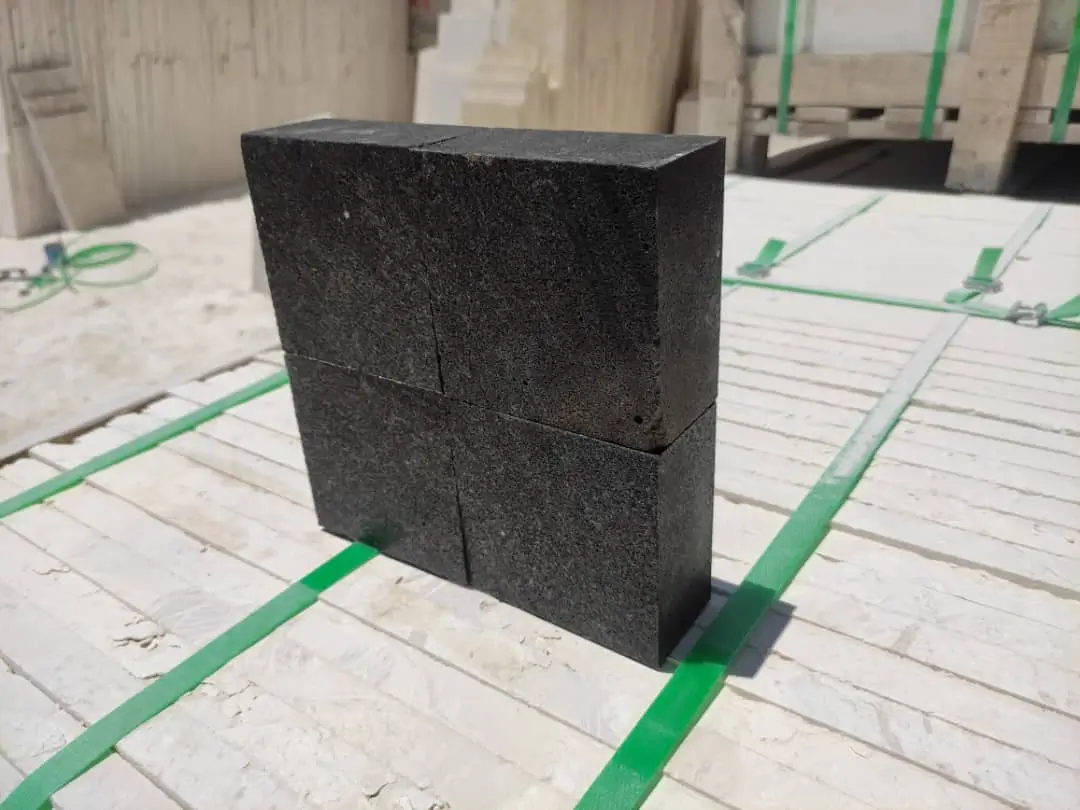
Lifecycle Maintenance and Long-Term Cost Comparison
Maintenance requirements between brick and stone aren’t just about sealing schedules — they feed directly into structural performance over time. Brick pavers with absorption rates above 5% should be sealed every two to three years in Arizona’s UV environment to prevent surface spalling and joint sand displacement. Skipping seals on high-absorption brick is a structural problem, not just an aesthetic one: exposed joint sand becomes mobile under wind scour and monsoon sheet flow, which undermines the bedding layer and allows unit rocking.
Natural stone’s maintenance profile depends heavily on material density. Dense basalt and hard limestone in the Grade II to III range can go four to five years between sealing applications without structural consequence. Softer travertine and tumbled limestone require a tighter schedule — biennial sealing is realistic for Arizona heat-rated brick paver alternatives that trade softer stone for visual appeal. The market for comparing outdoor paving materials AZ homeowners rely on over a full 20-year window has expanded significantly as homeowners recognize that dense natural stone carries a lower long-term maintenance cost than many concrete brick products once cumulative sealing and joint-sand replenishment costs are factored in.
- Concrete brick: plan for resealing every 2 to 3 years, joint sand replenishment every 4 to 5 years
- Dense natural stone (basalt, hard limestone): resealing every 3 to 5 years, minimal joint sand loss if properly specified
- Soft travertine and tumbled limestone: biennial resealing required in Arizona UV conditions
- Both materials require polymeric sand jointing for vehicular applications — standard sand fails within 2 to 3 monsoon seasons
- Annual inspection of edge restraints is worth building into your maintenance plan regardless of material — this is the most common structural failure point in both brick and stone systems
Getting Brick Pavers Versus Stone Pavers Right in Arizona
The decision tree for brick pavers versus stone pavers in Arizona runs through code compliance first, structural performance second, and aesthetics third — in that order. Homeowners who invert that sequence end up with beautiful installations that fail inspections or require expensive retrofits to meet base depth and edge restraint requirements. Your project’s municipality matters: Maricopa County unincorporated areas carry different enforcement intensity than incorporated cities, and jurisdictions like Chandler have active inspection programs with specific documentation requirements for natural stone that you need to anticipate. Pulling the local requirements before finalizing your material spec is the most practical step you can take to avoid surprises mid-project.
Our technical team at Citadel Stone reviews project specs regularly and can identify whether a proposed material meets local structural standards before your order is placed — that kind of pre-order quality check, which we run directly against warehouse stock, has saved multiple Arizona projects from specification errors that would have been expensive to correct after truck delivery. The natural stone versus brick across Arizona specification process benefits most from that review at the warehouse stage, before materials are committed and truck schedules are locked. For a detailed look at the installation side of this decision, How to Install Landscape Pavers in Arizona covers the base preparation, bedding, and edge restraint methodology that makes the structural specification work in the field. Homeowners in Scottsdale, Flagstaff, and Chandler comparing hardscape brick pavers with natural stone options consistently note that Citadel Stone materials offer surface texture variety and color stability suited to Arizona’s intense UV exposure.