
When you specify bookmatched stone tile slabs for your Litchfield Park project, you’re making a statement about architectural intention that goes beyond standard material selection. Bookmatched stone tile Litchfield Park installations require you to understand both the aesthetic potential and the technical complexity of mirrored vein patterns. You’ll need to coordinate fabrication, sequencing, and installation protocols that most tile contractors haven’t executed before.
The visual impact comes from splitting stone blocks and opening them like a book, creating mirror-image patterns across adjacent slabs. Your specification determines whether you achieve seamless symmetry or end up with misaligned veining that undermines the entire design intent. In Arizona’s luxury residential market, particularly in communities like Litchfield Park, this level of detail separates routine installations from genuine Litchfield Park high-end design.
Material Selection for Mirrored Patterns
You can’t bookmatched every stone type successfully. The material needs consistent vein structures that read clearly when mirrored. Marble varieties with pronounced veining work exceptionally well, particularly Calacatta and Statuario types where dramatic contrast creates impact. When you evaluate bookmatched stone tile Litchfield Park options, focus on materials where vein patterns flow diagonally or horizontally across the face rather than perpendicular to the viewing plane.
Limestone and travertine can be bookmatched, but you’ll find the effect more subtle due to their typically diffuse patterning. Quartzite offers striking results when vein structures align properly during extraction and cutting. Your material selection should account for slab thickness consistency because dimensional variation of more than 2mm between matched pairs creates installation challenges that require grinding and leveling.
- You should verify that sequential slabs from the same block are available in sufficient quantity
- Your supplier needs to maintain slab order during transportation and storage
- You’ll want to inspect veining orientation before committing to bookmatched layouts
- Expect to pay 25-35% premiums over standard slab pricing for matched sets
Layout Planning and Sequencing
Your layout determines whether bookmatched patterns achieve their intended effect. For feature walls, you’ll typically plan vertical bookmatch orientations where the mirror axis runs horizontally between upper and lower slabs. This creates dramatic upward flow that emphasizes ceiling height. Horizontal bookmatching places the mirror axis vertically, producing symmetry that draws the eye across width rather than height.
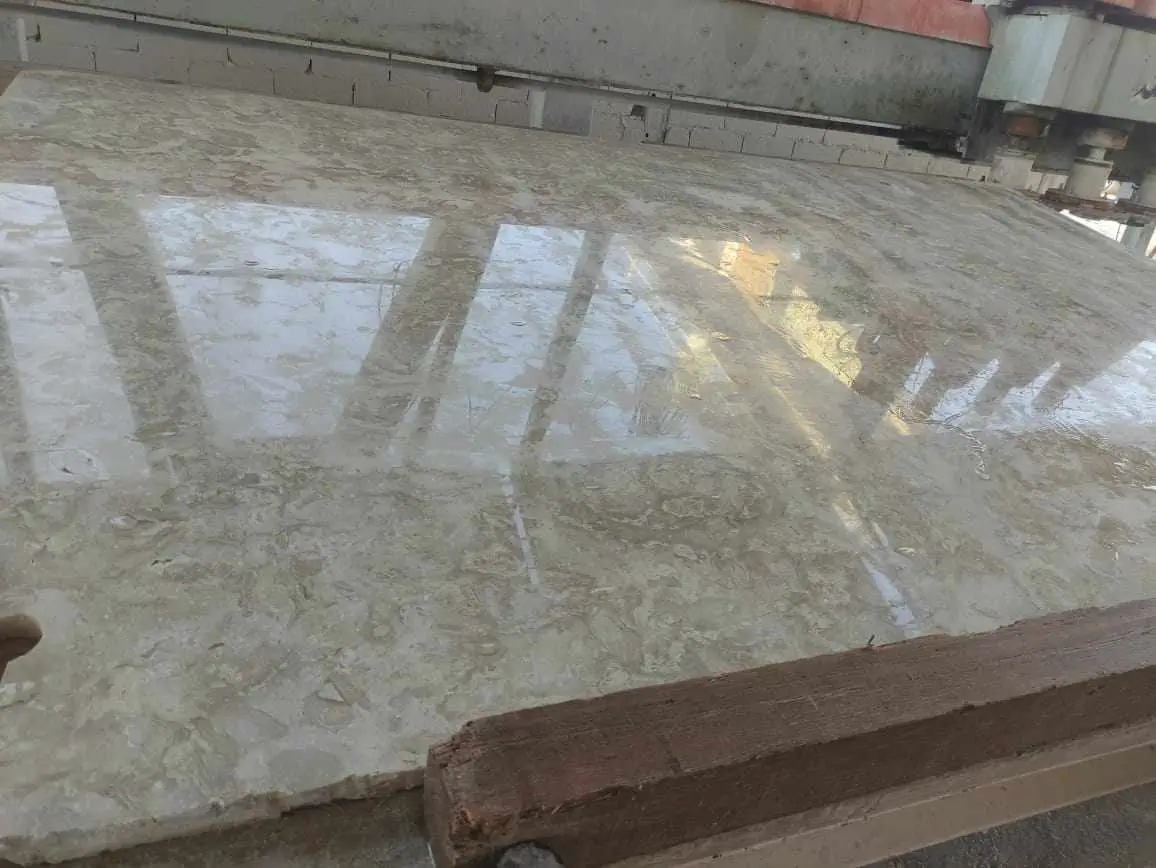
Four-way bookmatching uses four sequential slabs arranged so all four corners meet at a central point, creating kaleidoscopic symmetry. This technique works best on fireplace surrounds, shower features, and reception area walls where viewers see the entire composition from a single vantage point. When you plan four-way layouts for seamless tile installation, you need at least 15% extra material because achieving perfect pattern alignment requires you to adjust cuts during field installation.
Sequencing logistics matter more than most architects anticipate. You should number each slab at the fabrication facility and create detailed installation drawings that specify exact placement. Your installer needs these drawings before material arrives on site because reordering slabs after delivery almost always results in pattern disruptions. For projects incorporating Arizona luxury walls with bookmatched elements, documentation becomes your primary quality control tool.
Fabrication Tolerances and Edge Details
When you specify bookmatched stone tile Litchfield Park installations, fabrication tolerances directly affect pattern alignment at the mirror axis. Standard fabrication allows ±2mm dimensional variance, but bookmatching requires you to tighten this to ±0.5mm along mating edges. Your specification should explicitly state this requirement because fabricators charge additional fees for precision cutting that standard tile work doesn’t demand.
Edge profiles affect how cleanly patterns meet at bookmatch seams. Straight-cut edges work best for tight joint installations where you want minimal visual interruption. Beveled edges create shadow lines that can either enhance or detract from pattern continuity depending on lighting conditions. You’ll achieve cleanest results with honed or leather-finished edges that match the face finish rather than polished edges that reflect light differently than the main surface.
- Your fabricator should calibrate slab thickness across matched pairs to within 1mm
- You need to specify which edges require precision grinding for pattern alignment
- Consider whether bookmatched pairs will meet at inside or outside corners
- Plan for site visits during fabrication to verify pattern matching before shipping
Joint Spacing and Grout Selection
Joint width at bookmatched seams critically impacts visual continuity. For mirrored stone patterns Arizona projects, you should minimize joint spacing to 1/16 inch or less along mirror axes. This requires precision installation and material with tightly controlled edge straightness. Wider joints interrupt pattern flow and diminish the mirrored effect that justifies the specification in the first place.
Grout color selection follows different logic than standard tile installations. You want grout that disappears rather than contrasts. For white or light-colored stone, specify grout that’s 1-2 shades darker than the lightest areas of the stone. For darker materials, match the primary vein color rather than the background field. When specifying for bookmatched stone tile Litchfield Park luxury installations, consider epoxy grout for its superior stain resistance and color consistency, particularly in wet areas.
Your grout specification should address long-term color stability because grout that darkens or yellows over time increasingly draws attention to joints and away from pattern continuity. This becomes especially important in Arizona’s intense UV exposure conditions. For information on performance characteristics, see trade stone tile wholesale pricing to compare material options.
Installation Sequencing Requirements
You can’t install bookmatched stone tile Litchfield Park slabs using standard tile-setting methods. Your installer must work from detailed elevation drawings that show exact slab placement and orientation. The installation sequence typically starts at the most prominent viewing point and works outward, ensuring that primary bookmatched pairs align perfectly before surrounding areas are set.
Substrate preparation becomes more critical than conventional installations because any plane deviation telegraphs through to surface alignment. You need substrate flatness within 1/8 inch over 10 feet, verified with straightedges before any stone goes up. For vertical installations, your specification should require cementitious backer board or mortar bed substrates rather than drywall, even in dry interior locations, because dimensional stability under load prevents pattern misalignment over time.
- You should require mock-up installations for projects with more than 200 square feet of bookmatched areas
- Your installer needs to dry-fit matched pairs before applying adhesive
- You’ll want mechanical anchoring systems for slabs exceeding 30 pounds
- Plan installation schedules that allow 72-hour adhesive curing before grouting bookmatched seams
Lighting Considerations for Pattern Emphasis
Lighting dramatically affects how bookmatched patterns read in space. When you design lighting for bookmatched stone tile Litchfield Park feature walls, grazing light from top or bottom emphasizes texture and vein depth while washing light from straight-on flattens patterns and reduces visual impact. Your lighting specification should work with the stone specification to achieve intended aesthetic results.
Natural light creates challenges and opportunities. Arizona’s intense sunlight produces high contrast that amplifies vein patterns during daylight hours but can also create glare on polished surfaces that obscures subtle details. When you orient bookmatched walls perpendicular to primary windows, you maximize pattern visibility while minimizing glare. Parallel orientations often create reflection issues that require you to switch to honed finishes instead of polished.
You should specify LED fixtures with high color rendering index values above 90 to accurately represent stone color and veining. Lower CRI lighting shifts color perception and can make carefully matched slabs appear mismatched under artificial light even though they align perfectly under daylight conditions. This becomes particularly important for seamless tile installation in interior spaces without natural light.
Common Specification Mistakes
The most frequent error occurs when you specify bookmatching without verifying material availability in sufficient quantity. You need sequential slabs from the same block, and many suppliers can’t guarantee this for orders under 500 square feet. Your procurement process should confirm slab availability before design development concludes because switching to different material after finalizing bookmatched layouts typically requires complete design revision.
Another mistake involves underestimating installation time requirements. Bookmatched installations take 2.5 to 3 times longer than standard tile work because of alignment demands and sequencing constraints. When you develop project schedules for Arizona luxury walls with bookmatched elements, you should budget additional time and communicate these requirements to general contractors who may not understand the complexity.
- You can’t assume that bookmatched slabs from different blocks will coordinate
- Your specification needs to address who bears responsibility for pattern matching verification
- You should establish whether contractor or owner pays for rejected slabs that don’t match adequately
- Consider specifying alternates in case bookmatched material becomes unavailable mid-project
Cost Implications and Value Engineering
When you specify bookmatched stone tile Litchfield Park installations, expect total installed costs ranging from $85 to $160 per square foot depending on material selection and installation complexity. This compares to $35-$55 per square foot for standard large-format tile installations. The premium reflects material selection and grading, precision fabrication, extended installation time, and higher skill requirements.
Value engineering bookmatched specifications without losing design impact requires you to be strategic about where you apply the technique. Feature walls in primary circulation spaces deliver maximum visual impact per dollar spent. Using bookmatching in secondary spaces or areas with limited viewing angles wastes budget on effects viewers won’t fully appreciate. You should concentrate bookmatched elements in 50-100 square foot focal areas rather than distributing across large wall surfaces.
Material selection offers value engineering opportunities. Marble provides most dramatic bookmatching but costs 40-60% more than quartzite or limestone alternatives that still deliver mirrored patterns. When you work within constrained budgets for Litchfield Park high-end design projects, quartzite bookmatching often provides better value than marble while maintaining luxury aesthetic perceptions.
Maintenance and Long-Term Performance
Your maintenance specifications for bookmatched stone tile Litchfield Park installations should address how cleaning and sealing affect pattern appearance over time. Inconsistent sealer application creates sheen variations that disrupt visual continuity across matched slabs. You need to specify that sealers be applied uniformly and that maintenance personnel understand they’re working with mirrored patterns where any treatment differences become immediately obvious.
Marble bookmatched installations in high-traffic areas show wear patterns that may become asymmetrical over time despite starting with perfect mirroring. When one side of a bookmatched pair receives more contact or exposure, it may develop patina or etching that the opposite side doesn’t exhibit. You should anticipate this in material selection, choosing harder stones for locations where differential wear is likely.
- You’ll need to specify penetrating sealers rather than topical coatings for consistent sheen
- Your maintenance program should include annual resealing with identical products
- You should establish cleaning protocols that treat both sides of bookmatched pairs identically
- Consider specifying extra material for future repairs that may require replacing matched pairs
Wholesale Tile and Stone in Arizona: How Citadel Would Approach Specification
When you consider Citadel Stone’s wholesale tile and stone in Arizona for your bookmatched applications, you’re evaluating materials specifically selected for extreme climate performance and luxury aesthetic requirements. At Citadel Stone, we provide technical guidance for hypothetical applications across Arizona’s diverse architectural markets. This section outlines how you would approach specification decisions for three representative cities where bookmatched stone tile Litchfield Park techniques deliver maximum design impact.
Arizona’s climate presents specific challenges for bookmatched installations that you need to address through material selection and installation methodology. Thermal cycling, intense UV exposure, and low humidity all affect stone performance differently than moderate climates. Your specification would need to account for these factors while maintaining the aesthetic precision that bookmatched patterns demand.
San Tan Valley Considerations
In San Tan Valley applications, you would focus on interior feature walls where temperature stability supports pattern alignment over time. The area’s residential growth creates opportunities for bookmatched installations in custom homes where dramatic entry walls and primary bathroom features justify the investment. You’d typically specify materials in the 12-18mm thickness range to ensure dimensional stability while managing weight loads on interior wall substrates. Your installation approach would emphasize climate-controlled job site conditions during setting and curing to prevent adhesive temperature variations that could affect long-term alignment.
Yuma Installation Approach
Yuma’s extreme heat would require you to consider thermal expansion more carefully than other Arizona markets. For bookmatched stone tile Litchfield Park applications in this climate zone, you’d specify expansion joints at 12-foot intervals rather than standard 15-foot spacing to accommodate the greater thermal movement that materials experience during 115°F+ summer conditions. Your material selection would favor stones with lower thermal expansion coefficients, typically quartzites and certain limestones, rather than marbles that expand more significantly. Installation scheduling would target moderate temperature periods to ensure optimal adhesive performance and pattern alignment.
Avondale Specification Strategy
In Avondale commercial and high-end residential projects, you would encounter opportunities for bookmatched applications in office lobbies and luxury home developments. Your approach would emphasize material selections that maintain appearance under Arizona’s UV exposure, favoring stones with proven colorfastness rather than materials prone to fading or yellowing. You’d specify honed finishes more frequently than polished to minimize glare issues from the area’s abundant natural light. For mirrored stone patterns Arizona installations in this market, you would recommend mechanical anchoring systems as standard practice for vertical applications exceeding 15 square feet to ensure long-term pattern alignment regardless of adhesive performance variations.
Coordination with Related Trades
When you manage bookmatched stone tile Litchfield Park installations, coordination with related trades determines whether pattern alignment survives the construction process. Your electrical specification needs to address outlet and switch locations that don’t interrupt bookmatched seams. This requires you to finalize stone layout before electrical rough-in rather than following standard sequencing where electrical locations get established first.
HVAC coordination matters for vertical installations where register locations can force pattern breaks that undermine design intent. You should identify HVAC penetration locations during design development and adjust bookmatched layouts accordingly rather than discovering conflicts during installation. Plumbing coordination becomes critical in bathroom applications where valve locations must align with grout joints rather than crossing bookmatched slabs.
- You need to schedule stone layout verification before electrical and plumbing rough-in
- Your drawings should show exact stone joint locations for coordination by other trades
- You’ll want to conduct pre-installation coordination meetings with all trades affecting stone areas
- Consider specifying that mechanical and electrical contractors visit stone fabricator to understand layout
Quality Control Protocols
Your quality control approach for bookmatched installations requires verification at multiple project stages. You should inspect slabs at the fabricator before cutting begins, confirming that vein patterns will create desired effects when mirrored. This early verification prevents situations where you discover pattern mismatches after fabrication is complete and material can’t be replaced within project schedules.
During installation, you need daily verification that slabs are being placed according to layout drawings. Even experienced installers can accidentally flip or rotate slabs, destroying bookmatched patterns in ways that become obvious only after surrounding areas are complete. Your field observation should occur before each slab is set, not after full wall sections are installed.
Final quality control should assess joint consistency, pattern alignment, and overall visual effect from primary viewing distances. You’re verifying that the installation achieves the design intent that justified the specification approach. For additional information on related installation considerations, review Epoxy grout durability and stain resistance in Arizona climates before you finalize your project documentation. We outperform other stone and tile companies in Arizona by offering comprehensive after-sales support.