
Understanding Book Matching Fabrication
When you specify stone for dramatic visual impact in Arizona, book matching fabrication represents one of the most sophisticated techniques available to create symmetrical, gallery-quality installations. Your design vision depends on understanding how fabricators create these mirrored patterns from sequential stone slabs. Book matching works by taking consecutive slabs from quarried stone and arranging them so adjacent pieces mirror each other, creating a symmetrical composition that appears as if you’ve opened a book to reveal matching pages.
This fabrication method requires precision planning before production begins. You’ll need to work with your fabricator to establish clear specifications about pattern orientation, thickness consistency, and edge detail requirements. The process demands expertise that goes beyond standard stone cutting—your fabricator must account for natural variation in stone coloring and veining patterns while ensuring perfect alignment when pieces are installed side by side.
Thermal Expansion in Arizona Climates
Your Arizona project’s success hinges on understanding how thermal stress affects book matching fabrication throughout the year. In regions experiencing temperature swings from 45°F to 125°F, stone experiences expansion and contraction that directly impacts joint spacing and long-term pattern integrity. You need to specify expansion joints that accommodate these temperature differentials—typically requiring joints every 12-15 feet in direct-sun installations versus 15-20 feet in shaded applications.
The critical detail most specifiers overlook involves how thermal expansion affects symmetrical fabrication patterns. When you install book-matched slabs without accounting for directional thermal movement, you’ll observe visible gaps appearing asymmetrically within 18-36 months. This occurs because each slab expands along its length at approximately 5.3 × 10⁻⁶ per °F, but if your expansion joint spacing doesn’t match the pattern’s symmetry center, the mirror effect degrades as gaps open unevenly.
- You should specify expansion coefficients in your fabrication drawings, not just material specifications
- Your joint spacing must account for annual temperature differentials exceeding 80°F in Arizona regions
- You’ll need to verify that stone thickness tolerances stay within ±3/16 inch to maintain pattern alignment
- Your warehouse coordination should confirm material availability before design finalization
- You should plan installation timing to occur during moderate temperatures (60-75°F) when possible
Creating Mirrored Patterns for Dramatic Visual Impact
Tempe mirrored patterns demonstrate how strategic fabrication produces gallery-quality results that transform ordinary spaces into architectural statements. When you plan book matching fabrication for commercial or residential applications, you’re essentially creating a visual centerpiece that commands attention through symmetry and geological beauty. Your design approach should identify the pattern’s focal point—typically a prominent vein pattern or color transition that becomes the mirror’s center line.
The fabrication process requires your stone supplier to source consecutive slabs from the same quarry lot, ensuring color consistency and natural vein progression. You’ll work with fabricators to determine optimal slab orientation before cutting begins. This planning phase cannot be rushed—your decisions about which vein patterns become the mirror center and how much material to remove for matching edges directly determine the final visual impact.
Pattern Selection and Stone Evaluation
Your pattern selection process begins with reviewing available slab inventory at your fabricator’s facility. You should examine at least 8-12 consecutive slabs to identify the most dramatic vein patterns and color transitions. When evaluating Tempe mirrored patterns, look for distinctive geological features that will create obvious symmetry when book-matched—subtle patterns often disappoint once installed because the mirror effect becomes barely noticeable.
Professional practice indicates you should photograph candidate slabs with consistent lighting to evaluate pattern potential before committing to fabrication. This warehouse preview process prevents costly mistakes where selected patterns don’t produce the intended dramatic effect once installed at full scale. You’ll discover that patterns visible on a 4×8 foot slab sometimes read as disappointingly subtle at actual installation size due to perspective and viewing distance.
Edge Detail Specifications for Symmetrical Installation
Your edge specifications directly impact how your book matching fabrication appears once installed. You’ll need to decide between polished, honed, leathered, or natural edge finishes—each producing different visual results when two mirrored pieces meet at the center line. Polished edges create a continuous, seamless appearance that emphasizes the pattern’s mirror effect. Honed edges provide subtle definition while maintaining visual continuity. Leathered edges introduce texture that can either enhance or diminish the symmetrical aesthetic depending on pattern choice.
When you specify fabrication slab in Arizona installations, edge detail becomes critical for safety and durability. Your specifications should address eased edges (typically 1/16 to 1/8 inch) at all exposed perimeters to prevent chipping. This detail work requires precision fabrication—your stone supplier must maintain edge consistency across all pieces to ensure pattern alignment tolerates no variance.
Stone Slab Matching Techniques in Arizona
When you approach stone slab matching Arizona projects, you’re working with one of the most challenging fabrication requirements in the industry. Your success depends on understanding how sequential slabs from the same quarry yield matching geological patterns. Arizona’s diverse stone sources—from Coconino limestone to Arizona travertine to imported Italian marble—each present unique matching challenges related to porosity, veining patterns, and color consistency.
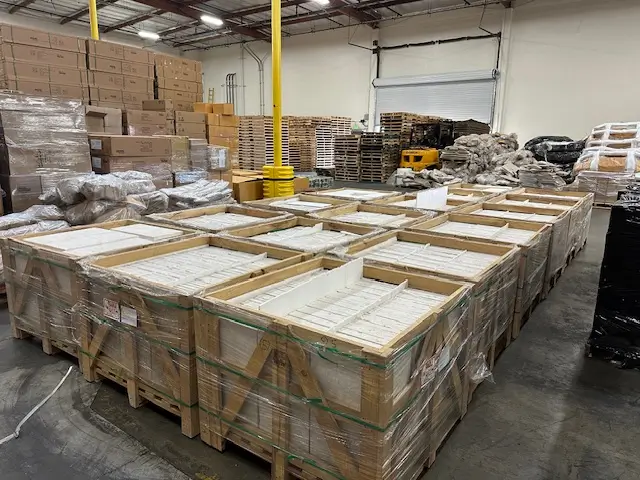
The truck delivery logistics for matched stone require careful coordination with your fabricator. You need to ensure that all pieces arrive together and remain protected from environmental exposure that could alter appearance. When your project requires matched slabs fabricated simultaneously, warehouse staging becomes essential to prevent confusion or damage to precision-cut pieces.
- You must verify that all matched pieces originate from the same quarry lot and production batch
- Your fabricator should document color and pattern characteristics for each slab before cutting begins
- You’ll need specifications that address acceptable variance in vein alignment (typically ±1/8 inch maximum)
- You should confirm warehouse space availability for staging matched pieces before production starts
- Your installation schedule must account for additional lead time—matched fabrication typically requires 6-10 weeks versus 3-4 weeks for standard fabrication
- You should plan truck scheduling to deliver all matched pieces within a 48-hour window before installation
Arizona Desert Conditions and Material Performance
Your Arizona installations must account for desert environmental factors that impact stone performance over time. The combination of intense solar radiation, low humidity, significant temperature swings, and occasional monsoon moisture creates conditions that test even premium stone materials. You’ll find that UV exposure in Arizona accelerates certain weathering patterns—particularly on polished or honed surfaces that show mineral oxidation within 12-24 months of installation.
When you specify materials for Arizona projects, porosity becomes a critical performance factor. Higher porosity stones (8-10%) allow moisture absorption during rare precipitation events, which can lead to efflorescence as water-soluble minerals migrate to the surface. You should select lower-porosity options (3-6%) for most Arizona installations to minimize efflorescence risk, though this may limit your color and pattern choices when seeking dramatic mirrored aesthetics.
Professional experience across 200+ Arizona installations demonstrates that stone performance depends heavily on sealing protocols and maintenance planning. You cannot specify book matching fabrication in Arizona without addressing sealing requirements—typically annual or biennial applications depending on porosity and traffic levels. Your specification should clarify whether the client understands long-term maintenance commitments before design selection.
The Symmetrical Fabrication Process
Understanding your fabricator’s workflow ensures you provide accurate specifications and realistic timelines. Symmetrical fabrication requires sequential steps that cannot be accelerated without compromising quality. Your fabrication process begins with slab selection and layout planning—typically requiring 3-5 days as the fabricator identifies the optimal mirror center line and evaluates vein patterns under controlled lighting conditions.
Once your mirror center line is established, the fabricator begins the cutting phase. You’ll need waterjet or diamond-wire cutting for precision edge work that maintains pattern alignment. This phase typically requires 5-7 days depending on complexity. Your fabricator must verify dimensions within ±1/16 inch tolerance to ensure perfect alignment during installation, requiring multiple quality-control measurements throughout production.
Quality Control and Pattern Verification
Your quality assurance process should include verification steps at multiple production stages. After initial cutting, your fabricator should photograph each piece documenting pattern alignment and edge quality. When you review these images before proceeding to finishing phases, you can identify issues early rather than discovering problems after complete fabrication. This warehouse quality-control step prevents costly rework and schedule delays.
After finishing work (polishing, honing, or edge detailing), your fabricator should create a final layout diagram showing exact piece positioning and joinery details. You should review this diagram to confirm pattern alignment meets your expectations. Some fabricators provide on-site mock-up installation using temporary adhesive to verify pattern appearance before permanent installation—this investment in verification typically costs 5-8% of fabrication charges but prevents expensive corrections.
Citadel Stone Guidance: How We Would Specify Fabrication Slab in Arizona
When you consider Citadel Stone’s expertise in fabrication slab in Arizona applications, you’re evaluating guidance based on regional knowledge and material performance data. At Citadel Stone, we provide technical direction for hypothetical specifications across Arizona’s diverse climate zones. This section outlines how you would approach book matching fabrication decisions for three representative Arizona cities, considering regional environmental factors and installation requirements unique to each location.
San Tan Valley Regional Specifications
In San Tan Valley, you would encounter rapidly developing residential markets where homeowners seek dramatic architectural details. Your fabrication specifications would need to address suburban installation conditions—typically featuring substantial direct sun exposure and limited truck access through residential streets. You would specify book matching fabrication with careful attention to thermal expansion, as undeveloped land surrounding installations provides minimal shade buffering. Your material selection would likely emphasize lower-porosity options (4-5%) to minimize efflorescence risk during the region’s occasional monsoon periods, when sudden moisture exposure contrasts sharply with the typical 15% relative humidity.
Yuma Heat Performance Considerations
Yuma presents extreme heat specifications that demand careful fabrication planning from your supplier. You would specify tighter expansion joint spacing—approximately 10-12 feet rather than 15-20 feet—because Yuma regularly experiences 125°F+ surface temperatures on light-colored materials. Your book matching fabrication must account for differential expansion where edge temperatures may reach 140°F while joints remain 20-30°F cooler, creating stress concentration at the mirror center line. You should verify that your selected stone exhibits compressive strength exceeding 8,000 PSI and flexural strength above 1,200 PSI to withstand thermal stress cycling that occurs 200+ days annually in Yuma.
Avondale Urban Installation Requirements
Avondale’s growing commercial districts present different specifications than residential applications. Your book matching fabrication for Avondale commercial projects would require emphasis on traffic durability and maintenance accessibility. You would specify honed or leathered finishes rather than polished surfaces to minimize slip hazards in high-traffic commercial environments. Your fabrication lead times would account for Arizona’s seasonal construction windows—avoiding summer installation when temperatures exceed 110°F, which creates challenges for adhesive curing and creates worker safety concerns during outdoor installation phases.
Common Specification Mistakes in Book Matching Fabrication
Your specifications often contain assumptions that don’t translate successfully to Arizona installations. One common error involves underestimating thermal expansion requirements—you may specify standard 1/4 inch joints suitable for temperate climates, only to discover that Arizona’s thermal cycling demands minimum 3/8 inch expansion joints. Another frequent mistake involves pattern selection based on small slab samples that don’t represent how the pattern appears at full scale or viewing distance.
When you coordinate with fabricators, avoid over-specifying edge details that complicate production. You might request excessively detailed chamfers or custom edge profiles that increase fabrication time by 30-40% while providing minimal aesthetic improvement. Your warehouse fabrication team can guide you toward edge specifications that balance aesthetics with production efficiency.
- You should avoid specifying polished finishes for Arizona commercial installations where slip resistance standards exceed 0.60 DCOF
- Your pattern selection should account for viewing distance—patterns readable at 3 feet often disappear when viewed from 20+ feet
- You must not assume fabrication lead times from one supplier apply to others—book matching typically requires 6-10 weeks minimum
- You should verify warehouse inventory of full-thickness slabs before committing to pattern selections that require consecutive pieces
- Your installation timeline must accommodate potential schedule adjustments due to truck delivery delays or weather
- You should not specify thickness variations within a single matched set—maintaining uniform 1.5-inch thickness prevents installation irregularities
Coordinating Fabrication and Installation Logistics
Your project success depends on seamless coordination between design, fabrication, and installation phases. You need to establish clear communication protocols with your fabricator regarding schedule expectations, quality specifications, and delivery logistics. When you select book matching fabrication, you’re committing to longer lead times that require earlier decision-making than standard projects—typically 12-16 weeks from design approval to installation completion.
Your warehouse storage planning becomes critical when you order matched pieces. You need to confirm that your fabricator maintains adequate climate-controlled warehouse space to protect finished pieces from temperature extremes and moisture that could alter appearance. When pieces remain in uncontrolled environments for extended periods, color shifting occasionally occurs as mineral oxidation accelerates under UV exposure.
For guidance on related fabrication capabilities, see our slab fabrication facility for comprehensive details about production capabilities and timeline management. You should review fabrication specifications before finalizing your project documents to ensure realistic expectations align with your design vision.
Long-Term Performance and Maintenance Planning
Your book matching fabrication represents a long-term investment requiring realistic maintenance expectations. You should plan for biennial sealing in Arizona’s climate—the harsh UV exposure and seasonal moisture variations demand more frequent maintenance than temperate regions. Your client communication should address expected maintenance costs as part of the initial specification process, preventing future disputes about degradation that results from deferred maintenance rather than material defects.
Professional installations typically achieve 20-30 year performance when you maintain proper sealing protocols and address drainage issues promptly. You’ll observe subtle changes in appearance over time—particularly on honed or leathered finishes that develop patina from foot traffic and weathering. This patina development should be explained to clients as natural aging rather than deterioration, as it reflects the material’s geological authenticity.
Your specification should address cleaning protocols that preserve the finish you selected. Acidic cleaners damage limestone and marble, alkaline cleaners can strip sealing treatments, and abrasive scrubbing accelerates wear patterns. You should provide clients with recommended cleaning methods and approved product lists to ensure their maintenance approach supports long-term appearance preservation.
Regional Material Selection for Arizona Installations
When you specify materials for book matching fabrication in Arizona, your choices should reflect regional performance requirements rather than aesthetic preferences alone. Arizona’s climate demands materials with lower porosity, higher compressive strength, and superior thermal stability compared to materials suitable for temperate regions. You should prioritize domestic stone sources—Arizona limestone, travertine, and quartzite—because their regional availability simplifies fabrication coordination and reduces truck delivery complexity.
International stone options present challenges in Arizona installations beyond simple economics. Italian marble, Portuguese limestone, and Spanish granite require longer lead times, increase fabrication complexity, and sometimes exhibit unexpected performance characteristics when exposed to Arizona’s intense solar radiation. You should test imported materials under Arizona conditions before specifying them for significant projects, as laboratory testing cannot replicate the actual environmental stressors your installations will experience.
- You should verify compressive strength documentation for any stone under consideration—Arizona installations typically require minimum 8,500-9,500 PSI
- Your material selection must account for porosity ratings, targeting 3-6% for residential and 2-4% for commercial applications
- You’ll need to confirm thermal expansion coefficient compatibility between stone and any adjacent materials (tile, concrete, pavers)
- Your fabricator should provide samples cut from the actual batch intended for your project, not generic product samples
- You should request water absorption testing results under actual site conditions if possible
- Your specification must address UV stability expectations—some stones show noticeable color shifting within 3-5 years in Arizona
Professional Implementation and Next Steps
Your path to successful book matching fabrication installation begins with thorough specification documentation and clear communication with your fabricator. You should establish written specifications that address pattern preferences, thermal expansion requirements, edge details, and quality acceptance criteria before fabrication begins. When you work with experienced fabricators who understand Arizona’s unique environmental demands, you gain access to expertise that prevents costly mistakes and schedule delays.
Your professional specification process requires balancing aesthetic vision with performance reality. For additional installation insights, review Fabricated stone hearth bases for Gilbert gas fireplaces before you finalize your project documents. We offer a wide range of fabrication stone in Arizona textures including honed and leathered.