
When you specify bluestone honed surface Arizona installations, you’re selecting a finish that delivers exceptional slip resistance and aesthetic consistency across residential and commercial projects. The honing process removes natural cleavage variations while creating a uniform matte texture that performs reliably in high-traffic areas. You’ll find this finish addresses both safety requirements and long-term maintenance considerations that other surface treatments can’t match in desert climates.
Your project’s success depends on understanding how production methods affect real-world performance. The bluestone smooth finish you specify today determines slip resistance values, heat retention characteristics, and maintenance requirements for the next 20-30 years. Here’s what you need to know about achieving consistent results.
Production Methods for Honed Finishes
The bluestone honing process uses progressively finer diamond abrasives to remove 1/16″ to 3/32″ of surface material. You should understand that this creates a fundamentally different product than thermal or natural cleft finishes. The mechanical abrasion seals surface pores partially while maintaining the material’s inherent slip resistance.
Your specification needs to address grit progression specifically. Commercial honing operations typically progress through 50-grit, 120-grit, 220-grit, and 400-grit sequences. Each stage removes the scratches from the previous grit while refining surface smoothness. If you stop at 220-grit, you’ll achieve a bluestone matte surface with visible tooling marks. Progressing to 400-grit or 600-grit creates what the industry calls a “closed hone” that approaches satin finish territory.
The production speed affects your lead times significantly. Modern CNC honing lines process 400-600 square feet per hour for standard 1.25″ thickness material. When you order custom dimensions or work with 2″ thick material, expect processing speeds to drop by 30-40%. This matters when you’re coordinating warehouse deliveries with compressed installation schedules.
Surface Characteristics and Performance Metrics
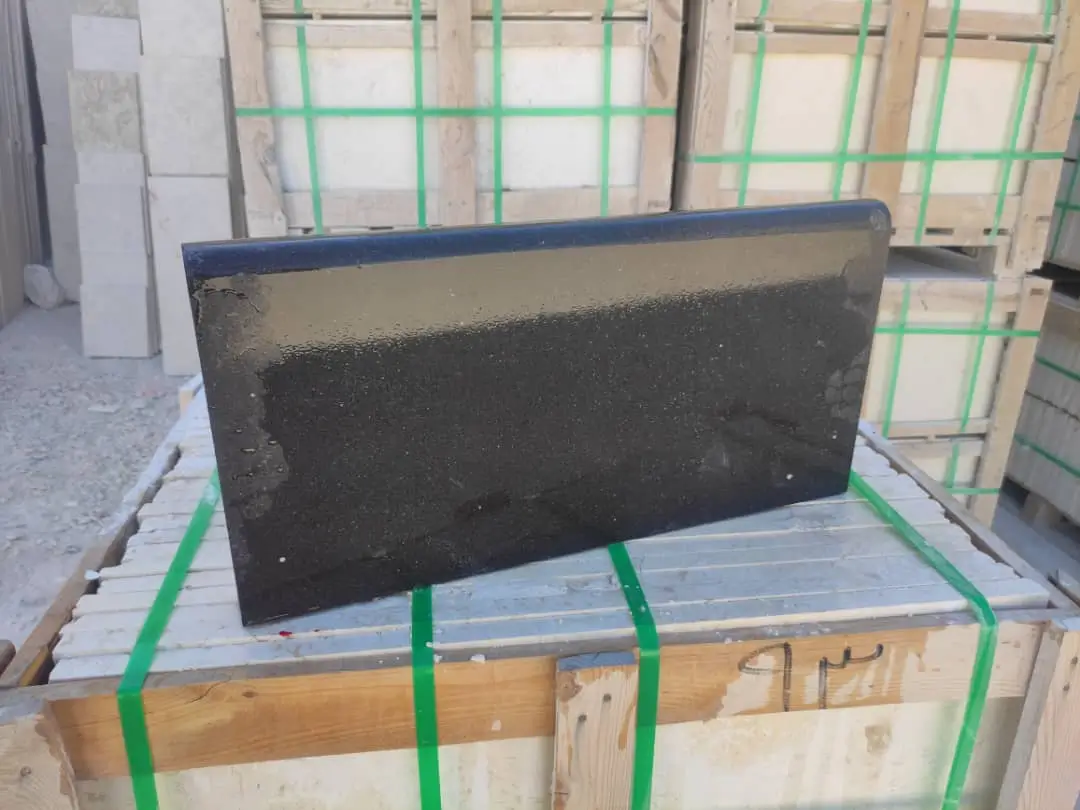
Bluestone honed surface Arizona applications deliver DCOF (Dynamic Coefficient of Friction) values between 0.48 and 0.56 in dry conditions. When you test wet surface performance, expect readings between 0.42 and 0.48. These measurements exceed ADA requirements for accessible routes, which specify minimum 0.42 DCOF values for level surfaces.
The bluestone non-reflective finish absorbs 85-92% of incident light, eliminating glare issues that plague polished stone installations. You’ll appreciate this characteristic in pool deck applications and covered outdoor living areas where reflected light creates visual discomfort. The matte surface also conceals minor scratches and wear patterns that become obvious on polished finishes within 5-7 years.
Heat retention characteristics require your attention in Arizona installations. Honed bluestone surfaces reach peak temperatures 15-20 minutes faster than thermal finishes due to the closed surface structure. However, the total temperature differential compared to thermal finishes remains minimal—typically 3-5°F under identical solar exposure. Your material selection should prioritize slip resistance and aesthetics over minor thermal variations that won’t affect user experience meaningfully.
Arizona Climate Impact on Honed Bluestone
You need to account for Arizona’s extreme diurnal temperature swings when you specify bluestone honed surface Arizona installations. The material experiences thermal cycling between 180°F peak surface temperatures and 65°F overnight lows during summer months. This 115°F differential occurs daily for 90-120 days annually in Phoenix, Tucson, and similar climate zones.
The bluestone smooth finish responds to these conditions through predictable thermal expansion. You should calculate joint spacing using the coefficient of 5.1 × 10⁻⁶ per °F for bluestone. This translates to 0.070″ expansion per 10-foot run across a 115°F temperature range. Your installation specifications must accommodate this movement through proper joint sizing and placement.
Efflorescence potential increases in Arizona’s alkaline soil conditions. When you install over concrete substrates or use cementitious setting materials, water-soluble salts migrate to the surface during evaporation cycles. The honed finish shows efflorescence more prominently than textured surfaces because the uniform plane provides no visual interruption. You’ll mitigate this through proper substrate moisture testing and penetrating sealer application before grouting operations.
Specification Criteria for Professional Procurement
Your specification documents should address these critical parameters for bluestone honed surface Arizona projects:
- Dimensional tolerances: ±1/8″ length and width, ±3/32″ thickness for standard material
- Surface flatness: maximum 1/16″ deviation across 10-foot straightedge
- Grit specification: 400-grit minimum for commercial applications, 220-grit acceptable for residential
- Porosity range: 3.5-6.2% for freeze-thaw stability in northern Arizona elevations
- Compressive strength: minimum 14,000 PSI for vehicular applications, 10,000 PSI for pedestrian
- Slip resistance: minimum 0.45 DCOF wet, 0.50 DCOF dry per ANSI A326.3 testing
You should verify material sourcing with your supplier before finalizing specifications. Bluestone quarries in Pennsylvania, New York, and Virginia produce material with varying iron content that affects color consistency. When you require uniform coloration across large installations, specify single-quarry sourcing despite the 8-12% cost premium this adds.
Installation Methods and Best Practices
The bluestone matte surface requires modified installation techniques compared to textured finishes. You’ll achieve optimal results using medium-bed mortar applications with 3/8″ to 1/2″ bed depth. Thin-set applications under 1/4″ don’t provide sufficient bedding to accommodate the slight warping that occurs in honed material during production.
Your substrate preparation determines long-term performance more than any other factor. When you install over concrete, verify moisture content below 4.5% using calcium chloride testing or relative humidity probes. Higher moisture levels create conditions for efflorescence emergence 8-18 months post-installation when subsurface salts finally migrate to visible surfaces.
Joint spacing should follow these guidelines for Arizona installations:
- Residential pedestrian areas: 3/16″ to 1/4″ joints with polymeric sand
- Commercial pedestrian plazas: 1/4″ to 3/8″ joints with cementitious grout
- Vehicular applications: 3/8″ to 1/2″ joints with epoxy-modified grout
- Expansion joints: every 12-15 feet in both directions for large field areas
You need to back-butter each piece during installation when working with bluestone honed surface Arizona material. The closed surface doesn’t key into mortar as aggressively as thermal or cleft finishes. Back-buttering ensures 95%+ mortar coverage that prevents hollow spots and reduces breakage risk under point loads.
Production Quality Variations You’ll Encounter
Not all honing operations produce equivalent results. When you source from different suppliers, you’ll notice these quality variations that affect installed appearance:
Inconsistent grit progression creates visible banding patterns. This occurs when fabricators skip intermediate grits to reduce production time. You’ll see parallel scratch patterns that become obvious when wet or under raking light conditions. Reputable suppliers maintain strict grit sequences even though this reduces throughput by 15-20%.
Edge condition varies significantly between suppliers. Lower-quality operations produce honed surfaces that don’t extend completely to panel edges, leaving 1/8″ to 3/16″ ridges along perimeters. When you install these panels with tight joints, the ridges create lippage issues that require extensive grinding to correct. Specify that the bluestone honing process must produce uniform surfaces that extend fully to all edges.
For guidance on related material options and performance comparisons across different surface treatments, see trade bluestone wholesale pricing in Tucson for comprehensive specification data. You’ll find detailed information addressing thermal properties, color consistency expectations, and long-term maintenance requirements.
Maintenance Requirements and Long-Term Considerations
The bluestone smooth finish requires less maintenance than polished surfaces but more than thermal textures. You should establish cleaning protocols that address Arizona’s specific environmental challenges without damaging the honed surface.
Dust accumulation occurs rapidly in desert environments. When you use pressure washing for routine cleaning, limit pressure to 1,200-1,500 PSI maximum. Higher pressures erode the honed surface progressively, creating visible traffic patterns within 7-10 years. Recommend that your clients use rotary scrubbing equipment with neutral pH cleaners for routine maintenance instead.
Sealer selection affects both performance and appearance. When you apply film-forming sealers, expect 18-24 month service life before reapplication becomes necessary. Penetrating sealers provide 3-5 year protection but offer less stain resistance for oil-based contaminants. Your recommendation should balance client maintenance capabilities against performance requirements.
The bluestone non-reflective finish shows staining more readily than polished surfaces because the open surface structure allows deeper contaminant penetration. You need to educate clients that prompt cleanup of food spills, plant tannins, and metal oxidation prevents permanent discoloration. Stains that sit for 24+ hours typically require professional remediation through poulticing or micro-grinding.
Cost Factors and Value Analysis
You’ll find that bluestone honed surface Arizona installations typically cost $8-12 per square foot for material only, compared to $6-9 for thermal finish and $4-7 for natural cleft. The premium reflects additional processing time and material waste during honing operations.
Installation labor costs remain consistent across finish types at $4-7 per square foot for standard residential installations. Commercial projects with stringent lippage requirements may add $1-2 per square foot for enhanced quality control and corrective grinding. Your total installed cost including substrate preparation, setting materials, and joint filling typically ranges from $18-26 per square foot.
The value proposition becomes clear when you calculate lifecycle costs. Polished bluestone requires refinishing every 8-12 years at $3-5 per square foot to restore appearance and slip resistance. The bluestone matte surface maintains acceptable appearance and performance for 20-25 years with only routine cleaning and periodic resealing. This translates to 40-50% lower lifecycle costs compared to polished alternatives.
Common Specification Mistakes to Avoid
You’ll prevent costly field problems by avoiding these specification errors that create conflict between expectations and delivered results:
- Failing to specify grit level allows suppliers to deliver 120-grit finishes that show excessive tooling marks
- Omitting flatness tolerances permits warped material that creates lippage issues during installation
- Not addressing color range allows suppliers to blend material from multiple quarries with visible variation
- Ignoring edge condition specifications results in ridge problems that require expensive field correction
- Specifying unrealistic tolerances forces suppliers to reject 40-50% of production, creating availability problems
The most frequent error involves confusing honed and polished finishes in specification language. When you write “smooth finish” without clarifying grit level and gloss specifications, you’ll receive whatever interpretation the supplier considers standard. Use precise terminology: “400-grit honed finish with matte appearance, 5-10 gloss units maximum” eliminates ambiguity.
Performance Comparison with Surface Alternatives
When you evaluate bluestone honed surface Arizona applications against other finish options, consider these performance differentials that affect long-term satisfaction:
Thermal finishes provide 8-12% better slip resistance in wet conditions due to the crystalline texture that remains after flame treatment. However, the thermal process creates micro-fissures that trap dirt and organic material more aggressively than the bluestone smooth finish. You’ll find that thermal surfaces require 30-40% more cleaning labor to maintain acceptable appearance.
Natural cleft surfaces offer the lowest initial cost but deliver inconsistent thickness that complicates installation. When you specify cleft material, expect ±1/4″ thickness variation that requires extensive mortar bed adjustment. The irregular surface also creates tripping hazards in commercial applications where ADA compliance requires maximum 1/4″ vertical discontinuities.
Polished bluestone delivers superior aesthetic impact for interior applications but fails rapidly in Arizona exterior environments. UV exposure degrades polish within 24-36 months, creating dull patches in high-traffic areas. The slippery wet surface also presents liability concerns that you can’t fully mitigate through applied treatments.
Citadel Stone: Premier Bluestone Wholesale Suppliers in Arizona
When you evaluate bluestone wholesale suppliers for Arizona projects, you’re looking for technical guidance that addresses regional performance requirements alongside competitive pricing. At Citadel Stone, we provide hypothetical specification recommendations for diverse climate zones across Arizona’s varied geography. This section outlines how you would approach material selection and installation planning for three representative cities.
Arizona’s climate zones range from low-desert environments with extreme heat to high-elevation areas experiencing freeze-thaw cycling. You need to modify your specifications based on location-specific conditions that affect long-term material performance. The following scenarios demonstrate how you would adjust bluestone honed surface Arizona specifications for different regional requirements.
Yuma Desert Applications
In Yuma’s extreme low-desert climate, you would prioritize thermal performance and UV resistance when specifying bluestone honed surface Arizona installations. Summer surface temperatures regularly exceed 165°F on horizontal surfaces with full solar exposure. You should verify that your selected material exhibits consistent thermal expansion characteristics across the expected 140°F daily temperature range. The bluestone honing process creates uniform surface density that prevents differential expansion between adjacent panels. Your joint spacing would need to accommodate 0.082″ movement per 10-foot run to prevent buckling during peak heat conditions. At Citadel Stone, we recommend warehouse stock verification before project commencement to ensure material availability aligns with your compressed installation timeline during acceptable temperature windows.
Mesa Commercial Specifications
Mesa’s commercial development activity requires you to address high-traffic performance when you specify bluestone matte surface installations for retail and hospitality projects. You would need to verify minimum 14,000 PSI compressive strength for vehicular crossings and loading zones. The bluestone smooth finish provides DCOF values meeting ADA requirements, but you should specify 400-grit minimum honing to ensure consistent slip resistance across large installations. Your specification would address edge condition requirements specifically, as commercial projects demand tight tolerances that prevent lippage-related trip hazards. You’d also need to coordinate truck delivery access for commercial sites with limited staging areas, as standard flatbed deliveries require 65-foot clearance for maneuvering.
Gilbert Residential Projects
Gilbert’s residential market focuses on outdoor living spaces where you would specify bluestone honed surface Arizona material for pool decks, patios, and covered entertainment areas. Your specifications would address the balance between aesthetic refinement and practical slip resistance that homeowners expect. The bluestone non-reflective finish eliminates glare issues near pools while maintaining the smooth appearance that complements contemporary architecture. You should recommend 220-grit to 400-grit honing for residential applications, as this range provides sufficient refinement without the premium cost of finer grits. Your installation guidance would address proper drainage sloping to prevent water accumulation on the relatively smooth surface. Standard residential specifications would call for 3/16″ joints with polymeric sand filling, providing flexibility for thermal movement while maintaining clean sightlines.
Sealing and Protection Protocols
Your sealing strategy for bluestone honed surface Arizona installations should address both immediate protection during construction and long-term maintenance requirements. The timing of sealer application significantly affects performance outcomes and warranty compliance.
You need to wait 28 days minimum after grouting before applying penetrating sealers. This allows complete curing of cementitious joint materials and prevents trapping residual moisture that causes subsurface efflorescence. When project schedules don’t permit this wait period, you can use breathable sealers specifically formulated for early application, though these typically cost 25-30% more than standard products.
Sealer penetration depth varies based on the bluestone honing process grit level. Material finished to 220-grit accepts sealers to 3-4mm depth, while 400-grit surfaces limit penetration to 2-3mm. Deeper penetration provides better stain resistance but may alter surface appearance by darkening the material. You should always apply test patches in inconspicuous areas before treating entire installations.
Application rates for penetrating sealers on honed bluestone typically range from 150-200 square feet per gallon for first coats, increasing to 250-300 square feet per gallon for second coats as surface pores become saturated. When you apply film-forming sealers instead, expect coverage rates of 300-400 square feet per gallon with single-coat application sufficient for most residential applications.
Quality Control and Inspection Points
You should implement these inspection checkpoints throughout the procurement and installation process to ensure delivered quality matches specified requirements:
- Pre-shipment inspection verifying grit level, dimensional accuracy, and color consistency before material leaves the fabrication facility
- Delivery inspection confirming packaging integrity, piece counts, and absence of transit damage requiring immediate rejection
- Pre-installation substrate verification testing moisture content, flatness, and structural adequacy before setting operations begin
- In-progress installation inspection checking mortar coverage, joint consistency, and lippage control at 25% completion intervals
- Final inspection validating surface cleanliness, joint filling completeness, and overall installation quality before client acceptance
The most critical inspection point occurs during material delivery when you verify that the bluestone smooth finish matches approved samples. Color variation between production runs can exceed acceptable tolerances, particularly when suppliers source from multiple quarries. You should reject shipments that show obvious color breaks or textural inconsistencies compared to approved samples, as these problems only become more apparent after installation.
Regional Sourcing and Logistics Considerations
Most bluestone honed surface Arizona material originates from northeastern quarries located 2,000+ miles from job sites. This distance creates logistics challenges you need to address during project planning to prevent schedule delays and cost overruns.
Standard truck freight transit times range from 5-7 days from Pennsylvania and New York sources to Arizona destinations. You should add 3-5 days for order processing and 2-4 days for local warehouse staging, resulting in 10-16 day total lead times for stock material. Custom sizing, special honing specifications, or large volume orders may extend lead times to 4-6 weeks depending on fabricator capacity.
Freight costs represent 12-18% of total material costs for Arizona deliveries. When you order partial truck loads under 20,000 pounds, expect freight premiums of 30-45% compared to full truckload rates. Your procurement strategy should consolidate orders to achieve full truck quantities whenever project schedules permit this efficiency.
Seasonal demand fluctuations affect both pricing and availability. You’ll find the best warehouse inventory levels and most competitive pricing during November through February when construction activity slows in northern regions. Spring and early summer create capacity constraints as northeastern projects consume fabrication capacity, potentially extending your lead times by 2-3 weeks during peak periods.
Final Project Considerations
Your successful bluestone honed surface Arizona installation depends on coordinating material specifications, installation techniques, and maintenance protocols that address regional climate challenges. The bluestone matte surface delivers proven performance across residential and commercial applications when you specify appropriate grit levels, verify dimensional tolerances, and ensure proper installation over adequately prepared substrates. You should establish realistic expectations with clients regarding natural color variation, maintenance requirements, and long-term appearance evolution that occurs even with proper care protocols.
The material’s non-reflective characteristics and reliable slip resistance make it particularly suitable for Arizona outdoor living spaces, pool decks, and commercial pedestrian areas where safety and aesthetics both demand attention. When you balance initial costs against lifecycle performance, the bluestone smooth finish typically provides superior value compared to polished alternatives that require periodic refinishing. Your specification documents should address all critical parameters including grit level, flatness tolerances, color range, and edge conditions to ensure delivered material meets project requirements without costly field corrections. For additional surface treatment options and comparative performance data, review Thermal flame texturing techniques for bluestone surface finishing before finalizing your installation specifications. Profile cutting available through Citadel Stone’s skilled blue stone fabrication in Arizona.