
Drainage geometry is the specification decision that separates a lasting blue paving slab courtyard from one that’s failing within three seasons — and in Fountain Hills, where the monsoon season delivers concentrated burst rainfall that can exceed two inches per hour, getting this right isn’t optional. Blue Paving Slab Courtyards Fountain Hills projects demand a fundamentally different hydraulic strategy than typical patio work, because the desert doesn’t absorb water slowly — it sheds it fast, and your courtyard design either channels that energy safely or becomes the collection point for it. The reference guide that follows addresses every specification layer that determines whether your blue stone courtyard performs as a contemporary showpiece or a seasonal maintenance problem.
Why Drainage Defines Fountain Hills Courtyard Design
Arizona’s rainfall pattern is deceptive. You can go eight months with virtually nothing, and then a single monsoon cell drops three inches in ninety minutes. The Fountain Hills area sits at roughly 1,520 feet elevation with hard caliche subsoil that doesn’t percolate quickly — which means runoff velocity across paved surfaces is high, and it builds up fast. Your blue paving slab courtyard has to be designed around this hydraulic reality from the base course up, not as an afterthought.
The interconnected porosity that makes blue limestone an excellent choice here works in your favor — natural stone transmits some moisture through its structure, reducing surface sheet flow compared to sealed concrete. But porosity alone won’t save a courtyard that’s been built without proper cross-fall and edge drainage. You’ll need to spec a minimum 1.5% cross-slope — not the 1% that shows up in generic guides — because desert soils underneath your base can develop localized saturation zones that cause differential settling if water pools even briefly against the slab edges.
In Fountain Hills specifically, the topographic relief around most residential and commercial sites means you’re often dealing with converging drainage paths from neighboring lots. Before laying a single slab, walk your site after any simulated wetting and identify where water wants to travel naturally. Design with that flow, not against it.
Blue Paving Slab Material Performance for Arizona Conditions
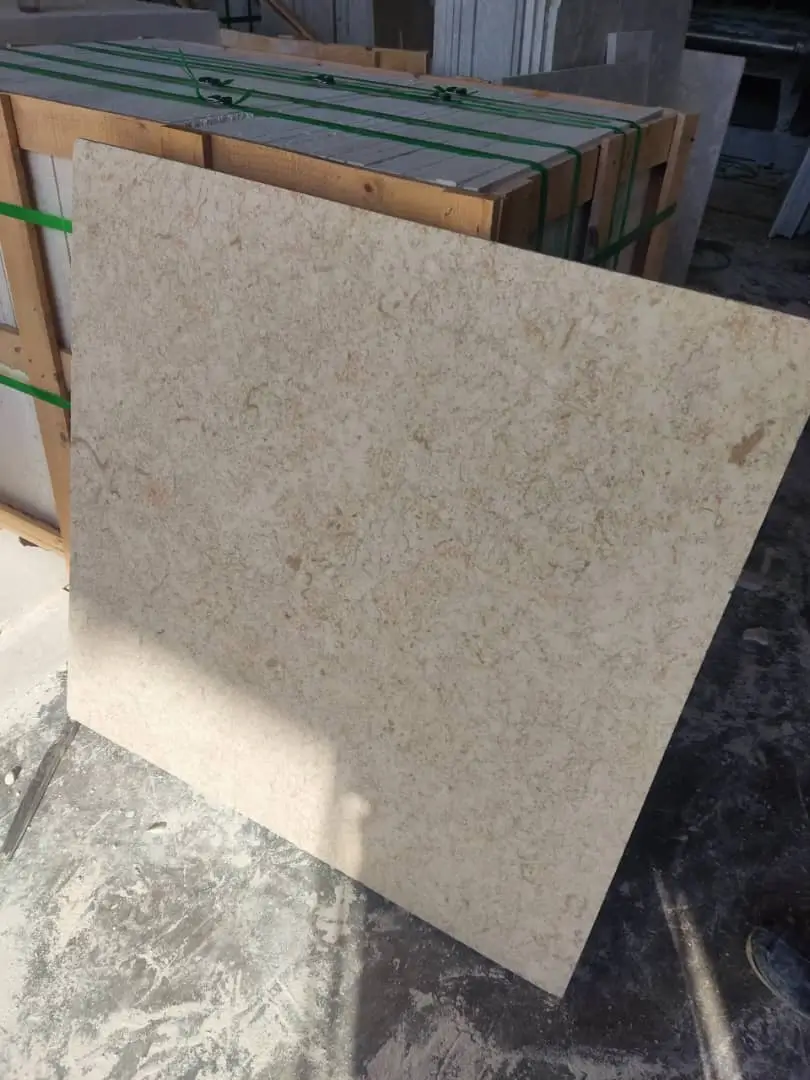
Blue limestone — the material behind most high-specification blue paving slab design Arizona projects — delivers compressive strength typically ranging from 10,000 to 15,000 PSI depending on quarry origin and bedding plane orientation. That structural density is what makes it viable for contemporary courtyard applications where foot traffic is heavy and concentrated point loads from furniture legs and planter bases are constant. You’re not just choosing a color or texture — you’re selecting a material that has to perform under thermal cycling, UV saturation, and periodic hydraulic stress simultaneously.
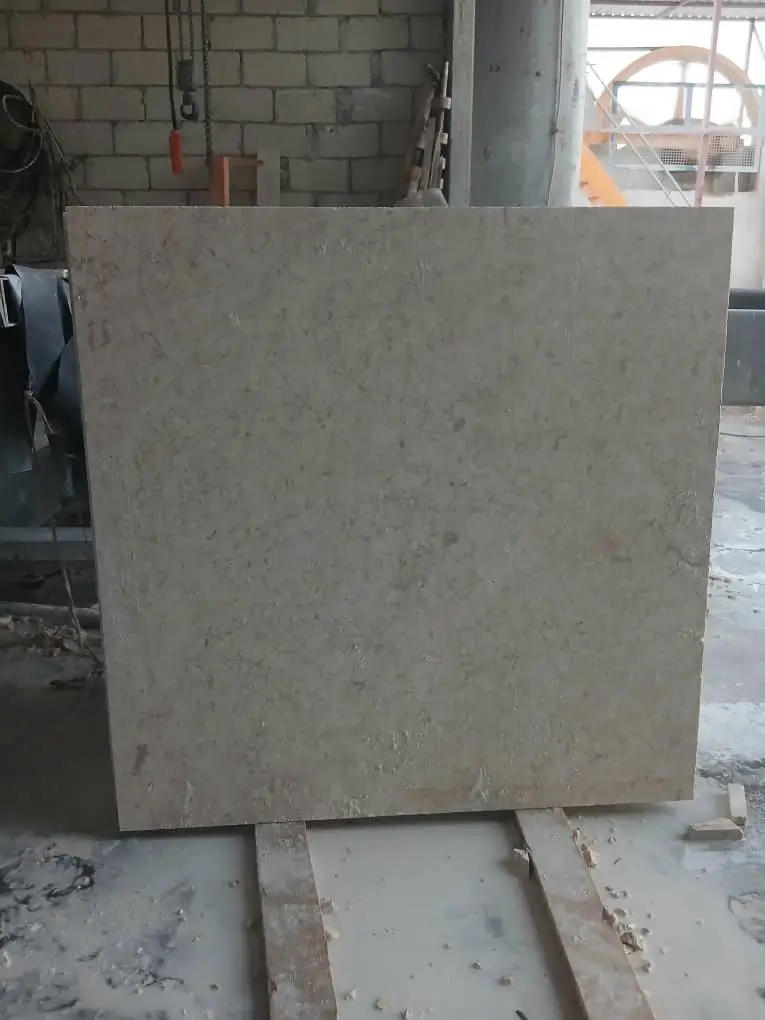
The characteristic blue-grey tone of this limestone comes from iron and clay mineral content within the carbonate matrix. Here’s what that means practically: the same mineralogy that gives you the color also contributes to the slab’s thermal mass, which keeps surface temperatures measurably lower than concrete or dark granite under direct afternoon sun. For blue paving slab design in Arizona, that thermal behavior translates directly into courtyard usability — surfaces that reach 140°F on concrete will read 110–115°F on blue limestone under identical exposure conditions.
- Thermal expansion coefficient: approximately 4.7–5.5 × 10⁻⁶ per °F — lower than most concrete units, reducing joint stress in heat cycles
- Water absorption rate: typically 0.5–2.5% by weight, depending on surface finish — honed finishes absorb slightly more than flamed
- Slip resistance: flamed or brushed finishes achieve DCOF values above 0.42 wet — the minimum for outdoor public areas per ANSI A137.1
- Modulus of rupture: 1,200–2,200 PSI range — specify 30mm thickness minimum for spans over 12 inches unsupported
- UV stability: limestone’s calcium carbonate matrix shows minimal color shift under prolonged UV exposure compared to some basalts
At Citadel Stone, we source blue limestone directly from quarries with consistent bedding depth documentation, because the orientation of natural stone relative to its original bedding plane affects how it responds to both compressive loads and moisture movement. Material sourced without this documentation has a higher rate of delamination failure in wet-dry cycling environments like monsoon-season Arizona.
Base Preparation and Moisture Control Under Blue Stone
The base system underneath blue paving slab courtyards in Fountain Hills needs to accomplish two things simultaneously: provide structural bearing capacity and manage subsurface moisture movement. These requirements pull in opposite directions — denser compaction improves load distribution but reduces permeability. The resolution is a layered system, not a single compromise.
Start with a 6-inch compacted crushed aggregate base (Class II, 3/4-inch minus) for standard residential courtyard applications. Under that, in areas where subsurface drainage is a concern, a 2-inch clean angular stone drainage layer separated by geotextile fabric creates a pressure-relief pathway for water that saturates below the frost line — even in a desert climate, intense monsoon infiltration can reach surprising depths. Your setting bed should be a 1-inch screed of cement-sand mortar or aggregate, not a full mortar bed, which traps moisture and accelerates spalling at slab undersides.
Projects in San Tan Valley deal with expansive clay soils that swell measurably when saturated — a problem that’s also present in parts of the Fountain Hills basin where older alluvial deposits underlie developments. In those conditions, increase your aggregate base to 8 inches and run a French drain at the perimeter to intercept lateral water migration before it reaches your slab field. Skipping this step is the single most common reason blue stone courtyards develop dish-shaped settlement within five years.
- Minimum aggregate base: 6 inches compacted to 95% Proctor density for residential loads
- Drainage layer option: 2-inch clean 3/8-inch angular stone below aggregate base in high-infiltration zones
- Setting bed: 1-inch dry-pack sand or cement-sand, never full mortar bed for outdoor slabs
- Perimeter drainage: 4-inch perforated pipe at base course level, directed to daylight or dry well
- Geotextile separation: 4-ounce non-woven fabric between drainage stone and aggregate base
Joint Design and Expansion Strategy for Arizona Heat
Most specifiers undersize expansion joints for Arizona conditions because they’re using generic tables built around mid-Atlantic or Pacific Northwest climate data. Your Fountain Hills courtyard experiences temperature swings of 60–80°F between winter nights and summer afternoons — that’s a thermal range that demands joint spacing of no more than 12–15 linear feet in any direction, not the 20-foot spacing common in temperate climate specs.
For contemporary courtyards in Arizona using blue paving slab installations, the joint material matters as much as the spacing. Standard cementitious grout works for interior applications, but exterior joints in high-thermal-differential zones need a polymer-modified joint compound or a flexible polyurethane sealant in the expansion joints specifically. Differentiating your working joints (filled with flexible sealant) from your aesthetic joints (filled with color-matched mortar) is a detail that most residential specs collapse into one — and it’s usually where the cracking starts within 18 months.
Here’s a dimension that comes from real field work: blue limestone expands about 0.0055 inches per linear foot for every 10°F of temperature increase. In a 15-foot slab run, you’re looking at 0.083 inches of total movement across a 150°F annual swing. Your joint needs to accommodate that without transferring stress to the stone face. Silicone-based sealants with 50% movement capacity are the minimum specification for this climate.
Contemporary Design Applications in Fountain Hills Modern Spaces
Fountain Hills contemporary architecture tends toward clean horizontal planes, restrained material palettes, and strong indoor-outdoor visual continuity — and blue paving slabs fit that language better than almost any other natural stone. The grey-blue tones create visual depth without competing with desert landscape colors, and large-format slabs (24×48 inches or 24×24 inches) reinforce the horizontal emphasis that defines regional modernism in this area.
For Fountain Hills modern spaces, the most successful courtyard layouts treat drainage as a design opportunity rather than a mechanical necessity. Linear channel drains aligned with the primary slab joint pattern become a visual element that reinforces the contemporary grid. Recessed perimeter drains at material transitions — where stone meets lawn or planting bed — eliminate the visual interruption of exposed grate systems while handling the volume that monsoon rainfall delivers. You’re accomplishing better hydraulic performance and cleaner aesthetics simultaneously.
Blue paving slab design in Arizona also benefits from the contrast dynamic between the stone’s cool tones and the warm earth tones of desert planting. Specified alongside native gravel mulch, ocotillo, or agave, blue limestone reads as sophisticated rather than incongruous — the contrast works because both palettes are desaturated and mineral. Avoid pairing it with red Arizona flagstone in the same plane; the simultaneous warmth-and-cool tension reads as indecisive rather than intentional.
- Large-format slabs (24×48 inches) emphasize horizontal mass — ideal for contemporary courtyard fields
- Honed finish provides the smooth visual plane that modern design demands while maintaining adequate DCOF for outdoor safety
- Linear drain channels integrated at primary joints handle monsoon volume without disrupting visual geometry
- Blue-grey tones pair naturally with palo verde, agave, and desert gravel palettes
- Consistent joint width (3/8 inch minimum outdoors) maintains the grid rhythm that contemporary Arizona stylish areas require
Sealing Protocols for Desert Conditions
Blue limestone in outdoor Arizona applications needs sealing — but the sealer type and timing are where most projects make mistakes that cost them premature maintenance cycles. The goal isn’t to waterproof the stone; it’s to reduce absorption rate enough to prevent staining and minimize the moisture cycling that accelerates surface micro-fracturing. You want a penetrating impregnator, not a topical film former, in any exposed outdoor application.
Penetrating silane-siloxane sealers at 15–25% solids content work well for blue limestone in Arizona’s UV environment. Film-forming acrylics degrade under UV exposure within 18–24 months here, leaving a chalky residue that’s difficult to remove without abrading the stone surface. Apply your first sealer coat after 28 days of installation cure, when the setting bed mortar has fully carbonated — sealing too early traps residual moisture that then has nowhere to go except back through the stone face.
Resealing frequency for blue paving slab courtyards in Fountain Hills climates is typically every 2–3 years for high-traffic areas and every 3–4 years for lower-use zones. You can gauge when resealing is due by observing whether water still beads on the surface after rain — when it starts sheeting and absorbing rather than beading, you’re at the resealing threshold. Waiting until the stone shows staining means you’ve already accepted contamination that penetrating sealers won’t fully reverse.
Supply Logistics and Project Planning for Arizona
Blue paving slabs in Arizona involve supply chains that reward early planning. Large-format stone in consistent color lots — which you need for any contemporary design that depends on tonal uniformity — comes from specific quarry runs, and those runs don’t always coincide with your project schedule. Verify warehouse stock levels before you finalize your project timeline, because substituting mid-run from a different quarry lot introduces color variation that’s impossible to correct without replacing exposed slabs.
You can visit our blue limestone slab facility to review current inventory, color lots, and finish options before committing to a specification. Seeing the material in person under Arizona light conditions — rather than evaluating digital samples — is a step that eliminates most of the color-expectation problems that arise at installation.
For projects in Avondale and similar suburban Arizona markets, truck delivery to residential sites requires confirming access clearance before scheduling. Standard delivery trucks need 14-foot height clearance and a firm, level drop zone within 50 feet of the installation area — blue limestone pallets run 3,000–4,500 pounds each, and unstable ground during off-loading creates tipping hazards. Coordinate this with your base contractor before the stone arrives on site.
- Order stone from a single quarry run for any courtyard visible field — lot consistency matters more than price per square foot
- Confirm warehouse availability 6–8 weeks before your scheduled installation start
- Verify truck access clearance (14-foot height, firm surface within 50 feet) before scheduling delivery
- Order 8–10% overage for cuts, breakage, and future repairs from the same lot
- Store pallets on level ground with edge protection — stacking pressure on corners causes fractures that aren’t visible until slabs are laid
Monsoon Season Performance and Long-Term Durability
The first monsoon season after installation is when blue paving slab courtyards reveal every base preparation shortcut and drainage design compromise simultaneously. Differential settling shows up as rocking slabs within the first wet-dry cycle. Inadequate joint sealing appears as efflorescence at joint edges as minerals migrate with moisture movement. Poor cross-slope becomes visible as ponding that doesn’t drain within 30 minutes of rainfall cessation — the standard benchmark for acceptable outdoor paving drainage.
For contemporary courtyards in Fountain Hills modern spaces, design your drainage system for a 100-year storm event capacity, not average annual rainfall. Arizona’s rainfall distribution is extreme — you can have three times the annual average in a single week. Undersizing your drainage capacity to average conditions means you’re designing for failure during the events that matter most. Channel drain sizing should be calculated for 3 inches per hour at minimum for Maricopa County locations.
Long-term durability expectations for properly specified blue paving slabs in Arizona are realistic at 25–35 years before surface refinishing becomes necessary, and 40+ years of structural performance when base preparation and drainage design are correct. Those numbers drop to 8–12 years when drainage is inadequate and moisture cycling is allowed to work on the joint system and slab undersides unchecked. The material itself is durable — it’s the installation system that determines whether you realize that durability potential.
In Yuma, where rainfall totals are far lower but when rain does arrive it often comes in concentrated desert storm events, similar drainage principles apply — the hydraulic logic of designing for peak flow rather than average conditions holds regardless of annual totals. The intensity pattern, not the annual figure, drives your drainage specification decisions.
Getting Your Blue Paving Slab Courtyard Specification Right
Blue Paving Slab Courtyards Fountain Hills projects succeed or struggle based on decisions made before the first slab is placed — base depth, cross-slope geometry, joint spacing, and drainage routing are the variables that determine 10-year versus 30-year performance. The aesthetic case for blue limestone in contemporary Arizona stylish areas is straightforward; the technical case requires attention to the hydraulic and thermal realities that are specific to this region and this climate pattern. You’re designing for a material that performs well, in conditions that test it seriously, and the specification details covered here are the ones that field performance consistently traces back to.
As you develop your Fountain Hills courtyard specification, complementary hardscape elements can round out the design. Blue Limestone Slab Sitting Walls for Cave Creek Garden Seating explores how the same material family performs in a vertical application context — useful reference for integrated courtyard and garden wall design using consistent stone throughout your project. Our blue black natural limestone paving in Arizona is a sustainable and natural product.