
Blue limestone walkways Queen Creek projects demand a level of layout precision that most pathway specs underestimate — specifically, the relationship between slab joint orientation and the directional sun exposure that defines Queen Creek’s afternoon heat load. Choosing your running bond direction based on shadow patterns rather than aesthetic preference alone will extend your joint sand retention by years. The thermal cycling between 45°F winter mornings and 115°F summer afternoons in the East Valley puts cumulative stress on every joint, every edge, and every transition point in your pathway design.
Why Blue Limestone Performs Differently in Arizona Pathways
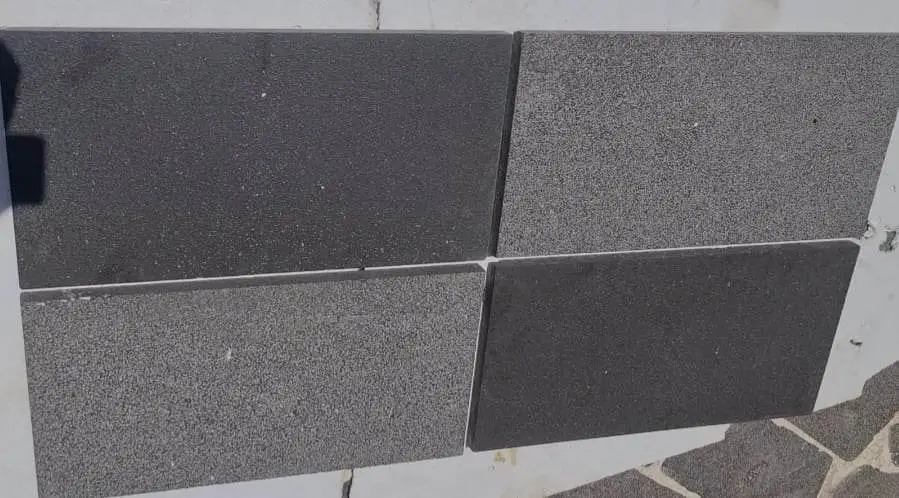
Blue limestone paving slabs in Arizona carry a dense, low-porosity matrix that distinguishes them from the softer sedimentary options commonly mistaken for equivalent alternatives. You’re looking at compressive strength values typically in the 9,500–12,000 PSI range for quality blue limestone, which means it handles the point-load stress of foot traffic, furniture legs, and equipment wheels without the surface spalling that plagues softer travertines in high-use pathway corridors.
The material’s characteristic blue-grey coloration comes from its mineral composition — primarily calcite with iron and manganese compounds — and that same dense structure gives it a surface temperature advantage. Field measurements consistently show blue limestone running 15–22°F cooler than dark concrete under direct afternoon sun, which matters enormously for barefoot comfort on a Queen Creek residential walkway.
- Compressive strength: 9,500–12,000 PSI typical range for pathway-grade blue limestone slabs
- Water absorption: below 0.5% for premium material — critical for resisting caliche moisture migration
- Coefficient of thermal expansion: approximately 4.6 × 10⁻⁶ per °F, requiring expansion joints every 12–15 linear feet in Arizona conditions
- Slip resistance: natural cleft or honed finishes achieve DCOF values above 0.42 wet, meeting ADA pathway requirements
Queen Creek Pathway Design Fundamentals Worth Getting Right
Your pathway layout decisions in Queen Creek need to account for two things most designers address separately but should treat as a single system: drainage geometry and base compaction strategy. The region’s caliche subsoil layers vary in depth from 14 to 36 inches across different parcels, and that variability directly affects how your aggregate base performs over time.
For blue limestone walkways in Queen Creek, a 6-inch compacted Class II base over a 4-inch compacted subbase delivers the stability these slabs need. Queen Creek pathway design often involves longer straight runs than you’d see in older neighborhoods — the newer master-planned communities favor generous setbacks and extended pathways that introduce more cumulative thermal movement per run. This means your expansion joint schedule isn’t optional; it’s a structural requirement.
- Minimum base depth: 6 inches compacted aggregate over prepared subgrade
- Slope requirement: 1.5–2% cross-slope minimum for positive drainage away from structure
- Joint width: 3/8 inch standard for pedestrian pathways; increase to 1/2 inch at fixed structure interfaces
- Setting bed: 1-inch screeded mortar bed or compacted sand bed depending on traffic classification
- Expansion joints: every 12–15 feet on linear runs, at all corners, and at all transitions to fixed elements
The detail that catches most installers off guard in this climate is the transition joint where your pathway meets an entry slab or pool deck edge. That interface sees differential thermal movement because the two masses heat and cool at different rates. You need a full flexible sealant joint at every such transition — not just a wider grout joint.
Walkway Layout Patterns That Work in Extreme Heat Climates
The classic running bond pattern remains the most structurally sound option for blue paving slab paths in Arizona because it distributes load continuously across staggered joints rather than creating the grid of aligned weak points that stack bond produces. That said, your pattern selection should also factor in how the pathway will be viewed and how it directs movement through the space.
Herringbone at 45 degrees is increasingly popular in Queen Creek because it handles curved pathway alignments naturally without the awkward cut pieces that straight herringbone demands on curved runs. At Peoria, landscape architects have been specifying 45-degree herringbone for connecting walkways between community amenity nodes, precisely because the pattern reads as directional without being rigid. It also distributes braking loads better in areas where dogs, children, or delivery carts create lateral stress on the surface.
- Running bond: best for straight runs exceeding 20 feet — maximum structural integrity, easiest to install
- 45-degree herringbone: ideal for curved alignments and high-lateral-stress zones like entry approaches
- Ashlar (random) pattern: works well for organic garden pathways where formal geometry would feel out of place
- Soldier course border: frame any pattern with a single or double soldier course to define the pathway edge and simplify the cut line
For wider pathways — anything above 48 inches — consider using two slab sizes in a random ashlar arrangement. Mixing 24×24 and 16×24 slabs creates visual movement that makes a wide pathway feel like a considered design element rather than a utility surface. You’ll also reduce your cut waste significantly because the random coursing accommodates minor dimension variations without visible errors.
Slab Sizing and Thickness for Arizona Pedestrian Routes
Thickness selection for Arizona pedestrian routes running through residential landscapes differs from commercial pedestrian specifications, and getting this wrong is the most common source of structural failure in otherwise well-installed projects. For purely pedestrian blue limestone walkways in Queen Creek, 30mm (1.2-inch) slabs set on a prepared mortar bed provide adequate performance. The moment you introduce occasional vehicle crossings — delivery trucks accessing a side gate, for instance — you need to step up to 40mm (1.6-inch) minimum.
Our technical team at Citadel Stone has seen more cracked 30mm slabs from single heavy vehicle crossing events than from any other failure mode. Having that conversation with your client upfront is essential, because the cost difference between 30mm and 40mm material is modest compared to the cost of removal and replacement. You should also verify warehouse stock for your preferred thickness before finalizing your project schedule, because 40mm blue limestone slabs in Queen Creek-area projects move quickly during peak spring and fall installation seasons.
- Pedestrian-only pathways: 30mm slabs over mortar bed on compacted aggregate base
- Mixed pedestrian and light vehicle crossing: 40mm slabs minimum
- High-frequency vehicle crossing: 50mm slabs with reinforced concrete sub-slab
- Slab sizing for scale: 24×24 inch works for pathways 36–60 inches wide; 16×24 or 12×24 for narrower runs
Surface Finish Selection for Pathway Safety and Comfort
Natural cleft finish is the default specification for most blue limestone walkway projects in Arizona, and for good reason — the texture is inherent to the material, doesn’t require additional processing cost, and delivers reliable slip resistance without becoming uncomfortably abrasive on bare feet. A honed finish reduces surface texture but maintains adequate DCOF (Dynamic Coefficient of Friction) values above 0.42 wet when the surface is maintained and sealed properly.
Consider carefully before specifying polished blue limestone for outdoor pathways. The polished surface looks exceptional when installed, but the maintenance burden in Arizona’s dusty environment is significant. Airborne silica and mineral dust settle into micro-scratches that dull the polished surface within one season, requiring periodic re-polishing to maintain appearance. Natural cleft or honed finishes age gracefully; polished finishes require active maintenance investment. For a project where aesthetics are paramount, explore graphite blue limestone slabs in Gilbert — the graphite variation offers a refined visual depth that performs well with a honed finish in residential pathway applications.
- Natural cleft: highest slip resistance, lowest maintenance, best long-term value for walkways
- Honed (matte): balanced aesthetics and function — the most versatile finish for residential pathways
- Polished: suitable for covered loggia walkways or interior thresholds only — avoid in exposed outdoor runs
- Brushed: a middle ground that softens the raw cleft texture while retaining adequate grip — increasingly requested in contemporary landscape designs
In Sedona, where natural stone pathways need to harmonize with the region’s red rock aesthetic, brushed blue limestone creates an interesting complement — the cool grey-blue tones contrast the warm ochre surroundings in a way that feels intentional rather than generic. The brushed texture also handles the dust and organic debris that collects on outdoor surfaces in that region more gracefully than a polished finish would.
Sealing Protocols for Blue Limestone Pathways in Arizona
The sealing conversation is where a lot of good pathway projects develop long-term problems. Blue limestone’s low porosity (below 0.5% absorption for quality material) means it doesn’t urgently need sealing the way a travertine or sandstone does, but Arizona’s specific combination of UV intensity, dust, and hard water creates a different argument for sealing — protection from surface staining and efflorescence, not moisture penetration per se.
A penetrating silane-siloxane sealer is the right primary protection layer, applied after the pathway has cured for a minimum of 28 days. Topical sealers create a surface film that traps heat underneath in Queen Creek’s summer conditions, which can accelerate joint failure and cause the sealer itself to bubble and delaminate. A penetrating sealer absorbed into the surface matrix avoids that failure mode entirely. Reapplication every 24–36 months is a reasonable maintenance interval in Arizona conditions, though blue paving slab paths in Arizona positioned in full western sun exposure may need attention closer to the 24-month mark.
- Sealer type: penetrating silane-siloxane blend, not topical acrylic or polyurethane
- Initial cure period: minimum 28 days before first sealer application
- Application rate: typically 150–200 square feet per gallon for quality blue limestone
- Reapplication interval: 24–36 months depending on sun exposure and foot traffic volume
- Pre-sealing prep: clean with a pH-neutral stone cleaner; never use muriatic acid on blue limestone
In Flagstaff, the sealing protocol shifts meaningfully because freeze-thaw cycles enter the equation. At 6,900 feet elevation, moisture that penetrates unsealed joints can freeze, expand, and progressively displace joint sand and edge conditions. Flagstaff-area blue limestone pathway projects should use a sealer rated for freeze-thaw environments and plan for annual joint sand top-up inspections rather than the biennial schedule that suffices in the lower desert.
Material Sourcing and Logistics for Queen Creek Projects
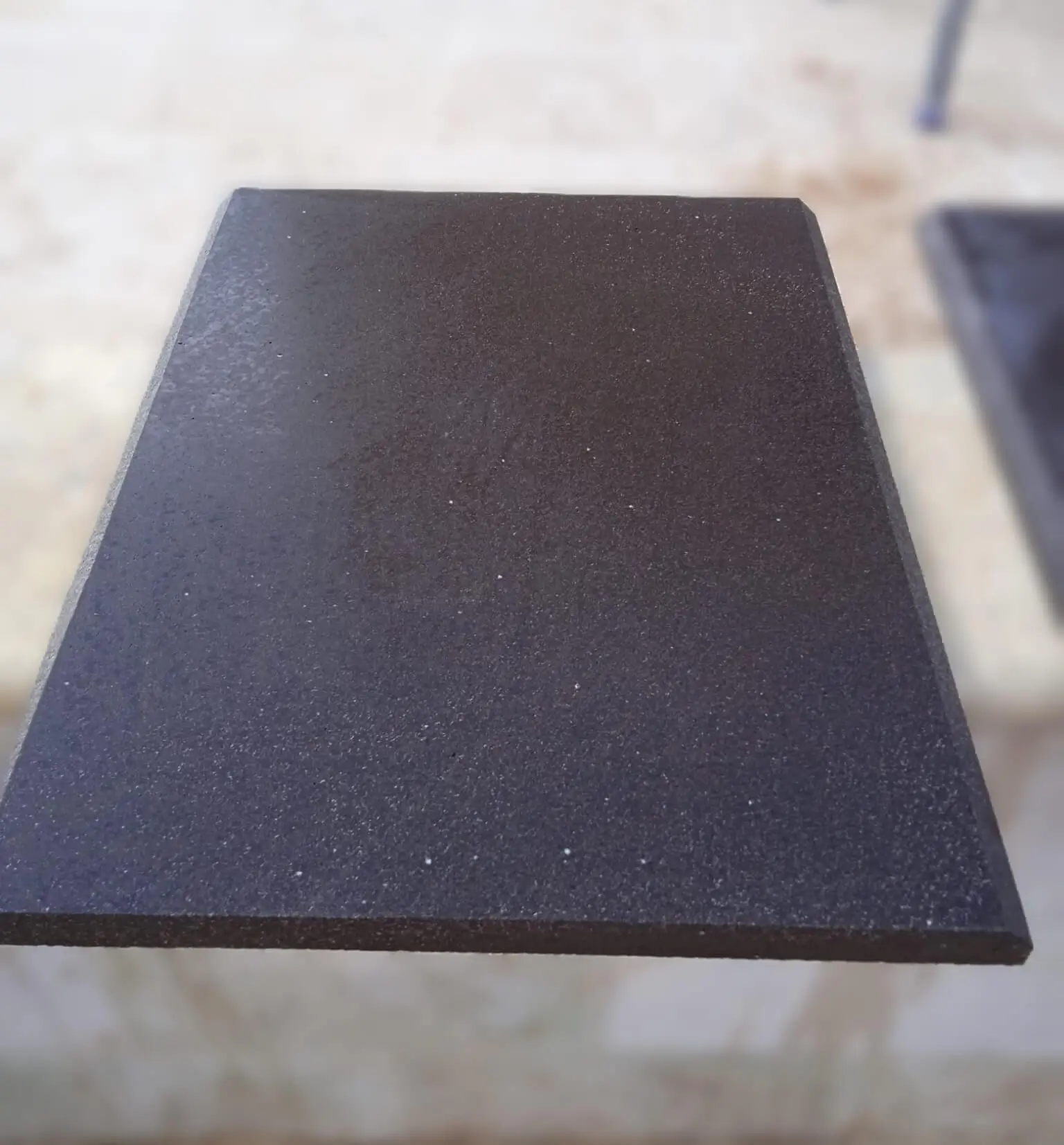
Logistics planning matters more than most clients realize when specifying blue paving slab paths in Arizona. Queen Creek’s location on the southeastern edge of the Phoenix metro means truck delivery routes from central Phoenix distribution points add time relative to projects in Tempe or Chandler. Factor in a 3–5 business day lead time for standard pallet deliveries from local warehouse stock, and confirm availability in writing before finalizing your installation start date.
Citadel Stone maintains stocked warehouse inventory of blue limestone slabs across multiple Arizona distribution points, which significantly reduces the uncertainty that comes with direct-import timelines. Projects that require custom sizing or unusual thicknesses may need 4–6 weeks if the specification falls outside standard warehouse stock dimensions. The practical implication: lock down your material spec and place your order at least three weeks before your planned installation date to avoid the schedule compression that derails more projects than material failures ever do.
- Standard pallet delivery: 3–5 business days from in-stock warehouse inventory
- Custom sizing or non-standard thickness: 4–6 weeks typical lead time
- Pallet weight: blue limestone pallets typically run 2,800–3,200 lbs — confirm your delivery access accommodates a standard flatbed truck
- Delivery inspection: check every pallet for corner damage before the truck leaves your site; freight damage claims require documentation at time of delivery
- On-site storage: stack pallets on level ground, covered with breathable tarps — avoid direct plastic wrapping in Arizona heat, which traps moisture and accelerates efflorescence
Common Installation Errors and How to Avoid Them
The errors that consistently produce callbacks on blue limestone walkway projects aren’t material failures — they’re installation decisions made under time pressure that create problems 18–36 months post-completion. The most frequent issue is inadequate base compaction, particularly in Queen Creek’s caliche-dominant soils where installers mistake the firm surface feel of caliche for adequate compaction. Caliche resists compaction equipment differently than engineered aggregate, and native caliche alone doesn’t meet the 95% modified Proctor compaction standard that walkway slabs require.
The second most common error is under-specifying joint sand. Polymeric joint sand should fill joints to within 1/8 inch of the surface, activated with water, and allowed to cure before traffic is permitted. Projects that rush this step end up with partially filled joints that allow ant intrusion and progressive sand loss — both of which accelerate under Arizona’s intense summer rain events. A well-executed joint sand installation adds one day to your schedule and eliminates years of maintenance calls.
- Base compaction shortcut: testing to 95% modified Proctor is not optional — it’s the threshold between a 10-year and a 25-year installation
- Improper slope: pathways installed without positive drainage slope trap water at transitions and accelerate sub-base saturation during monsoon events
- Missing expansion joints: linear thermal movement of 15 feet of blue limestone over Arizona’s temperature range measures approximately 3/16 inch — insufficient joint space translates directly to edge chipping and lippage
- Premature sealing: applying sealer before full mortar cure traps moisture in the setting bed, causing efflorescence that’s difficult to remediate without full slab removal
- Skipping the final level check: blue limestone’s dense weight makes it unforgiving to reset; check level on every third slab during installation, not just at completion
What Matters Most for Blue Limestone Walkways Queen Creek
Blue limestone walkways Queen Creek projects succeed or fail based on the decisions made in the base preparation and joint detailing phases — not during material selection. You can specify the finest blue limestone paving slabs available, but without the correct base depth, proper compaction verification, and expansion joint scheduling, that investment will underperform. The material gives you the structural and aesthetic foundation; your execution plan determines whether it lasts 12 years or 30.
Your specification should also address the complete lifecycle of the pathway, not just the installation phase. Sealing intervals, joint sand maintenance, and transition joint inspection are the three ongoing commitments that separate maintained pathways from deteriorating ones in Arizona’s demanding climate. Build those maintenance milestones into your project documentation so your client understands what the long-term performance expectation actually requires from them.
Beyond the Queen Creek walkway itself, other stone elements on the property deserve equally careful specification. For edge detailing on blue limestone projects, Blue Limestone Paving Slab Edge Finishing for Buckeye Polished Looks covers the finishing considerations that complete a polished pathway design. Every edge profile decision you make affects both the visual outcome and the long-term durability of the slab perimeter — it’s worth reviewing before your installation date. We are the reliable supplier of blue black limestone paving in Arizona for time-sensitive commercial jobs.