
Edge profiles on blue limestone slab edges Buckeye installations often receive less specification attention than the field material itself — and that’s where projects lose the polished, intentional look that separates premium hardscapes from adequate ones. The interaction between edge geometry, cut method, and finish determines how the material weathers over time, how it reads visually at ground level, and whether your installation holds up to the point loads that occur at perimeter zones. Getting this detail right from the start means fewer callbacks, a cleaner aesthetic, and a finished product that genuinely reflects the quality of the stone.
Why Edge Treatment Defines the Whole Installation
Your field stone can be perfectly laid with immaculate joints, but a mismatched or poorly executed edge profile will undercut the entire project visually. Blue limestone has a naturally dense, fine-grained structure — its characteristic blue-grey tone and tight crystalline surface make it one of the most versatile stones for achieving crisp, architectural edge lines. The material’s compressive strength, typically in the range of 8,000–12,000 PSI depending on quarry origin and bedding orientation, means it holds a tight edge without chipping the way softer sedimentary stones do.
The edge treatment you specify also affects structural performance at the perimeter. Slab edges bear concentrated load from foot traffic pivoting at corners, from furniture legs placed near perimeter zones, and from thermal expansion stress concentrating at the free edge. A bullnose profile distributes that stress differently than an arris edge or a pencil round — and in Arizona’s desert heat, where slab surface temperatures can exceed 140°F by mid-afternoon, thermal dynamics at the edge are non-trivial. You need to account for that in both profile selection and the joint allowance at the boundary condition.
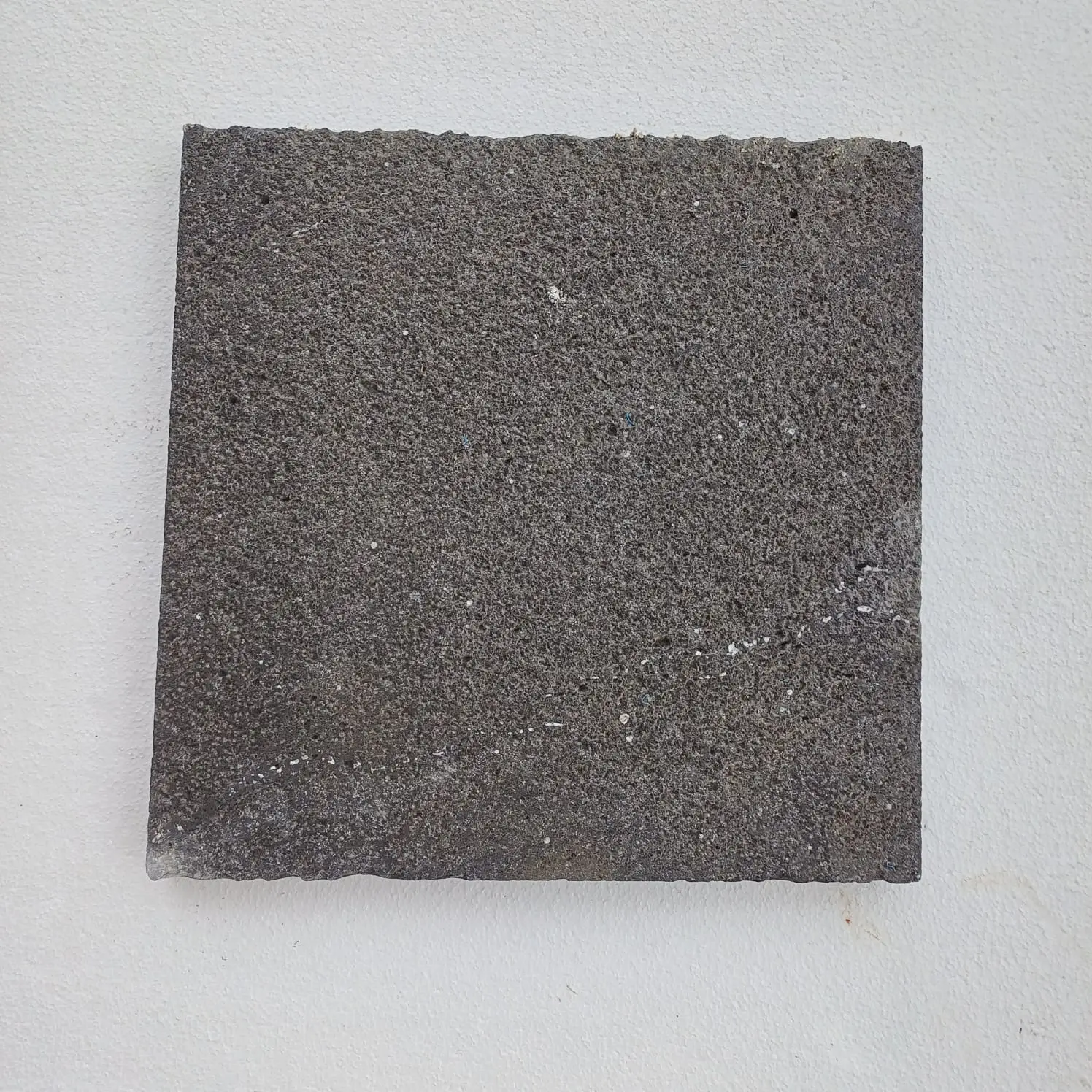
Edge Profiles That Work Best for Blue Limestone Slabs
Not every profile suits every project context, and blue limestone’s density characteristics make some profiles more achievable and durable than others. Here’s a breakdown of the profiles you’ll encounter most often in Arizona hardscape borders and Buckeye edge treatments:
- Sawn square edge — the most common profile, clean and contemporary, requires precise cutting tolerances of ±1mm to read well at close range
- Bullnose (full or half) — excellent for pool surrounds and step nosings, distributes edge load effectively, adds a softer visual line to formal designs
- Pencil round — a subtle 3–5mm radius break that removes the sharp arris without introducing obvious curvature, popular for garden path borders and terrace edges
- Beveled edge — typically cut at 45°, produces a chamfered shadow line that emphasizes the stone’s thickness and suits contemporary architectural styles
- Recessed (dropped) edge — used when you want the slab plane to appear to float above the surrounding grade, requires careful base engineering to prevent undermining
- Rough-split or riven edge — matches naturally cleft surface finishes, ideal for informal garden settings and rustic Buckeye edge treatments where a softer aesthetic fits the design intent
For most residential and commercial applications in Buckeye, the sawn square edge with a light pencil round is the standard specification. It photographs cleanly, tolerates minor installation variance better than a pure square arris, and doesn’t read as either too formal or too casual.
Cut Methods and Finish Quality
The method used to cut the edge directly affects finish quality, and not all cutting approaches are equal on blue limestone. Diamond blade wet-cutting produces the sharpest, most consistent profiles — the stone’s density and crystalline structure respond well to high-RPM diamond cutting, and the water cooling prevents micro-fracturing along the cut face. Dry cutting on this material tends to leave a rougher face texture and can introduce hairline fractures that won’t be visible immediately but become stress initiation points within two to three seasonal cycles.
For blue paving finishing options in Arizona, you’ll typically encounter two surface finish combinations on edge faces: honed (smooth, matte) or flamed. Honed edge faces complement honed or polished slab surfaces and work well in contemporary Buckeye hardscape borders where a unified surface character is desired. A flamed edge face paired with a sawn field surface creates an intentional textural contrast that reads well in exterior settings — the thermal texture provides additional grip at the perimeter exactly where foot traffic transitions from slab to adjacent surfaces. Blue paving finishing options in Arizona become especially important at these transition zones, where durability and slip resistance must both be satisfied.
Thickness Specifications and Structural Edge Integrity
Edge profile choice is partially constrained by slab thickness, and this is a specification decision you’ll want to lock in early. Blue limestone slabs for exterior paving in Arizona are typically supplied in 20mm, 30mm, or 40mm nominal thicknesses. The practical edge profile options available to you shift significantly across those thicknesses:
- 20mm slabs — support pencil round and light bevel only; bullnose on 20mm removes too much material and compromises edge strength in high-traffic zones
- 30mm slabs — the practical minimum for full bullnose profiles, bevels up to 10mm, and recessed edge details; this is the most versatile specification thickness for residential Buckeye projects
- 40mm slabs — enables all profile types including deep chamfers, stacked profiles, and multi-face treatments; required for step nosings carrying regular foot traffic loads
For step nosings and pool coping applications, specifying blue limestone slab edges Buckeye in thicknesses below 30mm should be avoided. The unsupported nose overhang — typically 25–35mm beyond the riser face — creates a cantilever load condition that 20mm stone cannot sustain reliably under repeated dynamic loading. Projects in Mesa that have attempted 20mm step nosings without structural backing have shown premature edge chipping within the first year, particularly on exterior stairs exposed to direct solar loading.
Managing Thermal Expansion at Slab Edges
Arizona’s temperature differential between winter night minimums and summer afternoon maximums can exceed 80°F in the Buckeye area. Blue limestone has a coefficient of thermal expansion in the range of 4.5–6.0 × 10⁻⁶ per °F, which means a 10-foot slab run will expand and contract by approximately 3.5–4.5mm across that full seasonal range. At slab edges, where the material transitions to a fixed boundary — a wall base, a pool beam, a step riser — that movement needs somewhere to go.
Your specification must include a soft joint at every fixed boundary condition. A 6–8mm joint at the edge-to-wall interface, filled with a color-matched silicone sealant rated for UV and high-temperature exposure, handles this movement without compromising the visual line. The mistake that generates most field callbacks on edge installations isn’t the edge profile itself — it’s the specifier who treats the perimeter joint as a grout joint rather than a movement joint. Standard cement grout at an edge-to-fixed-boundary condition will crack within one to two seasonal cycles regardless of how well the base is prepared.
Sealing Protocols for Blue Limestone Slab Edges
Edge faces are the most porous surfaces on a blue limestone slab. The cutting process opens the stone’s crystalline matrix along the cut face, creating micro-channels that absorb moisture and contaminants faster than the natural top surface. In Arizona, the relevant contaminants at the edge include irrigation water containing dissolved calcium carbonate (which deposits white efflorescence visible against the blue-grey stone), airborne iron oxide from decomposed granite surrounds, and organic material from adjacent landscaping.
The sealing protocol for edge faces should differ from your field slab sealing approach in one critical way: edge faces require two sealer passes, not one. Apply the first coat immediately after installation and curing — typically 28 days minimum after mortar bed installation — and allow full penetration. A second pass 24–48 hours later fills the surface pores that opened when the first coat was absorbed. Yuma‘s particularly intense UV and ambient heat environment accelerates sealer degradation, so for projects there you should plan for annual edge face re-sealing rather than the biennial schedule that suffices for field stone in more moderate microclimates.
For projects requiring Blue Lias limestone paving available from a stocked Arizona source, lead times from the warehouse are typically compressed compared to direct import — a practical advantage when your project timeline is tight and edge processing needs to happen on-site or at a local fabrication shop.
Edge Profiles for Pool Surrounds and Water Features
Pool coping represents the most demanding application for blue limestone slab edges in Buckeye hardscape projects. You’re combining constant moisture exposure, chlorine chemistry, UV degradation, foot traffic concentrated at the edge, and thermal cycling into a single joint condition. The profile specification for this context needs to prioritize slip resistance and moisture shedding over purely aesthetic considerations.
- A full bullnose with a minimum 50mm overhang beyond the pool beam face provides a comfortable grip edge for swimmers and sheds water away from the beam joint
- Flamed finish on the top 75mm of the coping face reduces slip risk at the toe-off zone where wet feet pivot to enter the pool
- A drip groove cut into the underside of the coping nose — typically 8mm wide by 6mm deep, positioned 25mm back from the nose — prevents water from tracking back along the stone soffit and staining the pool beam
- Movement joints at pool coping must be specified at maximum 2.4m intervals, not the 4m intervals acceptable for field paving — the combined thermal and moisture load at pool edges concentrates stress more aggressively
Chlorinated water sitting on the edge face will gradually leach fine calcite from the stone surface, producing a slightly lighter coloration at the waterline zone. This is a natural characteristic of blue paving finishing options in Arizona pool applications — it doesn’t compromise structural integrity, but you should inform clients upfront so the aesthetic evolution doesn’t prompt unnecessary concern.
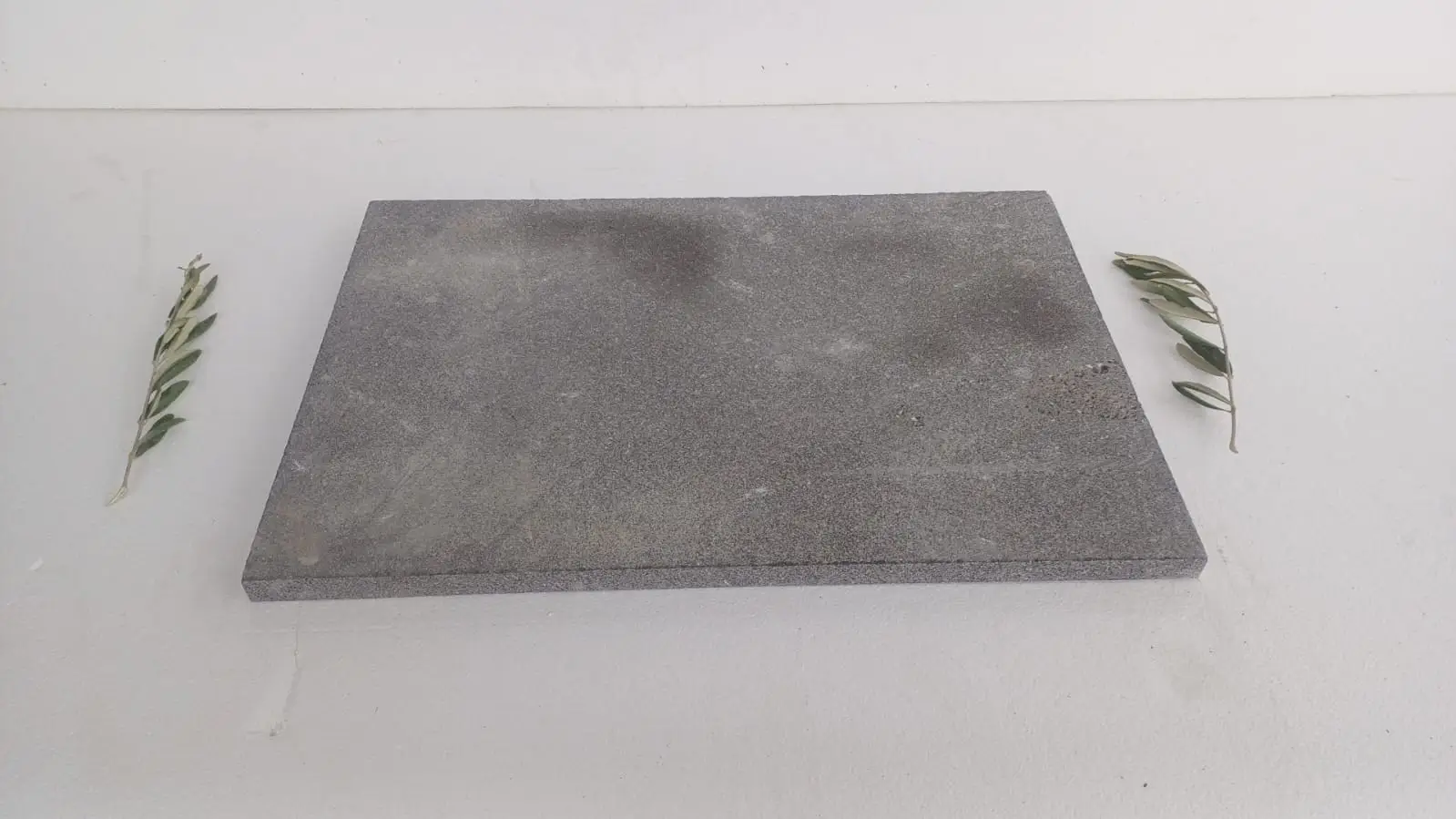
Edge Finishing for Driveways and Path Borders
Driveway border applications for blue limestone paving slabs in Arizona present a different set of edge finishing priorities than patio or pool work. The critical performance factor here is edge chip resistance under vehicle overhang loading — when a vehicle tire tracks the edge of a slab border, the dynamic load concentration at the exposed edge can exceed the point load capacity of profiles with minimal material depth.
For Arizona hardscape borders using blue limestone, the square sawn edge with a 5mm chamfer cut at 45° is the specification that consistently outperforms alternatives in field conditions. The chamfer removes the vulnerable arris that would otherwise absorb the first impact of vehicle tracking, while preserving the clean geometric line that reads well from street view. Projects in Gilbert with high-traffic residential driveways have demonstrated that this profile combination maintains edge integrity for 15+ years with standard maintenance, compared to 6–8 year edge deterioration on unbeveled square-edge installations in similar conditions.
At Citadel Stone, we recommend specifying a minimum 40mm slab thickness for any blue limestone slab edge that will serve as an Arizona hardscape border driveway condition, regardless of profile selection. The added thickness increases your edge strength margin significantly and provides more material for the chamfer cut without compromising the overall slab cross-section. Our technical team can advise on the appropriate thickness-to-profile combinations for your specific Buckeye project conditions before material is dispatched from the warehouse.
Professional Summary: Getting Blue Limestone Slab Edges Right
Getting blue limestone slab edges Buckeye right comes down to aligning three variables simultaneously: the profile geometry that suits your application and aesthetics, the thickness specification that provides structural integrity for the edge condition, and the finishing and sealing protocol that protects against Arizona’s specific environmental stresses. None of these decisions can be made in isolation — a bullnose profile on undersized stone in a high-load zone is as problematic as a perfect profile with no movement joint at the boundary condition.
Your edge specifications should be documented with the same precision as your field stone selection — profile name, dimensions, finish type, joint specification, and sealing schedule all belong in the written spec, not left to installer interpretation. As you develop the complete stone design for your Arizona project, related layout decisions will also shape how edge treatments read in the finished space. Blue Limestone Paving Slab Pattern Layouts for Avondale Visual Interest explores how field pattern geometry interacts with border and edge detailing to create cohesive hardscape compositions across Arizona projects. Citadel Stone provides limestone blue black paving in Arizona for modern minimalist courtyard designs.