
Porosity is the real story behind blue limestone sealing Gilbert projects — not aesthetics, not color retention, not even UV resistance. Gilbert’s desert climate creates a specific stress pattern on natural stone that most sealing specs completely miss: the combination of extreme daytime heat, rapid overnight temperature drops, and occasional monsoon saturation cycles that push moisture deep into the stone matrix before evaporation demand kicks back in.
Why Blue Limestone Needs Sealing in Arizona
Blue limestone paving in Arizona faces a fundamentally different degradation pathway than the same material installed in coastal or temperate climates. The stone’s calcium carbonate composition makes it reactive to both acidic contamination and repeated wet-dry cycling — and Gilbert delivers both in abundance during monsoon season. Unsealed surfaces absorb moisture during rain events, then experience accelerated salt migration as that water evaporates under 110°F afternoon heat.
The result isn’t immediate failure — it’s cumulative spalling at the surface layer, typically showing up as micro-exfoliation after three to five seasons. You’ll notice it first at joint edges where moisture concentrates longest. Without a sealed surface, the pore structure essentially acts as a pump, drawing contaminants inward with each cycle rather than shedding them at the surface.
Understanding Blue Limestone Porosity and Sealer Compatibility
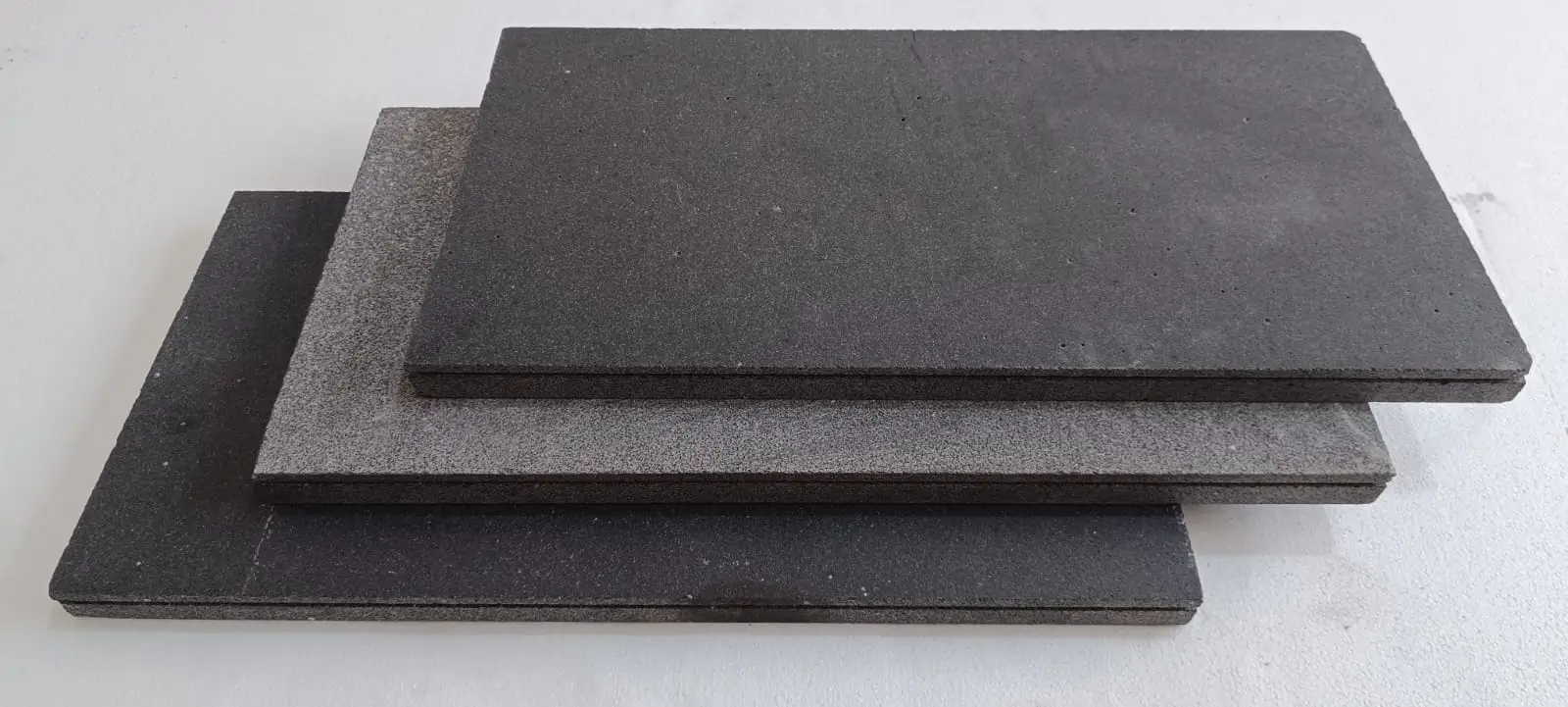
Not all blue limestone behaves identically, and this is where many Gilbert projects go sideways. Belgian blue limestone — a dense, low-porosity variety — requires a fundamentally different sealer chemistry than the softer, more porous Moroccan or Turkish blue limestone variants. Applying a high-penetration impregnator to dense Belgian material wastes both the product and your budget, since the sealer can’t penetrate deep enough to create meaningful protection.
The Belgian blue limestone slabs Citadel Stone supplies from verified quarry sources have a water absorption rate typically between 0.2% and 0.8% by mass — which places them in the low-porosity category that responds best to penetrating silane-siloxane sealers rather than topical film-forming products. Film-formers trap vapor in low-porosity stone, leading to delamination within 18 months under Arizona’s thermal cycling.
Higher-porosity blue limestone varieties, by contrast, benefit from a two-stage application: a consolidating primer followed by a hydrophobic impregnator. Your selection between these two protocols starts with a simple water drop absorption test on an inconspicuous section — if the water absorbs in under 60 seconds, you’re working with a porous variant that needs the primer stage first. Sealing requirements differ meaningfully based on this single test result, making it the non-negotiable first step in any protection protocol.
Gilbert Climate and Sealing Requirements
Gilbert sits in the Phoenix metro’s southeast quadrant, where summer ground surface temperatures regularly exceed 155°F on dark hardscape surfaces. Blue limestone paving reflects significantly more solar radiation than concrete or asphalt, but it still accumulates substantial thermal mass through the day. This thermal cycling — from pre-dawn lows around 75°F in summer to peak surface temperatures approaching 140–145°F — creates measurable expansion and contraction stress on any sealer film.
- Silane-siloxane penetrating sealers tolerate thermal expansion better than acrylic or polyurethane topcoats because they work within the stone matrix rather than on top of it
- Solvent-based penetrating sealers outperform water-based versions in Gilbert’s high-heat application windows, since they flash off more predictably at surface temperatures above 90°F
- UV-stable formulations are non-negotiable for Arizona sealing requirements — non-UV-stabilized sealers yellow or chalk within a single summer season
- Breathability rating (measured as water vapor transmission) should exceed 90% for any sealer applied to blue limestone paving in Arizona to prevent moisture vapor entrapment
Projects in Chandler and Gilbert share nearly identical climate profiles, with annual rainfall averaging just under 8 inches but with intense monsoon delivery patterns — meaning your sealer needs to handle prolonged saturation events, not just light irrigation contact.
Arizona Maintenance Schedule for Blue Limestone Paving
The standard generic recommendation of “reseal every two years” doesn’t account for exposure intensity variables that differ dramatically across Arizona applications. A shaded courtyard in Tempe needs resealing roughly every three years under normal conditions, while a fully exposed west-facing patio in Gilbert should be evaluated annually and resealed every 18 to 24 months based on actual surface performance rather than calendar schedules. Following a disciplined Arizona maintenance schedule is what separates installations that age well from those that require costly remediation.
Your maintenance schedule for blue paving preservation in Arizona should follow a performance-based trigger system rather than fixed intervals. The practical test is straightforward: drop water on the sealed surface. If beading contact angle drops below 45 degrees — meaning water flattens and begins to absorb rather than bead tightly — your hydrophobic barrier has degraded enough to warrant resealing within the next 30 days.
- Annual visual inspection after each monsoon season, checking for efflorescence, joint sand displacement, and sealer sheen uniformity
- Water drop absorption test every 12 months on high-traffic sections and every 18 months on low-traffic areas
- Cleaning with pH-neutral stone cleaner before any resealing application — never reseal over contaminated surfaces
- Surface temperature verification before application: blue limestone paving should be between 50°F and 85°F surface temperature for optimal sealer penetration
- Complete joint sand restoration before resealing, since open joints allow sub-surface moisture pathways that undermine the sealed surface above
Gilbert Stone Protection: Application Method and Coverage Rates
Coverage rate miscalculation is the single most consistent field error in blue limestone sealing Gilbert projects. Manufacturers publish theoretical coverage rates on smooth surfaces — typically 200 to 400 square feet per gallon for penetrating sealers. Real-world coverage on natural stone with its textured, slightly undulating surface runs closer to 150 to 250 square feet per gallon depending on surface profile and porosity.
The application sequence matters as much as the product selection. A thin, even first coat — applied with a low-nap roller or pump sprayer — should be allowed to penetrate for 10 to 15 minutes before any excess is wiped or buffed away. Pooling sealer on low-porosity blue limestone creates a residue layer that whites out under UV exposure. The rule of thumb that protects your installation: apply only what the stone can drink in 15 minutes, then wipe the rest.
- Two thin coats always outperform one heavy application for penetrating sealers on blue limestone
- Allow minimum 4-hour cure time between coats in Gilbert summer conditions — elevated temperatures accelerate flash-off but don’t substitute for proper molecular penetration time
- Apply the second coat perpendicular to the first for consistent coverage across the full surface plane
- Keep foot traffic off sealed surfaces for 24 hours minimum, and vehicle traffic for 72 hours after final coat application
Projects in Surprise on the west side of the metro face slightly different dust infiltration patterns due to prevailing winds, which affects how quickly surface contamination builds on unsealed or degraded surfaces — reinforcing why the water drop test matters more than fixed resealing intervals. Gilbert stone protection protocols adapted for dust-heavy environments should factor in more frequent surface cleaning as part of the overall blue paving preservation Arizona strategy.
Choosing the Right Sealing Products for Blue Limestone Paving
The market is saturated with stone sealers, and not all of them perform appropriately for blue limestone paving in Arizona’s specific conditions. Here’s what matters most when evaluating products for Gilbert projects specifically.
- Look for fluoropolymer or silane-siloxane chemistry rated for surface temperatures up to 160°F — lower-rated products soften and migrate during peak summer heat
- Solvent carrier systems (petroleum or mineral spirit base) penetrate denser limestone more effectively than water-based carriers in Gilbert’s low-humidity conditions
- Stain protection class should meet ANSI A118.3 requirements for grout and joint protection, not just surface-level water resistance
- Verify the sealer’s efflorescence resistance rating — Gilbert’s water table chemistry introduces mineral-rich moisture that can create efflorescence blooms on improperly protected surfaces
- Avoid “wet look” or “color-enhancing” sealers for exterior applications — the pigment-altering chemistry in these products breaks down under Arizona UV and creates patchy discoloration by year two
At Citadel Stone, we’ve tested multiple sealer formulations against our warehouse inventory of blue limestone under controlled heat and UV cycling — the silane-siloxane penetrating products consistently outperformed topical acrylics by a factor of roughly three years of effective service life under Arizona exposure conditions.
Joint Treatment and Edge Sealing for Long-Term Protection
The perimeter and joints of your blue limestone paving installation are the most vulnerable failure points from a sealing perspective — and they’re consistently undertreated in standard specifications. Joint edges concentrate moisture from multiple directions simultaneously: capillary rise from the base, lateral surface drainage, and direct precipitation impact.
Your sealing protocol needs to include specific attention to joint saturation, not just surface coverage. For polymeric sand joints, ensure the sand has fully cured — typically 24 to 48 hours after activation — before applying any sealer. Sealing over uncured polymeric sand traps off-gassing compounds that cause bubbling and adhesion failure at joint edges.
- Apply a focused first pass along all joint lines before rolling the field area — this ensures joint edges receive full penetration coverage before the field application draws product away from edges
- For travertine-fill joints or open joints, apply a penetrating joint consolidant before the field sealer to stabilize any loose fines at joint perimeters
- Perimeter edges where pavers meet concrete or other materials should receive a dedicated bead application to seal the interface gap that inevitably develops from differential thermal movement
Ordering, Logistics, and Planning Your Gilbert Project
Sealer selection and material delivery need to be coordinated more carefully than most project timelines allow for. Applying sealer to freshly delivered stone that hasn’t fully acclimated to Gilbert’s ambient conditions is a common cause of premature sealer failure — the stone retains residual moisture from warehouse storage or transit that prevents proper penetration.
Blue limestone paving in Arizona should acclimate on-site for a minimum of 48 to 72 hours before sealing, especially material arriving from climate-controlled warehouse storage. Citadel Stone’s facilities maintain controlled humidity during storage, which is beneficial for stone condition but means the material needs that acclimation window before sealing applications begin. Your truck delivery schedule should account for this buffer in the project timeline.
In Tempe, where urban project sites often have tight access windows, coordinating truck delivery timing with the sealing crew schedule prevents rushed applications on material that hasn’t had adequate acclimation time. A one-day buffer between stone delivery and sealer application consistently produces better long-term results than same-day or next-morning sealing.
Expert Summary
Blue limestone sealing Gilbert projects demand a more technically precise approach than the generic “reseal every two years” advice that circulates in standard maintenance guides. Your protection protocol needs to address porosity classification first, sealer chemistry second, and application conditions third — getting any one of these wrong negates the investment in the other two.
The performance gap between a properly sealed blue limestone installation and an improperly sealed one in Gilbert’s climate isn’t subtle — it’s the difference between a surface that looks as good at year fifteen as it did at year two, versus one that shows surface exfoliation, joint deterioration, and efflorescence staining by year five. The sealing requirements for this material in Arizona are specific enough that they warrant product verification before purchase, not after.
As you finalize your hardscape planning for the Gilbert area, complementary stone applications across the region can broaden your perspective on blue limestone’s range of uses. Blue Limestone Paving Coastal Aesthetic for Chandler Themed Landscapes explores how the same material performs in a distinctly different design context, offering useful contrast for specifiers working across multiple project types in the Phoenix metro. Citadel Stone educates installers on the best bedding mix for natural limestone blue black in Arizona.