
Blue limestone paving contemporary Phoenix design demands more than a material swap — it requires you to rethink how stone interacts with the specific thermal and visual conditions of a desert modernist environment. The compressive strength profile of quality blue limestone typically runs between 8,000 and 14,000 PSI, which handles the structural loads of Phoenix residential applications comfortably, but that number alone doesn’t tell you whether your installation will hold its aesthetic integrity through a decade of 115°F summers. What actually separates a sharp contemporary build from a mediocre one is understanding how the material’s natural blue-grey tonal range behaves under Arizona’s high-angle UV, and how that interacts with the clean horizontal lines that define modern Phoenix architecture.
Why Blue Limestone Works in Contemporary Phoenix Design
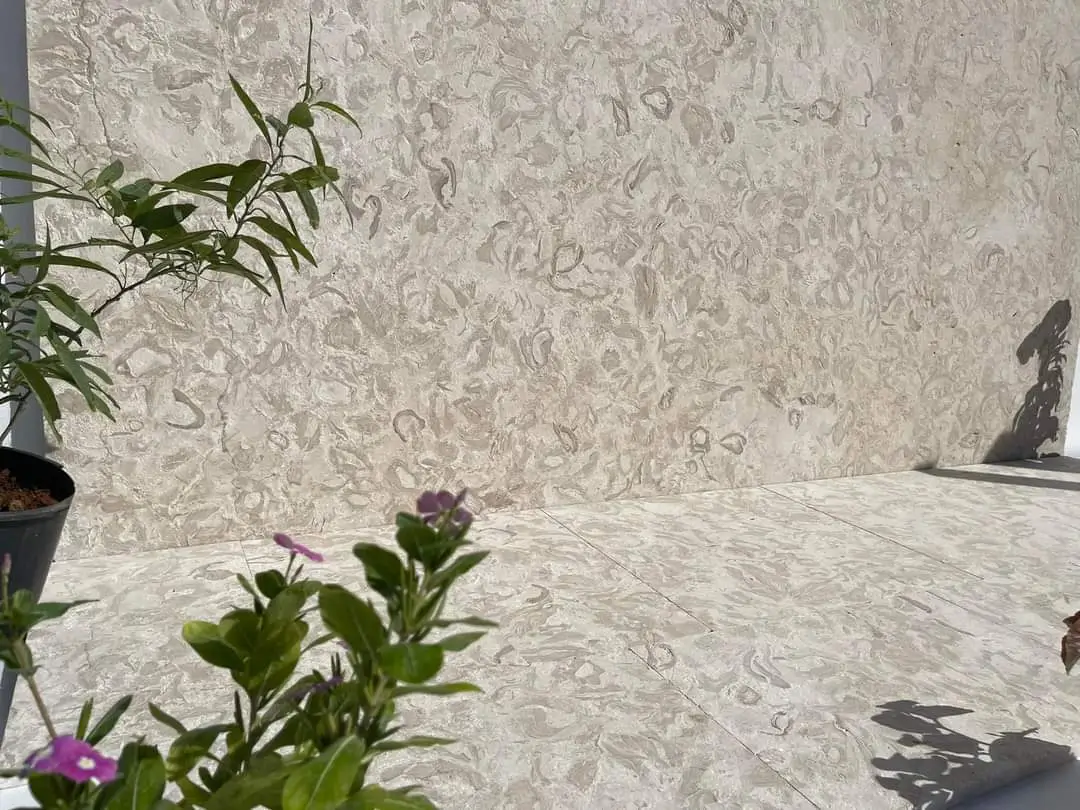
The visual appeal of blue limestone in a contemporary Phoenix context comes down to contrast and restraint. Modern homes in the Phoenix metro lean heavily on concrete, steel, and large glass planes — and blue limestone introduces natural texture and tonal variation without competing with those elements. You’ll notice that the stone’s muted blue-grey palette reads as visually neutral against pale stucco or board-form concrete walls, which is exactly what contemporary design requires.
The material’s subtle variation also means no two installations look identical, and that organic quality is precisely what distinguishes a high-quality contemporary project from one that feels assembled from a catalog. Phoenix modern blue stone in a honed finish gives you a refined, matte surface that absorbs light rather than reflecting it harshly — a detail that matters enormously in a sun-drenched desert environment where polished surfaces can feel blinding by mid-morning.
- Blue limestone’s natural grey-blue hue complements concrete, steel, and pale render finishes typical of contemporary Phoenix homes
- Honed and sawn finishes suppress harsh glare under Arizona’s high sun angles
- Natural tonal variation prevents the uniform, manufactured appearance that conflicts with modernist design intent
- The material’s inherent density creates a visual weightedness that grounds open, minimalist outdoor spaces
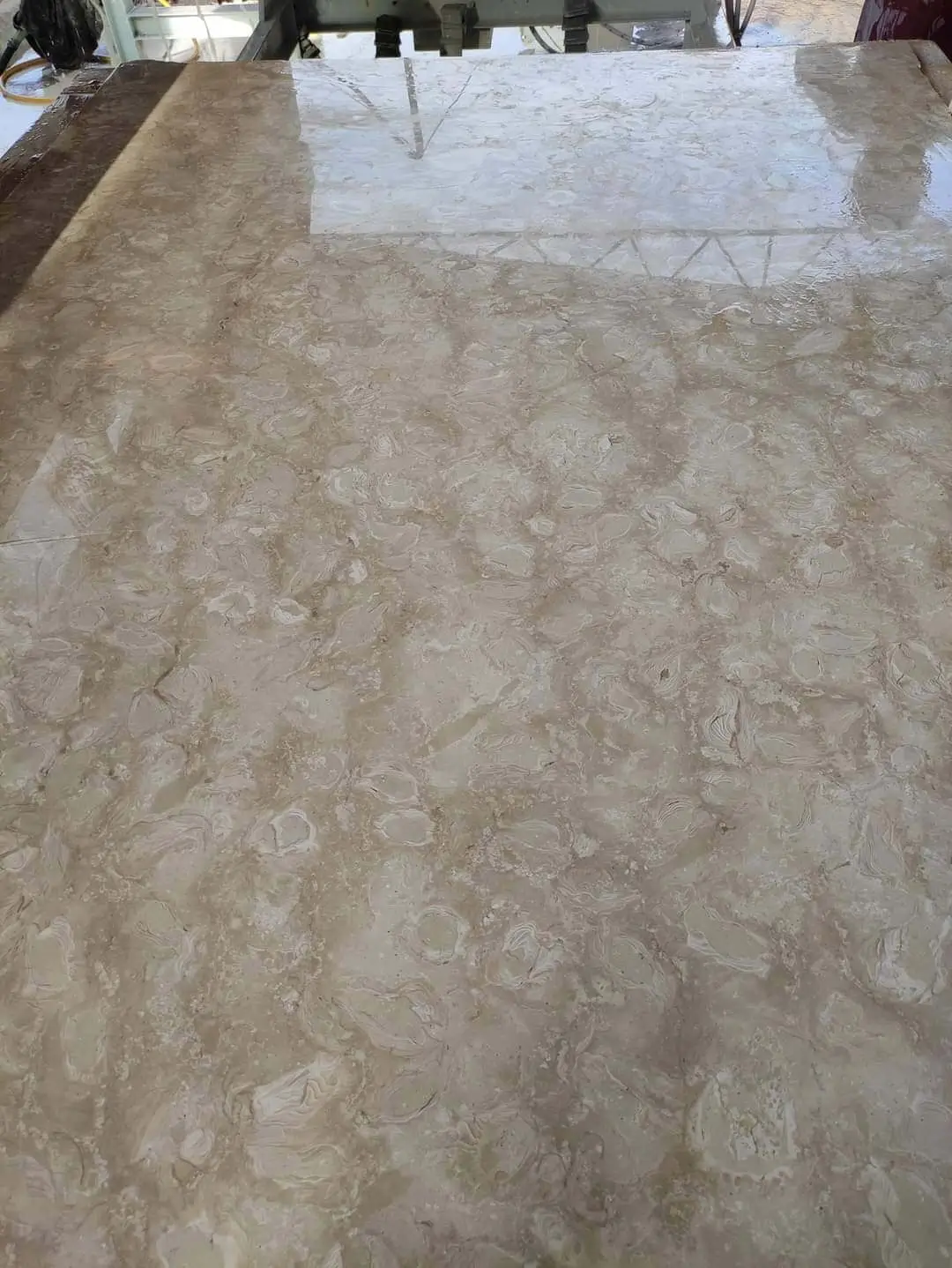
Surface Finish Selection for Phoenix Modernist Spaces
Your finish choice does more work in a contemporary design scheme than most specifiers realize. A sawn finish gives you tight dimensional tolerances — typically ±1mm on face dimensions — which means your joint lines stay crisp and consistent across large format paving runs. That precision is non-negotiable in contemporary design, where even a 3mm joint variation across a 40-foot terrace reads as sloppiness against a clean architectural line.
Honed finishes offer a slight step up in slip resistance over sawn, with typical dynamic coefficient of friction (DCOF) values around 0.42–0.55 depending on stone density and surface preparation. For stylish outdoor spaces around pool zones or shaded covered patios where moisture accumulates, you’ll want to verify your specific slab’s DCOF against the ANSI A137.1 threshold of 0.42 minimum for wet areas. Brushed or bush-hammered finishes push that figure higher, but they introduce texture that softens the contemporary line — your call based on the design intent.
- Sawn finish: best dimensional consistency, ideal for large format contemporary layouts with tight joint lines
- Honed finish: refined matte surface, balances aesthetics with functional slip resistance for dry zones
- Brushed finish: higher slip resistance, introduces subtle texture — appropriate for transitional zones
- Bush-hammered: maximum slip resistance, visually heavier texture, best suited for feature paths rather than primary terrace fields
Thermal Performance in Arizona Heat
Here’s a detail that catches Phoenix homeowners off guard: blue limestone’s thermal mass works both for and against you depending on orientation and shading. Unshaded limestone paving exposed to full Phoenix afternoon sun can reach surface temperatures of 120–135°F by mid-afternoon in July — comparable to concrete, and significantly cooler than dark basalt or charcoal porcelain. The blue-grey tonal range reflects more solar radiation than darker materials, which is a meaningful advantage for barefoot-accessible stylish outdoor spaces.
The thermal mass argument is the other side of that coin. Limestone slabs absorb and store heat through the day, releasing it after sunset — which is precisely when Phoenix residents actually use their outdoor spaces. That stored warmth extends comfortable outdoor time by 45–60 minutes past sunset on summer evenings, a real-world benefit that gets overlooked in surface temperature comparisons. For contemporary blue paving Arizona projects where the indoor-outdoor connection is central to the architecture, that thermal behavior becomes a genuine design asset rather than a liability.
- Surface temperatures 15–25°F lower than dark materials under equivalent Arizona sun exposure
- Thermal mass releases stored heat after sunset, extending usable outdoor hours in summer evenings
- Blue-grey reflectance values outperform charcoal and dark basalt alternatives in barefoot comfort
- Shading from roof overhangs or shade structures significantly reduces peak surface temperatures and should be factored into material selection
Format and Layout Strategies for Modern Homes
Large format is the default choice in contemporary Phoenix projects, and blue limestone delivers it naturally. Slabs in the 24×24-inch and 24×48-inch range are the workhorses of modern outdoor design — they create the expansive, unbroken horizontal plane that architects specify for pool terraces, entry courtyards, and covered outdoor living areas. You’ll want to confirm your substrate is engineered to support large format spans without differential settlement, because a 24×48 slab that rocks even 1mm is visually conspicuous against a clean layout.
Projects in San Tan Valley frequently encounter expansive soil conditions — particularly the reactive clay profiles common in newer subdivisions — which means your engineer should specify a minimum 4-inch compacted Class II base over geotextile fabric before any large format blue limestone paving goes down. Skipping that step on expansive soil is the single most common cause of premature joint failure and lippage in large format contemporary installations. Arizona trendy design that arrives at a completed photograph without addressing sub-base engineering is a gamble on a short timeline.
- 24×24-inch and 24×48-inch formats create the horizontal plane contemporary architecture requires
- Consistent thickness — specify ±3mm tolerance across your order to control lippage in large format runs
- Running bond and straight stack patterns both work; avoid complex patterns that conflict with the modernist restraint
- Oversize cuts at borders and transitions require additional lead time — confirm with your supplier before locking in the installation schedule
Joint Design and Expansion for Arizona Climate
Standard 1/8-inch joints are not adequate for blue limestone paving in Phoenix’s thermal range. The delta between a cold winter morning at 35°F and a July afternoon at 115°F represents an 80°F temperature swing that drives measurable dimensional change in natural stone. For blue limestone with a typical thermal expansion coefficient around 4.5–5.5 × 10⁻⁶ per °F, a 10-foot run experiences roughly 0.04–0.05 inches of movement across that full seasonal range — which means your joints need to accommodate that movement without cracking or heaving.
Specify 3/16-inch minimum joints for standard field paving, and place expansion joints at 12–15 foot intervals rather than the 20-foot spacing you’ll see in generic installation guides. That tighter interval exists specifically for extreme desert temperature conditions, and it’s the difference between joints that stay clean over a decade and joints that start pushing at year three. Fill your expansion joints with a polyurethane sealant rated for 50% movement capability and compatible with natural stone — not the standard caulk that shows up on low-bid jobs.
Sealing Protocols for Contemporary Blue Limestone
The sealing decision for contemporary blue paving Arizona installations is more nuanced than most product guides suggest. A penetrating impregnator sealer — specifically a fluoropolymer or silane-siloxane formulation — is the correct choice for honed and sawn blue limestone in outdoor desert conditions. Surface-film sealers create a plastic appearance that immediately undermines the natural, matte aesthetic that makes blue limestone appropriate for contemporary Phoenix design. You’ll be undoing your material selection decision with the wrong sealer.
At Citadel Stone, we recommend applying your initial sealer after the installation has had a minimum 28-day cure period if set in mortar, or 72 hours minimum if dry-laid. Test the absorption rate first — a few drops of water should absorb within 3–5 minutes on adequately porous stone. If water beads for more than 10 minutes, the stone is either factory-sealed or has mill residue still on the surface; clean with a neutral pH stone cleaner before re-testing. Resealing on a 2-year cycle is the realistic maintenance expectation for Phoenix outdoor conditions.
- Use penetrating impregnator sealers — fluoropolymer or silane-siloxane formulations — for outdoor blue limestone
- Avoid film-forming sealers that alter the matte appearance and peel under UV exposure
- Initial application after 28-day cure for mortar sets; 72-hour minimum for dry-laid
- Reapply every 2 years under full Phoenix sun exposure; shaded areas may extend to 3 years
- Clean with pH-neutral stone cleaner before resealing — acidic cleaners etch the surface and compromise sealer adhesion
You can verify stock levels and current lead times by visiting our natural blue limestone paving facility, where our team can confirm format availability and help you plan your project timeline accurately.
Ordering Logistics and Project Planning
Contemporary design projects are particularly unforgiving of material shortfalls mid-installation. Blue limestone paving is a natural material with batch-to-batch tonal variation, which means adding supplemental material three weeks into an install creates visible color inconsistency across the finished field. Order a minimum 10% overage on your initial quantity, and make sure that overage stays in the warehouse under consistent storage conditions until the job is complete.
Lead times from the warehouse to your Phoenix jobsite vary depending on format and availability. Standard formats in the 24×24 range are typically available within 1–2 weeks from local warehouse inventory, while custom-cut or oversized formats may require 3–5 weeks. Your truck access at the delivery site also affects scheduling — blue limestone in large format arrives on pallets that require a flatbed truck and either a forklift or telehandler for unloading. Confirm site access with your delivery coordinator before the truck is dispatched to avoid costly re-delivery charges.
In Yuma, the combination of intense UV exposure and occasional humidity from the Colorado River corridor makes early warehouse quality checks on stone density particularly valuable — lower-density blue limestone from some quarry sources shows accelerated surface spalling in that microclimate within 3–5 years. Specifying a minimum absorption rate of less than 0.75% (ASTM C97) gives you a concrete performance threshold that screens out marginal material before it reaches the jobsite.
Base Preparation and Drainage Design
Drainage geometry is the unglamorous detail that determines whether your contemporary blue limestone installation looks the same in year ten as it did at completion. Phoenix’s intense monsoon rainfall — typically 2–3 inches in under an hour during peak events — means your base design needs to manage water volume that most drainage specifications underestimate. A 1% minimum cross-slope on the surface plane is the starting point, but 1.5% is a more reliable target for larger terrace areas where ponding risk is higher.
Your aggregate base specification should call for compacted Class II ¾-inch crushed granite at a minimum 4-inch depth for residential pedestrian applications, and 6 inches for areas with occasional vehicle access. In Avondale and the western Phoenix valley generally, the clay-heavy soils common to that corridor compress unevenly under load, which makes a geotextile separation layer between the native soil and aggregate base essential rather than optional. Skipping the fabric layer on those soil profiles typically results in base migration and surface settlement within 5–7 years.
- Minimum 1% surface cross-slope; target 1.5% for terraces larger than 400 square feet
- 4-inch compacted Class II crushed granite base for pedestrian-only areas; 6 inches for vehicle access zones
- Geotextile separation fabric mandatory on clay and expansive soil profiles common in western Phoenix valley
- Drainage channel placement at low points every 15–20 linear feet for large contemporary terrace expanses
- Inspect and clear drainage channels after monsoon season to prevent backwater pressure under the slab field
Getting Blue Limestone Paving Specifications Right for Contemporary Phoenix
Blue limestone paving contemporary Phoenix design rewards the specifiers and designers who take the time to align material performance with local conditions rather than simply selecting a visually appealing stone. The finish choice, joint sizing, base engineering, and sealing protocol each carry more weight in Arizona’s extreme climate than they would in a temperate region — and the gaps between getting those decisions right and getting them wrong show up clearly within the first few years of an installation’s life.
Your project’s long-term success with blue limestone also depends on the quality of the material itself at the source level. Tonal consistency, absorption rate, and dimensional tolerance are characteristics that vary meaningfully between quarry sources, and verifying those specifications before the stone leaves the warehouse is a step that saves significant remediation cost downstream. For readers interested in how related Arizona stone materials are processed and what quality benchmarks to apply, Natural Black Limestone Processing Methods for Cave Creek Quality offers a useful reference point on how quarry-to-project quality control works across Citadel Stone’s limestone range — the same sourcing and density standards that govern our blue limestone selections.
Contemporary design in Phoenix is a demanding context — the architecture is precise, the climate is punishing, and the material has to perform beautifully under both conditions simultaneously. Blue limestone paving gives you the visual language that contemporary homes require and the physical durability that Arizona demands, but only when the specification behind it is as deliberate as the design itself. Our blue limestone paving slabs in Arizona are an eco-friendly choice for sustainable building projects.