
The thermal dynamics of blue limestone Mediterranean Paradise Valley installations reveal something most design teams don’t anticipate until they’re already committed to a layout — the stone’s natural density creates a heat-absorption curve that peaks in the late afternoon, not at solar noon. This means your seating areas, shaded terraces, and transition zones need to be positioned with afternoon heat mass in mind, not just midday sun angles. Blue limestone Mediterranean Paradise Valley projects demand this level of climate-specific thinking before a single slab is set, and the details that follow will give you the technical foundation to get it right.
Why Blue Limestone Suits Paradise Valley’s Design Language
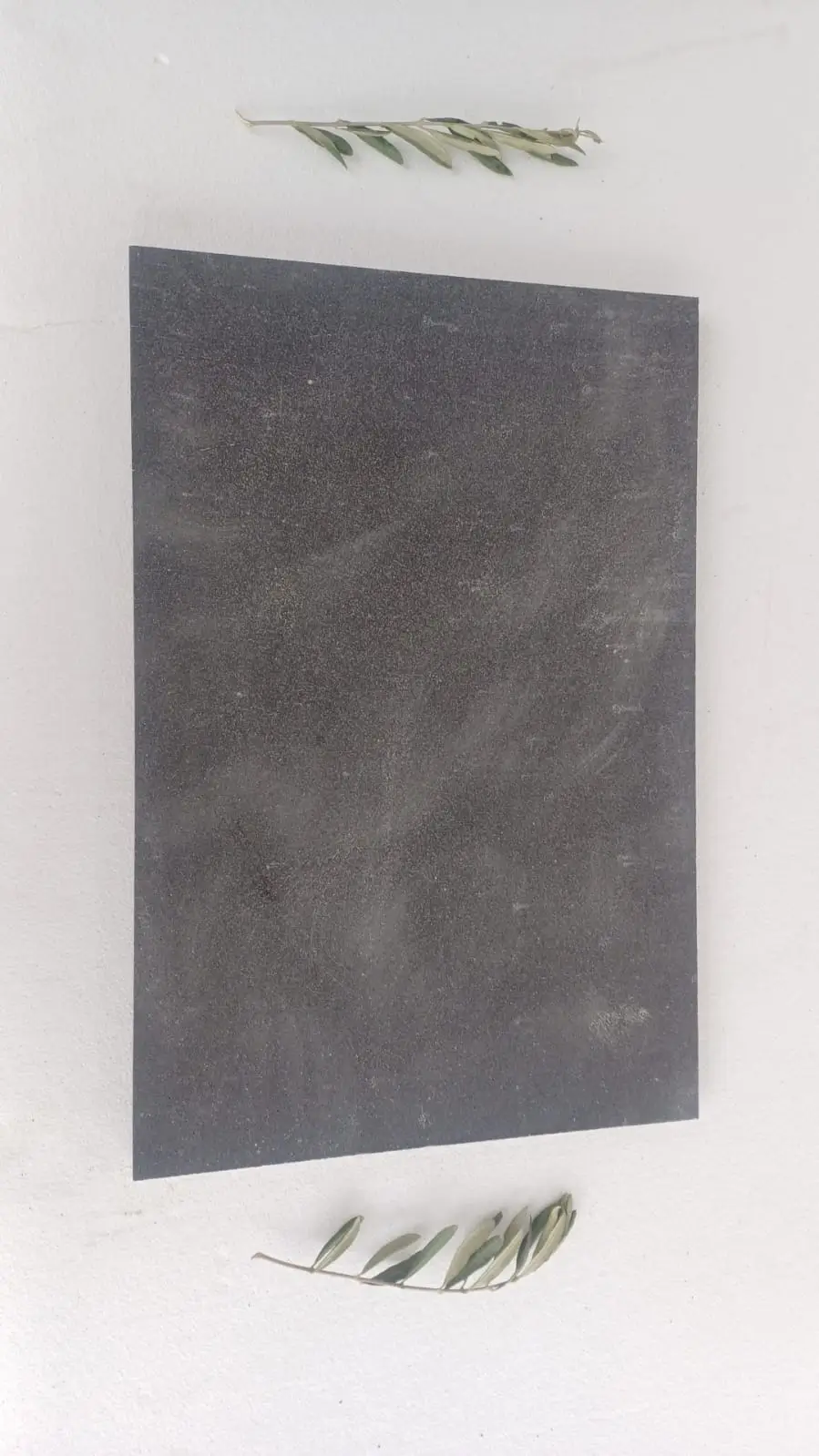
Paradise Valley European design has always leaned toward materials that carry architectural weight without visual heaviness. Blue limestone delivers exactly that — its subdued blue-grey tonality reads as sophisticated restraint, which pairs naturally with the stucco facades, wrought iron details, and terracotta roof profiles that define Mediterranean aesthetics in this market. The stone’s slight variation in surface color from slab to slab mimics the patina you’d find on centuries-old European estates, and that’s not something you can replicate with manufactured concrete products.
Mediterranean aesthetics in Arizona face a unique challenge — they need to evoke the Old World while surviving a climate that Old World materials were never designed for. Blue limestone handles this reconciliation better than most alternatives because its compressive strength typically runs between 10,000 and 14,000 PSI, giving it the structural integrity to handle the thermal cycling Arizona dishes out across seasons. Your villa-style project benefits from a material that looks the part and performs under real desert conditions.
Surface Finish Selection for Arizona Heat Exposure
Your finish choice on blue paving villa style Arizona projects will define both the visual register and the thermal behavior of your installation. Here’s what each finish option actually means in the field:
- Honed finishes absorb more solar radiation than brushed or sawn surfaces, raising surface temps by 8–12°F on average — a meaningful difference for barefoot terraces
- Brushed finishes scatter light more effectively and provide better slip resistance for pool surrounds and spa decks, where wet foot traffic is constant
- Flamed finishes open the surface pore structure slightly, improving drainage but requiring slightly more aggressive sealing schedules in Arizona’s dust-heavy environment
- Sawn edges on individual pavers allow tighter joint tolerances — typically 3mm rather than the 5–6mm you’d use with tumbled edges — which reads more refined for formal Mediterranean courtyard layouts
The finish also interacts with the stone’s inherent porosity. Blue limestone porosity typically runs between 2.5% and 5% by volume, which is moderate — enough to allow some breathability but low enough that sealing with a penetrating silane-siloxane formula at 18-month intervals will keep moisture infiltration from becoming a long-term structural issue.
Base Preparation Standards for Villa-Scale Projects
Paradise Valley villa installations often involve large continuous paving fields — courtyards running 2,000 to 5,000 square feet aren’t unusual in this market. At that scale, your base preparation decisions compound quickly. A 1-inch deflection variance across 40 feet doesn’t look like a spec error on paper, but you’ll see it in pooling water and rocking pavers within two monsoon seasons.
For these project scales, your compacted aggregate base should run a minimum of 6 inches for pedestrian areas and 8–10 inches where vehicle access is possible — even if the brief says “pedestrian only,” gate access for maintenance vehicles makes 10 inches the professional standard. In Sedona, where the red rock geology creates unique expansive clay pockets beneath alluvial fill, some projects have required base depths up to 14 inches to get past unstable native soil layers and achieve the load distribution that prevents edge settlement.
- Compaction should reach 95% Proctor density — verify with a nuclear densometer, not just a visual check
- Grade your sub-base to a minimum 1.5% slope away from structures before laying aggregate — relying solely on surface slope is a common spec oversight
- Bedding sand or a dry-pack mortar bed for natural stone should run 1 to 1.5 inches consolidated — thicker beds don’t add stability, they add settlement risk
- Allow 48 hours minimum for dry-pack beds to reach handling strength before full traffic loading, and 7 days before heavy foot traffic in summer heat above 100°F
Thermal Expansion and Joint Spacing in Arizona Climates
Blue limestone Mediterranean Paradise Valley installations carry a thermal expansion coefficient of approximately 4.8 × 10⁻⁶ per °F — lower than most concrete alternatives, which is one reason it performs so well in Arizona’s extreme temperature swings. But “lower than concrete” doesn’t mean you can ignore joint spacing. The design temperature differential between a winter low of 38°F and a summer high of 113°F in the Phoenix metro area represents a 75°F swing that produces measurable movement in any stone installation.
Your joint spacing calculation should account for full slab dimensions, not just nominal sizes. A 24×24-inch blue limestone paver in direct sun will experience roughly 0.014 inches of thermal expansion across its long dimension during peak summer heat. That sounds negligible for a single slab, but across a 30-foot run of pavers, the accumulated movement approaches 0.25 inches — enough to buckle if your perimeter containment doesn’t accommodate it. Plan expansion joints every 12 to 15 feet in continuous paved fields, not the 20-foot spacing you’ll see in generic guides written for temperate climates.
Blue Limestone Paving Arizona: Thickness and Loading Specifications
The right thickness for blue limestone paving Arizona projects depends on application type, not just personal preference. Here’s how to spec it correctly:
- 20mm (¾ inch) nominal — suited for dry-set interior applications only; not appropriate for outdoor Arizona conditions where thermal cycling and moisture exposure are factors
- 30mm (1¼ inch) — the minimum for pedestrian outdoor terraces and pool surrounds in Paradise Valley; this thickness handles the point loads from outdoor furniture legs without edge chipping
- 40mm (1½ inch) — appropriate for driveways and motor courts where vehicle traffic is present; also recommended for large-format slabs over 36×36 inches regardless of traffic type, as the additional thickness resists torsional stress during settling
- 50mm (2 inch) and above — reserved for public-access areas or where structural loading from heavy equipment access is a real consideration
At Citadel Stone, we recommend confirming your slab thickness against the specific slab dimensions you’re specifying — not just the application category. Oversized thin slabs are one of the most common sources of mid-installation cracking we see on Paradise Valley projects, and it’s entirely avoidable at the specification stage.
Pool Surrounds and Slip Resistance for Mediterranean Layouts
Mediterranean aesthetics typically call for pool surrounds that read as seamless extensions of the interior terrace — wide coping, flush transitions, and long uninterrupted runs of stone that frame the water. Blue limestone executes this vision beautifully, but your slip resistance specification needs to reflect the specific conditions of a Paradise Valley pool deck, not a generalized standard.
The ANSI A137.1 standard establishes a Dynamic Coefficient of Friction (DCOF) of 0.42 as the minimum for wet residential surfaces. Blue limestone with a brushed or flamed finish typically achieves DCOF values between 0.55 and 0.70 when tested wet — comfortably above the minimum. A honed finish, however, can drop to 0.38–0.44 when wet, which technically passes the threshold but leaves no margin for worn surfaces or biological growth that reduces friction over time. Brushed is the professional recommendation for pool decks, full stop. You can achieve the refined visual you want with a brushed blue limestone — it still reads as high-end in the context of Arizona luxury homes.
In Peoria, where pool installations often face more aggressive water chemistry due to the combination of municipal water hardness and evaporation rates, some specifiers have seen accelerated surface texture degradation on honed finishes. Brushed finishes hold their slip characteristics longer in those conditions.
Sealing Protocols That Actually Extend Service Life
Most sealing schedules get this wrong for blue paving villa style Arizona projects — they treat sealing as a single event rather than a maintenance system. The first seal happens at installation. The performance of that first seal determines whether your second seal at 18 months is maintenance or remediation.
Your initial sealing protocol for blue limestone should follow this sequence: apply a penetrating silane-siloxane sealer to clean, dry stone (moisture content below 6%) at temperatures between 50°F and 90°F. Arizona summers create a problem here — surface temperatures above 90°F cause penetrating sealers to flash off before they fully migrate into the pore structure, leaving a surface film that peels within one season rather than a subsurface barrier that lasts. Early morning application in summer months, or scheduling initial sealing for cooler months where the project timeline allows, produces meaningfully better results.
- Apply two thin coats rather than one heavy coat — thin coats penetrate; heavy coats pool and cure as a surface film
- Allow 4–6 hours between coats for full solvent release in dry Arizona air
- Reapply at 18-month intervals for the first 5 years; experienced installers often extend to 24 months after that once the stone’s pore structure has been through multiple seal cycles
- Test sealer performance annually with a water bead test — if water absorbs within 15 seconds rather than beading, reseal within 60 days
Color Consistency and Natural Variation in Blue Limestone
The most common client concern on blue limestone Mediterranean Paradise Valley projects isn’t installation quality — it’s color expectation. Natural blue limestone doesn’t behave like a uniform manufactured product, and getting that expectation clearly established before material arrives on site is professional obligation, not just courtesy.
Blue limestone’s color is driven by organic content and mineral deposit patterns in the parent rock. The quarrying process introduces color variation even within a single batch from the same quarry face. You’ll typically see a range from cool silver-grey to muted teal-blue to deeper charcoal-blue across individual slabs. This variation is the material’s strength — it’s what gives blue limestone its natural authenticity — but it needs to be represented accurately in samples before approval. Request a sample board of at least 8–10 individual pieces rather than a single tile, and view it in natural light, not showroom lighting.
Our technical team at Citadel Stone reviews warehouse inventory batches before dispatching material for large Paradise Valley projects to identify color range and flag any outlier slabs that should be set aside for cuts rather than featured field placement. That quality check at the warehouse level saves the kind of field arguments that delay projects and damage working relationships.
Ordering, Logistics, and Project Planning for Arizona Villas
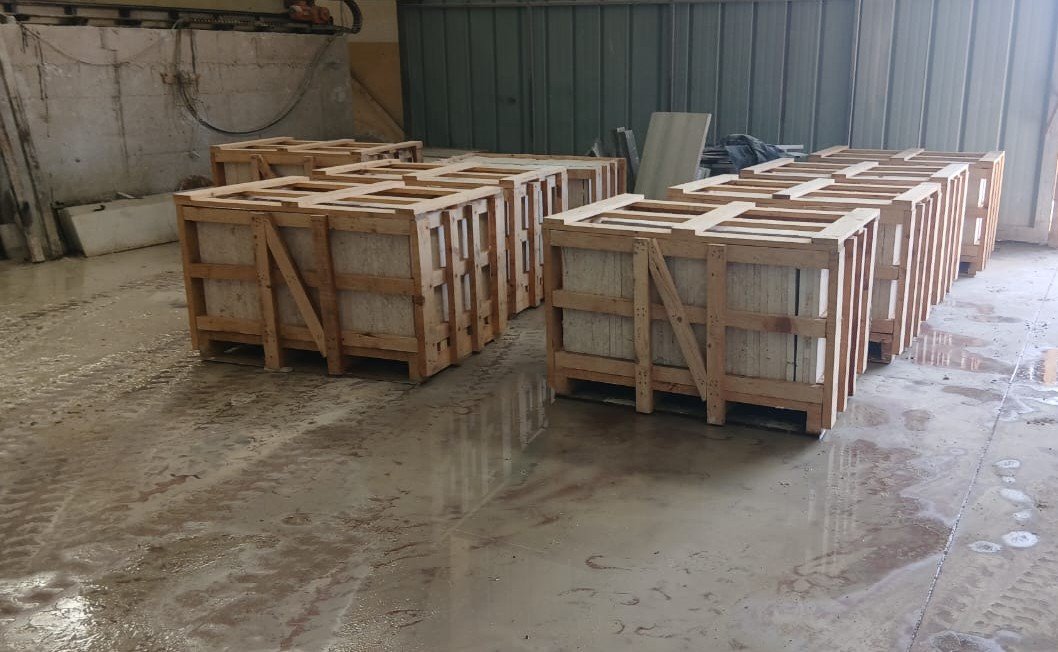
Blue limestone for villa-scale projects in Paradise Valley doesn’t operate on concrete paver lead times. Natural stone sourced from European quarries — particularly Belgian and Portuguese blue limestone, which are the two most common origins for this material — carries a 6–8 week import cycle when sourced directly. For Paradise Valley European design projects working against a construction schedule that doesn’t have that buffer, your best path is domestic warehouse stock rather than custom quarry orders.
Citadel Stone maintains warehouse inventory of blue limestone in Arizona, which typically reduces lead times to 1–2 weeks for standard sizes. That supply chain advantage matters significantly when your project schedule compresses, which it will. For large continuous paving fields above 3,000 square feet, verify that sufficient warehouse stock exists in a single batch before committing — mixing batches from different quarry runs introduces color variation that’s difficult to manage in field layout.
Truck delivery logistics in Paradise Valley present their own constraints. Many villa driveways don’t accommodate full flatbed access, and manual offloading from the street can add half a day to a delivery that should take 90 minutes. Confirm your truck access dimensions — standard flatbed trucks require a 14-foot clearance height and ideally a 60-foot straight approach for safe unloading. For Flagstaff projects at elevation, truck payloads may be adjusted slightly due to grade requirements on mountain access roads, which affects how many pavers you receive per delivery run.
Planning your material in a single order, with 10–12% overage for cuts and breakage, is the professional standard. Trying to match a second order to your first batch of blue limestone is a color-matching exercise you’d rather avoid. For projects where color continuity is a design priority, working from a single warehouse pull is the cleanest solution. You can explore the full range of our inventory options through our page on steel blue limestone paving.
What Matters Most for Blue Limestone Mediterranean Paradise Valley
The specification decisions that determine long-term performance on blue limestone Mediterranean Paradise Valley projects come down to four things: finish selection matched to application, base depth sized for actual soil conditions, joint spacing calculated for Arizona’s full temperature differential, and a sealing system treated as an ongoing maintenance protocol rather than a one-time step. Get those four right and you’re looking at a 25-year installation that improves in character as it weathers. Miss one, and you’ll be back on site within five years making corrections that cost more than the original specification adjustment would have.
The design side of these projects — the European courtyard proportions, the water features, the architectural lighting that makes blue limestone glow at dusk — comes together naturally once the technical foundation is solid. Blue paving villa style Arizona architecture works because the material is inherently suited to the aesthetic and, when specified correctly, to the climate. Your project deserves both. For planning that extends to entertaining spaces and outdoor living areas, Blue Limestone Paving Outdoor Entertaining for Peoria Gatherings provides practical guidance on how blue limestone performs in high-use social spaces across Arizona. We offer distinct blue paving slabs in Arizona that range from deep navy to light powder blue.