
Proper base preparation determines the outcome of any blue limestone installation Tempe professionals tackle — not the slab itself. You can source the finest blue black limestone on the market, but if the compacted aggregate layer shifts by even 3/8 inch during thermal cycling, you’ll be releveling pavers within two seasons. The variables that separate a 25-year installation from a 12-year one come down to decisions made before the first slab ever touches the ground: base depth, bedding consistency, joint width calibration, and drainage geometry tuned specifically to Tempe’s desert heat profile.
Understanding Blue Limestone Behavior in Arizona Heat
Blue limestone paving Arizona conditions demand a material that balances thermal mass with dimensional stability — and blue black limestone delivers on both fronts when you understand what you’re actually working with. The material’s crystalline matrix has a coefficient of thermal expansion in the range of 4.5 to 5.5 × 10⁻⁶ per °F, which is meaningfully lower than concrete’s 5.5 to 7.0 range. That difference matters when your surface temperatures in Tempe regularly swing 60°F between 3 a.m. and 3 p.m. in July.
The dense microstructure of quality blue black limestone — with water absorption rates typically under 0.5% — makes it far less susceptible to spalling than softer sedimentary options. Tempe’s 300+ days of sun create UV exposure that degrades some stones’ surface integrity over time, but blue limestone’s inherent density resists that photochemical breakdown more effectively than travertine or many sandstones.
- Thermal expansion coefficient: 4.5–5.5 × 10⁻⁶ per °F — plan joint widths accordingly
- Compressive strength typically exceeds 15,000 PSI, suitable for vehicular applications
- Water absorption under 0.5% reduces risk of subsurface moisture damage in monsoon season
- Surface hardness (Mohs 3–4) requires appropriate cutting tools and blade selection on-site
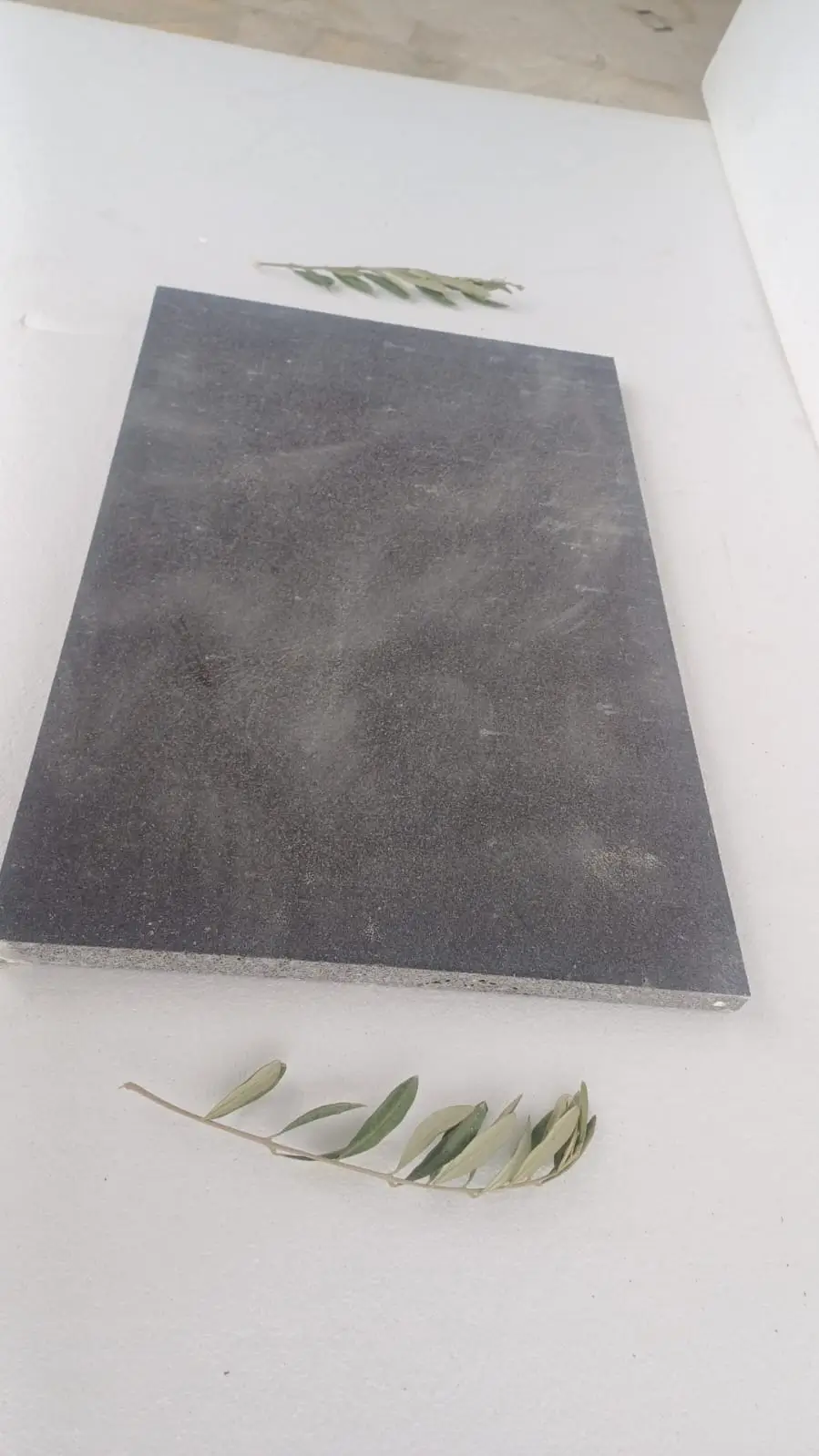
Base Preparation for Tempe Soil Conditions
Tempe’s alluvial soil profile introduces a complication that catches many contractors off guard: the upper 12 to 18 inches can be deceptively stable in dry months, then shift laterally when monsoon saturation hits. Your excavation needs to go deeper than the standard 6-inch recommendation in most national installation guides. For residential pedestrian applications, aim for 8 to 10 inches of compacted aggregate base. For vehicular or driveway loads, push that to 12 inches minimum.
Compaction in two lifts — not one — is non-negotiable here. Each lift should be compacted to 95% Proctor density before you place the next. A single 10-inch lift compacted all at once will leave the lower portion at 88 to 90% density, which translates directly to differential settlement after the first monsoon season. That’s the kind of callback that costs you more than the job was worth.
- Excavation depth: 8–10 inches for pedestrian use, 12 inches minimum for vehicular loads
- Use Class II crushed aggregate or road base — avoid recycled concrete fines in Tempe’s expansive soil zones
- Compact in two lifts, each to 95% Proctor density
- Install geotextile fabric at subgrade interface to prevent fines migration into aggregate
- Verify sub-base moisture content before compaction — too dry or too wet both compromise final density
Projects in Avondale share a similar alluvial soil challenge, but the irrigation history in many older residential neighborhoods there adds organic matter to the upper soil layers — a factor that requires excavating an extra 2 to 3 inches and replacing with inert aggregate to prevent long-term settlement from organic decomposition.
Bedding Layer Selection and Installation
The bedding layer is where most blue limestone installation Tempe projects either gain or lose their long-term performance margin. A 1-inch screeded sand bed is the industry standard, but the sand specification matters more than most specs acknowledge. Use coarse washed concrete sand (ASTM C33 grading), not fine mason’s sand or play sand — fine particles consolidate unevenly under thermal cycling and create a corrugated sub-surface within 18 months.
Screed your bed to ±1/8 inch tolerance across a 10-foot straightedge. In Arizona’s dry climate, you’ll need to lightly mist the sand bed just before laying pavers to prevent premature drying that creates inconsistent seating. This is one of those Tempe-specific adjustments that the installation best practices in most manufacturer guides don’t mention because they’re written for temperate climates.
- Sand specification: ASTM C33 coarse washed concrete sand — not fine or mason’s sand
- Screeded bed depth: exactly 1 inch — do not exceed 1.5 inches or you lose compaction transfer
- Screed tolerance: ±1/8 inch across a 10-foot span
- Mist the bed lightly before laying in temperatures above 90°F to prevent rapid moisture loss
- Do not disturb screeded areas after preparation — footprints in the sand bed create low spots that telegraph through the finished surface
Joint Spacing and Expansion Management
Here’s what most specifiers miss on blue limestone installation Tempe projects: the standard 1/8-inch joint specification from the manufacturer’s data sheet was developed for moderate climates with 30 to 40°F seasonal temperature differentials. Tempe’s differential is closer to 70°F from January nights to July afternoons. Your joint width needs to reflect that reality.
For blue black limestone pavers in the 24×24-inch format, spec 3/16-inch joints minimum. For larger format slabs — 24×48 or 36×36 — move to 1/4 inch. Use a polymeric joint sand with a documented expansion accommodation rating rather than standard silica sand. The polymeric binder holds joint integrity through thermal cycling while still allowing the micro-movement the pavers need.
Expansion joints are a separate issue from standard laying joints. Install compressible backer rod and flexible sealant at all hard boundaries — building perimeters, pool copings, raised planter edges — every 15 feet in both directions for open field installations. Skipping these is the single most common cause of edge failure in Tempe installations, particularly on south-facing exposures where thermal mass accumulates aggressively through the afternoon hours.
Arizona Proper Techniques for Cutting and Fitting
Blue limestone’s hardness sits in a range that demands the right blade selection — a standard segmented diamond blade appropriate for concrete will work but will wear faster than necessary and create micro-fractures at cut edges that eventually telegraph into surface chips. Use a continuous-rim or turbo-rim diamond blade rated for hard stone at 4,000 RPM minimum for clean cuts that don’t compromise the edge integrity of the slab.
Wet cutting is mandatory in Tempe’s dust environment — both for blade longevity and for controlling silica dust exposure. OSHA’s silica rule (29 CFR 1926.1153) is explicit about engineering controls for stone cutting, and wet cutting is the most practical field compliance method. Beyond compliance, the water cooling prevents thermal shock micro-cracking at cut edges, which matters particularly with blue limestone’s denser crystalline structure.
- Blade type: continuous-rim or turbo-rim diamond, rated for hard natural stone
- Always use wet cutting — dry cutting degrades edge quality and creates silica exposure risk
- Allow cut edges to dry completely before seating — wet cut edges can affect bedding adhesion in thin-set applications
- For curved cuts, use an angle grinder with a 4-inch segmented cup wheel rather than forcing a circular saw
- Score and snap is not appropriate for blue limestone — the material’s density requires mechanical cutting throughout
For projects requiring the blue limestone laying Arizona technique that maintains consistent color direction, orient slabs so the natural veining runs perpendicular to the primary view axis. This creates visual depth rather than a striped appearance that can make smaller patios look busier than intended.
Drainage Geometry for Desert Monsoon Performance
Tempe’s monsoon season delivers rainfall intensity that the surface drainage geometry of most paved areas isn’t designed to handle. A 2% cross-slope — adequate for Pacific Northwest rain events — may not clear standing water fast enough when 1.5 inches falls in 45 minutes. Plan for 2.5 to 3% minimum slope toward defined drainage channels on all blue black limestone surfaces. This is one area where Arizona proper techniques diverge most sharply from standard national specifications.
Surface water that pools on blue limestone installation Tempe projects doesn’t primarily threaten the stone — the material’s low absorption handles brief saturation fine. The real threat is subsurface water infiltrating through joints and saturating your sand bed during a monsoon event, then evaporating rapidly the next day. That repeated saturation-desiccation cycle is what destabilizes the bedding layer over time.
At Citadel Stone, we recommend incorporating a 4-inch perforated pipe drain at the low edge of every installation larger than 400 square feet in Tempe applications. That single addition, connected to a dry well or daylight outlet, eliminates the subsurface saturation cycle that accounts for the majority of premature blue limestone failures we see in the Phoenix metro area.
Sealing Protocols Specific to Tempe Conditions
Penetrating impregnating sealers outperform topical coatings on blue limestone paving Arizona surfaces by a wide margin. Topical sealers in Tempe’s UV environment degrade to a chalky, uneven film within 18 to 24 months — requiring complete stripping and reapplication rather than just a maintenance coat. A silicone- or fluoropolymer-based penetrating sealer with a UV stabilizer package will perform for 3 to 5 years before maintenance reapplication, with a simple single-coat refresh rather than a full strip cycle.
For those sourcing authentic blue black limestone materials in Tucson, verifying the sealer compatibility with the specific stone’s porosity before field application saves significant rework. Apply sealer only when surface temperature is between 50°F and 90°F — Tempe’s summer afternoons regularly exceed the upper limit, which causes solvent flash-off before adequate penetration depth is achieved.
- Sealer type: penetrating impregnating silicone or fluoropolymer with UV stabilizer
- Application temperature window: 50°F to 90°F surface temperature
- Apply in early morning in summer months to avoid surface temperature exceedances
- Two-coat application on initial installation — second coat applied within 2 hours of first while pores are still open
- Maintenance reapplication every 3–5 years with water bead test as the trigger indicator
- Allow 72 hours minimum cure time before foot traffic, 7 days before vehicular use
Logistics, Lead Times, and Material Planning
Material planning for blue limestone installation Tempe projects requires accounting for import lead times that most contractors underestimate at the bidding stage. Blue black limestone is typically quarried in Belgium, China, or Vietnam — and the warehouse-to-jobsite timeline depends heavily on whether your supplier maintains domestic stock or sources direct from overseas for each order. The difference between those two scenarios is 1 to 2 weeks versus 8 to 12 weeks.
Order a 10% overage minimum on blue limestone projects — not the typical 5% allowance used for standard concrete pavers. Blue limestone’s natural color variation means replacement slabs ordered six months post-installation may not match the original lot closely enough for seamless repairs. Keeping warehouse stock on hand, even after project completion, is a professional practice that protects against the callback cost of a mismatched repair. Following Tempe paving methods that account for material variability at the ordering stage is what separates experienced installers from contractors who learn that lesson the hard way.
In San Tan Valley, where large-lot residential projects frequently involve 2,000 to 5,000 square feet of paved area, coordinating truck delivery logistics around existing concrete flatwork and landscape grading is often the critical path item. Confirm the truck access route and turning radius before finalizing delivery scheduling — a loaded flatbed carrying 20 tons of limestone needs a 45-foot clearance radius that many partially-developed residential sites can’t accommodate without careful staging.
Citadel Stone maintains warehouse inventory of blue black limestone across Arizona, which typically reduces lead times to 1 to 2 weeks for most project volumes. Confirming warehouse stock availability before committing to a project start date is a straightforward step that prevents the schedule disruption of waiting on a late-arriving truck when your crew is already mobilized.
Blue Limestone Installation Tempe: Final Specifications That Hold
The technical details that define a successful blue limestone installation Tempe project aren’t complicated — but they are unforgiving when skipped. Base depth and compaction density are the structural foundation everything else depends on. Joint width calibration for Arizona’s temperature differential is the adjustment most installations get wrong. Drainage geometry tuned for monsoon intensity is the detail that separates installations that age gracefully from ones that require intervention every few years.
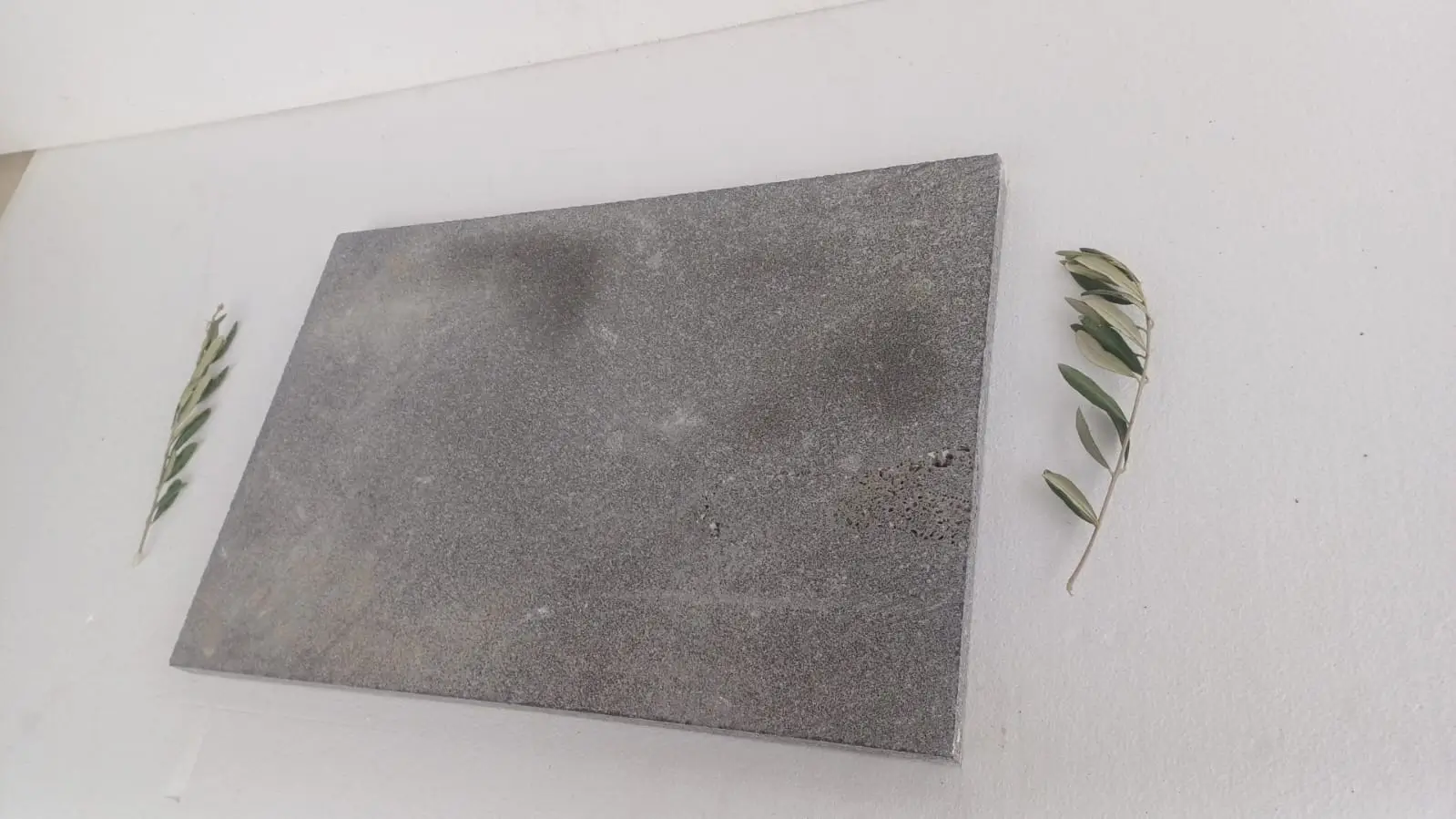
In Yuma, where temperature extremes and low humidity are even more pronounced than Tempe, these same specification adjustments apply with even greater margin — a useful reference point that illustrates how Arizona’s regional climate variation demands locally-tuned specs rather than national defaults. Applying consistent installation best practices across all Arizona climate zones is what builds the kind of track record that sustains a stone installation business long-term. As your project moves toward completion and long-term maintenance planning, protecting your blue limestone investment through proper sealing is the natural next step — Blue Limestone Paving Sealing Protection for Gilbert Longevity covers the protection protocols that keep Arizona installations performing across decades. We offer the natural limestone blue black paving slab in Arizona in brushed finishes for added texture.